Are you wondering how kitchen rugs ideas 2026 will change the way modern kitchens look and feel? Which styles will be practical, washable, non-slip, and still visually striking in open, large, square, or galley kitchens? In this article, I explore kitchen rugs ideas modern trends, layout solutions, and design approaches that combine comfort, safety, and style, including kitchen rugs ideas farmhouse, kitchen rugs ideas under table, and rugs in open kitchen ideas that reflect how kitchens are truly used today.
1. Modern Kitchen Rugs Ideas for Contemporary Interiors
In modern kitchens, I focus on clean lines, open layouts, and a balanced connection between furniture and flooring. Kitchen rugs ideas modern in 2026 emphasize simplicity, neutral color palettes, and precise placement around sinks, islands, or a peninsula. I see these rugs used to define zones in open kitchens while keeping the space visually calm and functional.
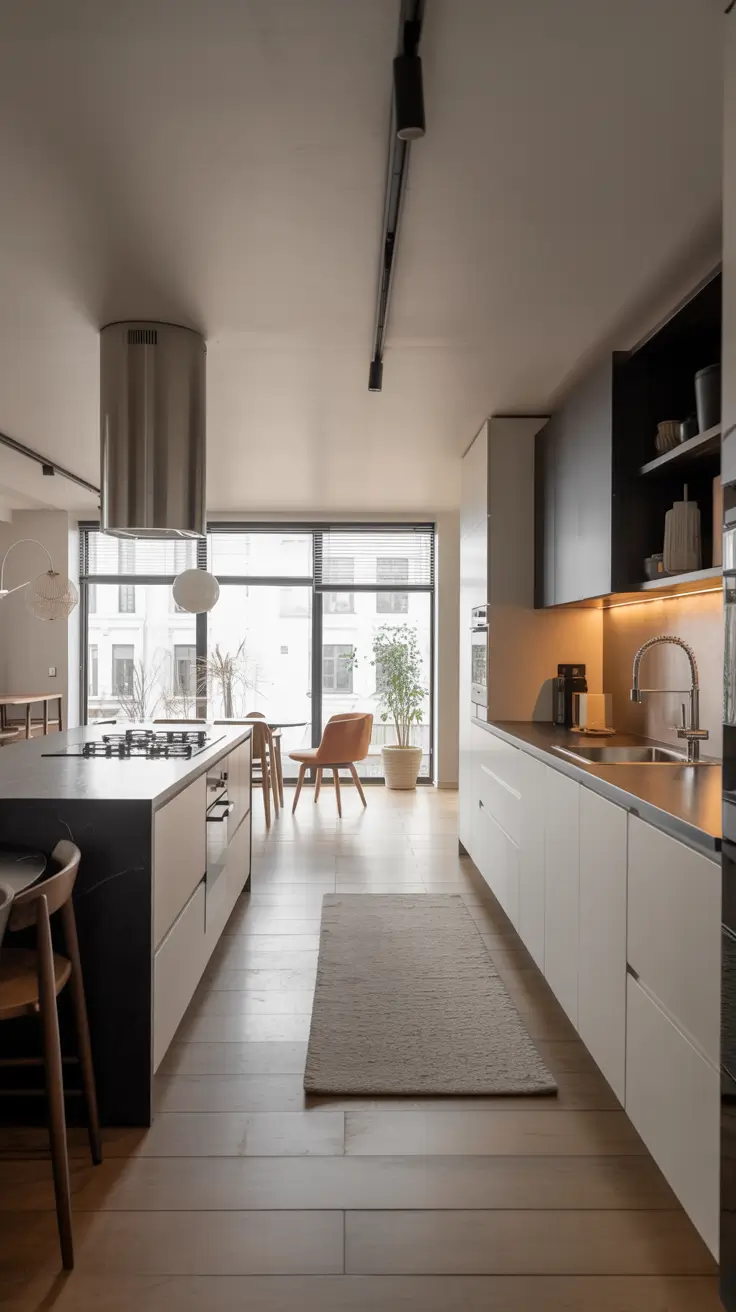
When I design contemporary interiors, I choose low-pile or flatwoven rugs placed near sinks, prep zones, or under a table when the layout allows. These rugs complement modern cabinetry in white, black, or green finishes and pair well with sleek countertops and integrated appliances. I find that rectangular or subtly shaped rugs work best in large and square kitchens, reinforcing the layout rather than interrupting it.
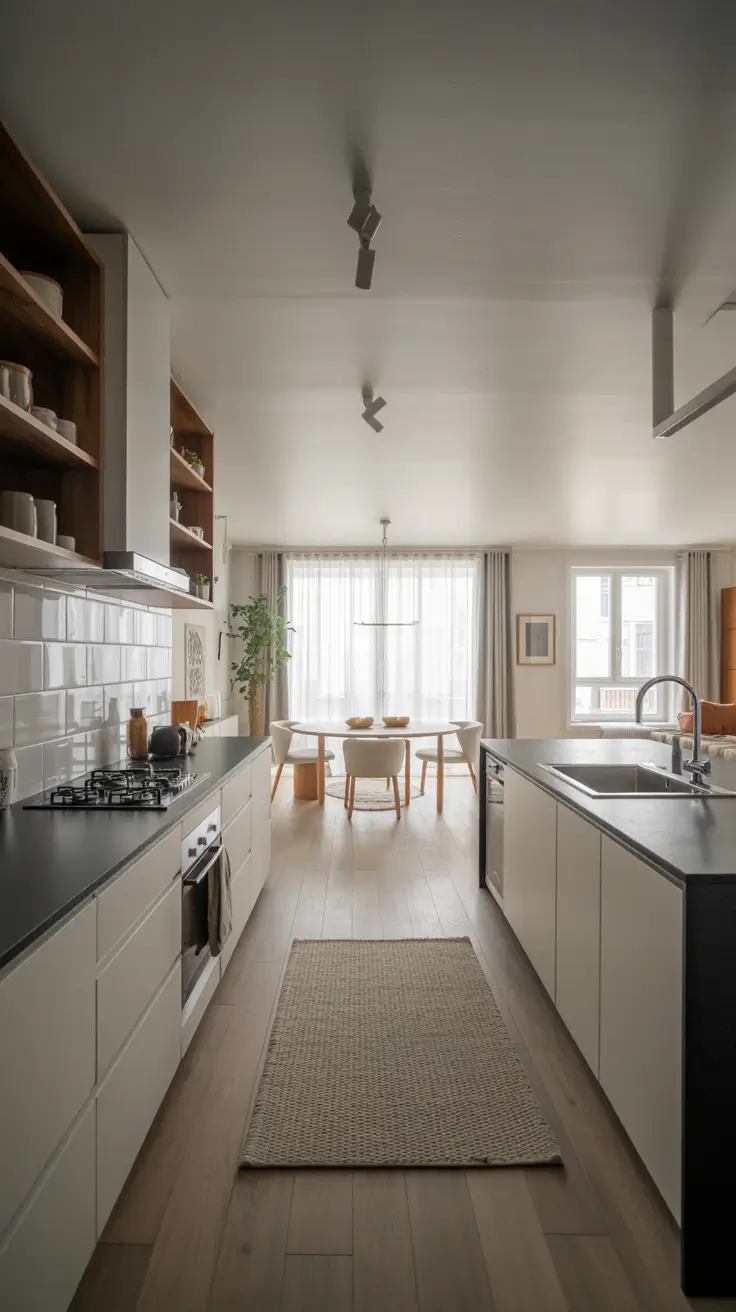
From my experience, designers in the US often recommend understated textures over bold patterns in modern kitchens. I agree with this approach because it allows the rug to enhance comfort without overpowering the architecture. A washable option is especially important in a high-use kitchen, making modern rugs both stylish and practical.
What I would add to this section is a brief mention of material innovations, such as recycled fibers or stain-resistant blends, which are becoming increasingly relevant for contemporary kitchen rugs ideas 2026.
2. Farmhouse Kitchen Rugs Ideas with a Cozy and Timeless Look
Kitchen rugs ideas farmhouse remain popular because they create warmth and familiarity, even in newer homes. I often use these rugs to soften large kitchens or open layouts where wood cabinetry, apron-front sinks, and classic furniture dominate. The goal is to make the kitchen feel lived-in while maintaining a practical surface.
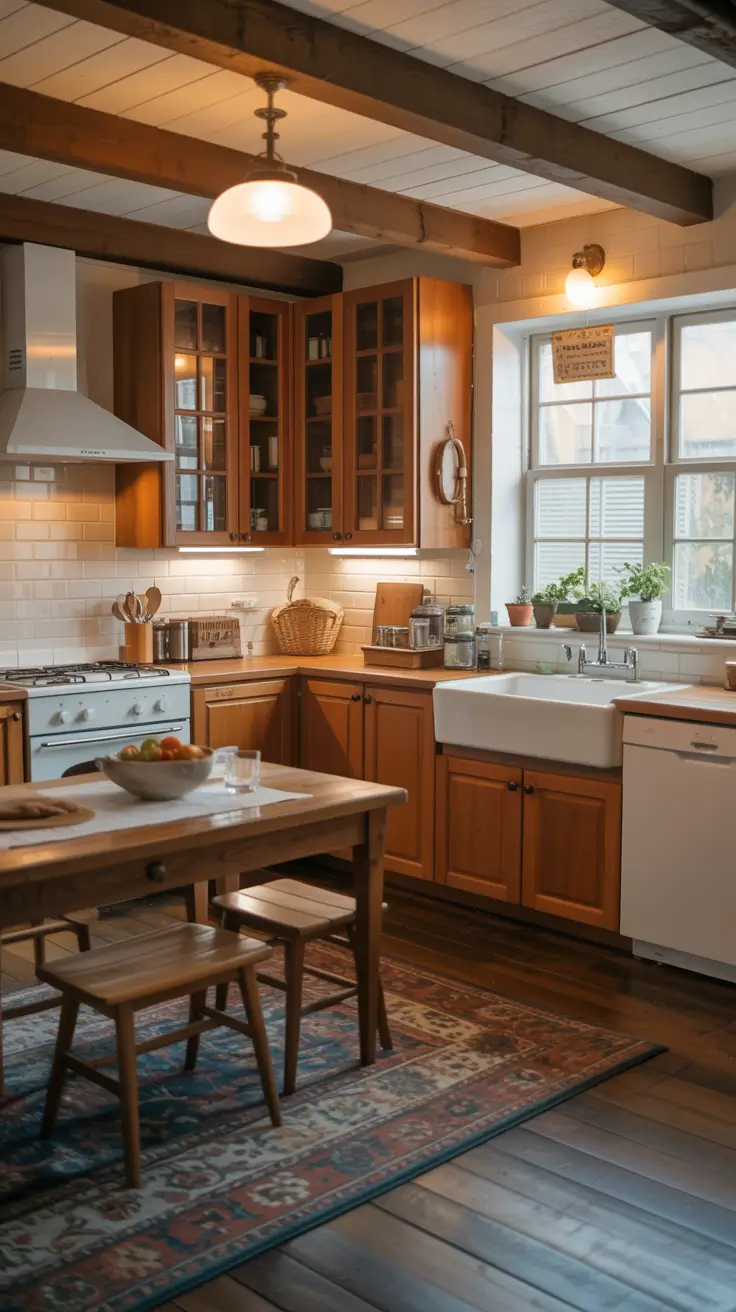
In farmhouse interiors, I select rugs with subtle patterns, muted colors, and a slightly textured weave. They pair naturally with wooden tables, open shelving, and vintage-inspired lighting. I usually place them near sinks or under a table, ensuring the rug anchors the furniture and enhances daily comfort.
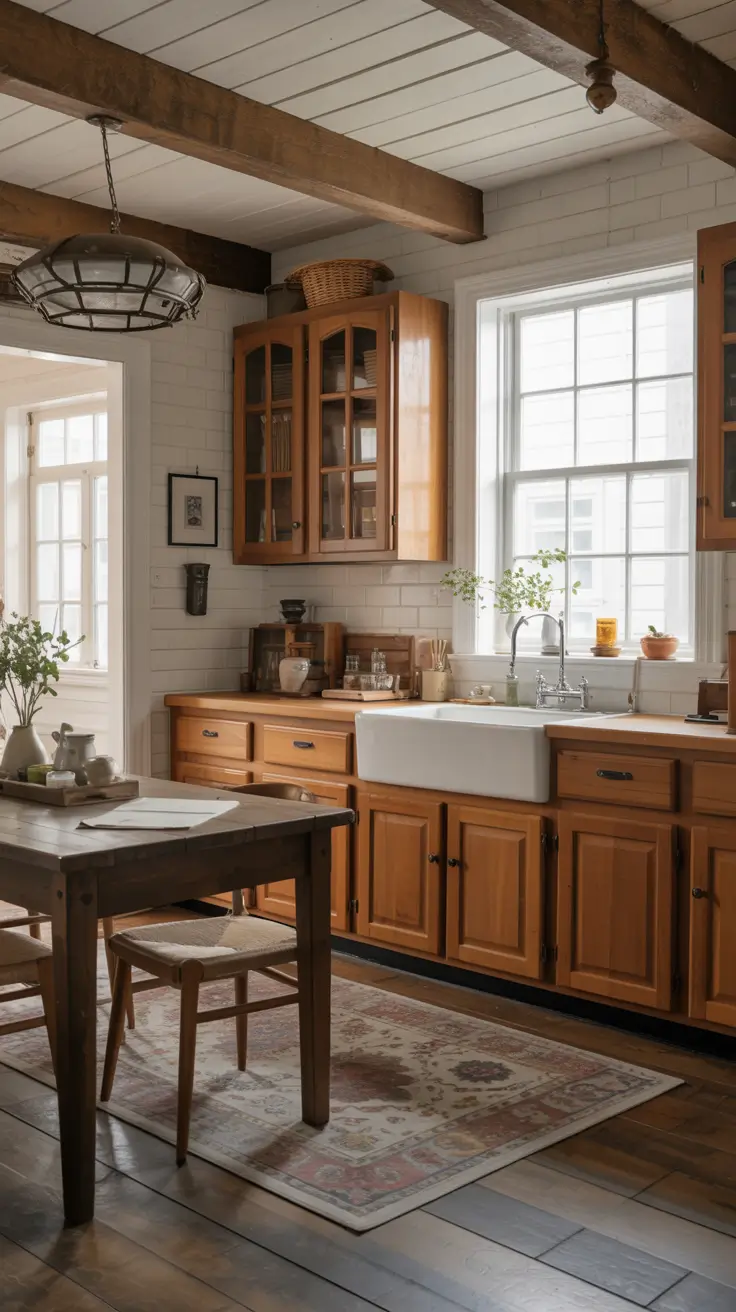
Personally, I appreciate how farmhouse rugs balance nostalgia with usability. Many designers highlight that washable kitchen rugs ideas are essential in farmhouse kitchens, and I fully agree. A rug that looks traditional but performs like a modern textile is ideal for long-term use.
What could enhance this section is a deeper look at how farmhouse rugs transition between kitchen and dining zones in open layouts, especially in homes with connected living spaces.
3. Modern Farmhouse Kitchen Rugs Ideas with Updated Rustic Appeal
Modern farmhouse kitchens blend rustic charm with cleaner lines, and I see rugs playing a key role in that balance. These kitchen rugs ideas layout solutions focus on grounding the space while supporting an open and airy feel. I often design them for kitchens with a peninsula or long island where traffic flow is constant.
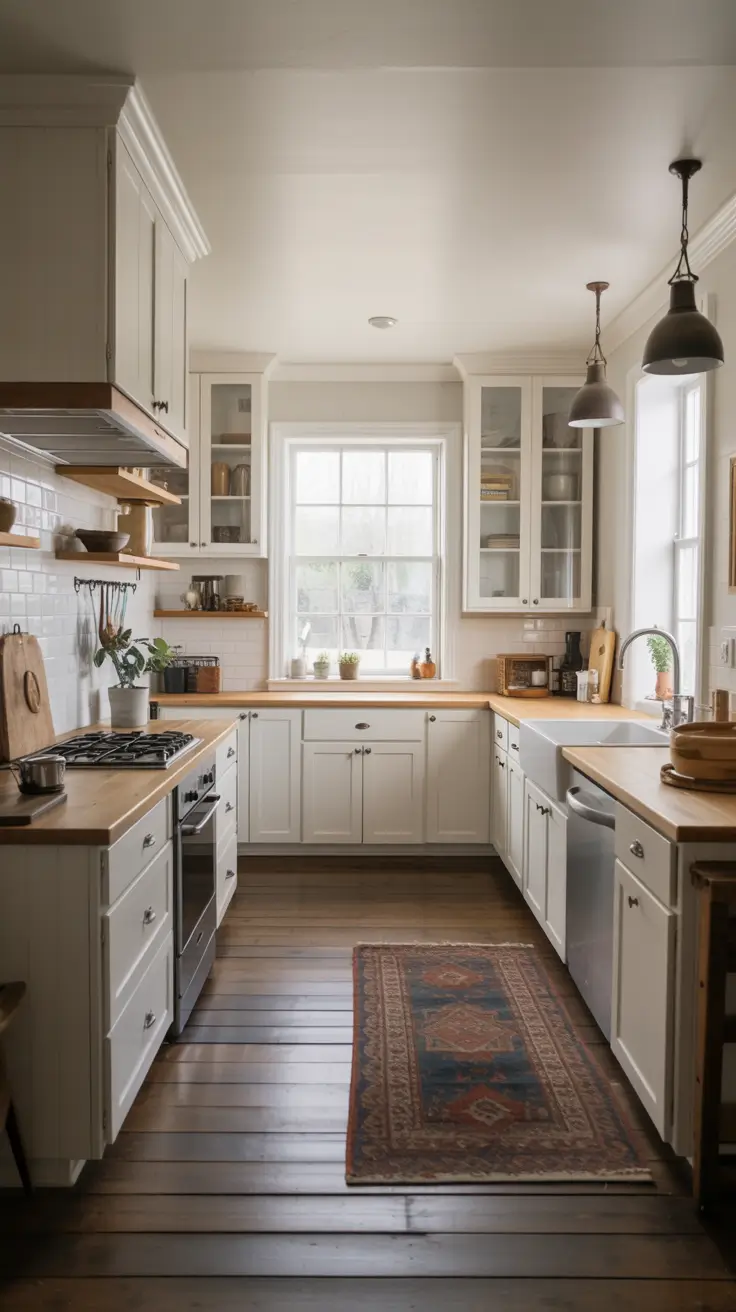
The rugs I choose for modern farmhouse spaces feature restrained patterns, neutral bases, and subtle contrast. They work well with black hardware, white cabinetry, and warm wood tones. Placement is intentional, often running long along the sink area or partially under a table to unify furniture and flooring.
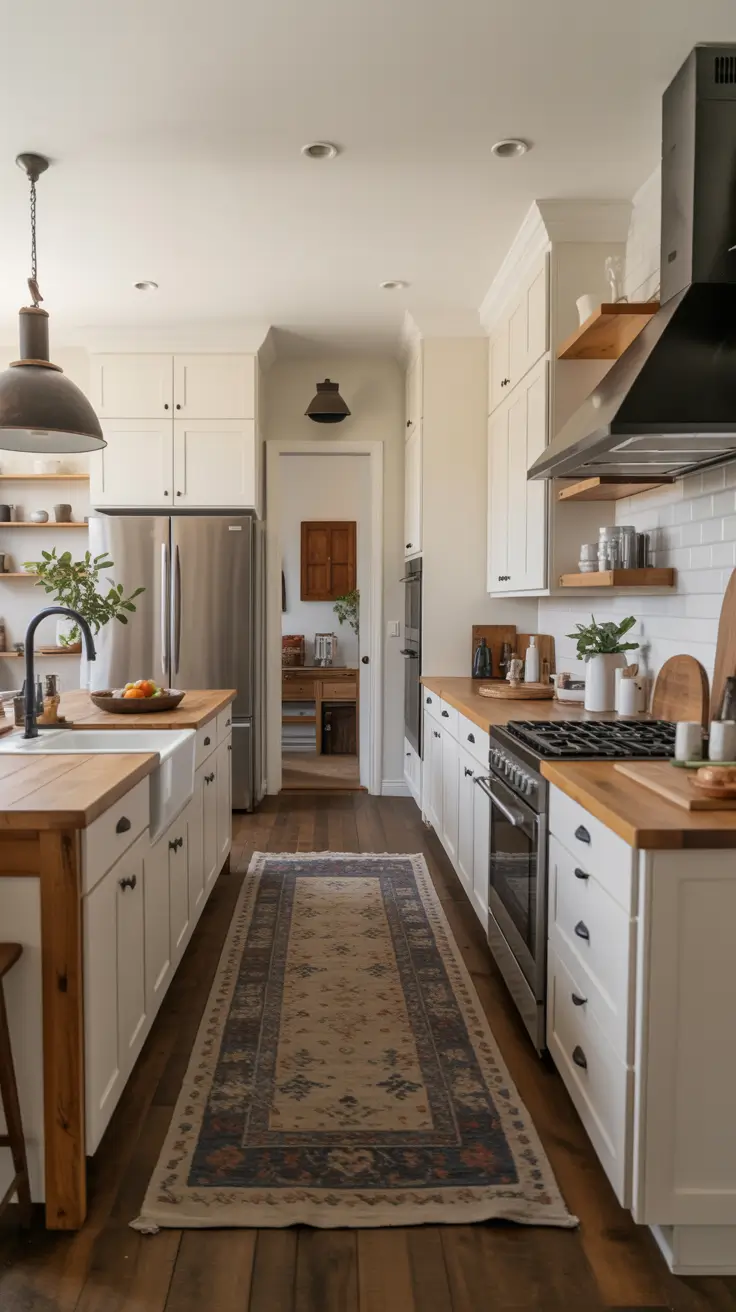
From my perspective, modern farmhouse rugs succeed when they feel intentional rather than decorative. Designers frequently advise avoiding overly distressed patterns, and I agree. Clean rustic textures age better and suit the evolving look of 2026 kitchens.
This section could benefit from additional guidance on choosing rug proportions for large kitchens, especially when balancing multiple work zones and seating areas.
4. Rustic Kitchen Rugs Ideas Inspired by Natural Materials
Rustic kitchen rugs ideas in 2026 draw inspiration from natural materials and earthy tones. I use these rugs to complement stone countertops, wood cabinetry, and organic textures that define rustic kitchens. They work particularly well in large or open kitchens where visual grounding is needed.
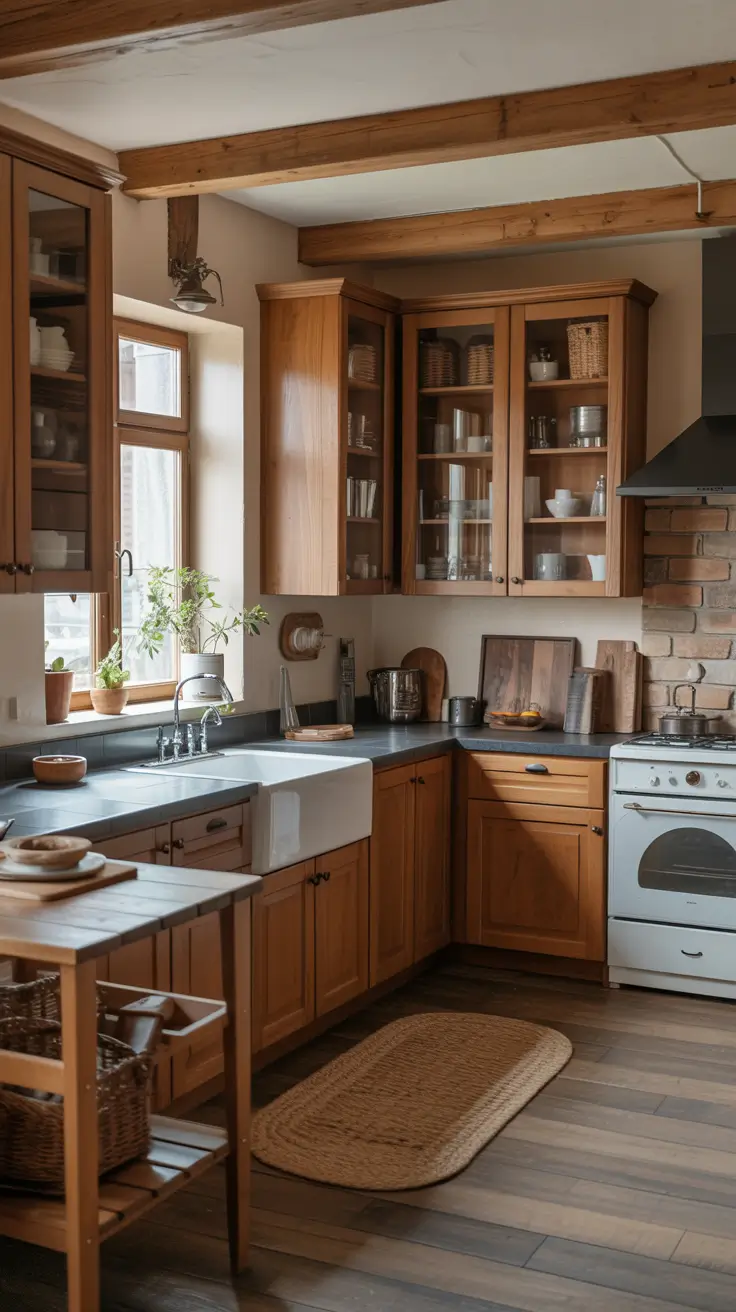
In my designs, rustic rugs often feature woven textures, warm browns, and understated patterns. They pair beautifully with solid wood tables, open shelving, and matte metal fixtures. I usually place them near sinks or in central work zones to add comfort without sacrificing durability.
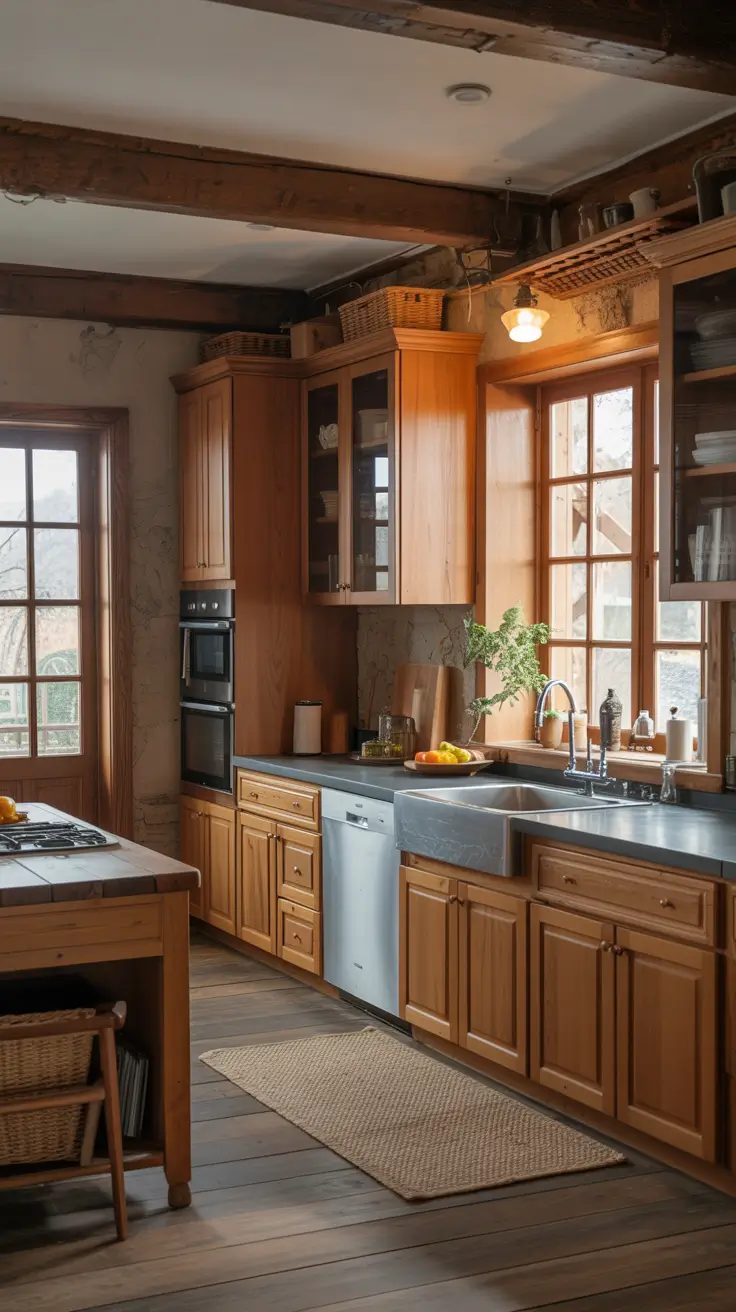
I find that rustic rugs feel most authentic when they highlight material honesty rather than decorative excess. Many professionals emphasize durability over trendiness in rustic kitchens, and my experience supports that approach for long-term satisfaction.
To strengthen this section, I would add more detail about layering rustic rugs with other natural elements, such as linen curtains or ceramic accessories, to create a cohesive interior.
5. Bohemian Kitchen Rugs Ideas for Creative and Relaxed Spaces
Bohemian kitchen rugs ideas embrace creativity, color, and relaxed layering. I often recommend this style for open kitchens where individuality matters more than strict coordination. These rugs bring personality into spaces that might otherwise feel too structured.
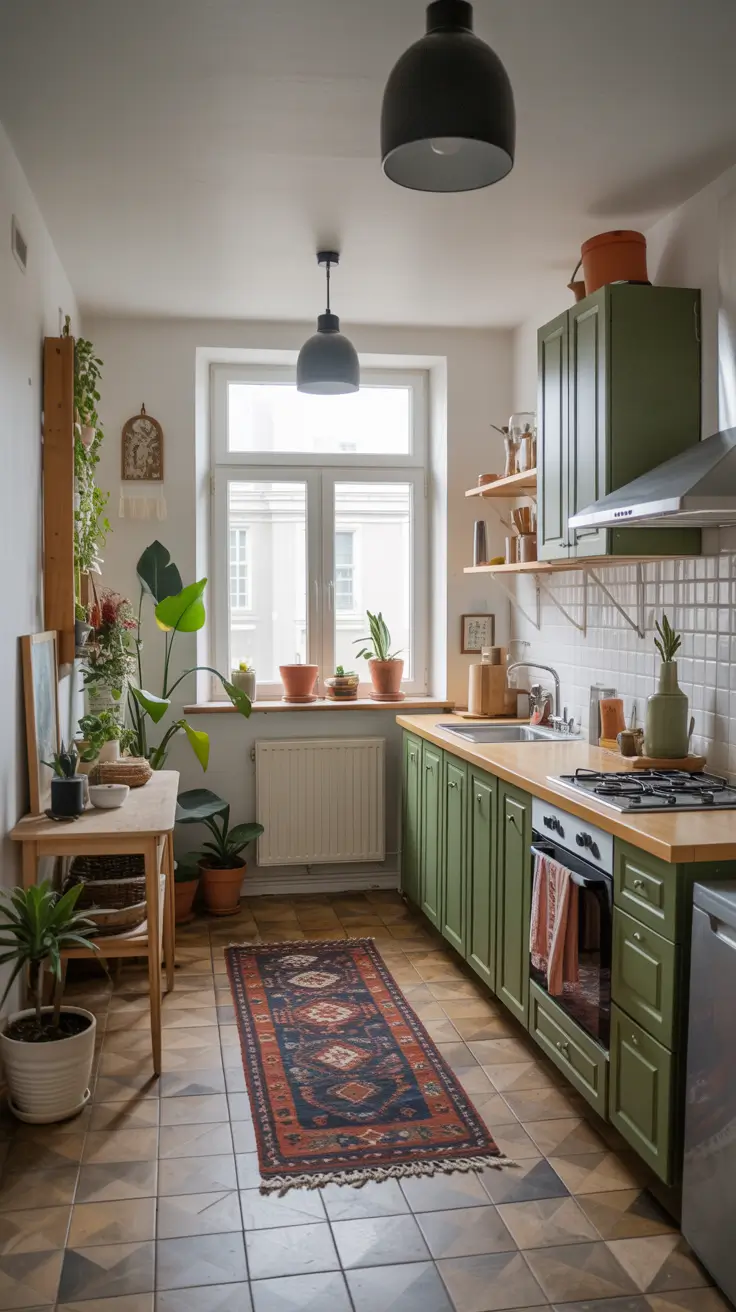
When designing bohemian kitchens, I select colorful or patterned rugs with a soft texture. They pair well with mixed furniture styles, open shelving, plants, and eclectic decor. I place them strategically in front of sinks or as a round accent under a small table to soften the overall layout.
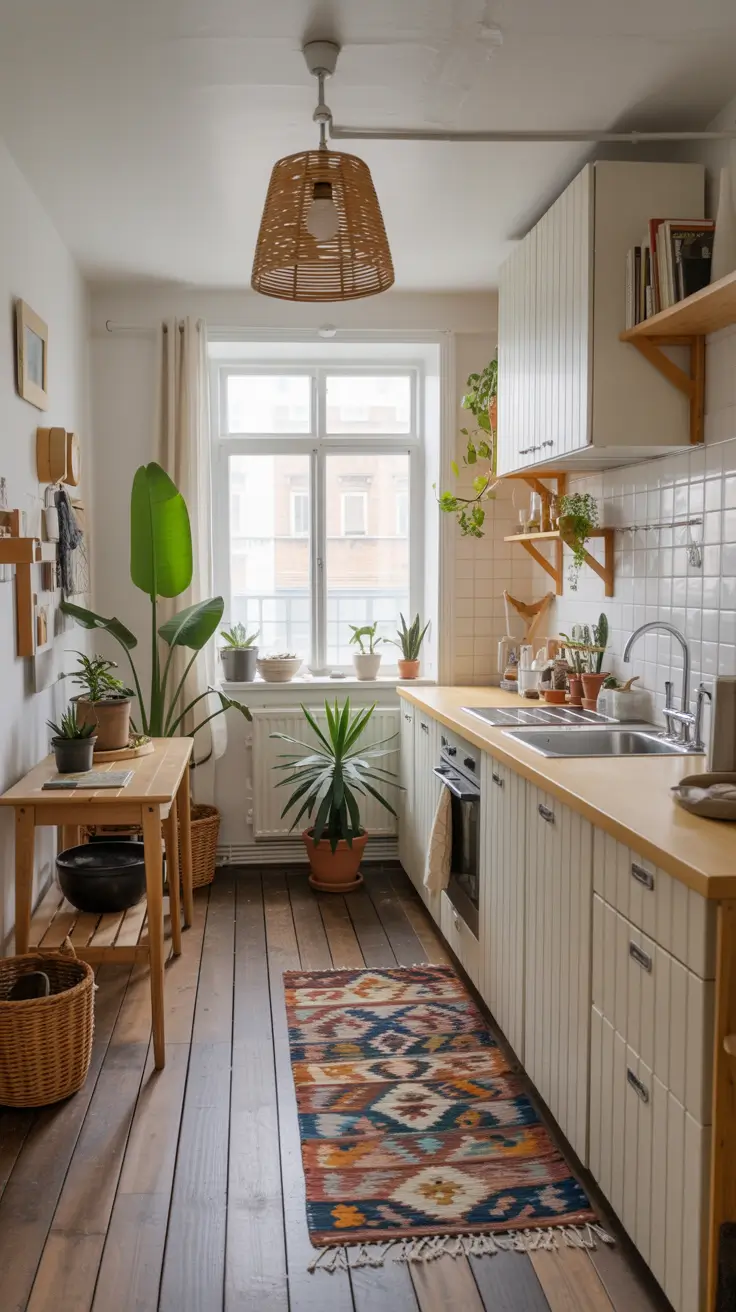
In my opinion, bohemian rugs work best when they feel curated rather than random. Designers frequently suggest limiting the color palette to avoid visual clutter, and I apply this advice to keep the kitchen inviting and functional.
What is missing here is a brief note on maintaining bohemian rugs, especially in high-traffic kitchen areas, where washable and durable materials are essential.
6. Colorful Kitchen Rugs Ideas to Add Personality and Energy
Colorful kitchen rugs ideas are becoming more refined in 2026, focusing on intentional color placement rather than bold excess. I use these rugs to energize white or neutral kitchens and to visually define zones in open layouts.

In practice, I choose rugs that echo accent colors found in cabinetry, backsplashes, or accessories. They work well under a table, along a galley kitchen layout, or near sinks where a pop of color enhances the daily experience. Shape and scale are critical, especially in large kitchens.

From my experience, designers recommend balancing colorful rugs with simple furniture forms, and I strongly support this approach. It ensures the rug enhances the kitchen rather than overwhelming it.
This section could be improved by adding guidance on choosing colorfast materials that resist fading and staining over time.
7. Green Kitchen Rugs Ideas for Fresh and Natural Kitchen Designs
Green kitchen rugs ideas reflect the growing desire for calm and nature-inspired interiors. I often use green tones to soften modern kitchens or to complement wood and white finishes. These rugs feel especially appropriate in open kitchens with natural light.
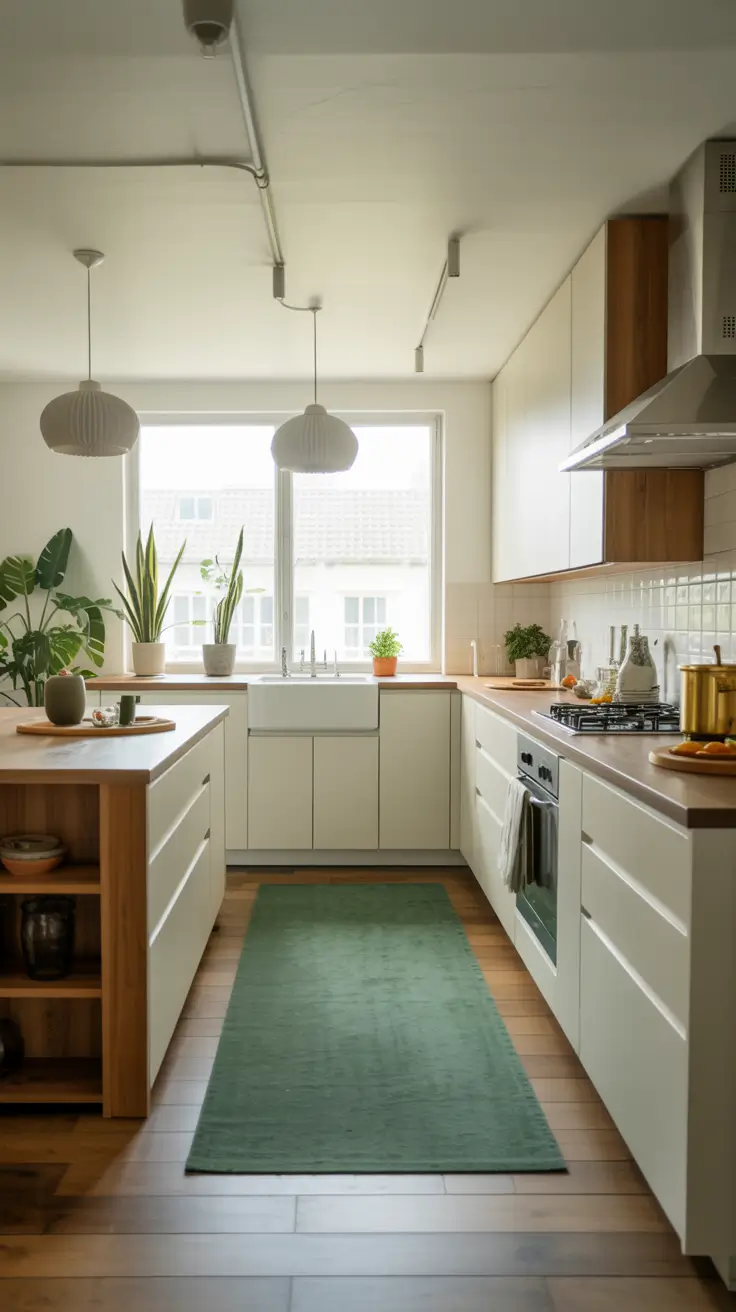
I select green rugs in subtle shades, pairing them with neutral cabinetry, black accents, and simple furniture. They work well near sinks, islands, or in l shaped kitchen rugs ideas where the rug helps guide movement and define space.

Personally, I find green rugs timeless and versatile. Many interior experts note that green promotes a sense of balance, and I see this reflected in how comfortable these kitchens feel over time.
To complete this section, I would add advice on coordinating green rugs with plants and natural textures to reinforce the overall design concept.
8. Black Kitchen Rugs Ideas for Bold and Elegant Kitchens
In 2026, black kitchen rugs ideas are about structure and contrast. I use them to anchor modern or modern farmhouse kitchens where cabinetry, islands, or appliances already feature black accents. These rugs help visually organize large and open layouts, especially around sinks or a peninsula, while adding a sense of sophistication.

When selecting black rugs, I focus on texture rather than heavy patterns. Flatwoven or low-pile rugs work well near sinks and prep areas, and they pair naturally with white cabinets, wood floors, and metal fixtures. I often place them in long or rectangular shapes to support galley or l shaped kitchen rugs ideas and to emphasize the flow of movement.
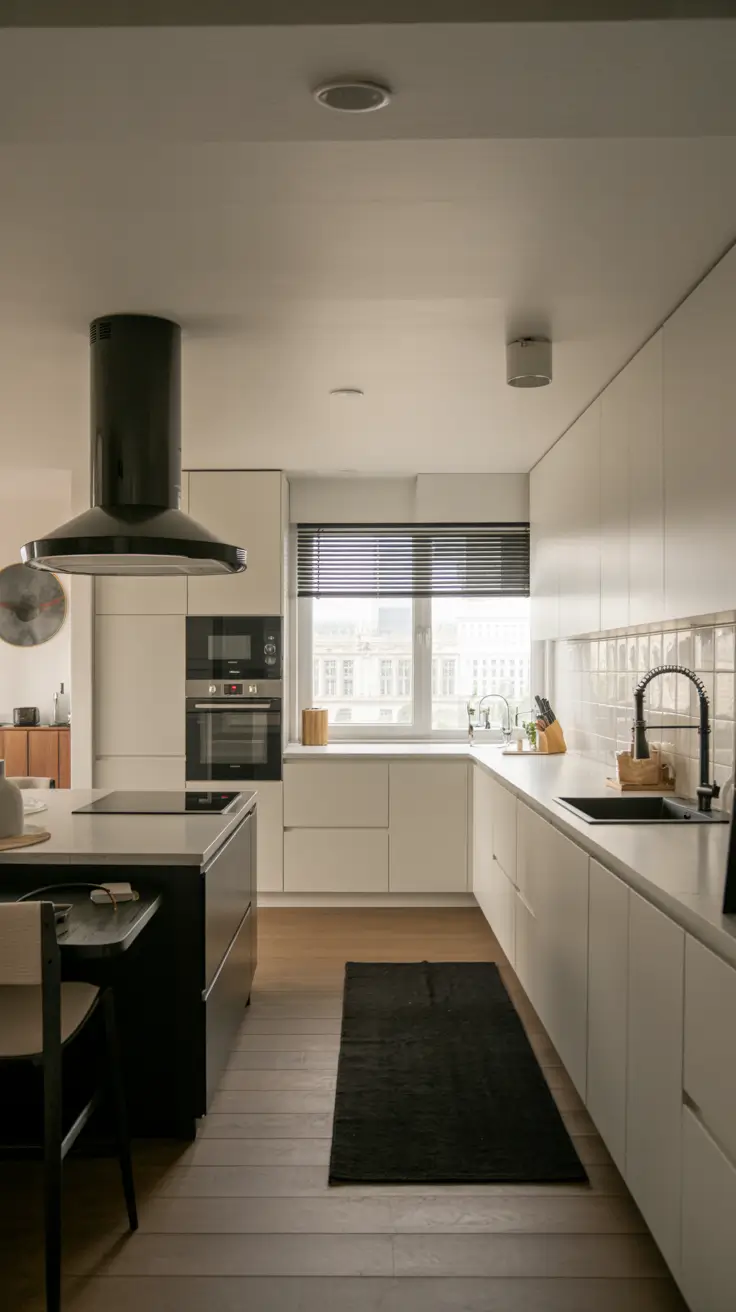
From my experience, many designers suggest using black rugs as grounding elements rather than statement pieces. I agree because they create balance and make surrounding furniture and finishes feel more intentional without dominating the space.
What could be added here is guidance on maintaining black rugs, particularly choosing materials that resist visible dust and water marks in busy kitchens.
9. White Kitchen Rugs Ideas for Clean and Bright Interiors
White kitchen rugs ideas remain popular for homeowners who want a light and open feel. I often use them in square or large kitchens where natural light is abundant and the goal is to enhance a clean aesthetic. These rugs work especially well in open kitchens where visual continuity matters.

I choose white rugs with subtle texture or tone-on-tone patterns to avoid a flat look. They complement white cabinetry, minimalist furniture, and simple tables placed nearby. I usually position them near sinks or under a table to soften hard surfaces while keeping the layout visually unified.
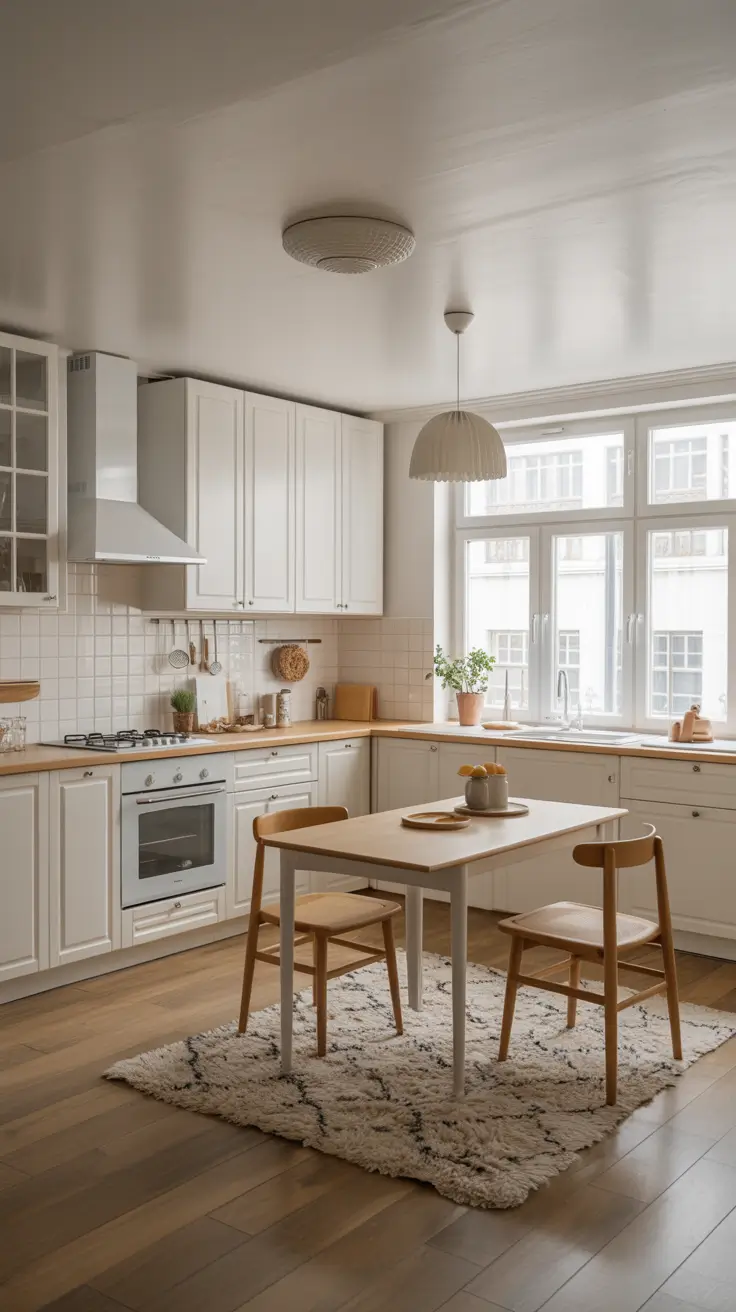
Personally, I believe white rugs are most successful when practicality is prioritized. Designers frequently recommend washable kitchen rugs ideas in lighter colors, and I fully support that advice for long-term usability.
This section would benefit from additional tips on layering white rugs with darker flooring or accents to maintain contrast and depth.
10. Kitchen Rugs Ideas for Brown Cabinets and Warm Wood Tones
Kitchen rugs ideas brown cabinets focus on harmony and warmth. In kitchens dominated by wood tones, I use rugs to balance color and prevent the space from feeling too heavy. This approach works well in large kitchens and open layouts where cabinetry plays a central role.
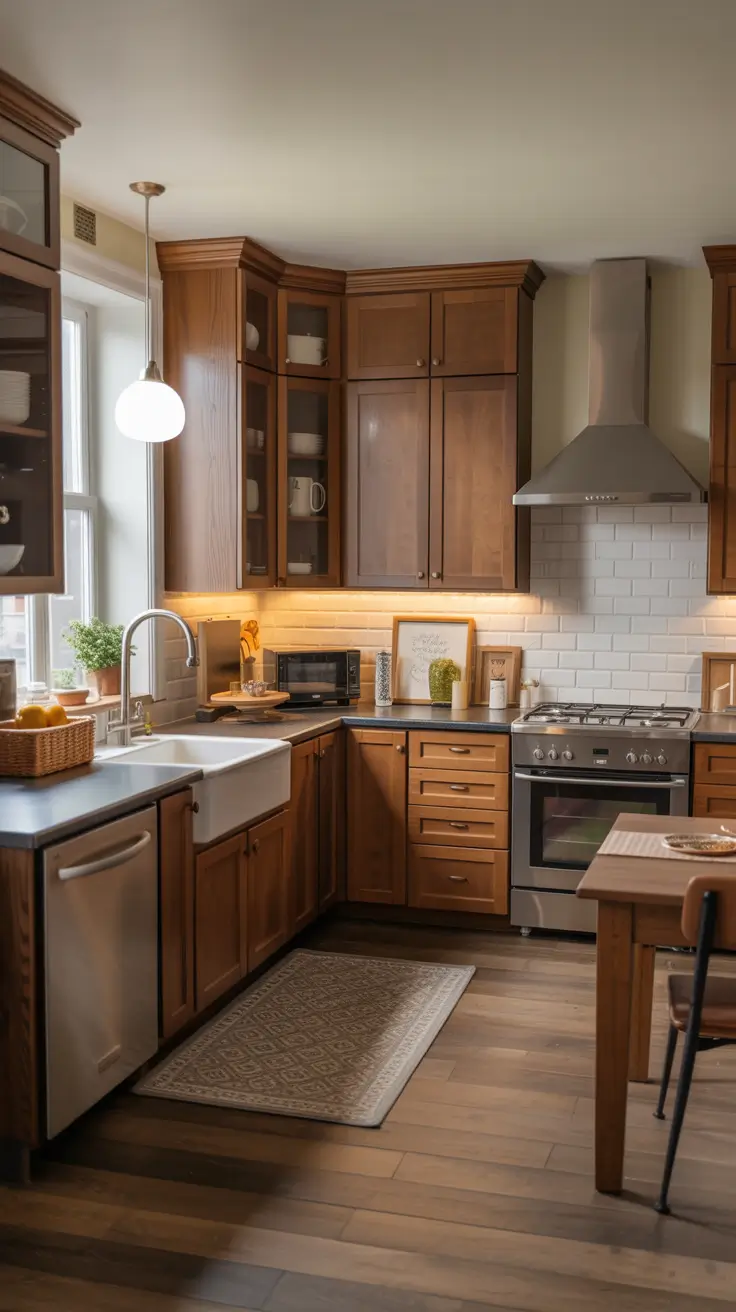
I select rugs with neutral bases and subtle patterns that complement brown cabinets without competing with them. These rugs pair well with wood tables, stone countertops, and warm lighting. Placement is often near sinks or under a table to reinforce functional zones.
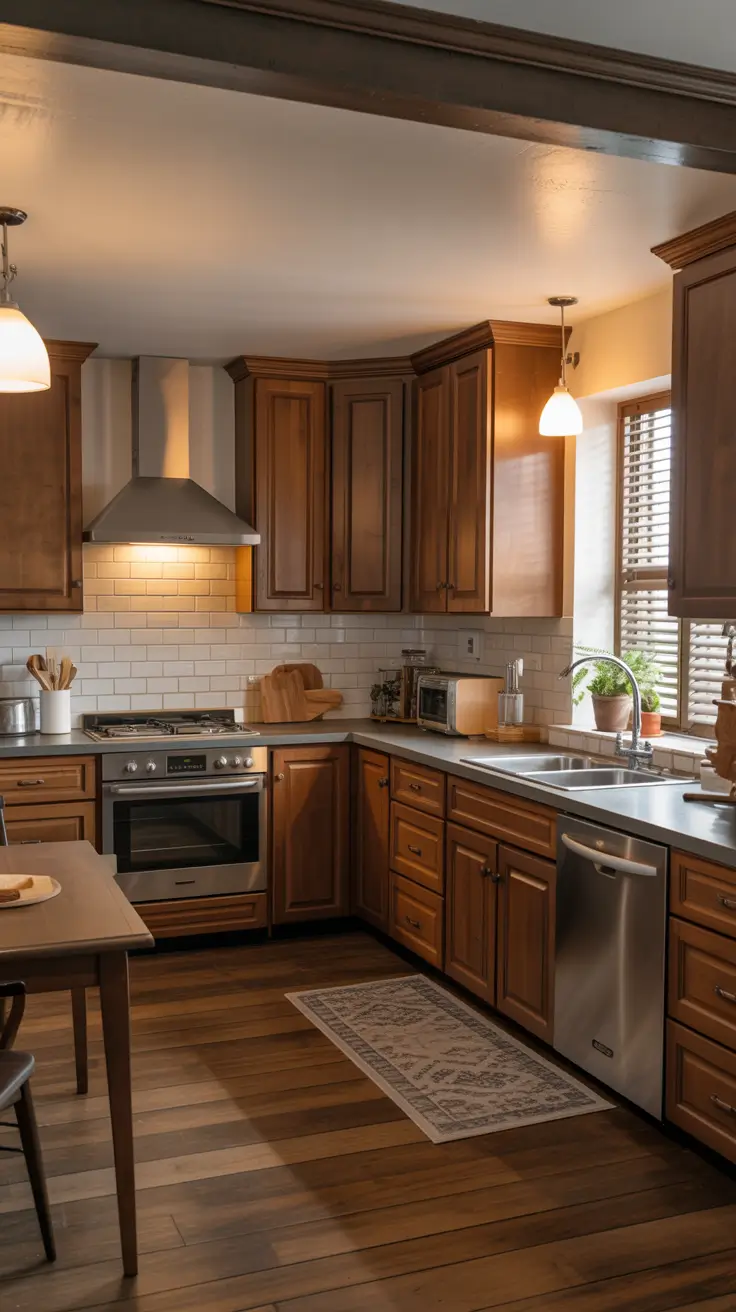
In my experience, professionals often suggest introducing contrast through rugs when working with brown cabinetry. I agree and recommend soft greens, muted patterns, or light neutrals to keep the kitchen feeling fresh.
What is missing here is a brief note on choosing rug colors that adapt to both traditional and modern wood finishes as trends evolve.
11. Washable Kitchen Rugs Ideas for Everyday Practicality
Washable kitchen rugs ideas are essential in 2026 kitchens that prioritize real-life use. I design these solutions for families and busy households where spills, crumbs, and moisture are unavoidable. These rugs support both modern and farmhouse kitchens without compromising style.
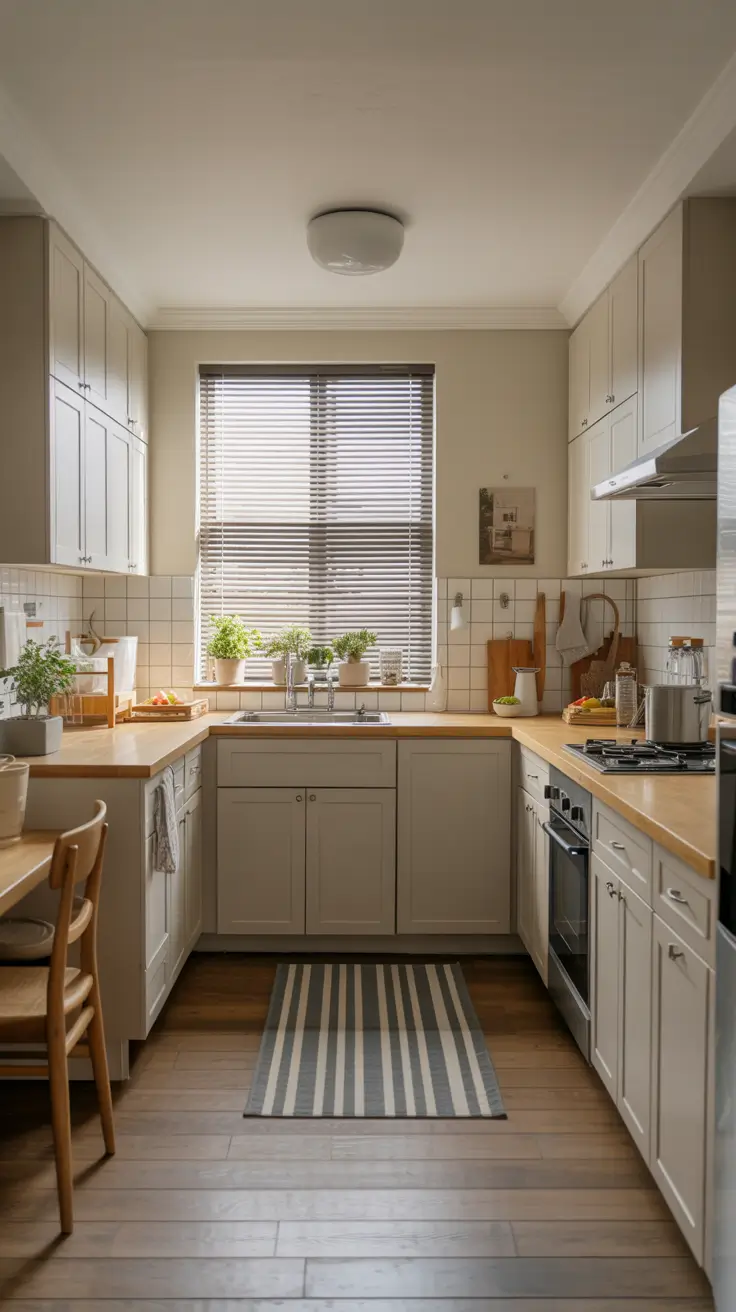
I prefer washable rugs with durable backing and low-pile construction. They work well near sinks, along galley layouts, or under tables where food preparation and dining overlap. Furniture placement remains flexible because the rug can be easily cleaned and reused.
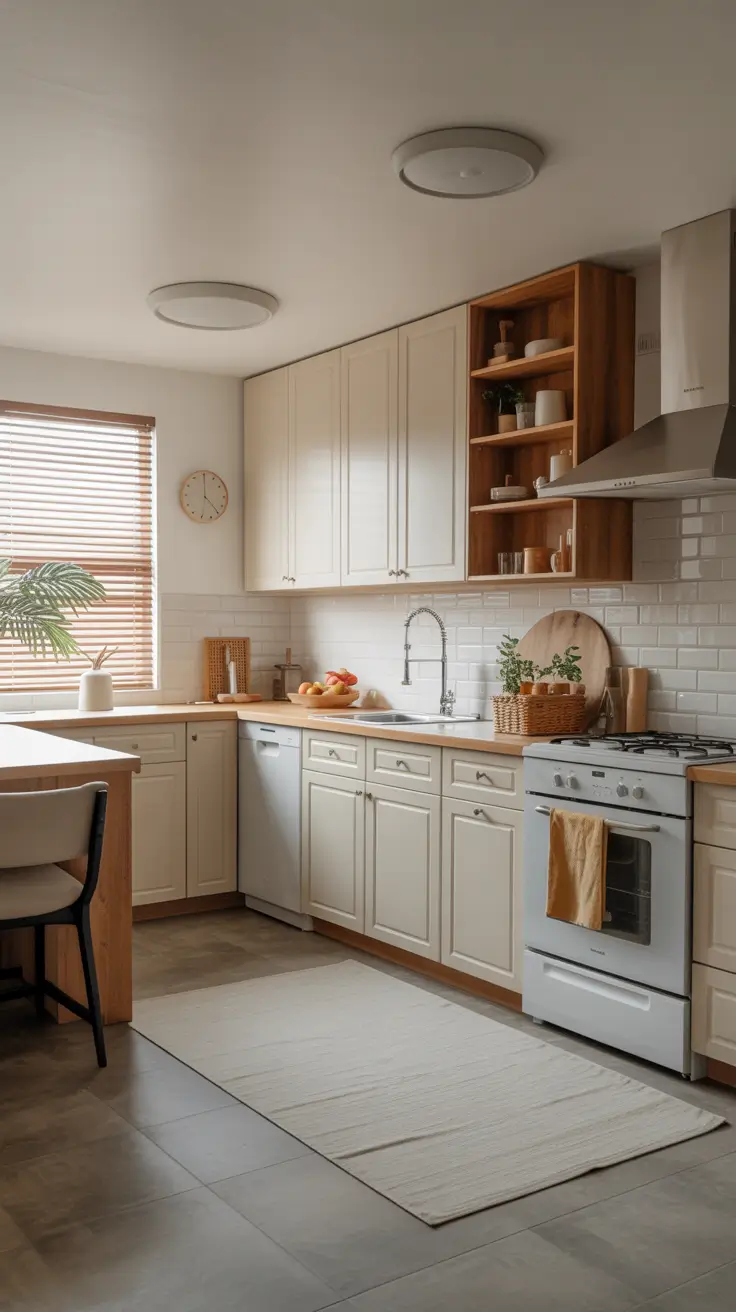
From my perspective, designers increasingly emphasize maintenance as a key design factor. I agree that a rug that looks good but cannot be cleaned easily will never be practical in a kitchen environment.
This section could be strengthened by adding advice on how often washable rugs should be cleaned to maintain hygiene and appearance.
12. Non-Slip Kitchen Area Rugs Ideas for Safety and Comfort
Non-slip kitchen area rugs ideas focus on safety without sacrificing design. I use them in kitchens with tile or polished floors where slipping is a concern, especially near sinks and cooking zones. These rugs are essential in both open and galley kitchens.
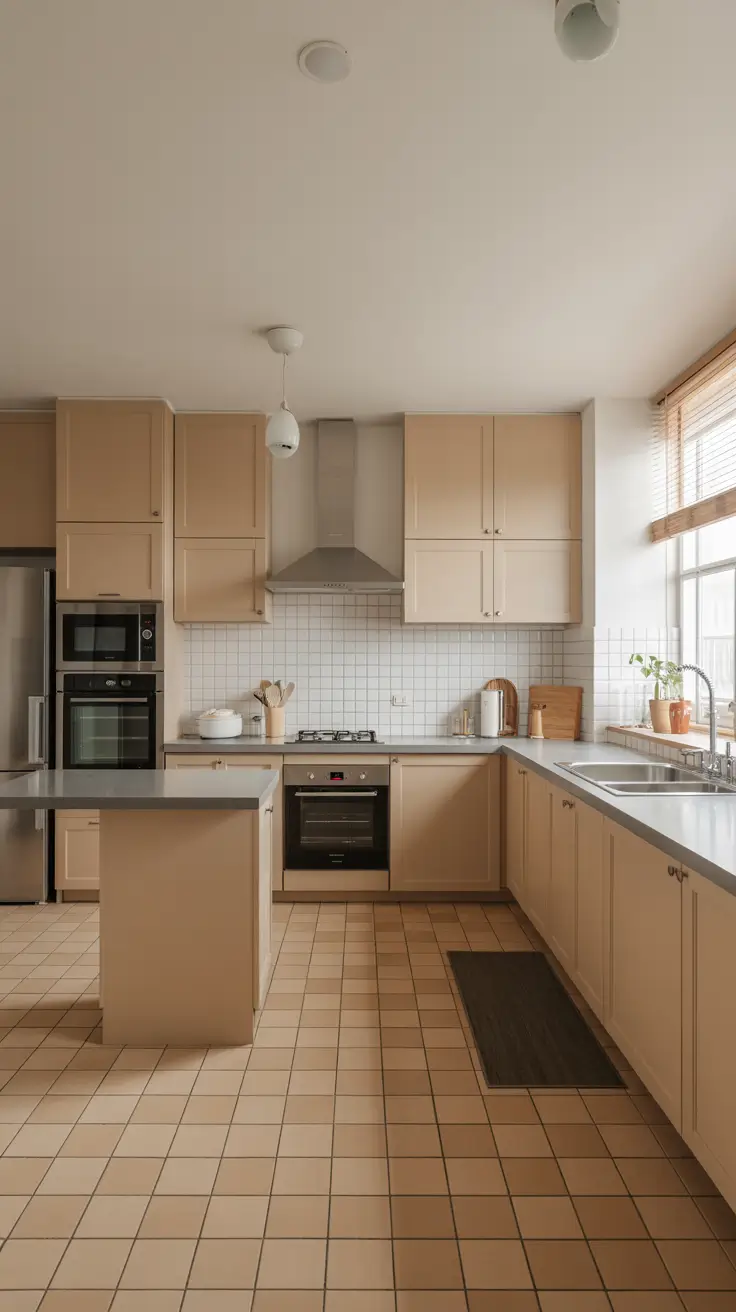
I choose non-slip rugs with integrated backing rather than separate pads to maintain a clean look. They pair well with modern furniture, islands, and peninsulas, and they are especially useful in long kitchen layouts where movement is constant.

In my experience, safety-focused design is often underestimated. Many US-based interior experts recommend prioritizing slip resistance in kitchens, and I consistently see better long-term satisfaction when this advice is followed.
What could be added is a comparison of different non-slip technologies used in modern kitchen rugs ideas 2026.
13. Kitchen Rugs Ideas Under Table for Defined Dining Zones
Kitchen rugs ideas under table are increasingly important as kitchens merge with dining areas. I use rugs to visually separate eating spaces from cooking zones, particularly in open and large kitchens. This approach improves both layout and comfort.

I select rugs that extend beyond the table edges to accommodate chairs and movement. Round or rectangular shapes work depending on the table and overall layout. These rugs pair naturally with both modern and rustic furniture styles.

Personally, I find that under-table rugs add a sense of intention to kitchen design. Designers often recommend durable, low-pile rugs for dining areas, and I agree because they balance comfort with easy maintenance.
This section would benefit from more detail on choosing rug sizes for different table shapes and kitchen proportions.
14. Kitchen Rugs Ideas Layout Planning for Open and Galley Kitchens
Kitchen rugs ideas layout planning focuses on guiding movement and defining zones. I approach rugs as tools that support workflow, whether in open kitchens, galley layouts, or l shaped kitchen rugs ideas. Proper placement improves both usability and visual clarity.
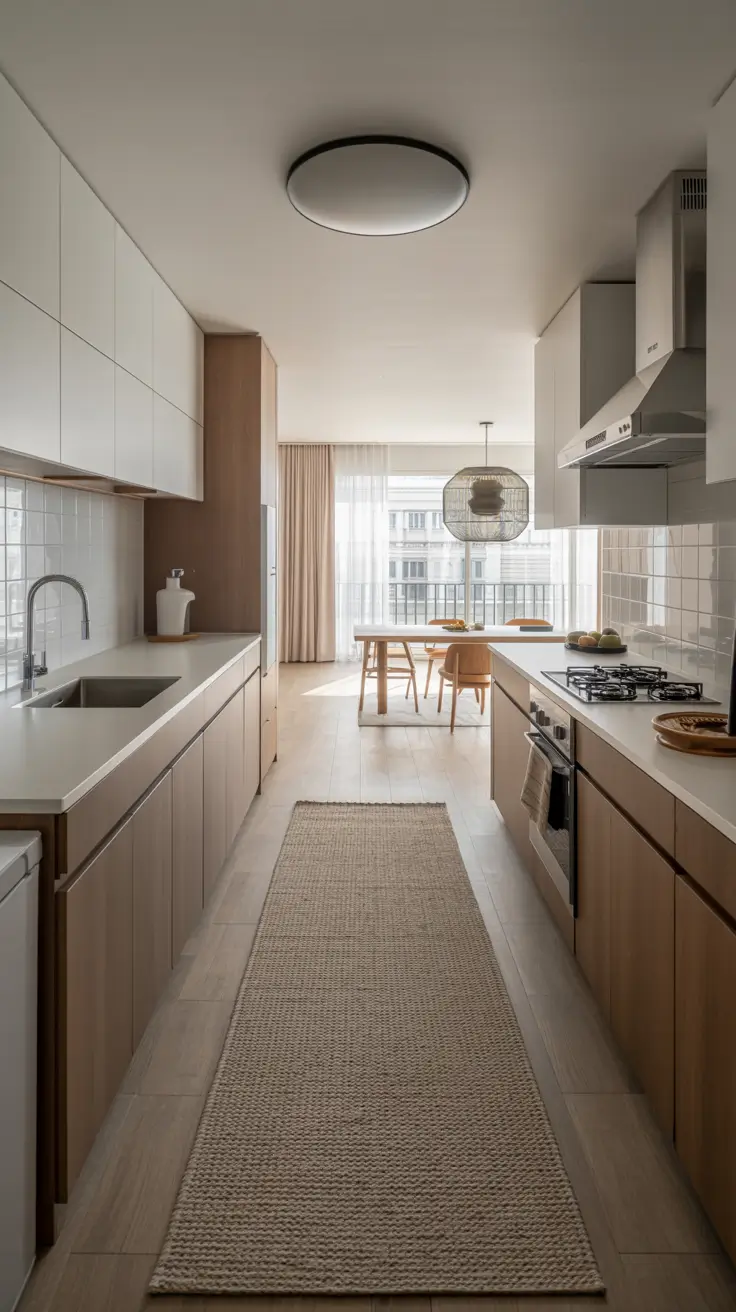
I position rugs strategically near sinks, prep areas, and walkways. Long rugs suit galley kitchens, while larger rugs work better in open and square layouts. Furniture, islands, and peninsulas all influence how the rug should be shaped and placed.
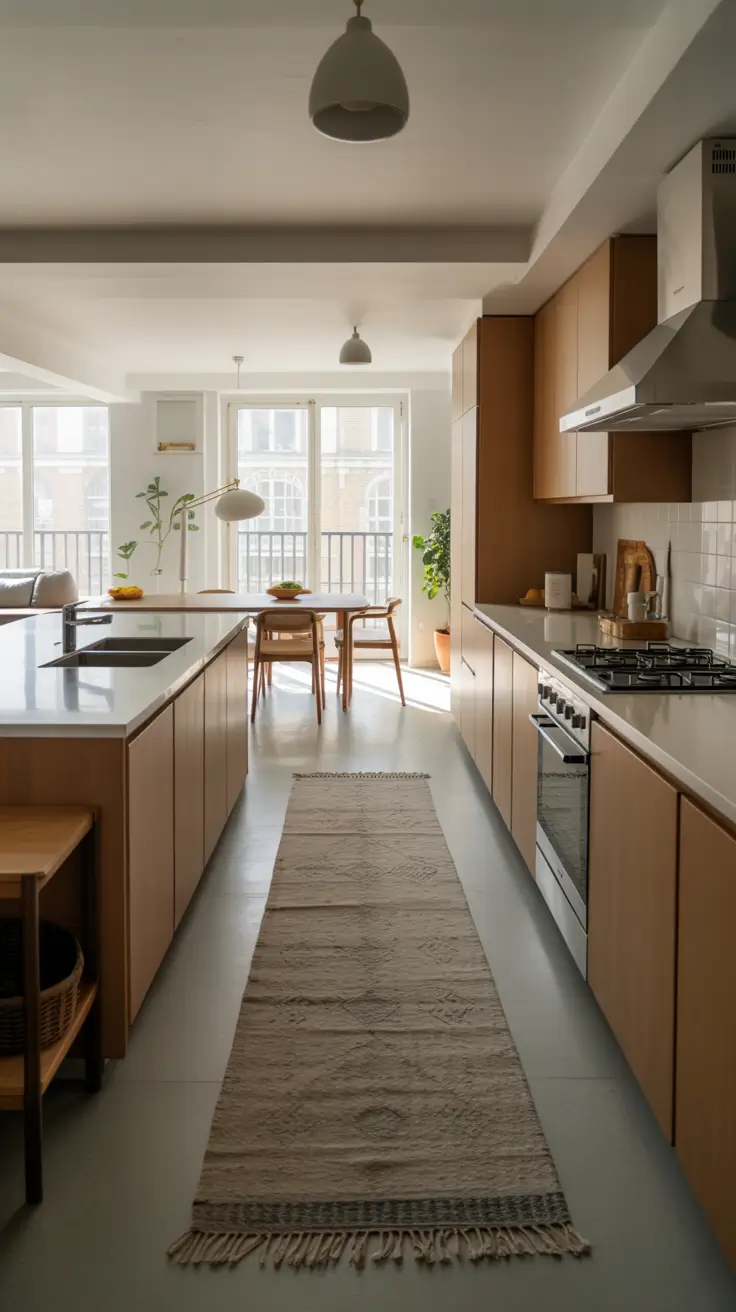
From my professional experience, layout-driven rug choices lead to more comfortable kitchens. Many designers stress the importance of aligning rugs with circulation paths, and I see this as a fundamental principle in kitchen design.
To complete this section, I would add visual guidance on combining multiple rugs in one kitchen without overcrowding the space.
15. Kitchen Rugs Ideas for Open Kitchen Concepts
When I design open kitchens in 2026, I treat rugs as an essential zoning tool rather than a decorative afterthought. In open layouts where the kitchen flows into the living or dining area, a well-chosen rug helps visually anchor the cooking zone while maintaining continuity with surrounding spaces. I focus on large, modern rugs with subtle patterns, often in neutral tones like white, green, or soft black accents, to avoid visual clutter in open environments.
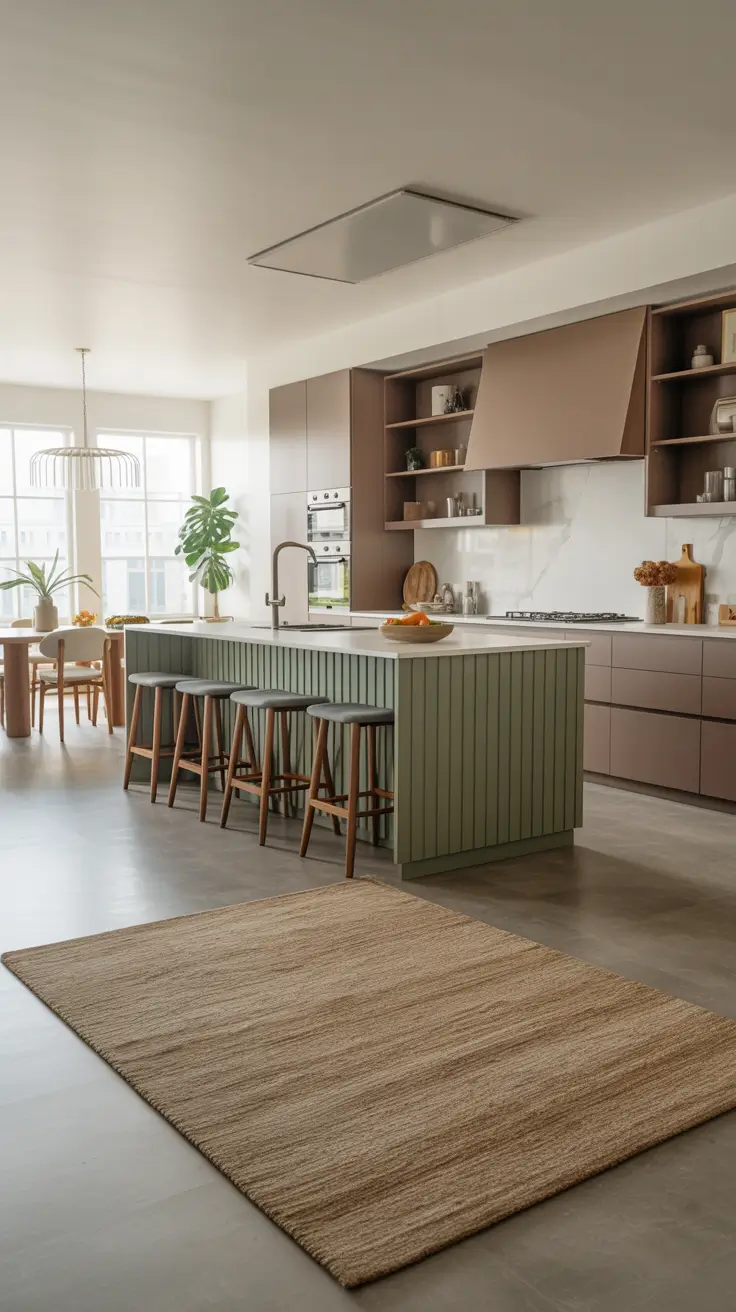
I typically recommend low-pile, non-slip kitchen area rugs ideas that can handle high traffic and frequent movement between sinks, tables, and islands. Furniture placement matters here. I align the rug under key zones such as the peninsula or main prep area, ensuring bar stools, cabinetry, and appliances sit comfortably around it. Materials are usually washable and stain-resistant, which is essential for open kitchens where spills are more visible.
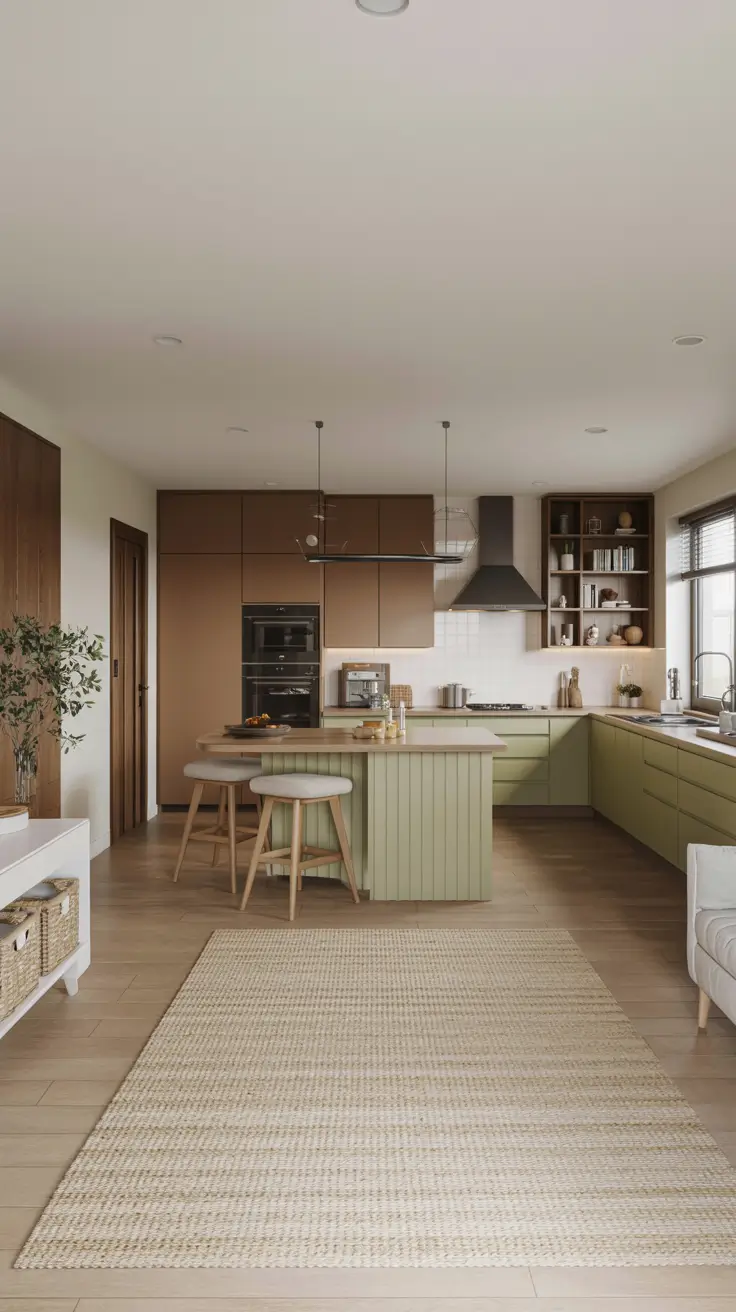
From my experience, open kitchens benefit from rugs that feel intentional rather than decorative. Designers from US-based interior publications often stress that rugs in open kitchens ideas should echo textures from adjacent rooms, creating cohesion. I agree and advise clients to repeat colors from sofas, lighting fixtures, or dining chairs for a seamless result.
What I would add to this concept is layered lighting that highlights the rug area. A combination of pendant lights and recessed fixtures makes the rug feel like a purposeful design element, not just a functional surface.
16. Rugs in Open Kitchen Ideas for Seamless Zoning
In 2026, rugs in open kitchen ideas are all about subtle separation without physical barriers. I approach these designs by selecting rugs that define functional zones while keeping sightlines open. This is especially useful in open plan homes where the kitchen shares space with a dining table or lounge area. A large rectangular or square rug placed strategically creates a soft boundary that feels natural and modern.

I usually pair these rugs with minimalist furniture and streamlined cabinetry. For example, a modern farmhouse kitchen with brown cabinets benefits from a textured rug that contrasts gently with wood finishes. I pay attention to how the rug aligns with the table, peninsula, or island, making sure it supports the layout rather than interrupts it.
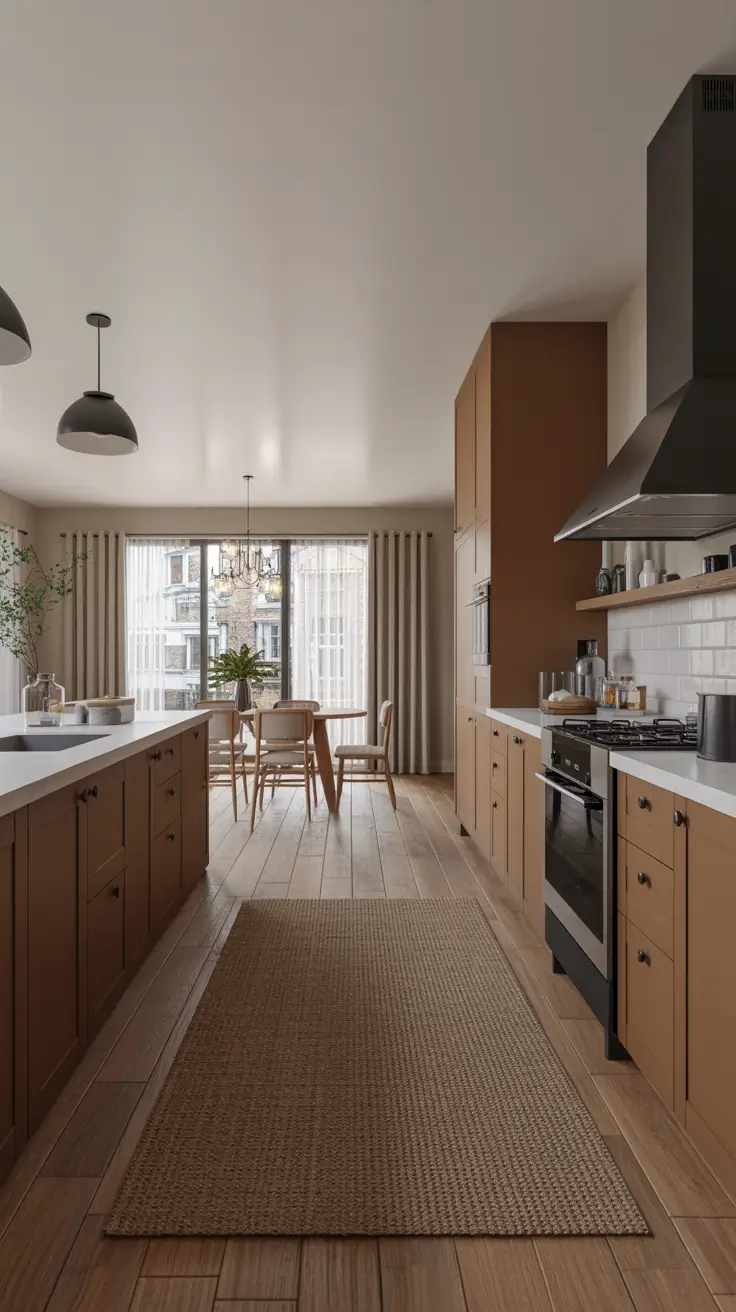
Personally, I have seen how homeowners feel more organized once zones are visually defined. Many American interior designers emphasize zoning as a key trend for open homes, and rugs are one of the easiest tools to achieve this without remodeling. I always recommend non-slip backing to maintain safety in busy open kitchens.
To improve this setup further, I suggest adding a complementary runner near sinks. This enhances comfort while reinforcing the zoned layout approach in open spaces.
17. Large Kitchen Area Rugs Ideas for Spacious Kitchens
Large kitchens offer freedom, but they also need grounding elements. When working with large kitchen area rugs ideas, I focus on scale and proportion. Oversized rugs help prevent the space from feeling empty or echoing. In 2026, I see a strong move toward large rugs with understated geometric or bohemian patterns that add warmth without overpowering the room.
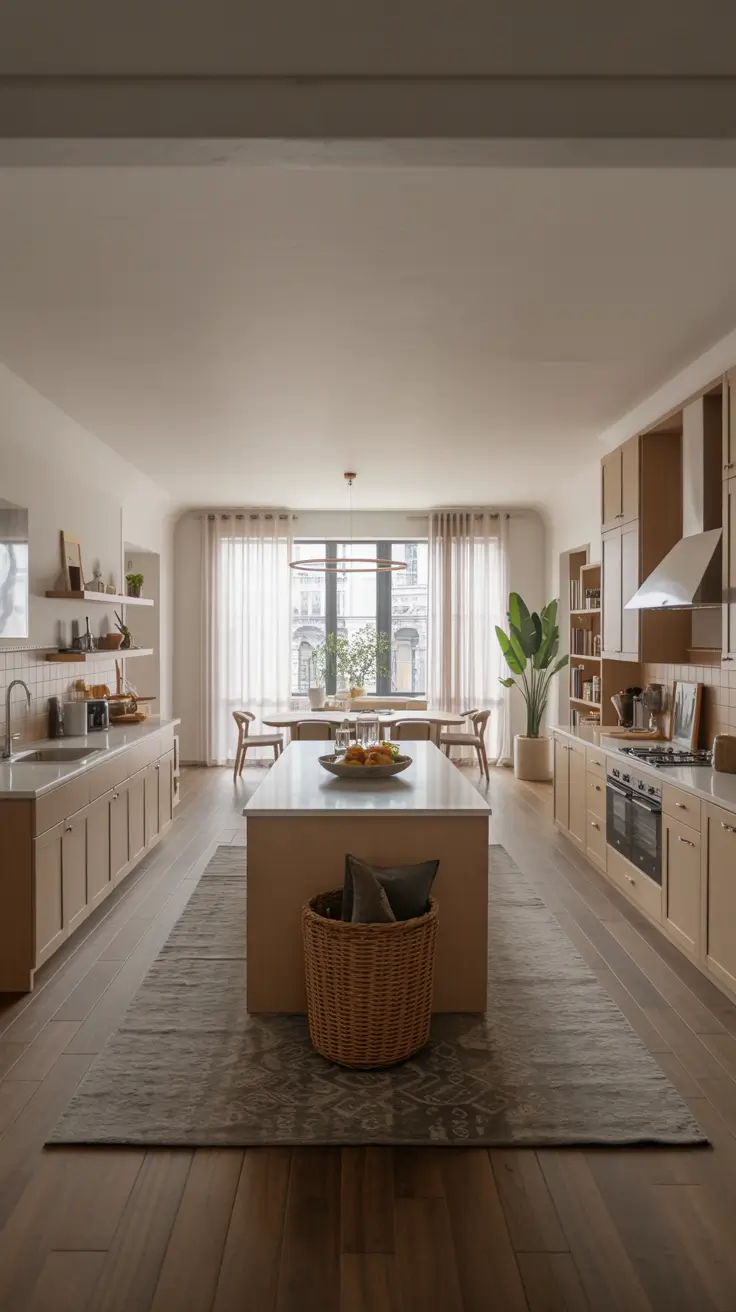
I typically place these rugs beneath central features such as islands or large tables, ensuring all chair legs fit comfortably on the rug. Furniture selection is key. Long tables, wide islands, and ample cabinetry work best with rugs that visually tie everything together. Washable materials remain a priority, especially in family homes.
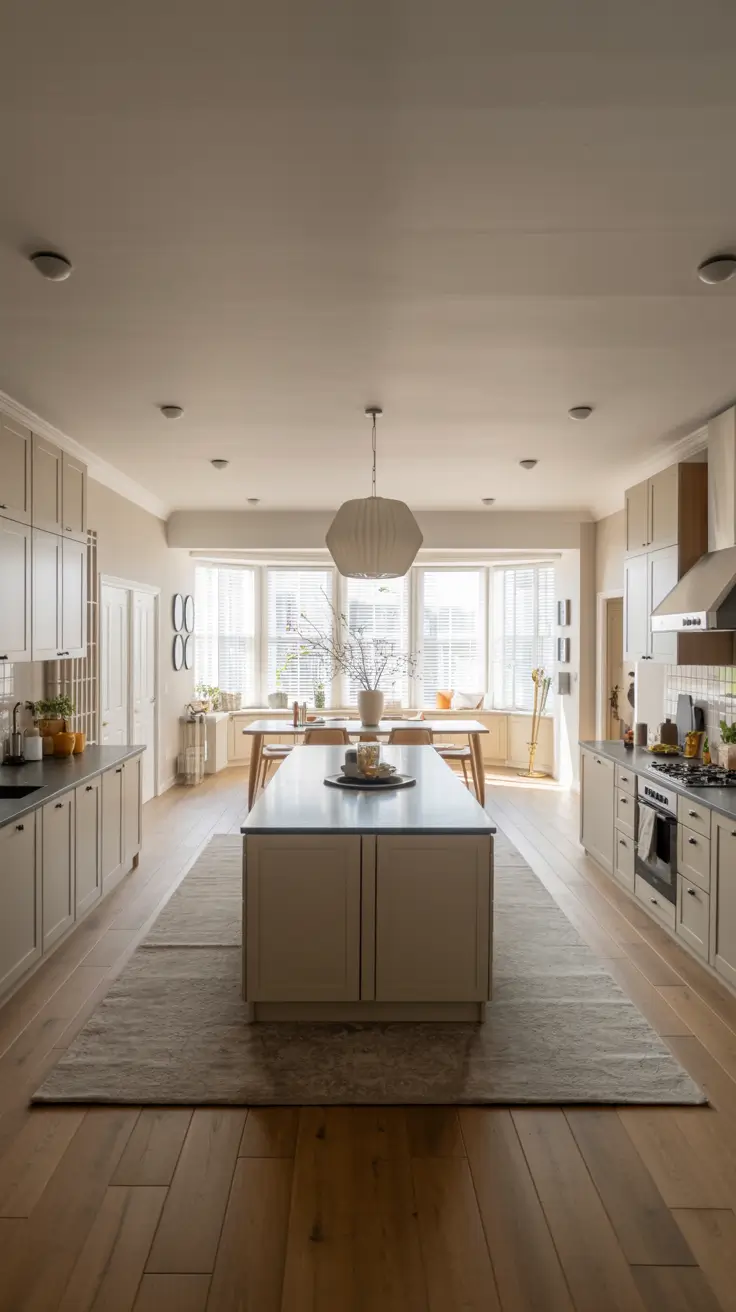
In my own projects, large rugs consistently improve acoustic comfort and visual balance. Designers often note that large kitchens benefit from fewer but bigger design statements, and a rug can fulfill that role effectively. I advise choosing colors that complement cabinets, whether white, black, or green tones.
What is often missing in large kitchens is intentional contrast. I recommend adding a rug with subtle color variation to prevent the space from feeling flat and overly uniform.
18. Square Kitchen Rugs Ideas for Balanced and Structured Spaces
Square kitchen rugs ideas are ideal for layouts that emphasize symmetry. I use square rugs in kitchens with central islands, square tables, or evenly distributed cabinetry. In 2026, these rugs are popular in modern and modern farmhouse designs where balance and order are key visual goals.
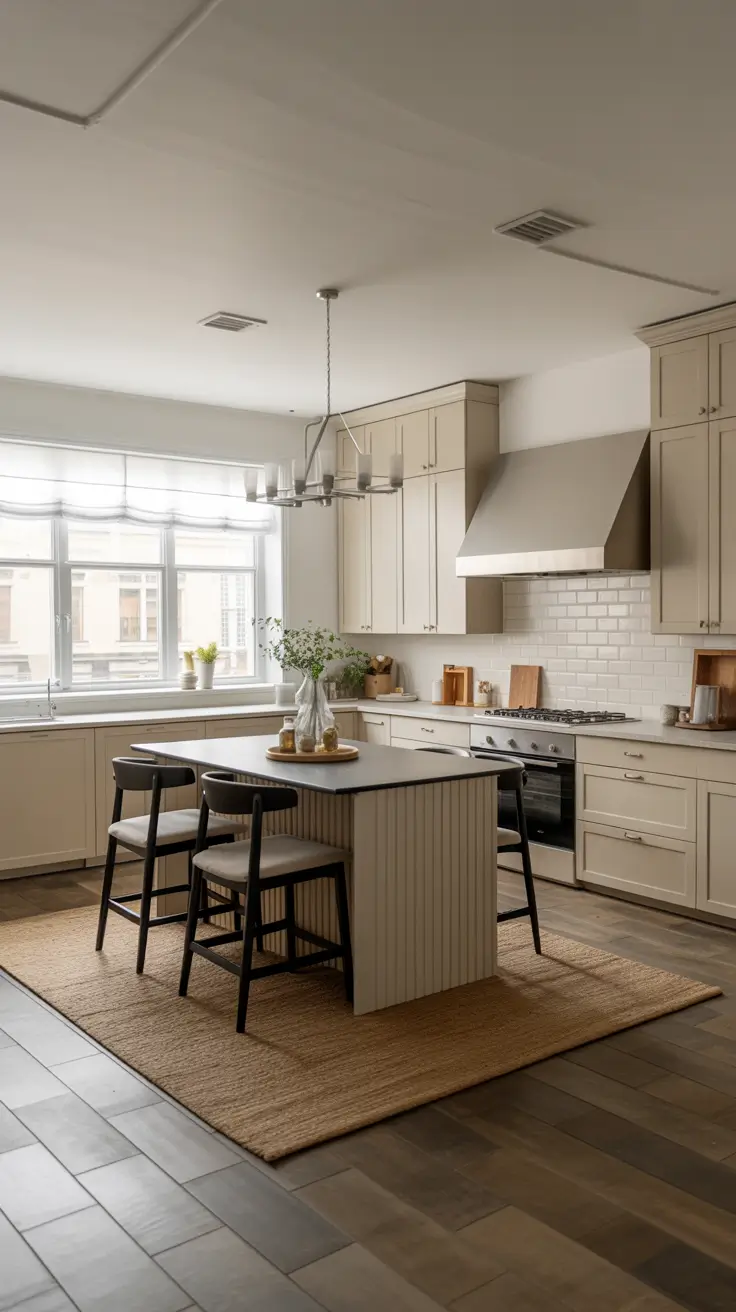
I usually match square rugs with square or rectangular furniture to reinforce structure. A square rug under a table or in front of a peninsula creates a sense of calm and organization. I prefer low-profile rugs that do not interfere with chairs or cabinet doors, especially in high-traffic zones.
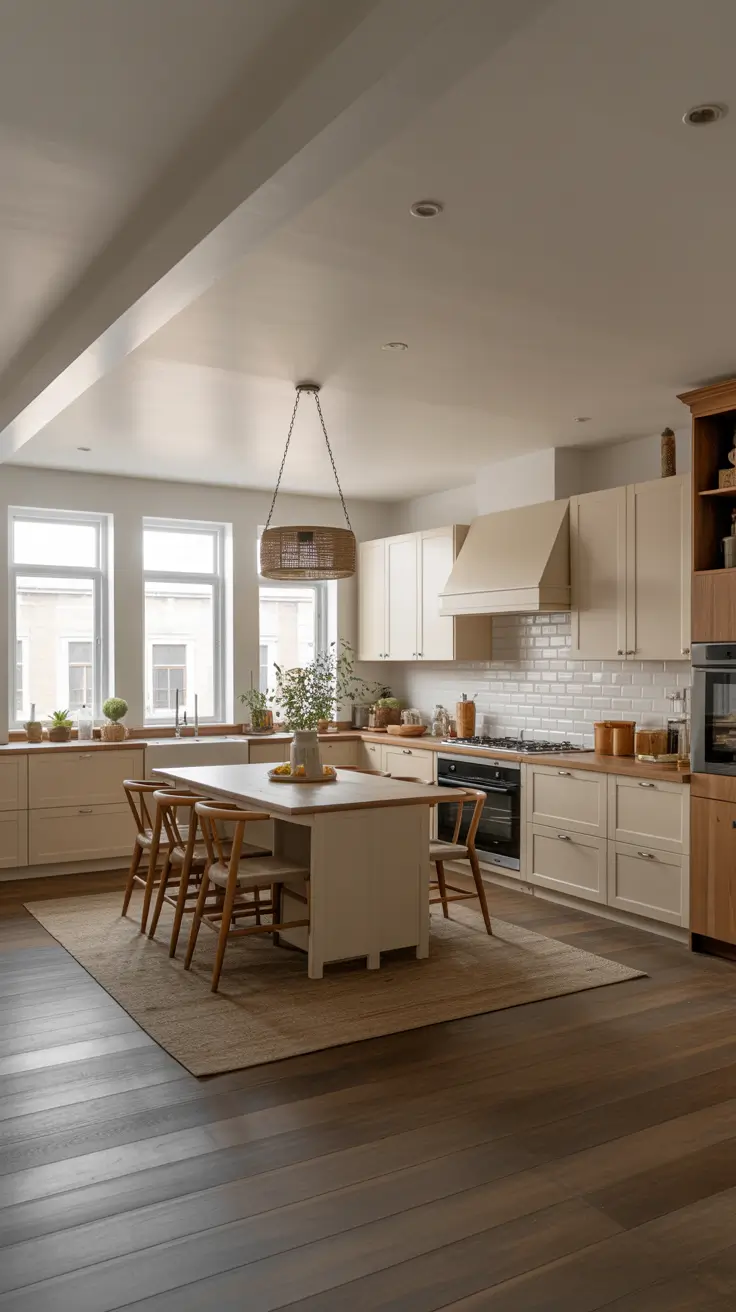
From my perspective, square rugs help kitchens feel intentional and composed. Interior experts frequently mention that structured layouts benefit from equally structured textiles. I have found this especially true in homes with open or large kitchens where visual clarity is important.
To enhance this setup, I suggest coordinating the rug pattern with backsplash or countertop details. This strengthens the overall design language without adding complexity.
19. Round Kitchen Rugs Ideas for Soft and Inviting Kitchens
Round kitchen rugs ideas are becoming more relevant in 2026 as homeowners seek softer, more welcoming interiors. I use round rugs to break up linear layouts and soften kitchens dominated by straight lines and hard surfaces. They work particularly well near round tables or in small open zones.
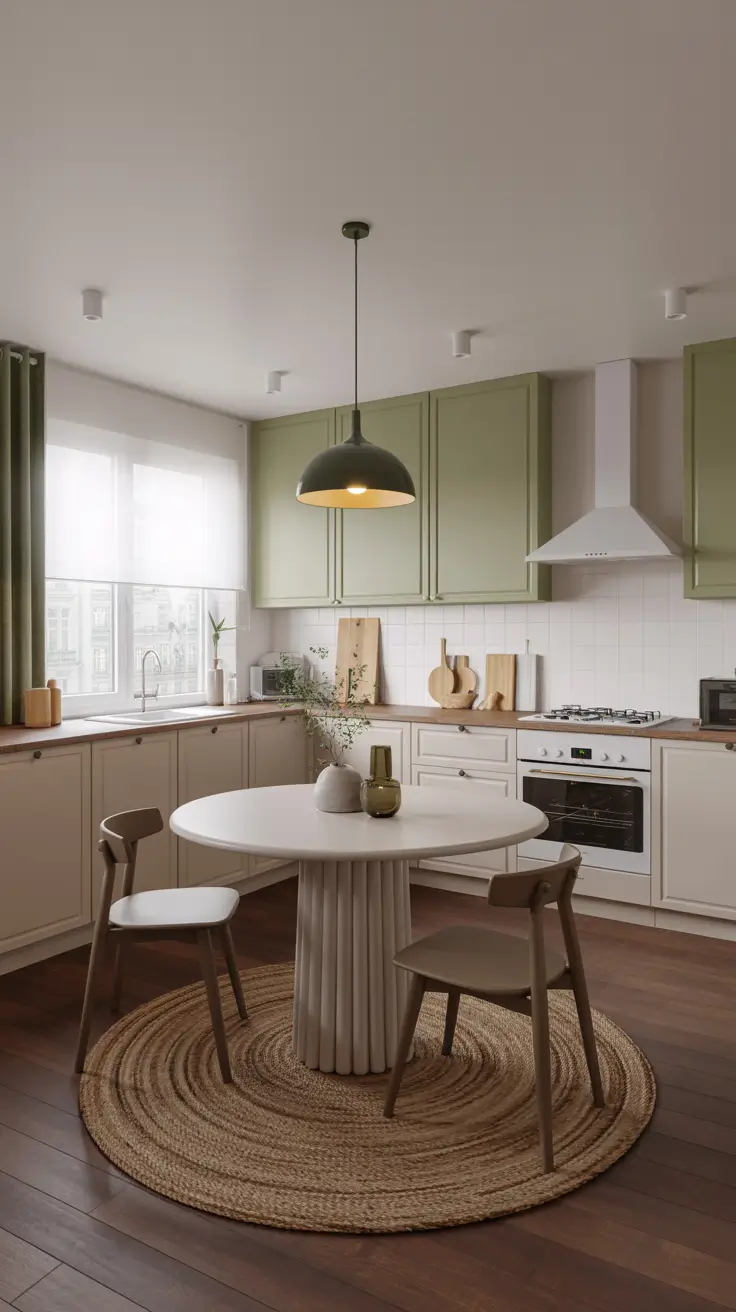
I often pair round rugs with light furniture, curved chairs, or soft pendant lighting. Placement is crucial. A round rug under a table or near sinks creates a focal point that feels intentional rather than random. Washable and non-slip options are essential here due to frequent movement.
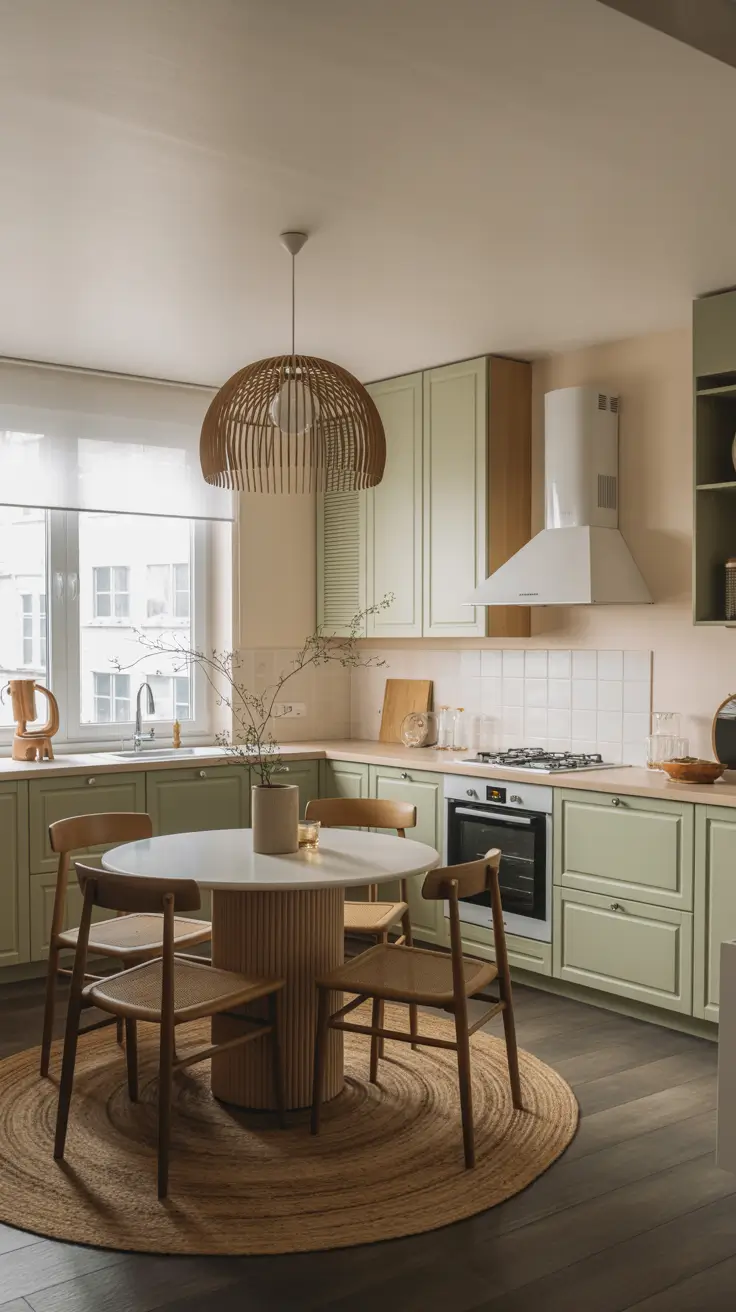
In my experience, round rugs change the emotional tone of a kitchen. Designers frequently highlight curves as a way to make functional spaces feel more human. I have seen clients respond positively to the warmth and comfort these rugs introduce.
What I would add is a thoughtful color choice. Soft colorful or bohemian tones help the round shape stand out while maintaining harmony with cabinets and flooring.
20. Long Kitchen Rugs Ideas for Narrow and High-Traffic Areas
Long kitchen rugs ideas are a practical solution for narrow layouts and busy pathways. In 2026, I often use runners in kitchens with long counters, galley layouts, or extended sink areas. These rugs provide comfort underfoot while guiding movement through the space.
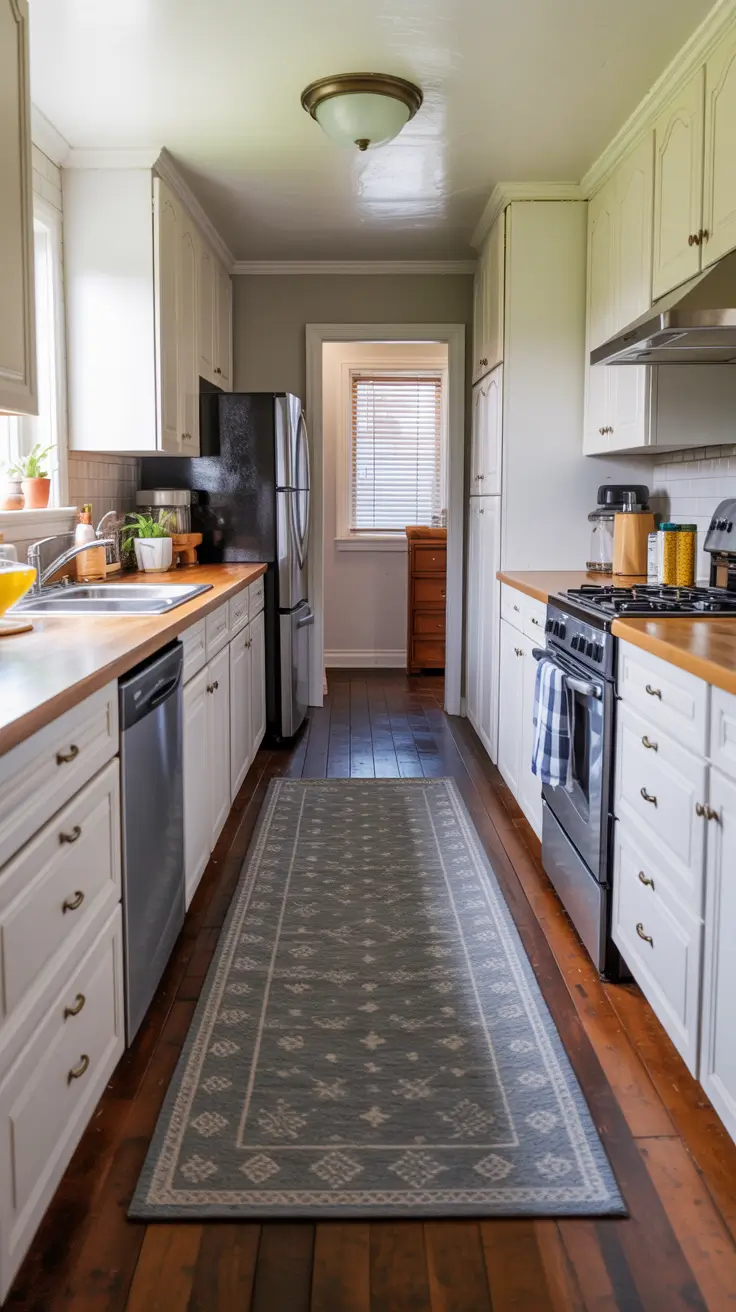
I select runners with durable, washable fibers and strong non-slip backing. Furniture alignment is important. The rug should follow the natural walking path, especially between sinks, prep zones, and cooking areas. Neutral or subtle patterned designs work best to avoid overwhelming narrow spaces.
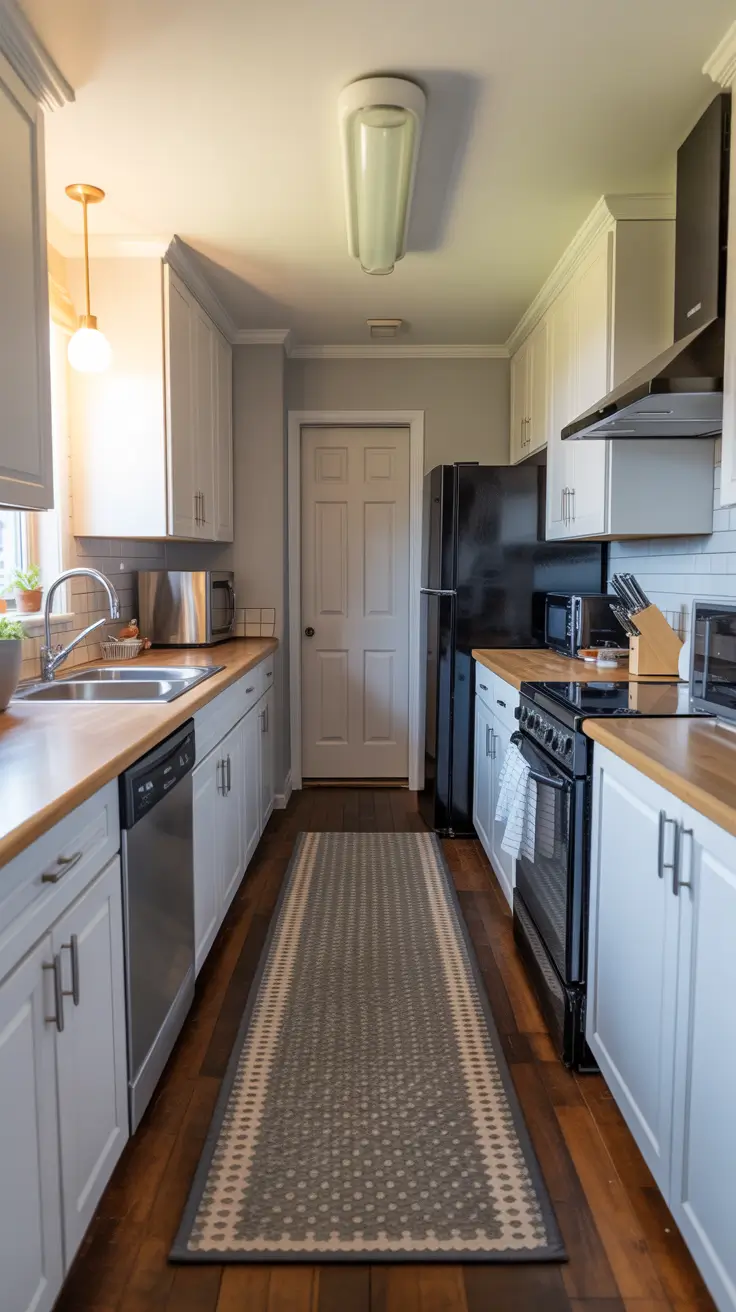
From my own work, runners significantly reduce fatigue in high-traffic kitchens. Many US-based designers recommend them for galley kitchen rugs ideas due to their efficiency and safety. I always emphasize proper sizing to prevent curling edges.
To complete this design, I suggest coordinating runner colors with cabinet hardware or appliances, creating a cohesive and polished look.
21. Galley Kitchen Rugs Ideas for Compact Layouts
Galley kitchens demand smart solutions, and galley kitchen rugs ideas in 2026 focus on efficiency and comfort. I approach these kitchens by using long, narrow rugs that enhance flow without obstructing movement. The goal is to make the space feel longer and more inviting.
I typically choose light-colored rugs to brighten compact layouts, especially when paired with white or light cabinetry. Placement is usually centered between opposing counters, ensuring safe footing near sinks and cooking zones. Washable materials are non-negotiable in these high-use areas.

In my opinion, a well-chosen rug can dramatically improve a galley kitchen. Interior professionals often point out that textiles are key to softening compact spaces, and I fully agree based on practical results.
What I would add here is improved lighting. Under-cabinet lights combined with a reflective rug surface can visually expand a galley kitchen and enhance daily comfort.
22. L-Shaped Kitchen Rugs Ideas for Corner-Friendly Designs
When I work with L shaped kitchen rugs ideas in 2026, my main focus is supporting the corner layout without breaking the flow of movement. L-shaped kitchens often combine prep, cooking, and washing zones into one continuous line, so the rug must visually connect these areas. I prefer using large or shaped rugs that follow the layout and help organize the space while keeping it comfortable underfoot.

I usually place the rug along the main working triangle, extending it from the sinks area toward the cooking zone or peninsula. Furniture such as corner cabinets, lower drawers, and integrated appliances benefit from low-pile, non-slip kitchen area rugs ideas that allow doors to open freely. Washable materials are essential, especially in homes with heavy daily use.

From my experience, L-shaped kitchens feel more intentional once the rug mirrors the layout. Many interior designers emphasize that textiles should reinforce architecture, and I agree with this approach. A well-fitted rug reduces visual clutter and enhances the sense of order.
What I often add to this setup is subtle color contrast. A green or colorful rug can bring life to white or brown cabinets without overpowering the corner layout.
23. Kitchen Rugs Ideas Under the Table for Dining Zones
Kitchen rugs ideas under table are especially relevant in 2026 as more kitchens combine cooking and dining in one open space. I treat the dining zone as its own area within the kitchen, and the rug becomes the anchor that defines it. Whether the table is square, round, or long, the rug helps visually separate dining from prep areas.
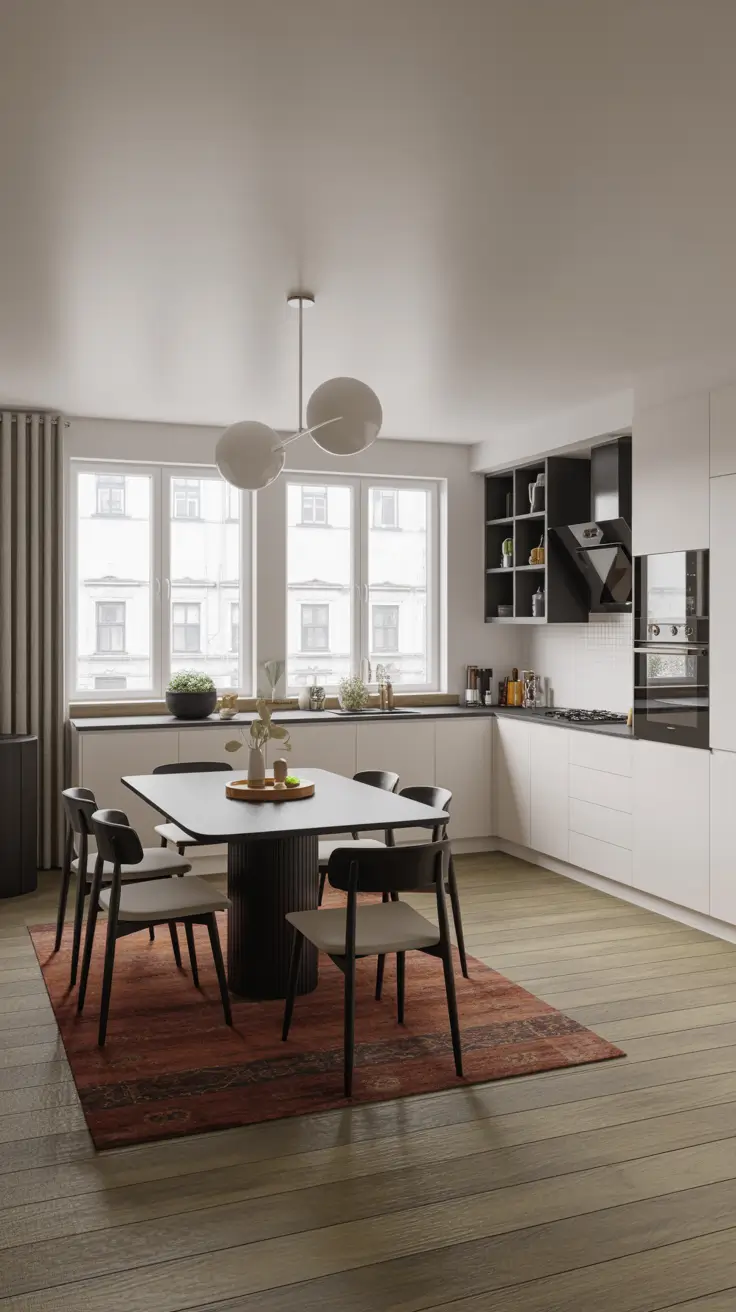
I always make sure the rug extends beyond the table edges so chairs remain stable when pulled out. Round rugs work beautifully with round tables, while square or rectangular rugs suit large or long tables. I prefer durable, washable options that handle spills without stress, especially in family kitchens.
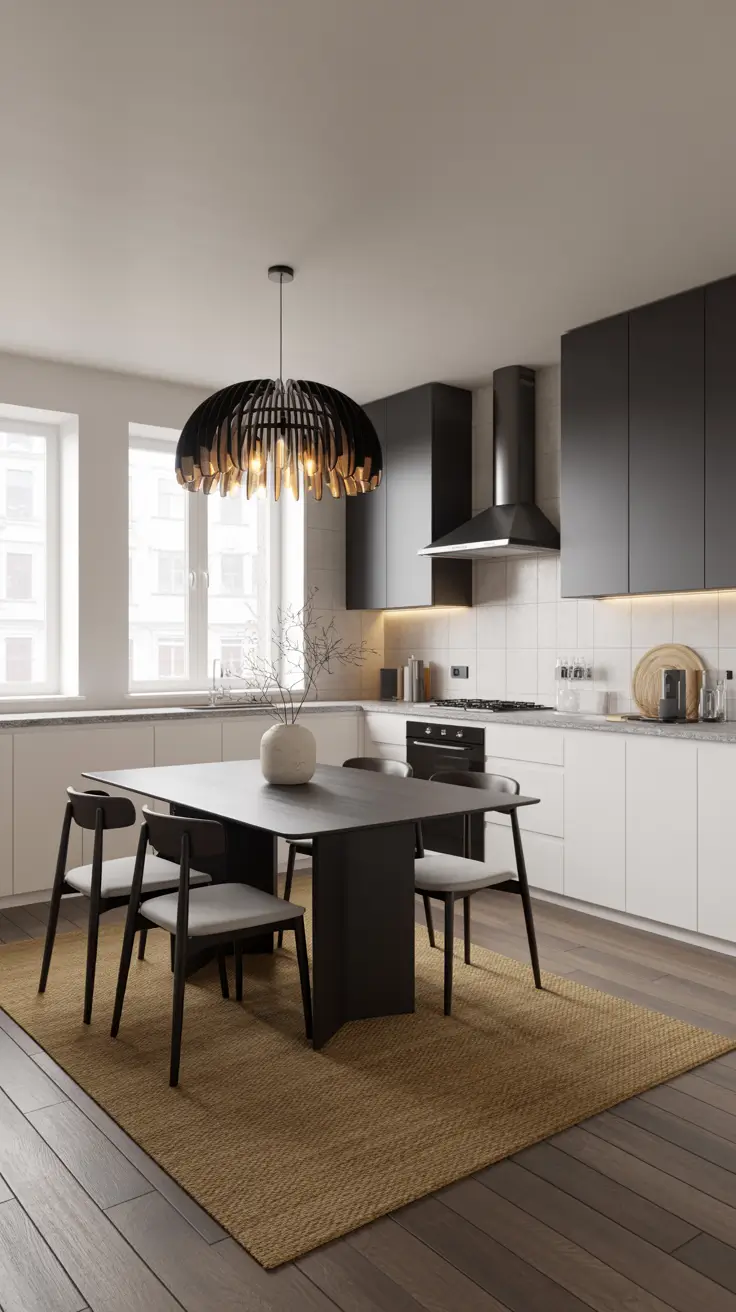
Personally, I find that rugs under tables encourage people to linger longer. Designers from major US interior magazines often highlight that comfort plays a big role in dining experiences, and I have seen this proven in real homes. A well-placed rug adds warmth and reduces noise in open kitchens.
If something is missing here, it is proper scale testing. I recommend marking the rug size on the floor before buying to ensure the table and chairs sit comfortably within the rug area.
24. Kitchen Rugs Ideas Near Sinks for Comfort and Protection
Kitchen rugs ideas near sinks focus on practicality above all else. In 2026, I see a strong demand for rugs that provide comfort during long prep sessions while protecting floors from water and spills. Placement near sinks is strategic and should never interfere with movement or cabinet access.
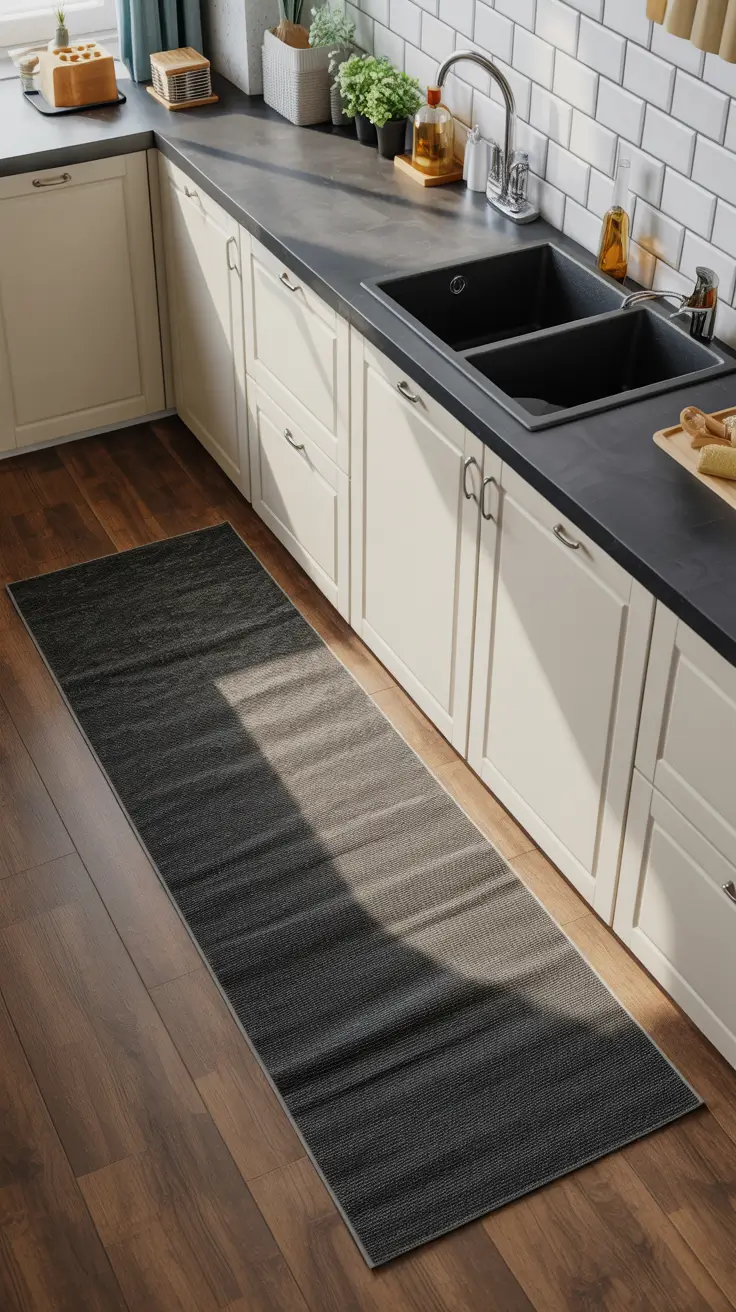
I usually choose long or rectangular rugs with non-slip backing and quick-drying fibers. These rugs sit directly in front of sinks, dishwashers, or prep counters. Neutral tones like white, black, or subtle colorful patterns work well without drawing too much attention to a functional zone.
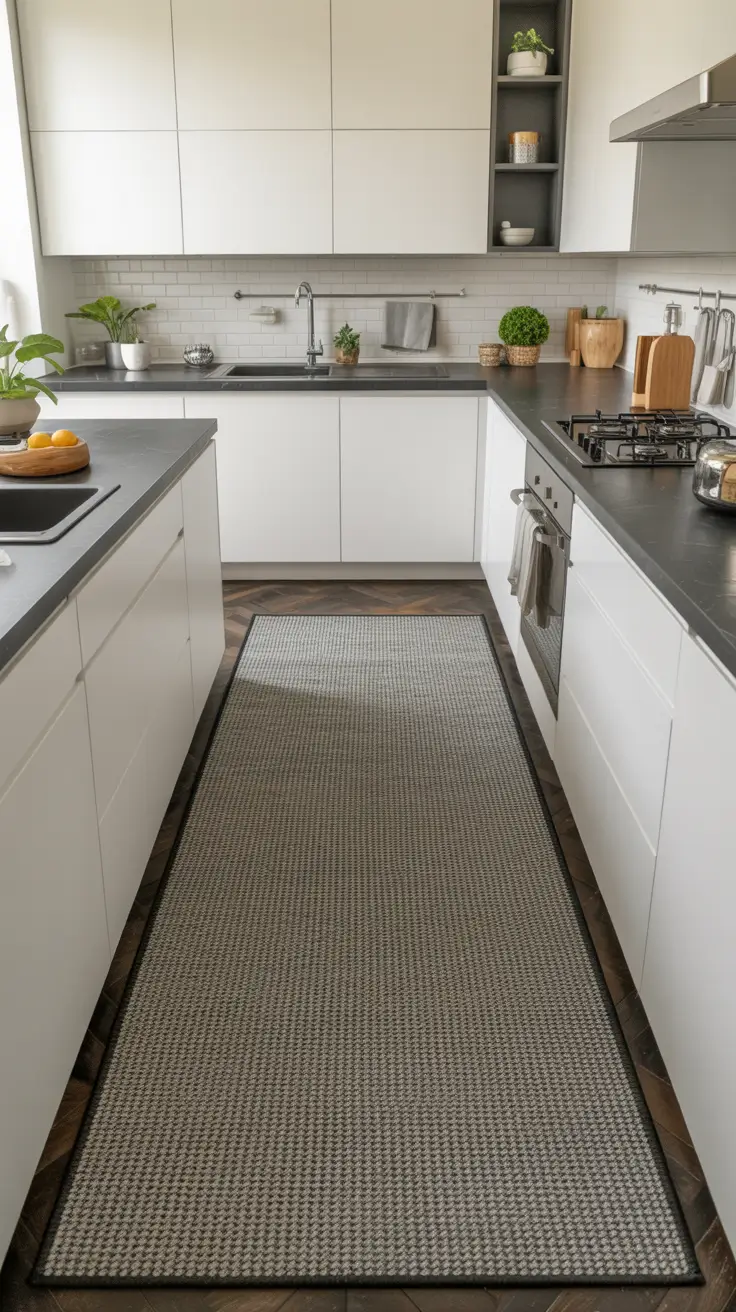
From my own projects, clients immediately notice the comfort improvement. Interior professionals often advise prioritizing ergonomics in work zones, and rugs near sinks are a simple way to achieve that. I always recommend machine-washable options to maintain hygiene.
What I like to add here is layered protection. Combining a durable rug with proper floor sealing ensures long-term performance in this high-moisture area.
25. Peninsula Kitchen Rugs Ideas for Transitional Layouts
Peninsula kitchen rugs ideas are ideal for transitional layouts that sit between open and closed concepts. In 2026, I use rugs to visually connect the peninsula with the rest of the kitchen while still defining circulation paths. This approach works well in modern farmhouse and modern interiors alike.
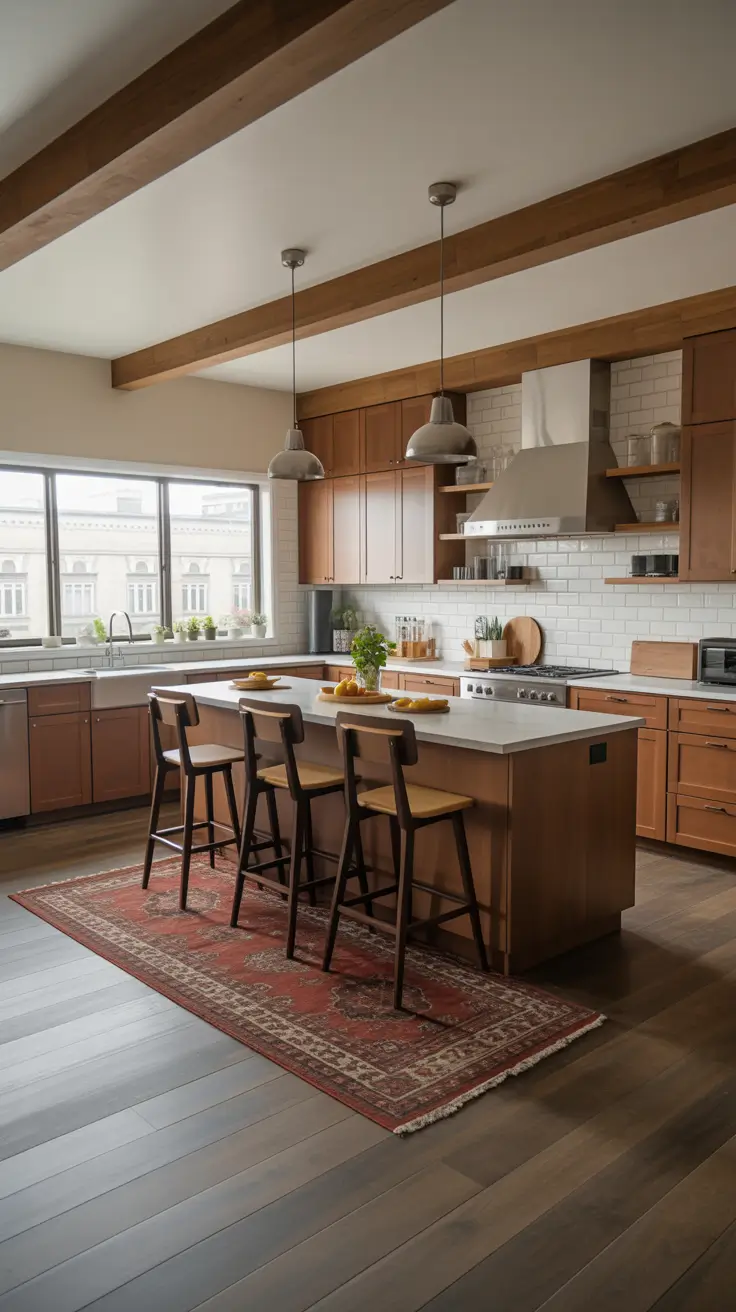
I often place a large rug partially under the peninsula stools and extend it into the main prep area. Furniture alignment is key. Bar stools, cabinets, and nearby tables should all relate to the rug placement. Washable and non-slip kitchen area rugs ideas are essential due to frequent foot traffic.
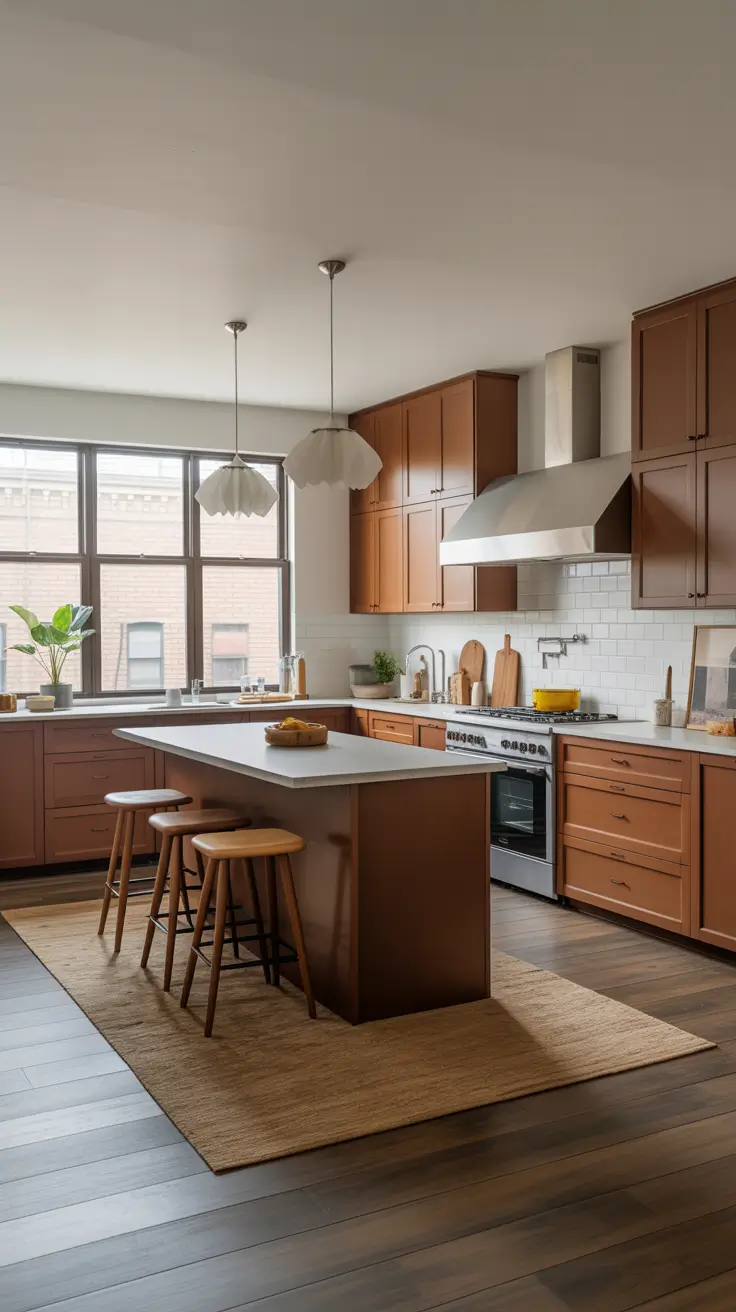
In my opinion, peninsula layouts benefit greatly from rugs because they soften what can otherwise feel like a hard transition zone. Designers frequently mention that transitional spaces deserve as much attention as focal areas, and I fully support this idea.
To enhance this design, I suggest coordinating rug colors with countertop materials or cabinet finishes, especially in kitchens with brown cabinets or black accents.
26. Shaped Kitchen Rugs Ideas for Unique and Custom Designs
Shaped kitchen rugs ideas are gaining popularity in 2026 as homeowners look for more personalized interiors. I use shaped rugs to respond to unusual layouts, islands, or open kitchen configurations where standard rectangles feel forced. These rugs follow the natural flow of the space.

I typically select custom or uniquely shaped rugs that complement furniture placement and architectural features. For example, a curved rug near a peninsula or an irregular rug in an open kitchen can enhance movement and visual interest. Practical features like non-slip backing and washable fibers remain a priority.
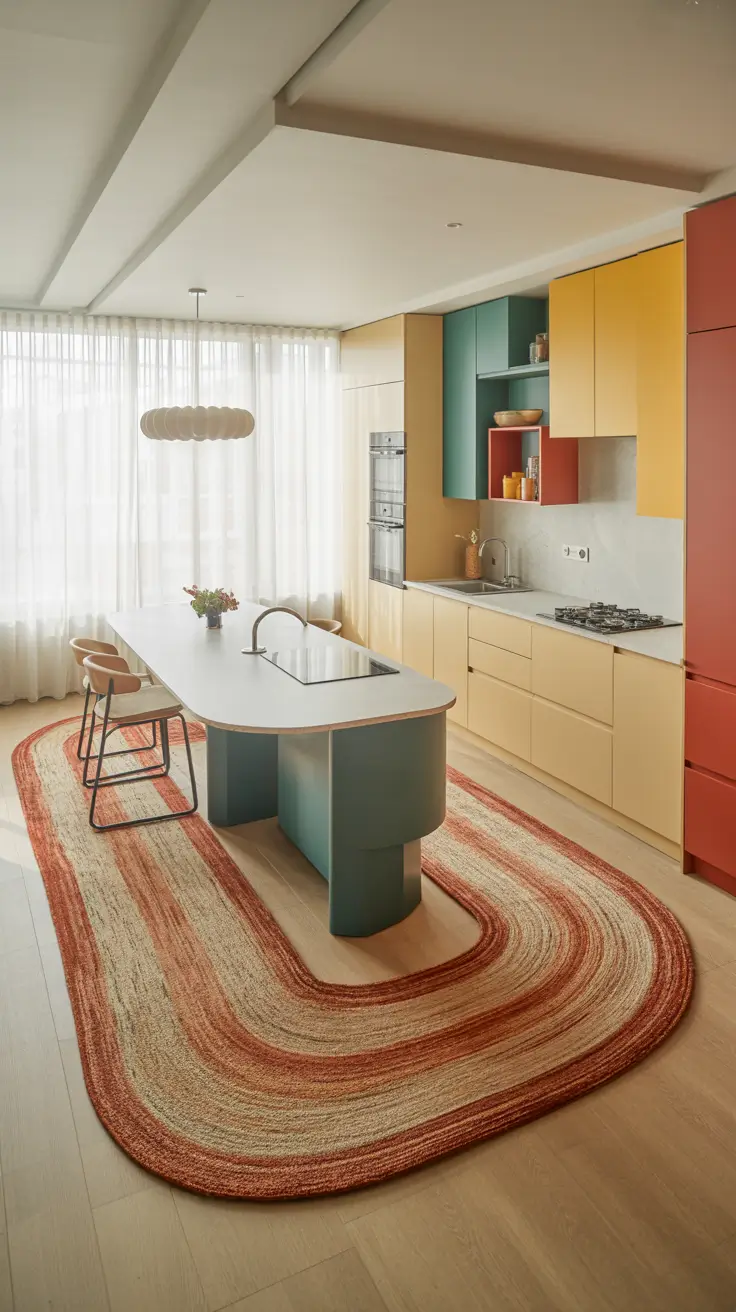
From my experience, shaped rugs become conversation pieces when done correctly. Many designers encourage experimenting with form as long as function is respected. I always ensure that the rug supports daily routines, not just aesthetics.
What I often add to these kitchens is restraint in decor. A shaped rug already makes a statement, so surrounding furniture and accessories should remain clean and balanced.