Pantry for foods ideas in 2026 are not just about where to put the pasta anymore – they are about making the kitchen a calm, smart hub of organization and community. When I design storage kitchen organization now, I ask myself how can a pantry accommodate daily life in a small kitchen, being able to prepare donations and still appear beautiful. In this article, I want to walk through pantry designs that work for busy families, community projects, and long term food security, and in real homes with real budgets.
I will explore the future ready layout, walk-in and cabinet storage, basement storage, community and church or school pantries, as well as the smart storage containers that keep everything fresh. Along the way, for each type of pantry, I will include how I would structure each type of pantry, what shelves, cabinets and containers I would use, and how I would plan for giving, like a simple donation box that I keep out before Thanksgiving or any local food drive.
1. Pantry for Foods Ideas 2026: Future Ready Storage and Smart Kitchen Organization
When I am designing a pantry for 2026 I begin with the idea of the kitchen as a serene command center, where all food groups have their specific space. I imagine a bright modern room with the pantry wall as an extension of my kitchen, not an afterthought. The cabinets are a central feature in the room that is divided between open shelves, which are a great way to show off those handsome jars, and closed doors for bulkier items and appliances. I prefer to keep things simple so the pantry space is close to the main cooking space that makes it easy to organize and grab what you need to cook up a quick meal. Future ready storage for me means thinking through storage in a way that involves far more than gadgets, and has a layout that can work as well in a small kitchen as in a bigger one.
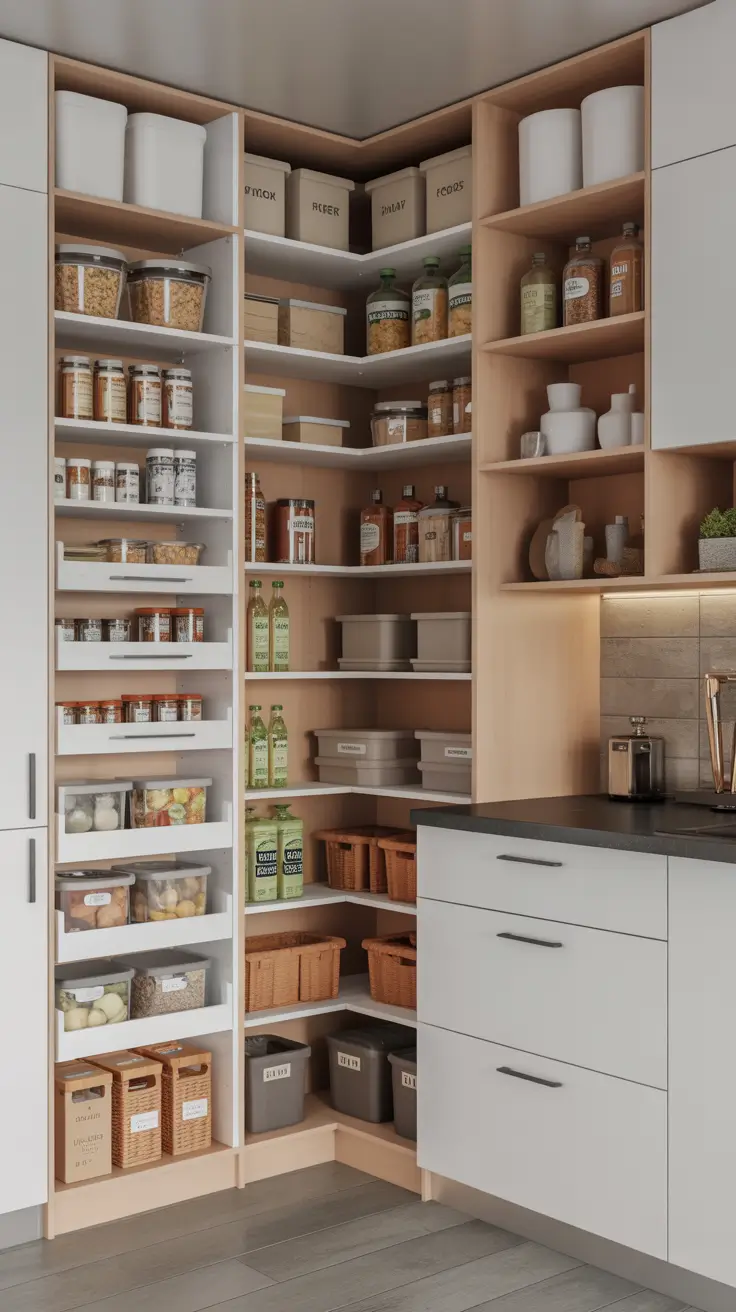
In a pantry of this sort, I have deep lower cabinets that run on pull out drawers, adjustable upper shelves and a full height cabinet that serves as a hub for food. Shelves are lined with clear storage containers of different categories (grains, snacks, etc.), and awkward items like chip bags and breakfast treats are stored in bins. For spices, sauces and oils I use door racks on the interior of tall cupboard doors so that the entire vertical surface is gainful storage. There is a small box on the floor where I can store reusable bags and I have a thin cart on castors that can be slid between cabinets, if I need some extra storage that I want closer to the cooking area.
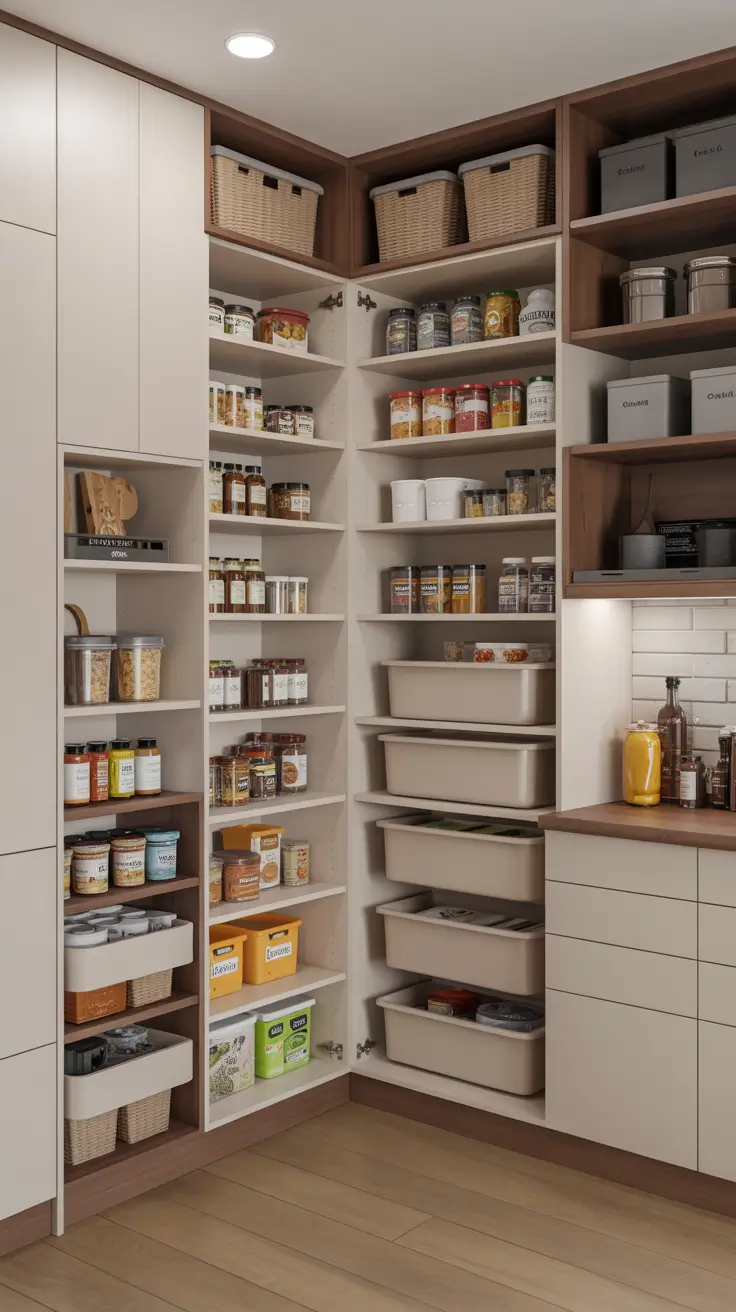
From my experience, the pantries that have had the longest life were the ones that were easy to maintain, not the ones that were over engineered. Like everything, I always say that it is important to start with a realistic inventory of what a household actually consumes and then build zones for those things rather than replicating something you see on the web. When a pantry is planned around real habits, families waste less food, make fewer emergency trips to the grocery store and feel more in control of their budget. Another thing I like to see clients keep a small amount for community giving so that food donations are part of everyday life rather than a once a year chore.
I would add one more element to the idea of a future ready pantry in this section and that’s lighting. I always prefer integrated LED strips underneath each shelf and deep cabinets so that you can see all of the items. Good lighting makes the storage process feel more luxurious and helps with organization too because people will be able to see what they have at a glance, which is key to a pantry that will still feel current and practical in 2026.
2. 2026 Kitchen Pantry Layouts for Everyday Foods and Easy Access
When I consider pantry layouts from 2026, I begin with the way people move through their kitchen during a typical day. Shorten the steps between the refrigerator, prep counter and main pantry- I will often create a U or L shape with the pantry area at one end. For example, for a small kitchen I provide a tall and narrow pantry cabinet that is close to the cooking area, and for a bigger space I would create a walk-in style pantry behind a pocket door. Everything at eye level, lower for snacks, higher or deeper for backup storage so the things that are used every day don’t need to be searched for and are always within reach.
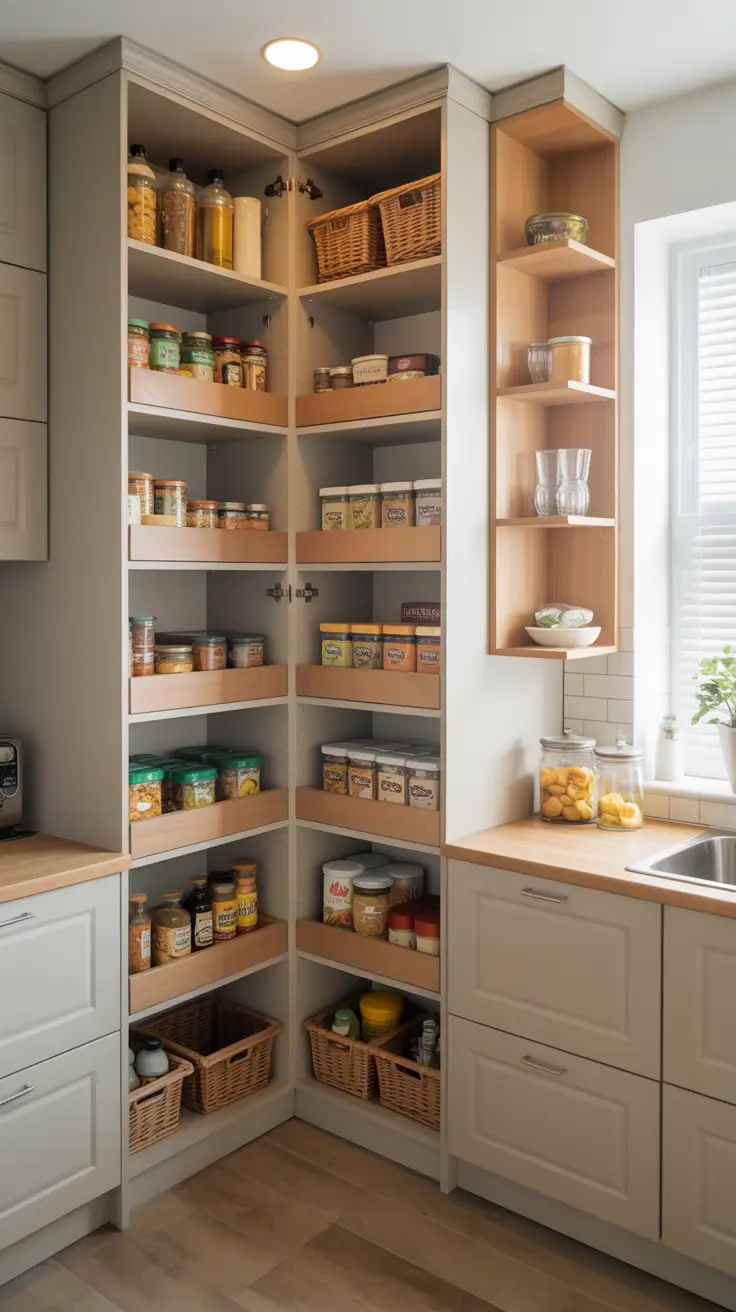
For the physical layout, I prefer to combine open shelving, cabinet storage with pull outs and a few vertical narrow spaces for some trays and cutting boards. In a tight corner I will sometimes require a shelf tower to be curved or angled so that the corner is not dead space. Within the cabinets, I utilise tiered tins for cans, lazy suans for sauces and stacking storage containers for baking items. Over the door solutions provide one more additional column of space for spices, foil, wraps, and small bottles. The goal is to make all sides and all corners function before adding more furniture or building an additional storage room.
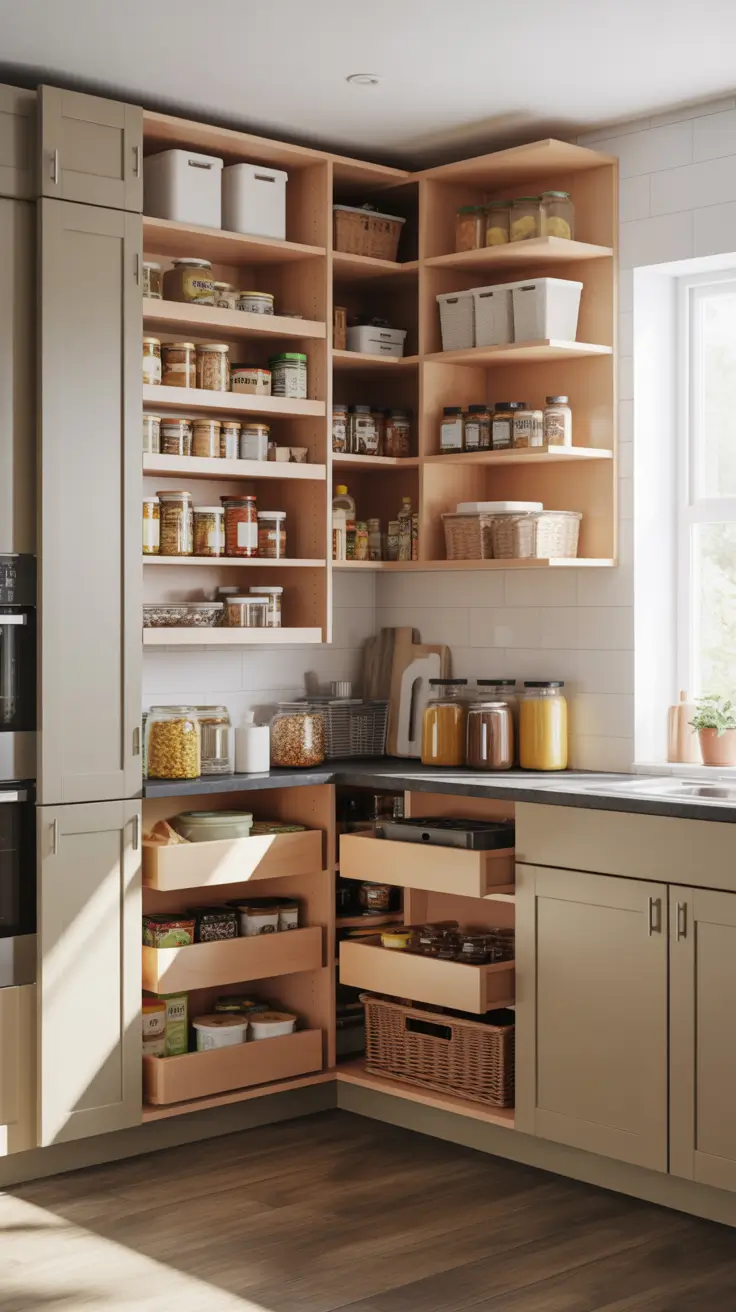
In my opinion, the best layouts are the ones that are intuitive even for guests to navigate. When a person can simply walk in, open a cabinet door and have instant access to tea, coffee or cereal, I know the system makes sense. I often recommend that families experiment with their layout by inviting a small group of people over and see where people get stuck or ask questions. Those small moments are the source of information about where labels, more effective grouping, or even a small change in shelving height will help everyone to have easier access every day.
I would also include one additional, functional element to complete the layout, in this section, such as a small landing area adjoining the pantry, a short length of counter or a shallow console. I like to have a tray or box there where groceries can be put down before they are stowed away. This helps keep organizing from being a chore as well as having items sitting around on random surfaces in the kitchen.
3. Community Pantry Ideas 2026: Sharing Foods and Reducing Waste
When I envision a community pantry for 2026, I picture a welcoming and dignified area as cared for as any home kitchen. I envision there’s a light-filled room attached to a school, church or neighborhood center, with clear signage and gentle colors. The design should be welcoming to donations as well as accommodate visiting freely without feeling embarrassed or self-conscious. Wide aisles, low shelfing and easy wayfinding signage facilitate a dignified flow of people through the space, and with an obvious system, there is a sense of trust within the system.
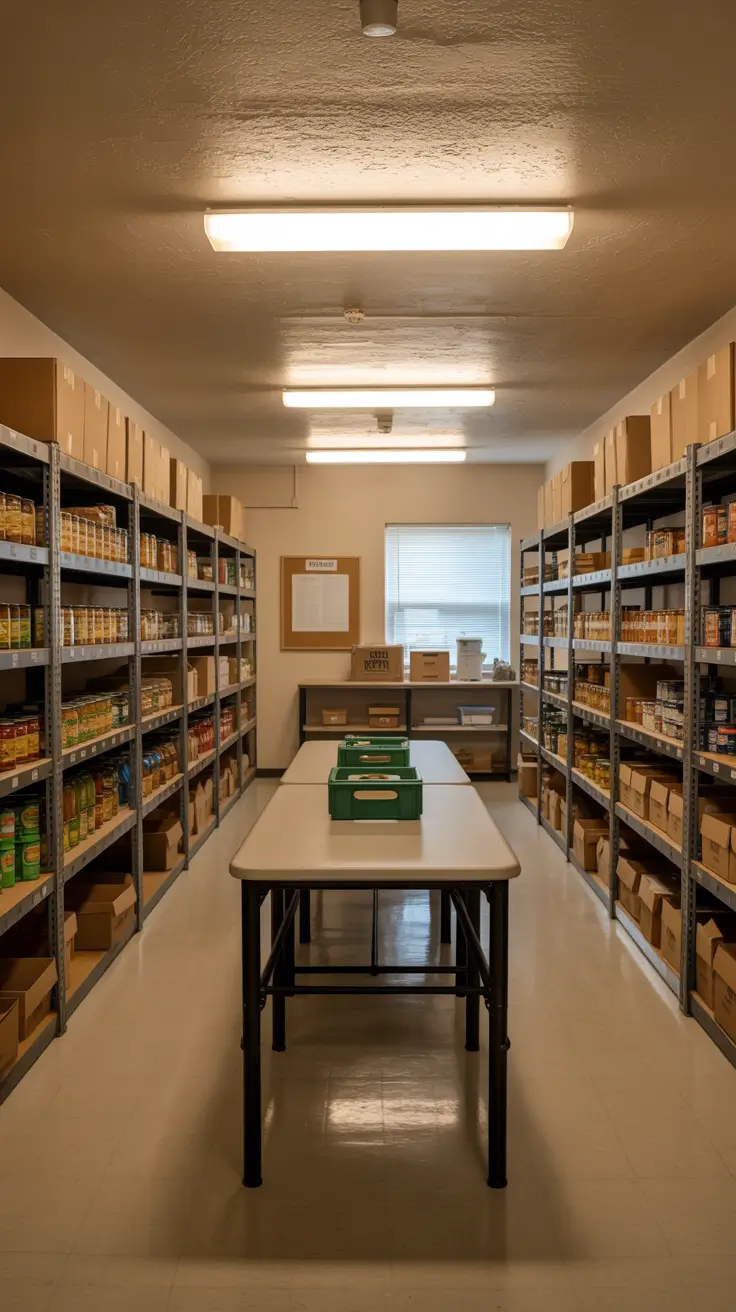
As for furnishings, I specify deep metal shelving for bulk storage on the walls and lower more open shelving in the center for daily use. Strong tables by the door contain categories of incoming donations and labeled boxes for each category of grains, canned foods, and toiletries. For the important staples I like to have glass front cabinets so that staff or volunteers can check the supplies inventory by looking. Large labeled containers can be used to store single servings of loose goods (such as individually wrapped snacks, bulk rice, etc.) and a large bulletin board can be used to hang guidelines, schedules, and community updates.
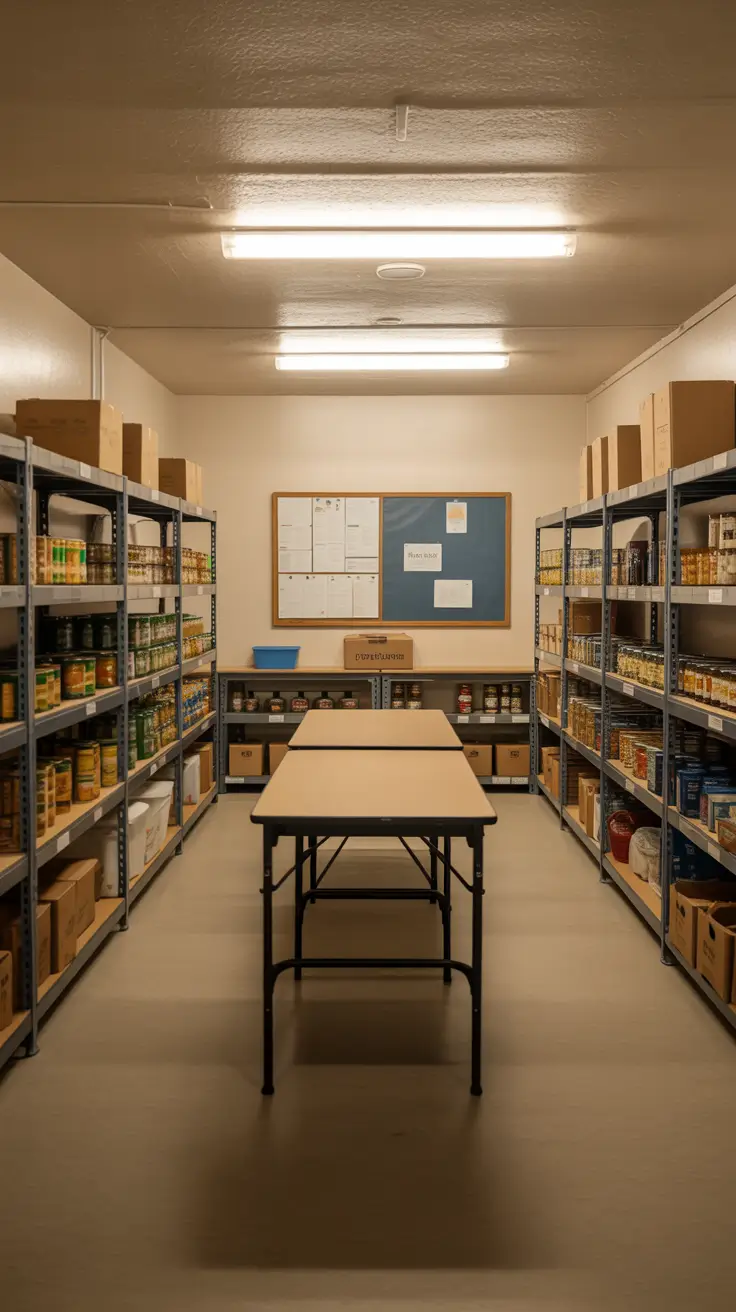
Personally, I feel that if constructed properly, a community pantry can become a strong symbol of connection, and not just a pickup place for goods. For example, when I meet with community organizers, I suggest that they build one corner with a small seating area, a rug, and a few shelves of cookbooks, that will make the space feel warm and human. Easy things like clear signage in more than one language and heights suitable for children and people with mobility restrictions are great ways of making the space accessible for everyone. I have witnessed the power of this level of design care to break down stigma, and to increase the number of people who are willing to give and receive support.
In this section, I would again have a more direct connection between design and local events. I would arrange for seasonal displays, for example a Thanksgiving theme corner with recipe cards and information about special donations and a summer area featuring fresh produce and hydration. Being able to build in moments into the layout assists volunteers to help plan in advance and also makes the community pantry feel alive and responsive rather than static.
4. Donation Friendly Pantry Ideas: Storing Foods with Giving in Mind
And when I am creating a donation friendly home pantry, I begin by setting aside a distinct and visible area for items that are intended to go out of the house. I think of a shelf or cabinet near the main pantry that would always have a solid donation box that is clearly labeled and easily accessible. Placing this area near the door to the garage or front entry helps keep the thought of giving something in people’s minds on a daily basis, particularly as families are planning for school events, church trips or holiday giving. This small design choice helps make generosity a habit, and not a last minute scramble.
In terms of furnishings and organization, I prefer to have one open shelf where foods that are soon to be donated go and a closed cabinet or lidded bin below it for overflow. The donation box itself can be a basic crate or nice basket that goes along with the rest of the storage kitchen organization and does not feel like clutter. I recommend having a clipboard or small magnet board handy with important dates for local food drives or community events. The adjustable upper shelves provide storage for backup items bought when on sale and transparent storage containers make it easy for families to see what types of canned goods are ready to share such as pasta, canned vegetables or school program snack packs.
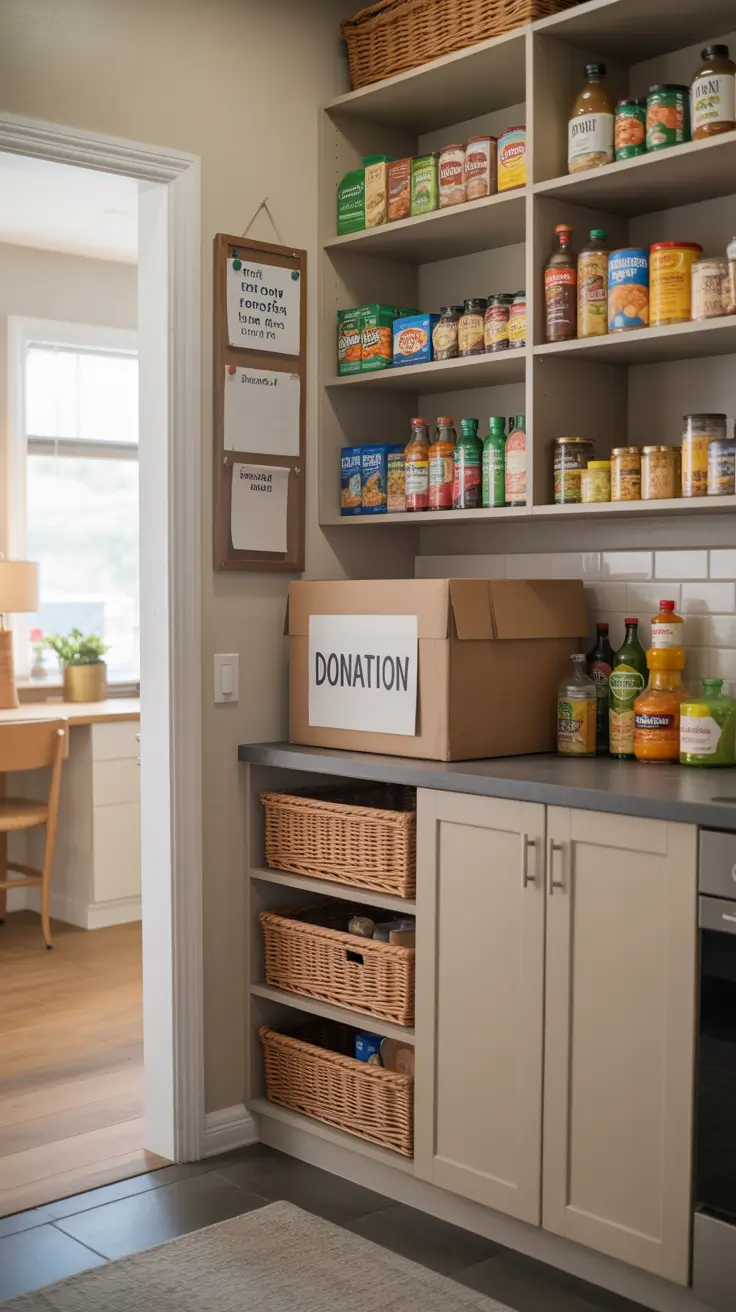
In my opinion, the best donation friendly pantries are the ones that remain flexible and realistic. I encourage households to make simple rules such as putting in the donation box any items they know they won’t use within a month. This type of structure supported by micro habits minimizes waste and sends surplus to neighbors who can use it. When families tie this area to meaningful traditions, such as filling the box together before Thanksgiving or a local community fundraiser, the pantry becomes a silent teaching tool for generosity.
In this piece I would also include a small visual reminder (to bring donors to mind) – something like a framed note on the wall describing local food banks or schools programs that take donations. Incorporating this fact into the design ensures that the pantry is easily accessible and that space is designed to manage excess needs with immediate action while catering to individual convenience and community responsibility.
5. Basement Pantry Storage Ideas 2026 for Long Term Food Security
When designing a basement pantry, I prioritize making this potentially dark and forgotten space into a clean and controlled space for long-term storage. I imagine a well-lit basement room on a floor that is completely dry, with a coat of paint over the walls, and a clear entrance from the stairs, to ensure that it is safe to bring supplies in and out. Because basements can be more susceptible to the variable relationship with moisture and temperature, I think in terms of zones, separating long term staples such as grains and canned goods from things that are more sensitive. The overall goal is to make the basement pantry a quiet backup to the main kitchen and not a chaotic overflow.
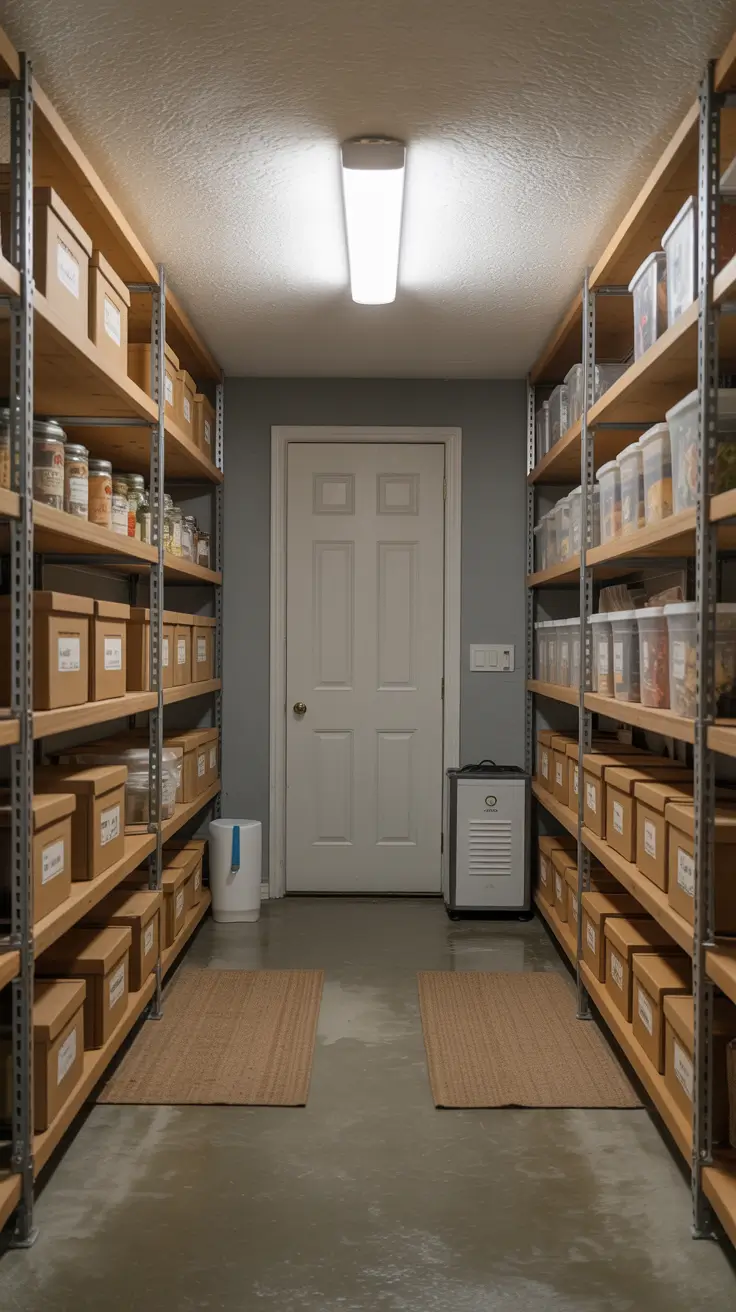
I would go for heavy duty metal shelving units bolted to the walls, with a couple of solid wood units if warmth is required by the layout of the room. I prefer shelves be a few inches off the ground and away from outside walls while storage containers are stacked tightly. Metal containers store flour, rice and beans and transparent packages categorise canned goods by type and expiry date. I typically specify a solid door with weatherstripping which will go far in determining humidity, and if space permits, a narrow cabinet or locker can lock the sensitive items, such as emergency supplies. A small dehumidifier and a simple thermometer are not an afterthought to the design.
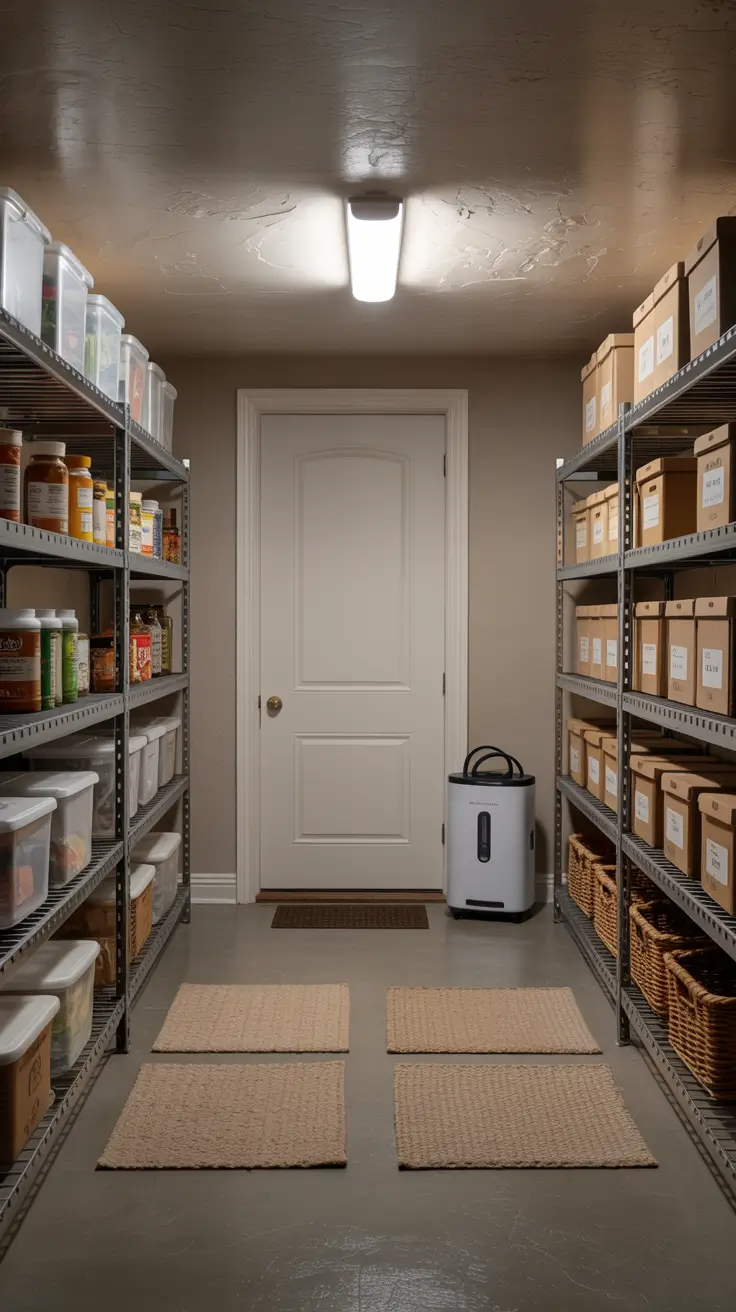
In my experience a well designed basement pantry can give one a real sense of food security without being a bunker feeling. I suggest that clients consider everything in terms of rotation, using the oldest stuff first and regularly moving goods up the stairs into the everyday pantry. This maintains the freshness of the basement space and prevents any stock-outs. I also try to remind people to think about access in bad weather or when the power is out, keeping paths clear and storing flashlights nearby so that the pantry will be accessible in any situation.
In this section, I would include a simple inventory system (many people forget about this planning element). I would get a small wall mounted white board, or notebook on a shelf by the door, and keep a record of what comes in and what goes out. This both streamlines the re-stocking process and ensures the basement pantry is truly a long-term stable as opposed to a mystery room with mystery boxes.
6. Transforming a Storage Room into a 2026 Home Pantry
Whenever I look at an unused storage room, I automatically start imagining how it can be transformed into a streamlined home pantry. I imagine taking the space back to its shell, patching holes in the walls and floors, and then reconstructing it as a peaceful, orderly room that is reserved for food and household items. The first step is always to assess the accessibility of the room with the kitchen, the room ventilation, and the natural or artificial light. With the basics in place I create some shelving along the length of the longest wall, a work surface or small counter on another, and ample clearance around the door to move in and out easily.
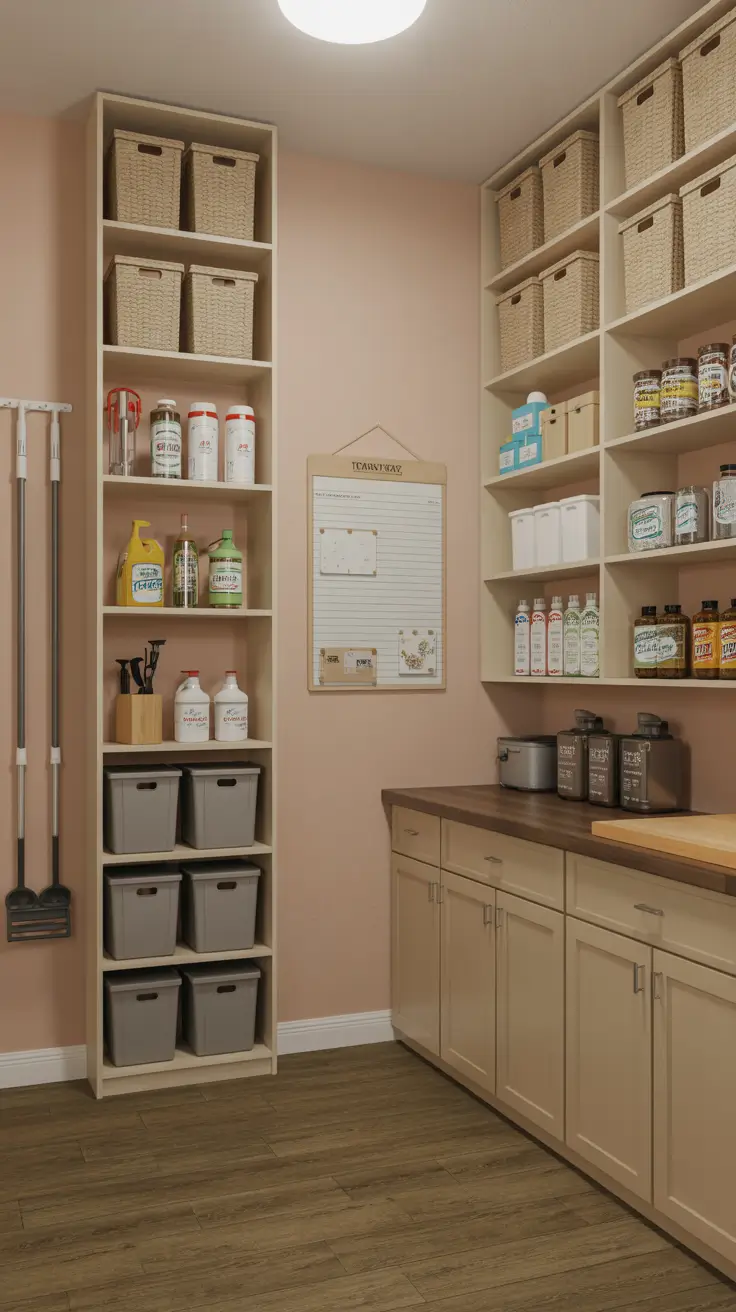
For the change, I like to substitute mismatched shelves and haphazard racks with a cohesive system. That may be a mix of tall base cabinets, lower base cabinets with tough countertops and open shelving for seldom-used items. I find that I like to have one cabinet that is tall so that the brooms and cleaning supplies can fit in there so that the pantry and utility stuff can remain separate without being on the same shelves. Clear storage containers for dry goods, stackable bins for snacks and labeled boxes for party supplies and small appliances all add to a clear look. If the ceiling height permits, I use high shelves for bulk paper products or seasonal products that do not require frequent access.
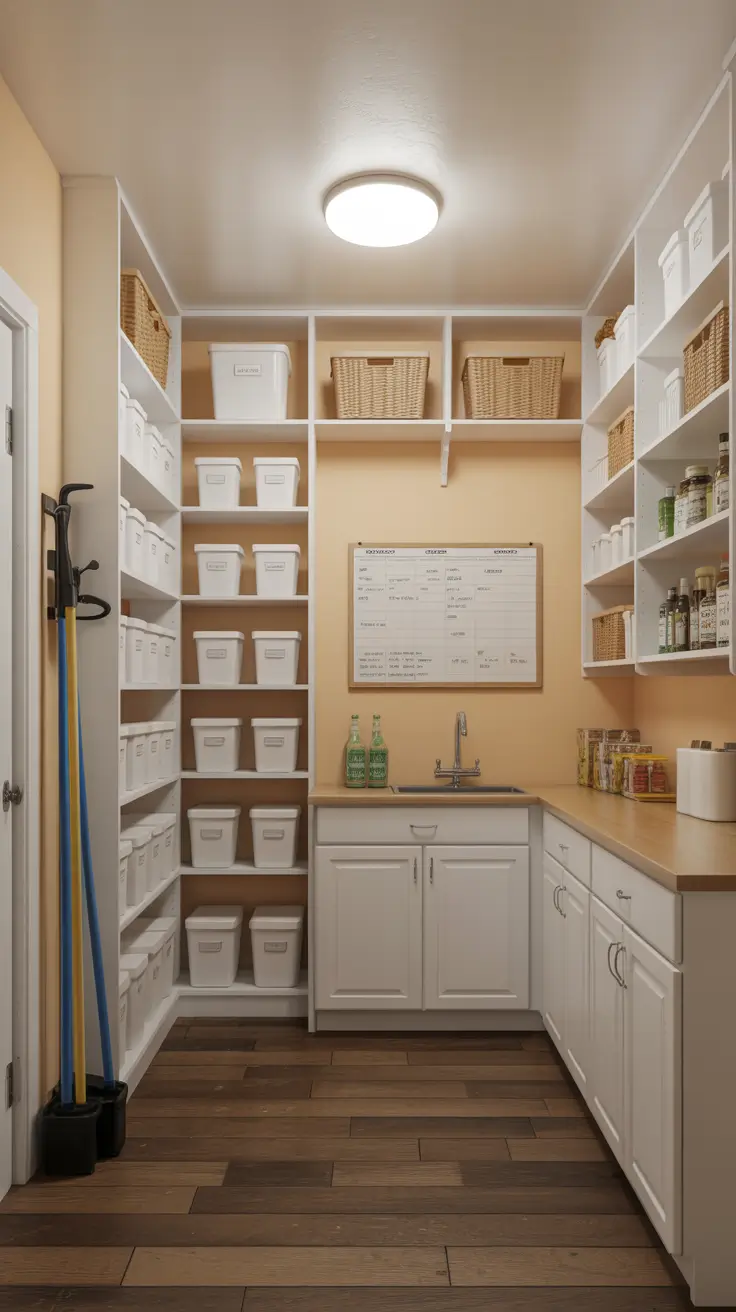
From my point of view, the key to the success of this conversion is the equating of the former storage room to the main kitchen in terms of design. I often suggest adding a simple, attractive light fixture and painting the walls a soft colour, and using uniform containers so the room looks like it’s meant to be there and pretty to go in. If people find the space fun to be in, they are more likely to keep it organized and use it to its full potential. Many clients report to me that once their storage room is a proper pantry, they spend more time cooking at home and feel more at ease with keeping their groceries in order.
In this section, I would still include one other feature that completes the transformation – a small, planning area. I would hang shopping bags on a board or rail system which I would mount on the wall along with a place to hang a weekly meal plan and a place to clip coupons or school notices. This makes the pantry a true destination in which planning, organizing, and storing are all brought together in one room.
7. Smart Storage Containers for the 2026 Pantry: Freshness, Labels, and Stacking
When I design a 2026 pantry, one of my key tools in keeping everything visible and fresh is smart storage containers. I envision rows of transparent, stackable containers perfectly fitting the shelves, making open shelving or the inside of cabinets a clean grid. I don’t see a jumble of crinkled packages, but I see smooth lines of grains, pasta, snacks and baking ingredients, all labeled and easy to recognize. This approach works in a walk in pantry or single tall cabinet or even the small kitchen which relies on just one or two shelves for dry goods.
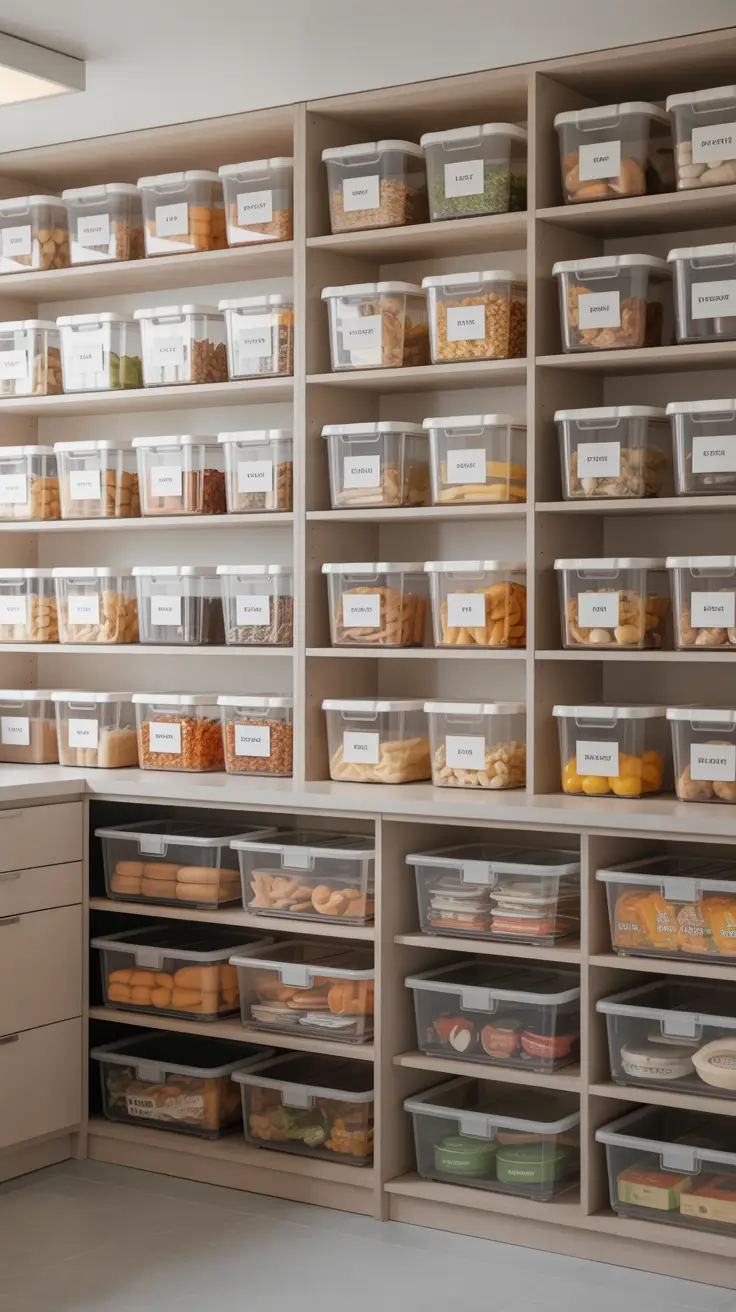
In practice I prefer to use a container system that has different-sized containers with the same footprint, so that they can be stacked safely. Short containers for nuts, seeds and baking ingredients tall ones for spaghetti and tall cereal Shallow bins are used for snack packs and breakfast bars and I try to put them at child height for independence. For cabinet storage, I use a combination of turntables and risers for as much access as possible in the back of the cabinet itself. Over the door organizers may be used for lighter items like teas and spice containers to free up shelf depth for the heavy storage containers.
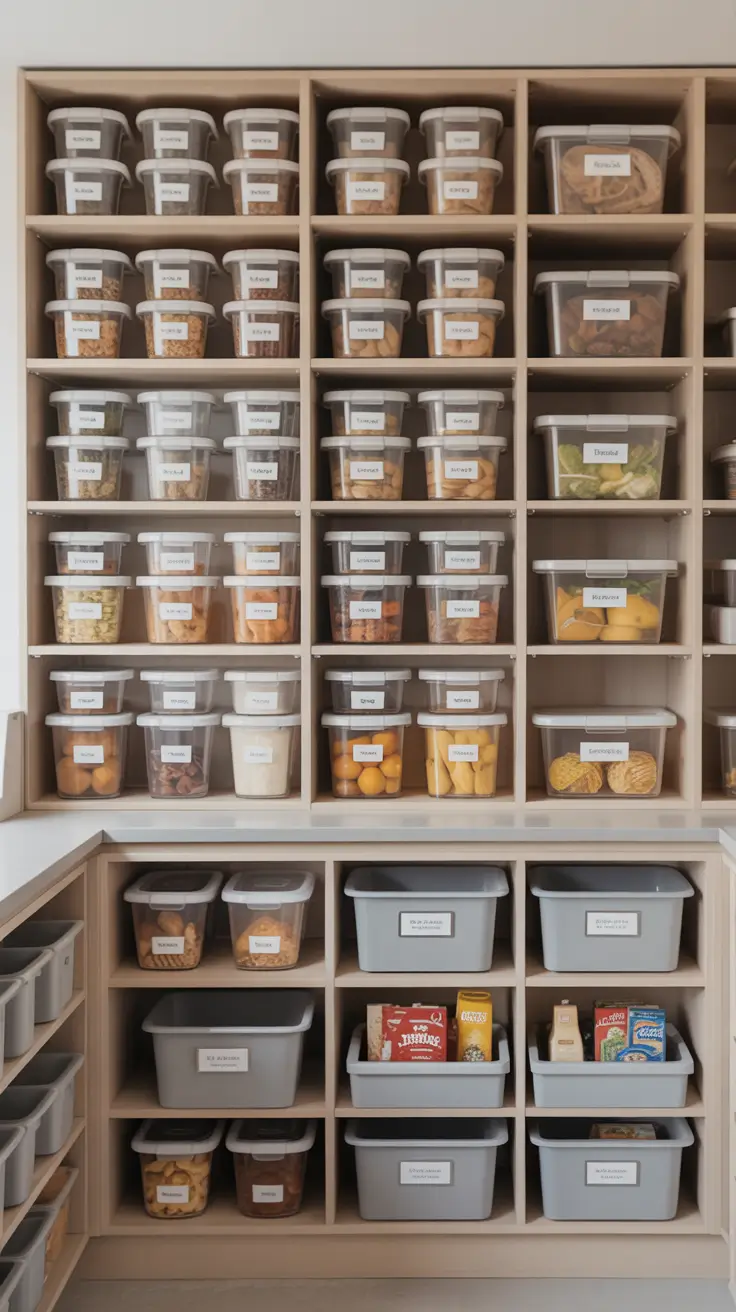
In my work with someone else, I have seen the impact of investing in a unified container system and how it can dramatically improve daily organizing and can help minimize waste. When people have full visibility into the quantity of each item they have, they make more thoughtful grocery decisions and lose less to the back of the shelf. I also find that labeled containers are helpful to everyone in the household in terms of participating in upkeep, as there is no guesswork about where things go. This is especially useful in the busy home where multiple people prepare food or make lunches.
In this section I would still add one important consideration that is often overlooked – ensuring that containers are truly comfortable to use. I always test how easy it is to open the container, pour from the container and how easy the container is to wash thoroughly. My systems designs for 2026 are focused on dishwasher safe systems with wide scoop holes and easy relocating as habits evolve. Smart storage is not about looks, it is about the containers that fit real, daily routines such that the pantry remains organized over time.
8. Walk In Pantry Ideas 2026: Zones, Flow, and Visibility
When I have a walk in 2026, I would imagine walking through the door and knowing straight away where everything is. For daily use, I prefer to create a clear U or L shape flow so that movement is intuitive and easy where the more everyday food choices are centered at the eye level on the back wall while the less frequently used items are on the side walls. Good visibility is a key element, and I ensure open shelving from floor to ceiling and keep the center of the room open, even in a small walk in space off the kitchen. This makes the pantry into a small quiet room where food, small appliances and storage kitchen organization work together in a smooth way.
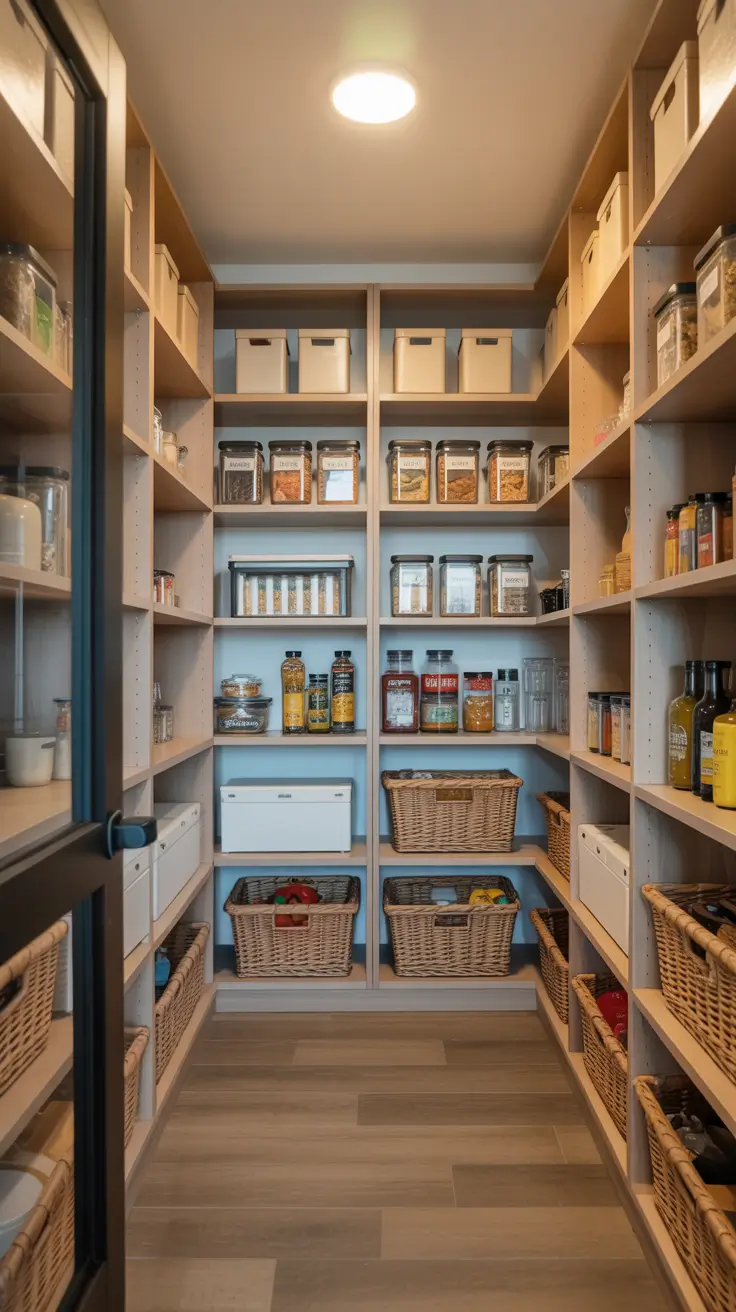
For furniture and fittings, I generally will specify adjustable shelving on at least two walls with lower shelves at greater depth for larger storage containers and boxes and upper shelves slightly shallower for visibility. I like to include one narrow cabinet with doors for things that need to be in darkness, such as oils or treats that I do not want to constantly see. Easily accessible counter or shallow console provides a place to lay out groceries or place donations before heading out the door. Inside the walk in I have baskets and labeled bins creating areas such as baking, snacks, breakfast, pasta, canned goods, etc., and I typically have a wall with some hooks to hang items like reusables, aprons, etc.
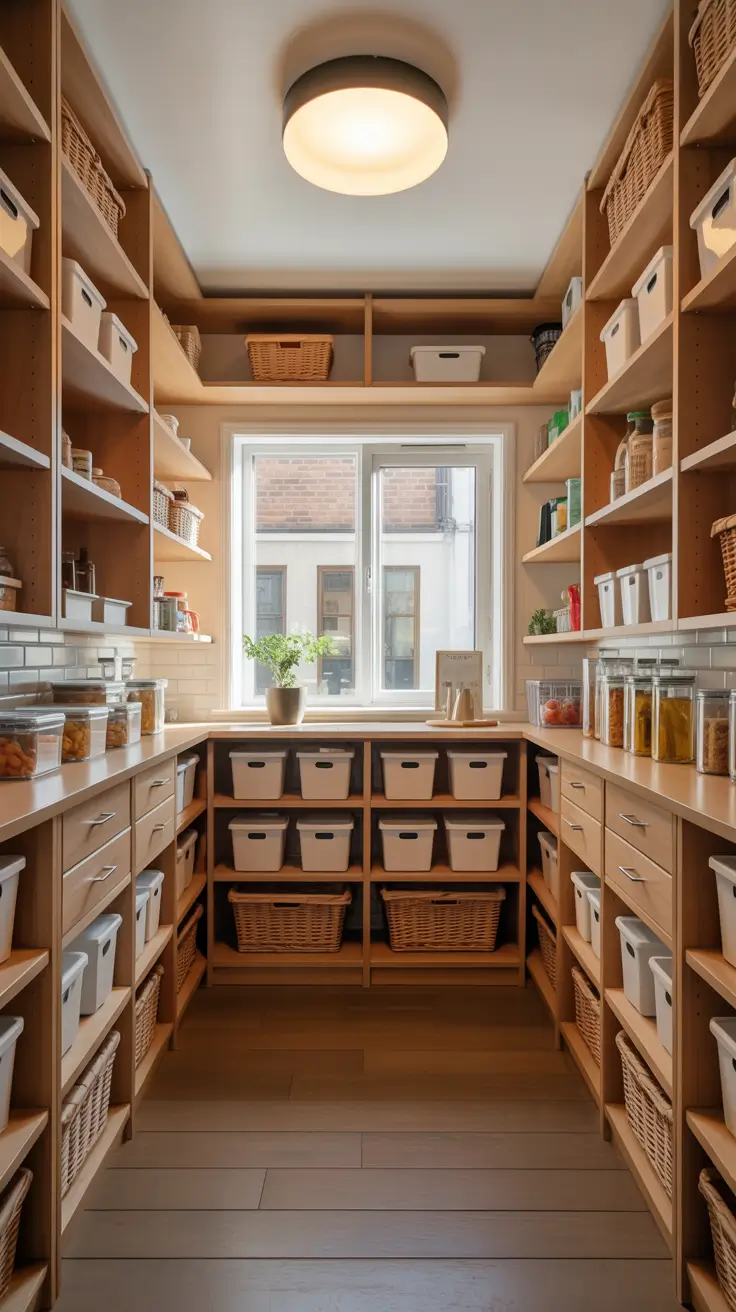
From my experience, the best walk-in pantries are organized extensions of the kitchen and not a dedicated storage room. Often I recommend glass or a partially glazed door so that they can filter in light from the kitchen and the room does not feel cordoned off. When clients are concerned about the mess that a walk in pantry will create, I remind them that it is more important to have clear spaces, good lighting and labels than perfection. Even in a small kitchen, a small walk in can lead to a dramatic decrease in clutter if the layout is respectful of the way the household actually shops, cooks and stores food.
In this section, I would still add one more upgrade that changes the user experience completely and that is integrated lighting on sensors. I like to specify LED strips under shelves and a motion activated ceiling light so that hands are left free when carrying in bags. This simple feature lends itself to visibility, safety, and general comfort every time the walk in pantry door is opened.
9. Daily Organizing Habits to Keep Your 2026 Pantry in Order
When I think of well-organized pantries in 2026, I think less of products and more of little everyday habits. I envision a kitchen where, after dinner, one only needs to spend two or three minutes putting spices, oils, and snacks back in their correct places so the shelves are never completely filled to overflowing. Instead of organizing a huge project once a year I like to introduce routines that become part of the natural flow of the day as in putting the groceries away in a certain order or doing a quick check of the expiry dates before shopping each week. The design facilitates these habits but it’s the rhythm that keeps the pantry working.
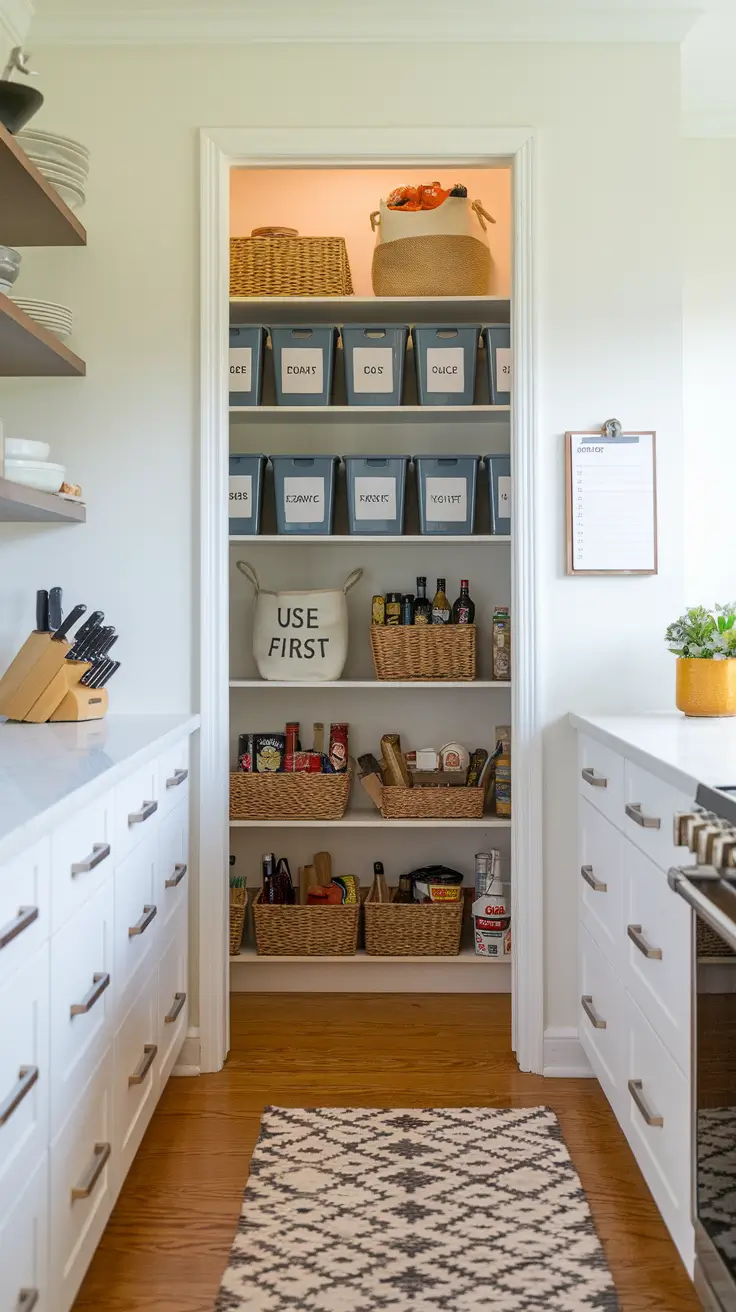
To simplify these habits, I create interiors where there are clear categories and apparent places for each thing. Open shelving at eye level stores the foods the household uses on a daily basis and bins and storage containers group similar foods together so even children can help. I like to have a little basket or box that specifically says “Use First” on it, on a shelf that is visible, so people act as they tidy up to put older things in that basket as they are putting the things away. I keep a small charitable box nearby so that unwanted but still good food can be quickly set aside, and I keep a paper pad or dry erase board in front of the pantry door to keep track of the items that are low.
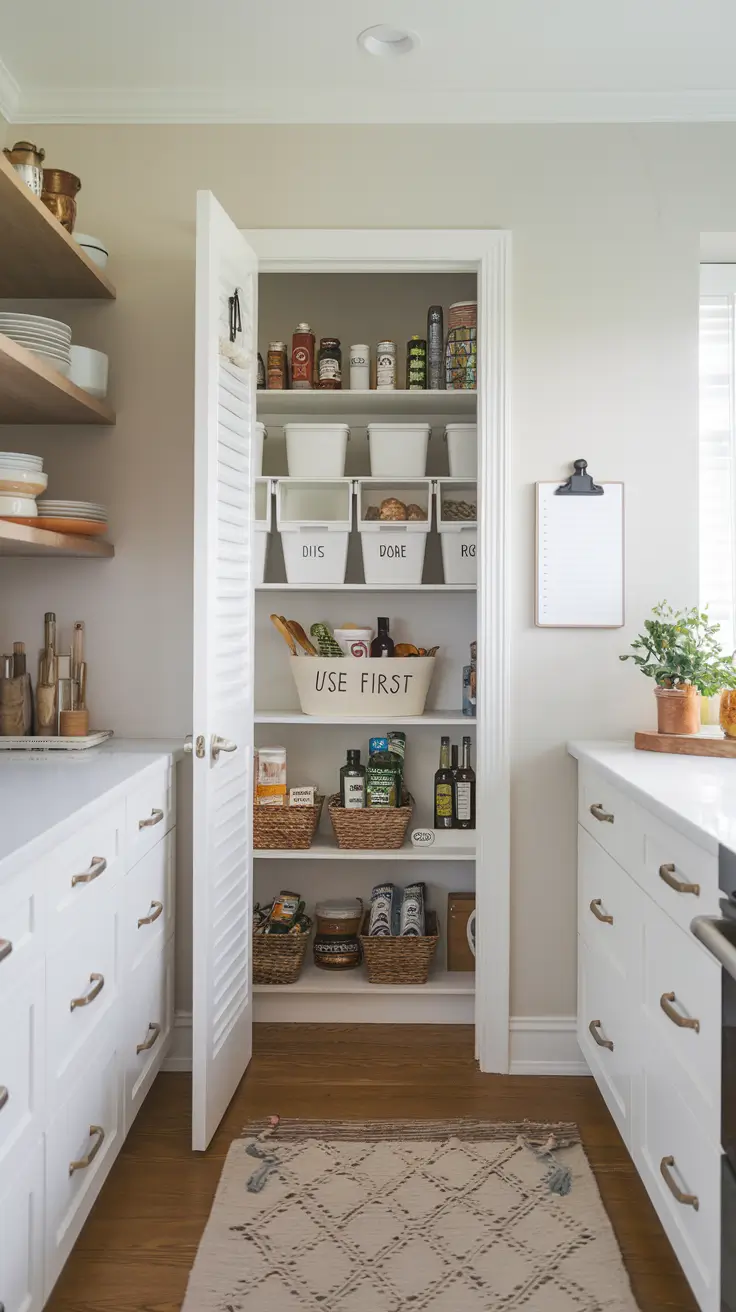
In my professional opinion, the pantries that really work over time, are those that make the process of organizing something light and fast, not a major task. I am borrowing some advice that I’ve seen shared in American home magazines and design media, where experts often recommend the “one in, one out” rule for some category such as snacks or cereal, to avoid overcrowding. I also like the idea (which is often repeated by professional organisers) of a small reset once a week, even if it is only for 5 minutes, rather than doing one big seasonal reset. These ideas are realistic and respect real life and help families large or small who live in a large house or small kitchen apartment.
In this regard, I would like to supplement my list with another habit that makes a significant difference: the last-minute pantry review before occasions such as school fairs, church drives, Thanksgiving food drives, etc. I would suggest that you set a reminder to check the shelves before these dates; take appropriate items to the donation area. This simple practice leaves the pantry lean and connects everyday organizing to community support.
10. Corner Pantry Solutions 2026: Using Awkward Spaces for Food Storage
Instead of seeing an awkward corner as wasted space, I see an opportunity for a clever pantry design. In 2026, I frequently envision the transformation of that corner into a small pantry niche that feels purposeful and stylish. This could mean creating a tall corner cabinet with doors at angles, making a slim walk in tucked into a kitchen wall, or with open triangular shelving for a sharp corner. The key is to ensure accessibility is comfortable so that the corner is not a dark hole to which food is sent to be forgotten.
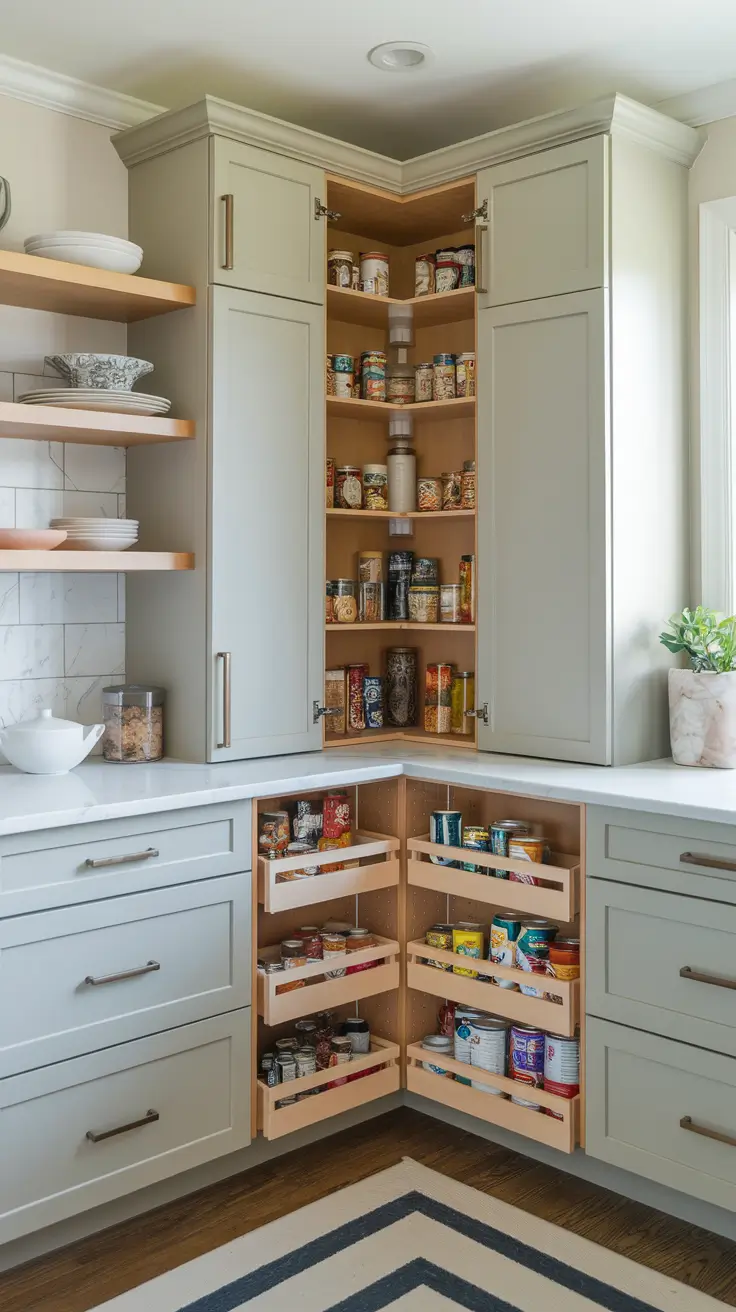
As far as the furnishings go I think about what shape the corner is first. In a small kitchen, I may call for a floor to ceiling cabinet with a bi fold or angled door that opens wide and allows for deep cabinet storage with pull out trays inside. In a larger kitchen, I might create a small walk in corner pantry with shelves going around two walls and a simple door that is the same as all of the other kitchen doors. I utilize lazy susans, tiered risers, and transparent storage containers in every corner solution to allow items to be seen from all sides. A vertical tower of shallow shelves can be placed in even a narrow corner where spices, oils or canned foods can be stored.
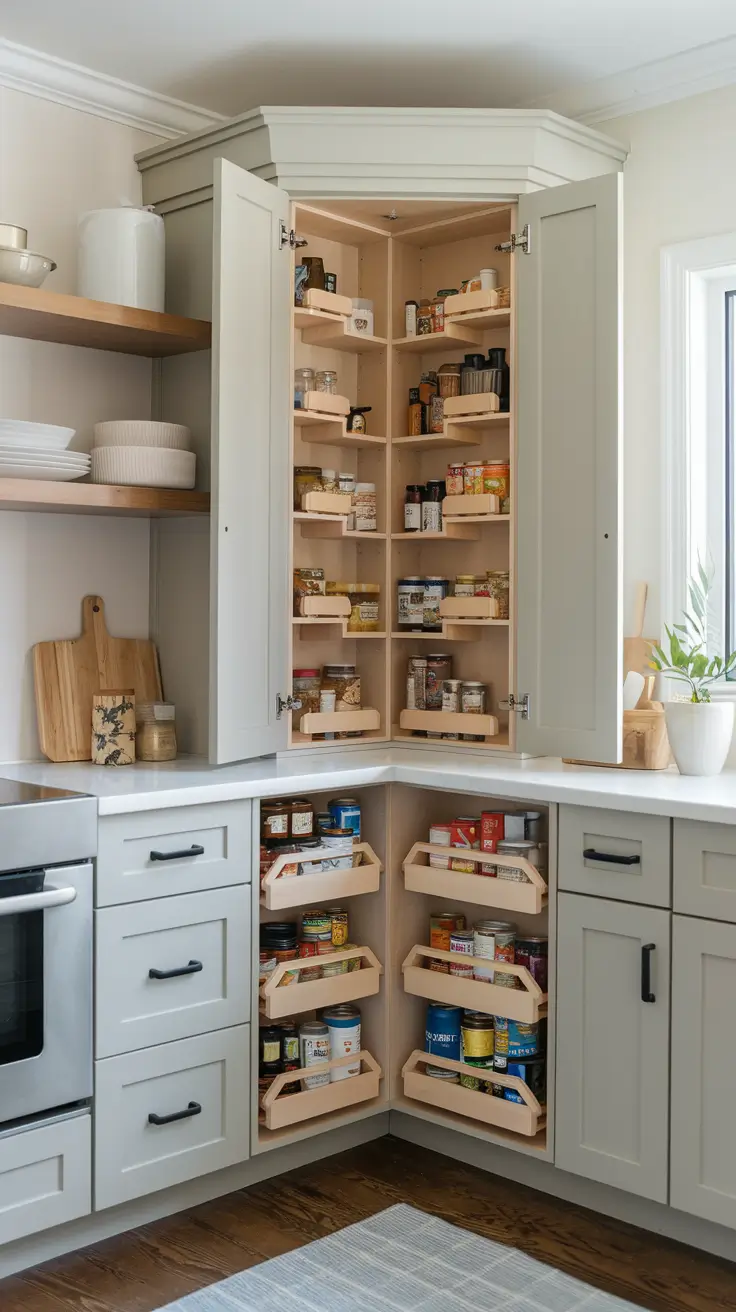
From my experience, unfortunately people often underestimate the power that a well used corner can have when it comes to storage. To me, when we turn a corner into a dedicated pantry space, this reduces the pressure on other cabinets and releases counter space. I encourage clients to dedicate this space to categories that benefit from being together such as baking supplies or snacks so that they can open one door and see all. It is also a great place to have a small donation box or basket, as the corner is out of sight but not in the path of heavy traffic.
In this section, I would still add more attention to lighting and style of doors. I tend to add an interior light that comes on with the door, and select hardware that is easy to understand, so the corner won’t seem awkward. Thoughtful details at the corner make the entire kitchen seem more complete and ensure that no square foot is wasted.
11. Pantry Donation Box Station: Simple System for Regular Food Donations
When I plan a pantry donation box station, I try to make donating as easy and natural as putting groceries in the pantry. I imagine a small, well-defined space either inside the pantry or right outside of the pantry door, where a sturdy box or crate is always awaiting its contents. The station must be present enough to make people remember, but also be nicely incorporated into the overall kitchen or storage room design. This makes the concept of Donations part of everyday life, not something special before Thanksgiving and holidays.
For the physical set up, I like to have the donation box on a low shelf or short bench so that people of all ages can get up to it. Above or next to it I hang a small frame or clip board with information about local food banks, school drives, or church collections along with small notes about what kinds of foods are most helpful. Reusable shopping bags can be used to store donations in a neighboring bin or box for convenience, so all we need to do is organize the process from beginning to end. If space permits I have a narrow cabinet or cubby for extra items that I buy on sale specifically for future giving.
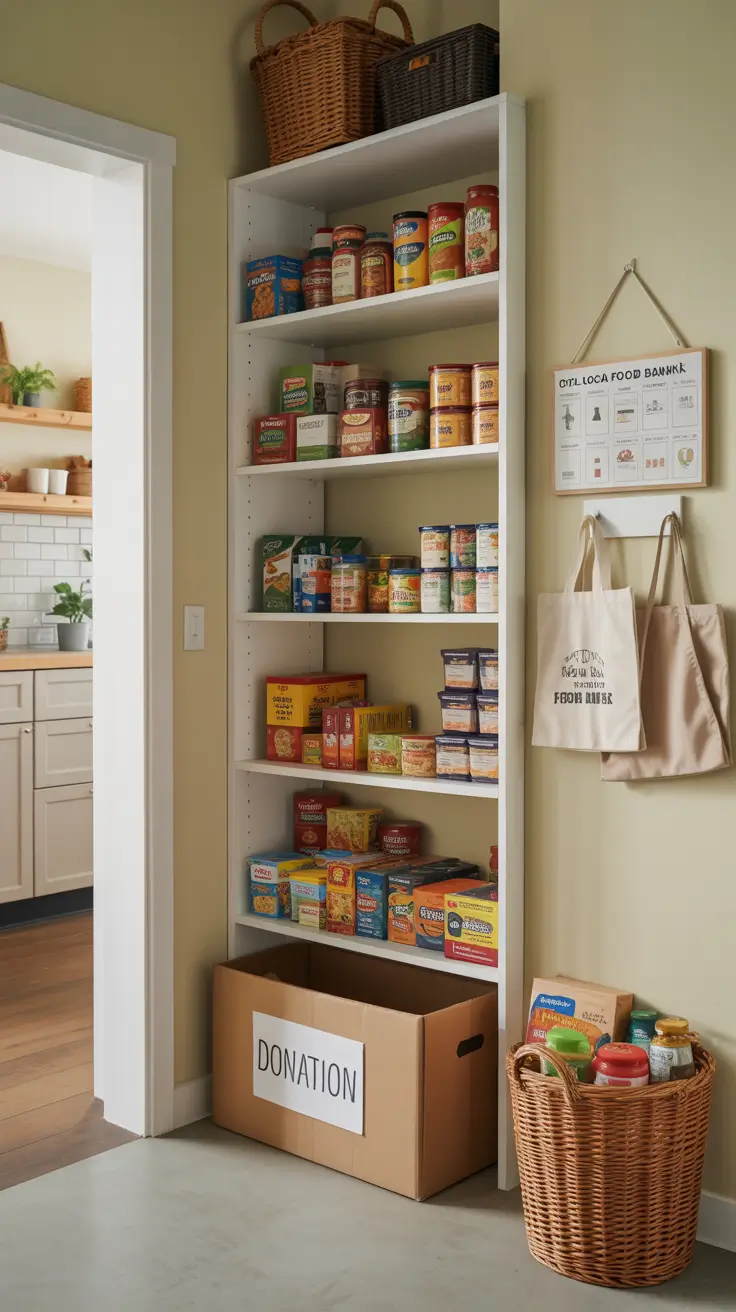
In my opinion, this type of station is best when it is calm and attractive, not cluttered looking. I usually use a box that goes with other pantry or kitchen decor, maybe a woven basket or plain wood crate with a nice sign on it titled “Donation Box.” Families can make it a habit to scan the pantry once a month and move items they will not use into this area and children can be involved in this by helping to pack the bags. I’ve witnessed the ability of this sort of mini design gesture to open up conversations around community that are ongoing, and alleviate the stress from these last minute requests from schools or community programs.
Additionally, I would incorporate some kind of flexible scheduling element, such as a small calendar or note board on the adjacent wall in this section. I would recommend marking out regular drop off dates whether monthly or related to events such as school food drives so the donation station is not allowed to die but is regularly used and doesn’t become a forgotten corner. This way, the design lends itself to regular generosity throughout the year.
12. Pantry Shelving Ideas 2026: Adjustable, Pull Out, and Vertical Storage
One of the first things that I think about when considering pantry shelving in 2026 is versatility. I imagine a pantry with shelves that move up and down effortlessly, pull fully out and even utilize vertical space that is often neglected near the ceiling. This may be a separate storage room, walk in pantry or wall of shelving in the main kitchen. By selecting the correct shelving structure I may be able to adjust the pantry as the needs of a household vary, whether they begin to cook more at home, hold bigger gatherings, or store more of the basic long term staples.
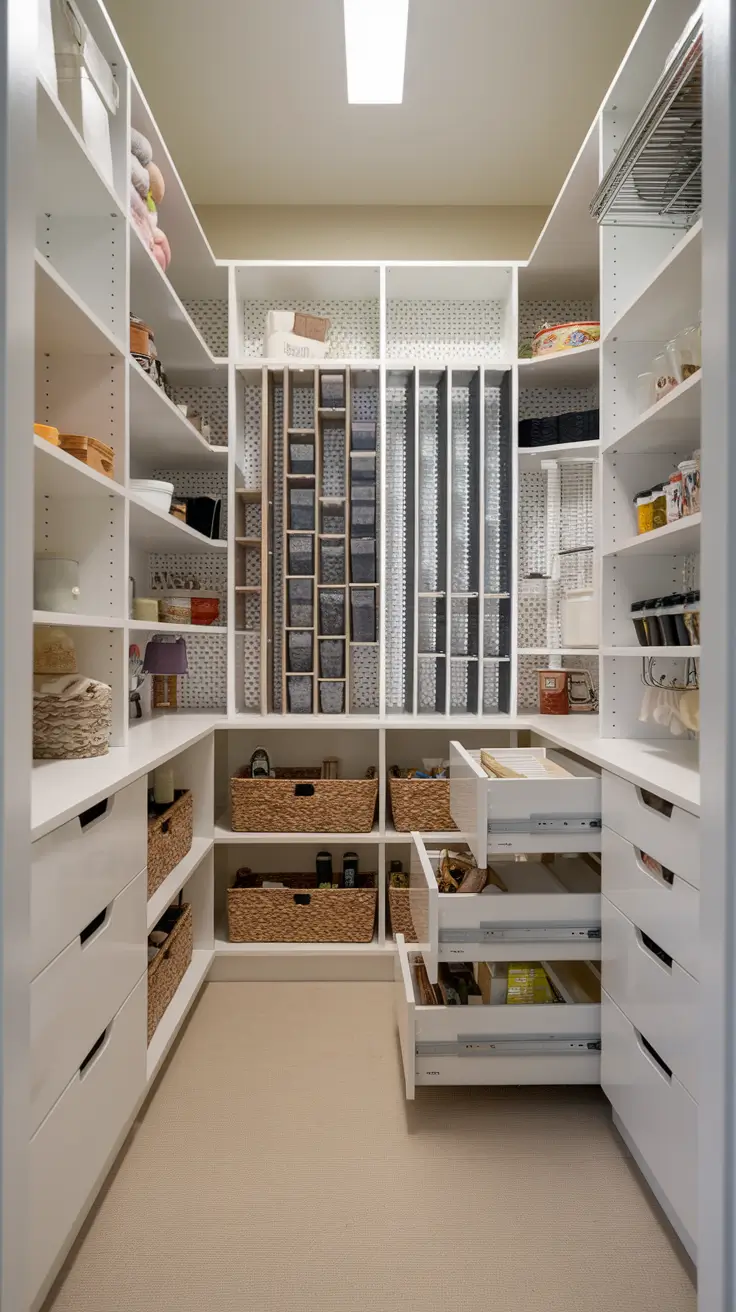
In practice I usually define a mixture of fixed and adjustable shelves. Deep, lower shelves or pull out drawers store heavy items and large storage containers, and mid level shelves are always flexible for more day-to-day foods that change more frequently. Pull out wire baskets can be used to function as drawers for produce or snacks, while vertical dividers can be used to prop up cutting boards, trays and baking sheets. Using the vertical space, I create a top shelf space around the room where less-used appliances or bulk boxes are located and be certain to have a sturdy step stool included in the pantry equipment. In more tight spaces, I have over the door shelving to extend another narrow column for jars, spices or bottles.
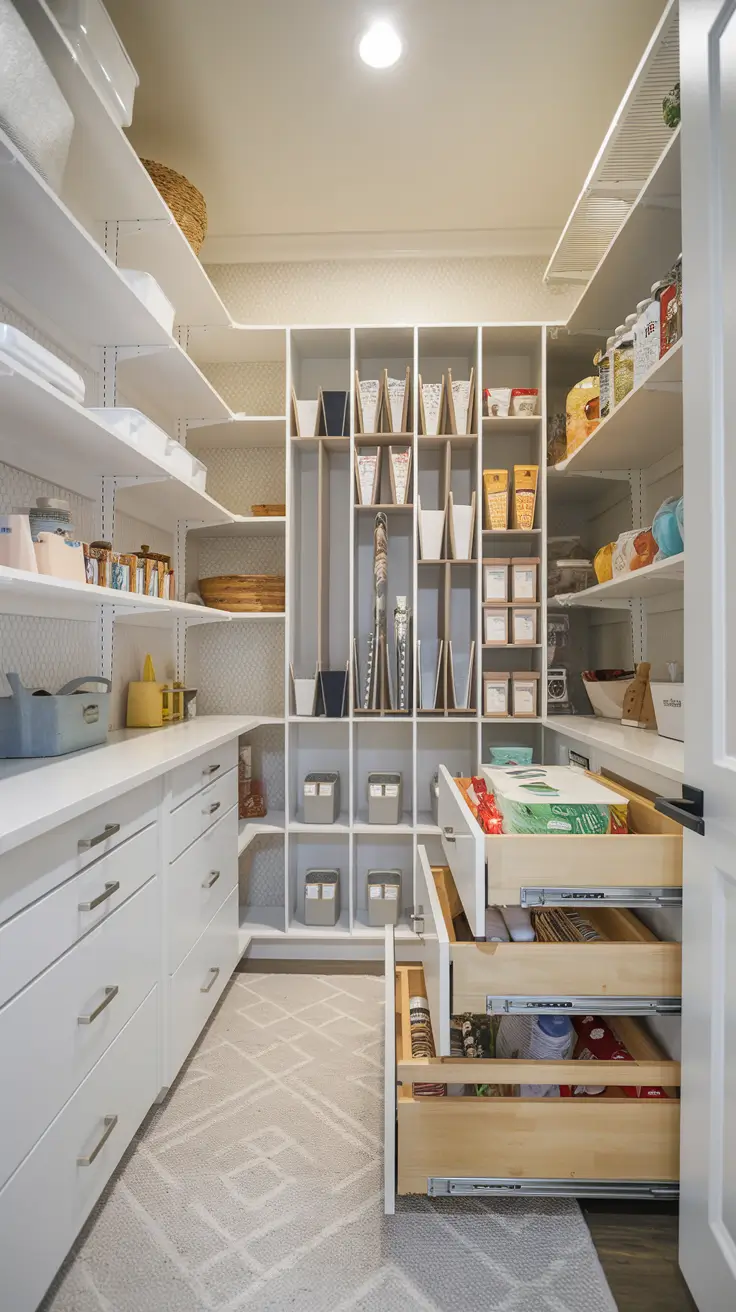
From my professional point of view, the correct shelving can help make even a small pantry into a very efficient storage area. I know of narrow, tall shelves up a wall in a basement or garage being a greater asset than a cluttered storage room with random furniture. I usually suggest simple metal or wood shelving units that can be rearranged over time rather than built in cabinets everywhere for families that will probably change their habits. This method of preserving food is based on the fact that the method of storage changes over time and the cabinet remains functional without major alterations.
In this section, I would still add the concept of labeling the shelves themselves and not just the containers. A small strip of label tape at the front of each shelf keeps everyone organized in knowing what goes where and makes it easier to turn the pantry over after full working weeks. This simple detail provides support for long term order and makes the shelving system even more effective.
13. Kitchen Cabinet Pantry Ideas: Turning Cabinets into Food Storage Zones
When the home does not have a pantry, I often create efficient compartments for food storage by turning common kitchen cabinets into pantries. I begin by mapping out the existing cabinets around the kitchen, then allocate certain areas for dry food, snacks, baking goods, as well as canned goods. Even a small kitchen can work exceptionally well if one can plan a few cabinets in pantry style organizing. This method is perfect for apartments, small houses and areas where there is no room for a separate storage room or walk in pantry.
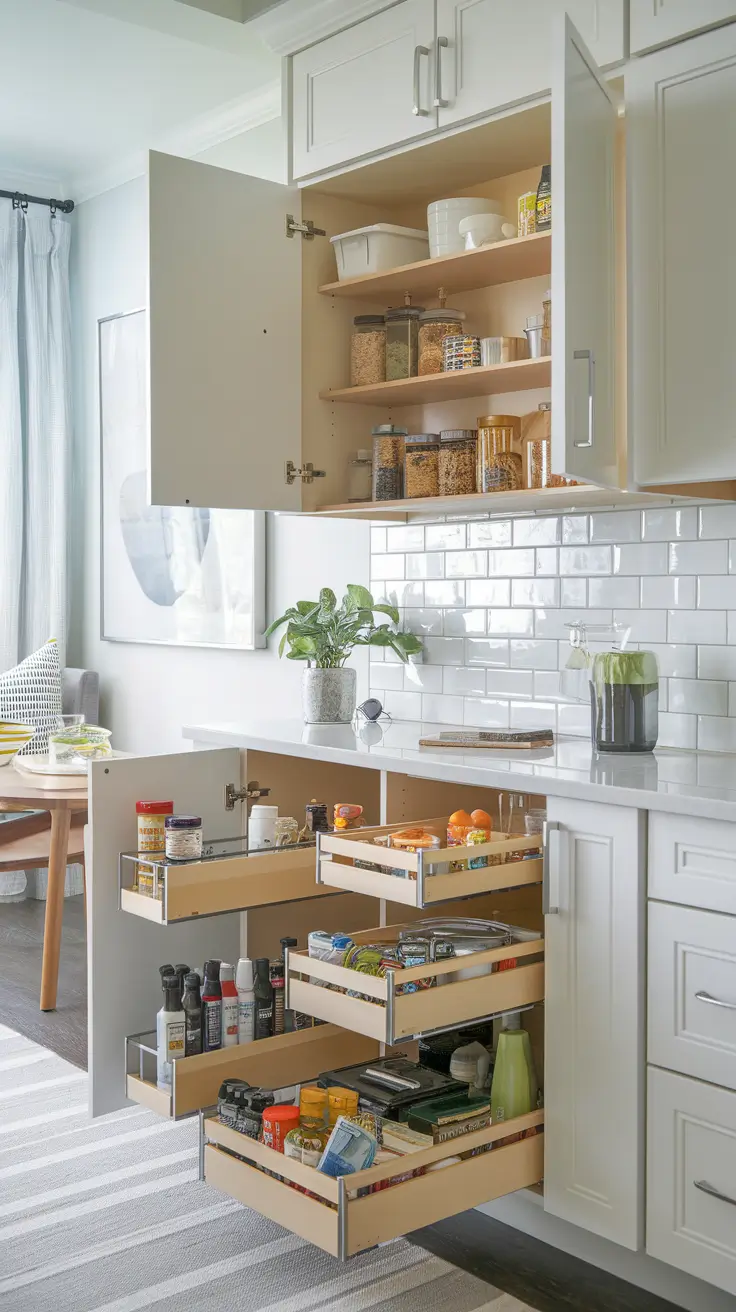
Inside each cabinet, I make use of pull out trays, tiered risers and clear bins very liberally to make things structured. For instance, a top cabinet might contain breakfast products, with separate containers to store cereal, oats, and spreads while a bottom cabinet next to the stove might contain grains, pasta, and cooking oils. I also frequently install racks to the inside of cabinet doors for spices or foil making every surface available as storage. Stacking storage containers is a great way to maximize the space inside the cabinet and I am mindful of the height of shelves, so the foods I use often are within easy reach.
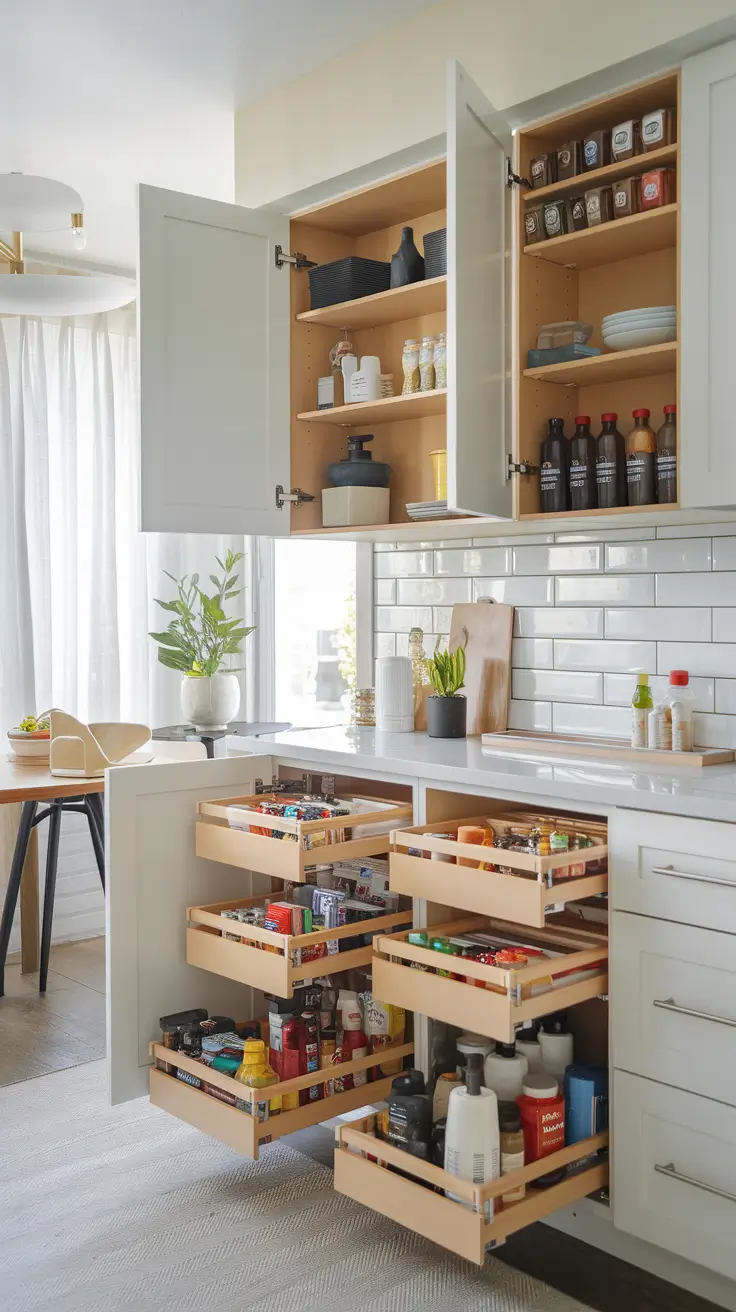
In my experience, cabinets based pantries work best if they are purposeful and cohesive throughout the space. I suggest that you use the same type of storage containers and labels throughout the house so that opening any cabinet is predictable, and not a haphazard situation. I also like to keep one cabinet partially dedicated to overflow and donations – where there is a small box items can be placed to be set aside for community events or family members. This will give the entire kitchen a sense of integrating whole, not of a peculiar compilation of random cabinets.
In this part, I would still add one more element to complete the idea: a visual guide. I would recommend sketching out a basic outline or list of what is in which cabinet of what categories and keeping it in a drawer or on the fridge. This will help everyone in the household, or even guests, locate and return items properly which can help the cabinet pantry zones stay effective over time.
14. Free and Low Cost Pantry Upgrades for 2026
When I give people advice on how to update the contents of their pantry in 2026 without breaking the bank, I like to focus on changes that will make a big impact but are small. I envision a kitchen where easy improvements as simple as better organizing and labeling make the pantry seem almost new. Some of the best improvements like categorizing shelves or bringing things you use daily to eye-level are completely free. With a little planning, even a simple storage room, basement nook or cabinet can have a more modern and efficient feel to it.
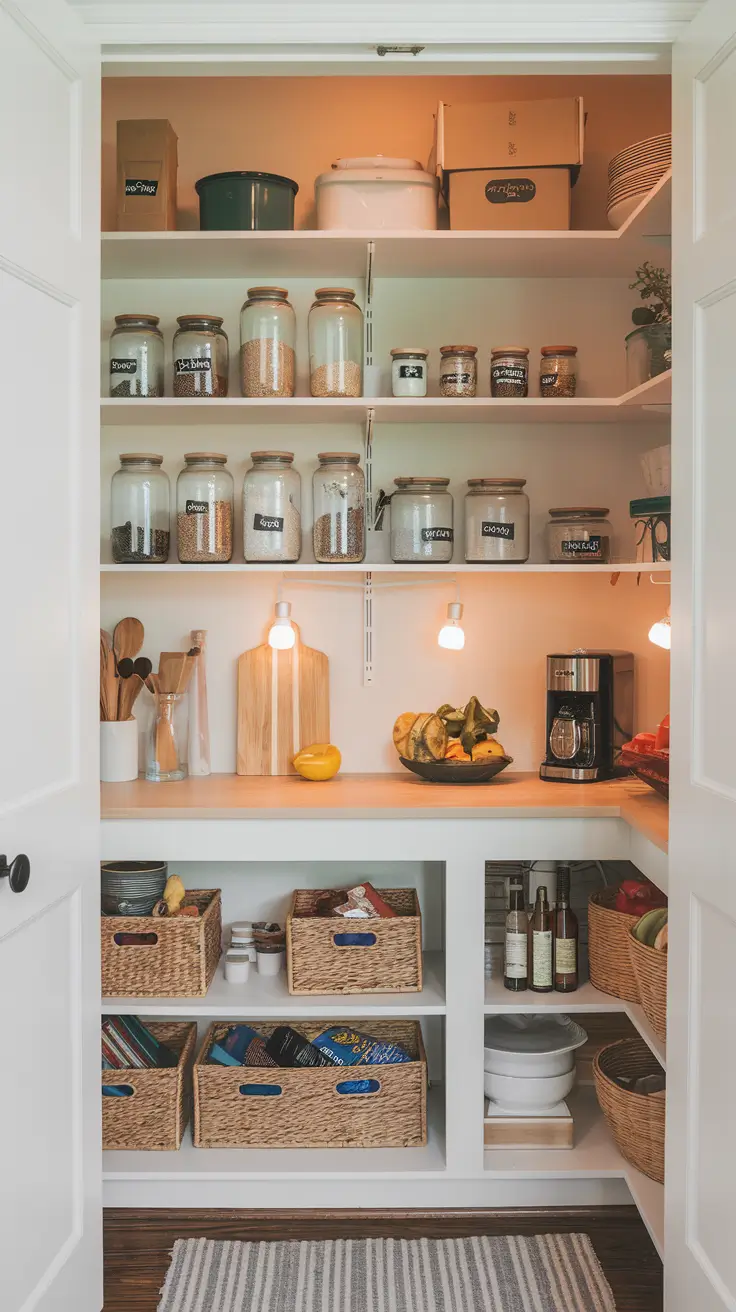
For low cost improvements, I suggest that you start with containers and shelving that you own. Reclaimed jars, old boxes and repackaged containers can be labeled areas for snacks, baking and canned items. Cardboard boxes cut to the right size can be used as drawer organisers inside cupboards, and simple hooks can be placed on walls or doors for reusable bags or aprons. I also advise marking up the items with painter’s tape and a marker until a permanent system is selected. For lighting, there are battery-operated stick on lights that can be easily applied to dark cabinets or under shelves to make a huge difference without the need for any wiring.
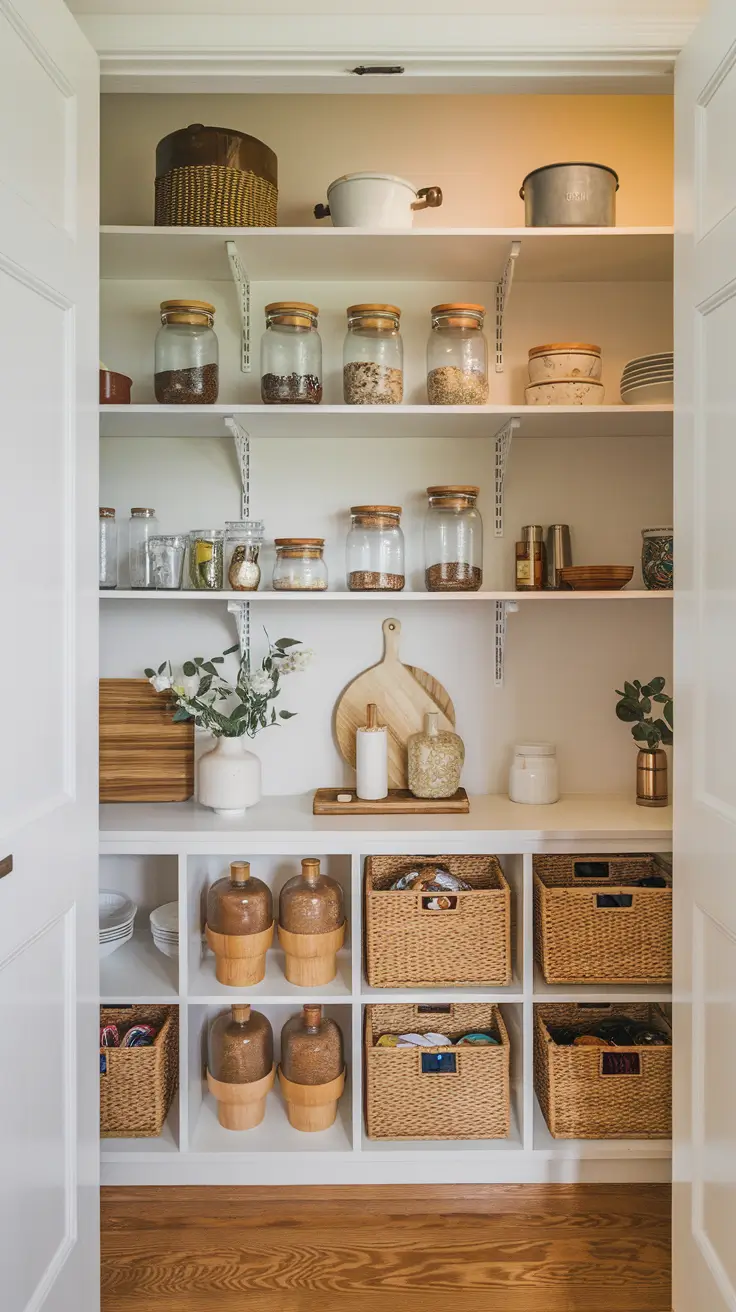
In my opinion, the greatest free upgrade is a careful reset of the pantry contents. I urge people to get everything out, check expiry dates and make an informed choice about what is kept, what is donated and what is not replaced. This process frees up space and often uncovers the fact that there is no need for additional furniture at all. I have seen many households feel like they have a new pantry just because they de-cluttered and re-defined their shelves. Once that base is established it becomes simpler to add more of selected upgrades over time as upgrades can be made based on budget, like better storage containers or custom made shelving.
In this section, I would still add one more idea that can be beneficial in helping people stay motivated: a simple before and after photo habit. I recommend taking a quick picture of the pantry or cabinet before re-organizing and another picture after the reset. The visual improvement is very rewarding and can lend a boost to future low cost projects in other areas of the kitchen and home.
15. Small Kitchen Pantry Ideas 2026: Space Saving Food Storage Tricks
When I create a pantry for a small kitchen, I begin by considering every inch of available vertical and horizontal space as valuable real estate. Even if it is just a corner cubbie, as in a recessed niche off the refrigerator or behind a door, I like it to look more like a narrow storage room. I use open shelving for daily foods, skinny pull out pantry units and shallow cabinet storage so that nothing is misplaced. I see more of my clients are looking for light colors, handle-free cabinet fronts and integrated storage containers that are organized in a way that works with their everyday lives and eliminate visual clutter for better organization.
In this type of small pantry I would use wall to wall shelves from just above floor level up to the ceiling, with the bottom shelf for heavy box items and bulk bottles. I have clear storage containers on the middle shelves for dry goods, a small cabinet for spices, and hooks or a rail in the inside of the door for small baskets. Even if the footprint is small, having at least one area of floor that is left open will create that walk in feel. Corner shelves are curved so that jars do not end up hiding in dark pockets; and I put a simple battery powered light strip under each of them for improved visibility.
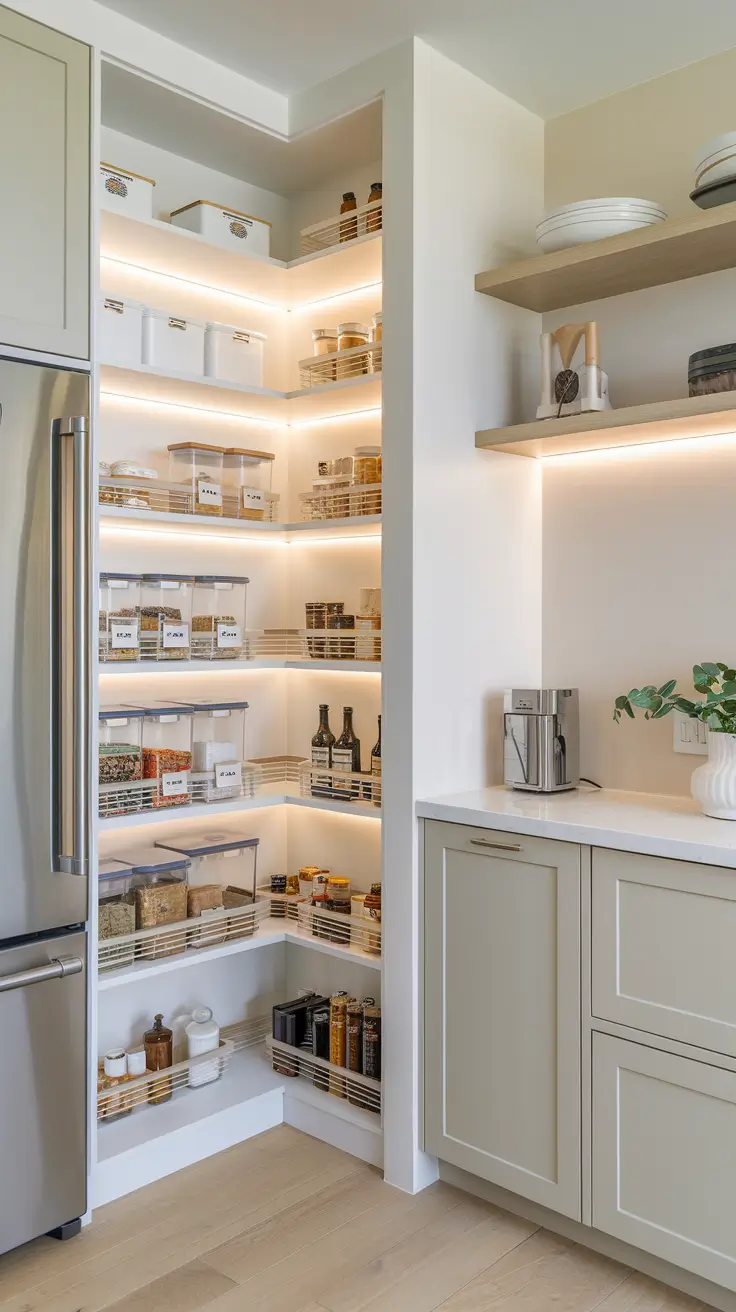
My experience shows that small kitchens don’t work if the owners just have deep cabinets with no internal organizers. I tend to suggest shallow shelving and shorter space between shelves, which is often repeated by American kitchen designers in the media in small kitchen makeover talking points, as it makes for more visible food and less waste materials. I have found that if people can scan through everything quickly they are more likely to use what they have and less likely to purchase duplicates. That is especially true during a time of tight budgets when throwing away food seems like a form of irresponsibility.
I would add one more feature to this small kitchen pantry, if I could – a thin pull-out column between the fridge and the wall space, where you could store cans, bottles and baking items. It is almost always a sleek line in the kitchen, but without taking any space, it increases the storage organization for the kitchen remarkably.
16. School Pantry Ideas 2026: Organized Food Support for Students
When I design a school pantry I first consider dignity, accessibility, and obvious organization so students feel safe and welcomed when they come for assistance. I think of a well-lit room near the cafeteria or guidance office with shelves that are easy to see-and that have wide aisles, and are designed so that you can get in there and look around without too much hassle. The pantry is not meant to be a dark storage room, and so by using warm colors, clear signage, and good lighting, I create an inviting space.
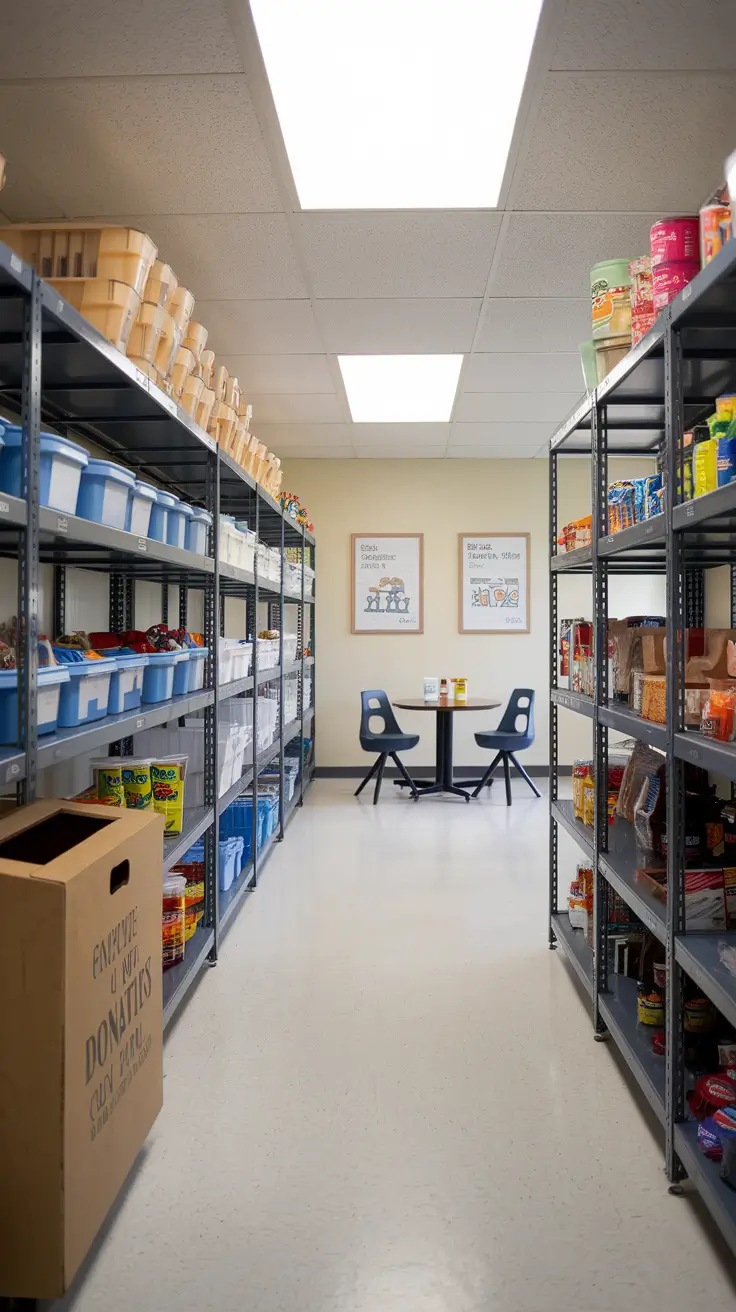
As far as furniture goes, I opt for solid metal or laminated shelving that can support a lot of weight, labeled storage containers for snacks and dry goods and larger bins or box style totes for fresh produce on the lower shelves. The donor box is near the entrance of the facility and I always leave a small table and chairs for volunteers to use to sort and replace items that staff and families leave for donation. Open shelving is great for making everyday items easily available for students while door cabinets can be used to store sensitive items or backup stock. Flow from the entry door to the check out or sign in area is clearly defined and additional features include a small refrigerator, recycling containers, etc.
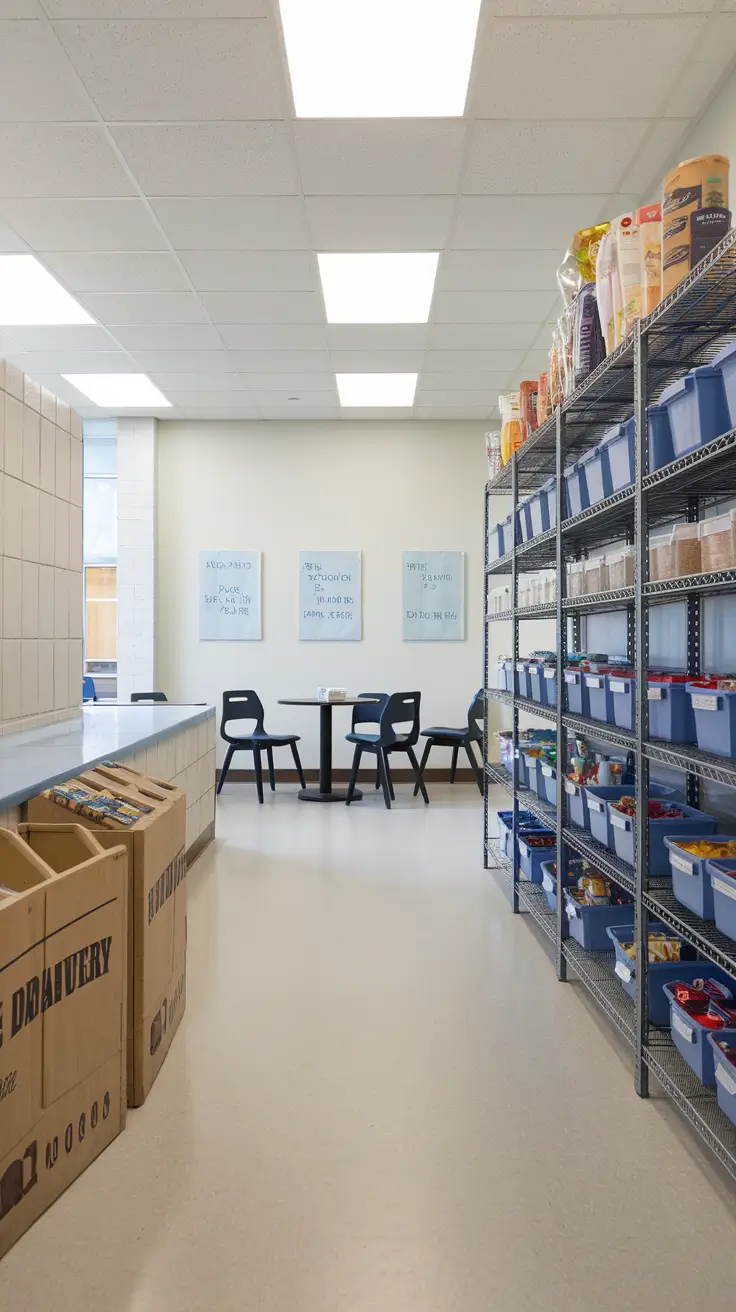
In my opinion, the best school pantries have distinct areas organized like this: breakfast, quick grab, complete meal ingredients and hygiene products. Many community school pantries throughout the United States are guided by zoning practices as they make it easier for school personnel to quickly direct students and keep track of inventory. I also like to involve the school community to invite student volunteers to help set up and label, which helps to increase pride and de-stigmatize using the pantry.
I would still include one more element to a 2026 school pantry that would be a designated information corner with posters about free meal programs, community resources and nutrition tips. A small bulletin board, a tablet kiosk, or a simple brochure display near the door can transform the pantry from a mere storage space to a true support center, which is in line with the larger mission of caring for students and their families.
17. Church Pantry Organization 2026: Community Focused Food Storage
When I think of a church pantry, it is as a place that is responsive to the needs of the broader community and operates with a sense of dignity. Often the pantry is in a basement or side room that leads off a back door where the delivery happens so I am working on making the clear pathway from unloading to shelving. Tone of the atmosphere should be calm and warm, which speaks to the mission of the church, with enough structure to manage busy donation days and distribution days.
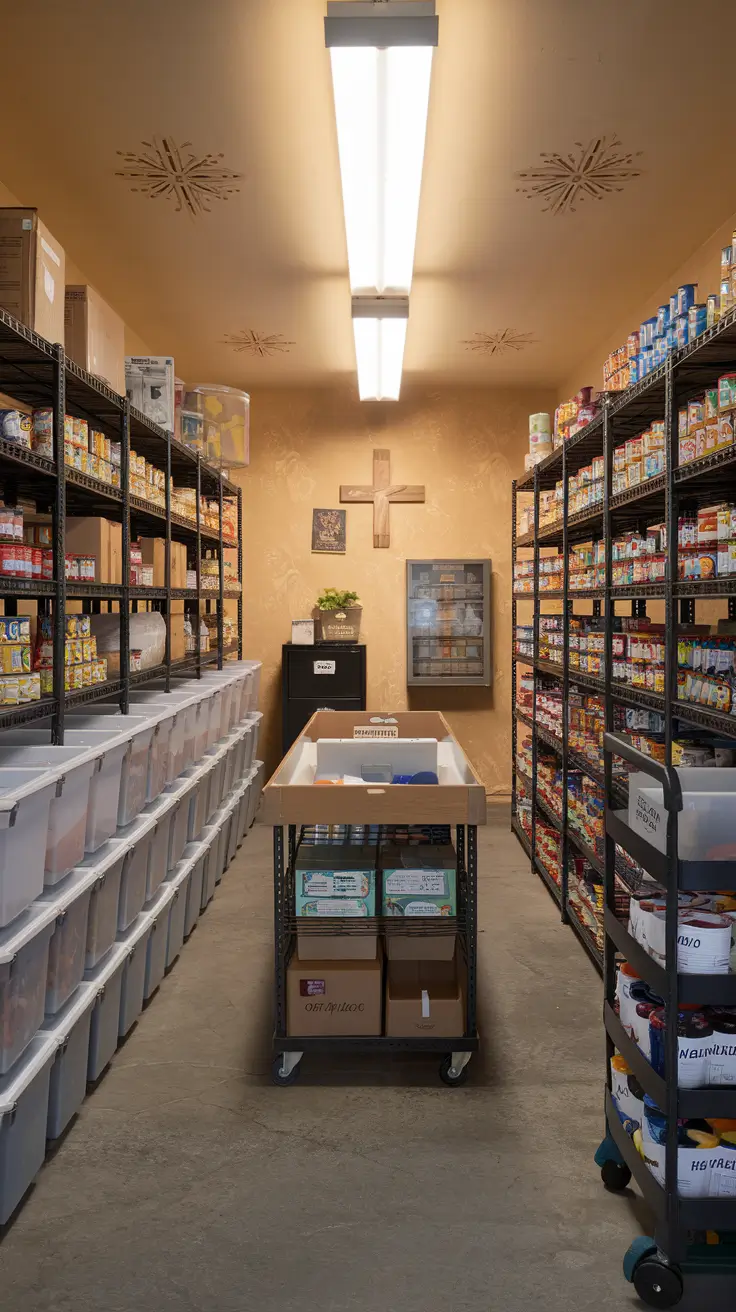
So as far as the physical design goes, I like long shelves for the canned and dry goods, obviously, clearly marked cabinets for specialty dietary items, and big plastic storage containers for the bulk items such as rice or flour. I have a sturdy table in the center of the room for sorting donations as well as rolling carts to carry boxes from the door to the shelves. A labeled donation box is placed by the church lobby and members bring in items on Sunday which can then be sent to the pantry. I also have a small cabinet with a lockable door to store records, gift cards, cleaning supplies, etc.
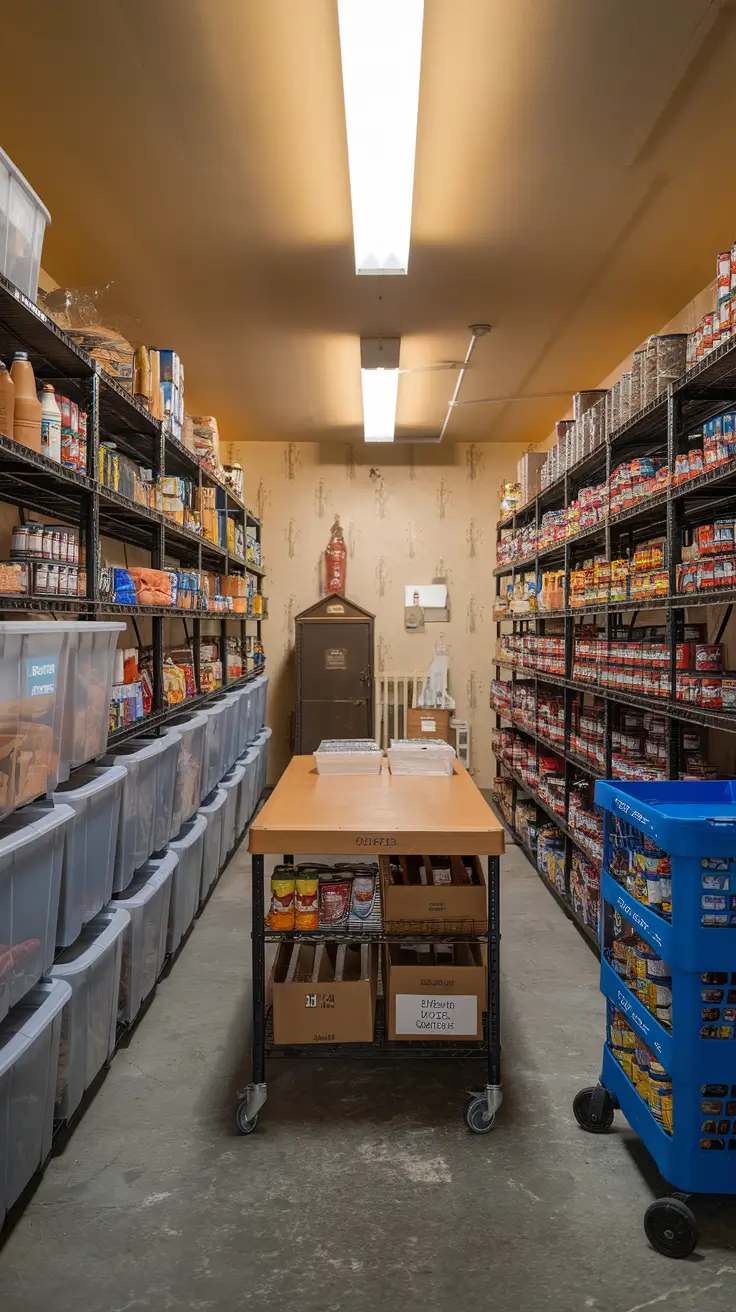
From my point of view, church pantries operate best when there is some sort of structure for intake, organizing and distribution. Many food programs in the United States are known to practice first in, first out rotation and simple color coded labels to ensure that older food is at the front. This approach is something I employ in my designs because I use volunteers and they are subject to change every week, and having the visual system makes everything easy to understand. I also recommend that a printed guide is placed on the wall, including categories, rules for donations, and rules for safety so that operations are carried out in the same way.
If I was a church pantry being enhanced for 2026 I would include a welcoming client area located just outside the main storage room. A couple of chairs, a small check in desk and some tasteful decor will make a purely functional basement into a place where neighbours feel cared for. A simple detailing element is used to create the connection between the necessary behind-the-scenes storage and the church’s visible community commitment.
18. Pantry Design Principles 2026: Style, Function, and Easy Access
When talking about the 2026 pantry design principles, I always begin with the idea of cool aesthetics and usability that will help with easy access. Whether the pantry is a walk in room or a single drawer in the kitchen, I seek a clear layout, good lighting and finishes which complement the overall design of the home. I see the pantry as a functional component of the kitchen rather than an afterthought, so I match colors, door styles and hardware for a seamless appearance.
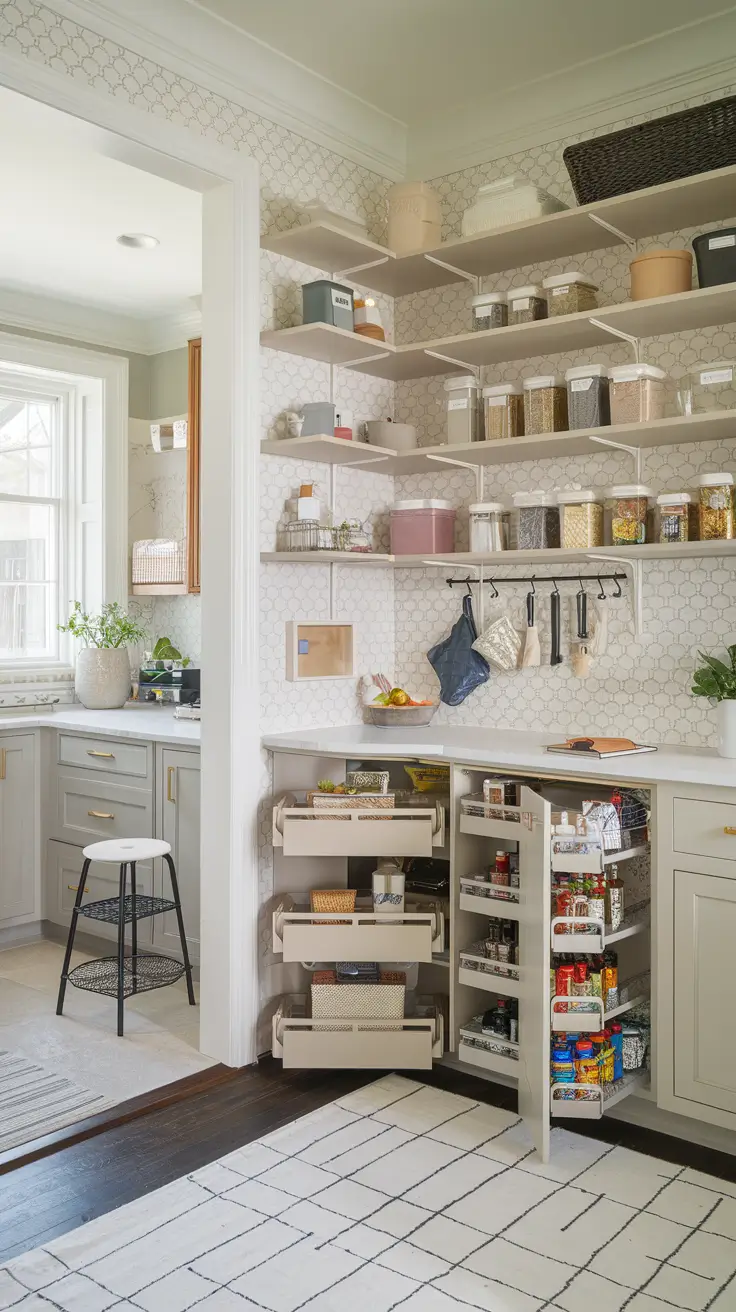
The key factors for me are adjustable shelving, a balance of open and closed cabinet storage, and a complete assortment of storage containers that are sized to fit shelves with little wasted space. I prefer tall pull out racks for spices and oils, deep drawers for snacks and baking items, and a dedicated corner unit with lazy Susans type shelves where otherwise it will be wasted space. Doors can be solid for a clean appearance or glass front to display beautifully arranged jars and baskets. I always have a step stool, hanging hooks that hold the reusable bags, and have clear signs so that everything has a place.
In my experience, the best pantry designs adhere to a simple set of rules whose application is touted in the home design media quite often: Heavy items low, daily items at eye level and seldom used items high. I have found that when my clients adhere to these principles that they are able to move more efficiently in the kitchen and feel less stressed around meal preparation. I also often suggest going for a neutral background with a very light pattern such as a light tile or washable wall paper as this makes food packaging much easier to see without visual noise.
If I were to add another layer to these design principles I would add a little planning station inside or just outside of the pantry. A small shelf or wall rail with a notepad, pen and perhaps a tablet dock provides a place to keep track of what is running low, weekly menu plans and what you can donate at a later date. This makes the pantry not just a passive storage place, but a true command center for food management.
19. DIY Pantry Projects 2026: Shelves, Labels, and Smart Hacks
When I think about pantry projects, I think about reasonable improvements that homeowners can make with basic tools and a small budget. Many times I’ll begin with a closet that’s not being utilized or a blank spot in the corner by the kitchen and make it a working storage area with basic lumber shelving and good organization. More people desire to decorate their pantry with paint, peel and stick tile, and custom labels that give the space that extra special touch to inspire you to keep the space clean and upkept.
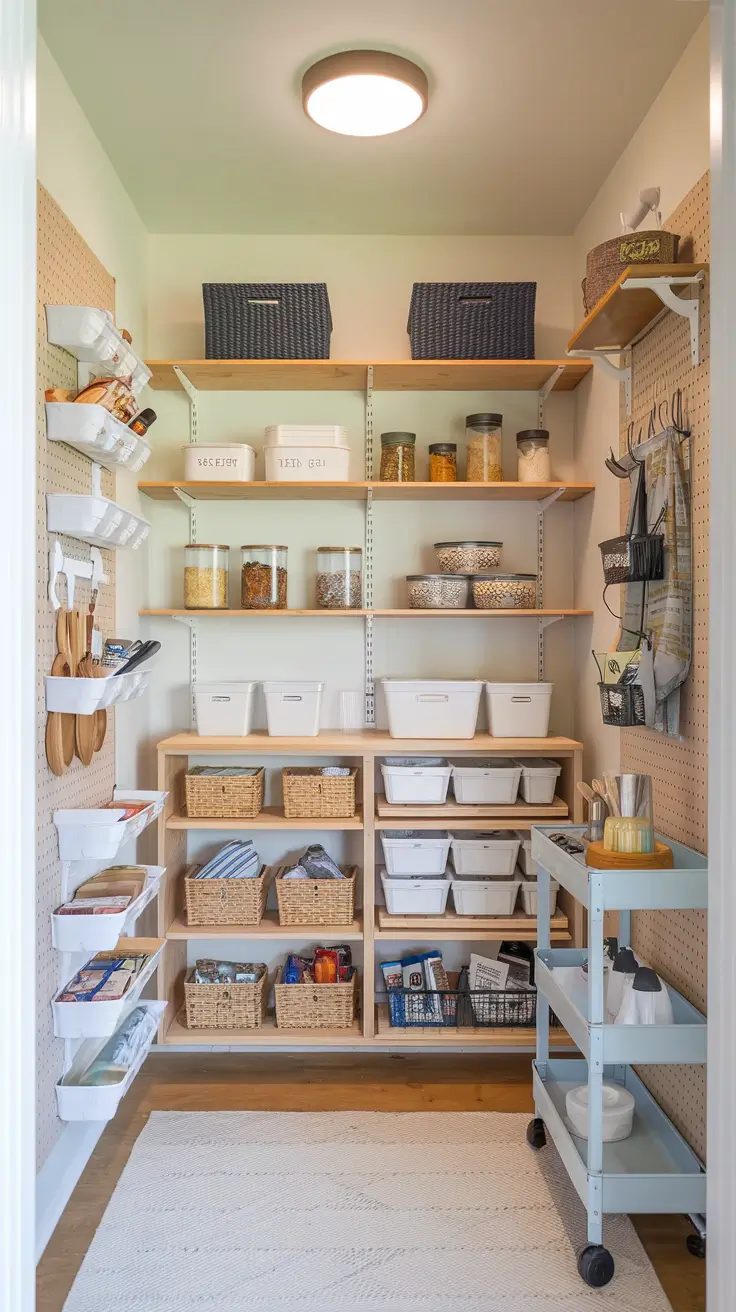
For furniture and accessories I use open shelving of wood, stackable storage boxes and modular boxes that can be rearranged according to my changing needs. I also tend to include a pegboard or rail system on one of the side walls to hang small baskets, measuring cups, and utensils that are used as often as necessary. A basic DIY door rack can be used for spices or small jars, while a rolling bin can be pulled into a corner for overflow items or baking supplies. Lower cabinet storage in a pantry can be sourced from a kitchen remodel where cabinets are dysfunctional, instead of buying additional storage and giving a new life to durable pieces.
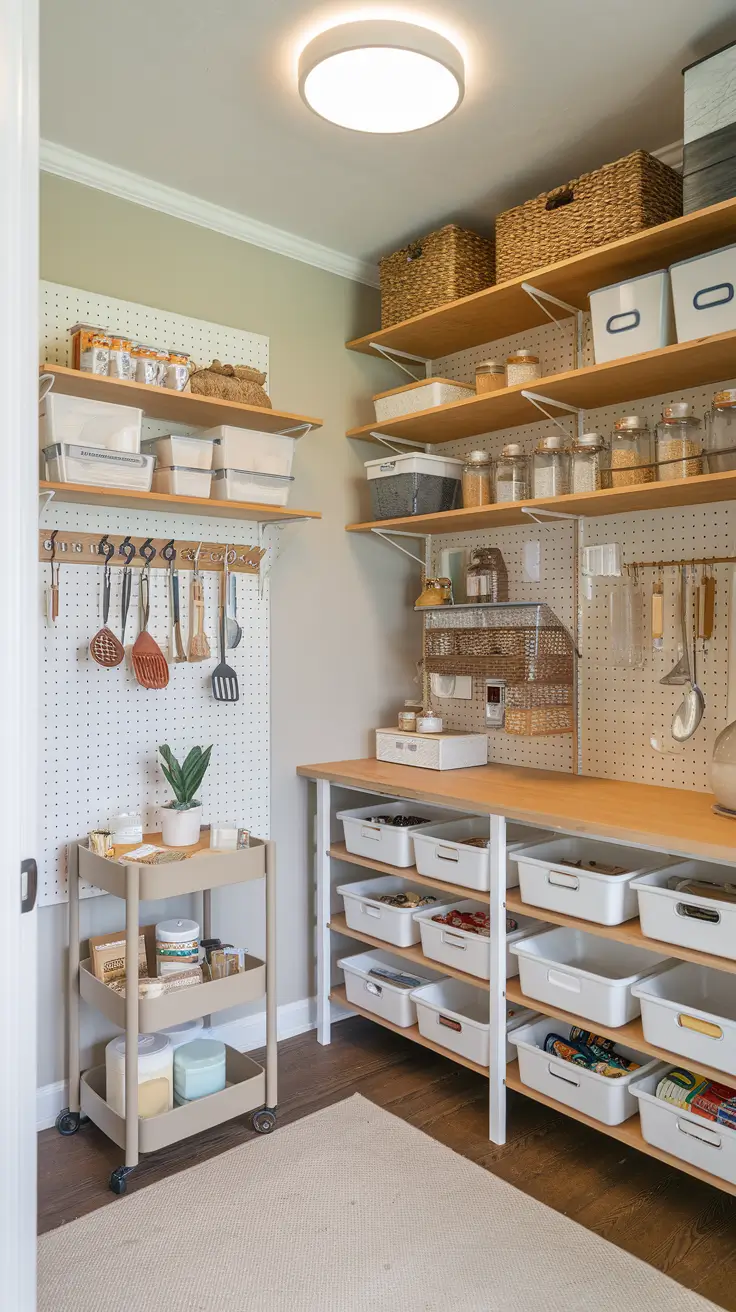
I have seen many homeowners build confidence after completing even a small DIY pantry project as it has a direct influence on daily life. Popular American media home organization experts are fond of preaching about the importance of labeling, which I totally agree with. In my own practice, I encourage my clients to apply clear, simple labels so grains, snacks, baking, breakfast, etc., can be easily identified and everyone in the household can put things away in their proper place. This ensures that the system will continue to operate even when the excitement of the DIY project is long since forgotten.
If you wanted to take it a step further with your pantry, I would recommend adding the motion sensor lighting and a small charging station for the devices used during cooking like tablets or phones. Many homeowners can add these types of additions, but they go a long way to making the space much more usable and making the pantry feel like the space is more of a designer installation.
20. Cabinet Storage Systems for a Modern Pantry 2026
When I design cupboard storage for a modern pantry I consider the pantry part of the main pantry cabinetry. In 2026, this often means cabinet fronts that are smooth and handle free as well as hardware inside the cabinet that encourages you to reach into the corner to pull out contents instead of pushing you to reach into a dark corner while risking fingers. I favor a mix of tall pantry cabinets, base cabinets with deep drawers and lighter weight items in upper cabinets, arranged and coordinated for the purpose of forming a clean architectural line along one wall or in a walk in pantry room.
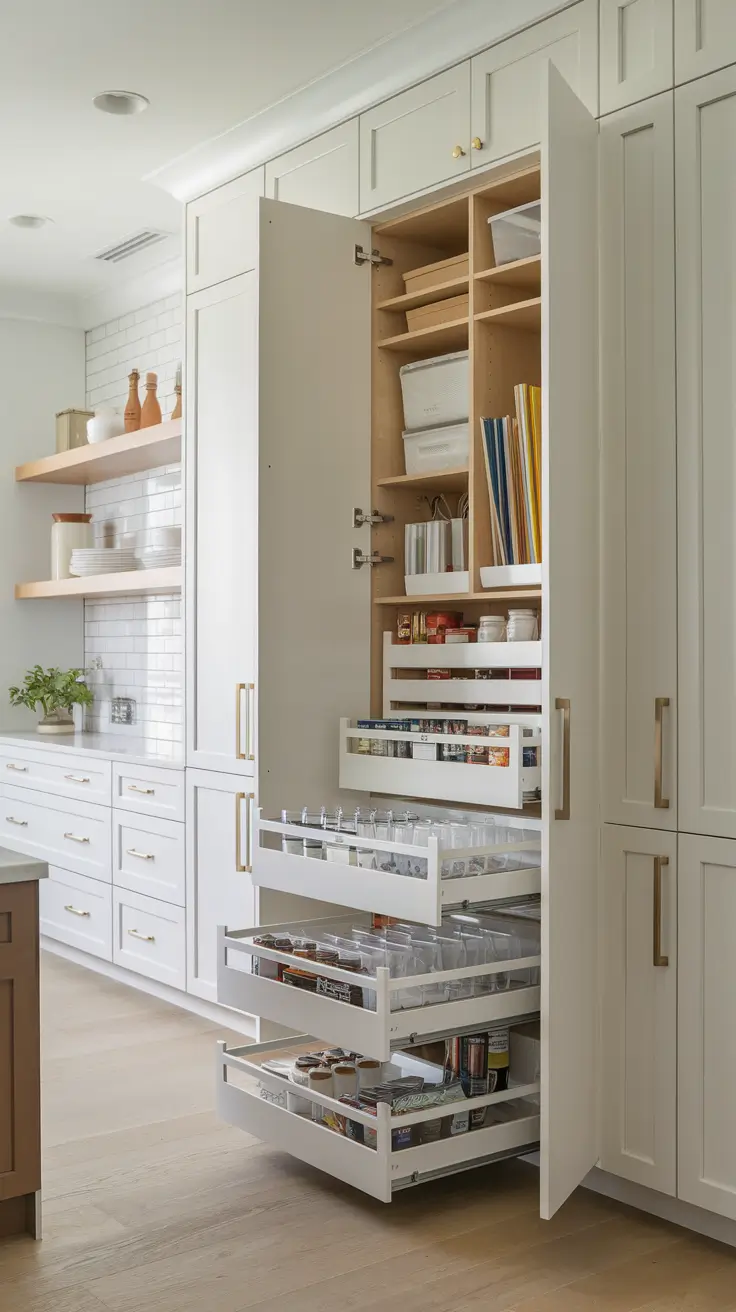
Inside those cabinets, the requirements are for clear-out shelves, tiered cans, baking sheet separators and inner drawers for food supplies and small items. I keep transparent storage containers in drawers so that items in them are easy to see and grab. For upper cabinets, I install lift up doors and shallow shelves for paper goods and back up items that are not used daily. I always save one base cabinet as a flexible cabinet storage area that can be used seasonally like extra food during holidays such as Thanksgiving or emergency supplies.
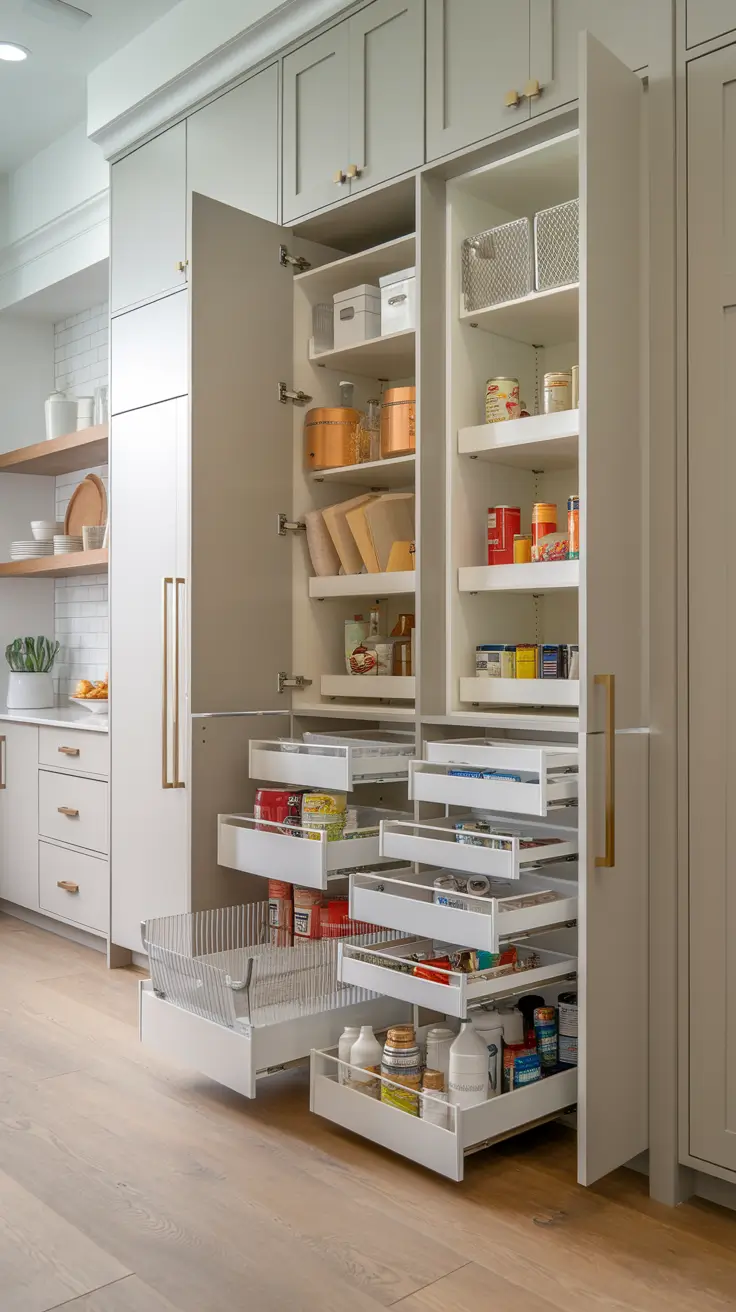
In my opinion, getting quality cabinet hardware is one of the best investments that you can do to a pantry. Many kitchen design experts note that full extension drawers and soft close slides improve the longevity and usability in cabinets and I agree – that is what I find in my projects. When drawers move easily and everything is in view at once, the chore of organization becomes less of a hassle and more of a fast and furious routine. I also find that a well-thought-out division of the cabinet’s inside makes clients feel as though they have gained extra square footage without requiring the footprint to be increased.
If I were adding something to a modern cabinet based pantry, I would add at least one narrow cabinet that would fit in as a tall pull out for bottles, oils and sauces. This type of cabinet uses little pockets in the design and keeps the messy things contained and upright. It is an easy adaptation that often turns into a client’s favorite feature in their storage kitchen organization system.
21. Storage Kitchen Organization 2026: Boxes, Bins, and Clear Zones
When I think about storage kitchen organization in 2026, I imagine a pantry that’s purposeful in each zone and each box or bin serves their purpose. Instead of random shelves with anything and everything in them, I develop designated zones for breakfast, baking, snacks, bulk foods, and donations. Whether the pantry is a complete walk in room or just a series of cabinets and open shelves, the zoning approach makes it easier to stock up each day and allows the whole family to contribute to the organization.
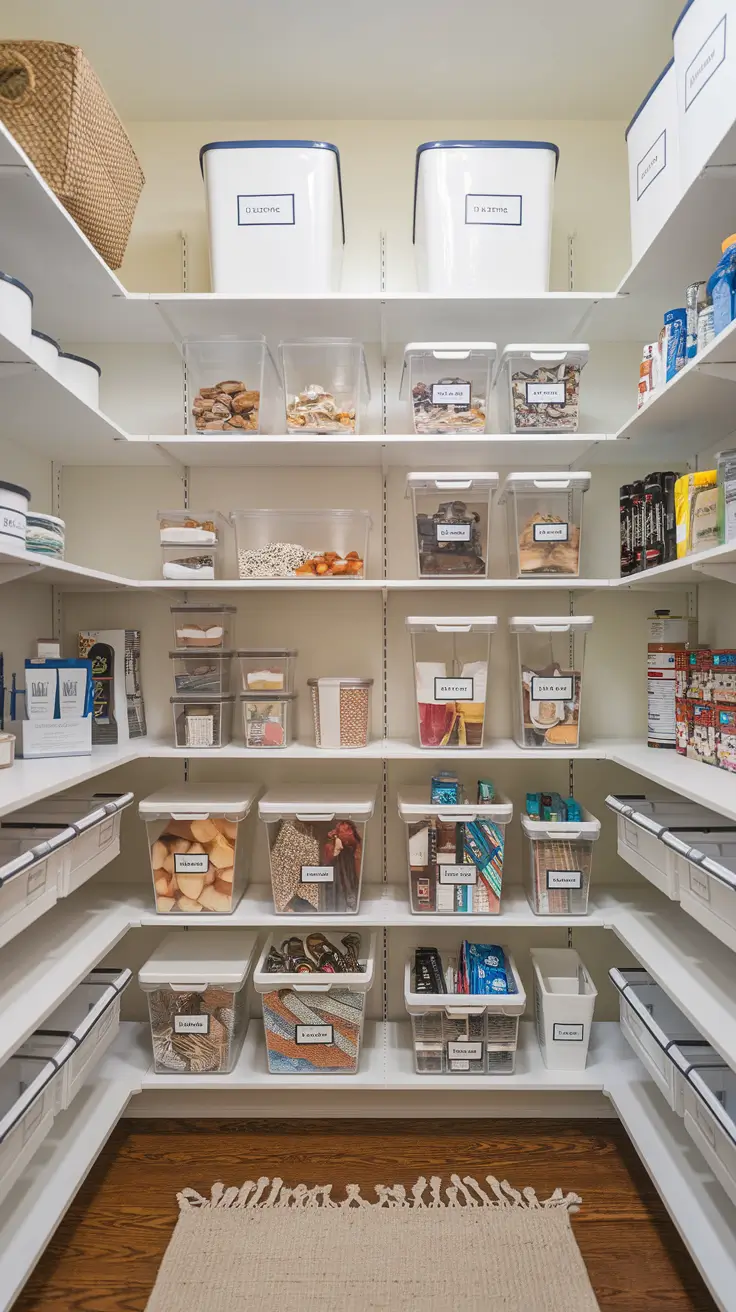
For the physical part I use a combination of transparent storage containers, closed bins and open boxes that easily move on shelves. I label shelves and containers and then line them up so that the front edges form a straight line, which right away makes them seem tidier. Heavy packages are stored in low bins that are removable like drawers, and lighter packages are stored higher up. I always have a designated donation box or bin in one corner so that once people discover items they no longer need that are in good condition, they have an obvious place to leave them for donations to the community.
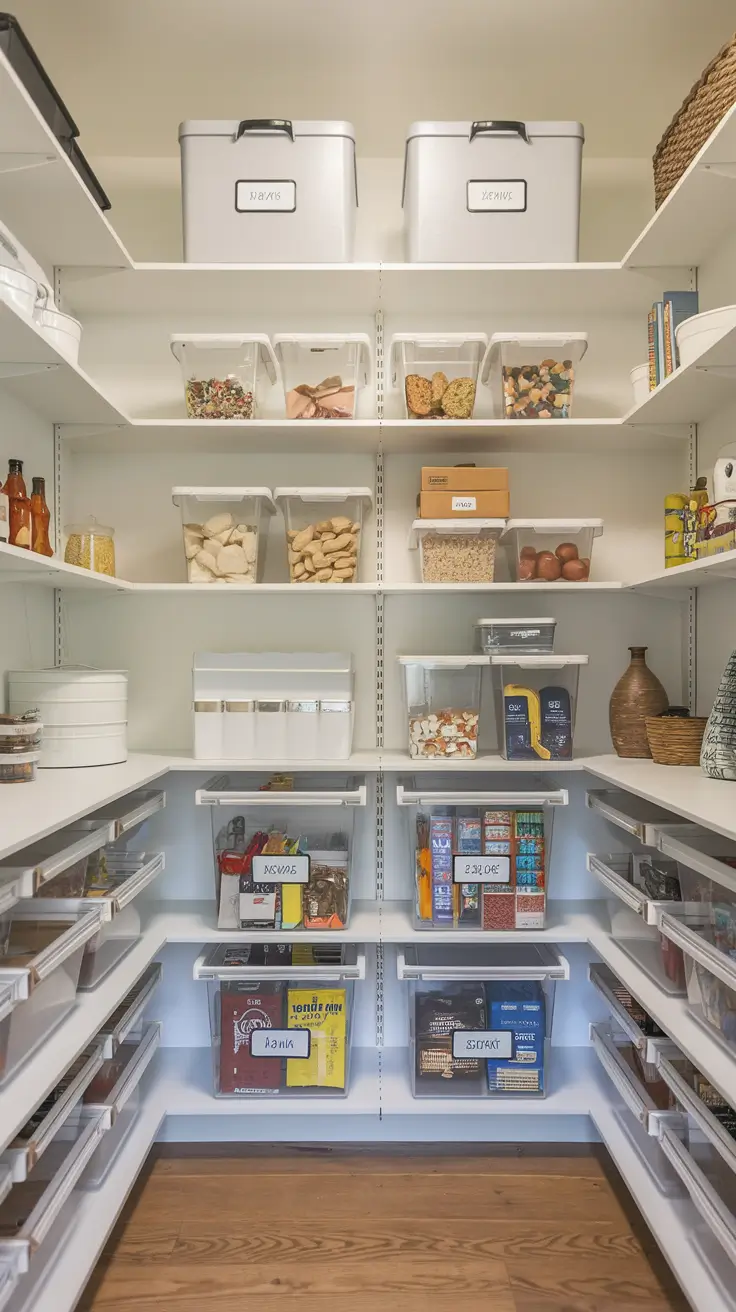
In my experience, clients fail to appreciate the role that container choice plays. Many organization experts, including the likes of the US home magazines, insist on the usefulness of having a standardized container for a peaceful, unified appearance. I see this every time I take a pantry filled with crazy, and put in matching little bins and boxes: people tell me they cook more at home, feel less stressed, and have less food waste. Something as easy as designating one bin for snacks and another for grab-and-go school lunch items may help busy mornings run more smoothly.
If I was to add an additional layer to a 2026 storage kitchen layout, I would set up a seasonal rotation area somewhere, a seasonal or holiday bin to be placed near the top shelf. This is where I would keep special baking ingredients, Thanksgiving classics, or treats that aren’t meant to last long (in case they’re the only treats I have, I can keep them in everyday zones). This allows keeping the basic pantry structure intact while allowing for variations in tradition and in events that occur during the year.
22. Thanksgiving Ready Pantry 2026: Seasonal Food Storage and Planning
I am visualizing a Thanksgiving pantry for 2026, the seasonal command center for the entire kitchen. I organize the storage so that all the holiday special ingredients are easily accessible and don’t interrupt the general food organization process. That may mean making a walk in pantry, a basement storage room, or even a tall cabinet near the door into a temporary Thanksgiving zone. I make distinct areas for bakeware, canned goods, drinks, and leftovers so that while flustered throughout the cooking and serving process, I am not searching for boxes, spices, or storage containers.
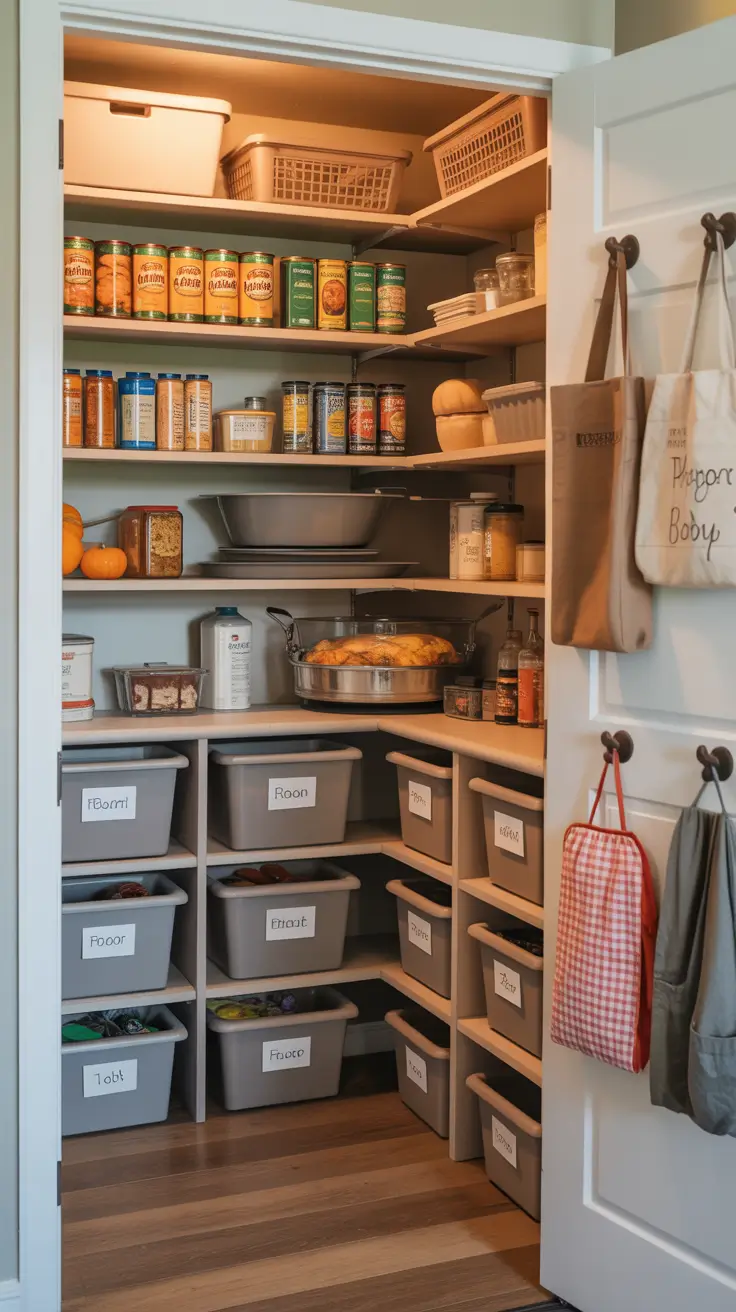
For furniture and layout, I use sturdy eye level shelves for canned pumpkin, broth and vegetables, deeper lower shelves or cabinet storage for flour, sugar and bulk baking items, and a special corner for large serving platters and roasting pans. I like to include some additional storage containers and lidded bins to store leftovers to use when the meal is over. A labeled box or bin for table linen, napkins and lighting keeps it all together and hooks on the pantry door can hold reusable shopping bags for some last minute grocery trips. If I have an area in the basement, I tend to use it to store extra beverages, bulk paper items, and a backup food donation drive box for the community.
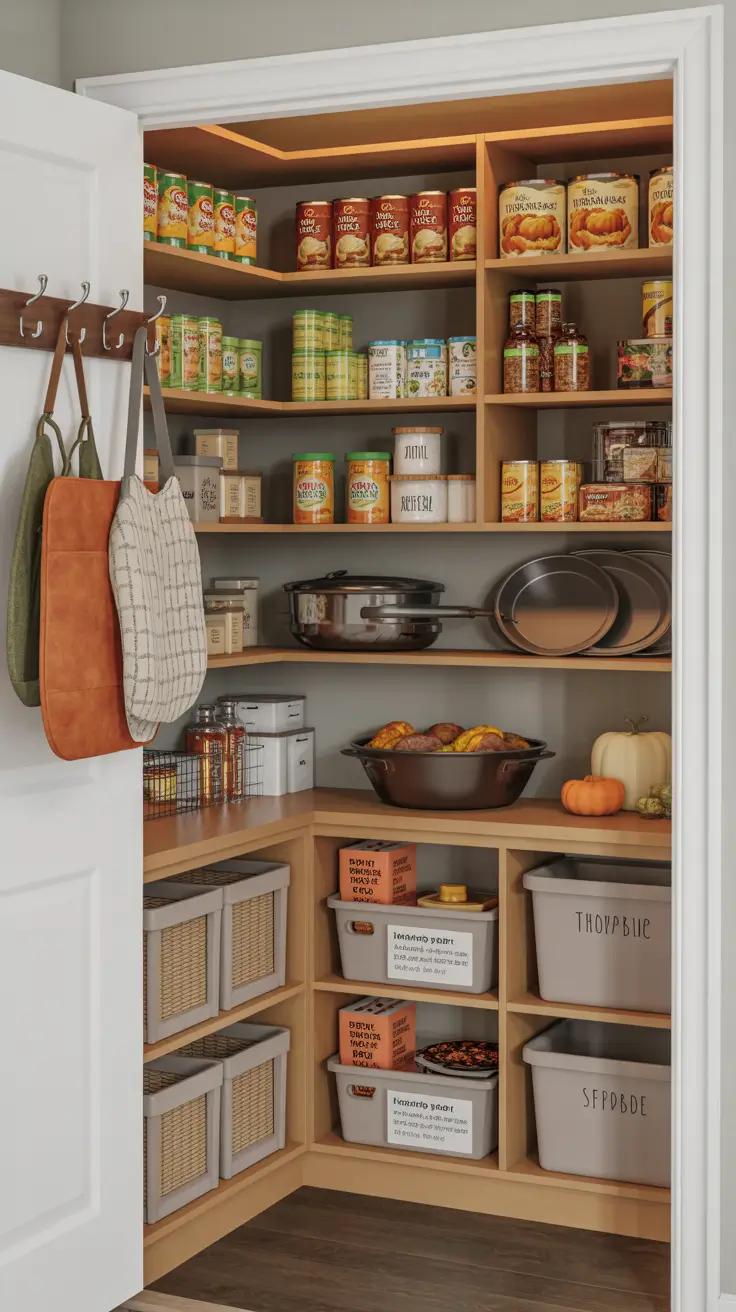
In my experience, the most effective Thanksgiving shopping lists begin weeks ahead of time. Many US food and home design publications suggest making a list and assigning shelves to all of the ingredients’ categories and I find that it helps maintain both stress and clutter at manageable levels. Personally, I like to go through expiration dates, pull out the older stuff and put it into storage to the front and have a small group of extras just for donations to make the community happy. I also try to leave at least one shelf empty for food items that arrive unexpected or special food that they want to leave as a gift for the holidays.
If I wanted an even more organized Thanksgiving pantry, I would include something as simple as a planning area set aside inside or just outside the pantry: a small wall mounted board or clipboard with the holiday menu, cooking time line, and shopping list. This way I can easily see what has been done and what still needs to be done each time I open the pantry. It makes the pantry not just a passive storage space, but an active planning center to feed the feast as well as make donations to neighbors, school or church programs if I so desire.