Container gardening ideas and designs are transforming how we use patios, balconies, and small outdoor spaces in 2026. But how do you create container gardening ideas that look modern, practical, and productive at the same time? Can container gardening ideas vegetable setups really thrive in small spaces? And what are the best container gardening ideas if you want flowers, herbs, or tomatoes growing right outside your door?
In this guide, I explore container gardening ideas on a budget, container gardening ideas flowers that bloom all season, and smart layouts for patios, decks, balconies, and backyards. Whether you want a sunny vegetable corner, a shade-friendly herb garden, or creative recycled planters, these ideas for container gardening will help you design a beautiful and productive outdoor space.
1. Creative Container Gardening Ideas and Designs to Transform Small Outdoor Areas
When I design creative container gardening ideas and designs for small outdoor spaces, I focus on layering plants and containers so the area feels lush without becoming cluttered. In a small patio, balcony, or backyard corner, vertical variation is essential. I often combine tall containers with trailing flowers and mid height herbs to create depth and movement. This approach works especially well for container gardening ideas flowers or mixed herb displays.
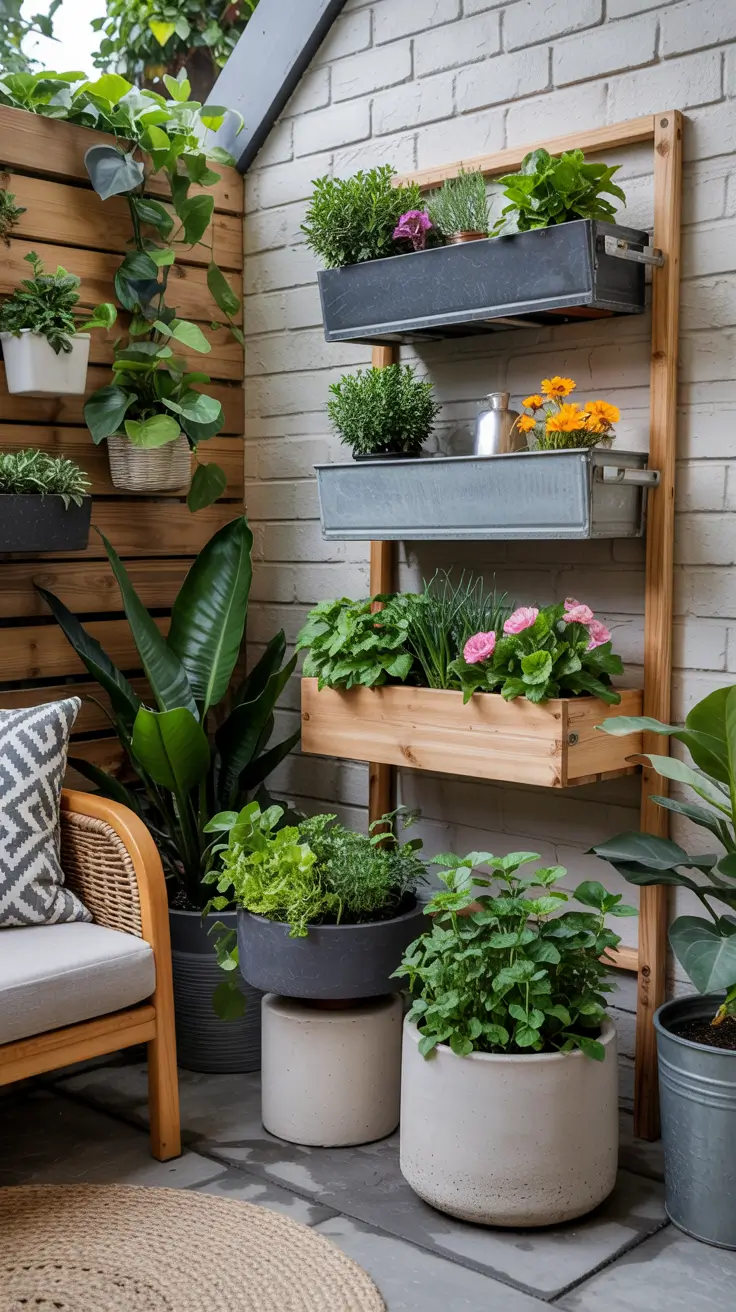
The containers themselves are just as important as the plants. I typically use a mix of ceramic pots, matte concrete planters, and lightweight fiberglass containers. These materials add texture and help structure the space. A wooden plant stand or tiered metal shelf allows smaller herb pots and strawberry containers to sit above larger vegetable containers. This layering keeps the space organized while maximizing sunlight exposure.
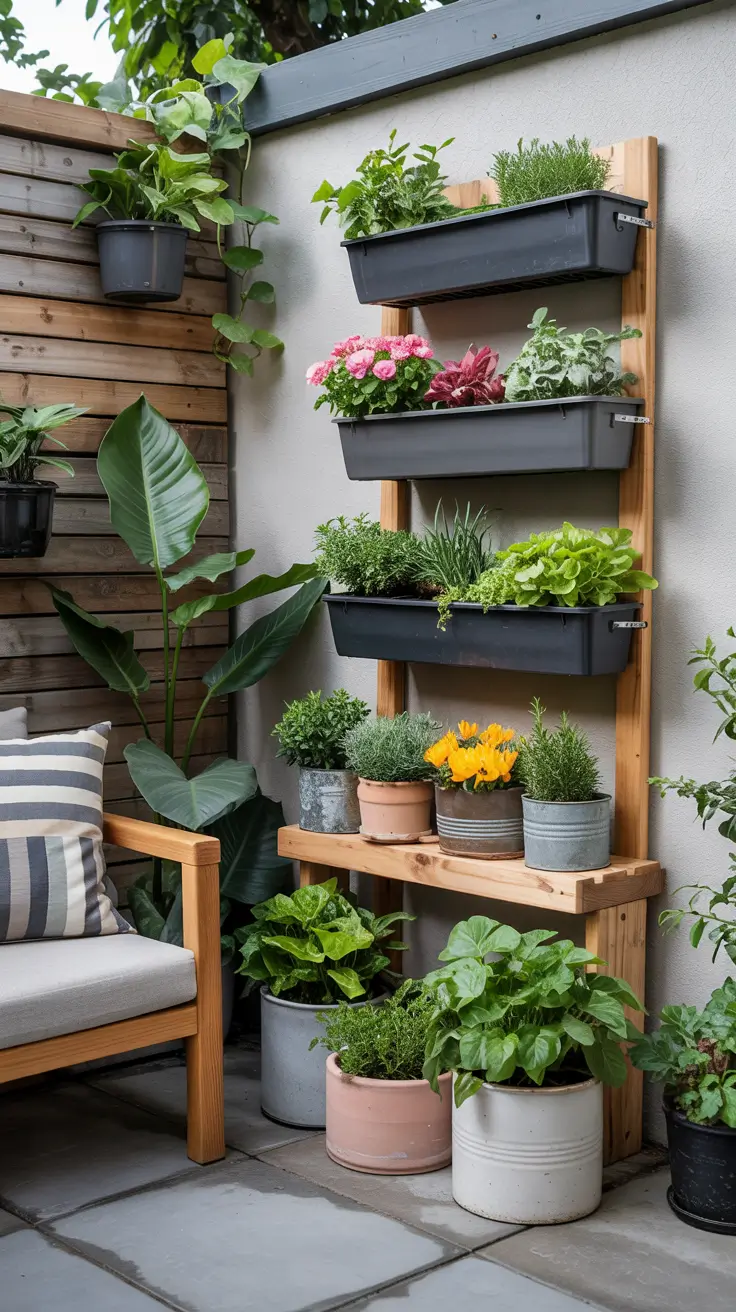
From my experience, the most successful designs combine beauty and productivity. A container garden can easily include herbs, tomatoes, and flowers in the same arrangement. Landscape designers frequently recommend mixing edible plants with ornamentals to make small gardens more visually dynamic. Publications like Better Homes and Gardens often highlight this approach because it makes container gardening feel intentional rather than improvised.
To improve this setup further, I would add integrated lighting and a drip irrigation system. Small solar lights or warm LED string lights can highlight containers at night, while simple irrigation tubing prevents inconsistent watering, which is one of the most common problems in container gardens.
2. Budget-Friendly Container Gardening Ideas That Look Expensive but Cost Almost Nothing
Container gardening ideas on a budget are often the most creative. When I design inexpensive container gardens, I focus on reusing everyday objects that still look stylish outdoors. Old wooden crates, metal buckets, and painted terracotta pots can instantly create a cohesive outdoor design without requiring expensive planters.
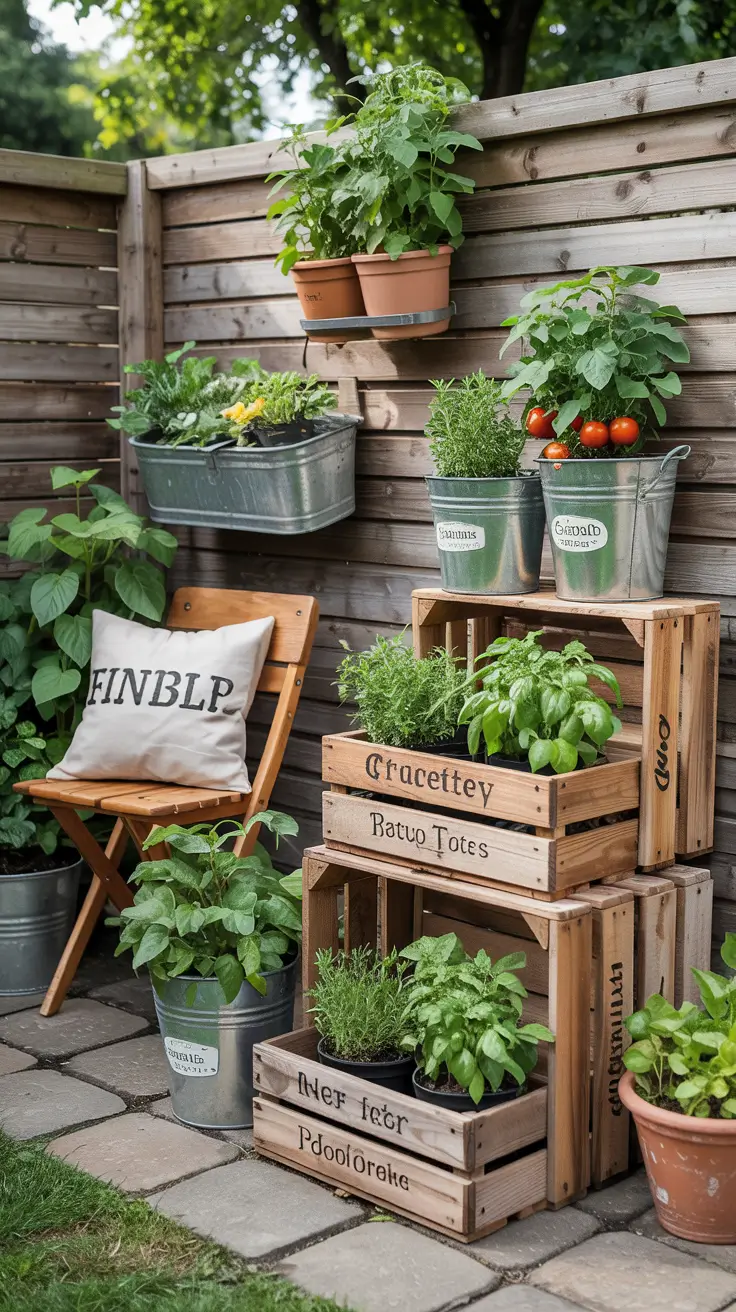
For structure, I usually combine a few larger containers with clusters of smaller ones. A recycled wooden crate can hold herbs such as basil, rosemary, and thyme, while metal buckets work well for tomatoes or peppers. A simple outdoor bench or narrow plant table helps elevate some containers, making the entire setup feel like a designed garden rather than a random collection of pots.
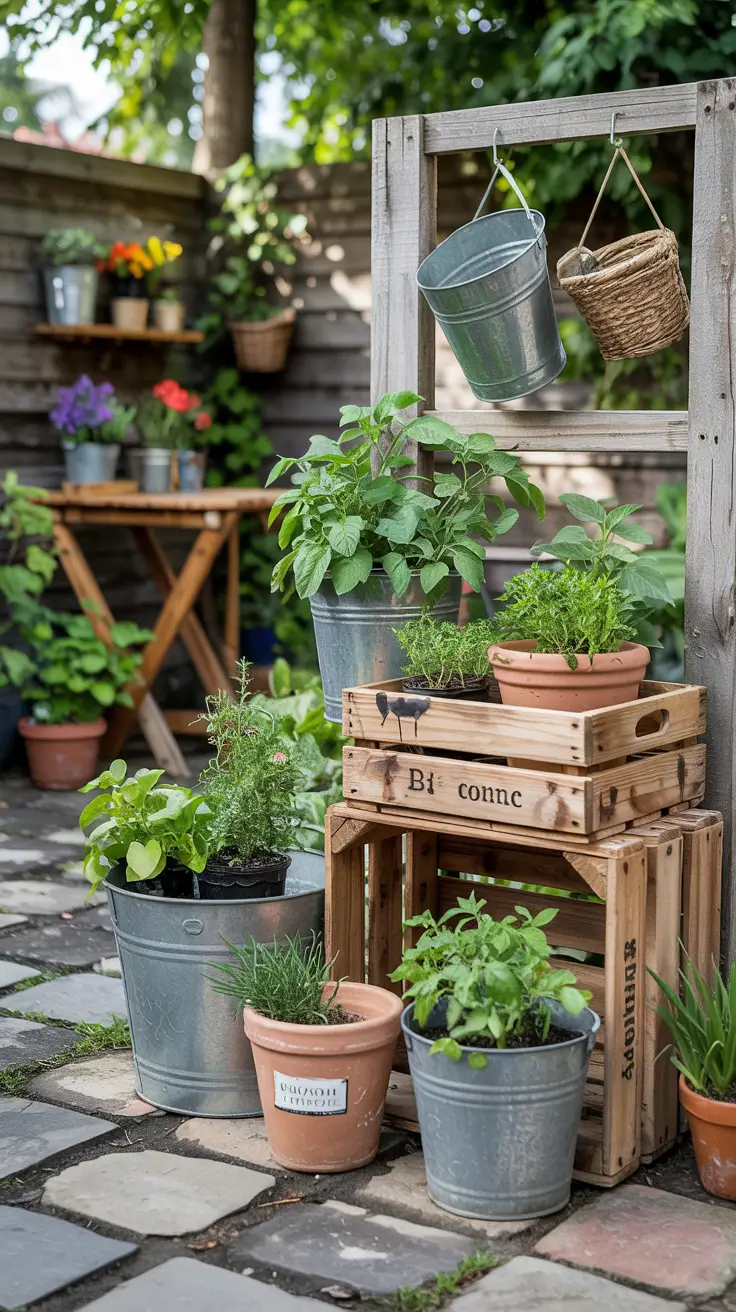
Personally, I believe budget gardening encourages more creativity. Some of the best container gardening flowers ideas creative setups I have seen use recycled containers, painted pots, or vintage watering cans as planters. Many gardening editors recommend focusing spending on quality soil and plants instead of expensive containers, since healthy soil determines plant success.
If something is missing in this setup, it is a unifying color palette. I usually recommend painting recycled containers in two or three complementary colors so the entire garden feels intentional and visually calm.
3. Beautiful Container Gardening Ideas for Flowers That Add Color All Season
When I create container gardening ideas flowers arrangements, my goal is to maintain continuous color throughout the growing season. I often combine perennial flowers with seasonal bloomers to keep containers lively for months. Zinnias in large pots, trailing petunias, and compact marigolds create a vibrant display that works well in patios, decks, and front yard gardens.
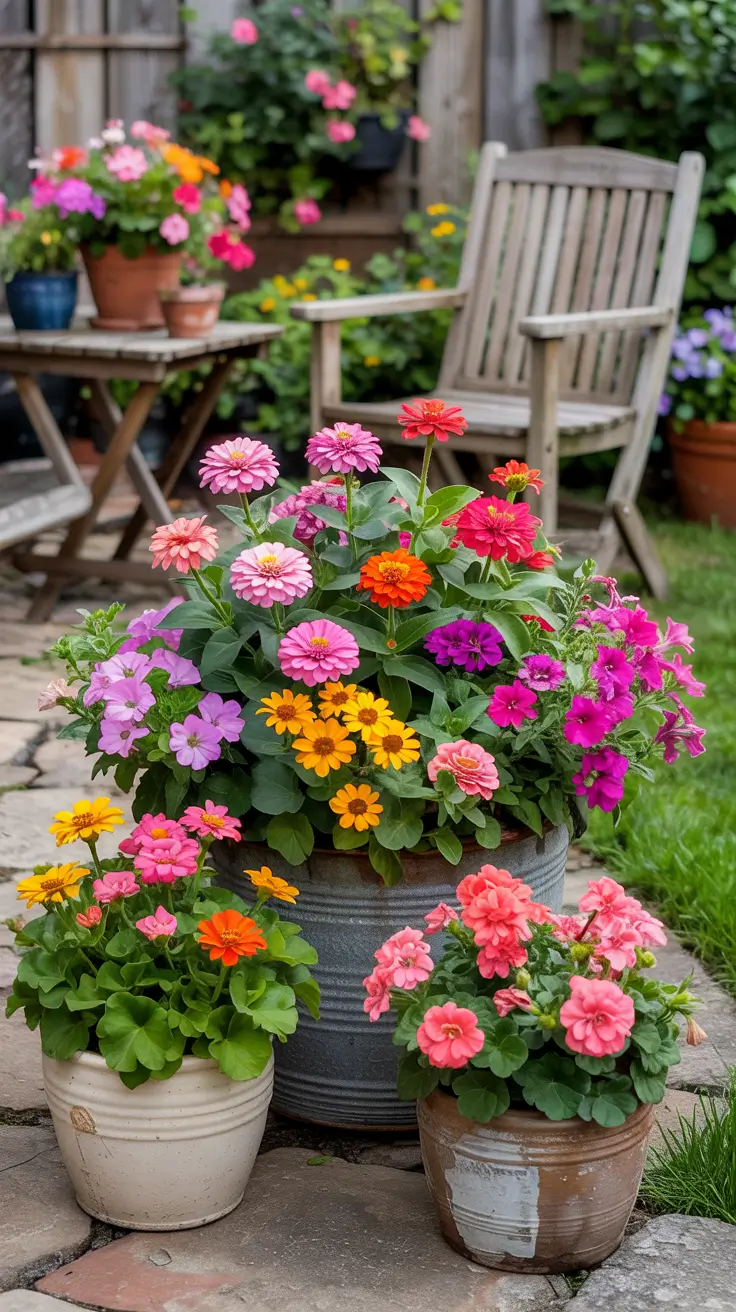
The container design should support both aesthetics and plant health. Large ceramic pots with good drainage are ideal for flower containers. I typically plant taller flowers like zinnias or salvia in the center, medium plants like geraniums around them, and trailing flowers such as lobelia along the edges. This layered structure creates a balanced and professional look.
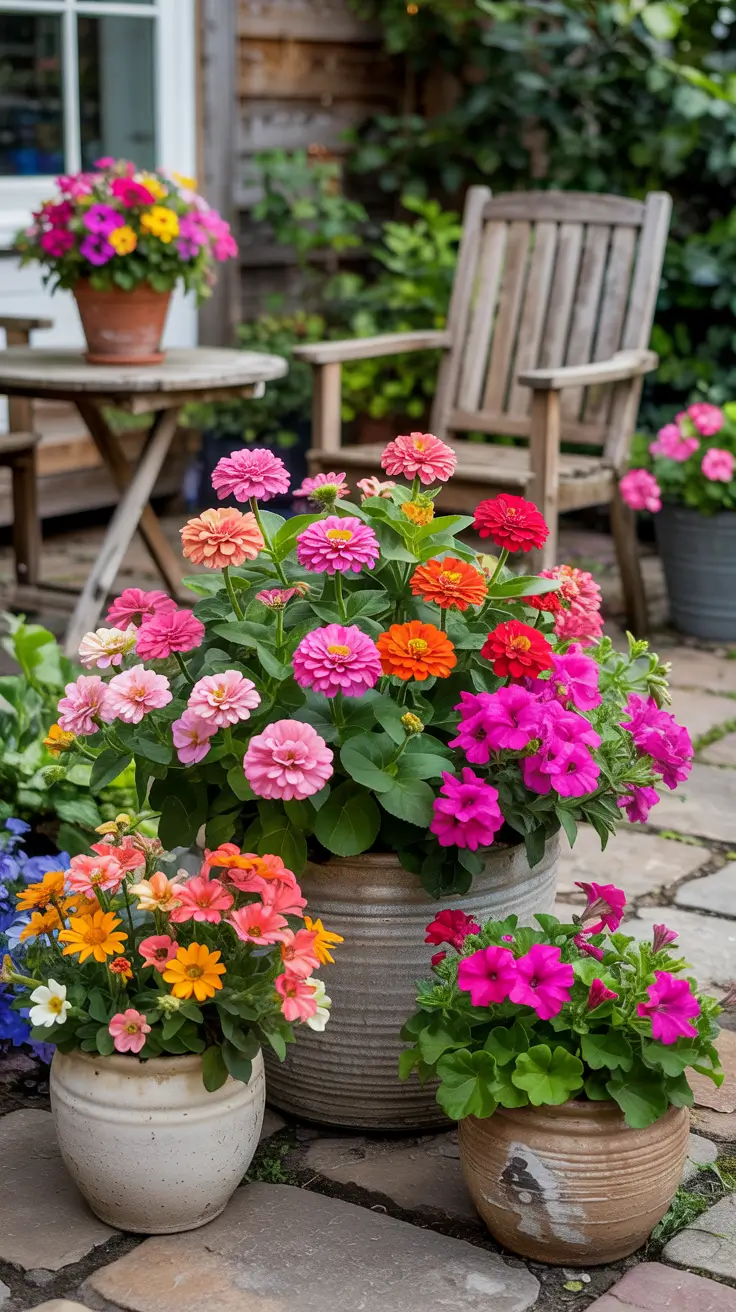
In my opinion, flowers in containers should always complement the surrounding outdoor design. If the patio uses warm wood furniture, I prefer warm toned flowers such as orange zinnias or red geraniums. Garden designers frequently mention that repeating colors across containers creates visual harmony in small outdoor spaces.
To strengthen this section, I would include pollinator friendly flowers such as lavender or butterfly attracting plants. These additions turn decorative containers into a small ecosystem that attracts butterflies and beneficial insects.
4. Smart Container Gardening Ideas for Growing Vegetables in Small Spaces
Vegetable container gardening ideas are perfect for people who want fresh food but lack a traditional garden. I often design compact vegetable setups for patios, balconies, and decks where every container must be efficient. Tomatoes, peppers, lettuce, and strawberries all perform well in containers when placed in a sunny location.
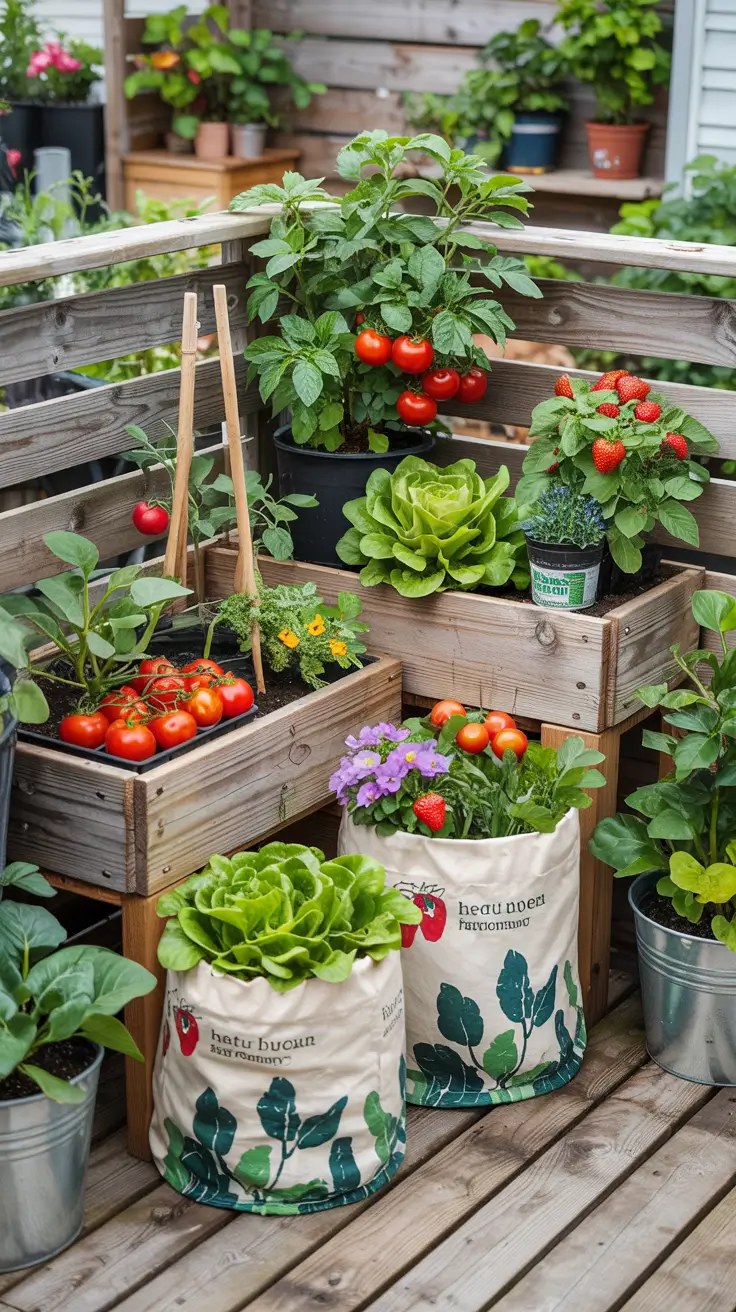
Container selection is critical for vegetables. Large deep containers are necessary for tomato container gardening ideas because tomatoes develop strong root systems. Fabric grow bags, wooden boxes, or large plastic planters all work well. Vertical supports like trellises or tomato cages help maximize vertical space and keep plants healthy.
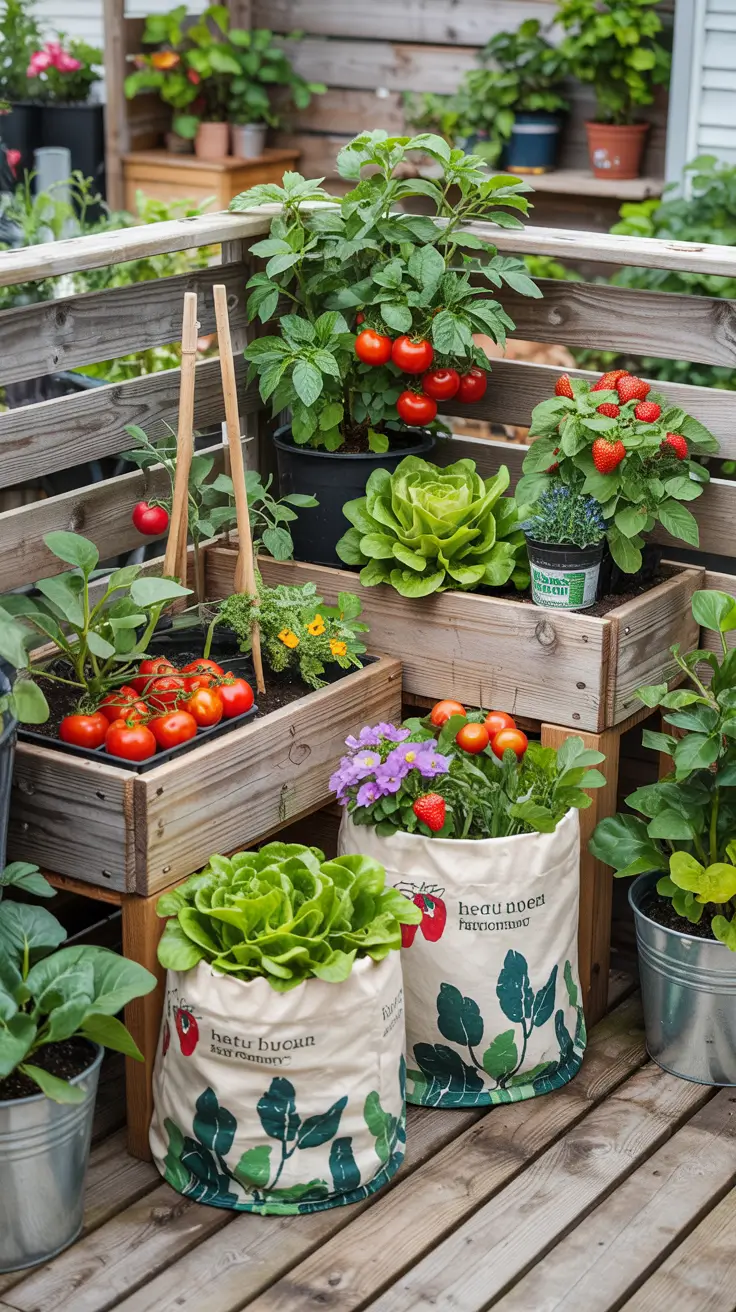
From my experience, combining vegetables and herbs in the same area improves productivity. Herbs such as basil or parsley grow well beside tomatoes and can even improve flavor according to many gardeners. Gardening magazines often emphasize companion planting even in containers because it improves airflow and plant health.
What could improve this setup further is adding a dedicated watering system. Vegetables require consistent moisture, and containers dry out faster than ground soil. A simple drip irrigation line or self watering container dramatically increases success rates.
5. Full Sun Container Gardening Ideas That Thrive in Bright and Hot Conditions
Sunny patios and decks create perfect opportunities for container gardening ideas full sun arrangements. In these spaces I prioritize plants that thrive in bright conditions such as tomatoes, peppers, zinnias, lavender, and succulents. These plants not only tolerate heat but often bloom or produce more fruit with strong sunlight.
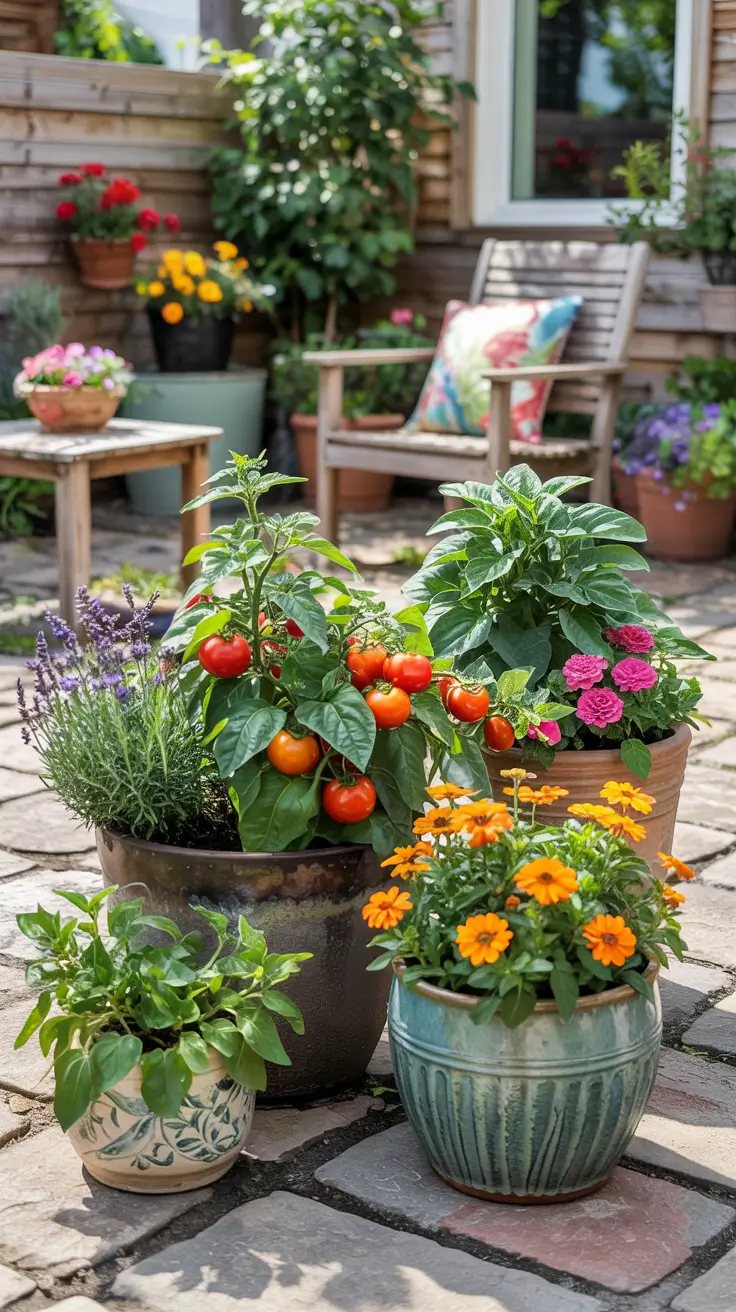
Container materials play an important role in full sun gardens. Thick ceramic or concrete containers help retain moisture better than thin plastic pots. I also position taller containers in the back and lower ones in front to ensure all plants receive adequate sunlight throughout the day.
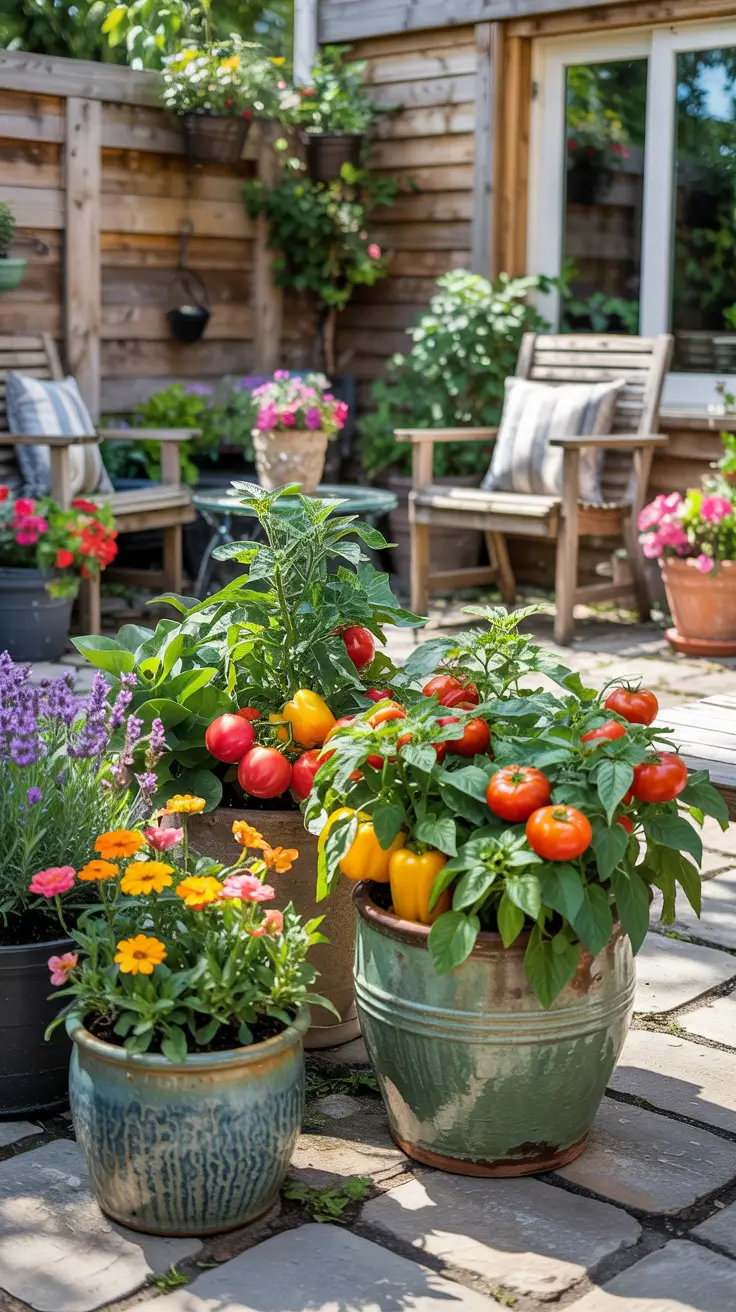
In my own gardens, I always combine edible plants with decorative flowers in sunny containers. For example, tomatoes can share a large planter with basil and marigolds. This creates a vibrant mix of vegetables and flowers that looks attractive while remaining productive.
What I would add to this design is shade protection for extremely hot afternoons. A pergola, patio umbrella, or light shade cloth can prevent plants from overheating during peak summer hours.
6. Shade Container Gardening Ideas for Dark Corners and Low-Light Gardens
Not every outdoor space receives direct sunlight, which is why container gardening ideas for shade are extremely valuable. I often design shade gardens for balconies, patios, and backyard corners that receive limited sunlight. These spaces can still be beautiful when planted with the right species.
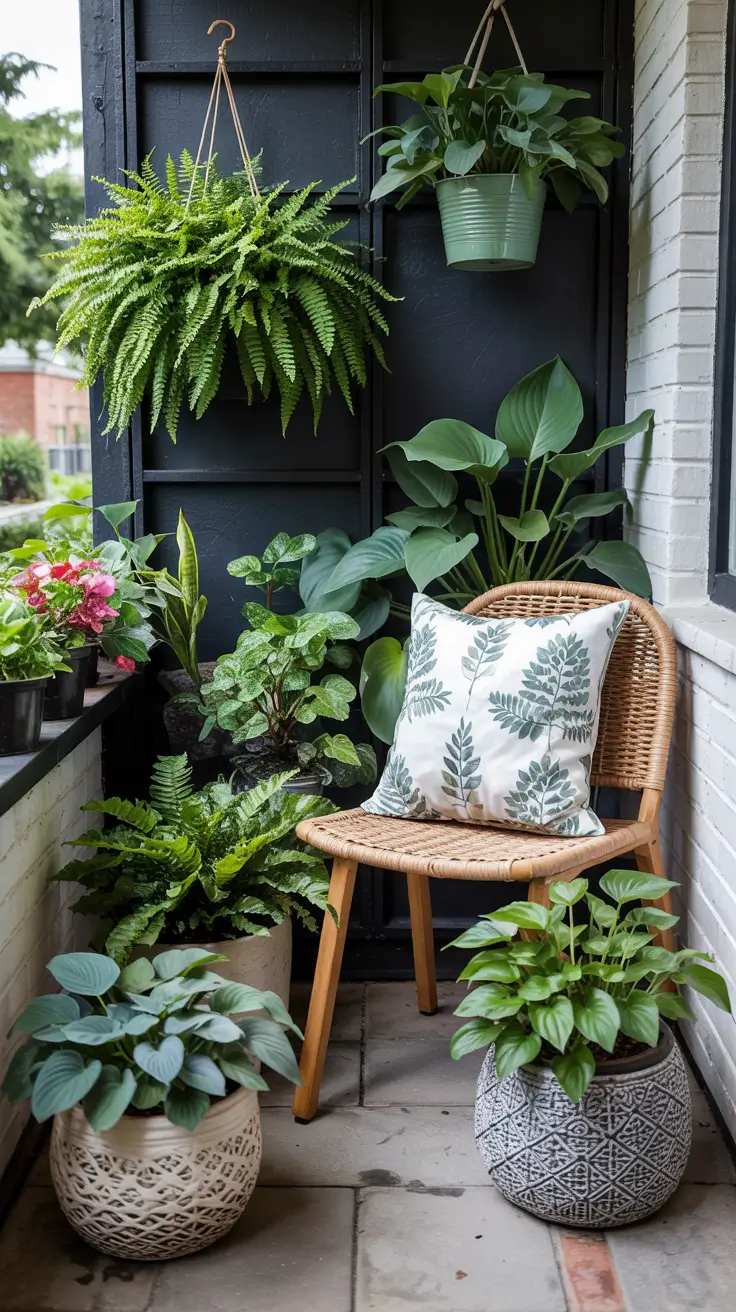
Plants like ferns, hostas, begonias, and shade tolerant herbs such as mint thrive in these environments. I prefer using tall containers with lush foliage plants because leafy textures create visual interest even without bright flowers. A few decorative planters placed near seating areas can completely transform a shaded corner.
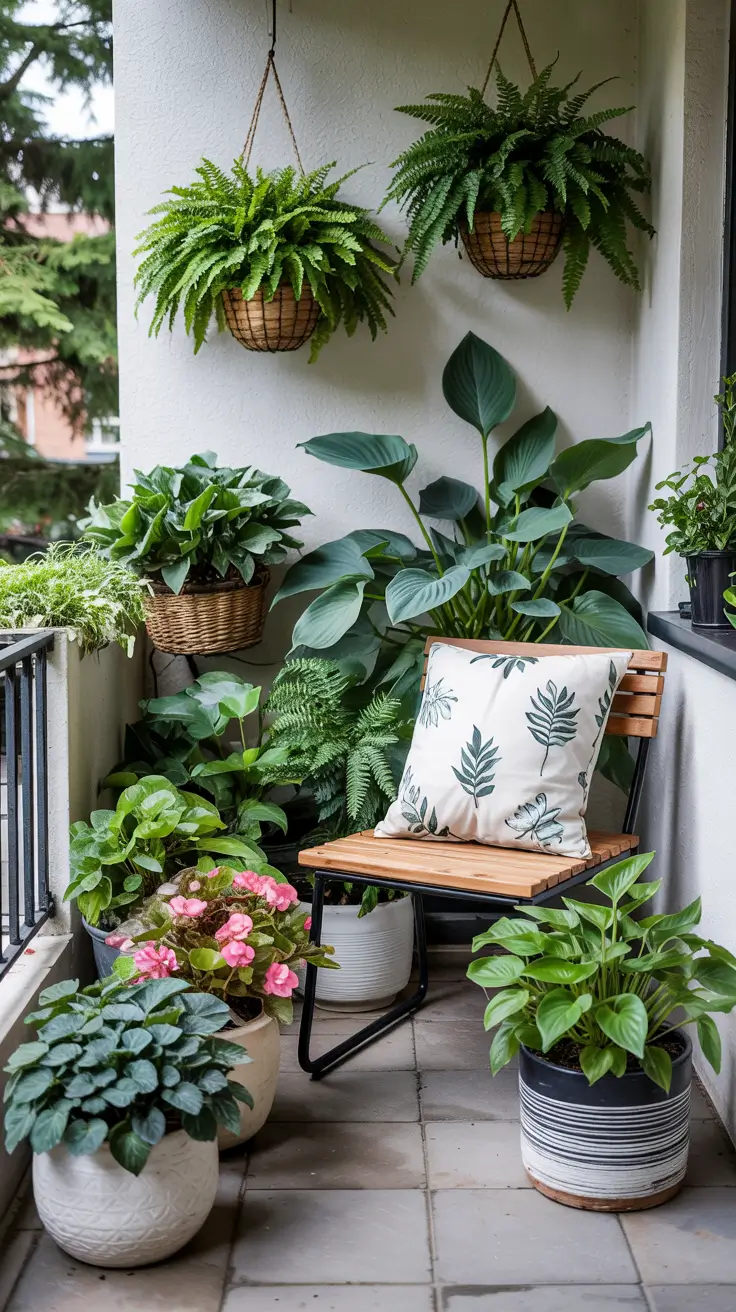
Personally, I enjoy designing shade gardens because they create calm and relaxing environments. Garden designers frequently highlight shade foliage gardens as ideal for creating tranquil outdoor retreats. Deep green leaves and layered textures make these spaces feel cooler and more peaceful.
To enhance this section further, I would introduce subtle lighting such as solar lanterns or ground lights. Soft lighting makes shade gardens feel inviting during the evening.
7. Best Container Gardening Ideas for Beginners Who Want Easy Success
The best container gardening ideas for beginners always start with simplicity. When I help new gardeners design their first container garden, I recommend focusing on a few reliable plants that are easy to maintain. Herbs, lettuce, cherry tomatoes, and marigolds are excellent choices because they grow quickly and tolerate minor mistakes.
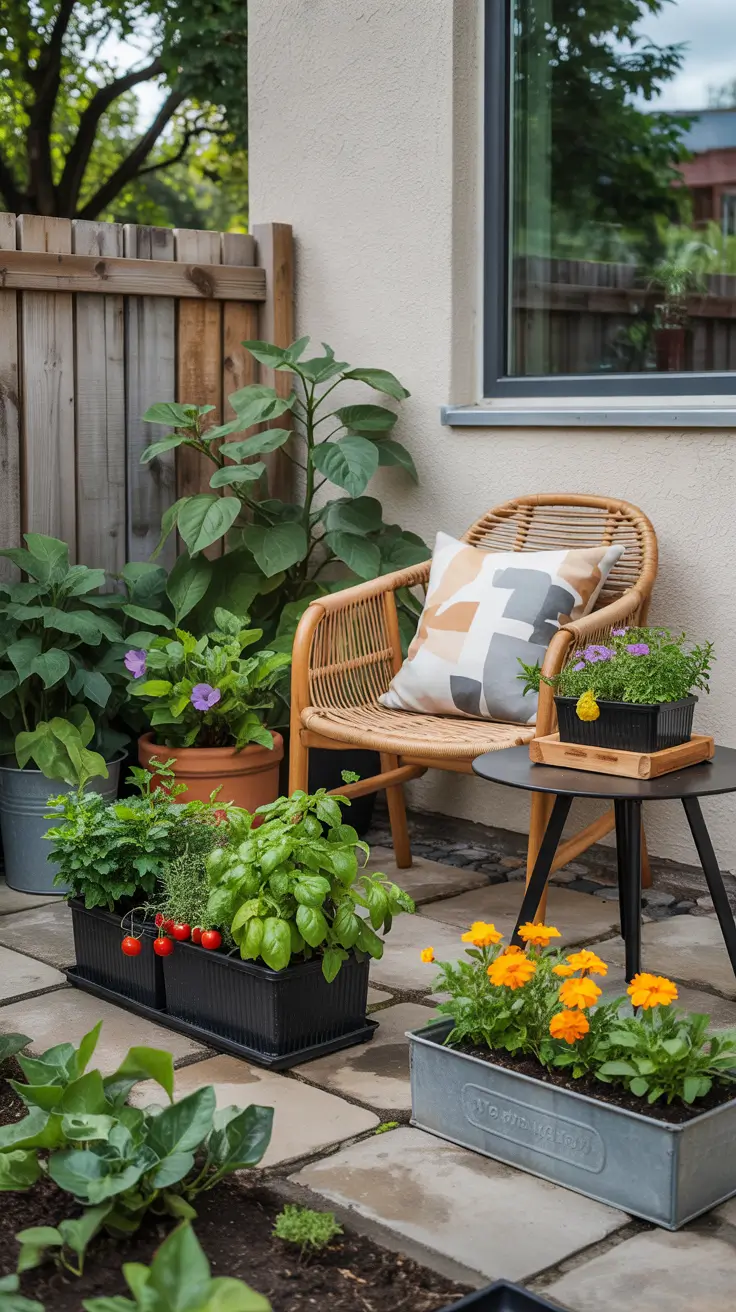
Container layout should remain simple as well. A small patio or balcony garden can begin with three to five containers arranged near a seating area or along a wall. This creates a manageable garden that still feels visually complete. Lightweight planters also make it easier for beginners to move plants if sunlight changes.
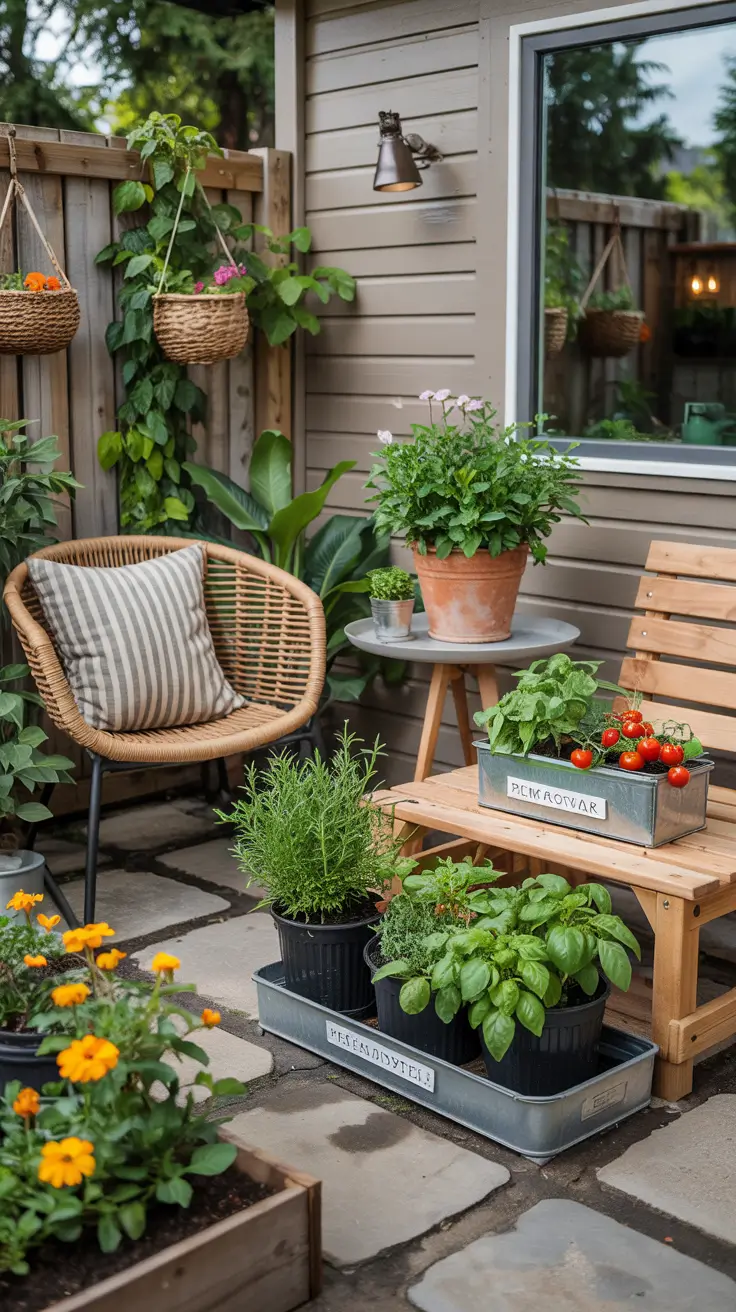
From my perspective, beginner gardens succeed when they prioritize convenience. Many experienced horticulturists suggest starting with self watering containers or high quality potting soil. These small improvements dramatically increase the chances of success for new gardeners.
What I would add to this setup is a simple plant care routine. A weekly schedule for watering, fertilizing, and pruning helps beginners build confidence while keeping plants healthy.
8. Unique Container Gardening Ideas Using Unexpected Pots and Materials
When I experiment with unique container gardening ideas, I often look beyond traditional planters and search for unexpected materials that can transform a simple Outdoor space into something memorable. Old watering cans, vintage metal tubs, wooden drawers, and even recycled kitchen containers can become distinctive planters. In a backyard or patio environment, these unusual containers immediately create visual interest and make the garden feel creative rather than conventional.
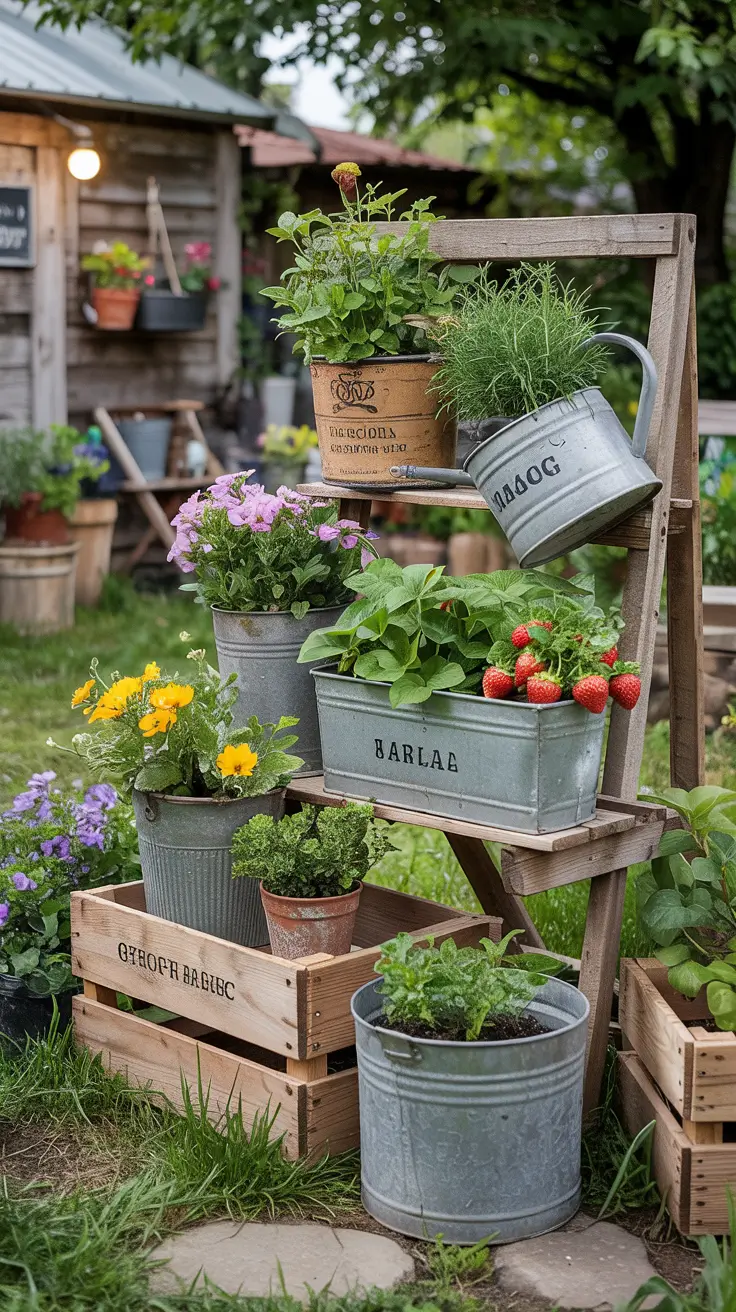
In my designs I carefully combine different materials so the containers feel intentional instead of chaotic. For example, I may place a row of galvanized metal tubs with herbs beside a reclaimed wooden crate filled with strawberries. A vintage ladder can act as a vertical stand for smaller pots with flowers or cactus plants. These structural elements allow a garden to grow upward while maintaining an organized appearance.
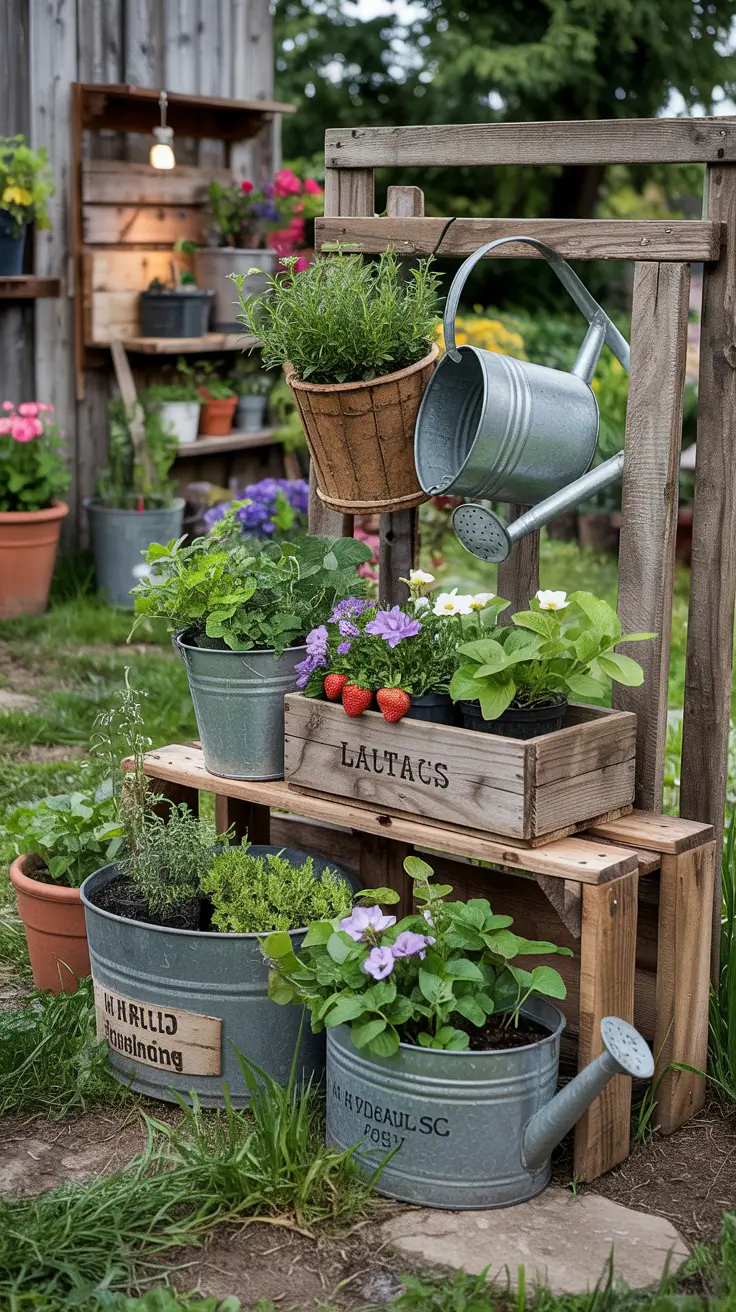
Personally, I have found that unique containers encourage people to interact more with their gardens. When visitors notice a recycled object used as a planter, it often becomes a conversation piece. Designers frequently recommend mixing vintage pieces with modern planters because this contrast gives a garden personality and authenticity.
If I were expanding this concept further, I would include a clear drainage solution for unconventional containers. Many recycled objects require drilled holes or inner plastic liners to prevent water accumulation and root damage.
9. Patio Container Gardening Ideas to Create a Relaxing Outdoor Retreat
A Patio garden should feel like an extension of the living room, which is why I approach patio container gardening ideas as both landscape design and outdoor interior design. Containers filled with flowers, herbs, and small vegetables can frame seating areas and create a cozy retreat where people enjoy spending time.
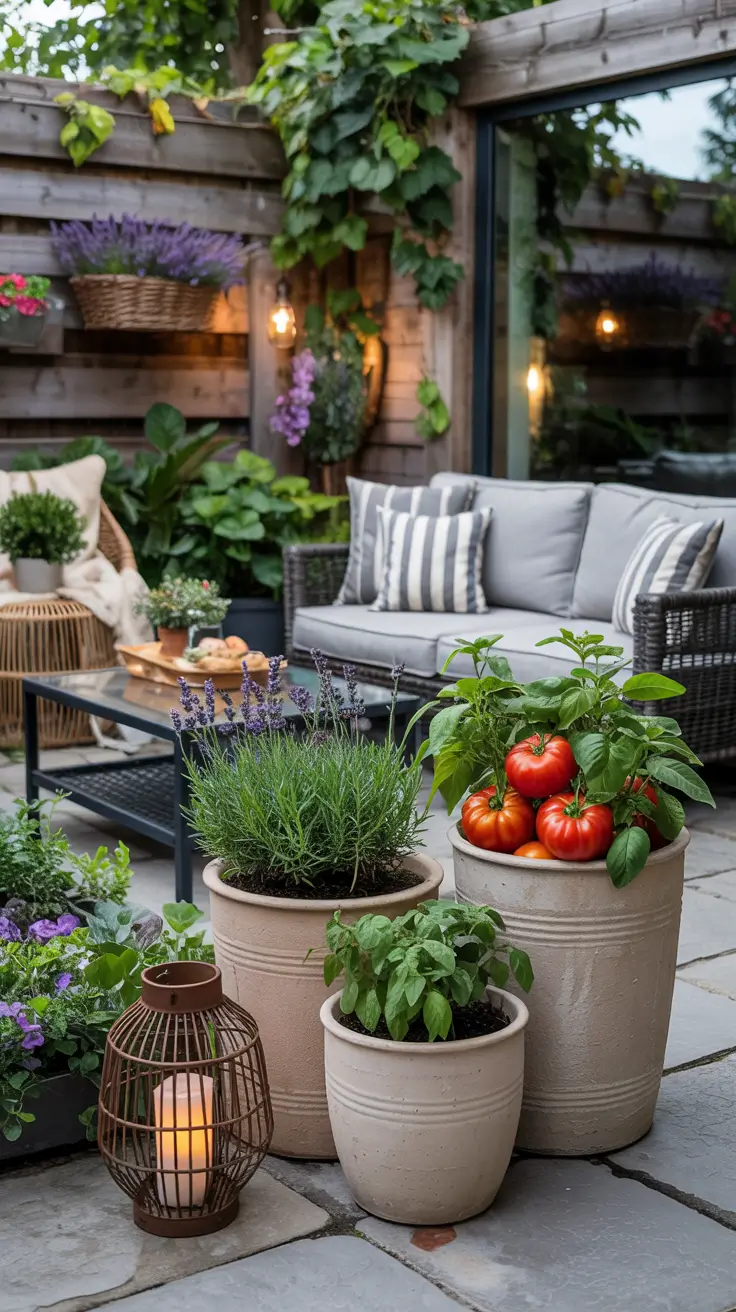
In my patio layouts I usually combine larger planters with comfortable outdoor furniture. Large ceramic containers with lavender, tomatoes, and ornamental grasses can be positioned along the edges of the patio to form a natural border. Smaller herb containers sit closer to dining tables or lounge chairs so fresh basil or mint is always within reach.
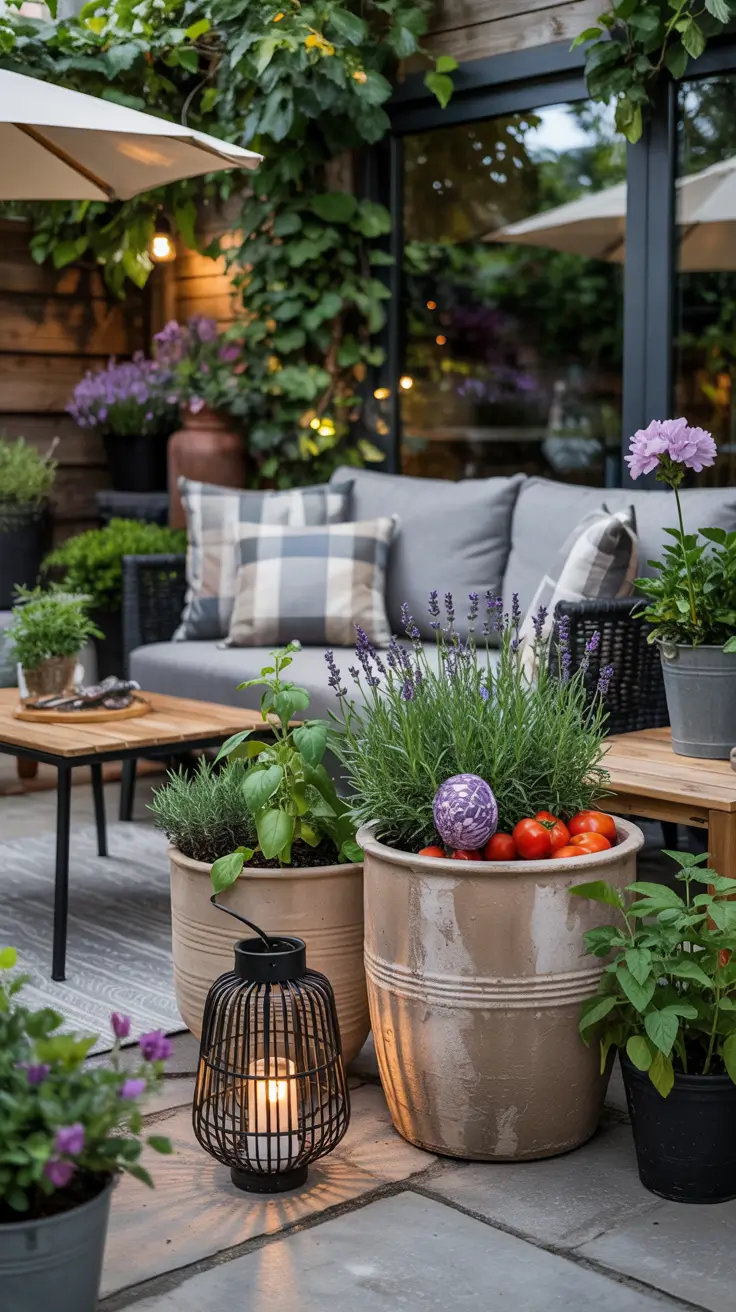
From my experience, a relaxing patio garden depends heavily on balance. Too many containers make the space feel crowded, while too few make it look unfinished. Landscape designers often suggest creating clusters of three or five containers rather than lining them up in rows. This arrangement looks more natural and visually appealing.
One improvement I would add to this design is soft ambient lighting. Lanterns, solar lights, or subtle LED strips beneath planters create a comfortable atmosphere that allows the patio garden to remain inviting long after sunset.
10. Backyard Container Gardening Ideas That Turn Empty Space Into a Lush Garden
Backyard spaces often contain unused corners that can easily become productive gardens through thoughtful container gardening ideas. When I design backyard container gardens, I focus on transforming empty areas into layered green zones filled with vegetables, flowers, and perennial plants.
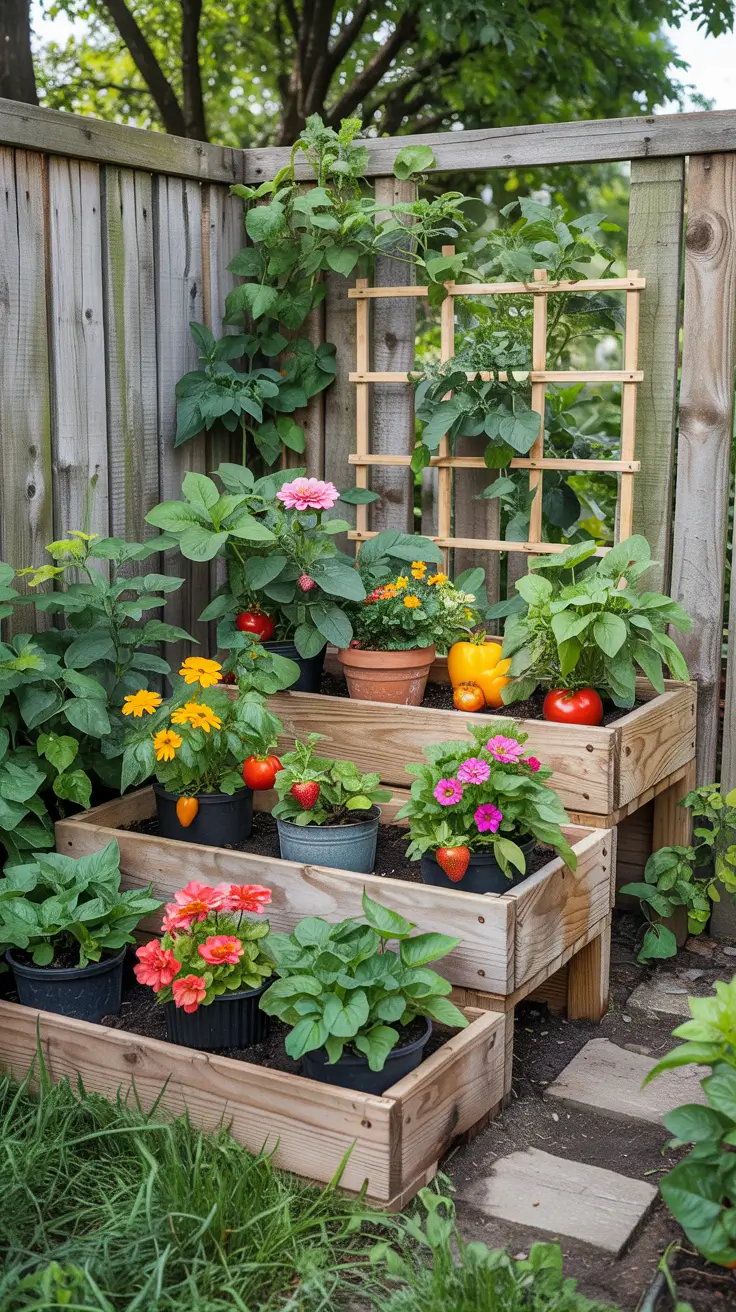
Large containers placed at different heights help create the feeling of a full garden even when planting directly in the soil is not possible. Wooden planter boxes can hold tomatoes and peppers, while large ceramic pots are perfect for flowering plants like zinnias. Adding strawberry containers or herb pots along pathways brings life to otherwise empty spaces.
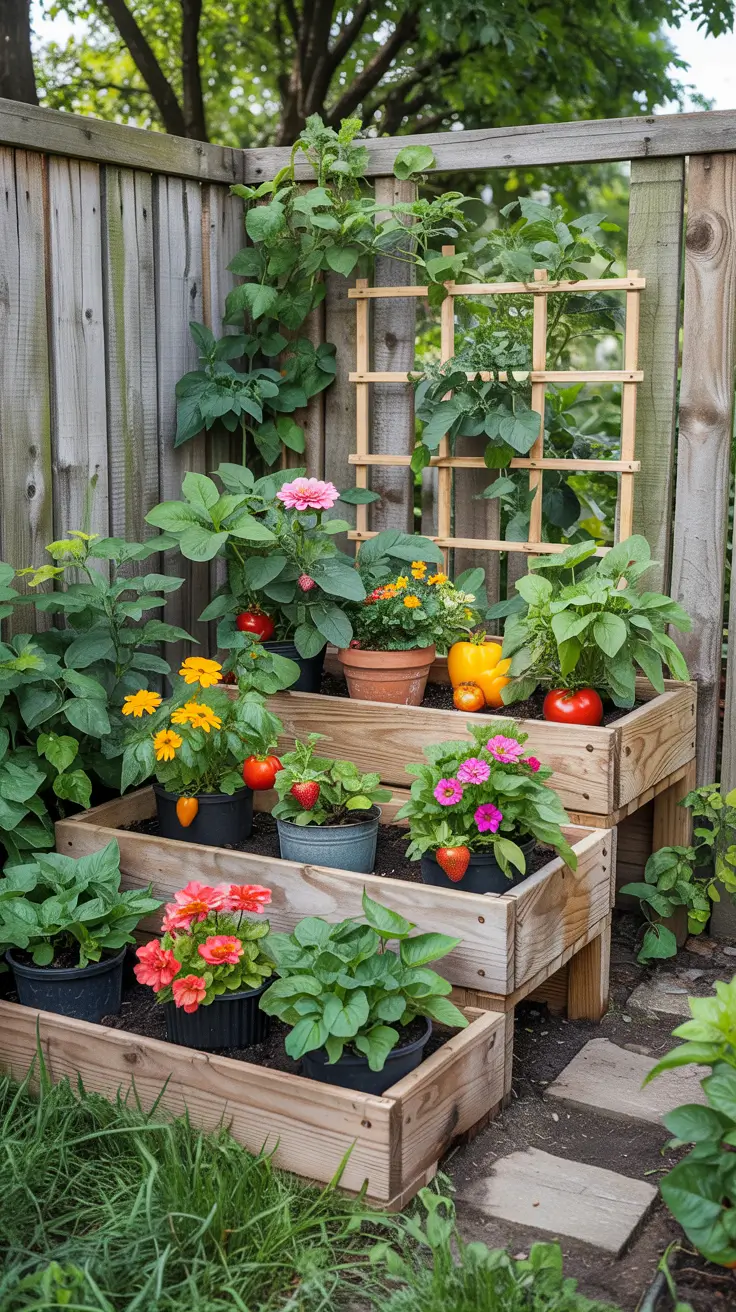
In my opinion, the best backyard container gardens combine productivity with visual structure. A mix of vegetable plants and colorful flowers keeps the garden lively throughout the season. Garden designers frequently highlight the importance of repeating plant varieties across multiple containers so the space feels cohesive.
What I would enhance in this setup is a vertical element such as a trellis wall or plant arch. Vertical structures increase planting capacity and give the backyard garden a stronger architectural presence.
11. Deck Container Gardening Ideas for Stylish Outdoor Living Areas
Deck container gardening ideas focus on integrating greenery into a structured outdoor living area. Decks often function as gathering spaces, so containers must complement furniture and architecture while still allowing plants to thrive. I usually design deck gardens with symmetrical container placements to create a clean and modern look.
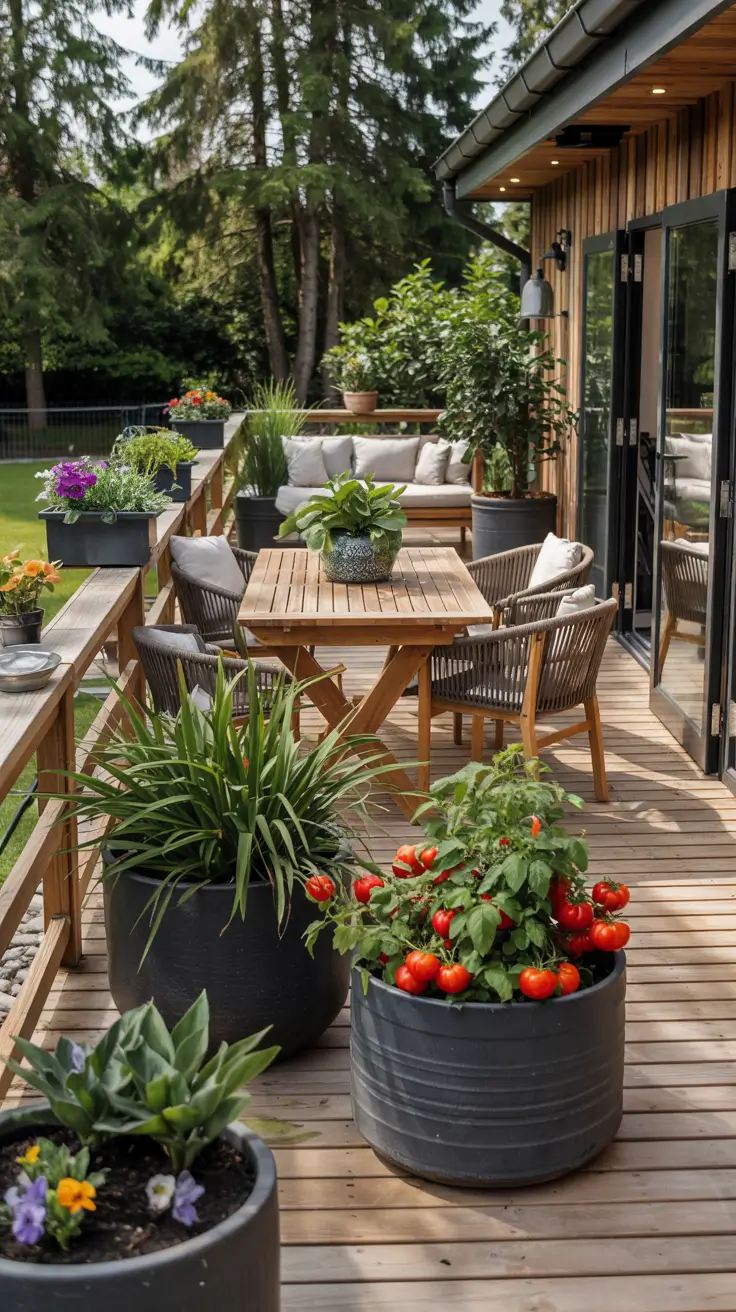
Tall planters placed near deck railings can hold ornamental grasses, tomatoes, or flowering plants that enjoy Sun exposure. Medium containers with herbs or lettuce sit near outdoor dining areas, while smaller decorative pots bring softness to corners of the deck. This layered arrangement prevents the deck from feeling empty while maintaining clear walking paths.
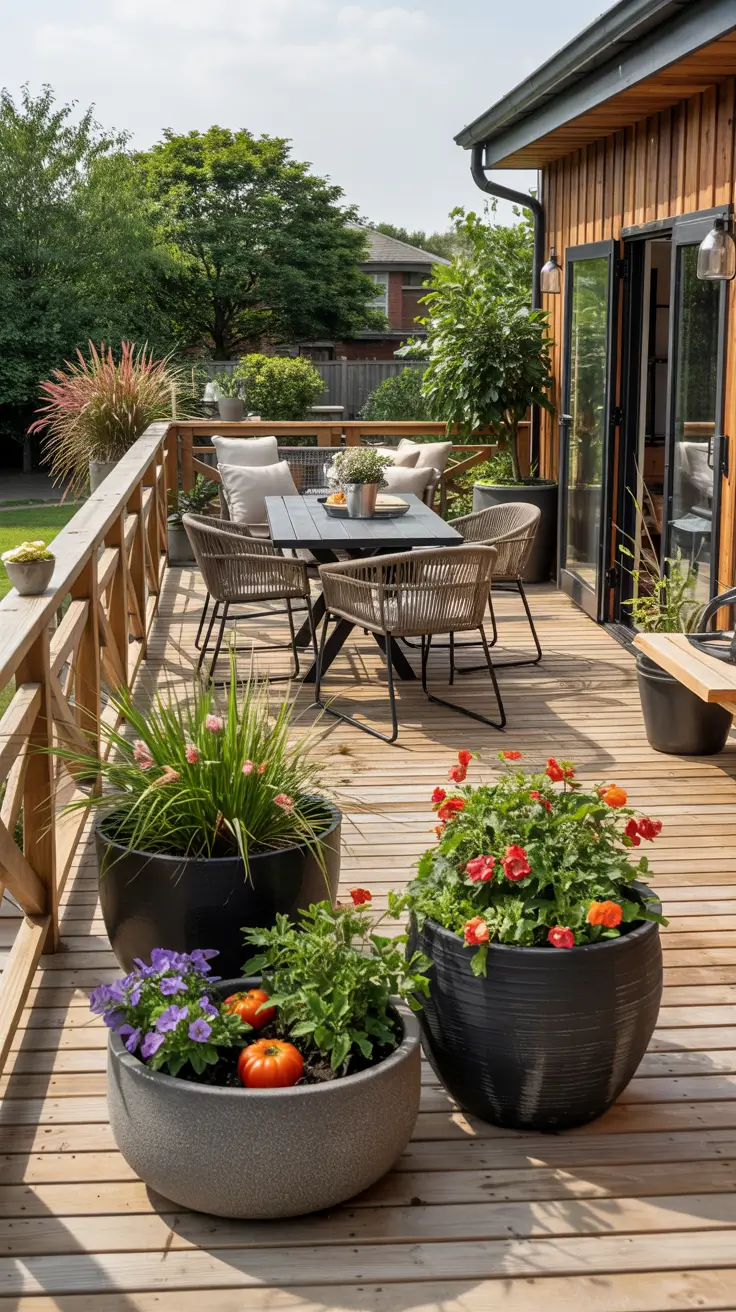
From my perspective, the most successful deck gardens feel intentional rather than improvised. Professional garden designers often suggest using containers in similar colors or materials to create visual harmony across the deck space. Matching planters help the garden integrate naturally with the surrounding architecture.
If I were improving this design further, I would introduce weather resistant storage benches or built in planter boxes. These additions maximize space while providing additional planting opportunities.
12. Balcony Container Gardening Ideas for Urban Apartments and Tiny Spaces
Balcony container gardening ideas are especially important for people living in urban apartments where traditional gardens are impossible. When I design balcony gardens, I treat the space like a miniature Backyard environment where every container must serve a purpose.
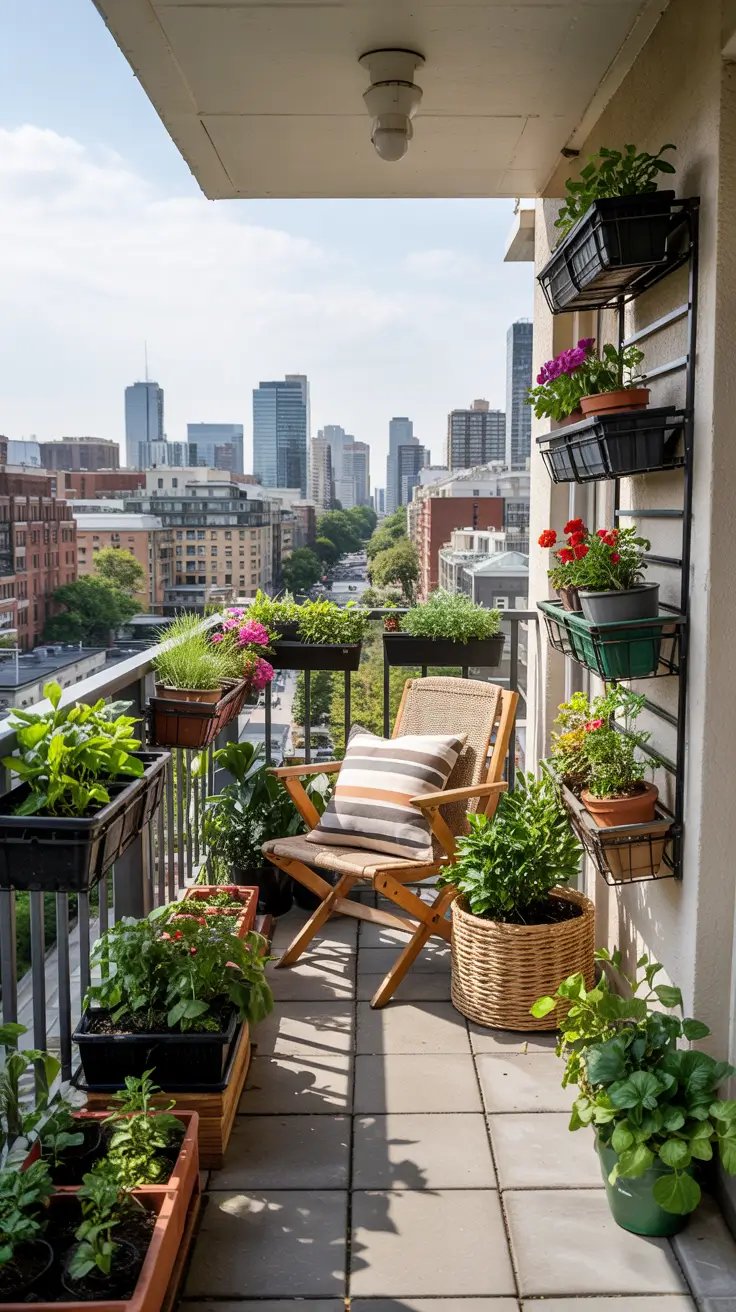
Vertical gardening becomes essential in these situations. Wall mounted planters, railing containers, and stacked shelves allow herbs, flowers, and vegetables to grow without occupying valuable floor space. Tomatoes, strawberries, and compact herbs perform surprisingly well in balcony containers when they receive enough sunlight.
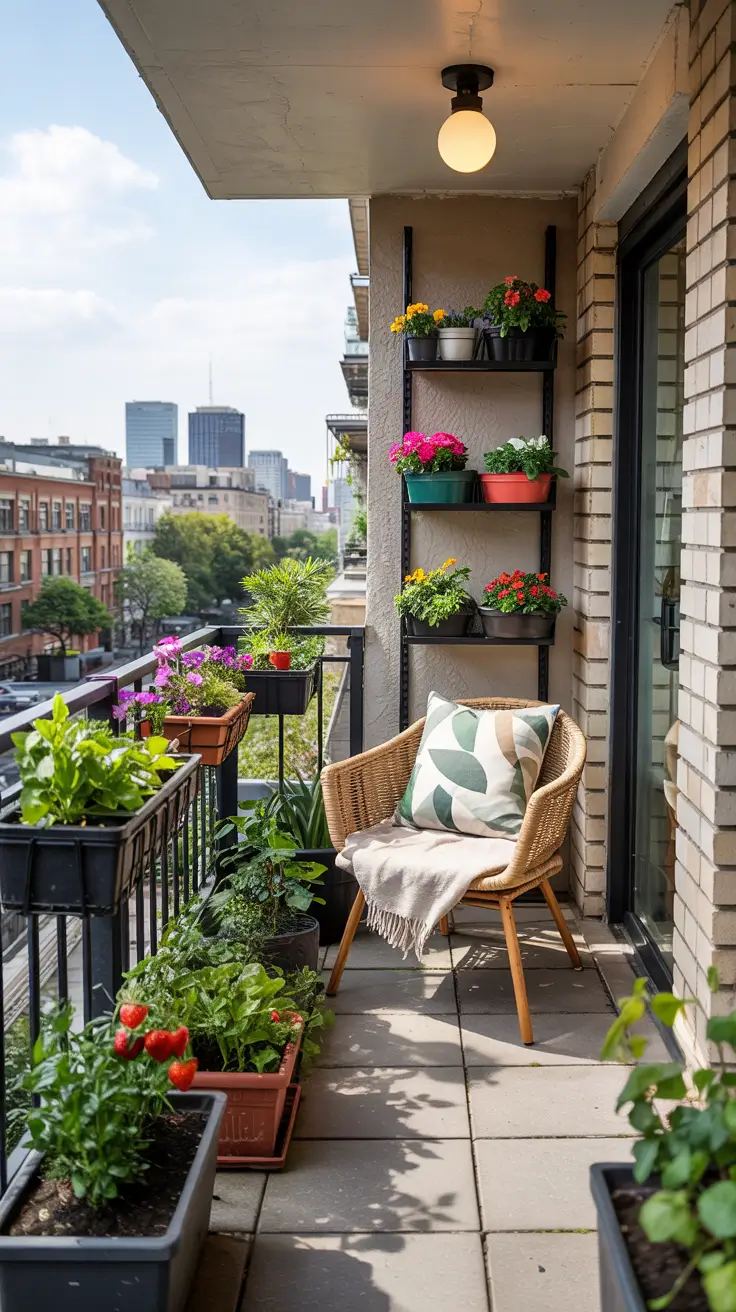
Personally, I enjoy designing balcony gardens because they prove that even very small spaces can produce fresh food and beautiful flowers. Urban gardening experts often emphasize that container gardens can thrive on balconies if gardeners carefully monitor watering and sunlight exposure.
One improvement I would include here is wind protection. Balcony environments often experience stronger airflow, so placing containers behind railings or using heavier pots can prevent plants from tipping over.
13. Front Yard Container Gardening Ideas That Instantly Boost Curb Appeal
Front yard container gardening ideas are one of the easiest ways to enhance curb appeal without redesigning the entire landscape. I often place decorative containers near entryways, pathways, or porch steps so the garden becomes the first thing visitors notice.
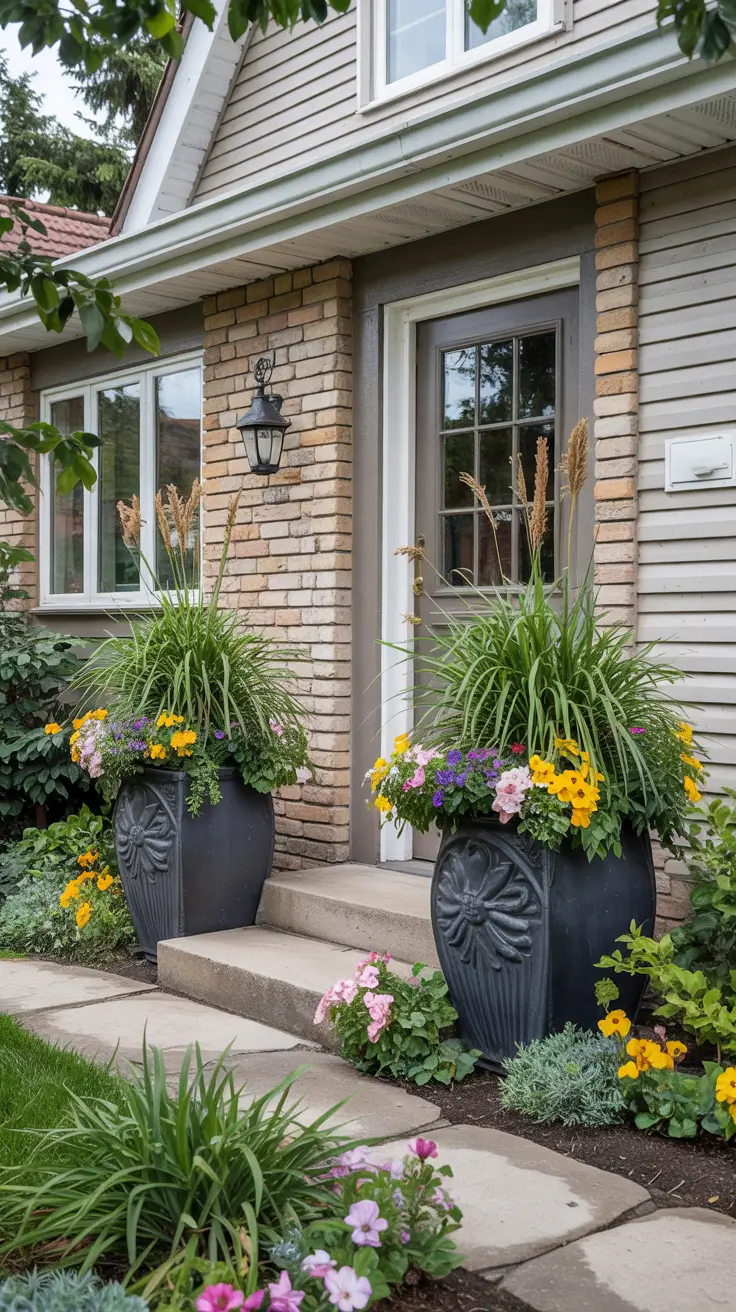
Large symmetrical planters on both sides of the entrance work particularly well for this purpose. These containers can hold flowering plants, ornamental grasses, or small shrubs that remain attractive throughout the season. Seasonal flowers such as zinnias or petunias add bright color that makes the front yard feel welcoming.
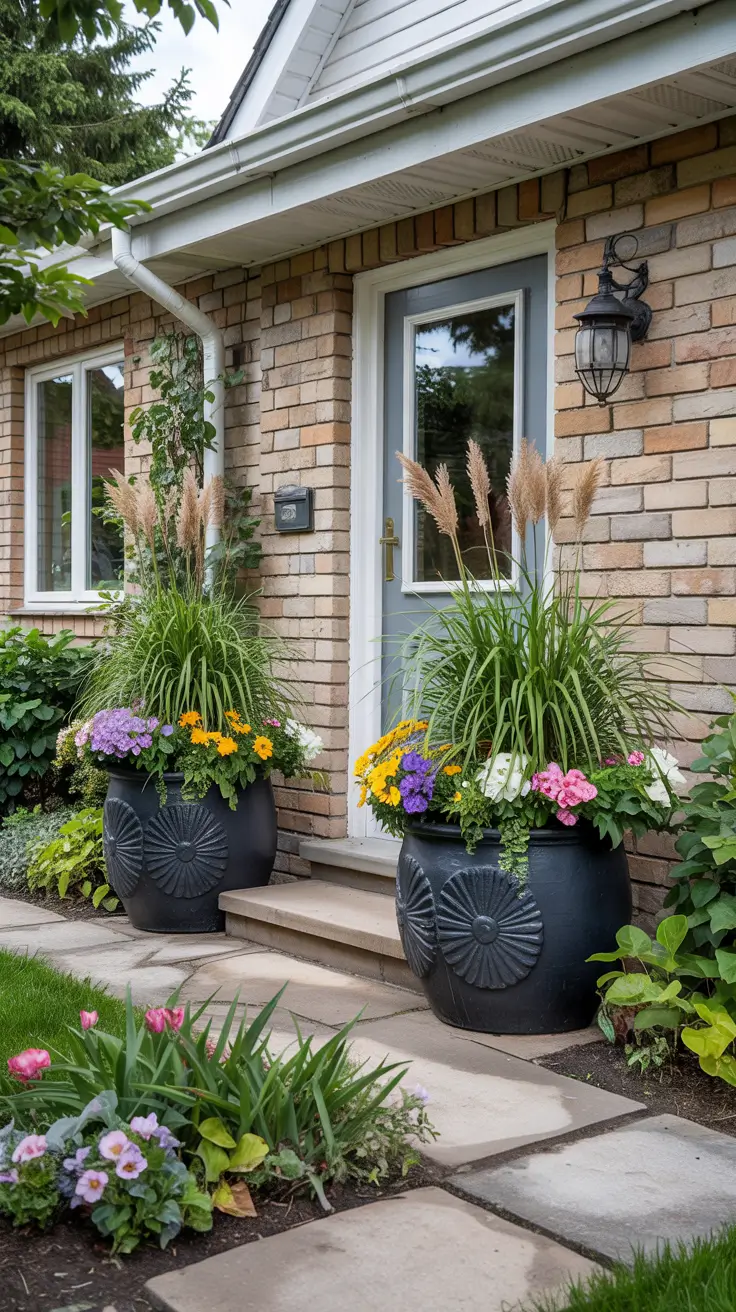
From my experience, the most effective front yard container gardens follow a simple color palette. Repeating the same container style and plant colors creates a cohesive look that feels professionally designed. Landscape architects frequently recommend symmetry near entrances because it naturally guides visitors toward the door.
If something should be added here, I would include subtle pathway lighting. Small garden lights highlighting containers during the evening dramatically improve visibility and enhance the overall appearance of the front yard.
14. Creative Butterfly and Pollinator Container Gardens for Wildlife-Friendly Spaces
Creating butterfly friendly container gardens is one of my favorite ideas for container gardening because it combines beauty with ecological value. Even a small patio or balcony can attract butterflies when containers include nectar rich flowers and pollinator friendly plants.
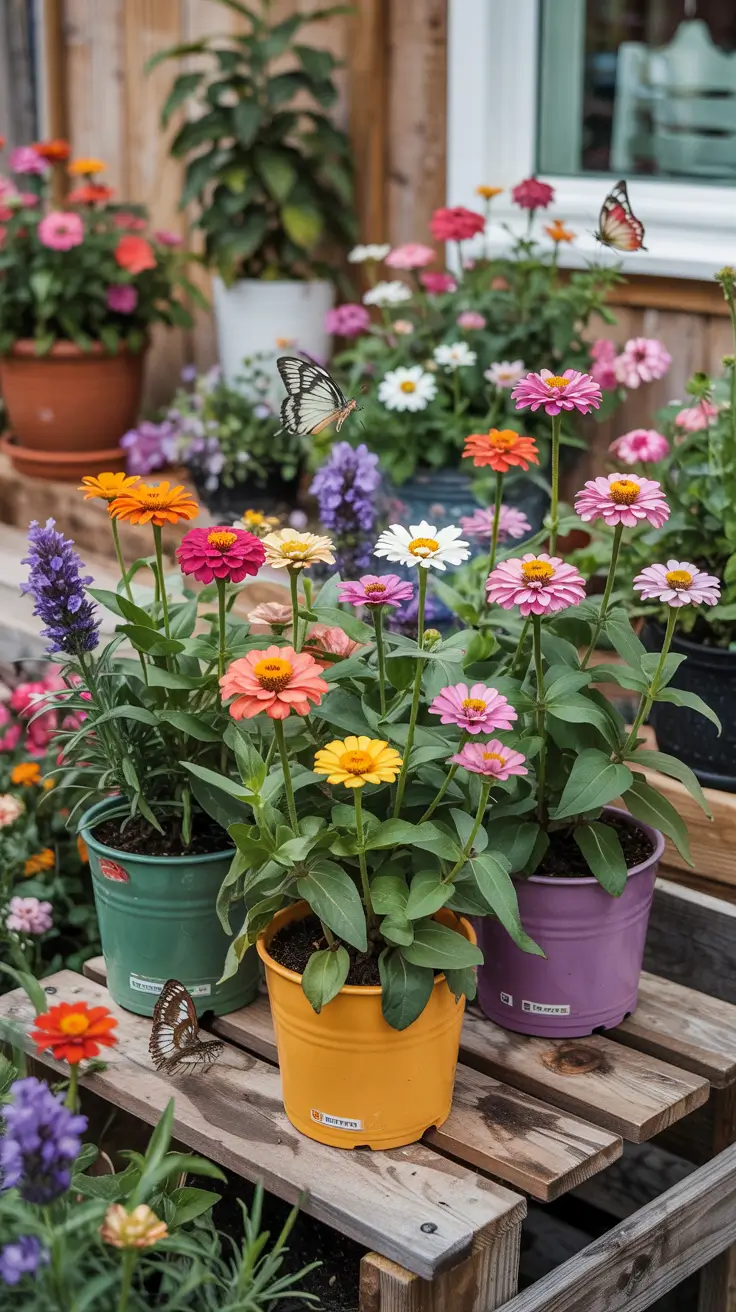
In these designs I usually plant flowers such as zinnias, lavender, and butterfly friendly perennials that produce nectar throughout the season. Containers with different heights allow butterflies to move easily between flowers. A shallow water dish with stones can also provide a safe place for butterflies to rest.
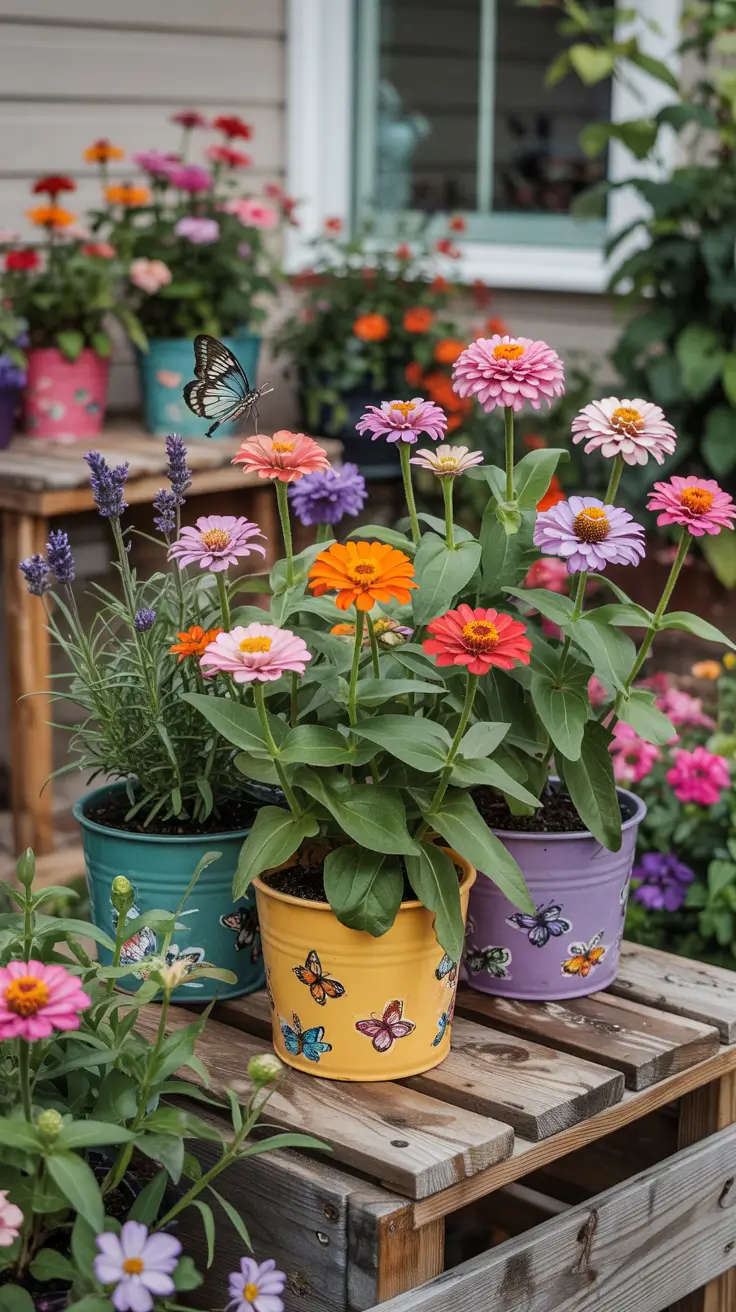
Personally, I find that pollinator gardens bring a sense of movement and life to outdoor spaces. Many environmental organizations encourage gardeners to include pollinator plants because they support local ecosystems while enhancing garden beauty.
What I would add to this setup is a small cluster of native plants suited to the region. Native flowers often attract more pollinators and require less maintenance compared to exotic varieties.
15. Creative Container Gardening Flower Combinations That Look Like Designer Planters
When I design container gardening ideas flowers displays, I always treat each planter like a miniature landscape. Instead of planting a single flower type, I combine height, texture, and color to create what feels like a professionally designed planter arrangement. This approach works beautifully in a front yard, on a patio, or along a deck where the containers become decorative elements rather than simple plant holders.
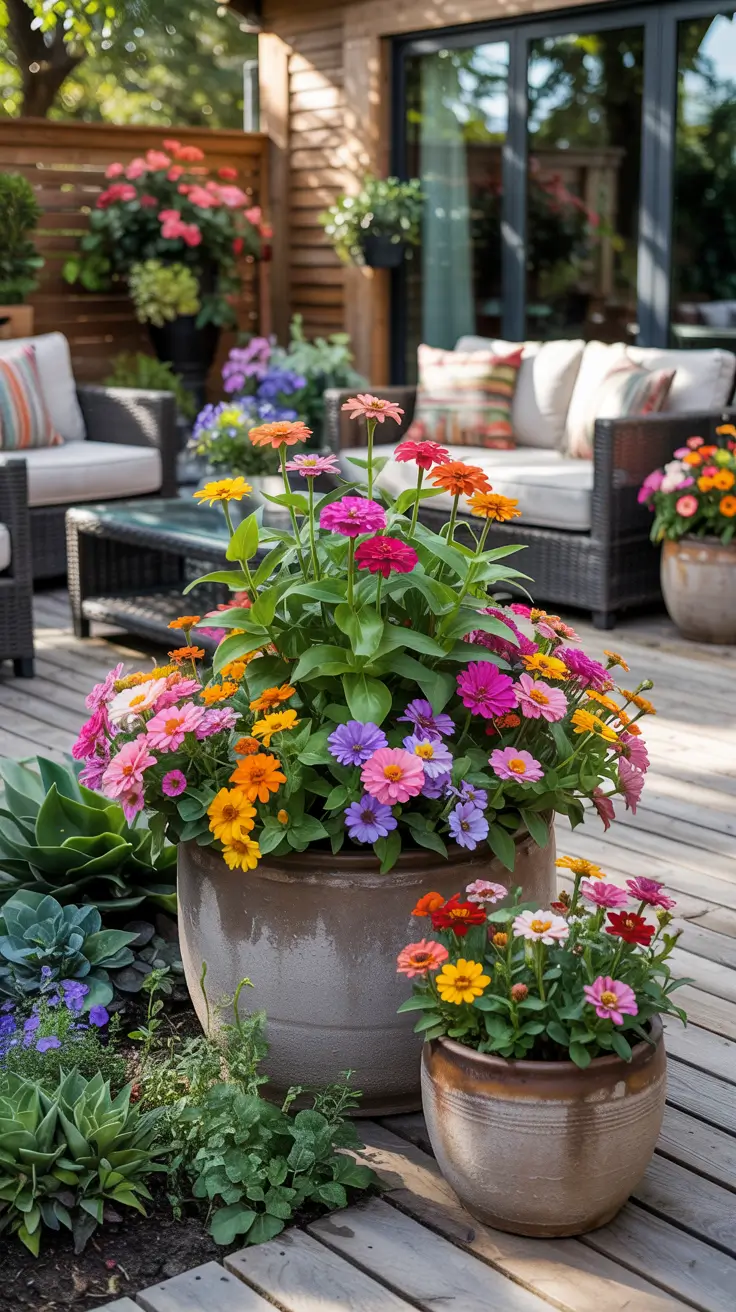
I usually start with a tall focal plant in the center, such as ornamental grass or tall zinnias in containers, then surround it with medium height flowers and trailing plants. Large ceramic or matte concrete containers create a modern outdoor design while cascading flowers soften the edges. This layered structure makes the container gardening flowers ideas creative and visually balanced.
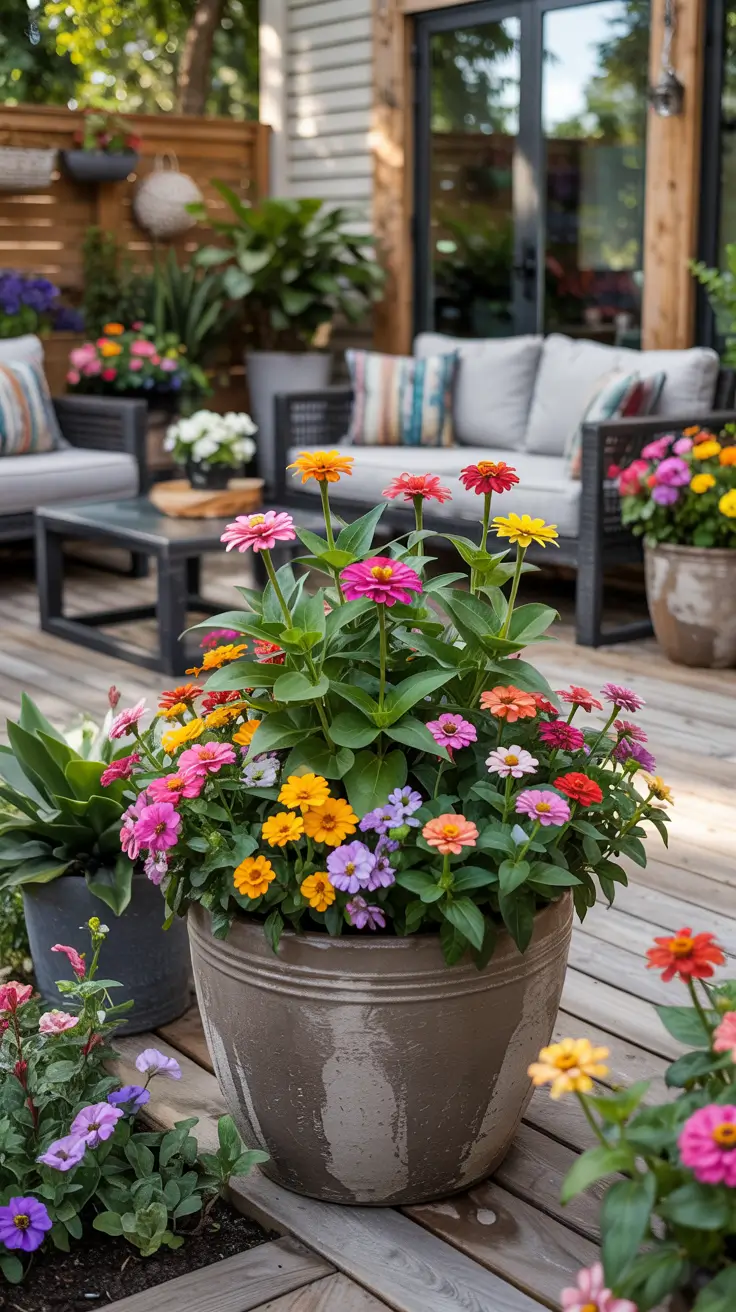
From my experience, mixing warm and cool colors works best in outdoor spaces. Garden designers often recommend using a thriller, filler, spiller strategy, which is frequently mentioned by publications like Better Homes and Gardens. I follow the same idea because it makes even small balcony planters look thoughtfully arranged rather than random.
If I were expanding this section, I would also include guidance on soil depth and drainage layers. These technical details are often overlooked but they determine whether the flowers will thrive through the entire summer season.
16. Herb Container Gardening Ideas for Fresh Kitchen Herbs at Home
Herb container gardening ideas are some of the most practical ideas for container gardening because they combine beauty and everyday usefulness. I often recommend placing herb containers close to the kitchen door, on a patio, or on a sunny balcony so the herbs become part of daily cooking routines.
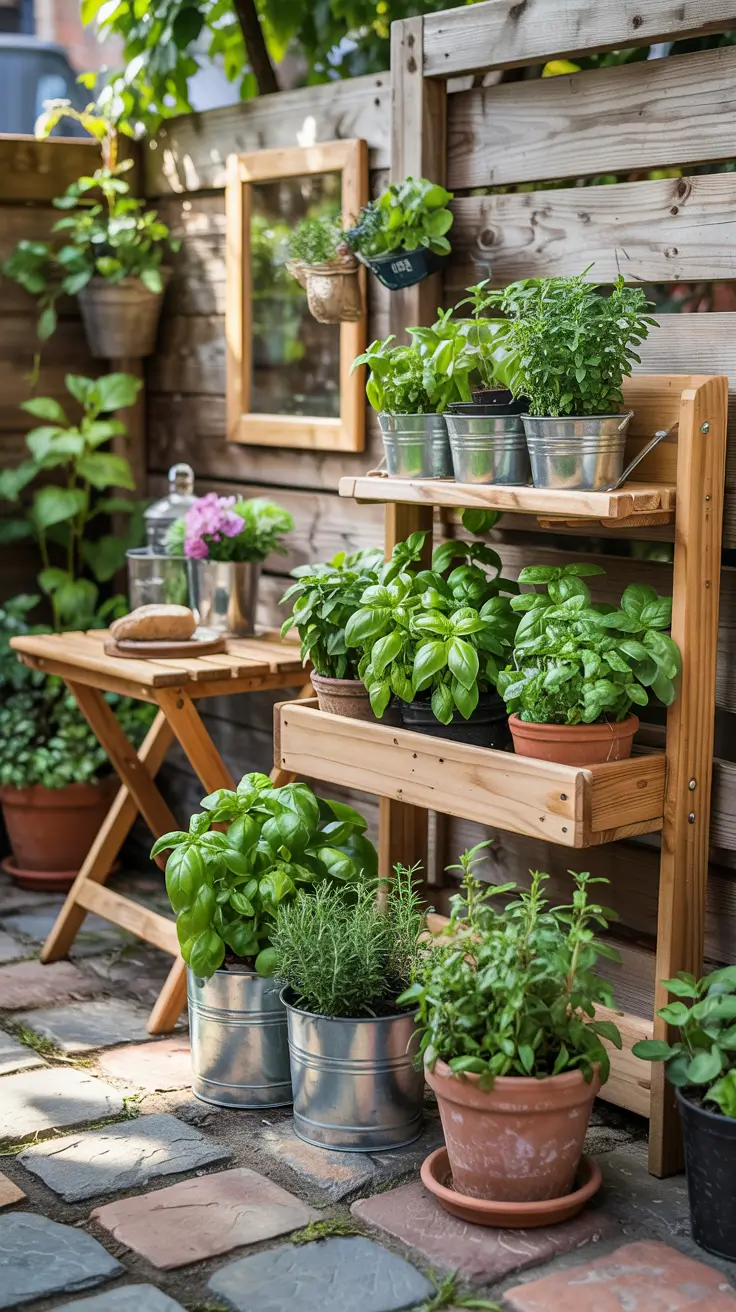
In my designs I usually combine herbs like basil, thyme, rosemary, and mint in large terracotta or wooden containers. These materials allow good airflow for the roots while also giving the patio a warm natural look. A small wooden herb stand or tiered shelf can turn a simple herb collection into an organized outdoor kitchen garden.
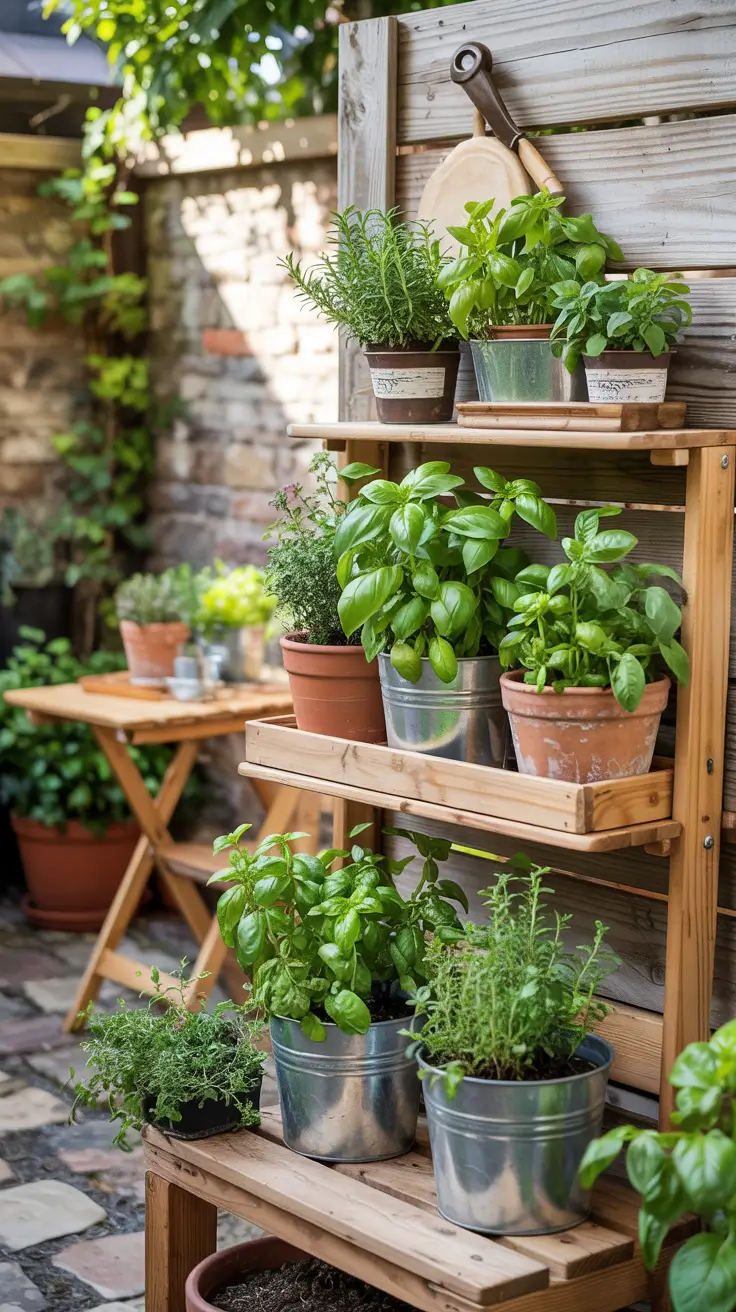
Personally I like keeping herbs near outdoor seating areas because their fragrance adds another sensory layer to the space. Publications like Martha Stewart Living often emphasize planting herbs where they can be easily harvested, and I have found this advice very practical in real homes.
If something could be added to improve this section, it would be guidance about separating aggressive herbs like mint into their own containers so they do not overtake other plants.
17. Tomato Container Gardening Ideas for Big Harvests in Small Pots
Tomato container gardening ideas are ideal for gardeners who want productive vegetable gardens even without a traditional yard. I have seen tomatoes thrive on balconies, decks, and even narrow backyard corners when the containers are deep enough and positioned in full sun.
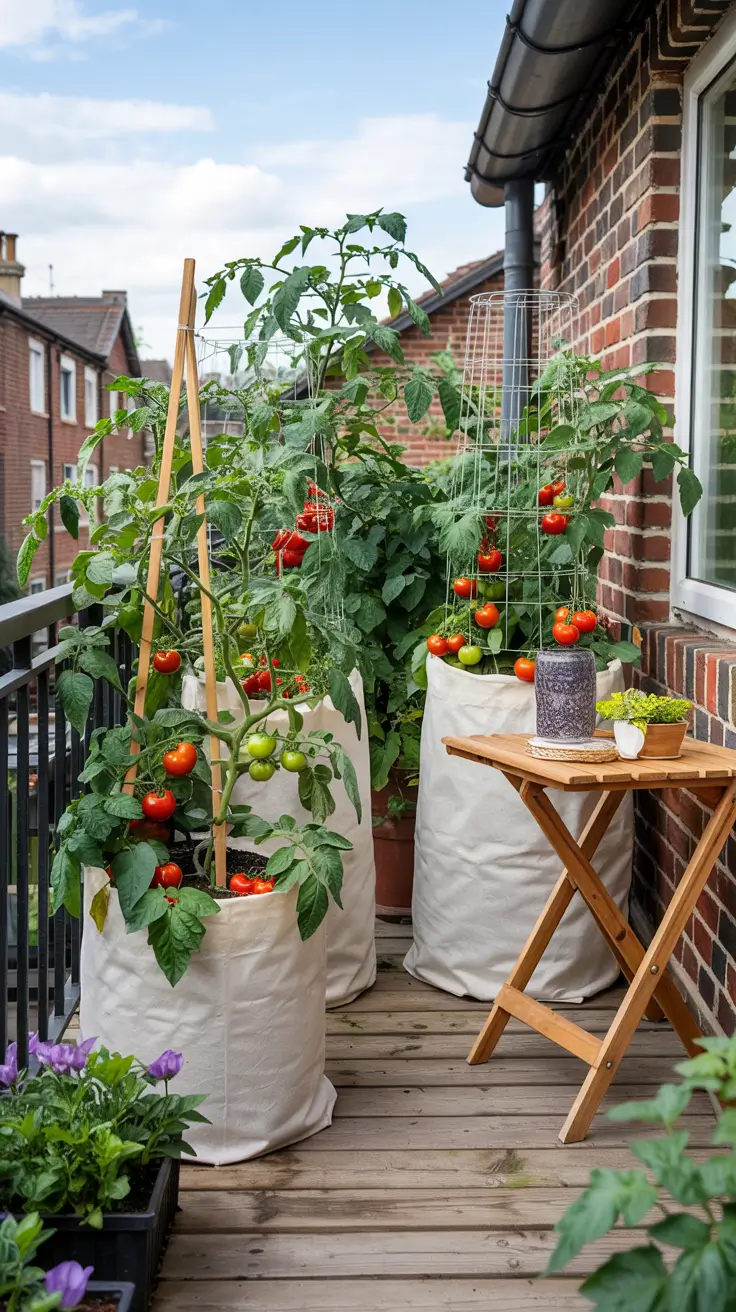
When designing a tomato container garden, I always prioritize large containers with proper drainage. A sturdy wooden planter box or a tall fabric grow bag works well because tomatoes need deep root systems. Adding a trellis or tomato cage helps structure the plant vertically, which keeps the patio or balcony looking organized rather than messy.
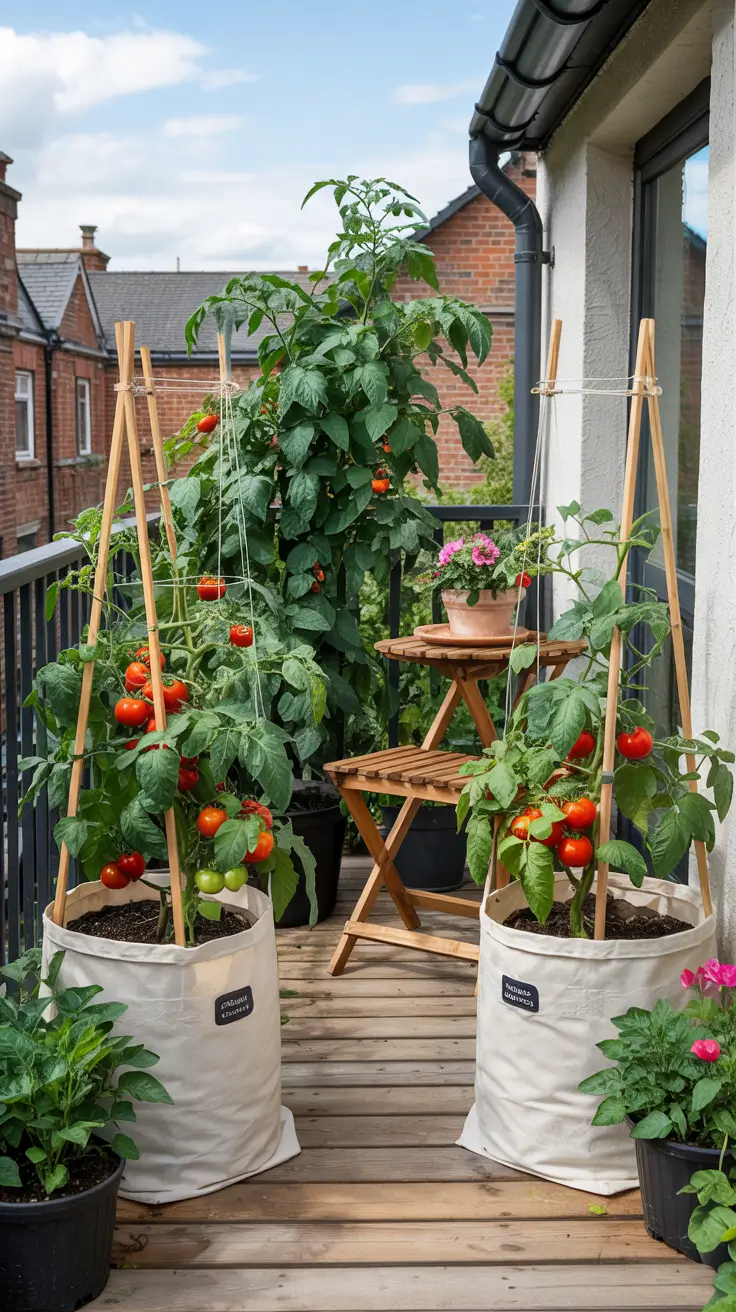
From my own experience, positioning tomato containers along a sunny wall works extremely well because the wall reflects warmth and encourages faster growth. Many vegetable gardening experts recommend at least six to eight hours of sun for tomatoes, and I have found this guideline very accurate.
To make this section more complete, I would include recommendations for companion plants like basil or marigolds that help improve the overall container vegetable garden ecosystem.
18. Strawberry Container Gardening Ideas for Sweet Balcony Harvests
Strawberry container gardening ideas are perfect for balconies and small patios because strawberries grow beautifully in compact vertical spaces. I like using tiered planters or stacked containers so the strawberries cascade naturally while saving floor space.
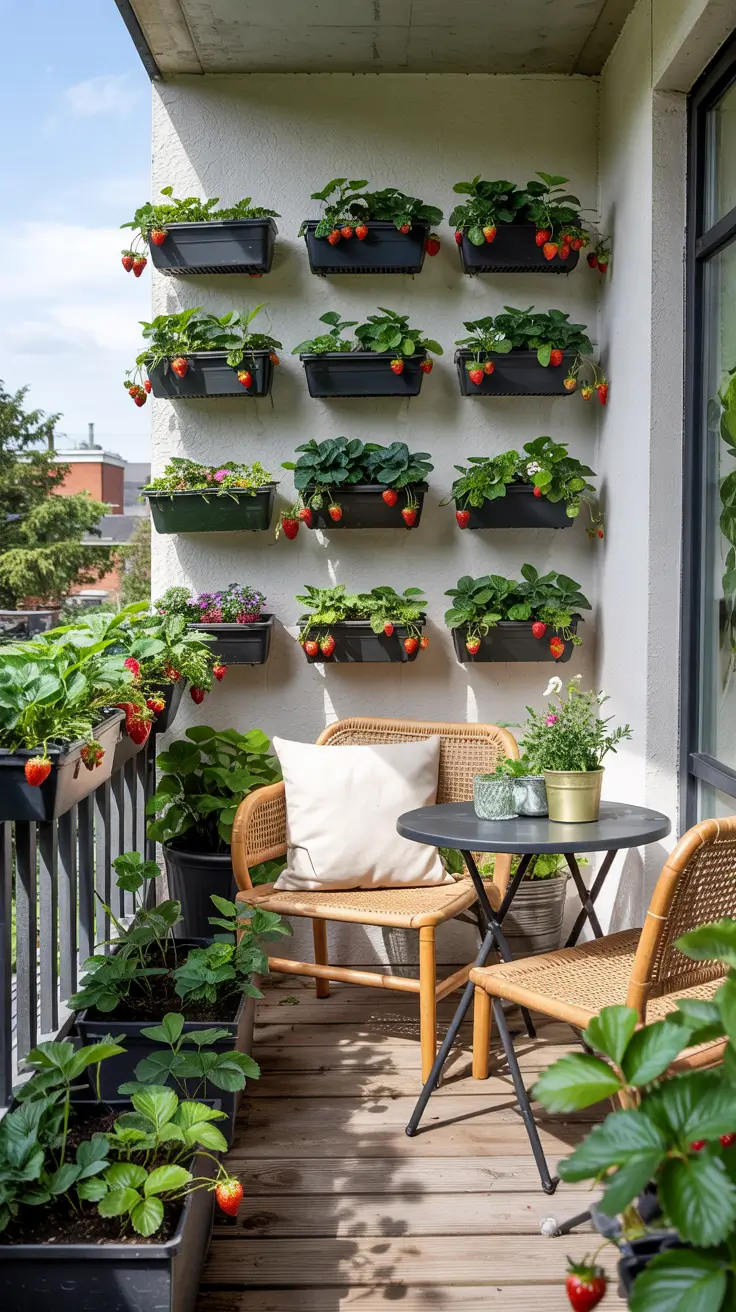
In terms of design, hanging baskets, wall mounted planters, or multi level wooden strawberry towers work extremely well. These arrangements not only maximize growing area but also create a decorative balcony feature that feels vibrant and productive.
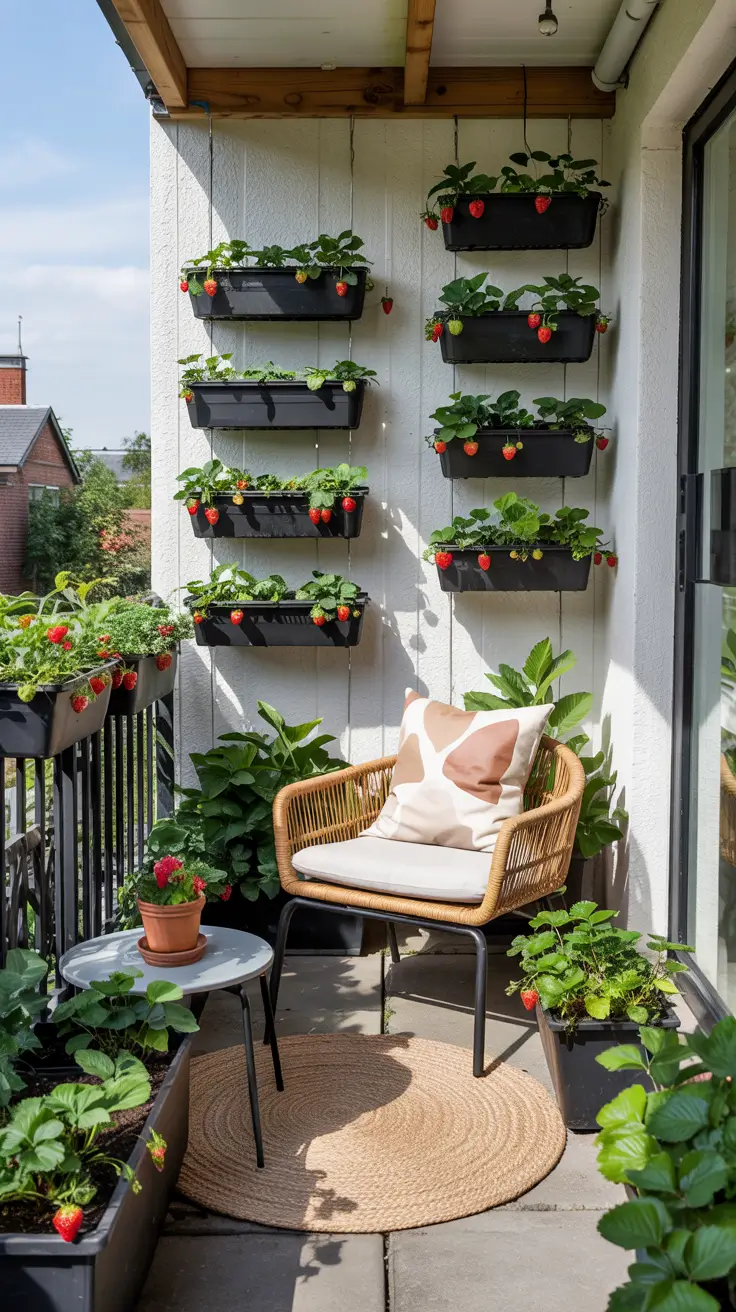
In my opinion, strawberries are one of the most rewarding container plants because they produce fruit quickly and require relatively simple maintenance. Many gardening publications highlight strawberries as an ideal beginner fruit plant for container gardening.
If this section needed improvement, I would add advice about protecting strawberries from birds by using light mesh or balcony netting.
19. Perennial Container Gardening Ideas That Come Back Every Year
Perennial container gardening ideas are perfect for gardeners who want long lasting outdoor designs without replanting every season. I often use perennial plants in large containers placed around patios, decks, and front beds to create structure in the outdoor layout.
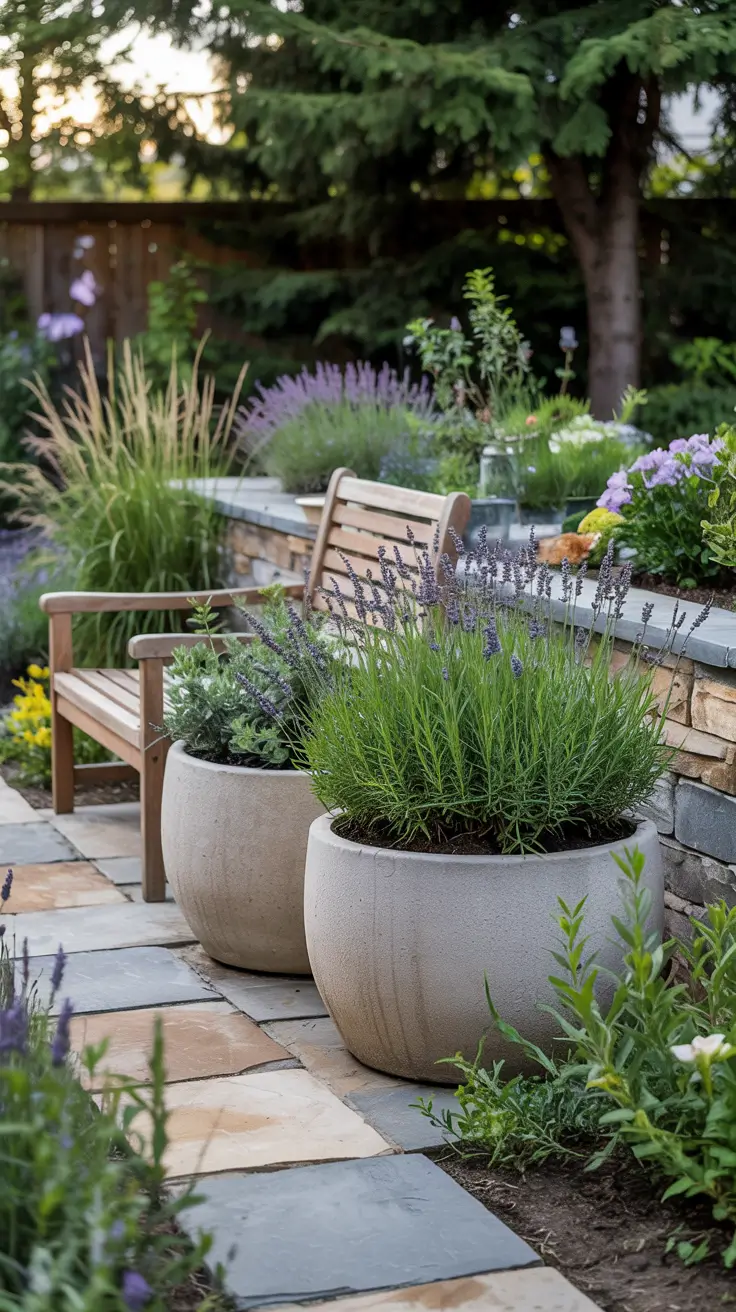
Plants like lavender, ornamental grasses, and hardy flowering perennials can live in containers for multiple seasons when the container is large enough. I prefer using heavy ceramic or stone containers because they provide stability and insulation during temperature changes.
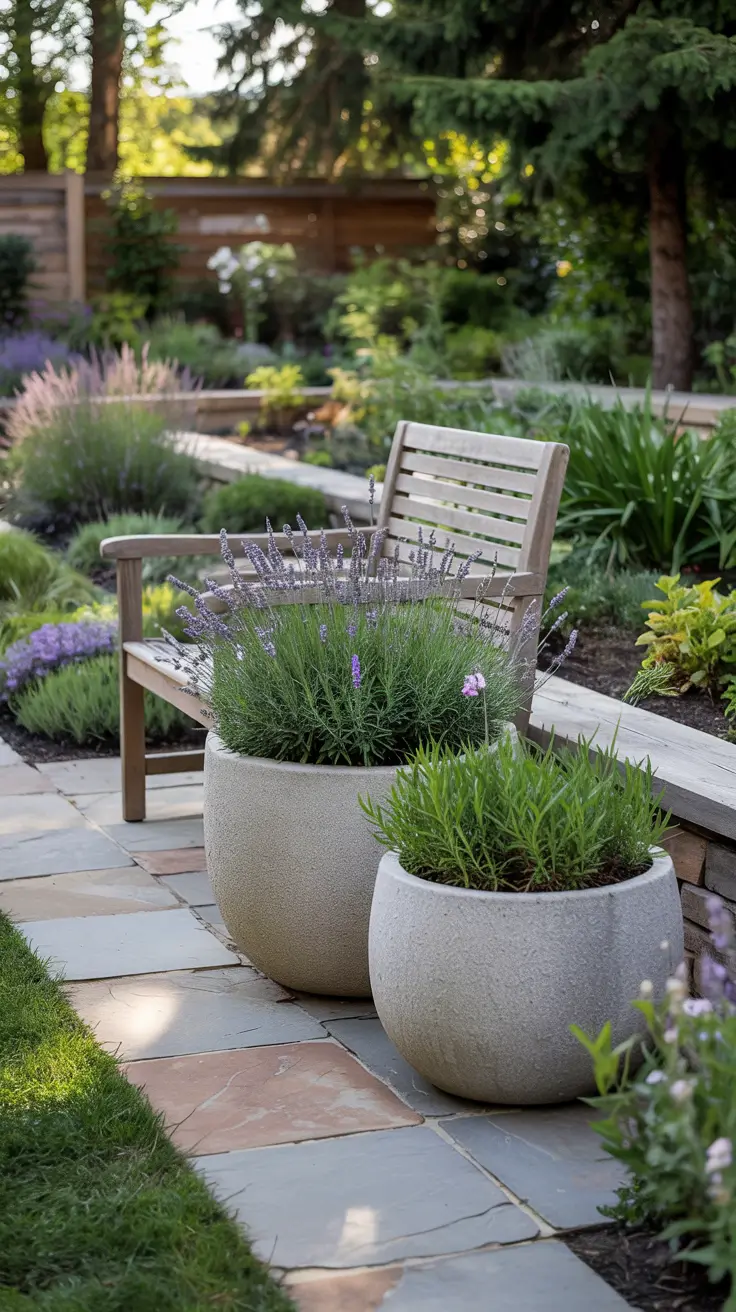
In my own projects, perennial containers often become anchor points in a garden design. They provide consistency year after year while seasonal flowers can be added around them to refresh the look.
To expand this section further, I would include advice on winter protection for containers in colder climates, since root insulation becomes very important for perennial survival.
20. Cactus Container Gardening Ideas for Low Maintenance Modern Displays
Cactus container gardening ideas are ideal for modern outdoor designs where low maintenance plants are preferred. I often use cactus containers on sunny patios or minimalist decks because their sculptural shapes complement contemporary outdoor furniture.
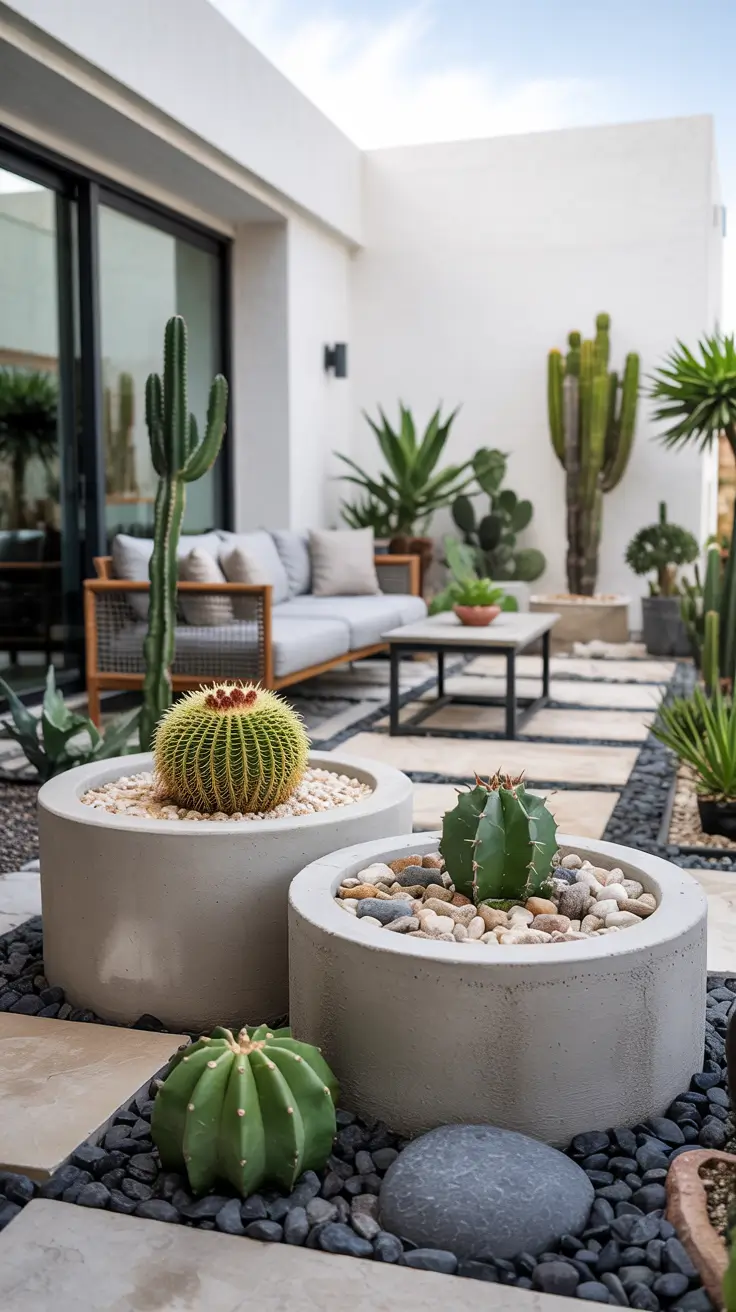
Concrete bowls, geometric planters, or shallow ceramic trays are excellent containers for cactus arrangements. By mixing different cactus varieties with decorative gravel or sand, the container becomes a small desert landscape that looks modern and artistic.
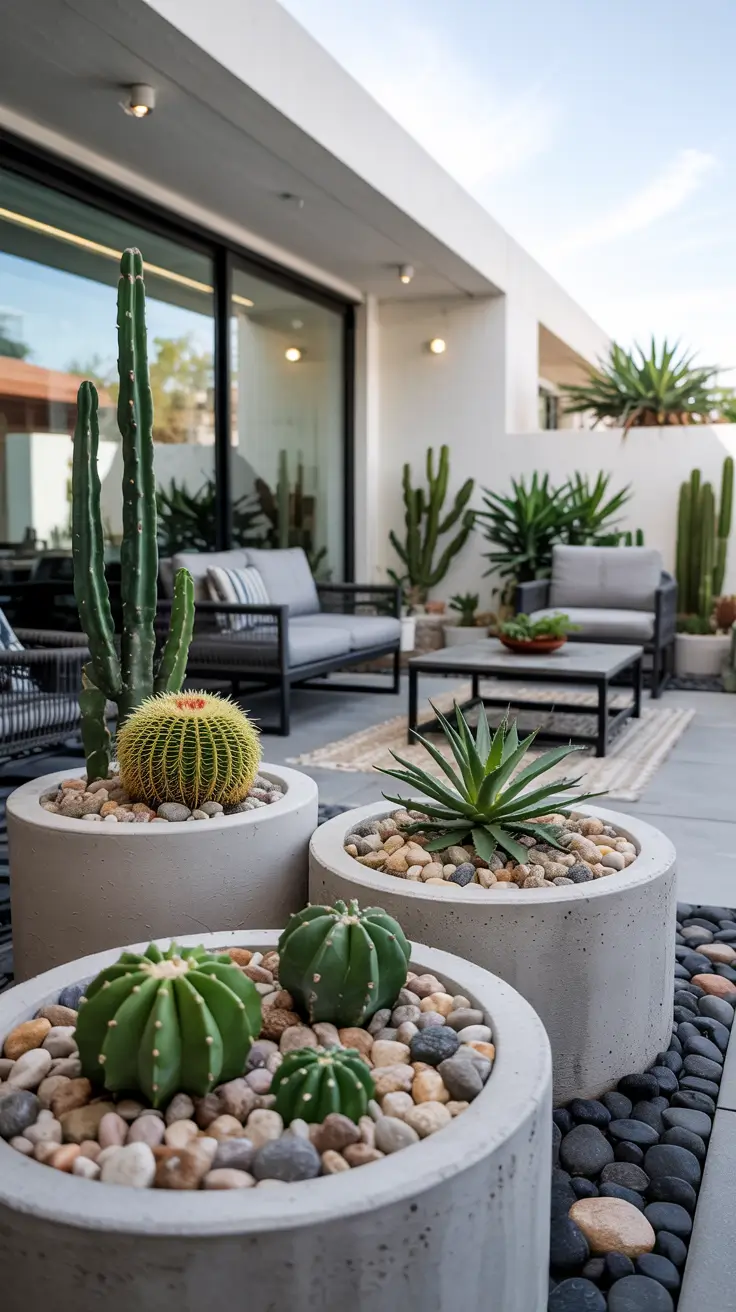
From my experience, cactus gardens work especially well in sunny outdoor corners where other plants might struggle. Designers frequently use these arrangements in modern outdoor styling because they combine structure, texture, and simplicity.
To improve this section, I would include advice about drainage layers and soil mixes specifically designed for cactus and succulents.
21. Butterfly-Friendly Container Gardening Ideas That Attract Pollinators
Butterfly container gardening ideas can transform a patio or backyard into a lively pollinator habitat. I often design these containers using bright nectar rich flowers such as zinnias, lavender, and coneflowers that naturally attract butterflies.
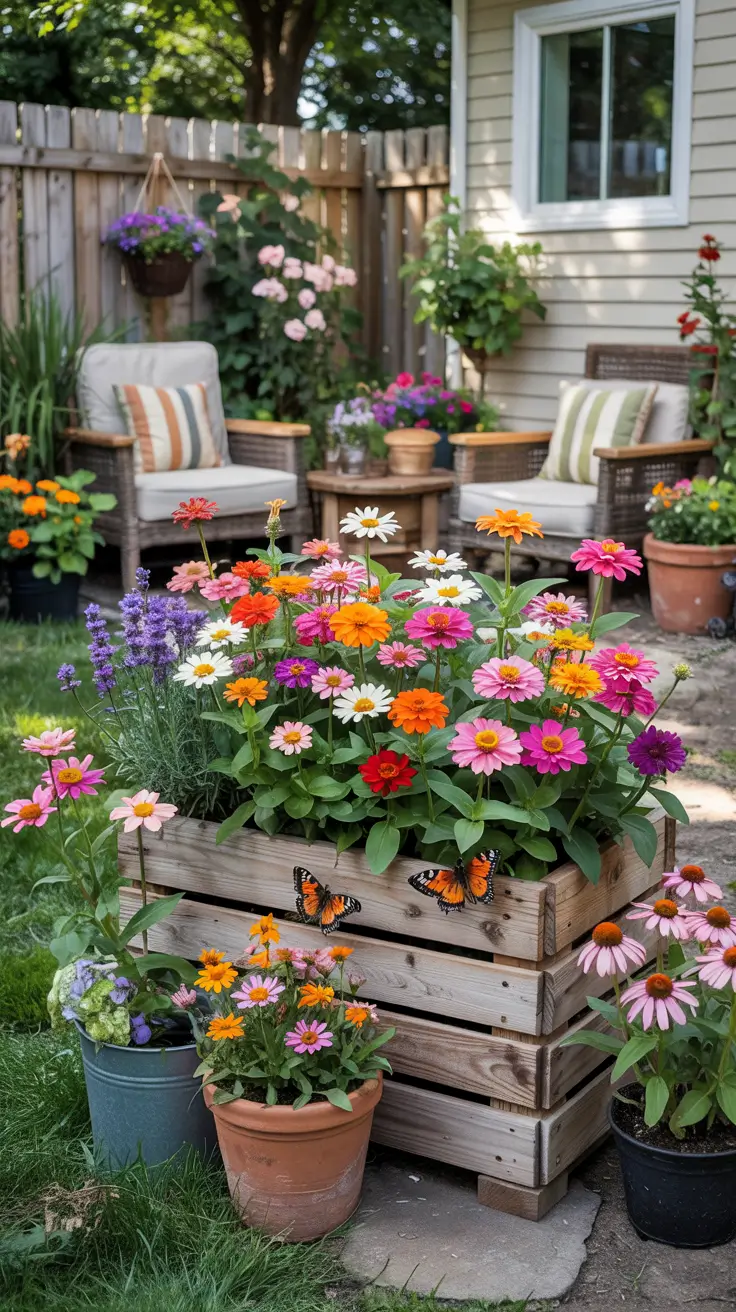
In terms of layout, placing several medium sized containers together creates a small pollinator zone. Wooden planters, clay pots, and natural stone containers blend beautifully into outdoor garden settings while supporting pollinator friendly planting.
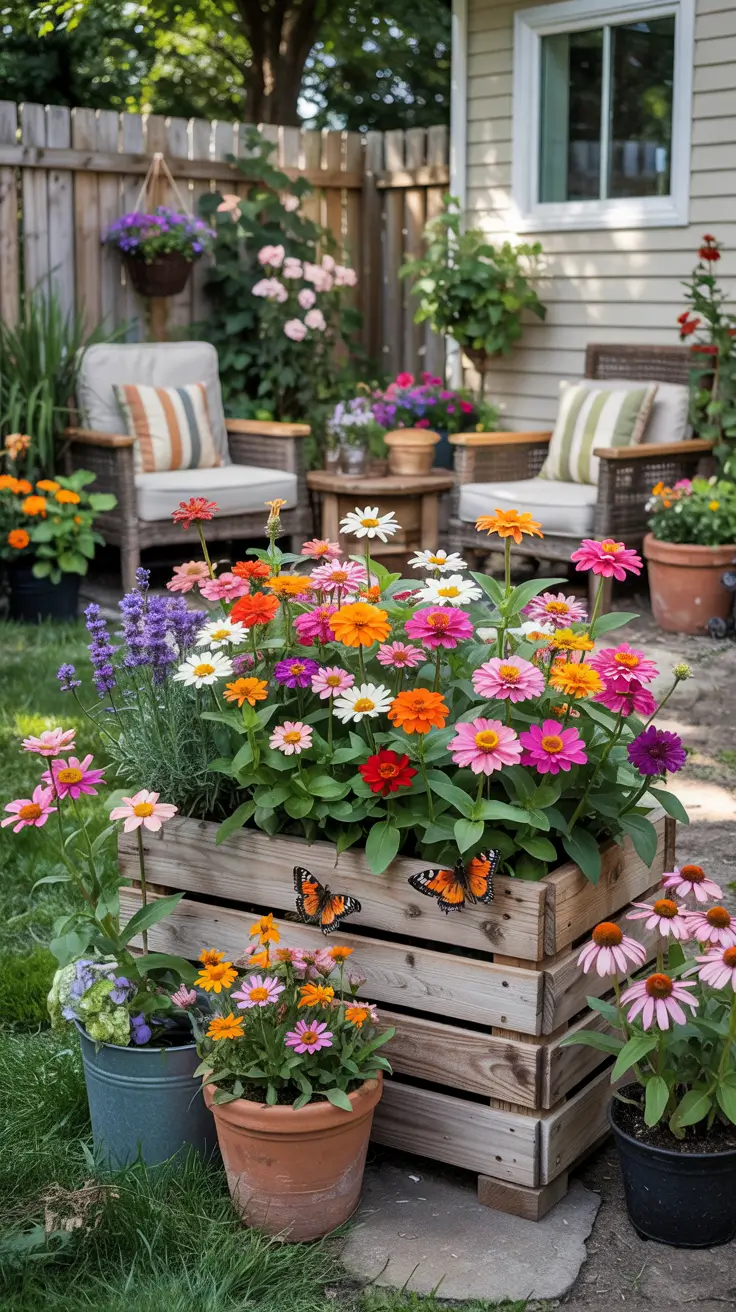
Personally I enjoy designing these gardens because they bring movement and life to outdoor spaces. Pollinator gardens are frequently recommended by environmental gardening organizations, and I have seen firsthand how quickly butterflies respond to the right flowers.
If something were missing from this section, I would add a list of specific butterfly friendly plant species that perform well in container environments.
22. Sunny Container Gardening Ideas for Bright and Vibrant Outdoor Displays
When I plan sunny container gardening ideas, I always focus on plants that thrive in strong light and heat. Full sun containers can turn a simple patio, deck, or backyard seating area into a vibrant outdoor display filled with bold color and dense foliage. These containers work especially well along railings, beside outdoor furniture, or lining a garden pathway where sunlight is abundant for most of the day.
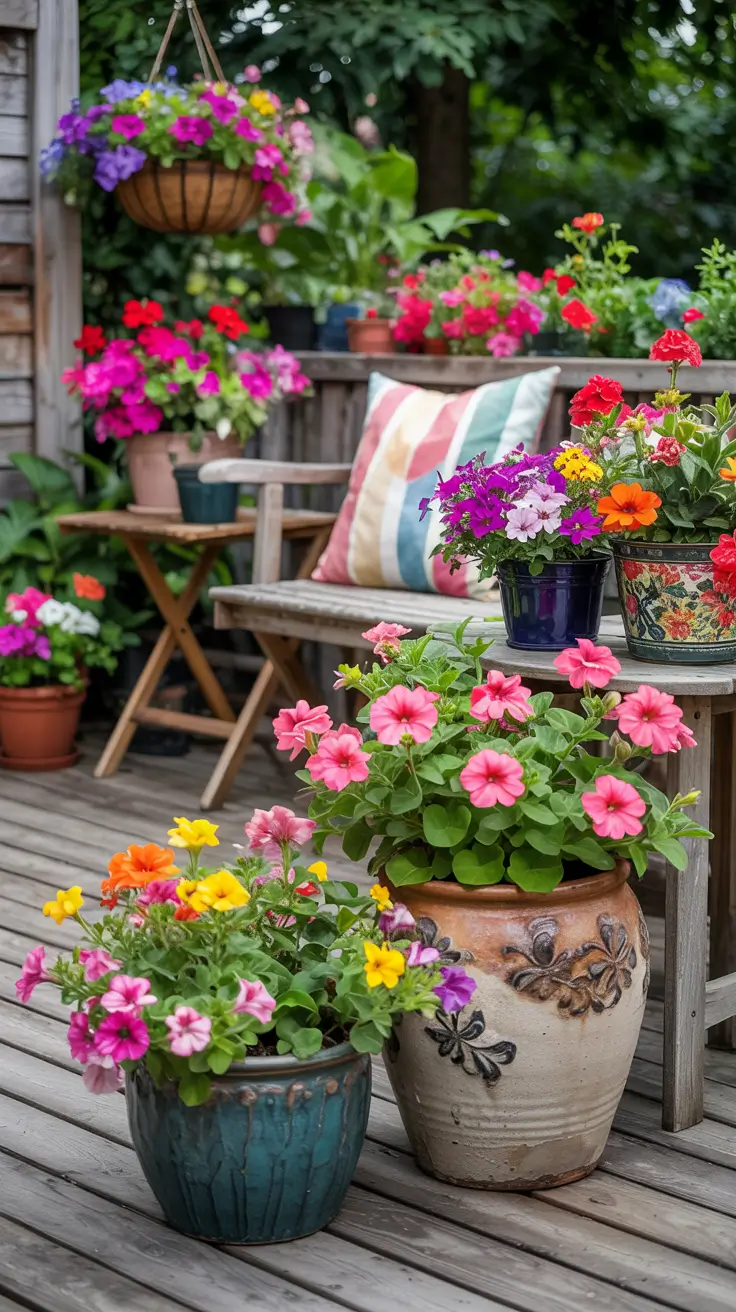
For structure, I prefer large ceramic or stone containers that retain moisture while giving the arrangement a polished outdoor design. Sun loving flowers such as petunias, geraniums, and zinnias in containers work beautifully with trailing plants like calibrachoa or verbena. When I place several containers together, I usually vary their heights to create a layered look that feels intentional and balanced rather than flat.
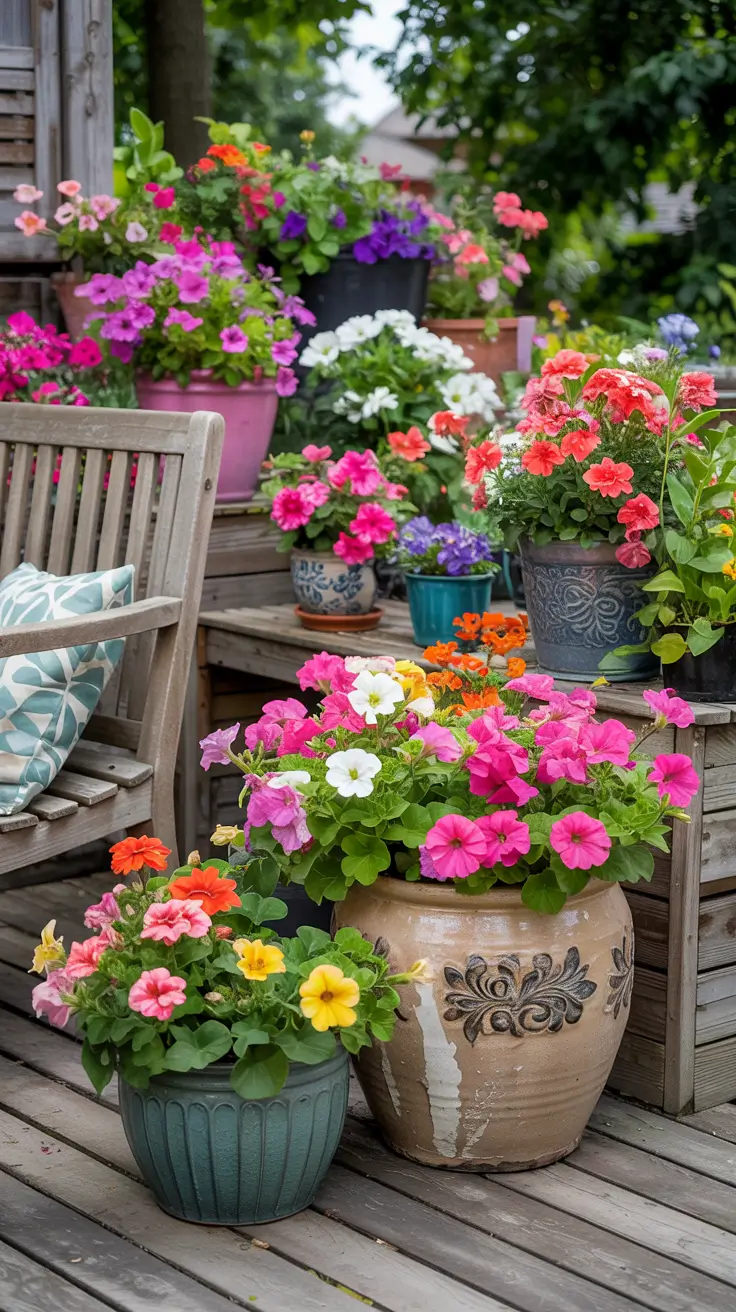
From my experience, the biggest mistake gardeners make with sunny containers is underestimating watering needs. Full sun containers dry quickly, especially on balconies and decks. Many horticulture experts recommend adding water retaining soil mixes and mulch layers, and I always follow that advice because it keeps the plants healthy throughout hot summer weeks.
If this section were expanded further, I would add a planting chart showing which flowers and vegetables perform best in full sun container gardening environments.
23. Small Patio Container Gardening Ideas That Maximize Limited Space
Small patio container gardening ideas are perfect when space is limited but you still want a lush outdoor environment. Even a very compact patio can become a productive garden when containers are placed strategically around seating areas and walls. I often design these spaces as small outdoor rooms where greenery becomes part of the décor.
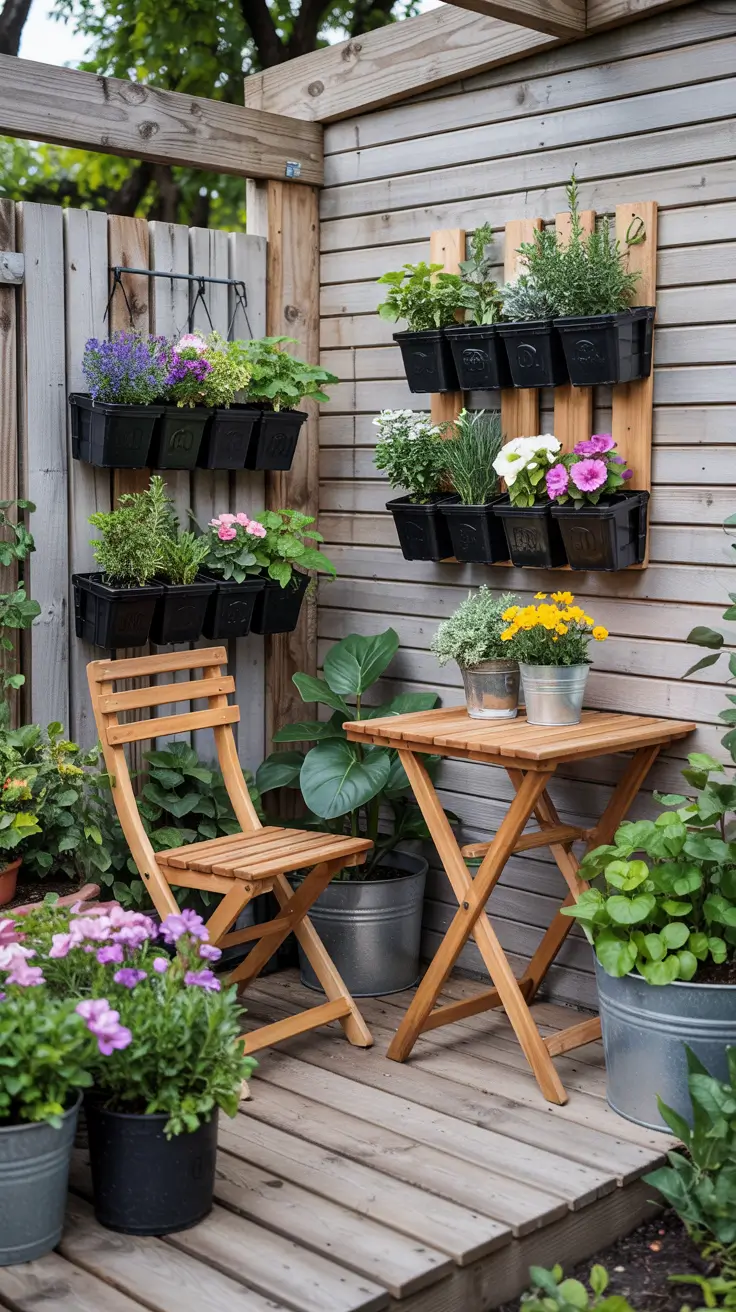
In compact patios I prefer vertical arrangements such as tiered plant stands, wall mounted planters, or narrow rectangular containers placed along railings. Combining flowers, herbs, and small vegetables creates both visual interest and practical harvest opportunities. A small bistro table, lightweight chairs, and several layered planters can transform a plain patio into a cozy garden retreat.
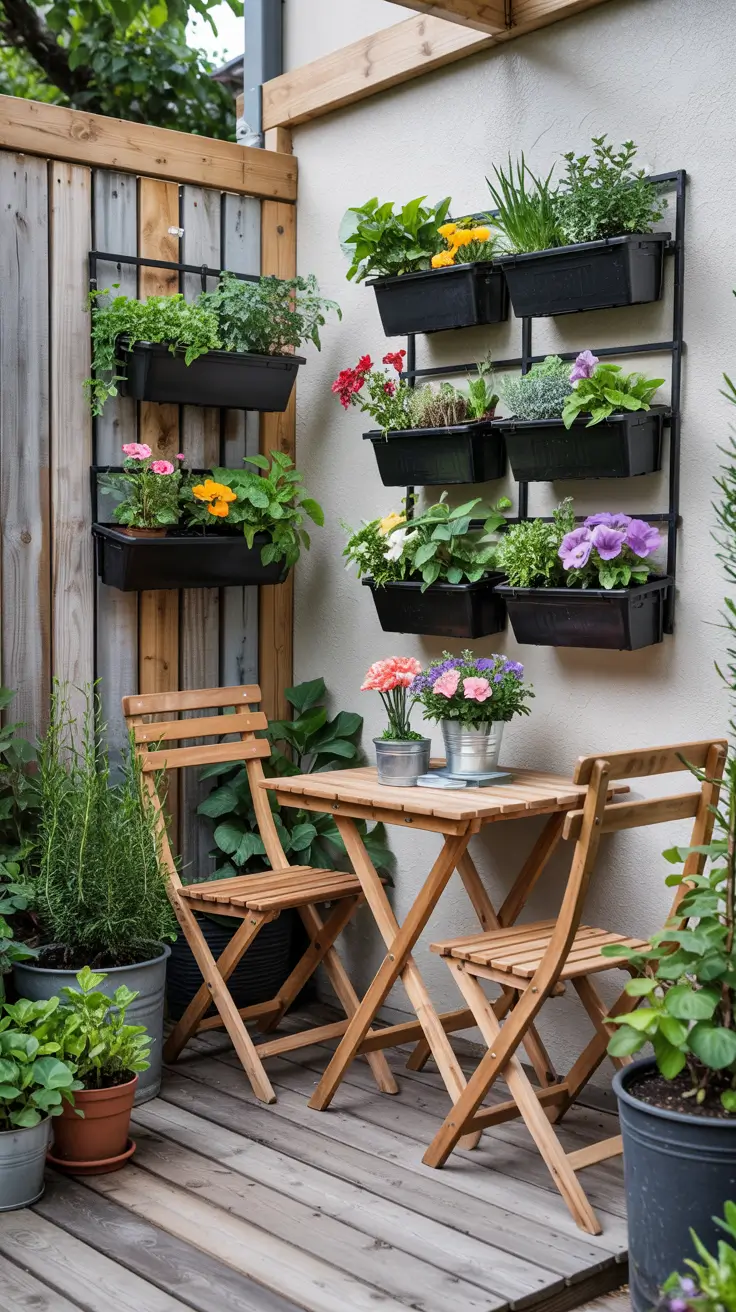
Personally I believe small patios benefit most from intentional layout planning. Designers frequently recommend leaving a clear central walking space and grouping containers along the edges. I have found this approach extremely effective because it keeps the patio comfortable while still allowing a dense planting display.
If something could be added here, I would include examples of compact container sizes that work best for balconies and small patios without overcrowding the space.
24. Recycled Container Gardening Ideas Using Old Buckets, Crates, and Household Items
Recycled container gardening ideas are some of the most creative container gardening ideas on a budget. Instead of buying new pots, I often repurpose old buckets, wooden crates, metal tubs, or vintage kitchen containers to create unique garden displays. This approach not only saves money but also adds personality to the garden.
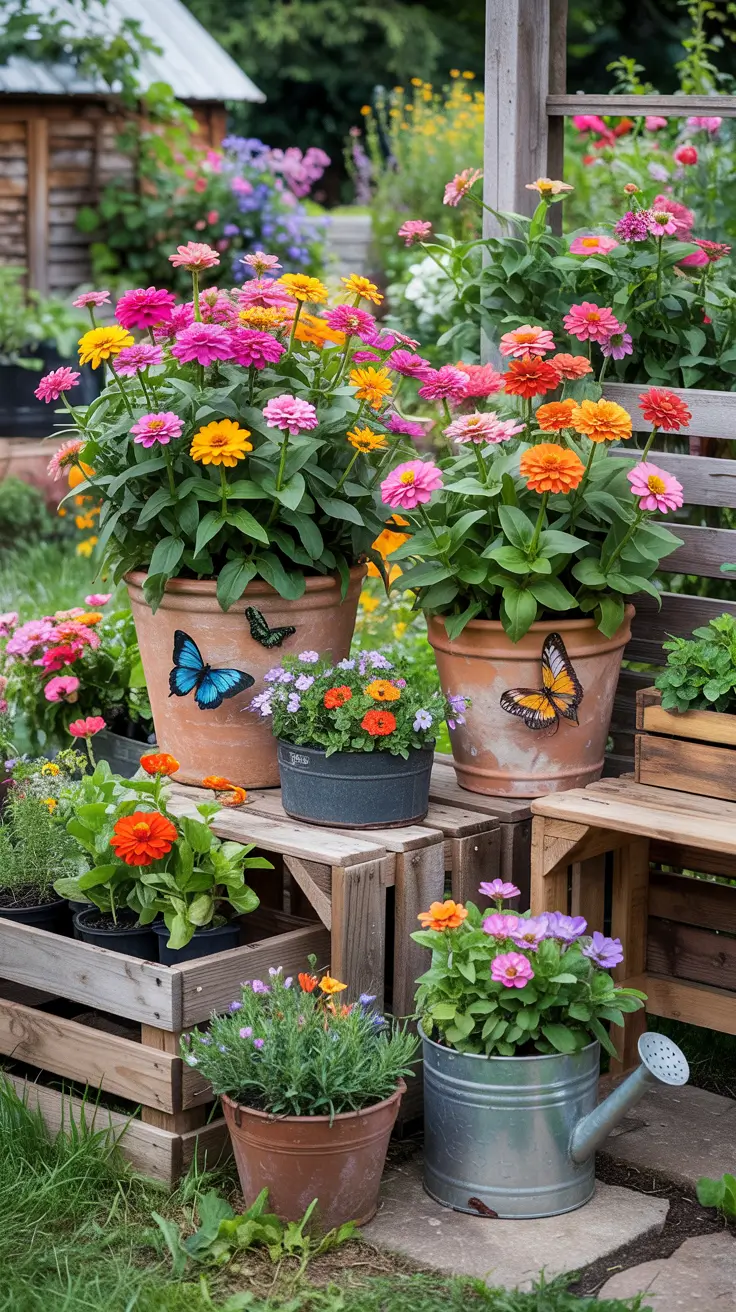
In my designs, wooden fruit crates work particularly well for herb or vegetable gardens, while metal buckets create a rustic farmhouse style planter. Old watering cans, teapots, or enamel basins can also become charming flower containers when drainage holes are added. Placing these recycled containers along a patio wall or backyard fence creates a relaxed and artistic outdoor garden.
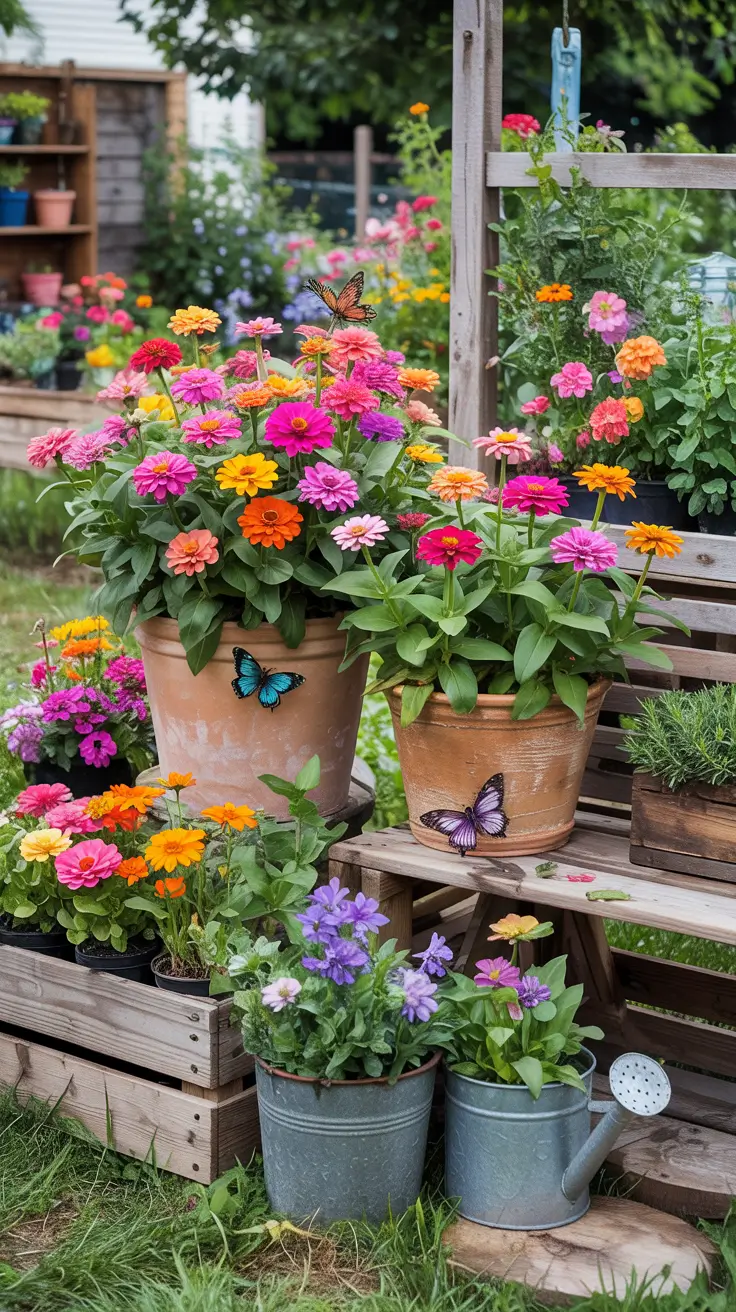
From my experience, the key to making recycled containers look intentional rather than random is consistency in arrangement. Using similar materials or colors helps unify the display. Many sustainable gardening guides also encourage repurposing containers as a way to reduce waste while creating decorative garden features.
If this section needed additional depth, I would include a short guide on how to properly drill drainage holes and prepare recycled containers for planting.
25. Zinnias in Containers – Bright and Cheerful Flower Gardening Ideas
Zinnias in containers are one of the easiest ways to create bright and cheerful container gardening ideas flowers displays. These flowers thrive in sunny environments and produce bold colors that instantly energize patios, decks, and front yard garden spaces. I often use zinnias as the main flower in summer container arrangements because they bloom continuously.
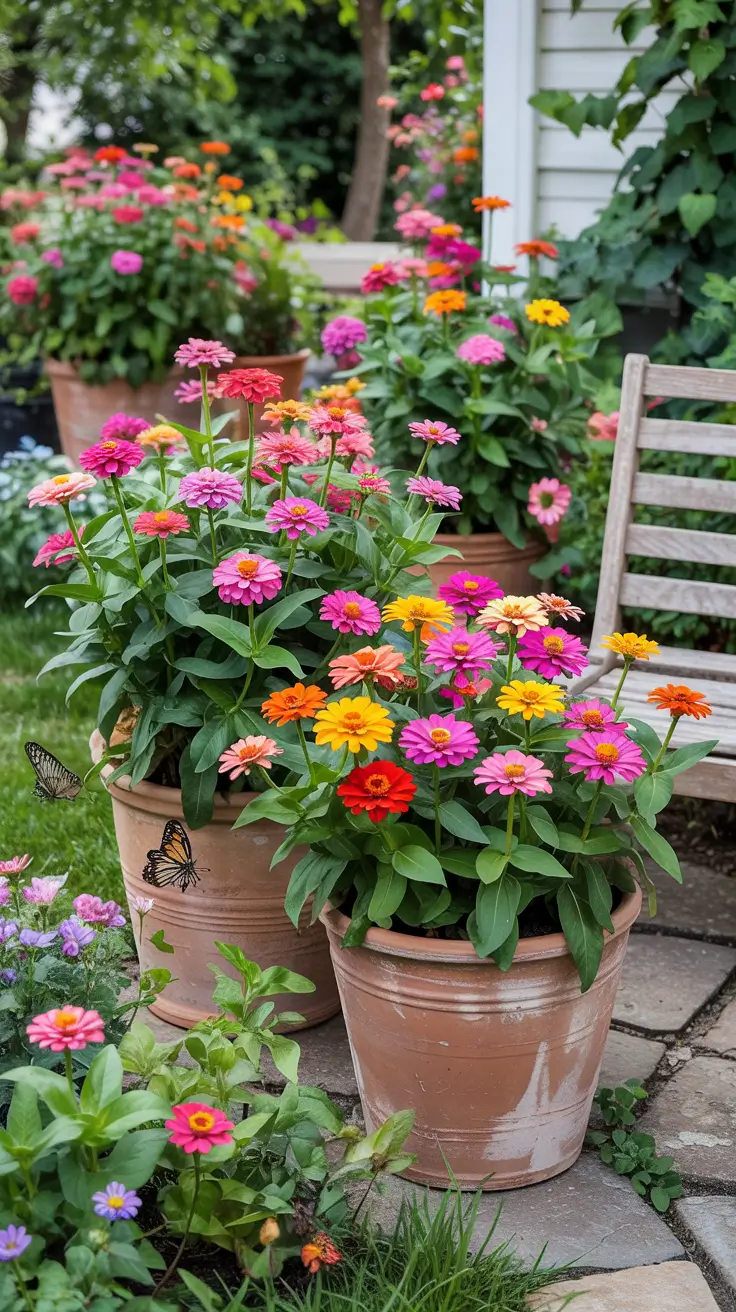
For container layouts, I usually plant taller zinnias toward the center of a large pot and surround them with lower flowering plants or trailing greenery. Terracotta pots, ceramic planters, or wooden containers all work well for this style of flower garden. When grouped together, several zinnia containers create a vibrant seasonal display that feels lively and welcoming.
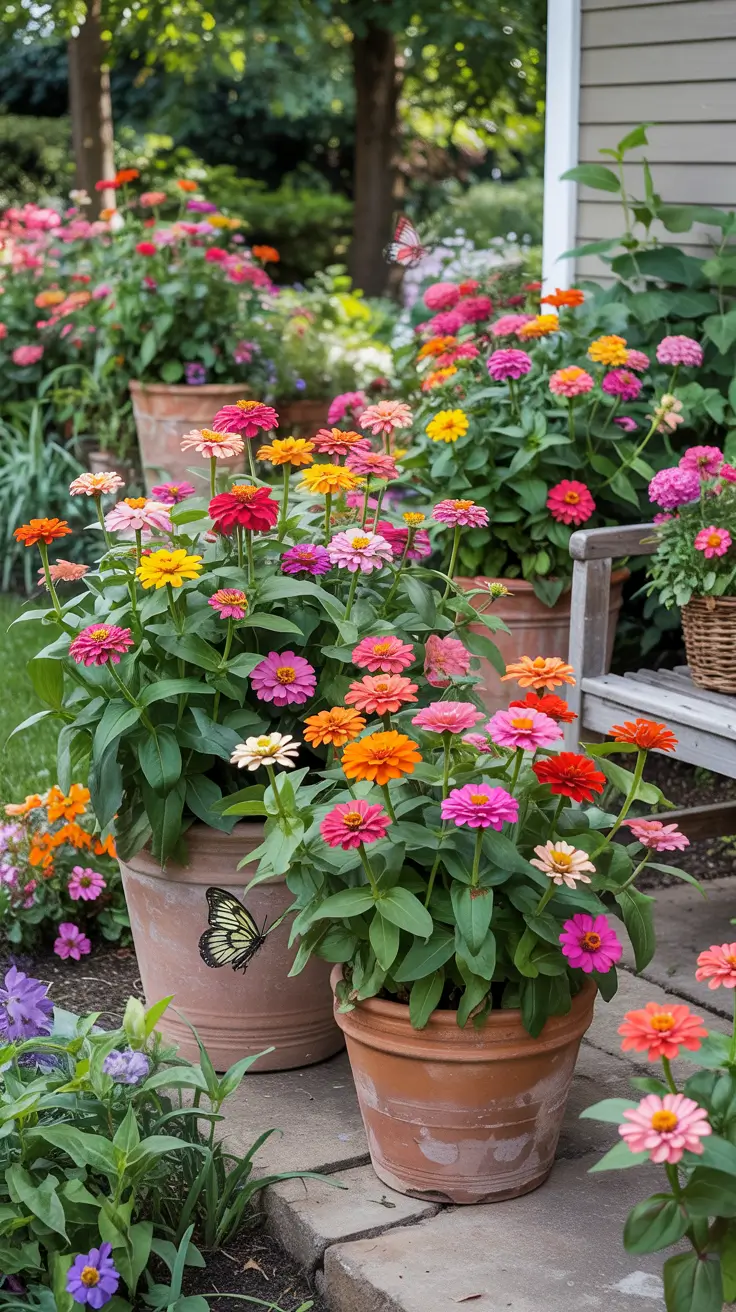
In my opinion, zinnias are also excellent for attracting butterflies and pollinators. Gardening experts often recommend them as beginner friendly flowers because they germinate quickly and tolerate heat very well. I have planted them in many container gardens and they consistently perform beautifully throughout the season.
To make this section even more useful, I would add information about spacing between plants and recommended soil mixtures for flowering container gardens.
26. Corner Container Gardening Ideas to Beautify Empty Outdoor Spaces
Corner container gardening ideas are perfect for transforming empty or overlooked areas of a patio, deck, or backyard. I often notice that outdoor corners remain unused, yet they can easily become lush focal points when containers are arranged thoughtfully. A corner planting arrangement can soften hard edges and bring balance to the overall garden design.
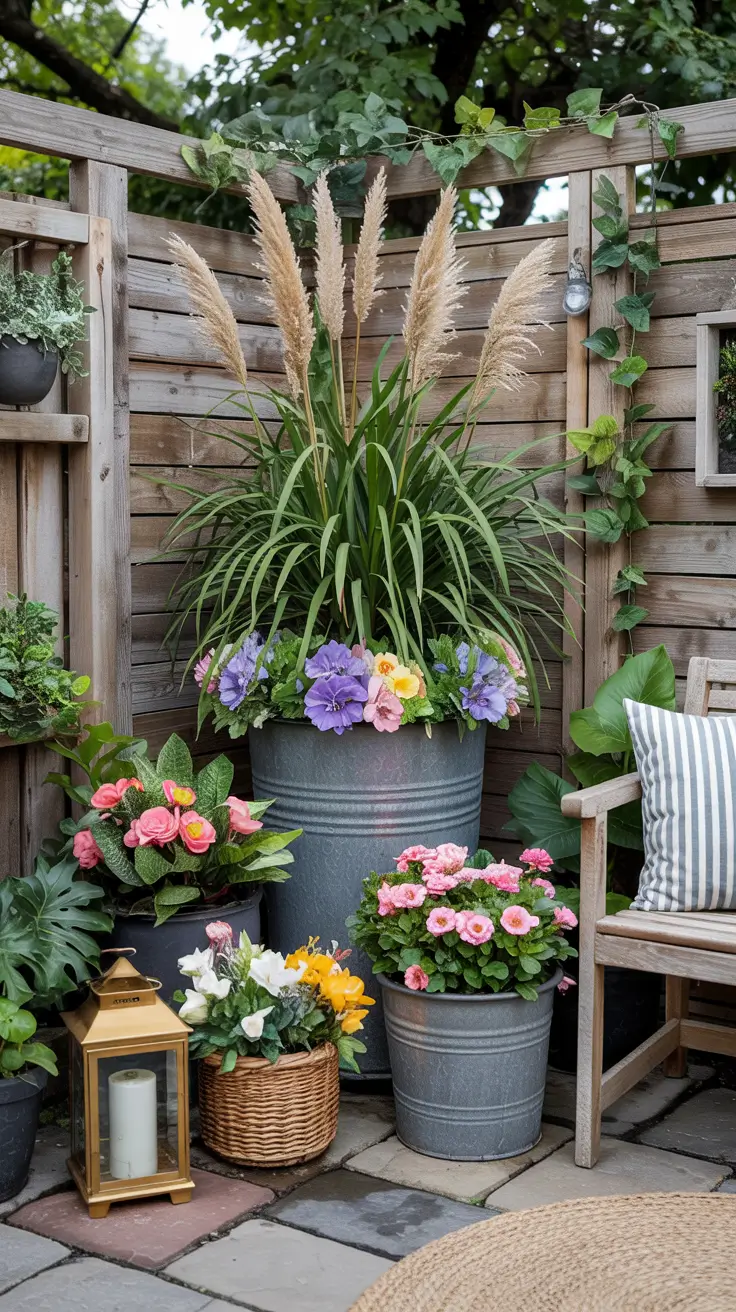
In these spaces I like using containers of different heights placed in triangular compositions. A tall planter with ornamental grass or flowering plants can stand at the back, while medium and small containers fill the front layers. Adding a small bench, lantern, or decorative garden sculpture can turn the corner into a relaxing visual feature.
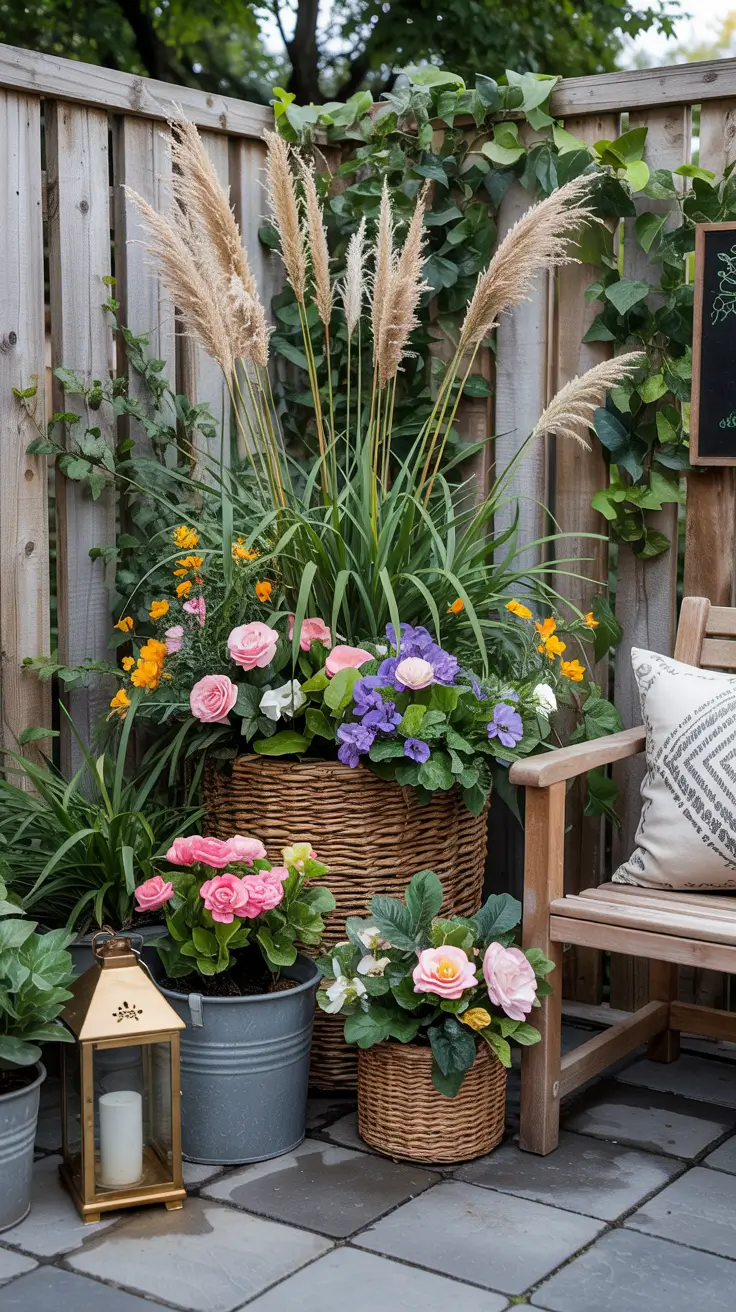
From my own experience, corners benefit from plants with interesting textures such as ferns, flowering perennials, or trailing vines. Garden designers often highlight the importance of vertical layering in corners because it draws the eye upward and prevents the space from looking empty.
If this section were expanded, I would include examples of plants suitable for shady corners versus sunny corners to help readers adapt the idea to different environments.