Japanese garden ideas 2026 are becoming increasingly popular as homeowners search for peaceful outdoor spaces that combine beauty, simplicity, and balance with nature. Whether you are exploring japanese garden ideas backyard layouts, japanese garden ideas diy small spaces, or modern zen concepts for a front yard or rooftop terrace, there are countless ways to create a calming retreat. But how do you design a Japanese garden that feels authentic, modern, and practical for real homes?
Many people wonder if japanese garden ideas for small spaces or japanese garden ideas on a budget can still feel elegant and balanced. Others are curious about creative concepts inspired by Animal Crossing, Minecraft, ACNH, or even Bloxburg builds that translate into real outdoor landscapes. In this article, I will explore practical, modern, and realistic ways to design beautiful Japanese gardens for backyards, front yards, narrow spaces, rooftops, and even indoor areas.
From bamboo fences and zen moon gates to miniature gardens and peaceful stone pathways, these ideas combine traditional Japanese design principles with modern landscaping trends for 2026. I will explain how to create a harmonious outdoor environment that feels calm, functional, and visually stunning.
1. Japanese Garden Ideas 2026 – Peaceful Zen Backyard Designs Inspired by Nature
When I design japanese garden ideas backyard spaces for 2026, I focus first on creating a calm, balanced environment that reflects nature. A Zen backyard garden should feel quiet and intentional, with natural textures like stone, moss, gravel, and wood. Even in a modern outdoor setting, I try to ensure that every element feels organic and harmonious with the surrounding landscape. In my experience, this approach helps transform a regular backyard into a peaceful retreat where people can relax and disconnect from daily stress.
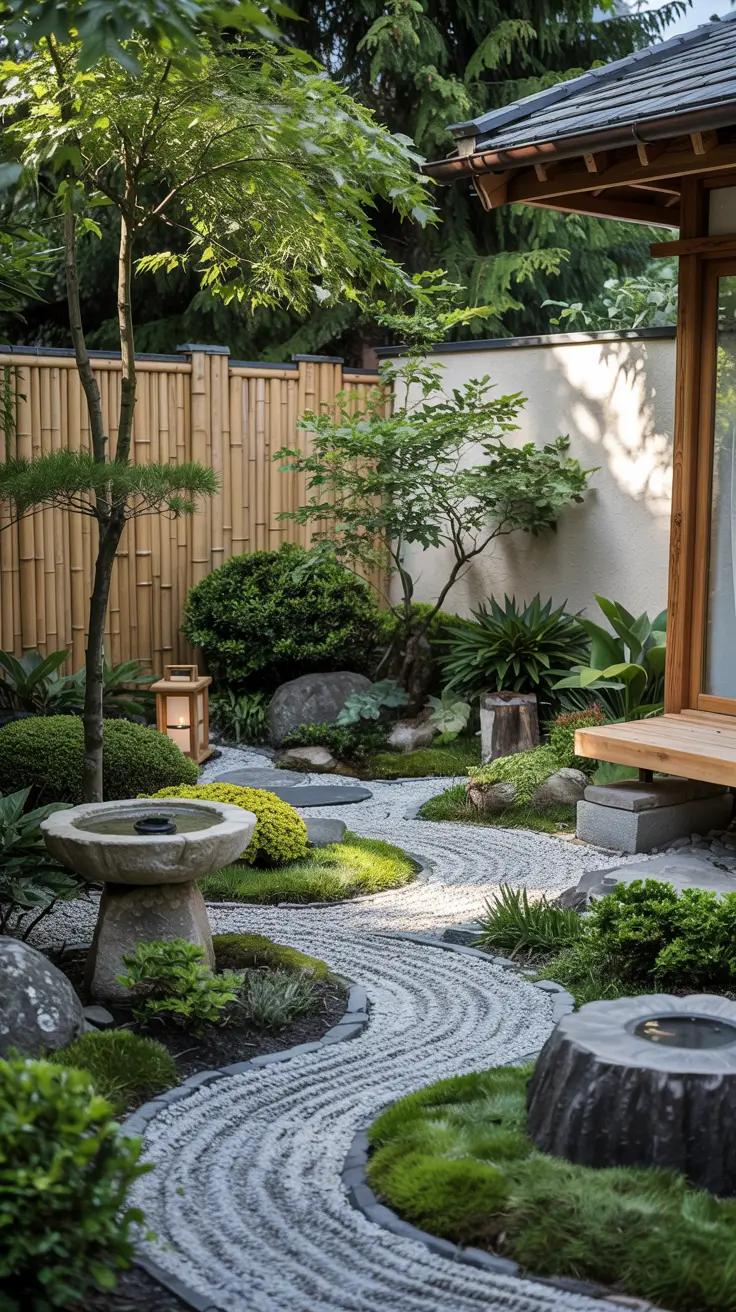
I usually start with a simple layout that includes a gravel or raked sand area, natural stone pathways, and a few carefully placed plants such as Japanese maples, moss, or dwarf pines. I also like incorporating a bamboo fence or low wooden border to frame the space while maintaining privacy. A small stone lantern, a minimalist bench, and a shallow water basin often become focal points in the garden. These elements work together to create depth, visual balance, and the tranquil atmosphere that defines traditional Zen landscapes.
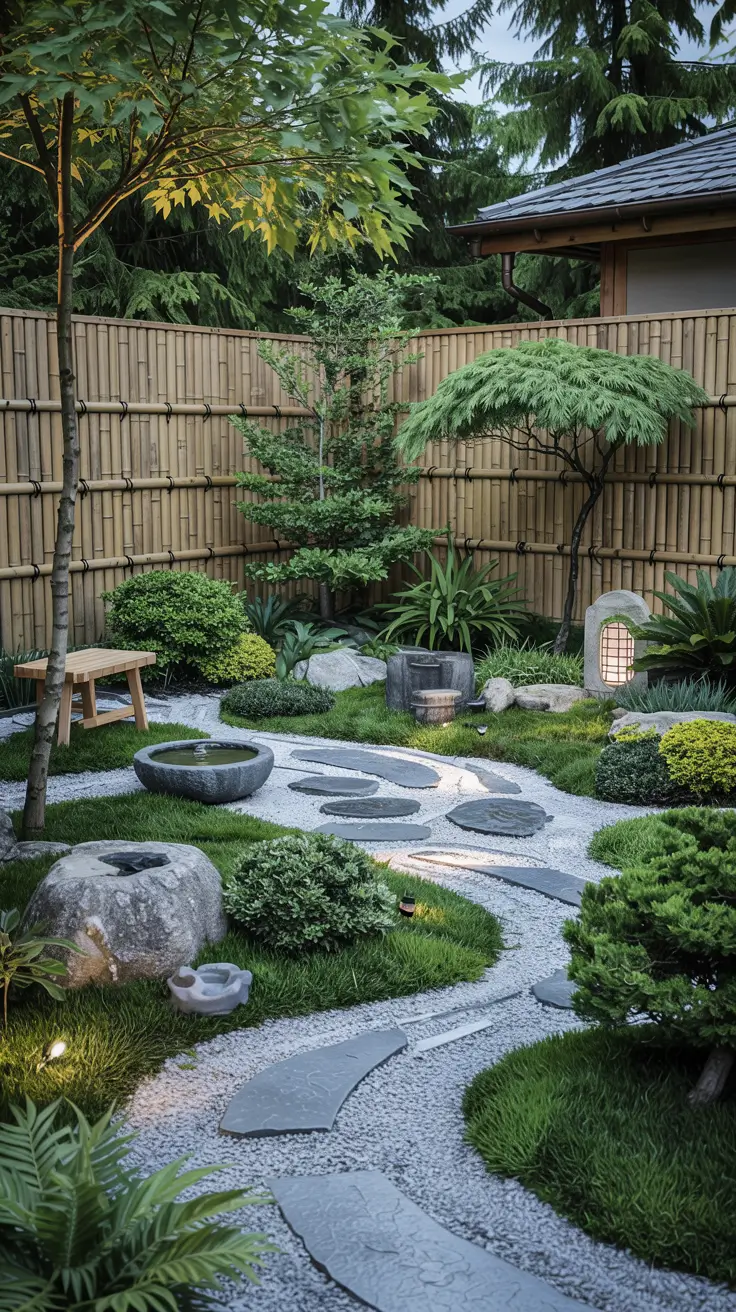
Personally, I find that the most successful Japanese gardens are the ones that avoid overcrowding. Many landscape architects, including designers featured in Architectural Digest and Garden Design Magazine, emphasize the importance of restraint and negative space. I follow the same philosophy in my own projects. By limiting decorative elements and focusing on natural materials, the garden feels more authentic and peaceful.
In this section, I would also add subtle lighting suggestions to enhance the garden during the evening. Soft ground lights near stone paths or lanterns can highlight textures and create a serene nighttime atmosphere without overpowering the minimalist design.
2. Modern Japanese Garden Ideas 2026 – Minimalist Zen Landscapes for Contemporary Homes
Modern Japanese garden ideas combine traditional Zen principles with contemporary outdoor design. When I work on a modern garden, I try to maintain the calm simplicity of traditional Japanese landscapes while introducing clean lines, architectural elements, and minimal planting schemes. This approach works particularly well for newer homes where the outdoor space should complement modern architecture.
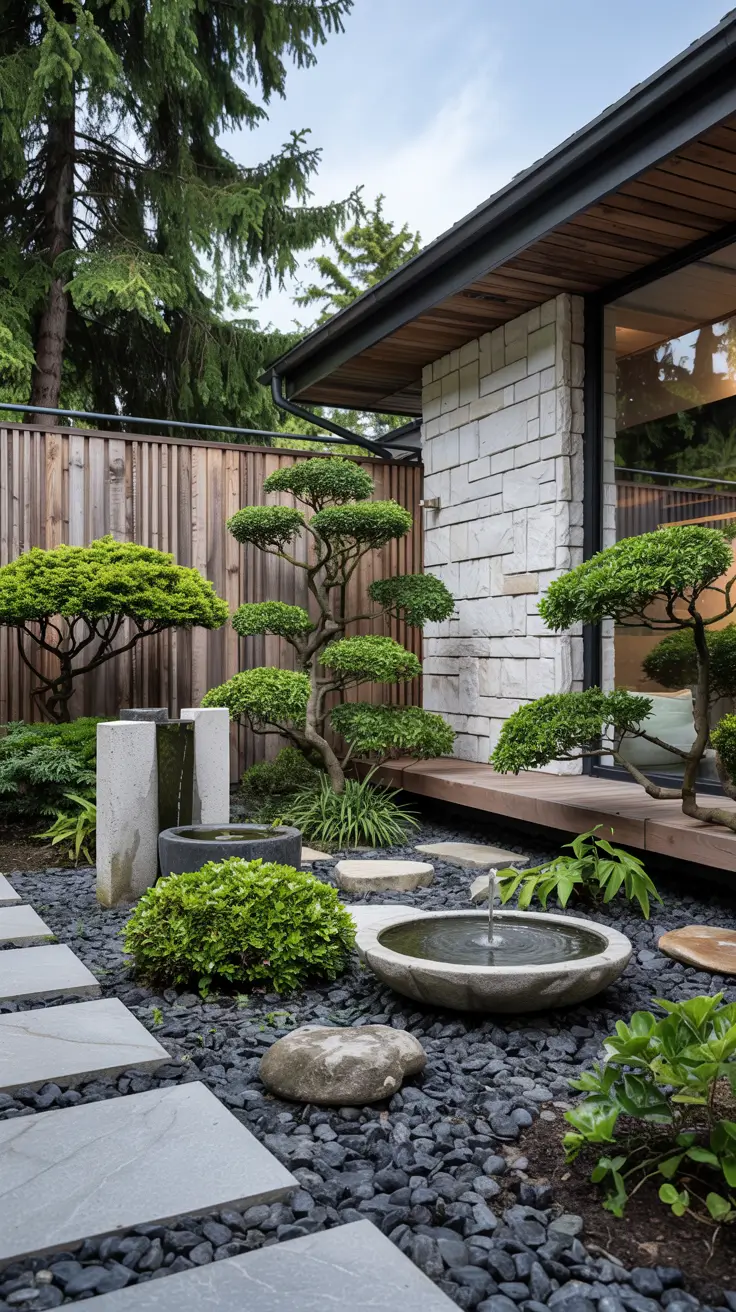
In a contemporary garden design, I often use smooth concrete stepping stones, dark gravel beds, and structured planting areas with ornamental grasses or sculptural shrubs. A modern bamboo fence or vertical wood slats can define the garden boundary while maintaining a natural aesthetic. Water features such as narrow reflecting pools or minimalist stone fountains also help reinforce the tranquil character of the garden while adding gentle movement and sound.
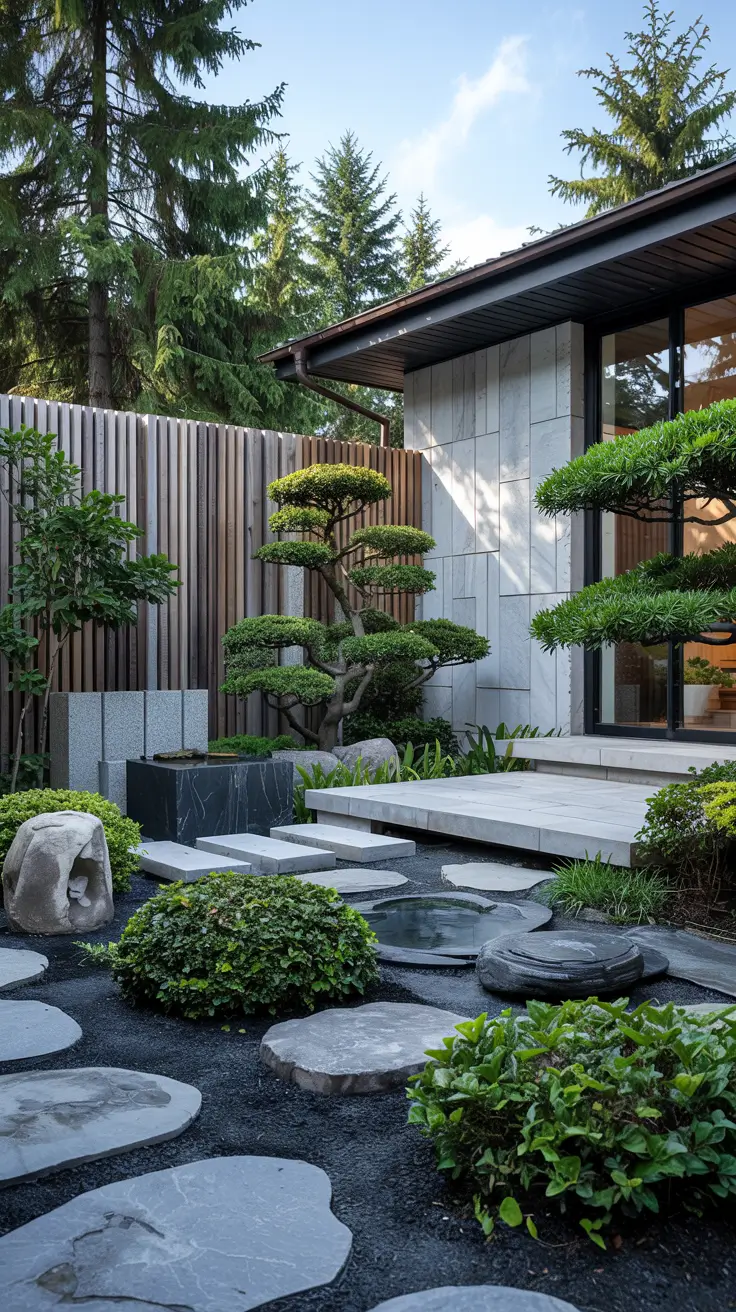
From my experience, modern Japanese gardens work best when materials remain natural but refined. Designers frequently recommend combining stone, wood, and gravel with subtle lighting and clean landscaping edges. Publications like Dwell often highlight how modern minimalist gardens succeed by blending architecture with nature rather than separating them.
To strengthen this section, I would include ideas for integrating outdoor seating such as a low wooden platform, modern garden stools, or a small meditation deck. These features allow the garden to function as both a design element and a usable outdoor living space.
3. Japanese Garden Ideas for Small Spaces – Creating a Serene Zen Retreat in Tiny Gardens
One of the most common questions I receive is whether japanese garden ideas for small spaces can still capture the peaceful atmosphere of a traditional Zen landscape. In my experience, small spaces actually work very well for Japanese gardens because the design philosophy naturally focuses on simplicity and careful composition. Even a tiny backyard, a small corner, or a narrow outdoor space can become a calming retreat when planned thoughtfully.
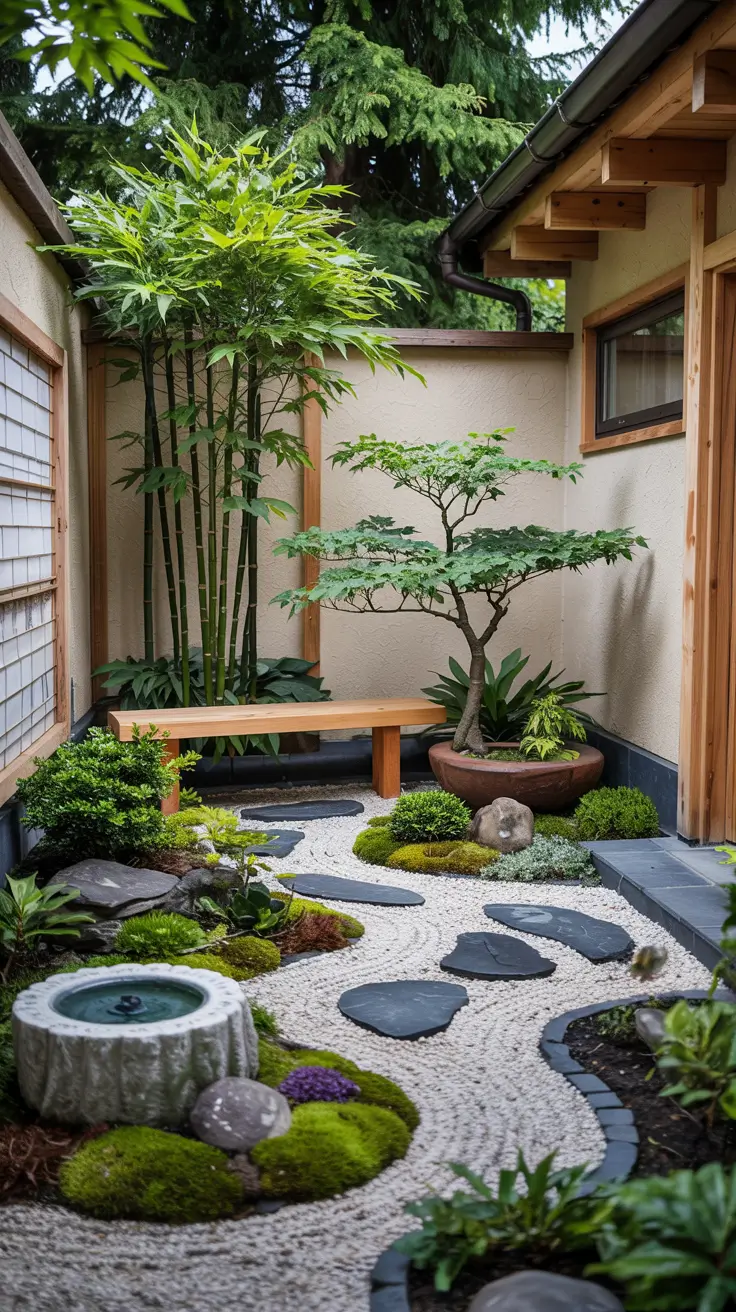
When designing small gardens, I concentrate on a few key elements instead of filling the space with too many features. A compact gravel Zen garden, a single sculptural tree such as a Japanese maple, and a curved stone path can create visual interest without overwhelming the area. I also like using vertical elements like bamboo screens or wooden trellises to add height and privacy while maintaining a light and open feeling.
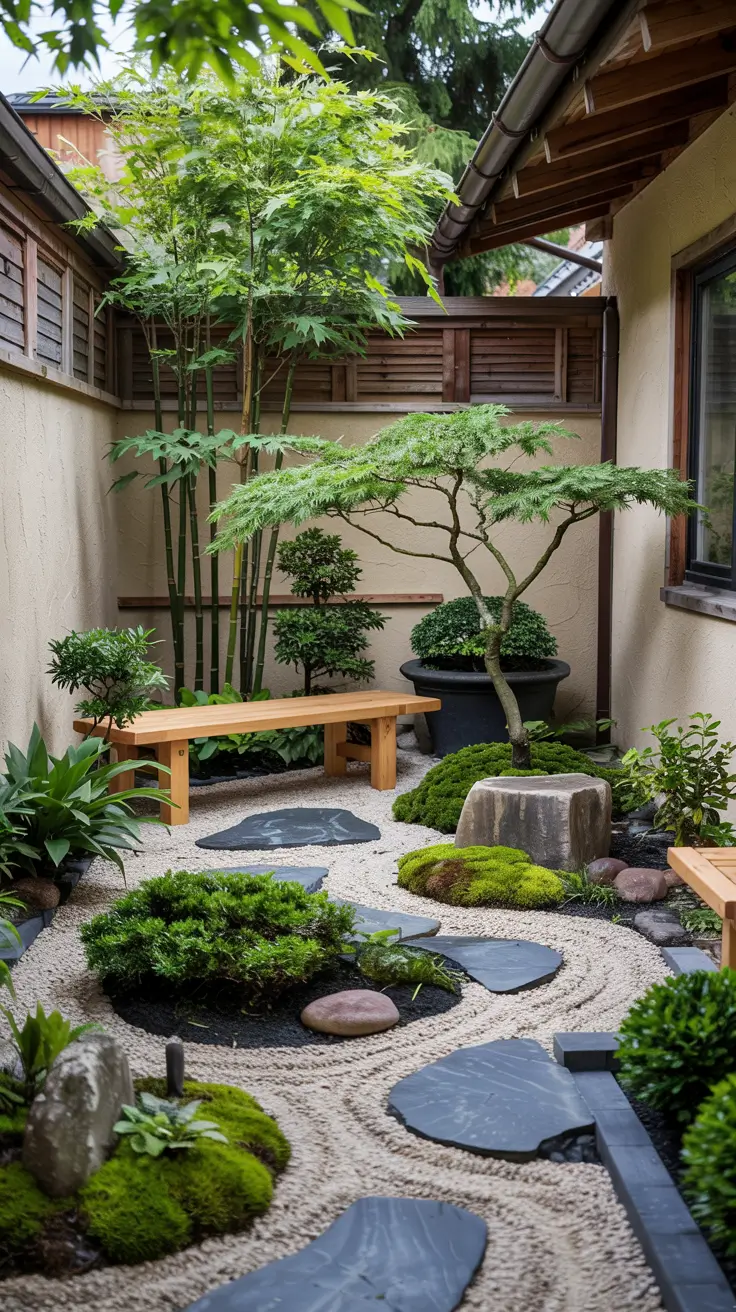
Personally, I find that the most successful tiny gardens rely heavily on texture and contrast. Smooth gravel, rough stone, soft moss, and warm wood all contribute to a layered yet minimalist environment. Landscape designers often recommend this technique because it allows small spaces to feel more dynamic without increasing visual clutter.
To further improve this section, I would include guidance on container gardening for small Japanese gardens. Stone planters, ceramic pots, or wooden boxes allow homeowners to grow bamboo, dwarf pines, or ornamental grasses even when the ground space is limited.
4. Japanese Garden Backyard Ideas 2026 – Tranquil Outdoor Spaces with Stones, Moss, and Water
Japanese garden backyard ideas in 2026 often emphasize natural textures and calming sensory experiences. When I plan a Zen backyard landscape, I prioritize elements that engage sight, sound, and touch while maintaining a peaceful atmosphere. Stones, moss, and water are the core materials that help achieve this effect and create a timeless garden environment.
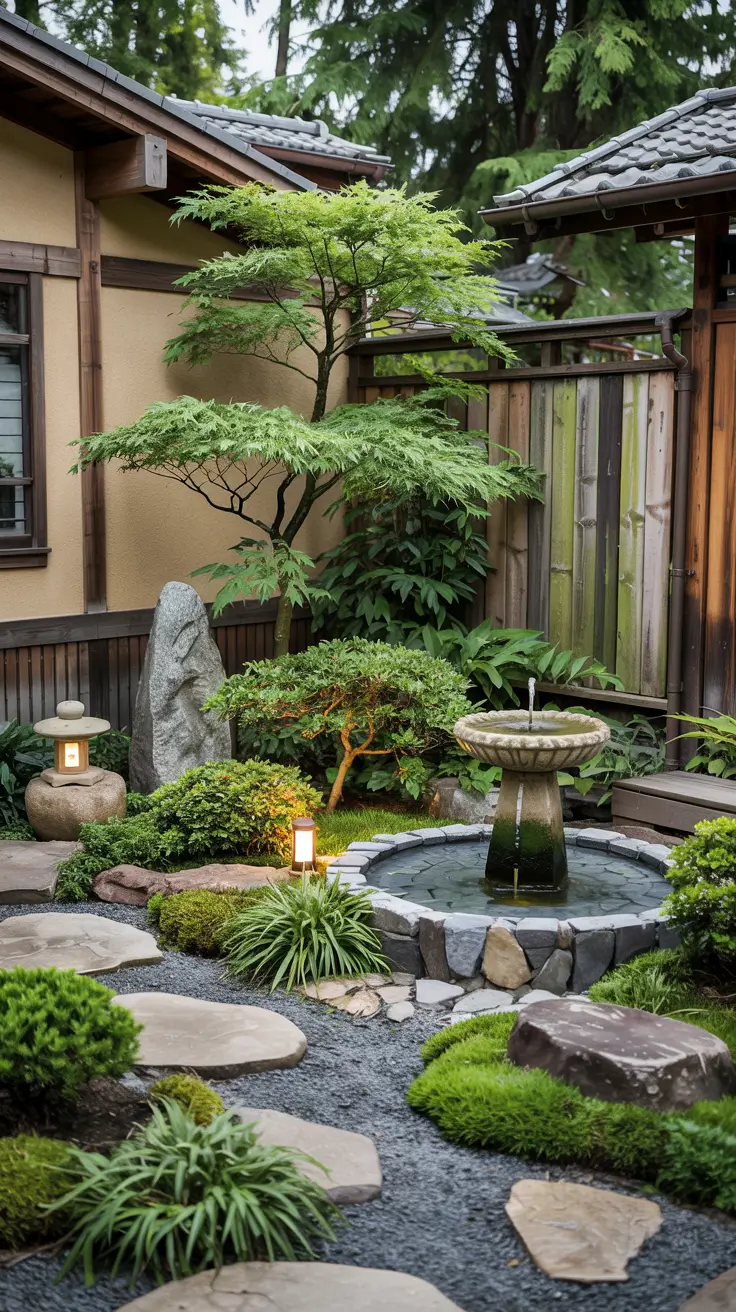
In many of my designs, I arrange large natural stones to mimic mountain formations or islands in a sea of gravel. Moss is then planted around these stones to soften the landscape and introduce a rich green texture that feels both ancient and natural. A small water feature, such as a bamboo fountain or shallow pond, adds movement and the soothing sound of flowing water.
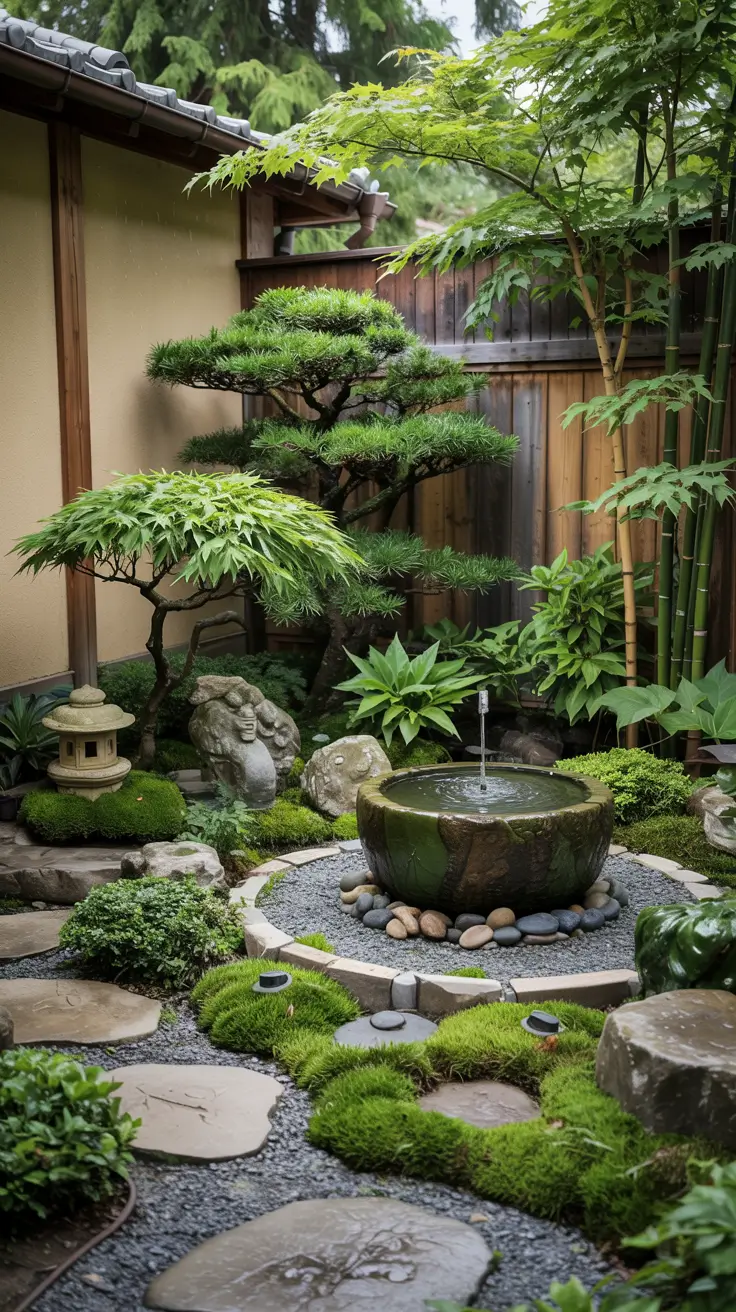
From my perspective, the balance between stone and greenery is what makes a Japanese garden feel authentic. Too many plants can make the space feel like a regular garden, while too much stone can make it appear overly formal. Designers frequently recommend finding a natural balance between these elements, which is something I always aim for in my projects.
For this section, I would also add recommendations for seasonal plants such as cherry blossoms or Japanese maples that change color throughout the year. These plants bring subtle seasonal transitions that enhance the experience of the garden.
5. DIY Japanese Garden Ideas – Simple Ways to Build a Zen Garden at Home
DIY japanese garden ideas are becoming increasingly popular as homeowners look for simple and affordable ways to transform their outdoor spaces. From my experience, creating a small Zen garden does not require expensive landscaping or large areas of land. With a few natural materials and thoughtful planning, almost anyone can build a calming garden environment.
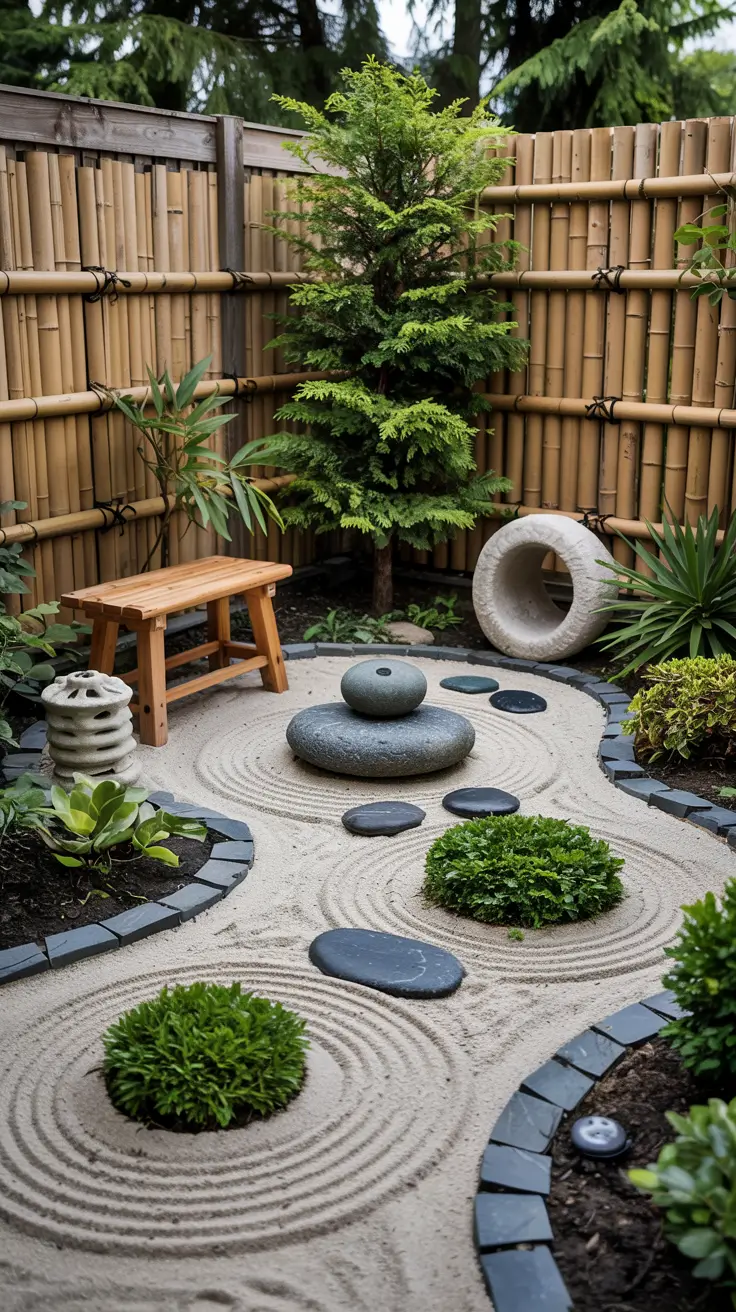
When I design DIY gardens, I usually start with a gravel or sand base that can be raked into traditional Zen patterns. I then add natural stones, a small wooden bench, and a bamboo fence to frame the garden space. Even a simple stone lantern or water basin can become a focal point that adds character to the design.
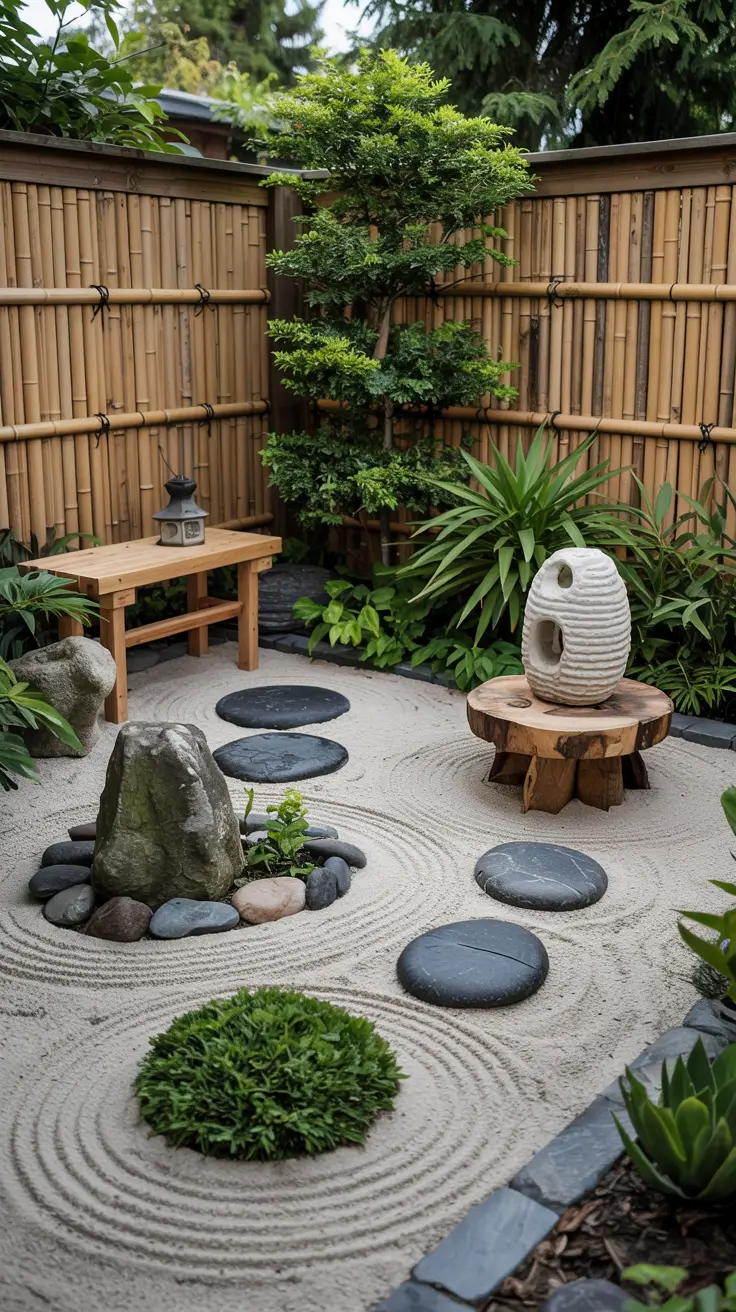
I personally recommend starting small when building a DIY Japanese garden. Many landscape professionals emphasize that simplicity is essential in Zen design. Instead of filling the space with decorations, I prefer selecting a few meaningful elements that contribute to the garden’s atmosphere and visual harmony.
What I would add to this section is a short step by step layout plan for beginners. Explaining how to prepare the ground, place stones, and arrange gravel patterns would help readers feel more confident about creating their own DIY Zen garden.
6. Japanese Garden Ideas for Front Yard – Elegant and Peaceful Entrance Landscaping
Front yard Japanese gardens can create a strong first impression while maintaining a calm and welcoming atmosphere. When I design a Japanese front yard landscape, I focus on creating a pathway that gently guides visitors toward the entrance of the home. The design should feel intentional and balanced rather than overly decorative.
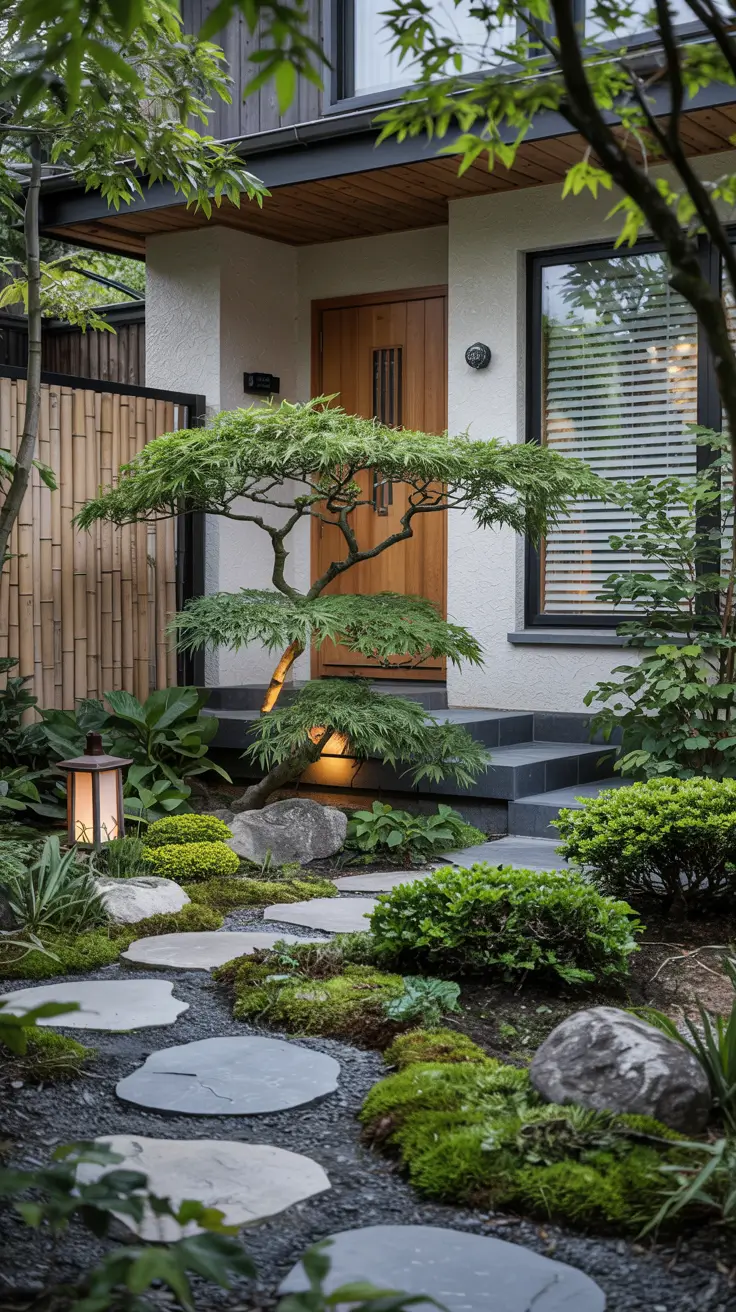
I often use stepping stones surrounded by gravel or moss to create a natural walking path. A bamboo fence, low shrubs, and a small stone lantern can frame the entrance while maintaining privacy. A Japanese maple tree is another excellent feature because it adds color, structure, and seasonal beauty to the garden.
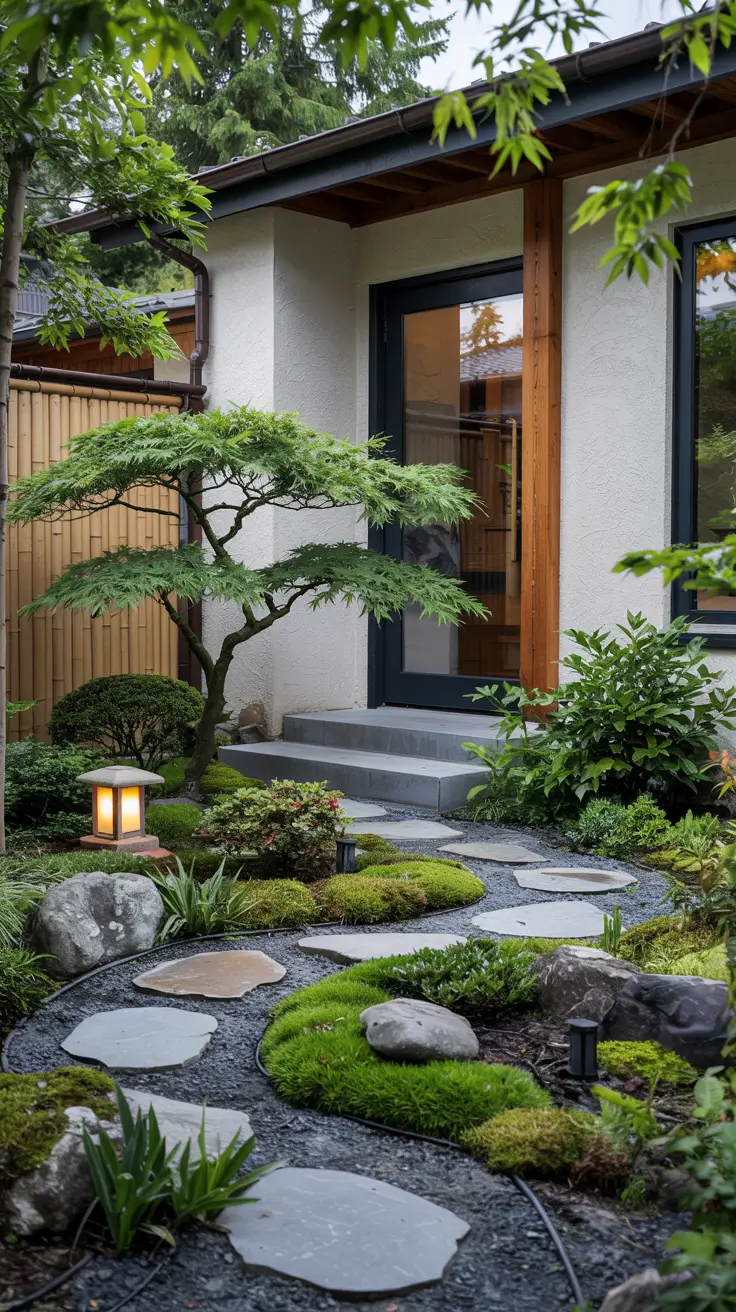
In my opinion, the key to a successful front yard Japanese garden is subtlety. The garden should complement the architecture of the home rather than dominate it. Many designers suggest keeping the layout simple and focusing on natural materials that age gracefully over time.
In this section, I would also recommend adding soft landscape lighting along the pathway to highlight textures and improve safety during the evening.
7. Japanese Garden Ideas on a Budget – Affordable Zen Landscaping for Any Home
Creating a beautiful Japanese garden does not necessarily require a large budget. In fact, many japanese garden ideas on a budget rely on simple materials and thoughtful composition rather than expensive landscaping. I often encourage homeowners to focus on natural textures and minimal design elements that can still create a peaceful outdoor environment.
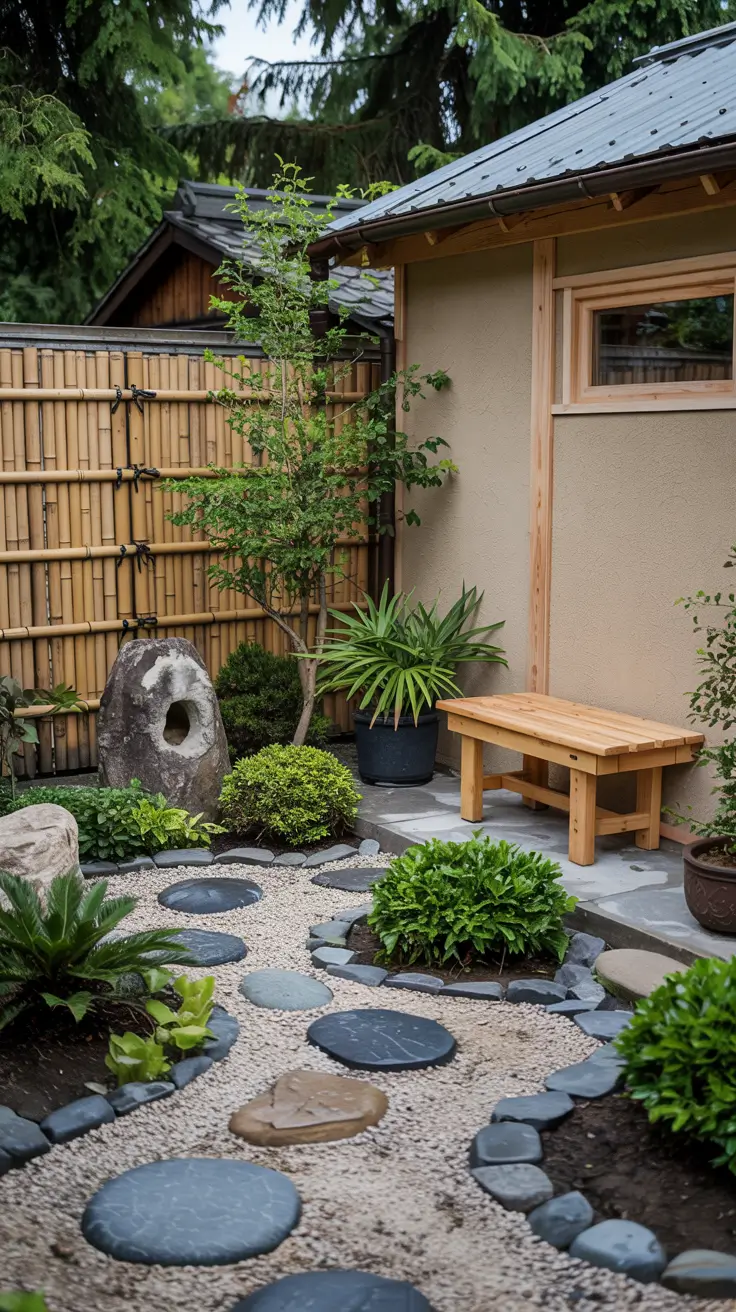
One of the easiest ways to save money is by using gravel instead of large paved surfaces. Gravel is affordable, easy to install, and perfectly suited to Zen garden design. Natural stones collected locally can also serve as sculptural features, while bamboo fencing or wooden panels can create boundaries without high costs.
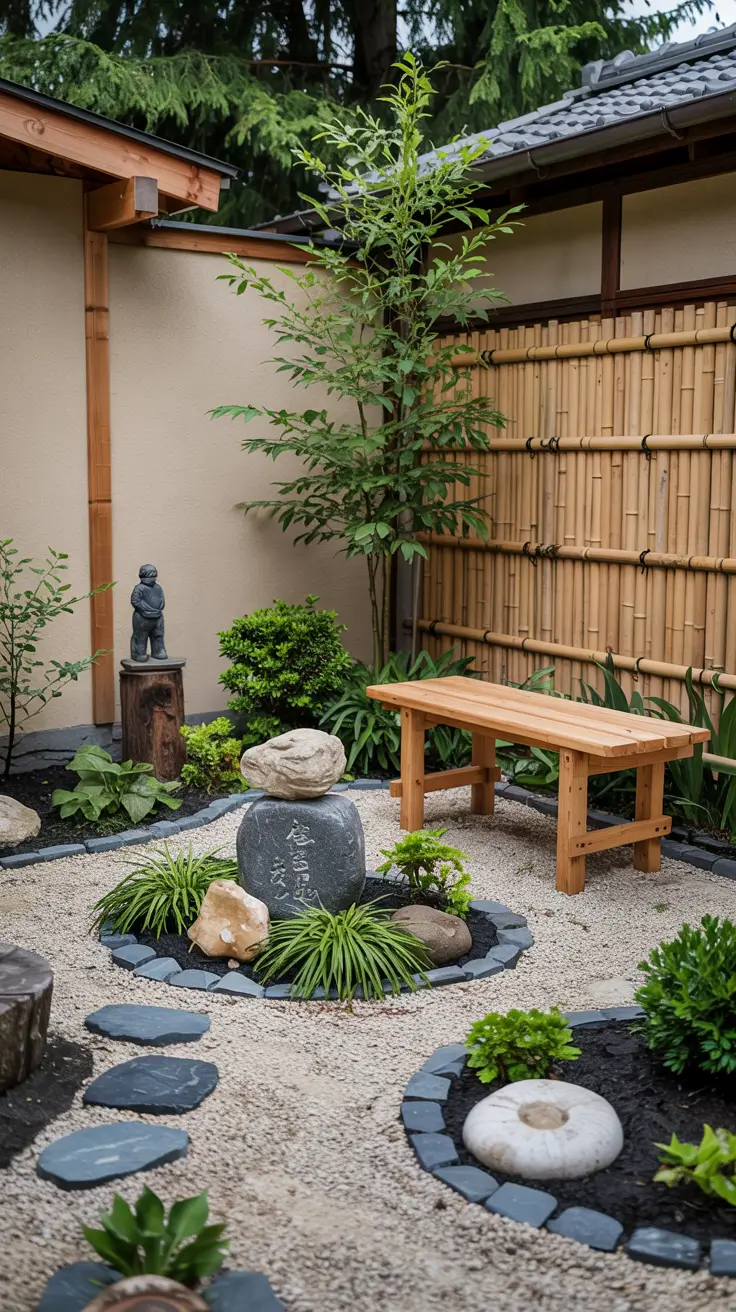
From my experience, budget gardens succeed when they prioritize atmosphere over complexity. Even a small arrangement of stones, gravel, and a single ornamental tree can create a striking visual effect. Many landscape designers emphasize that Japanese gardens are about balance and symbolism rather than expensive materials.
To strengthen this section, I would also include ideas for recycled materials such as reclaimed wood, repurposed stones, or handmade bamboo fences that support both sustainability and budget friendly design.
8. Simple Japanese Garden Ideas – Minimalist Zen Designs with Natural Materials
When I create simple japanese garden ideas, I focus on the principle that simplicity often produces the most calming and elegant landscapes. Japanese gardens do not require complicated layouts or many decorative elements. Instead, I design the space around balance, natural materials, and thoughtful placement. Even a small outdoor area can feel peaceful when stone, gravel, and plants are arranged intentionally.
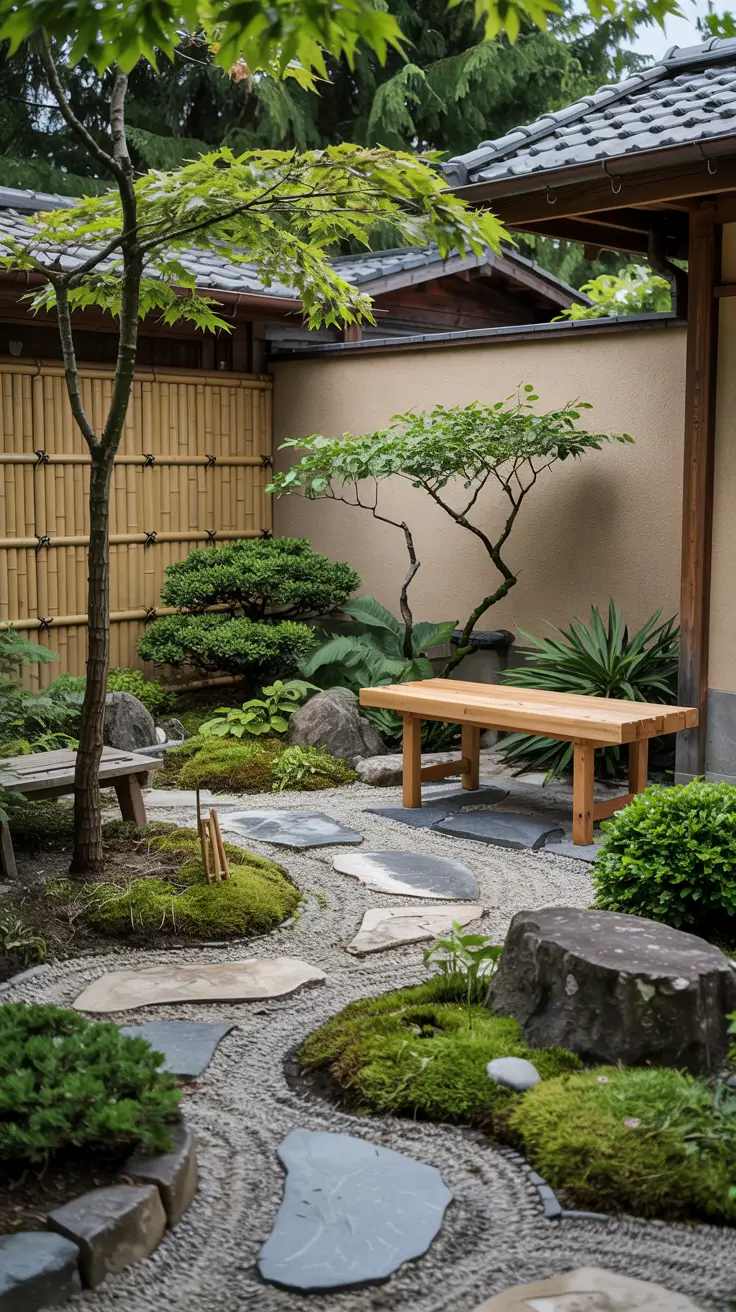
In my projects, I usually begin with a gravel base combined with natural stone stepping paths. Gravel provides a clean and minimalist ground texture, while stones guide movement through the garden. I often include bamboo elements such as a bamboo fence or bamboo edging to introduce warmth and organic structure. A small Japanese maple tree or ornamental grass can serve as a focal plant without overwhelming the space.
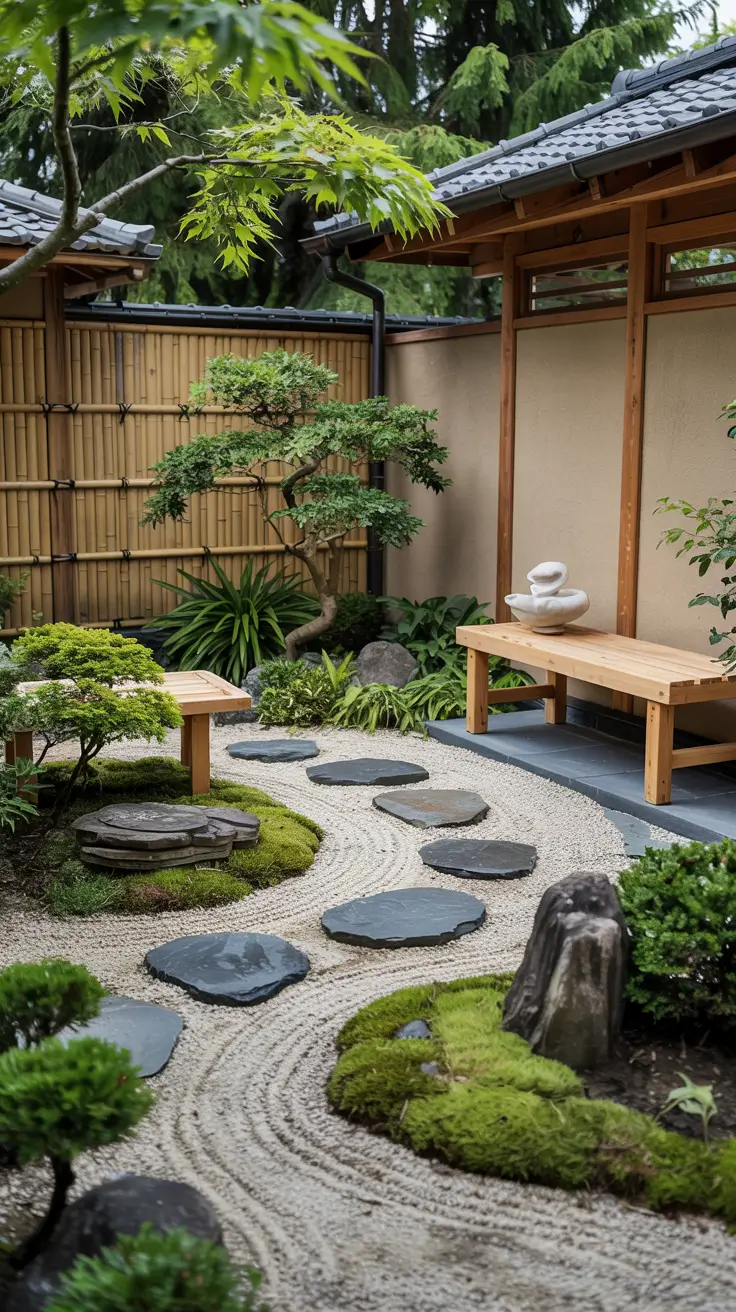
Personally, I believe that restraint is one of the most important principles of Japanese garden design. Landscape designers frequently explain that negative space is just as important as the decorative features themselves. By leaving open gravel areas and limiting plant varieties, the garden feels more meditative and balanced.
What I would add to strengthen this design is a subtle seating area. A small wooden bench or low meditation platform allows homeowners to spend quiet time in the garden and truly experience the calm atmosphere created by the minimalist layout.
9. Japanese Garden Ideas for Small Backyard Spaces – Calm and Balanced Outdoor Layouts
Japanese garden ideas for small backyard spaces work particularly well because Japanese landscape design focuses on careful composition rather than size. When I design a small backyard Zen garden, I prioritize harmony and proportion. Even limited space can feel spacious and peaceful when each element is placed intentionally.
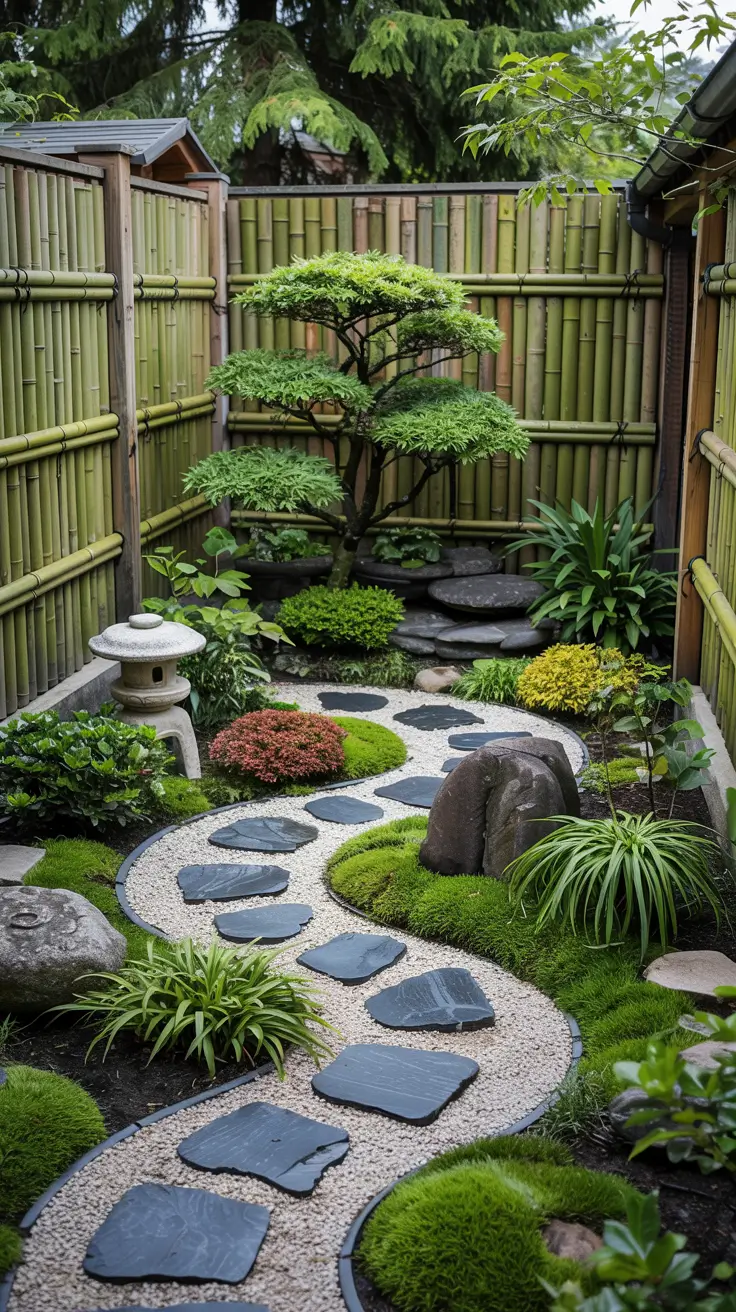
I typically divide a small backyard into a few simple zones. One area may contain a gravel Zen garden with raked patterns, while another might feature moss, stones, and a small ornamental tree. A winding stepping stone path can visually expand the space by creating movement and guiding the eye across the garden.
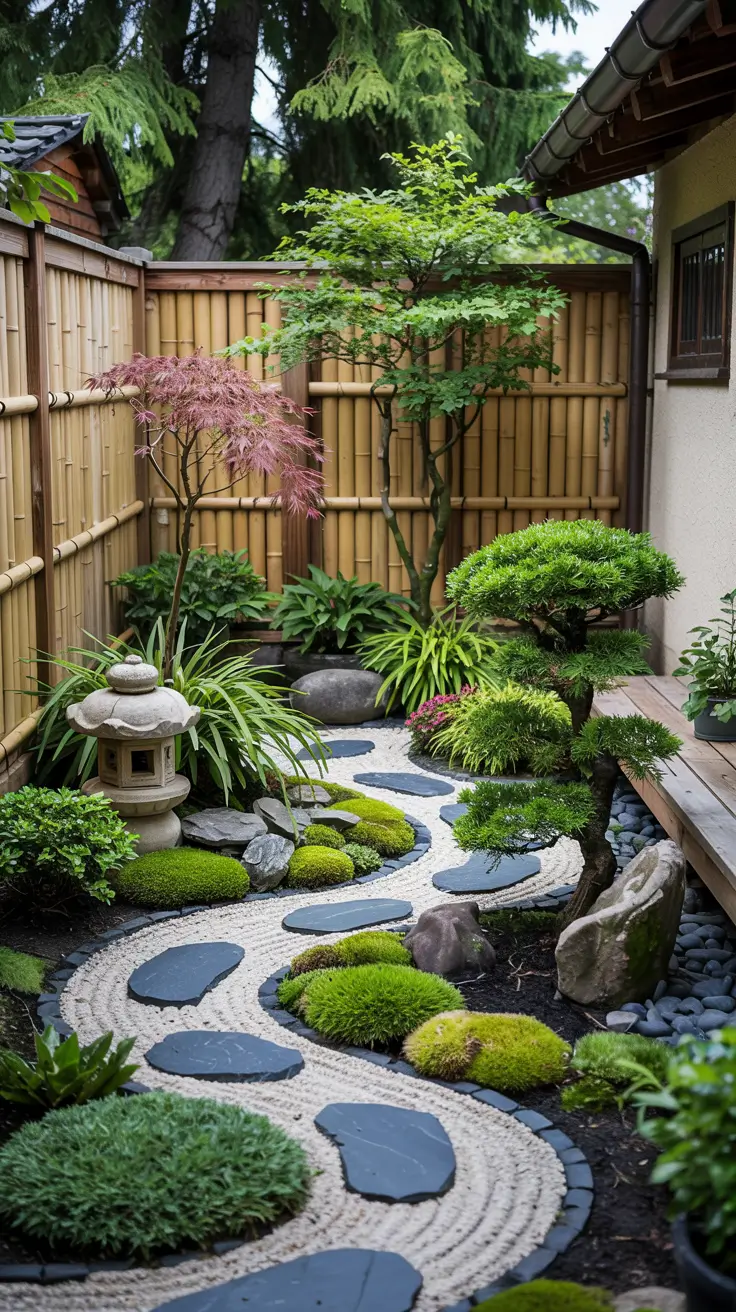
From my experience, vertical features become very important in small backyard designs. Bamboo fences, wooden lattice panels, or narrow trellises allow plants to grow upward without taking up too much ground area. This approach helps maintain openness while still creating a lush atmosphere.
To improve this section further, I would include suggestions for subtle garden lighting. Soft lights along pathways or near stone lanterns can highlight textures and create a relaxing ambiance during the evening.
10. Japanese Garden Ideas for Narrow Gardens – Beautiful Zen Landscapes in Tight Spaces
Narrow gardens often appear difficult to design, but I have found that Japanese landscaping principles actually work extremely well in long and narrow outdoor spaces. By emphasizing flow and direction, the garden becomes visually engaging rather than restricted.
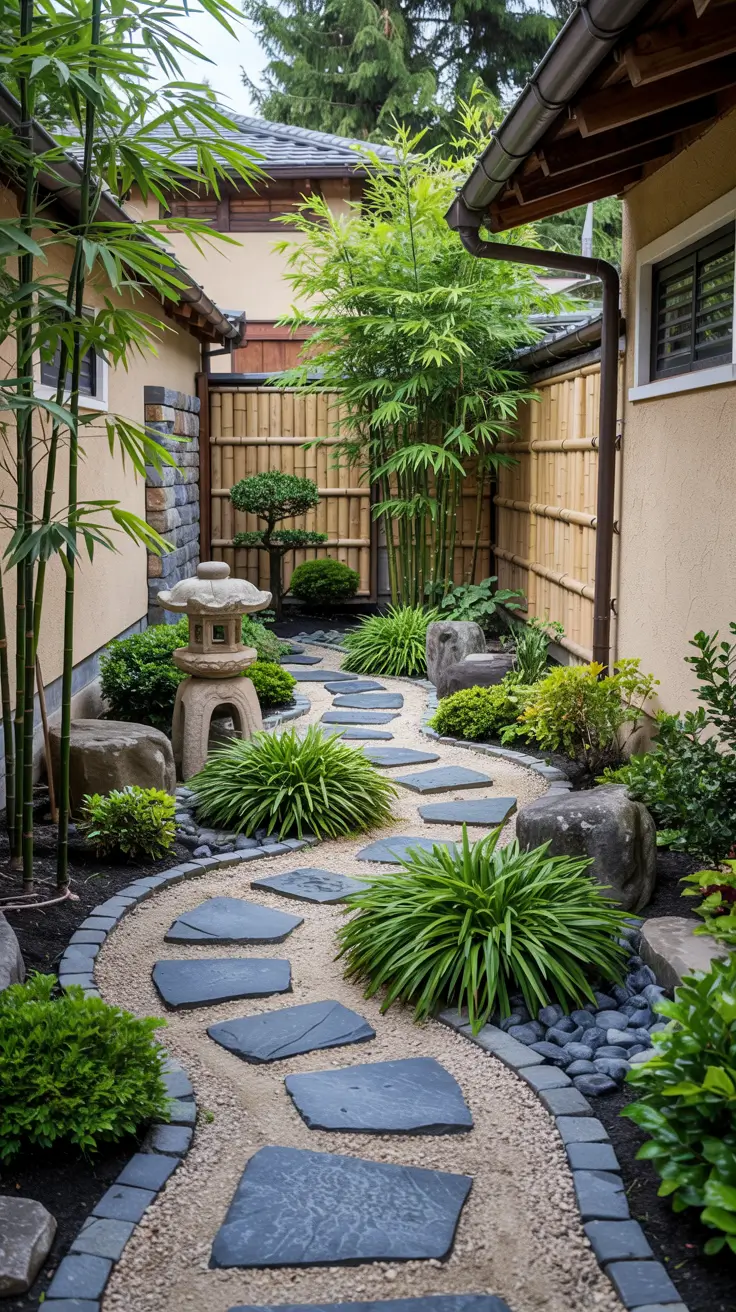
In a narrow garden layout, I usually create a pathway that gently leads visitors through the space. Stepping stones placed diagonally or slightly curved can break up the straight lines of the yard. Gravel beds along the sides help define the pathway, while moss or small shrubs soften the borders.
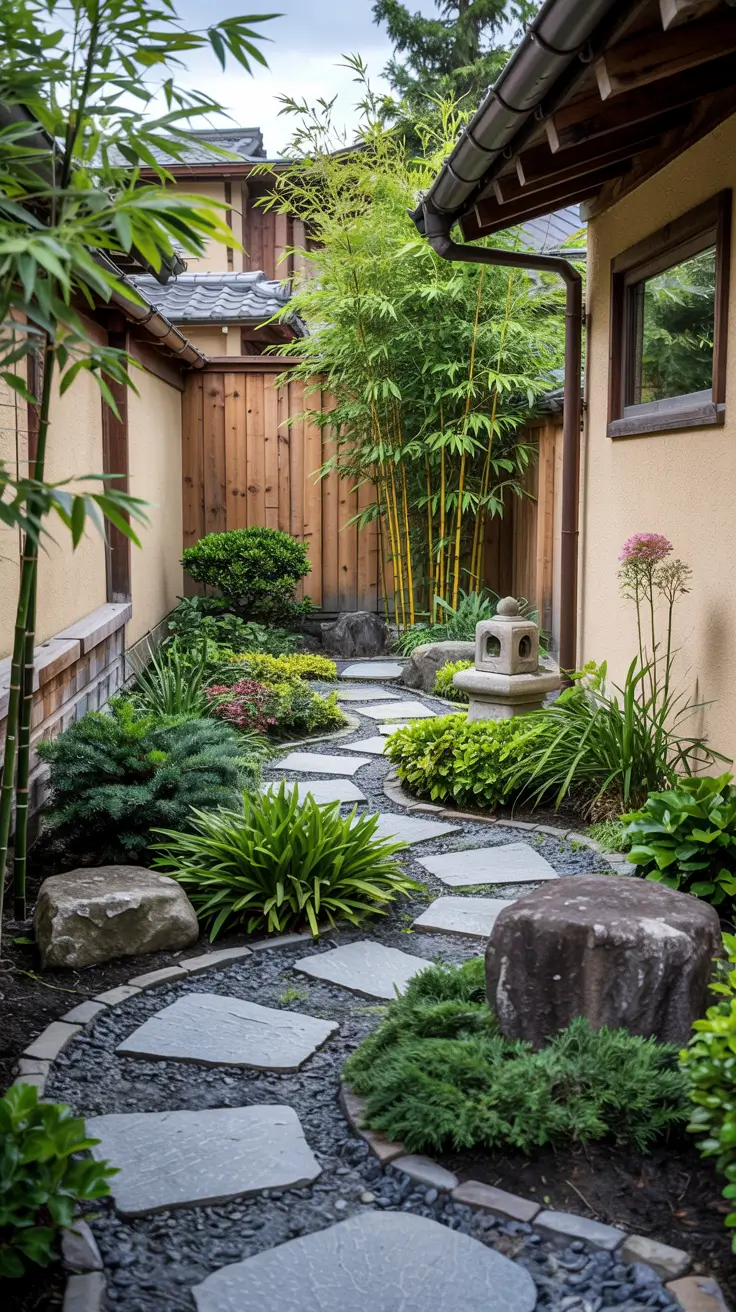
I often recommend adding vertical bamboo screens or slim wooden fencing to frame the space. These features create privacy while also introducing natural textures. A small water feature or stone lantern placed at the end of the garden can act as a visual destination that draws the eye forward.
One element I would include in this section is the use of layered planting. Combining low ground cover plants with taller ornamental grasses or small trees helps create depth and prevents the narrow garden from feeling flat.
11. Japanese Garden Corner Ideas – Transforming Small Garden Corners into Zen Retreats
Garden corners are often overlooked spaces, but I see them as perfect opportunities for creating intimate Zen retreats. A small corner garden can become a peaceful focal point in the backyard, especially when designed with Japanese garden principles.
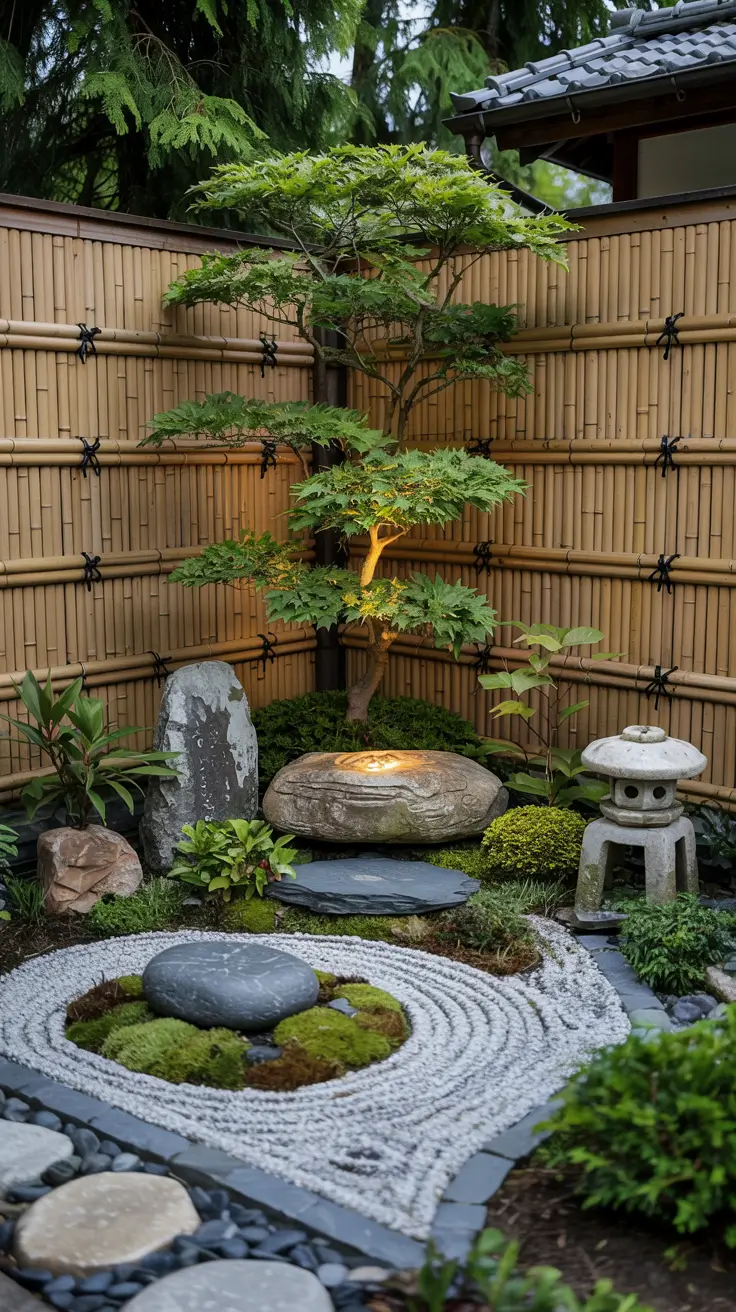
When I design a corner Zen garden, I usually begin with a triangular or curved gravel base that fits naturally within the corner area. Large natural stones are then arranged to form a sculptural centerpiece. Moss or low ground cover plants soften the edges and create a lush appearance.
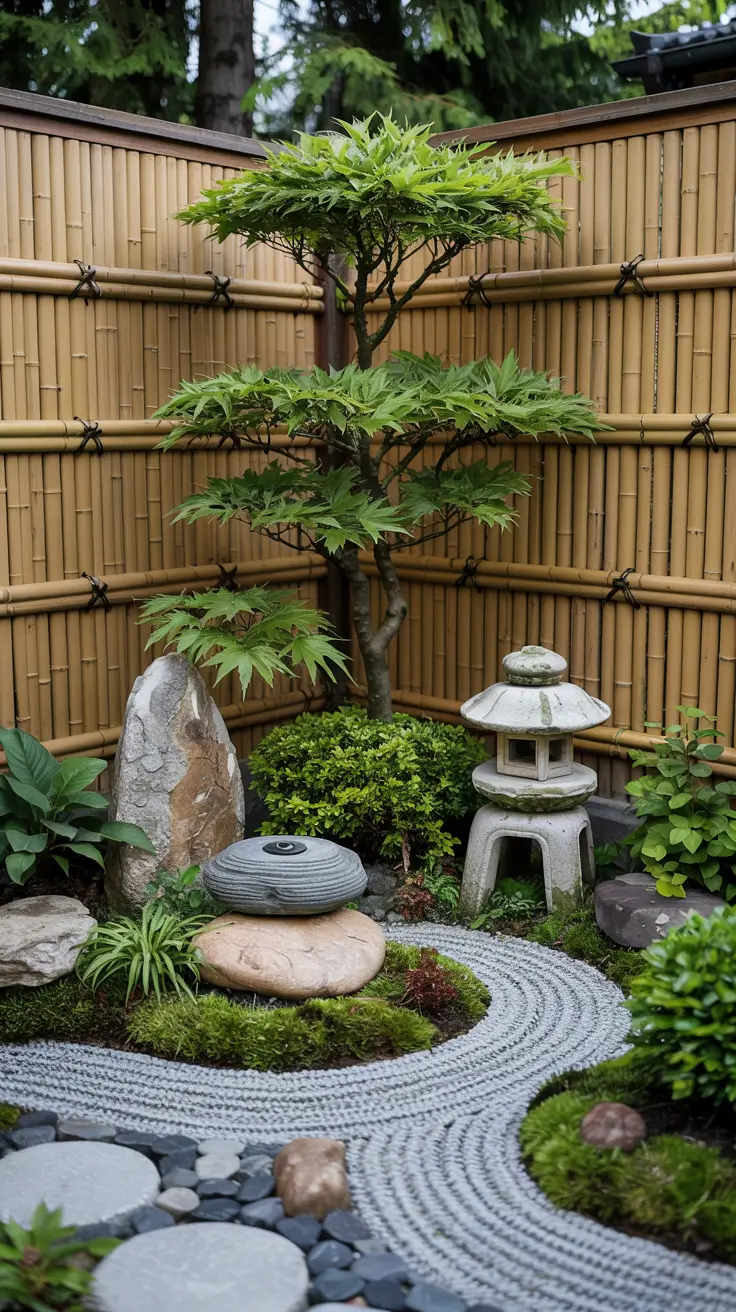
I like to include vertical elements in corner gardens because they help frame the space. A bamboo fence, wooden screen, or small ornamental tree can provide height and structure. A stone lantern or small water basin often becomes the visual anchor of the corner garden.
In my opinion, corner gardens benefit greatly from careful lighting. Soft illumination placed behind stones or near plants can highlight textures and turn a simple corner garden into a beautiful evening focal point.
12. Japanese Garden Ideas for Small Side Yards – Peaceful Zen Paths and Stone Arrangements
Small side yards are often narrow and underused, but I frequently transform them into elegant Zen pathways. These areas naturally lend themselves to Japanese garden design because the long shape encourages movement and quiet exploration.
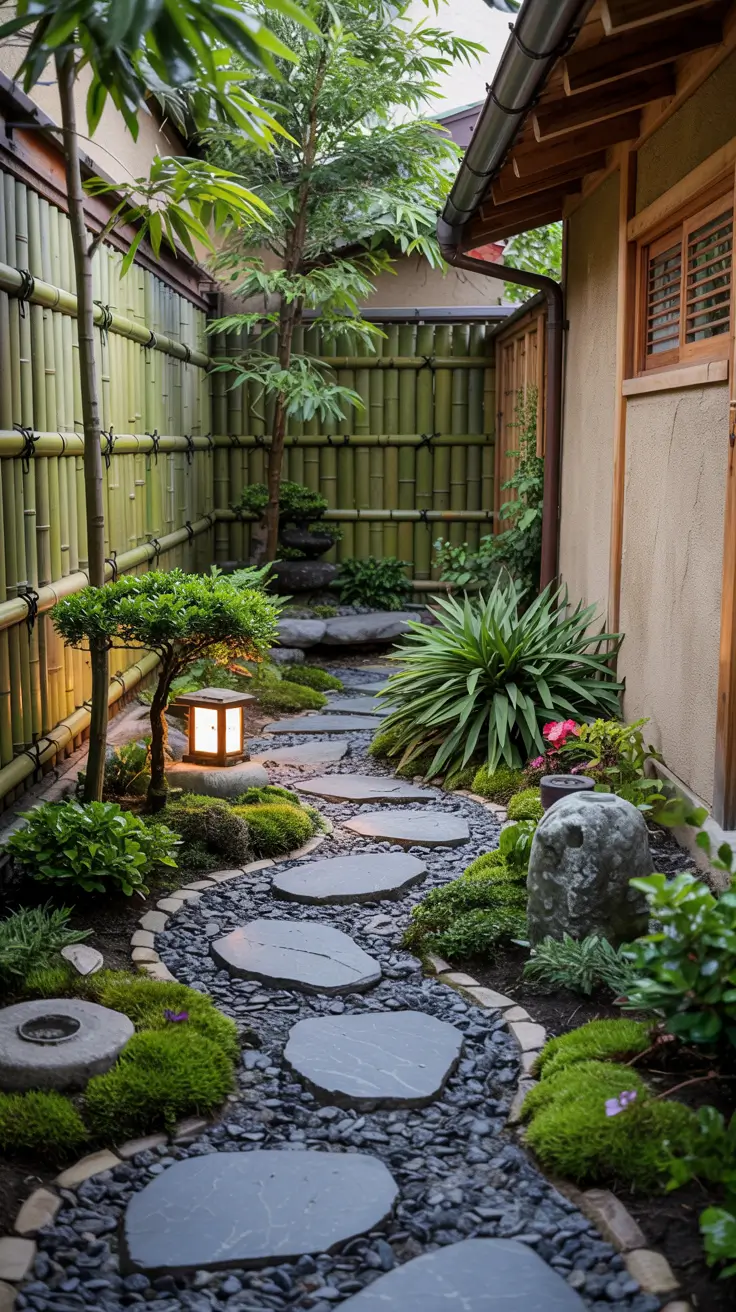
When designing a side yard garden, I typically create a stepping stone pathway that runs the length of the space. Gravel or fine crushed stone fills the surrounding ground area, which helps maintain a clean and low maintenance surface. Moss patches or low shrubs can soften the edges and introduce natural greenery.
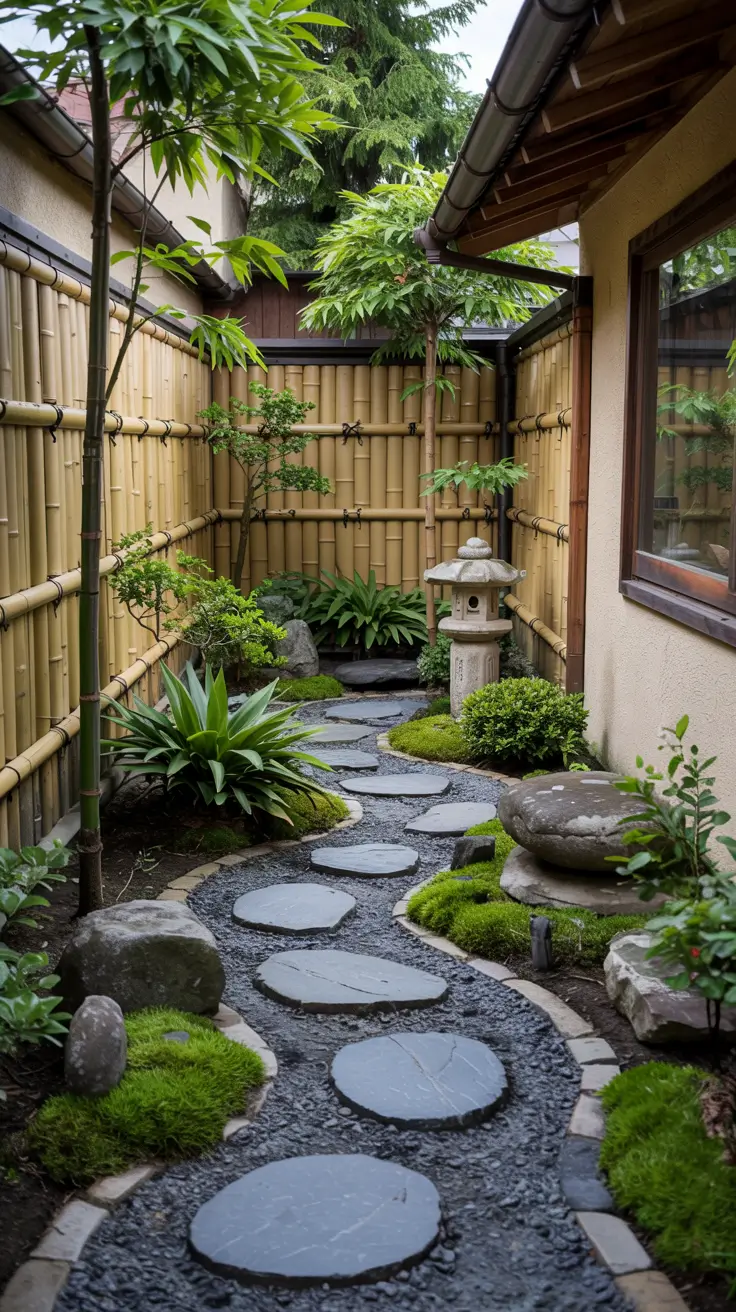
I often incorporate bamboo fences or wooden screens along the sides of the pathway to create privacy and enclosure. These elements also enhance the traditional Japanese aesthetic. A small stone lantern placed halfway along the path can create a visual pause and a moment of calm.
What I would add to this section is the suggestion of incorporating a small water feature or bamboo fountain at the end of the pathway. This subtle sound element can enhance the peaceful atmosphere of the entire garden corridor.
13. Miniature Japanese Garden Ideas – Tiny Zen Landscapes for Compact Spaces
Miniature Japanese gardens are ideal for extremely small spaces where a full landscape design may not be possible. I often recommend miniature Zen gardens for patios, balconies, rooftops, or tiny backyard corners. Despite their small size, these gardens can still reflect the balance and beauty of traditional Japanese landscapes.
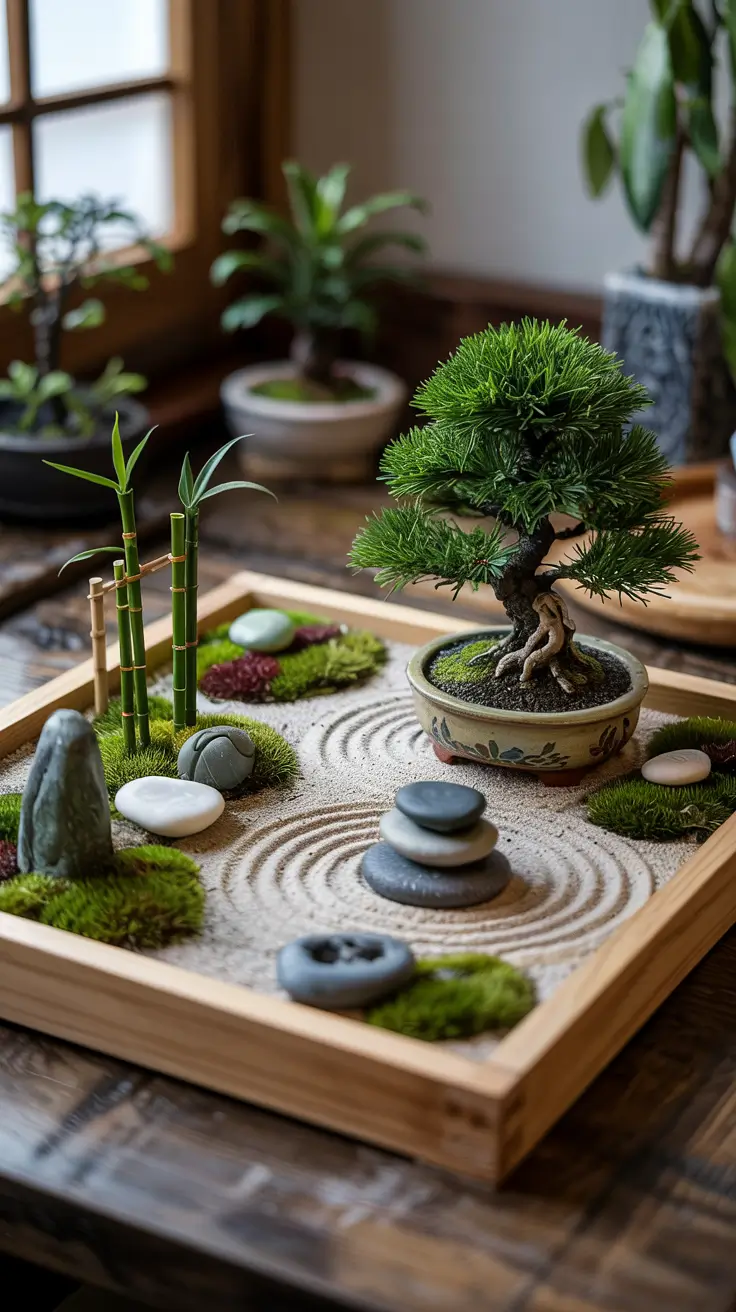
In a miniature garden, I usually use a shallow gravel or sand base that can be carefully raked into patterns. Small decorative stones represent mountains or islands, while moss or miniature plants add texture and color. A tiny bamboo fence or small wooden frame can help define the garden boundary.
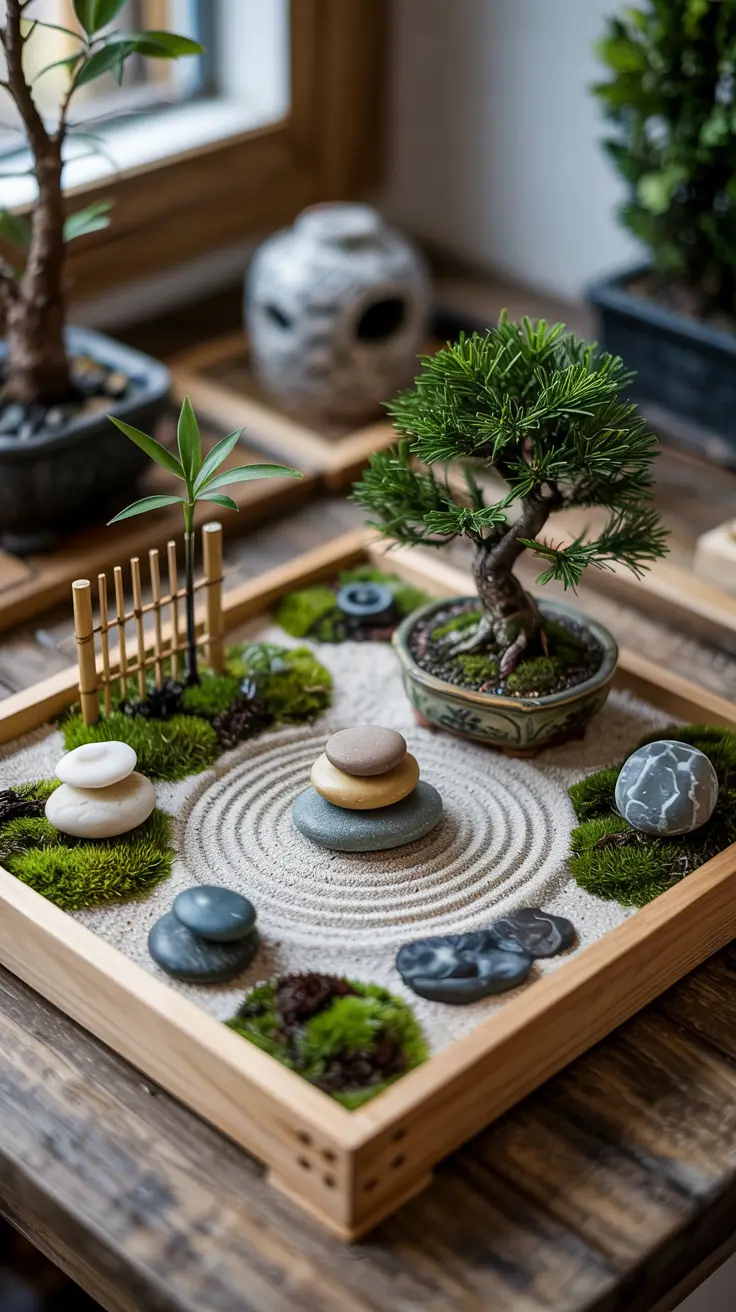
From my perspective, the charm of miniature gardens comes from their careful scale and detail. Each element must feel proportionate to the space. Even a tiny stone lantern or miniature bridge can become a striking focal point when placed thoughtfully.
To enhance this section, I would recommend incorporating container planting. Small ceramic pots with bonsai trees or dwarf bamboo can add height and depth to the miniature landscape.
14. Indoor Japanese Garden Ideas – Bringing Zen Garden Calm into Interior Spaces
Indoor Japanese gardens allow homeowners to bring the calm atmosphere of Zen design into interior environments. I often design indoor gardens for living rooms, entryways, or quiet meditation spaces where natural elements can create a relaxing mood.
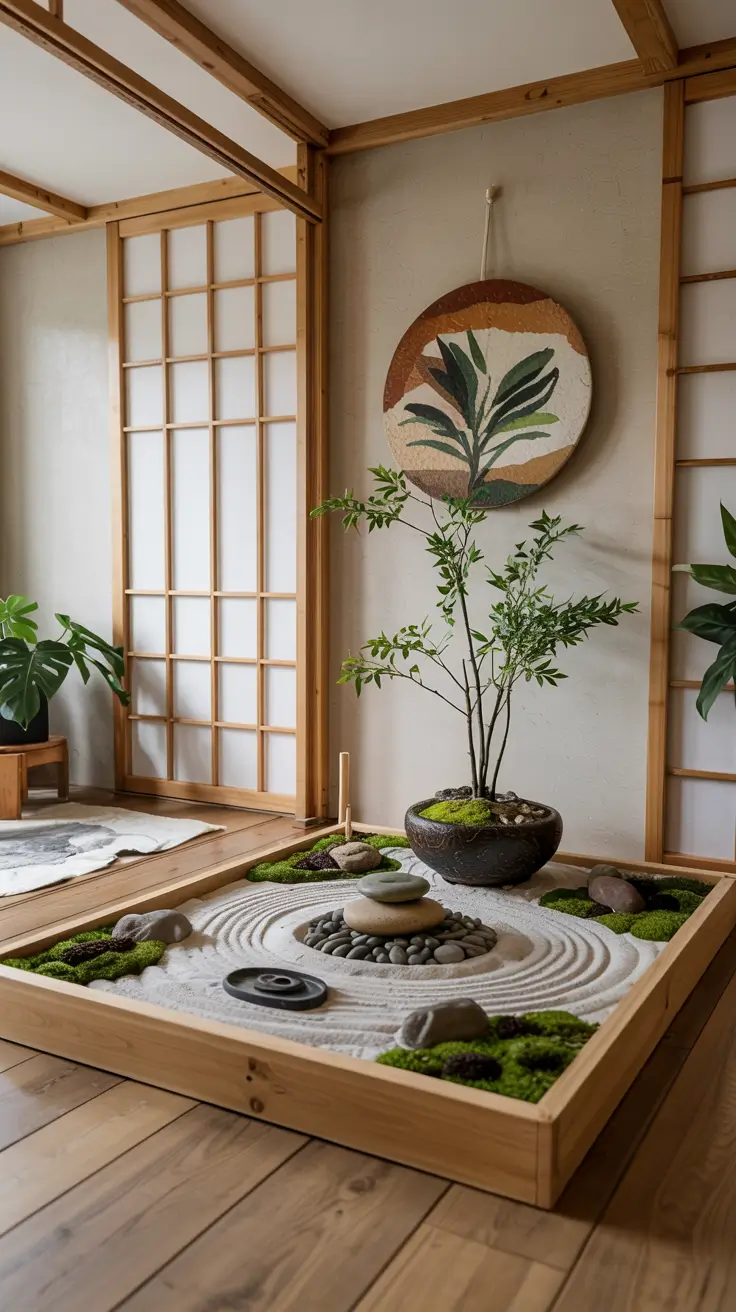
When planning an indoor Zen garden, I typically start with a tray or shallow stone base filled with fine sand or gravel. Natural stones, miniature plants, and moss create a small landscape composition that mirrors outdoor Zen gardens. Soft lighting and natural wood surfaces help reinforce the calming atmosphere.
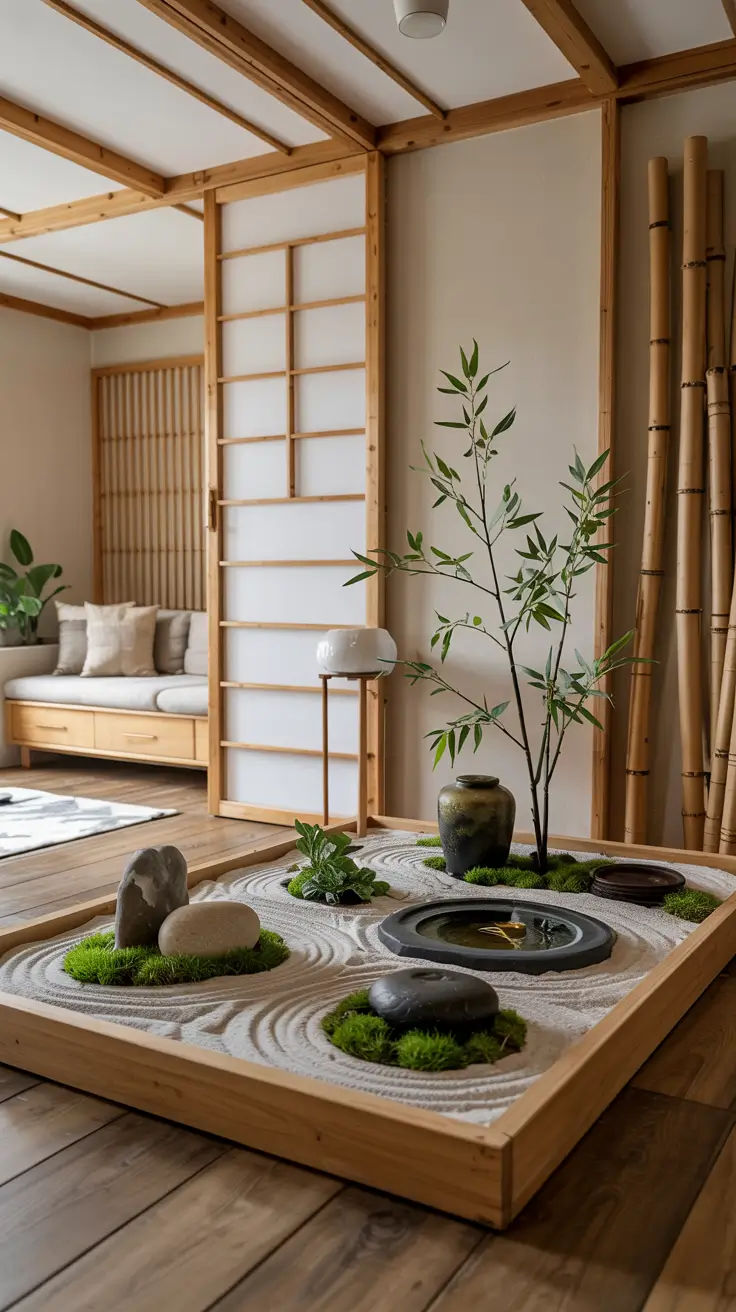
In some designs, I include bamboo panels, sliding shoji style screens, or small water features to enhance the sense of tranquility. These elements work especially well in modern interiors where natural materials add warmth and texture.
From my experience, indoor Zen gardens are most successful when they remain simple and uncluttered. Interior design publications often highlight how minimalist natural features can significantly improve the atmosphere of a space.
15. Japanese Garden Rooftop Ideas – Urban Zen Gardens Above the City
I often recommend rooftop gardens for homeowners who lack a traditional backyard but still want a peaceful outdoor retreat. Japanese garden ideas rooftop designs work especially well in urban environments where space is limited but creativity is unlimited. By transforming a rooftop into a Zen inspired landscape, I can create a calm escape above the busy city. These gardens often include gravel areas, small maple trees, bamboo accents, and minimalist seating areas that allow residents to enjoy nature even in dense neighborhoods.
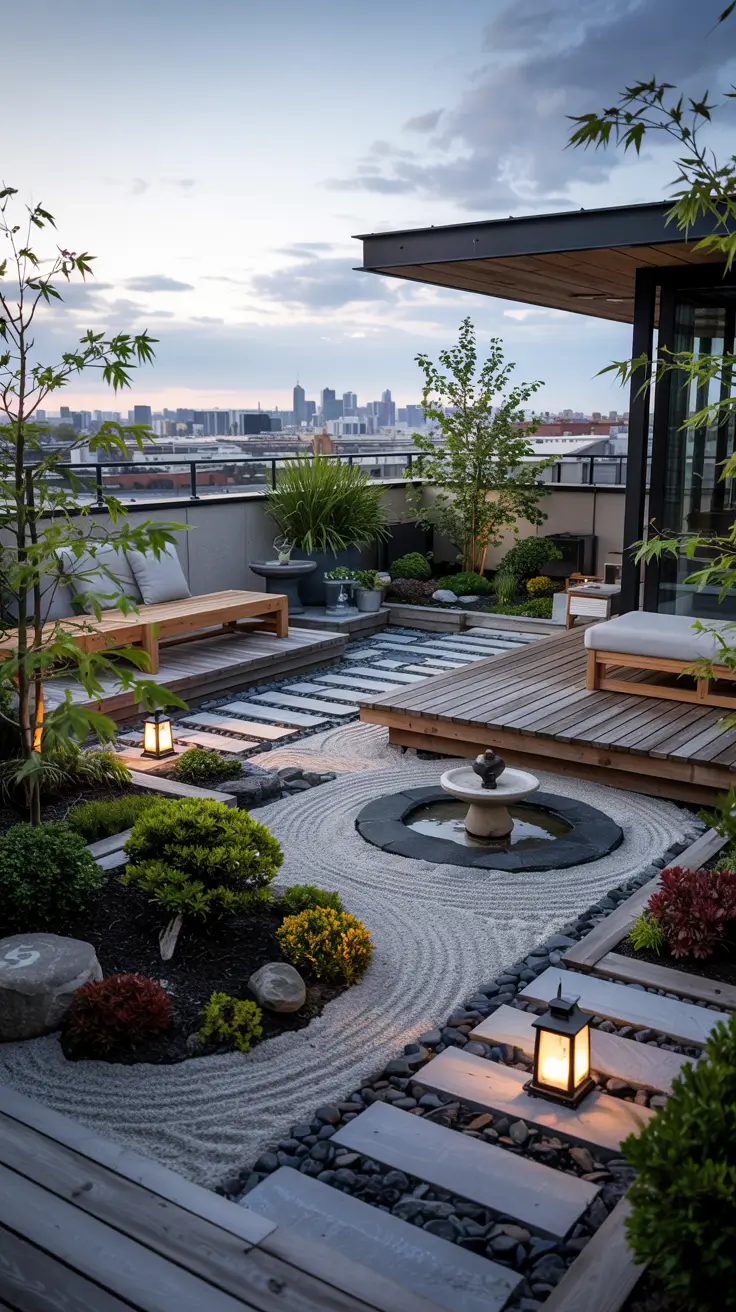
When designing a rooftop Japanese garden, I focus on lightweight materials and carefully planned zones. Wooden decking, stone stepping paths, and raised planters with ornamental grasses or dwarf pines help structure the space. A small water feature or bamboo fountain adds calming sound, while lantern style lighting enhances the tranquil atmosphere at night. I also like to incorporate compact seating such as low wooden benches or simple outdoor chairs so the garden becomes a usable living space rather than just a decorative feature.
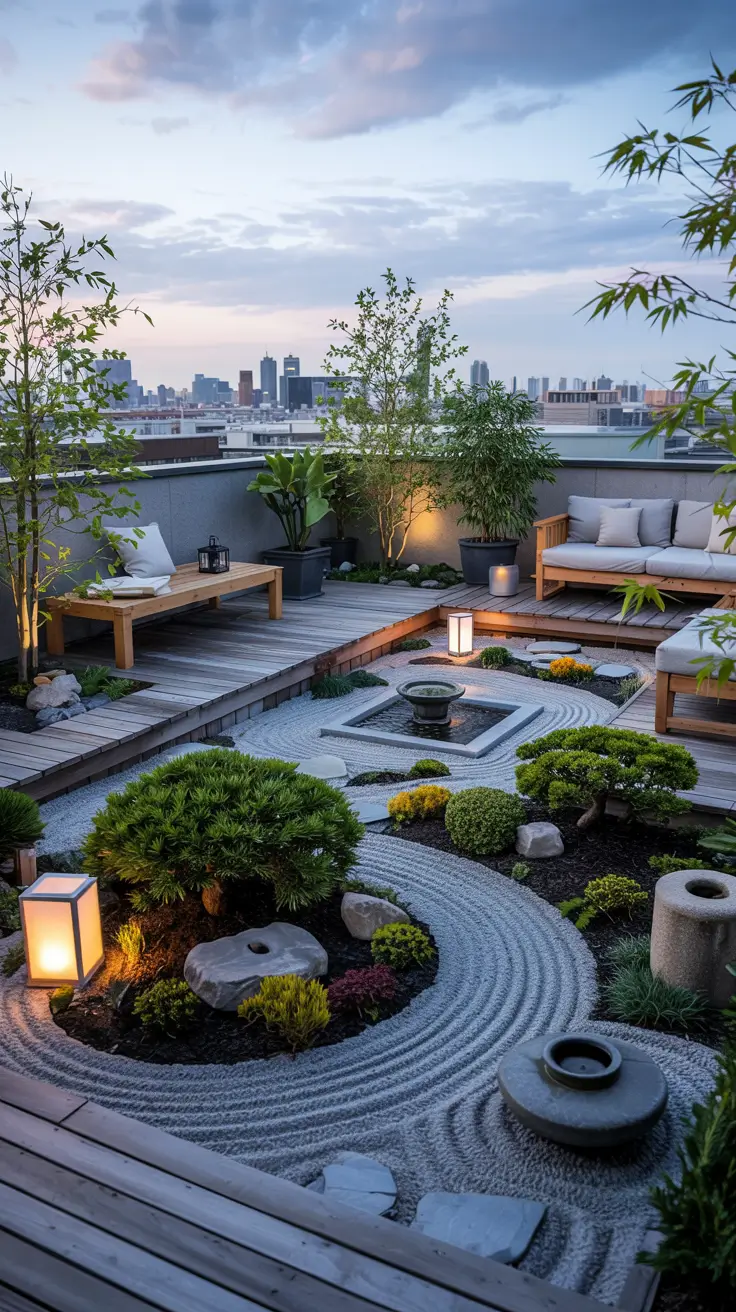
In my experience, rooftop Zen gardens benefit from restraint. I follow the advice often shared in landscape publications like Architectural Digest, which emphasize balance and negative space in Japanese gardens. Instead of filling every corner, I allow open gravel areas and minimal plant groupings to create visual calm. This approach makes even a small rooftop feel expansive and meditative.
For this type of garden, I would also consider adding wind resistant plants and subtle privacy screens such as bamboo panels. These additions help protect the space from city winds and neighboring buildings while maintaining the natural aesthetic.
16. Japanese Garden Ideas with Bamboo Fence – Natural Privacy and Traditional Style
One of the most recognizable features of Japanese garden design is the bamboo fence. I frequently use bamboo fencing when creating japanese garden ideas backyard or japanese garden ideas front yard layouts because it provides both privacy and strong visual identity. Bamboo fences instantly introduce a traditional Japanese aesthetic while remaining natural and environmentally friendly.
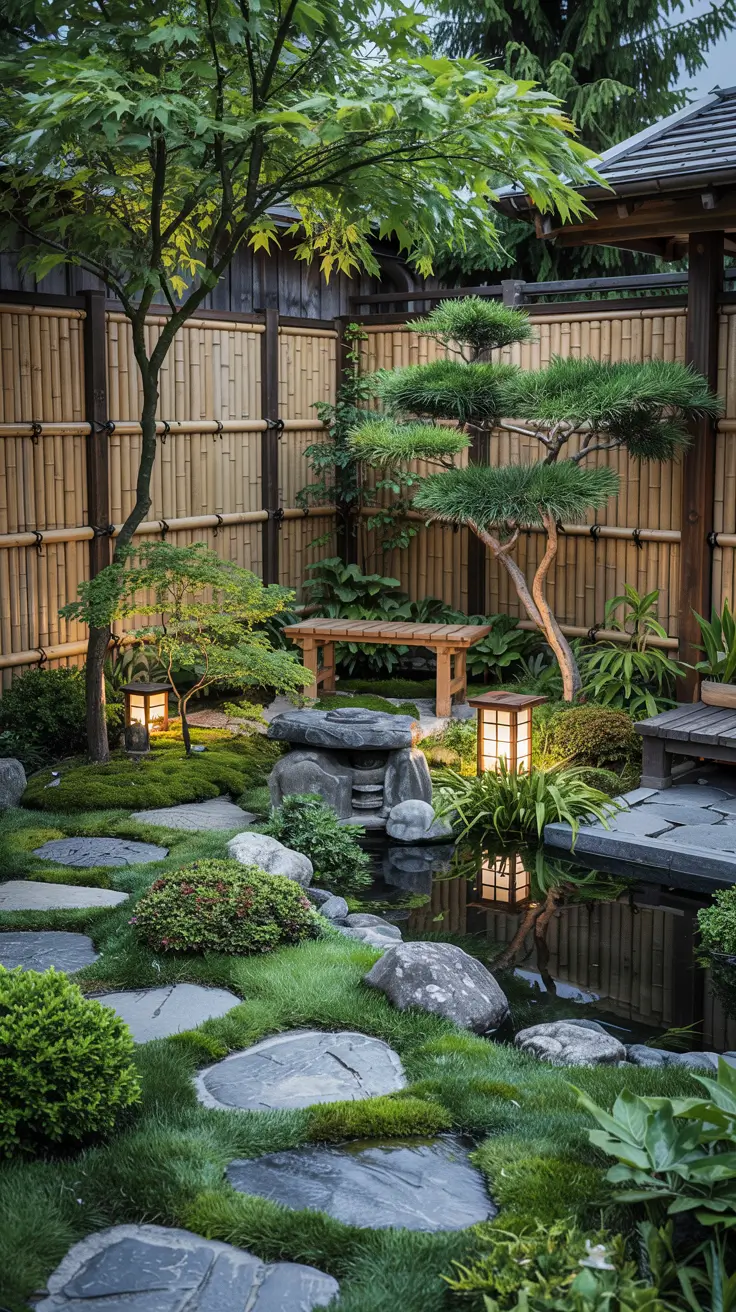
In practical terms, bamboo fencing works well for defining zones within a garden. I often place it along property edges or around meditation corners to create quiet, enclosed spaces. Combined with stone pathways, moss patches, and ornamental shrubs, the bamboo fence becomes part of the overall composition rather than just a barrier. I also recommend adding wooden posts, rope bindings, and natural stone bases to keep the design authentic.
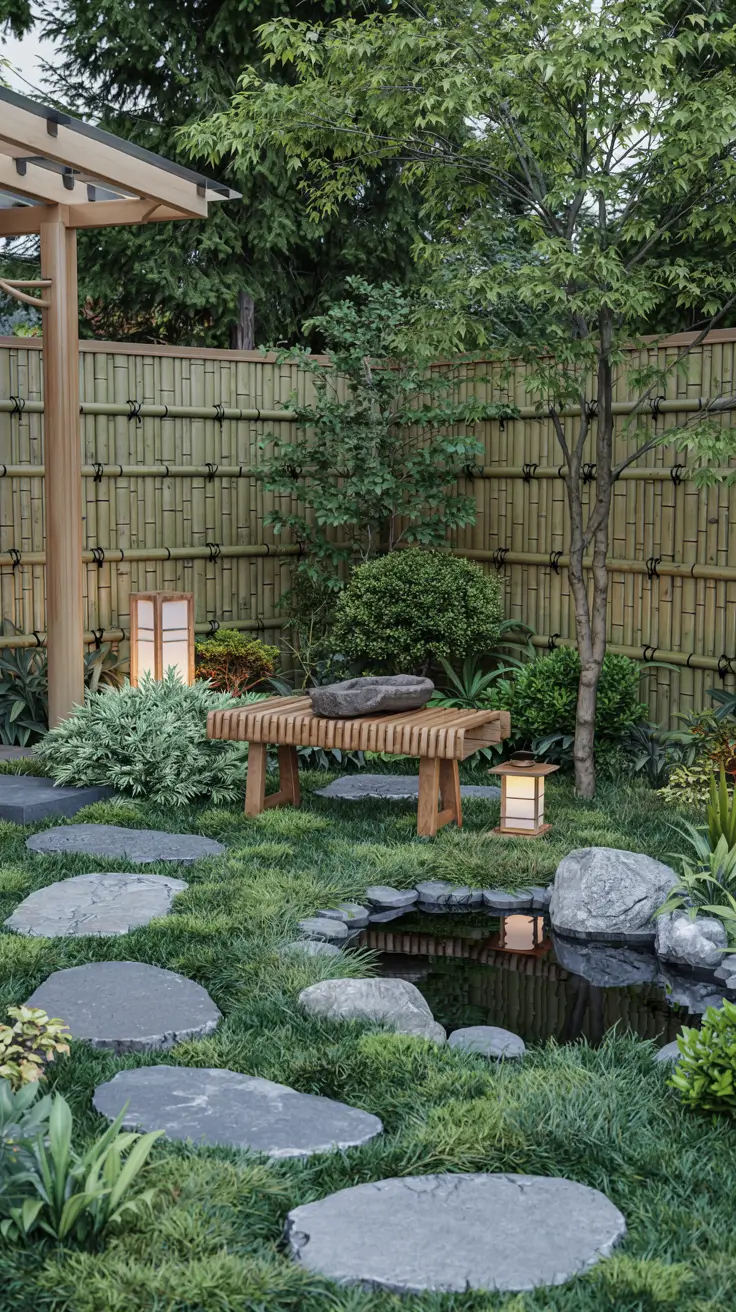
From my perspective, bamboo fences also soften modern homes that may otherwise feel too structured or minimalist. Many landscape designers note that natural materials help balance hard architectural lines. I find that bamboo pairs especially well with gravel gardens, lantern lighting, and small ponds, helping the entire garden feel cohesive and serene.
If I were expanding this section, I would also include recommendations on bamboo treatment and weather protection, especially for climates with heavy rain or frost, so homeowners can maintain durability without losing the natural look.
17. DIY Bamboo Fence Japanese Garden Ideas – Easy Natural Garden Borders
For homeowners interested in japanese garden ideas diy projects, building a bamboo fence can be one of the most rewarding and affordable improvements. I often suggest this project for people exploring japanese garden ideas on a budget because bamboo is relatively inexpensive and the installation process is simple compared to stone or metal fencing.
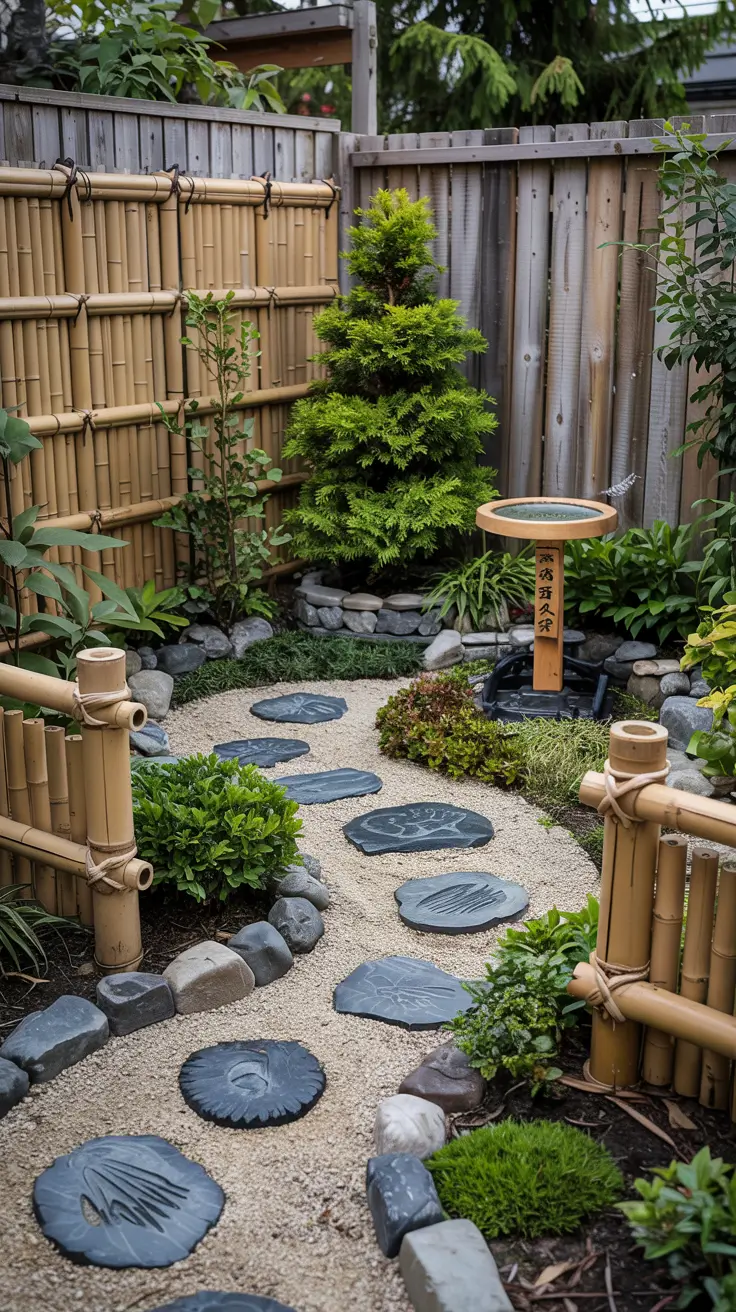
When creating a DIY bamboo fence, I start by installing wooden support posts along the border of the garden area. Bamboo poles are then attached horizontally or vertically using traditional rope bindings or outdoor fasteners. This structure forms a natural border that works beautifully around small backyards, garden corners, or even tiny meditation spaces. In smaller gardens, I often combine the fence with gravel beds, stepping stones, and miniature shrubs to create a balanced composition.
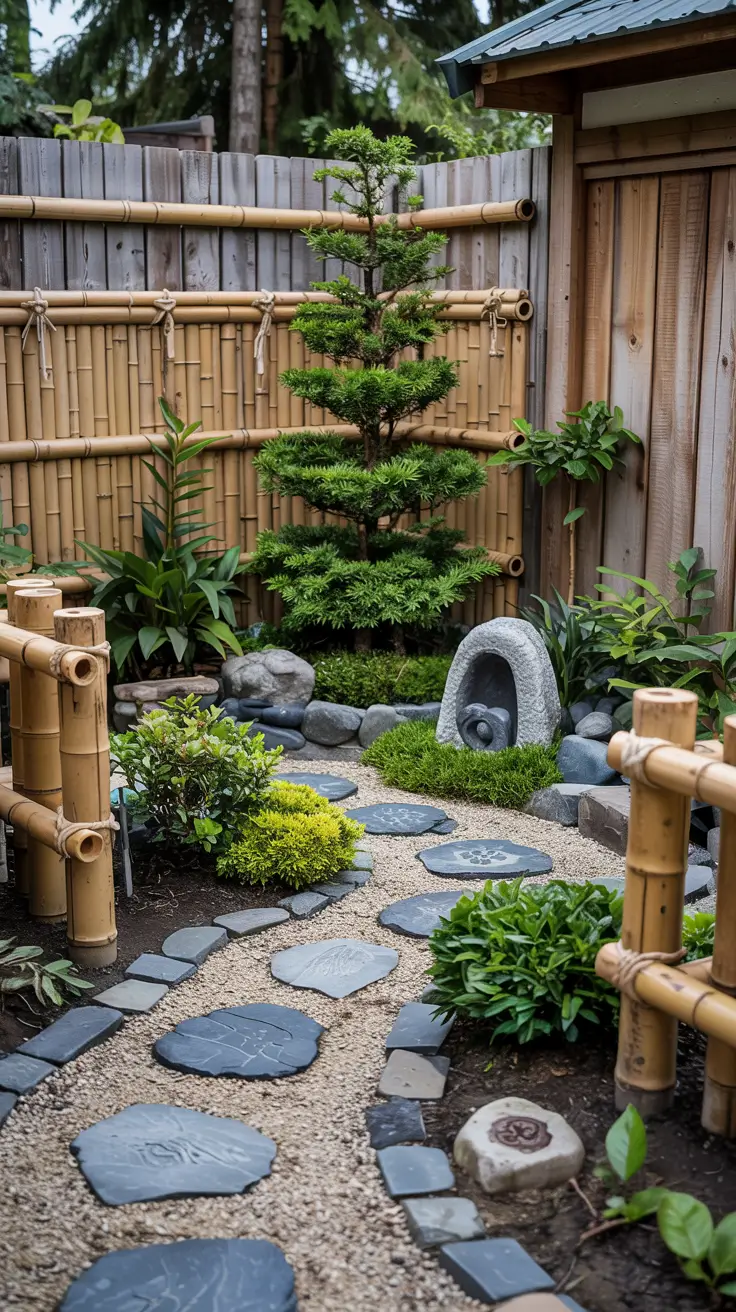
Personally, I enjoy DIY bamboo fences because they allow homeowners to participate directly in shaping their outdoor environment. According to many garden design guides, hands on work often increases appreciation for landscape spaces. I have seen many clients become more connected to their gardens once they help build elements like fences, pathways, or planters themselves.
What I would add to this section is guidance on choosing sustainable bamboo sources and weather resistant coatings. These details ensure the fence remains strong and visually appealing for many seasons.
18. Japanese Zen Garden Ideas 2026 – Sand, Stone, and Meditation Inspired Landscapes
Zen gardens remain one of the most timeless japanese garden ideas outdoor spaces can include. In 2026, I see many homeowners embracing minimalist landscapes built around sand, stones, and carefully placed plants. These gardens are designed not only for beauty but also for meditation and reflection, making them ideal for modern lifestyles that often feel fast paced and stressful.
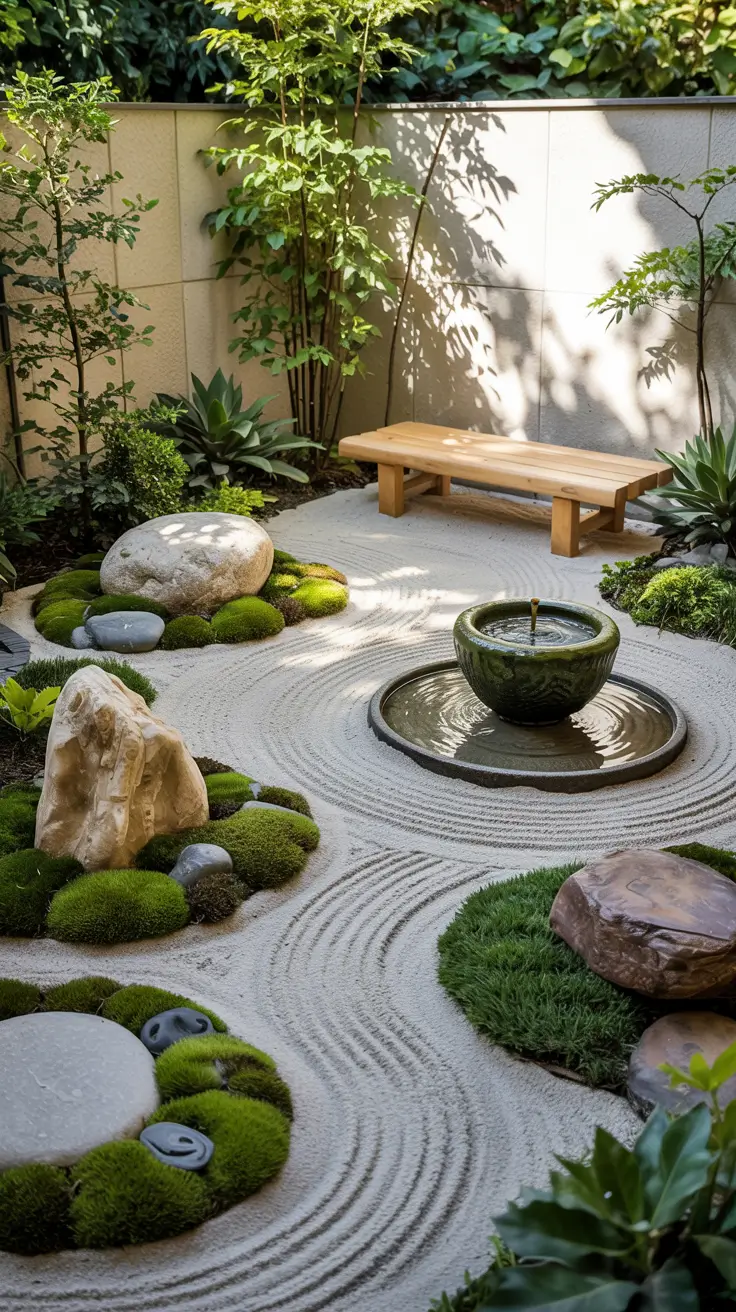
The core elements I use in Zen gardens include raked gravel, large natural stones, moss patches, and simple wooden walkways. Each element is placed intentionally to represent natural landscapes such as mountains, rivers, or islands. Even in small backyard areas or narrow side yards, these components create a powerful visual effect. A small bench or meditation platform can also help transform the garden into a quiet retreat.
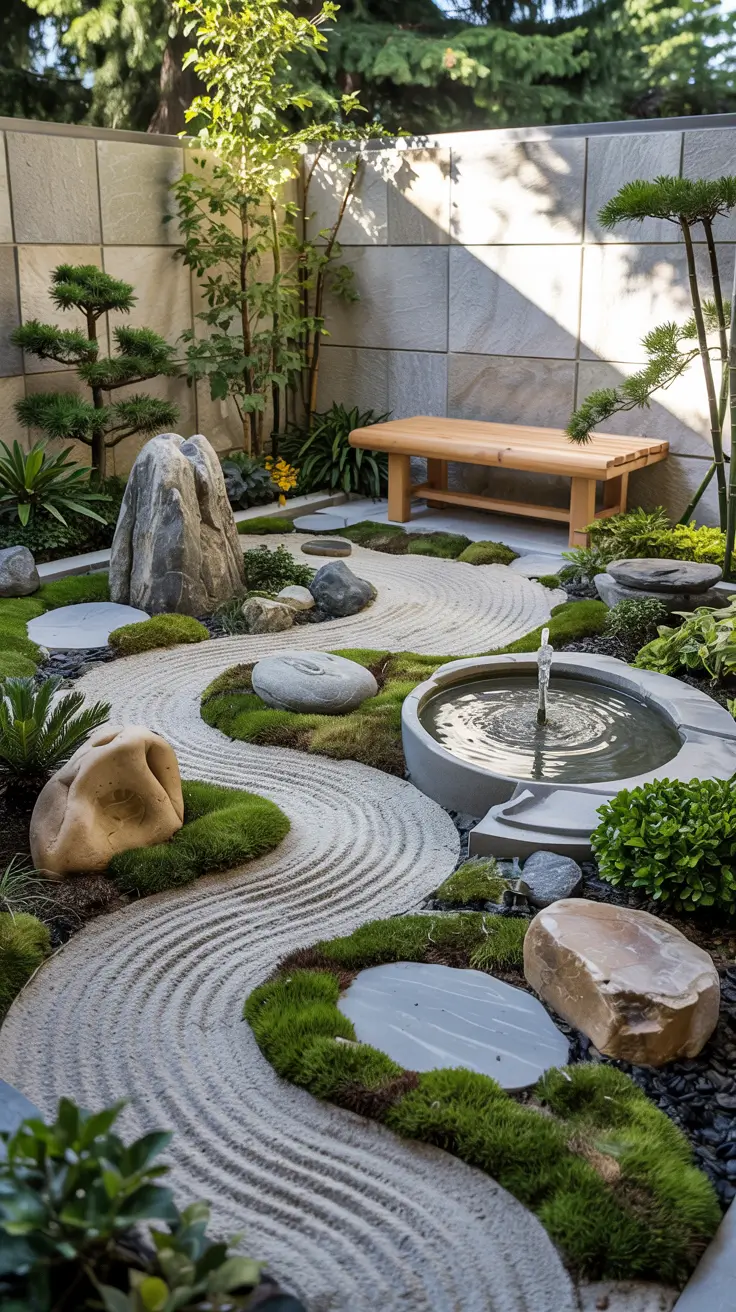
Personally, I appreciate how Zen gardens encourage mindfulness. Many landscape experts highlight that raking gravel patterns can be a meditative activity itself. I often recommend adding subtle lighting and a small bamboo fountain so the space can also be enjoyed during early mornings or evenings.
If this section were expanded further, I would include guidance on maintaining gravel patterns and controlling weeds to preserve the clean, minimalist look that Zen gardens require.
19. Japanese Garden Ideas with Moon Gate – Elegant Zen Garden Entrances
Moon gates are one of the most striking architectural elements I use when designing japanese garden ideas zen landscapes. A moon gate creates a circular entrance that symbolically represents harmony, unity, and transition. In many Japanese style gardens, passing through a moon gate marks the moment where visitors leave everyday life behind and enter a calm, reflective environment.
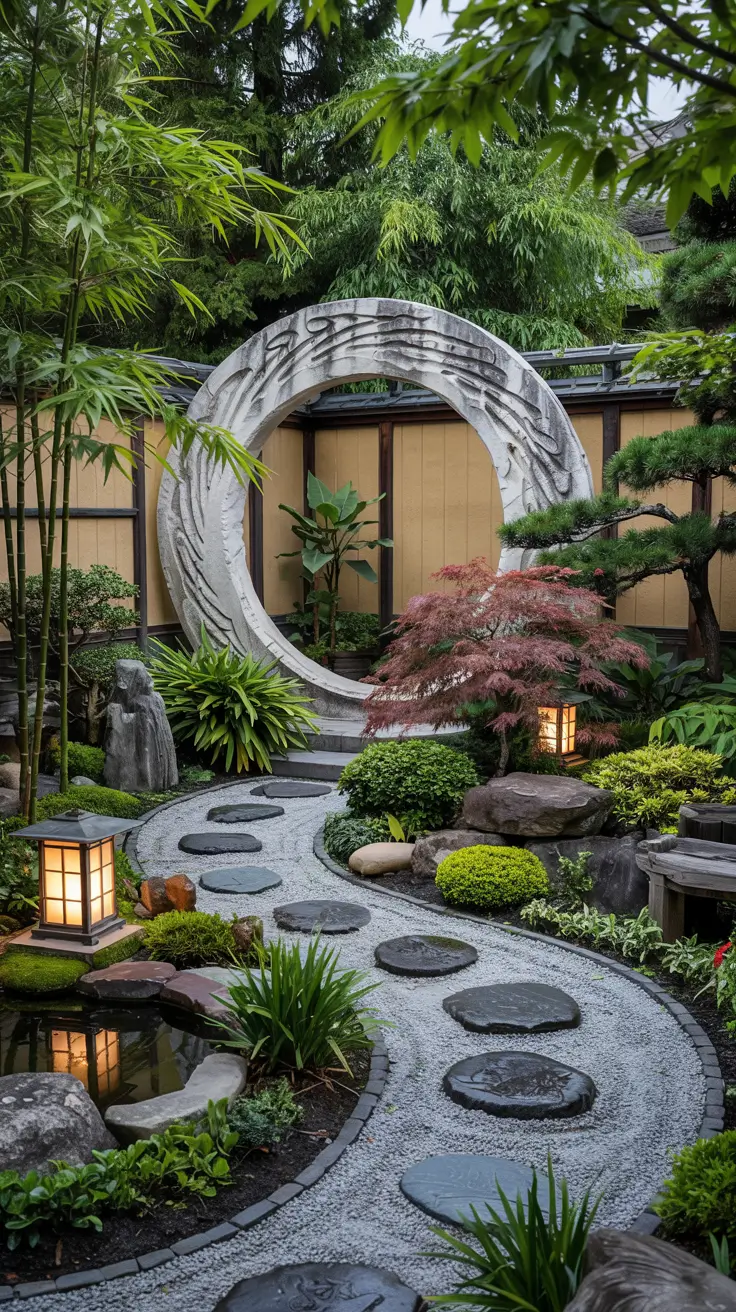
When incorporating a moon gate, I typically position it along the main pathway leading into the garden. The gate itself can be built from stone, wood, or concrete, depending on the overall design style. Surrounding the entrance with bamboo, ornamental grasses, and low shrubs helps frame the circular opening and create a dramatic visual effect.
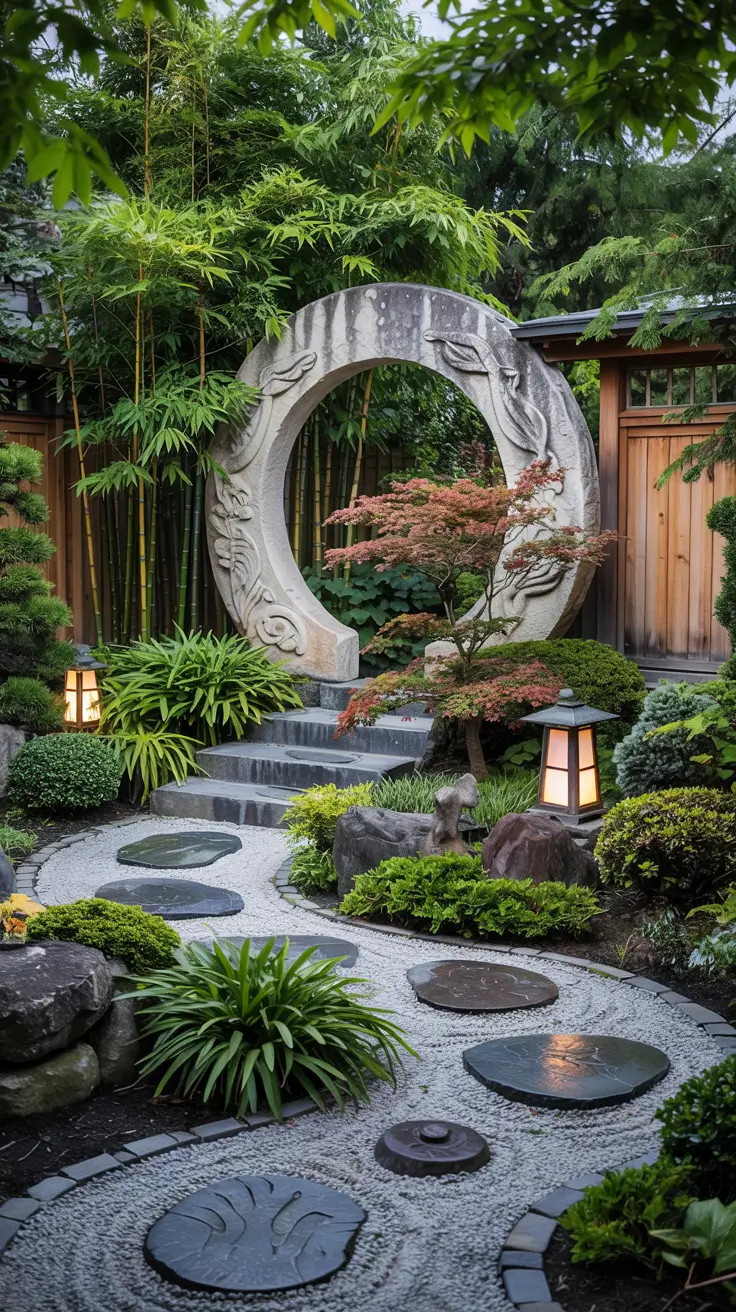
From my experience, moon gates are particularly effective in medium to large gardens where they can divide multiple sections of the landscape. For example, one area may contain a pond and seating area, while another holds a gravel Zen garden. The gate then becomes both a functional pathway and a sculptural centerpiece.
In this section, I would also consider discussing proper placement and scale, since moon gates should always feel proportionate to the surrounding garden space.
20. Modern Zen Japanese Garden Ideas – Contemporary Landscaping with Traditional Elements
Modern homes often benefit from contemporary Japanese garden designs that combine minimalism with traditional symbolism. I frequently apply modern zen japanese garden ideas when clients want a sleek outdoor space that still feels peaceful and connected to nature. These gardens use simple lines, neutral materials, and carefully chosen plants.
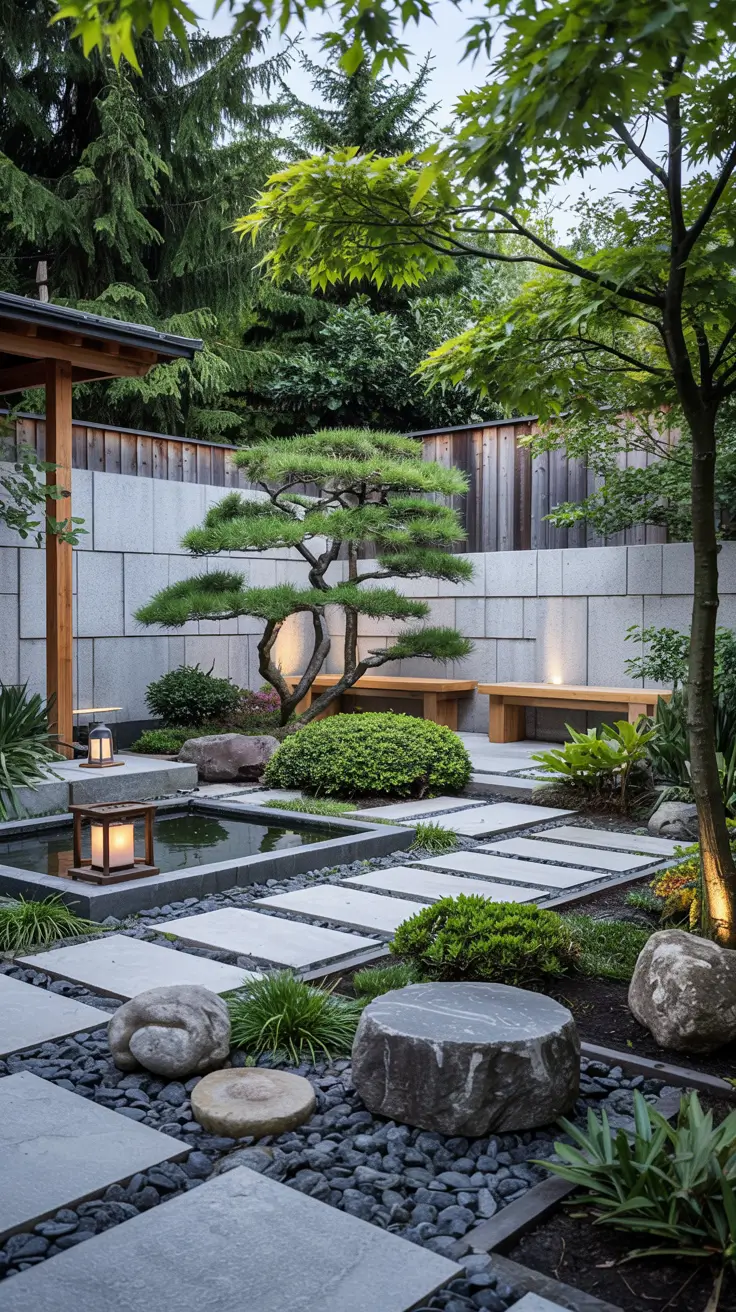
For modern landscapes, I like to combine concrete or large stone pavers with gravel beds, sculptural trees such as Japanese maples, and minimalist water features. Outdoor furniture also plays a role here. Low profile benches, teak lounge chairs, or minimalist patio seating help transform the garden into a comfortable outdoor living area.
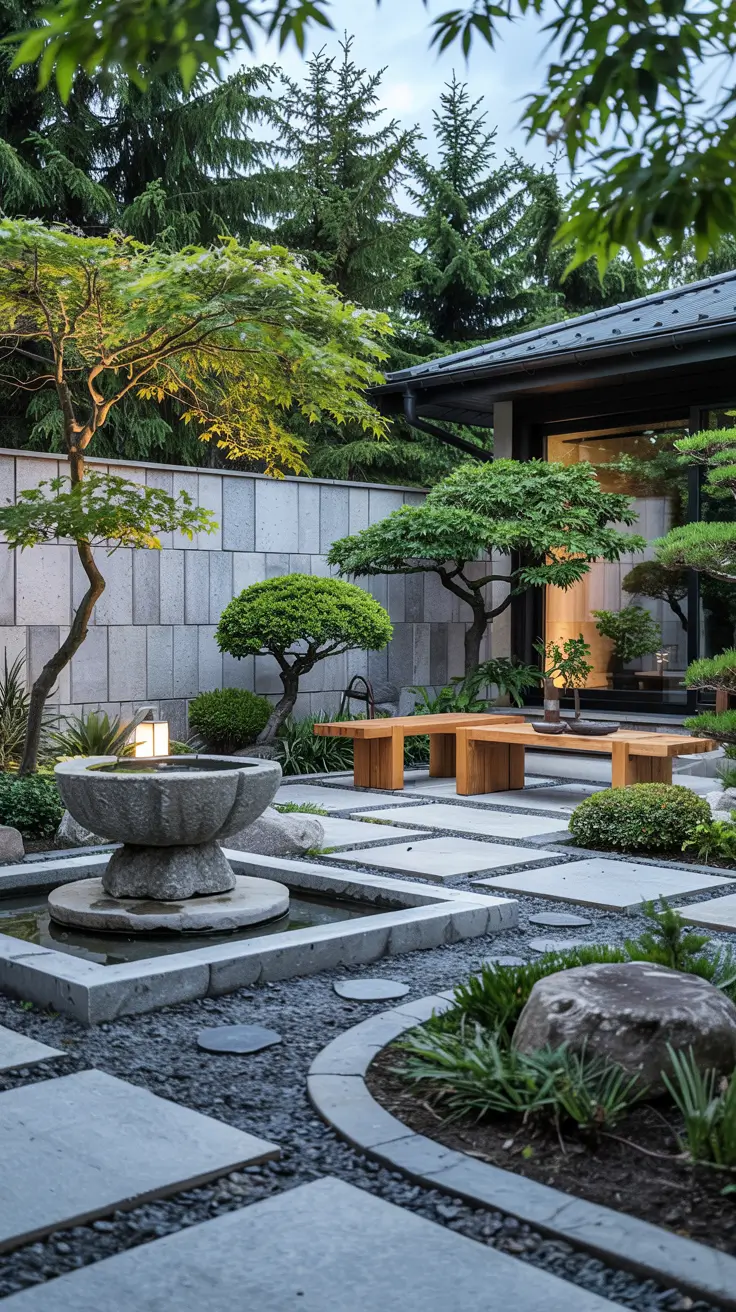
In my opinion, modern Japanese gardens work especially well for small backyard spaces or narrow side yards because they emphasize structure and clarity. Many contemporary landscape architects note that Japanese design principles translate naturally into modern environments due to their focus on simplicity and balance.
To further enhance this section, I would include lighting design ideas such as recessed pathway lights or stone lanterns, which can dramatically improve the atmosphere of a modern Zen garden during evening hours.
21. Japanese Garden Ideas for Large Backyards – Expansive Zen Landscapes with Water Features
Large properties offer exciting opportunities for expansive japanese garden ideas backyard layouts. When I work with larger landscapes, I can introduce multiple garden zones such as ponds, bridges, walking paths, and meditation areas. This allows the garden to unfold gradually, encouraging visitors to explore the space.
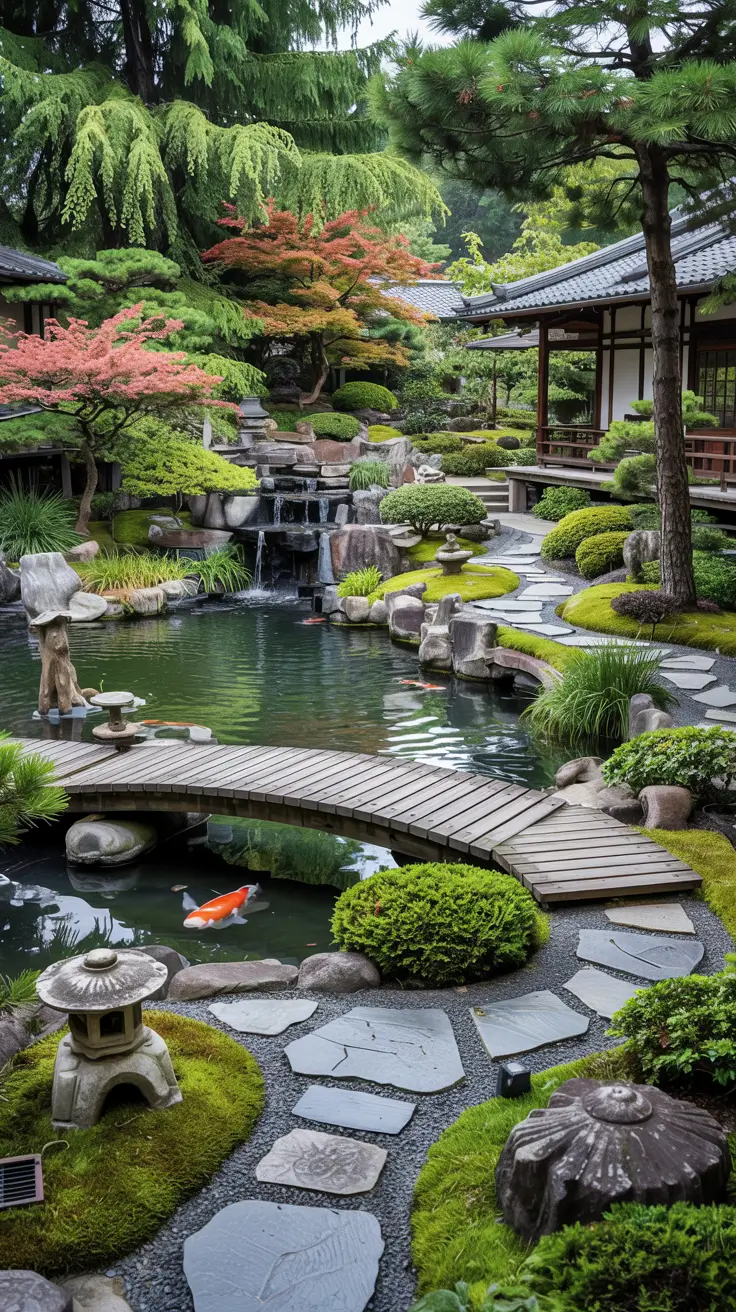
In a large Japanese garden, I typically include features like koi ponds, wooden bridges, winding stone paths, and clusters of trees such as Japanese maple or pine. Water features play an especially important role because they introduce movement and sound. A waterfall flowing into a pond instantly becomes a focal point and enhances the calming atmosphere.
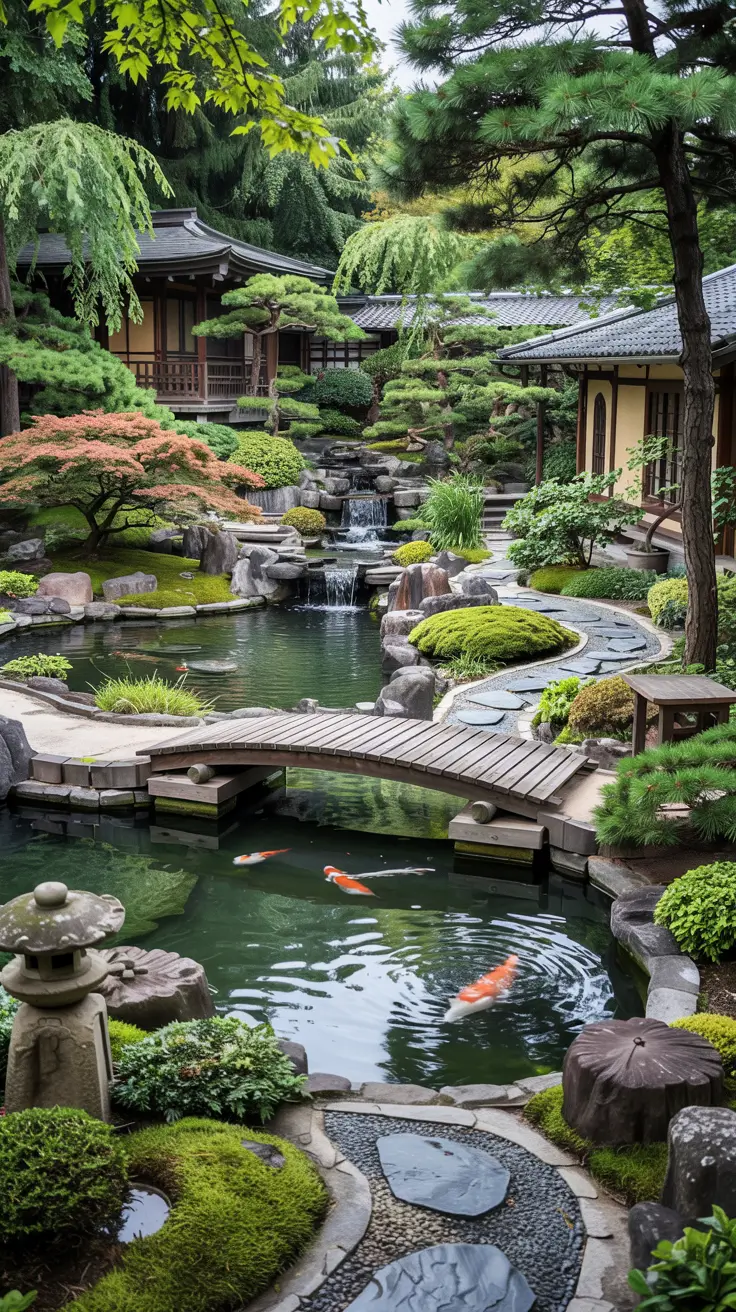
From my perspective, large Japanese gardens should still maintain balance and simplicity despite their scale. Even though there is more space, I avoid overcrowding the landscape with too many elements. Instead, I allow open areas of gravel, moss, and lawn to contrast with detailed focal points like bridges or stone lanterns.
If expanding this section further, I would add guidance on designing walking paths that guide visitors naturally through the garden, creating a sense of discovery and peaceful exploration.
22. Japanese Garden Ideas for Tiny Gardens – Creating Harmony in Very Small Spaces
When I work with limited outdoor areas, I often rely on japanese garden ideas for small spaces to create a sense of balance and tranquility without overcrowding the layout. Tiny gardens can still feel peaceful and visually complete if every element has a clear purpose. Even a small corner, narrow yard, or compact small backyard can become a Zen inspired retreat when I focus on simplicity, natural materials, and thoughtful placement of stones and plants.
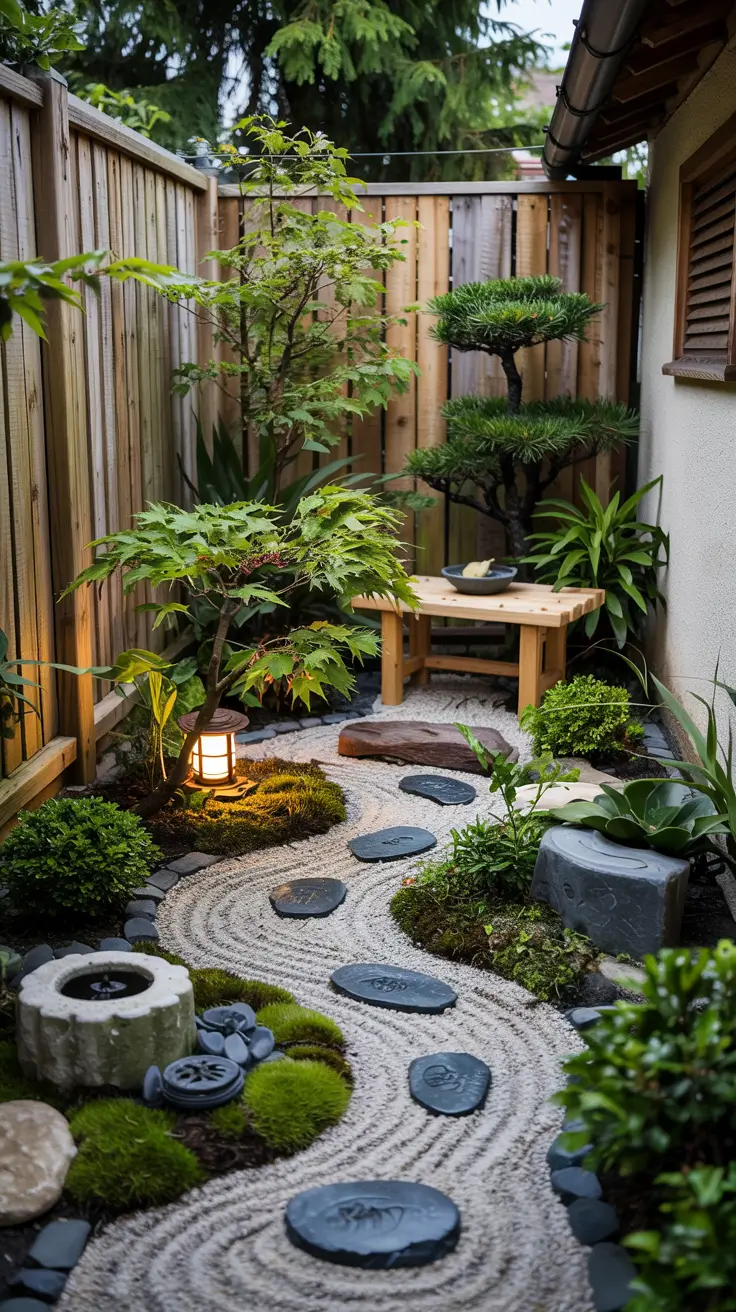
In these compact gardens, I usually incorporate a few carefully selected features rather than many decorative objects. A miniature gravel Zen area, a few stepping stones, moss patches, and a dwarf Japanese maple can completely transform a tiny outdoor corner. I also like to include small bamboo accents, compact lantern lighting, or a simple wooden bench that allows someone to sit quietly and enjoy the garden. These details create depth and structure even in very limited spaces.
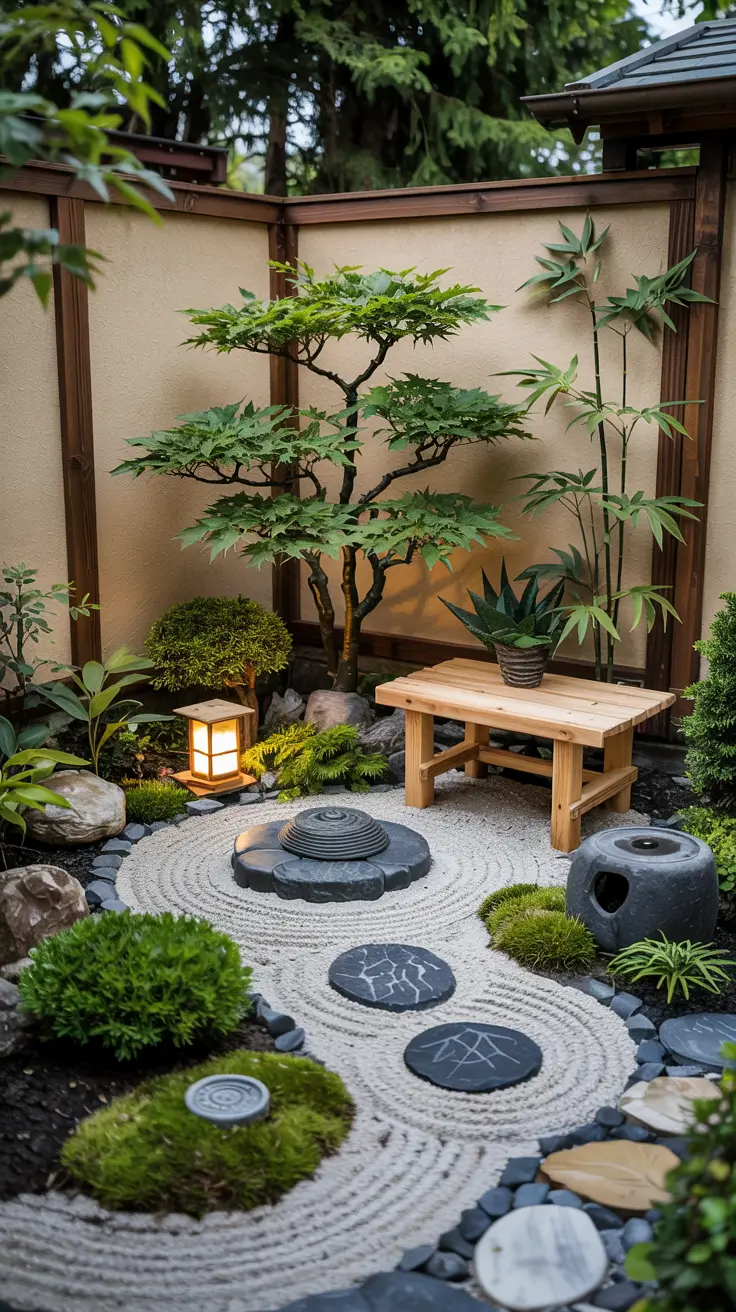
In my experience, the key to designing tiny Japanese gardens is restraint. Many designers emphasize that negative space is just as important as physical objects. I often leave open gravel areas that allow the eye to rest, which makes the entire space feel larger and more peaceful. This principle works especially well in urban homes where outdoor space is extremely limited.
If I were expanding this section further, I would include suggestions for vertical elements such as bamboo screens or climbing plants that add visual height without occupying valuable ground space.
23. Japanese Garden Grow Garden Ideas – Combining Zen Landscaping with Plants
One interesting direction in modern landscaping is combining japanese garden ideas grow a garden concepts with traditional Zen design. Instead of purely decorative gardens, many homeowners now want spaces where they can also grow herbs, vegetables, or ornamental plants. I find that this approach blends practicality with tranquility, allowing a garden to serve both aesthetic and functional purposes.
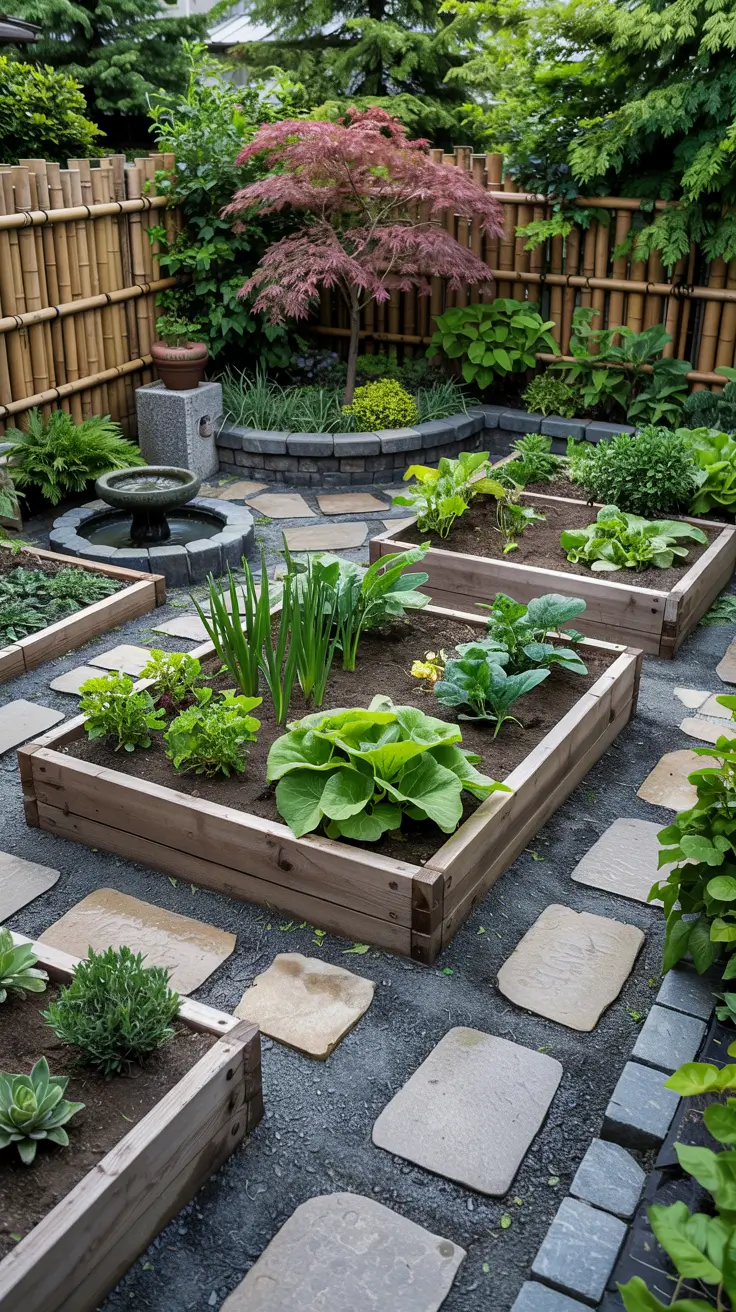
To create this type of garden, I often organize the layout using stone pathways and small planting zones. Raised wooden beds or natural stone borders help separate herbs, vegetables, and ornamental plants while maintaining a harmonious design. Bamboo fences, small gravel sections, and simple water features keep the overall atmosphere calm and balanced even though the garden includes productive planting areas.
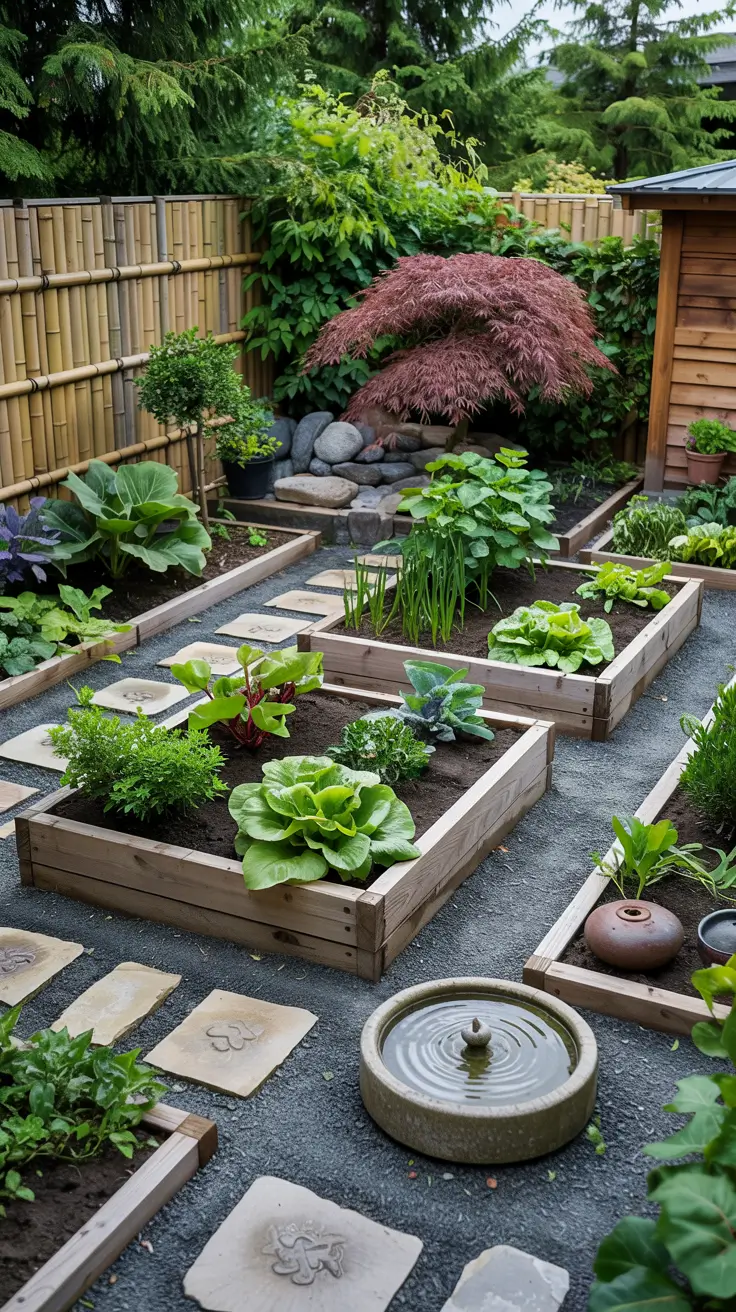
Personally, I believe that gardening itself aligns naturally with Zen philosophy. Tending plants encourages mindfulness and patience, which are central ideas in Japanese landscape traditions. Many gardening experts also emphasize that spending time caring for plants can significantly improve mental well being, which makes these gardens both beautiful and beneficial.
To strengthen this section, I would also discuss plant selection for different climates and recommend low maintenance species that maintain the clean visual structure typical of Japanese gardens.
24. Japanese Garden Ideas UK – Beautiful Zen Gardens for British Climate
When designing japanese garden ideas uk landscapes, I always consider the climate conditions typical in Britain, including frequent rain and cooler temperatures. Fortunately, many traditional Japanese plants and garden structures adapt well to this environment. Moss, ferns, Japanese maples, and evergreen shrubs thrive in moist climates, making them ideal for creating authentic Zen style gardens.
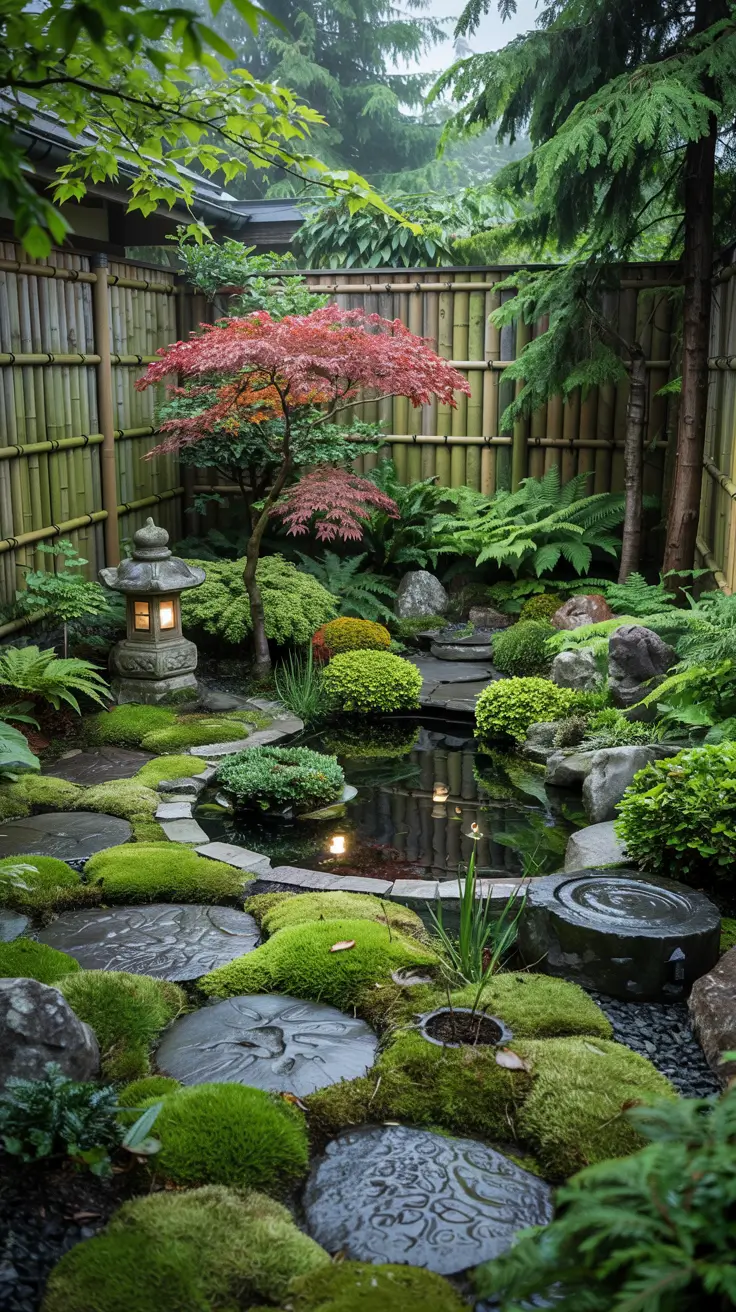
In these gardens, I often include stone pathways, moss covered ground areas, and simple wooden bridges that complement the natural greenery. A small pond or water basin can also add movement and reflection to the landscape. Bamboo fencing works well in the UK too, although it often requires proper treatment to withstand wet conditions. Lighting elements like stone lanterns help extend the garden’s atmosphere into the evening.
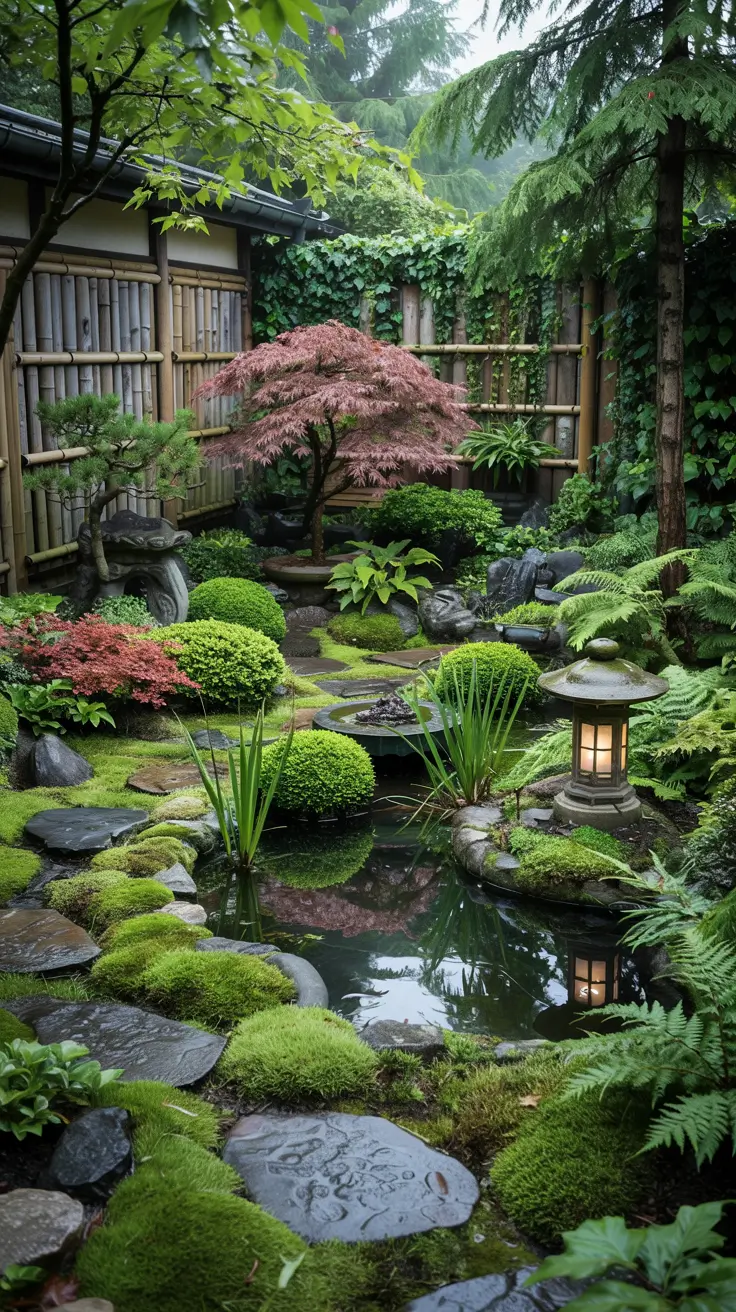
From my perspective, the British climate actually enhances Japanese gardens because the constant moisture encourages lush plant growth and soft textures. Many landscape designers note that moss gardens, which are extremely important in Japanese design, develop particularly well in damp environments like the UK.
If I were adding more detail to this section, I would include recommendations for winter protection and drainage solutions to prevent excess water from affecting pathways and structures.
25. Japanese Garden Ideas for Outdoor Spaces – Peaceful Nature Inspired Landscapes
Japanese garden ideas outdoor spaces can transform ordinary yards into relaxing landscapes that feel connected to nature. I approach these gardens by focusing on natural balance between plants, stone, water, and open space. The goal is not simply decoration but the creation of a calm environment where people can slow down and appreciate the surroundings.
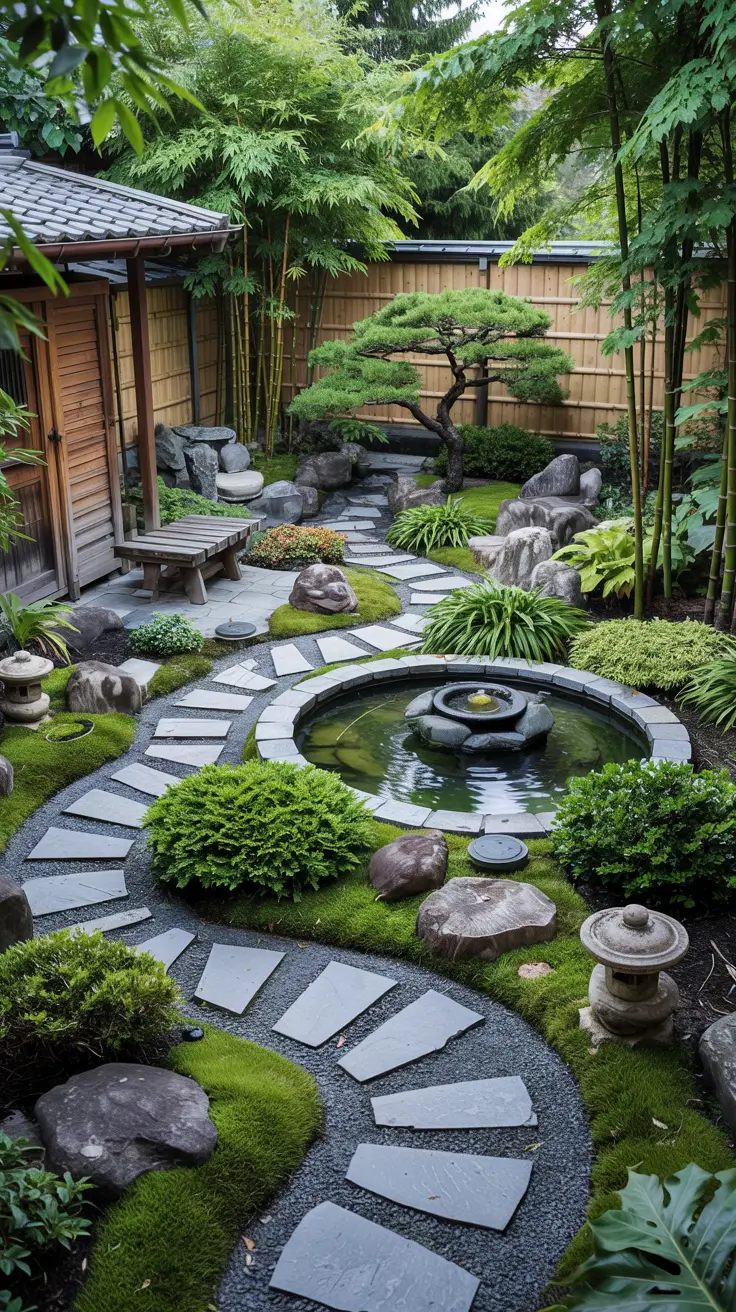
To achieve this effect, I typically design winding stone pathways, small ponds or water basins, and carefully arranged trees and shrubs. Gravel areas help structure the space and provide contrast with greenery. Bamboo fences or wooden screens can define separate zones such as meditation areas, seating spaces, or quiet walking paths through the garden.
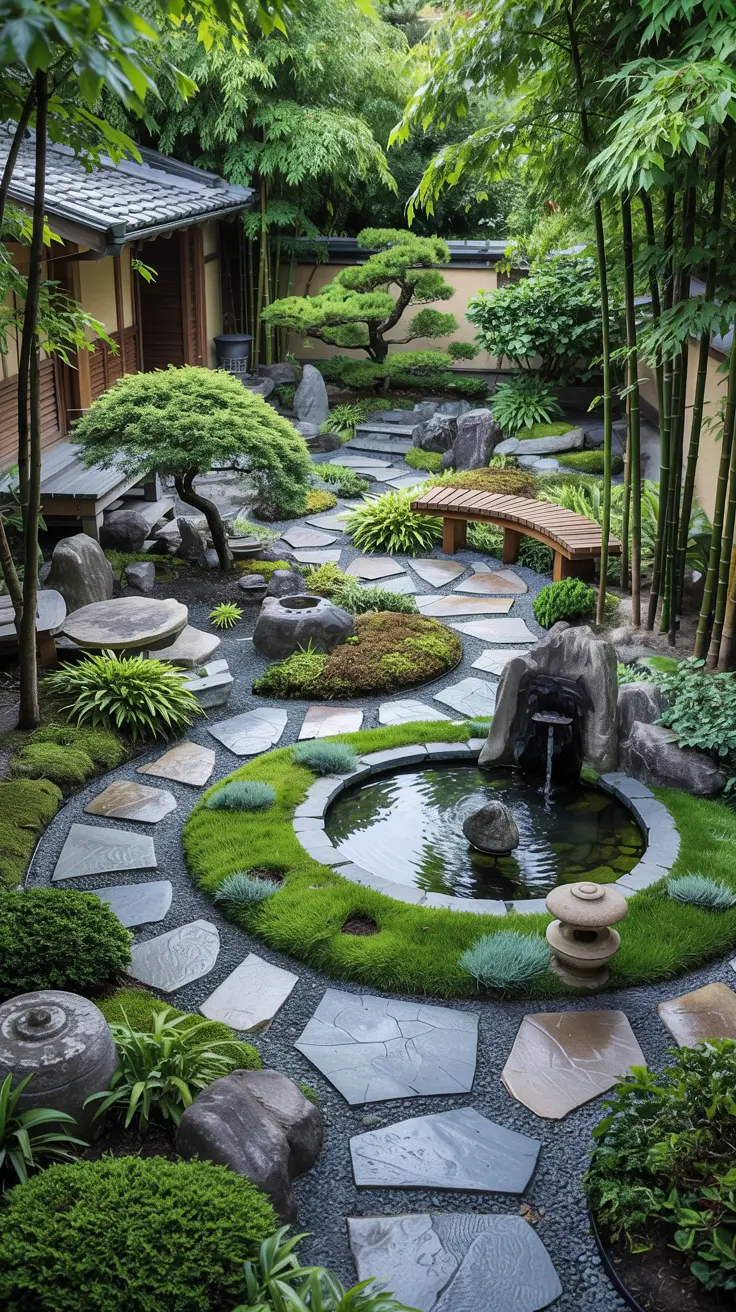
In my experience, the most successful outdoor Japanese gardens avoid symmetry and instead follow organic patterns found in nature. Landscape experts often describe this as “controlled naturalism,” where every element appears spontaneous but is actually carefully planned. I apply this principle when arranging rocks, trees, and pathways.
To expand this section further, I would recommend integrating subtle outdoor lighting so the garden remains visually appealing during evening hours and can be enjoyed at different times of the day.
26. Japanese Garden Ideas DIY for Beginners – Easy Zen Garden Projects Anyone Can Build
Many people believe Japanese gardens require professional landscaping, but I often show clients that japanese garden ideas diy projects can be surprisingly accessible. Even beginners can build simple Zen inspired spaces using affordable materials and straightforward techniques. These gardens are perfect for homeowners exploring japanese garden ideas on a budget.
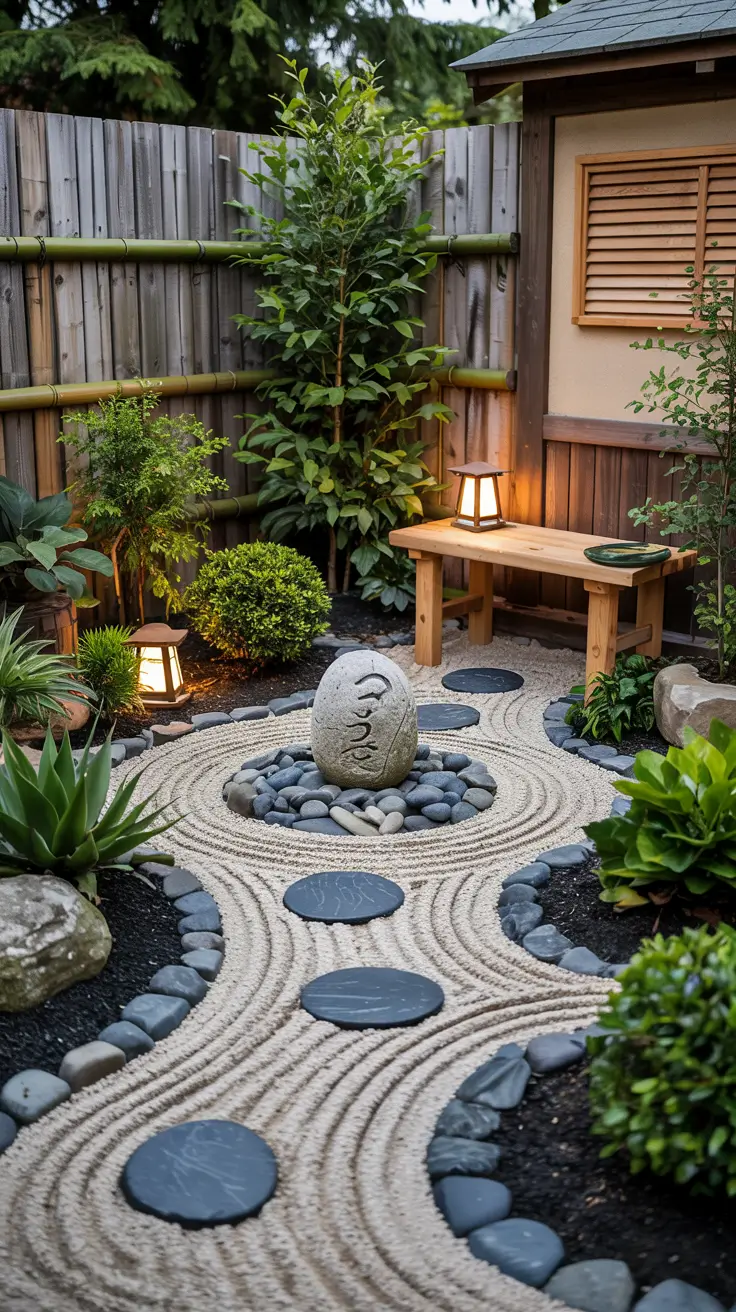
One of the easiest DIY projects is a small gravel Zen garden with a few natural stones and a simple bamboo border. Adding stepping stones, a small lantern, or a miniature water fountain immediately enhances the atmosphere. For small backyard or front yard spaces, these elements create a complete design without requiring extensive construction.
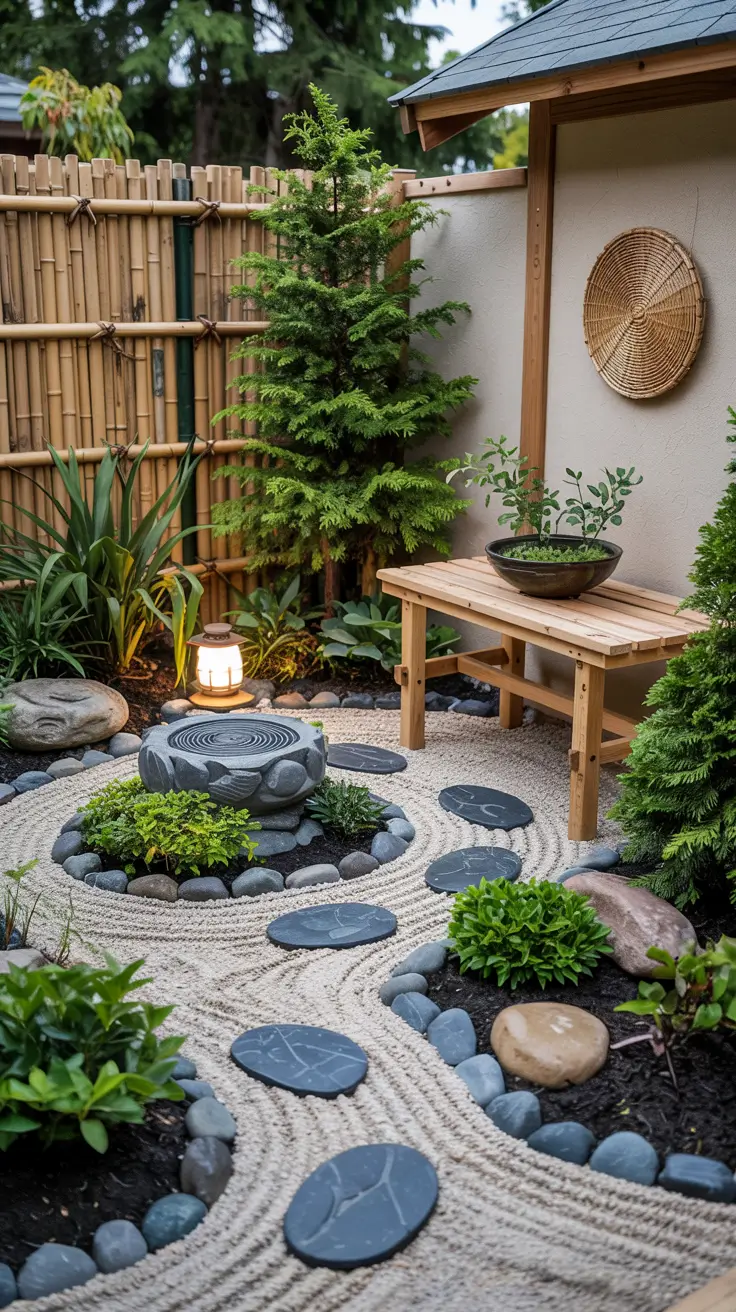
From my own experience, DIY gardens often feel more meaningful because homeowners actively participate in creating them. Many gardening publications emphasize that hands on involvement strengthens the connection people feel with their outdoor spaces. I often encourage beginners to start small and expand the garden gradually.
To make this section even more practical, I would include a short checklist of essential tools and materials that beginners should prepare before starting their first DIY Zen garden project.
27. Japanese Garden Ideas Minecraft – Building Peaceful Zen Landscapes in Minecraft
Interestingly, japanese garden ideas minecraft builds have become very popular among players who enjoy designing peaceful landscapes inside the game. Minecraft allows creators to experiment with traditional Japanese garden elements such as stone bridges, ponds, bamboo forests, and Zen gravel areas using digital blocks.
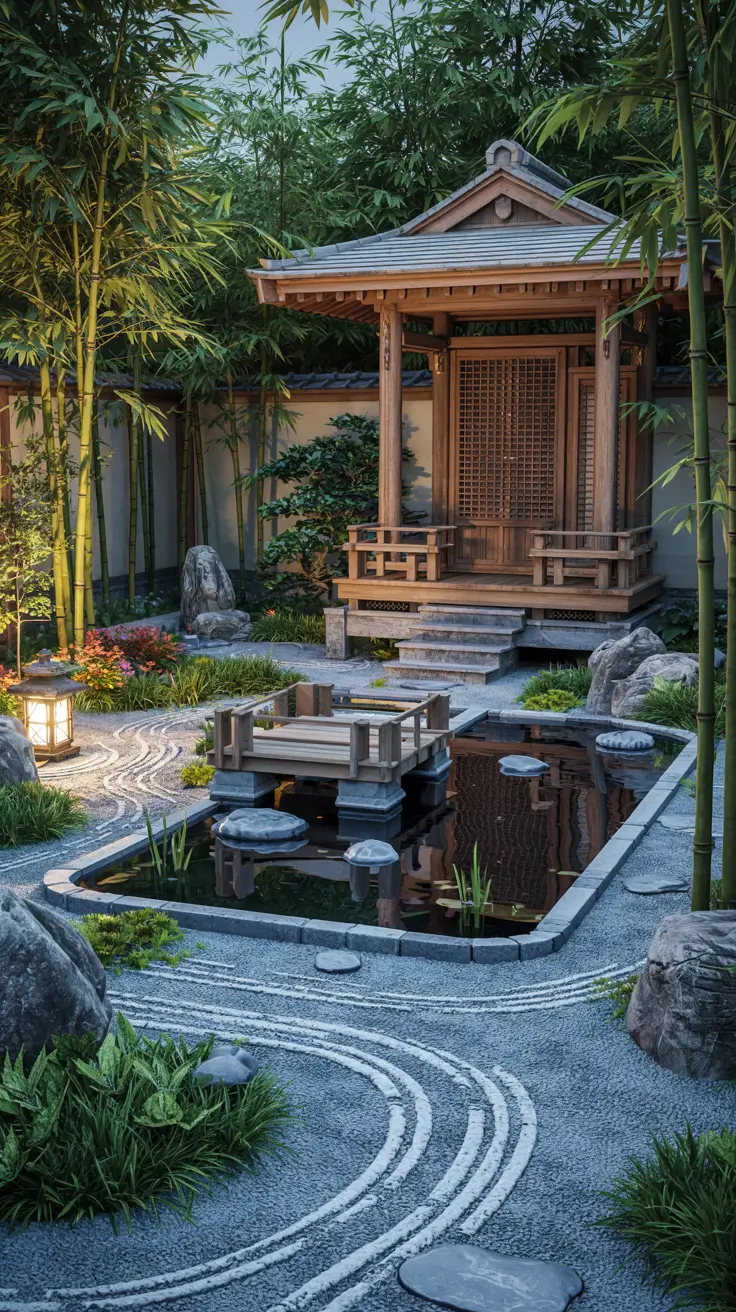
When designing a Minecraft Japanese garden, I usually recommend starting with a central pond or water feature. Surrounding it with stone paths, lantern inspired lighting, and block based bamboo structures helps recreate the atmosphere of a real Zen garden. Players often add wooden pavilions or small tea house structures that serve as focal points within the landscape.
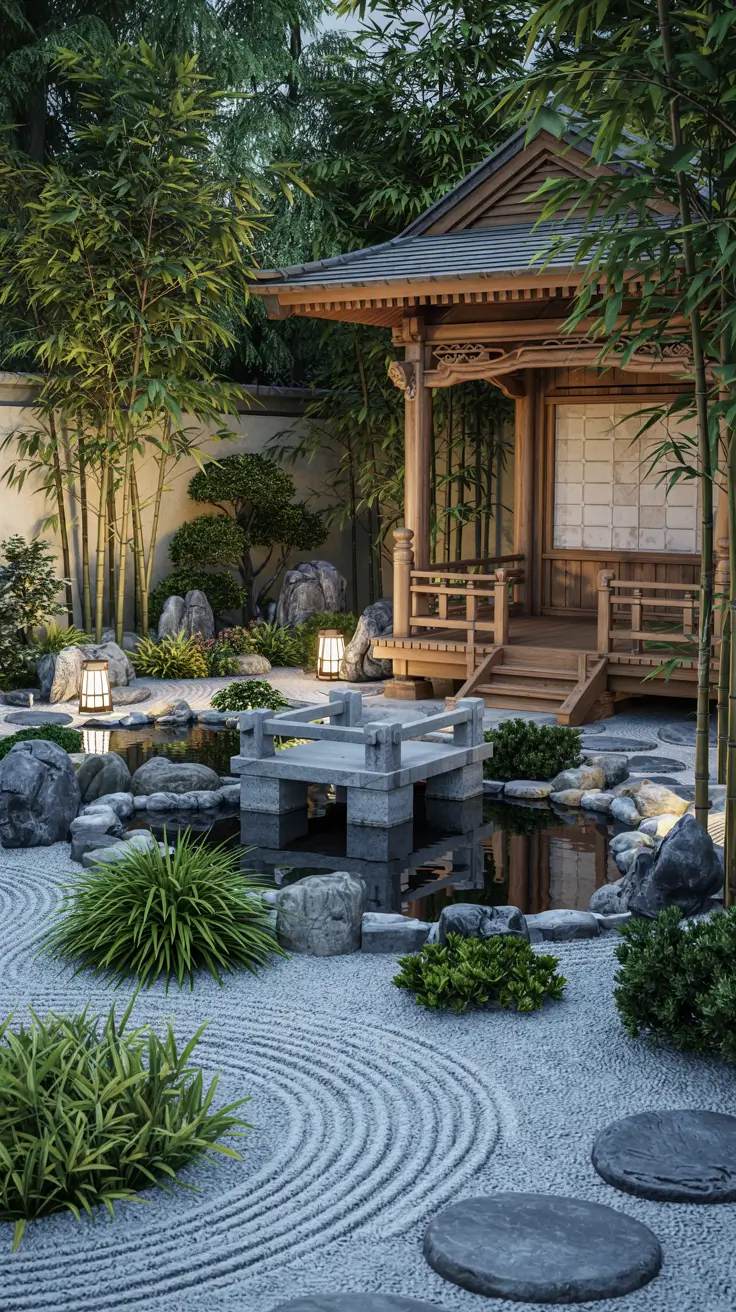
I find that Minecraft is a surprisingly effective platform for exploring landscape design ideas. Many players develop a strong understanding of spatial balance and composition while building these environments. The same principles used in real gardens such as asymmetry, balance, and focal points also apply inside the game.
If I were expanding this section further, I would suggest using elevation changes such as small hills or layered terrain blocks to make the digital garden feel more dynamic and realistic.
28. Japanese Garden Ideas Bloxburg – Creating a Relaxing Japanese Style Garden in Bloxburg
In the popular game Bloxburg, players often explore japanese garden ideas bloxburg builds to create calm outdoor areas around their virtual homes. These gardens allow players to combine architecture, landscaping, and decorative design in ways that mirror real world Japanese gardens.
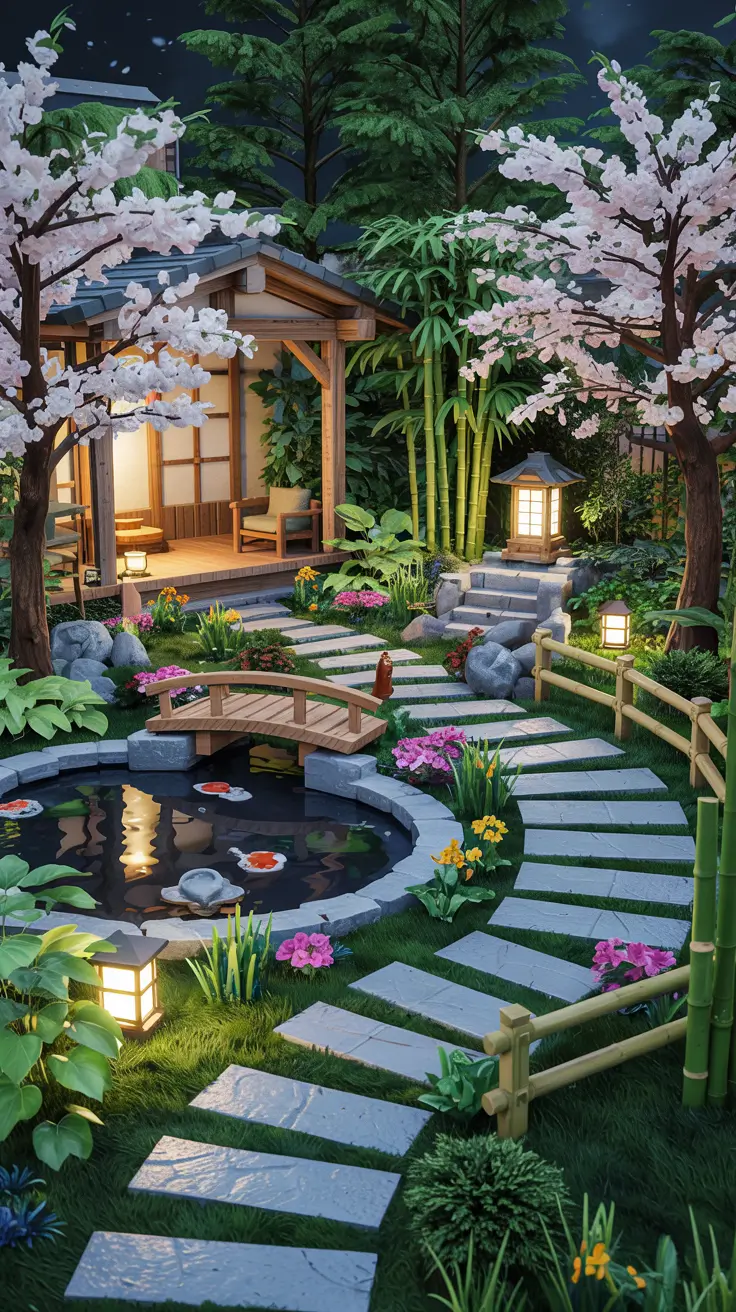
When I design a Bloxburg Japanese garden concept, I usually start with a curved pathway that leads through the landscape. Adding ponds, small bridges, bamboo fences, and lantern style lighting helps establish the traditional Zen aesthetic. Trees such as cherry blossoms or Japanese maples create beautiful focal points within the garden.
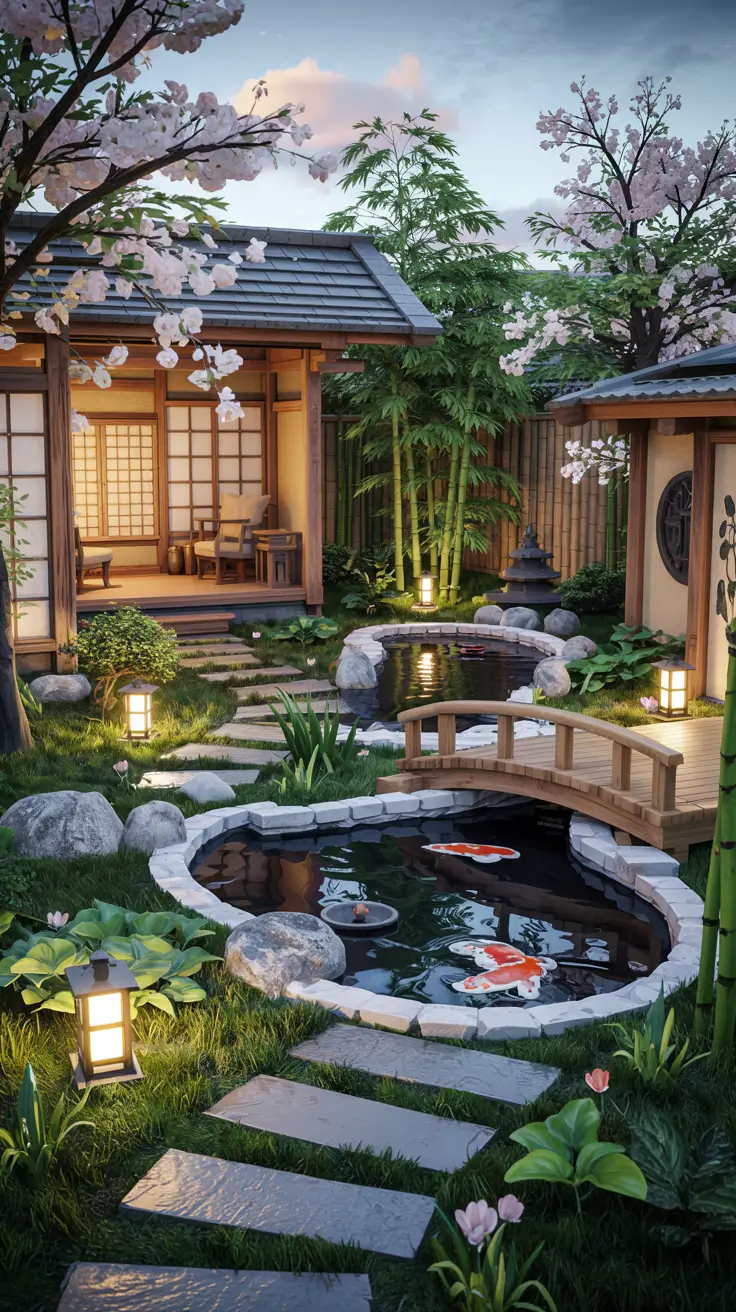
In my opinion, the most successful Bloxburg gardens focus on atmosphere rather than complexity. Soft lighting, water reflections, and balanced plant placement create a peaceful environment that feels immersive for players exploring the space.
What I would add to this section is advice on scaling garden elements properly so the design looks balanced relative to the virtual house and surrounding terrain.
29. Zen Rock Garden Backyard Layout
I often recommend starting a Japanese garden with a classic zen rock garden because it creates an immediate sense of calm while requiring minimal maintenance. In a backyard setting, I design a simple composition of gravel, large natural stones, and carefully spaced plants to form a balanced landscape. This works particularly well for japanese garden ideas backyard projects and also fits perfectly into japanese garden ideas for small spaces because the design relies on structure rather than size.
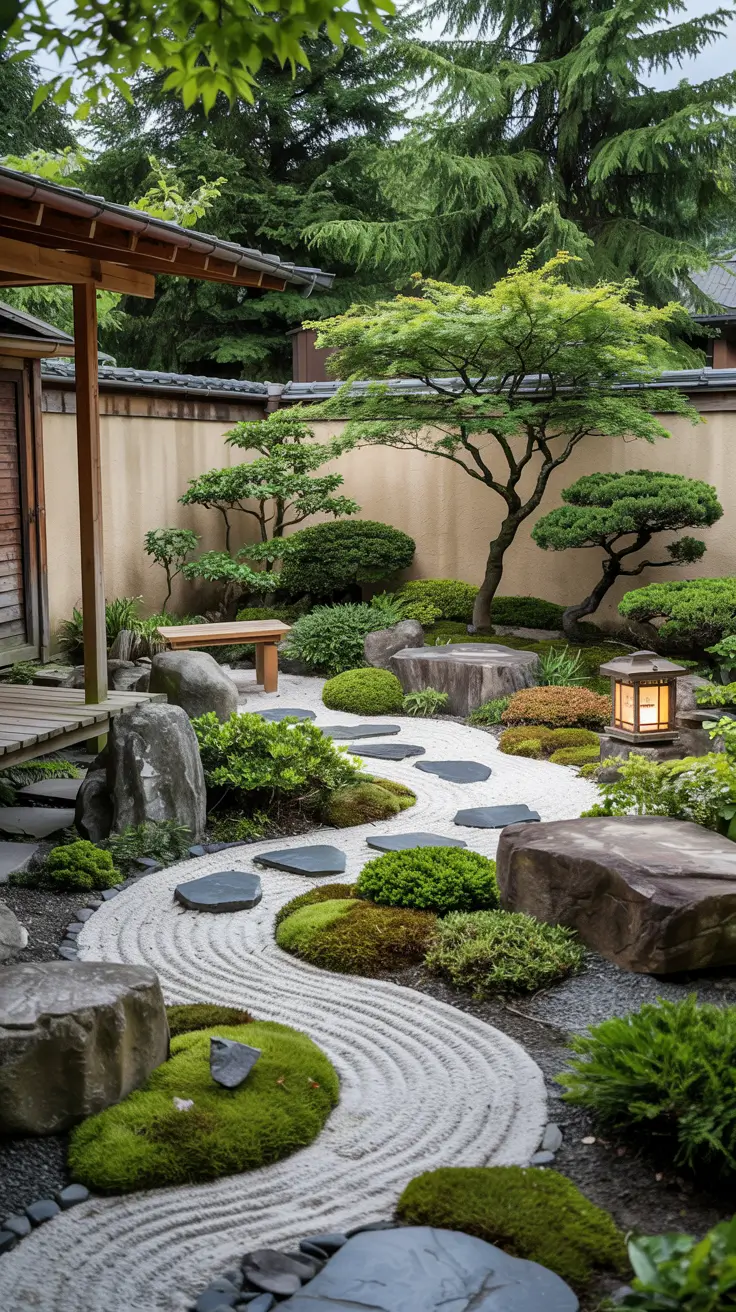
In my experience, the key elements include raked white gravel, large weathered stones, a small maple tree, and low moss ground cover. I usually add a stone lantern and a wooden bench so the space becomes more than decoration – it becomes a place to pause and relax. These pieces create a sense of depth and harmony while maintaining the simplicity that defines zen garden design.
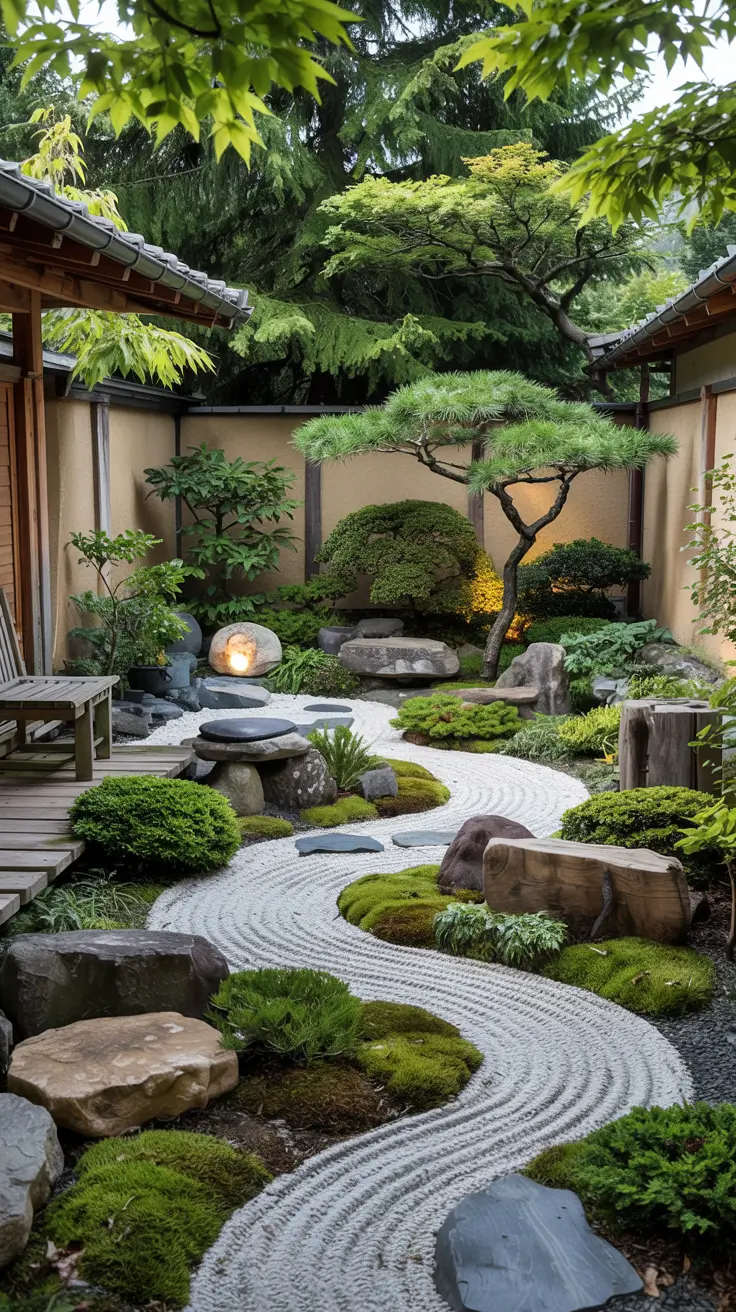
Personally, I always think about how the space will be experienced from different angles. Designers from Architectural Digest often emphasize that Japanese gardens should unfold slowly as you move through them, revealing new views and textures. I follow this approach by placing stones and plants asymmetrically so the garden feels natural and balanced rather than overly planned.
What I would add to improve this section is a narrow stepping stone path that guides visitors through the gravel area. This path adds movement to the design and helps protect the raked patterns from being disturbed while still allowing people to interact with the garden.
30. Small Corner Bamboo Fence Garden
When working with japanese garden ideas for small spaces, I often transform an unused corner into a miniature bamboo garden retreat. Even a tiny corner of a backyard can become a peaceful environment when framed with a simple bamboo fence and soft planting.
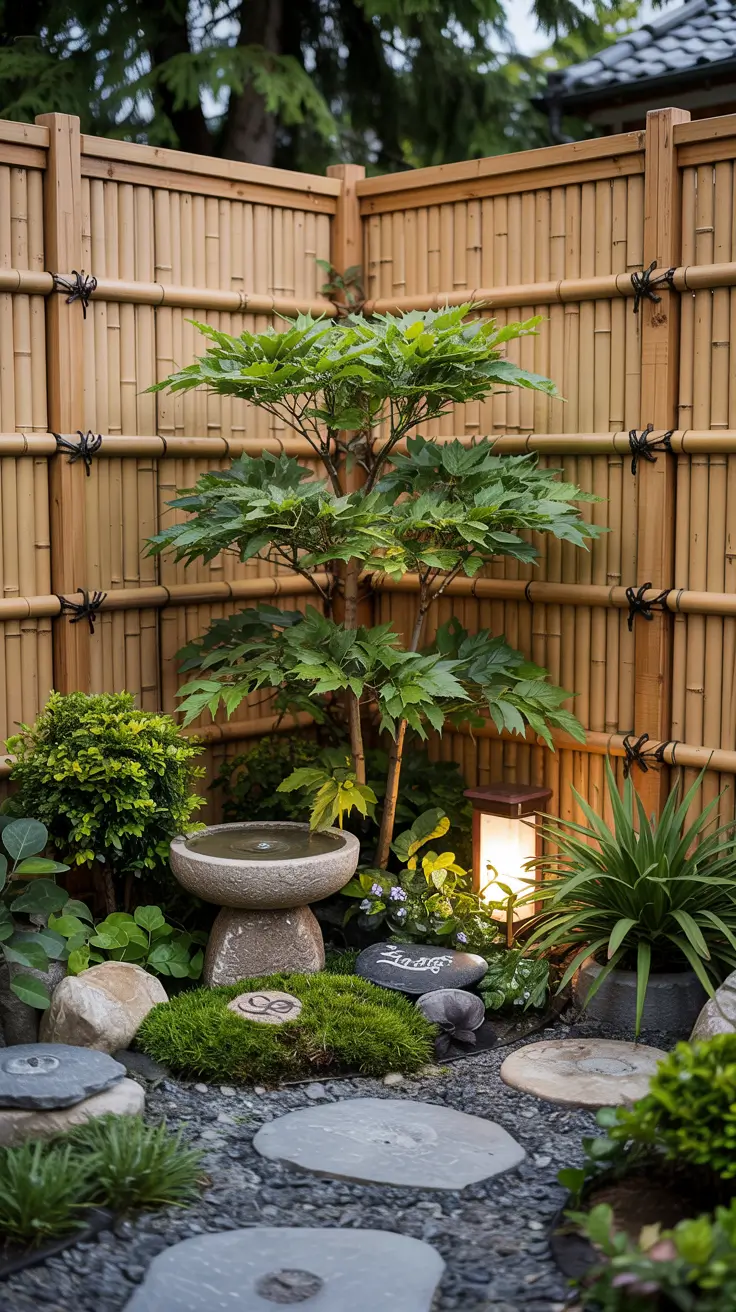
The structure usually includes a diy bamboo fence, a small stone basin, compact shrubs, and a gravel base. Bamboo fencing works beautifully because it instantly introduces Japanese character while also creating privacy. I also like adding a single ornamental tree such as a dwarf maple, which provides color and structure without overwhelming a small area.
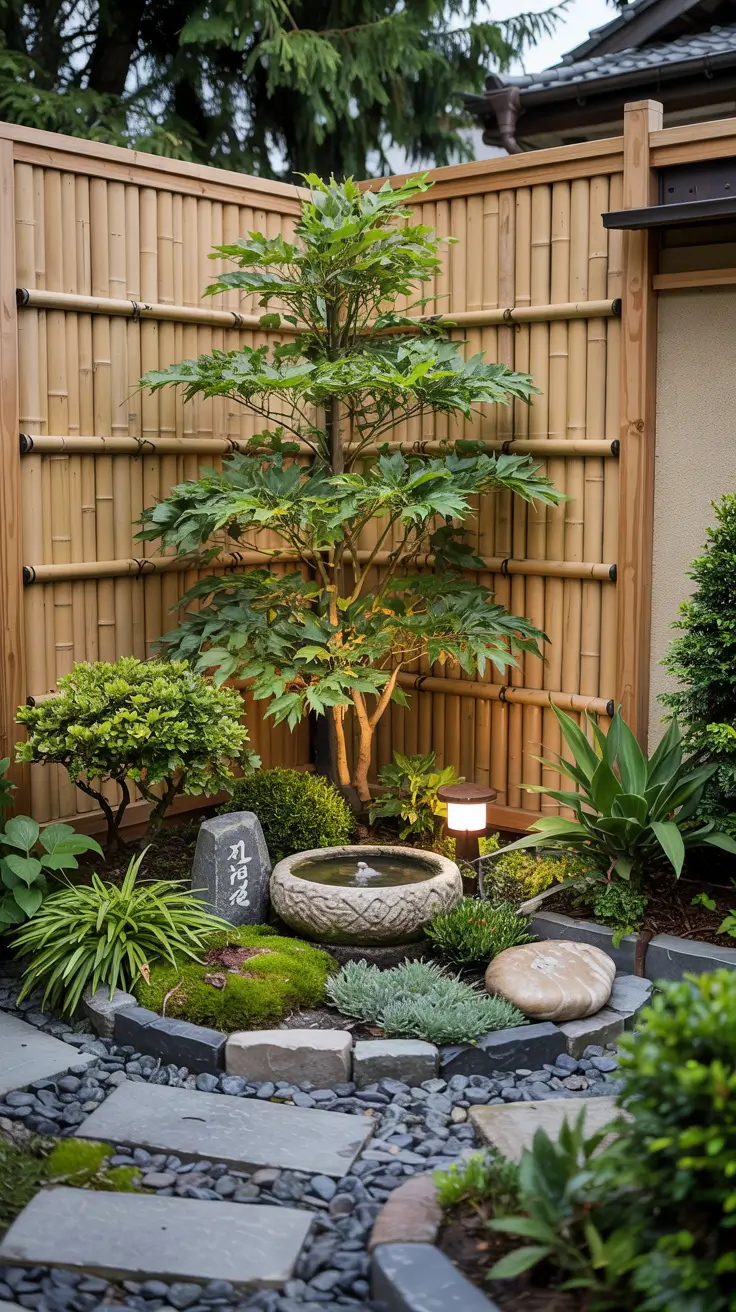
From my perspective, simplicity is the most important principle here. I have seen many small gardens fail because they try to include too many elements. Garden designers frequently advise focusing on a few strong features rather than cluttering the space. By limiting the design to bamboo, gravel, and one focal plant, the garden feels calm and intentional.
If I were refining this corner design further, I would add soft lantern lighting along the fence line. Subtle lighting allows the garden to remain visually interesting in the evening while maintaining the quiet atmosphere typical of Japanese landscapes.
31. Japanese Moon Gate Garden Entrance
A moon gate is one of the most striking architectural features I use in japanese garden ideas backyard layouts. This circular entrance creates a symbolic transition between the everyday world and the peaceful environment of the garden.
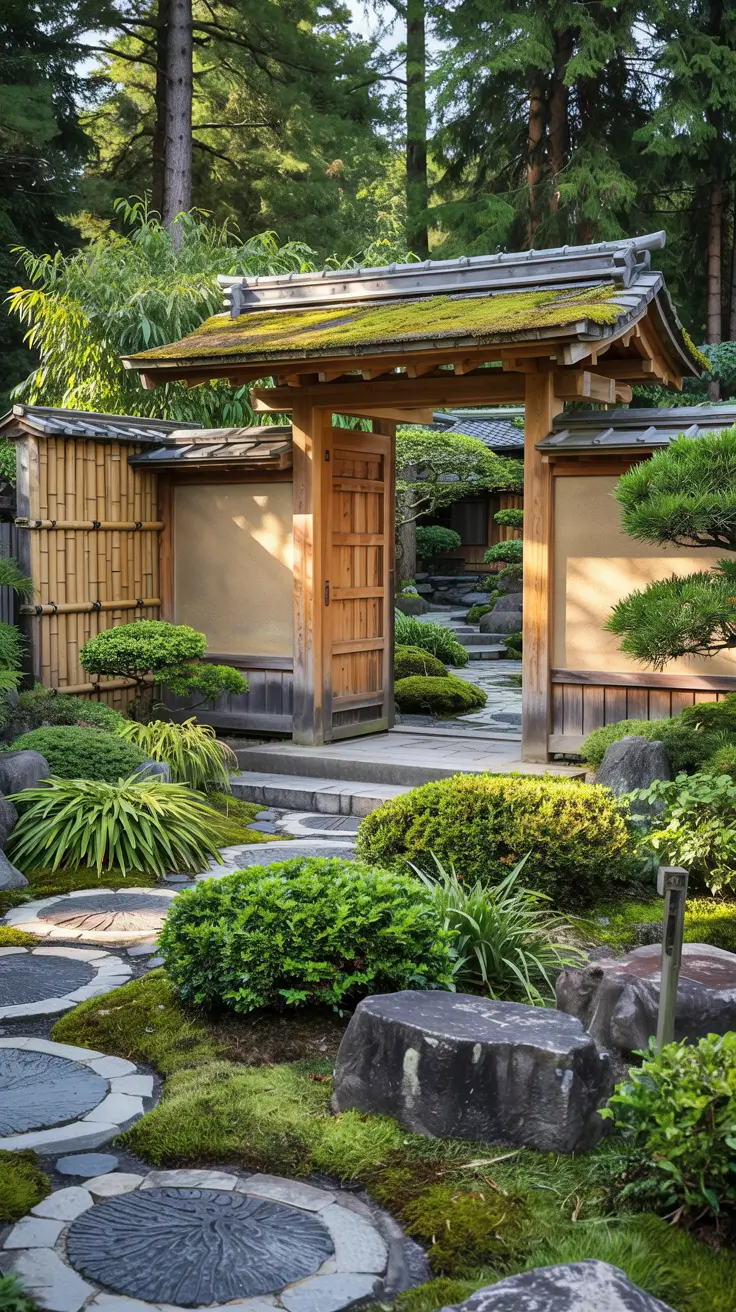
In practical design terms, I typically position the moon gate at the beginning of a stone path leading into the garden. Surrounding elements might include bamboo fencing, ornamental grasses, and layered shrubs that frame the circular structure. The path often leads to a small seating area or meditation space, allowing the gate to function as a visual and emotional threshold.
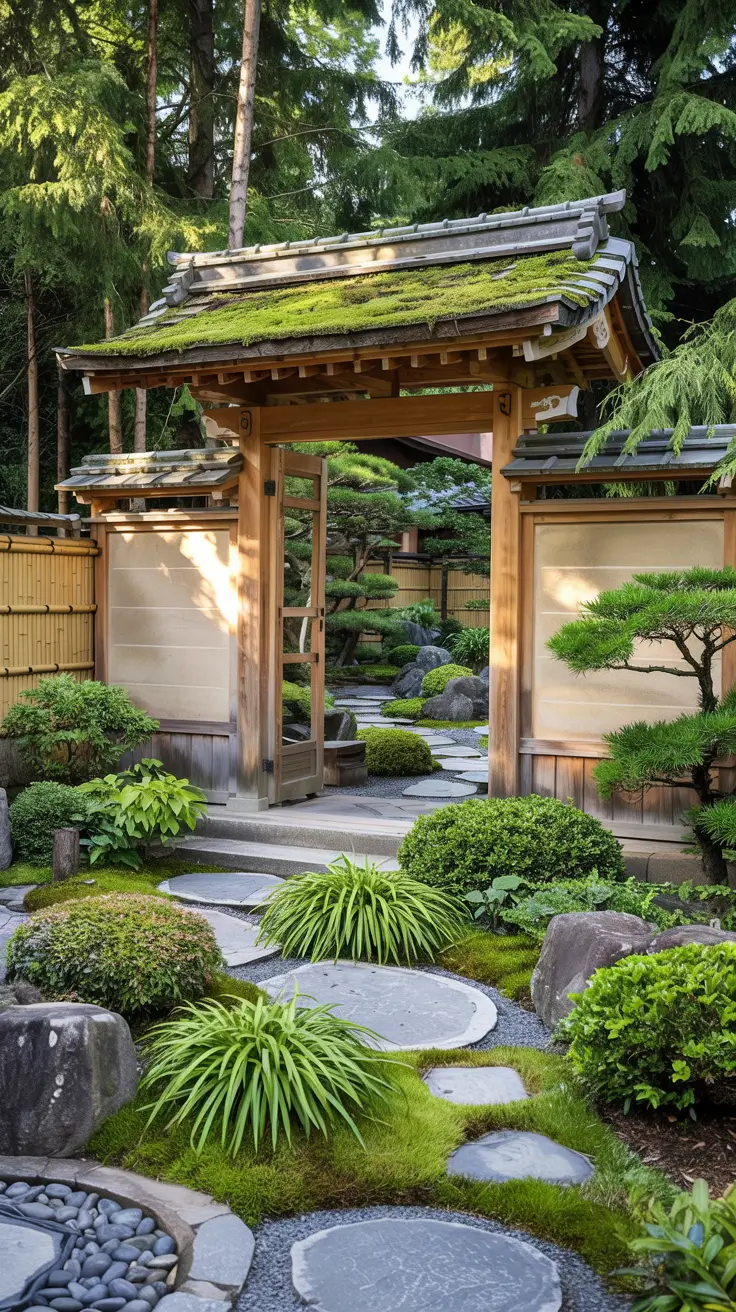
Personally, I love how the moon gate creates a sense of anticipation. When someone walks through it, the garden reveals itself gradually. Landscape architects often emphasize the importance of framing views in Japanese garden design, and the moon gate achieves this beautifully by presenting the garden as a living picture.
To strengthen this feature further, I would add soft moss and ground cover plants around the base of the gate. These details soften the structure and help it blend naturally with the surrounding landscape.