Mediterranean garden style landscape design continues to inspire homeowners who want outdoor spaces that feel warm, relaxed, and connected to nature. In 2026, mediterranean garden styles are evolving with modern materials, climate-adapted planting, and comfortable outdoor living zones that blend architecture with landscape.
What makes mediterranean style garden design so timeless? Why do mediterranean style homes garden layouts feel both elegant and practical? And how can anyone recreate a garden in mediterranean style even in small spaces or cooler climates?
In this article, I explore practical mediterranean garden design tuscan style ideas, from patios and outdoor living areas to terraces and compact landscapes. Each concept focuses on realistic design choices, natural materials, and functional layouts that reflect the charm of Spanish colonial and Tuscan outdoor living.
1. Mediterranean Garden Style Landscape Trends for 2026 That Transform Outdoor Spaces
I often begin mediterranean garden style landscape planning by focusing on openness, sunlight, and layered textures. In 2026, the trend moves toward gardens that feel both natural and structured. Gravel paths, olive trees, terracotta tones, and stone terraces create an atmosphere that resembles a relaxed coastal retreat while still being practical for everyday living.
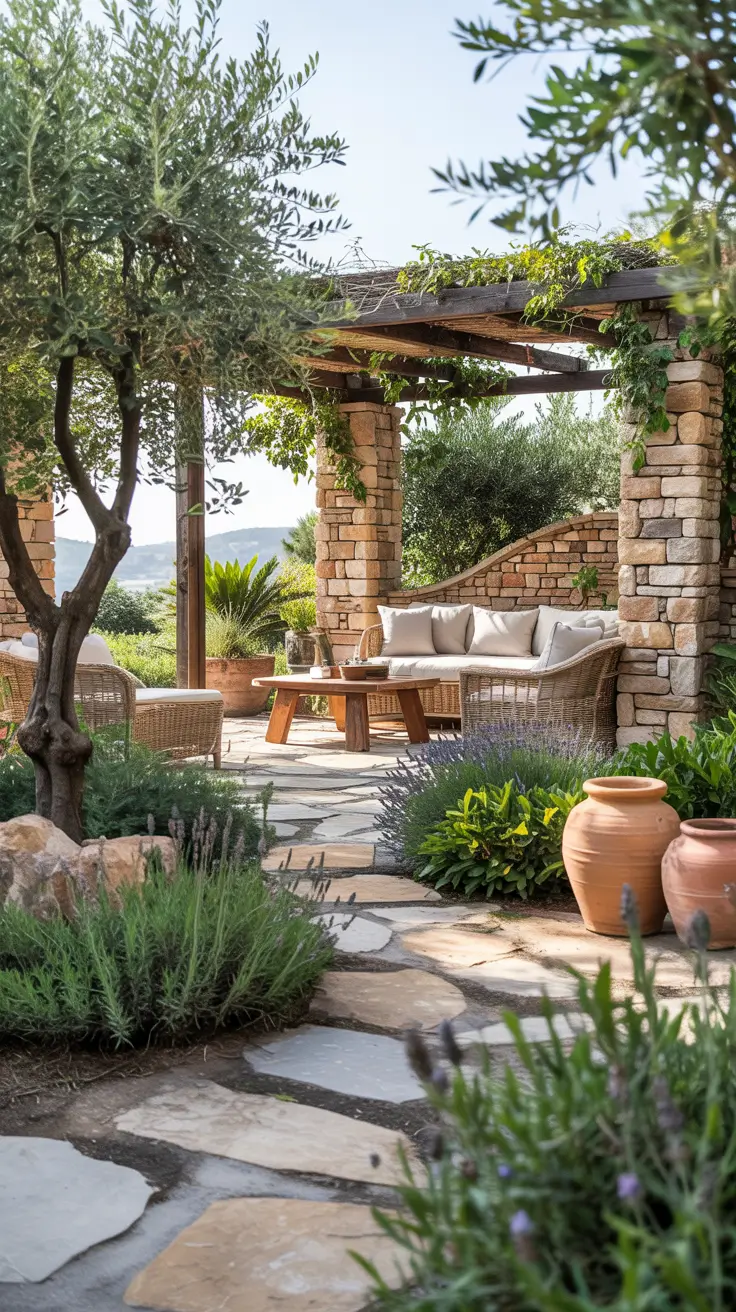
When I design these landscapes, I rely heavily on materials such as limestone pavers, textured stucco walls, clay pots, and rustic wooden pergolas. Drought tolerant plants like lavender, rosemary, and ornamental grasses help reinforce the mediterranean garden styles aesthetic while also making the landscape easier to maintain. Comfortable outdoor seating areas are essential because mediterranean gardens are meant to be lived in, not just admired.
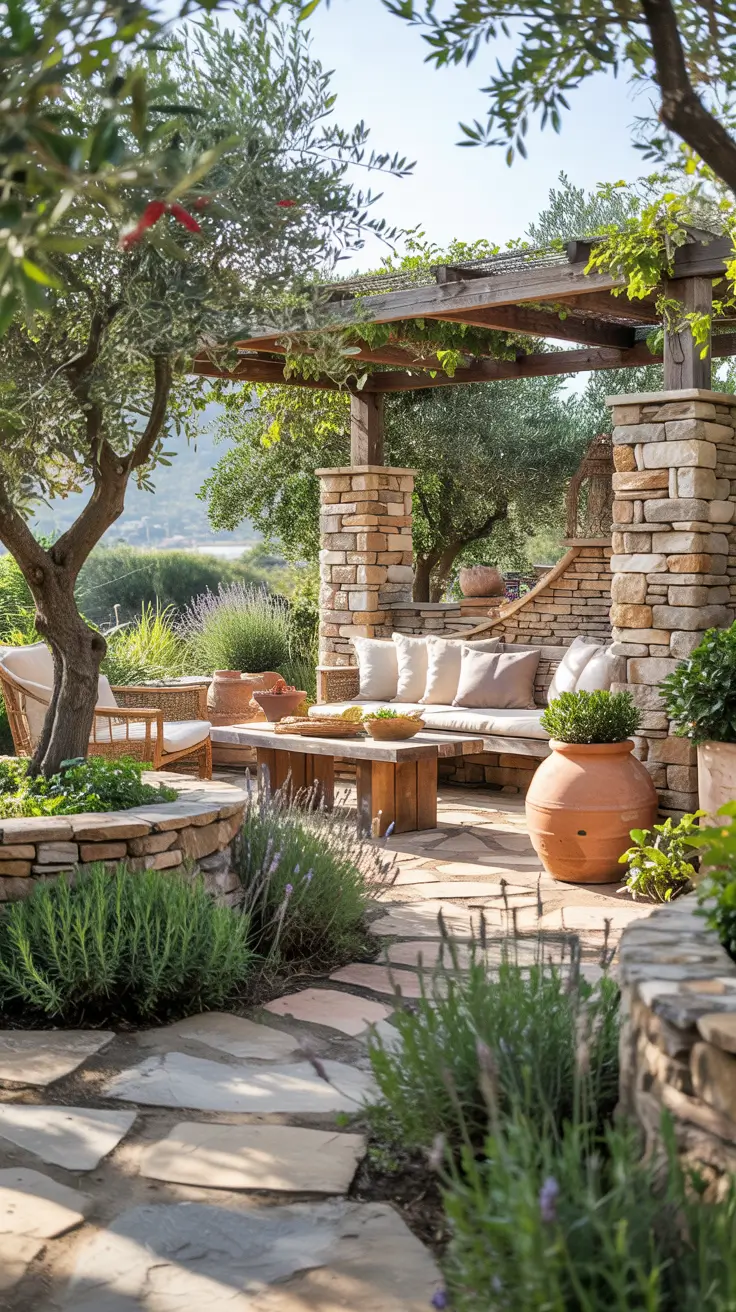
From my experience, balance is what truly makes this design work. A good mediterranean landscape should combine structured elements like stone walls or pathways with softer planting areas. Designers featured in publications such as Architectural Digest often emphasize this contrast because it prevents the garden from feeling overly formal.
To improve this section further, I would also include lighting strategies such as warm lantern style fixtures or ground lights along pathways. Lighting enhances the texture of stone and plants in the evening and makes the garden usable after sunset.
2. Mediterranean Style Garden Design – Creating a Relaxed Coastal Landscape at Home
When creating a mediterranean style garden design, I focus first on the feeling the space should evoke. The goal is to build a calm outdoor environment that mirrors the atmosphere of coastal villas. Natural stone paving, white plaster walls, and sun washed color palettes immediately create the impression of a mediterranean setting.
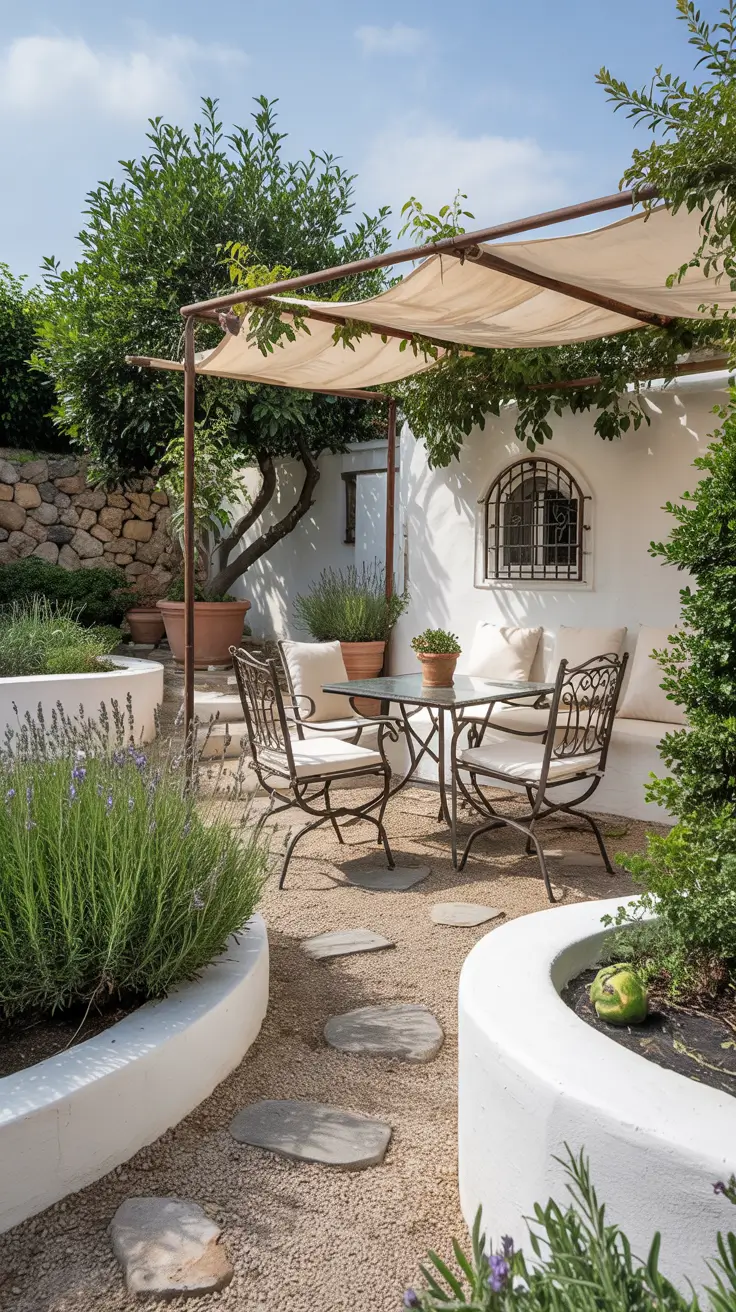
Furniture plays a crucial role in this type of landscape. I typically include wrought iron dining sets, wooden benches with linen cushions, and shaded seating under pergolas or fabric canopies. These elements support outdoor living while also reinforcing the rustic elegance associated with mediterranean style homes garden spaces.
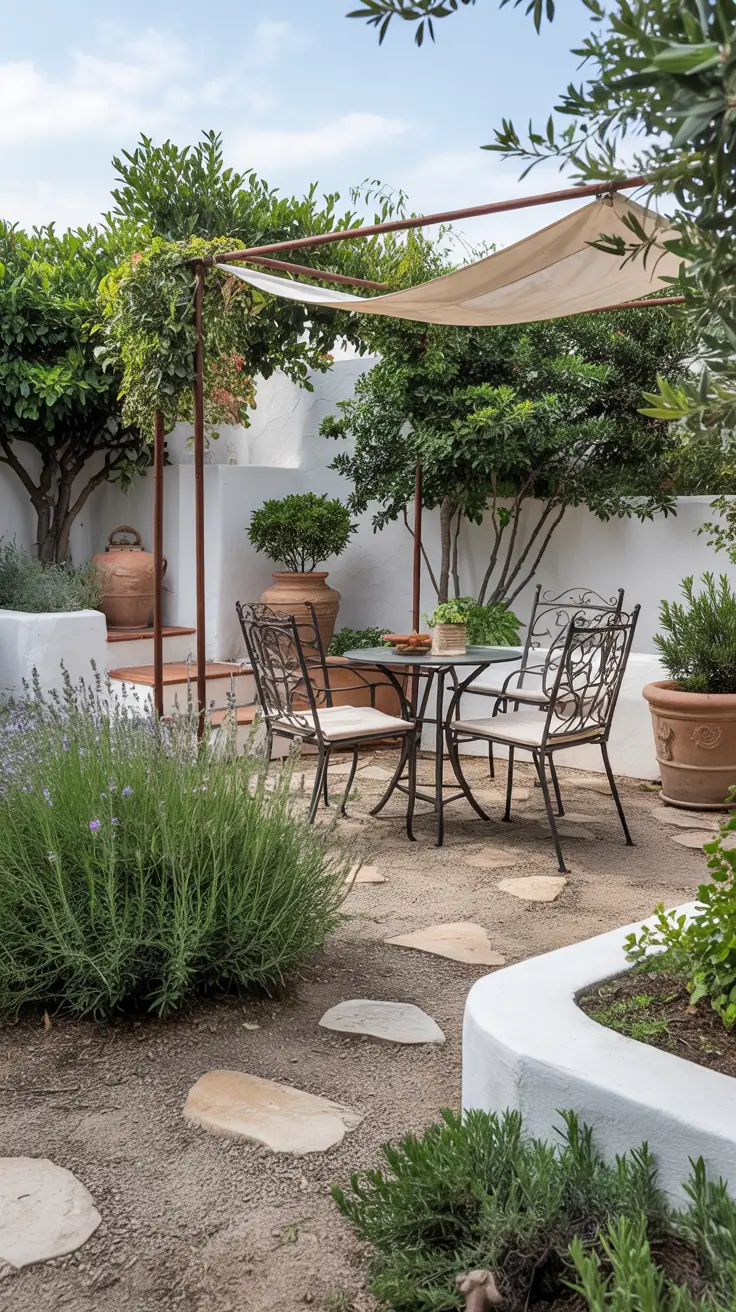
Personally, I have noticed that homeowners appreciate gardens that require less maintenance. Mediterranean planting schemes naturally support this idea. Plants such as olive trees, sage, and thyme thrive in warm conditions and provide texture, fragrance, and structure without excessive care.
One additional element that could enhance this design is the use of water features. A small stone fountain or ceramic basin can introduce subtle sound and movement while reinforcing the traditional character of mediterranean landscapes.
3. Mediterranean Style Homes Garden Ideas That Blend Architecture and Nature
When I work on mediterranean style homes garden projects, I treat the garden as an extension of the house rather than a separate area. Architectural details such as arches, textured stucco walls, and clay roof tiles naturally influence the landscape layout and help maintain visual harmony.
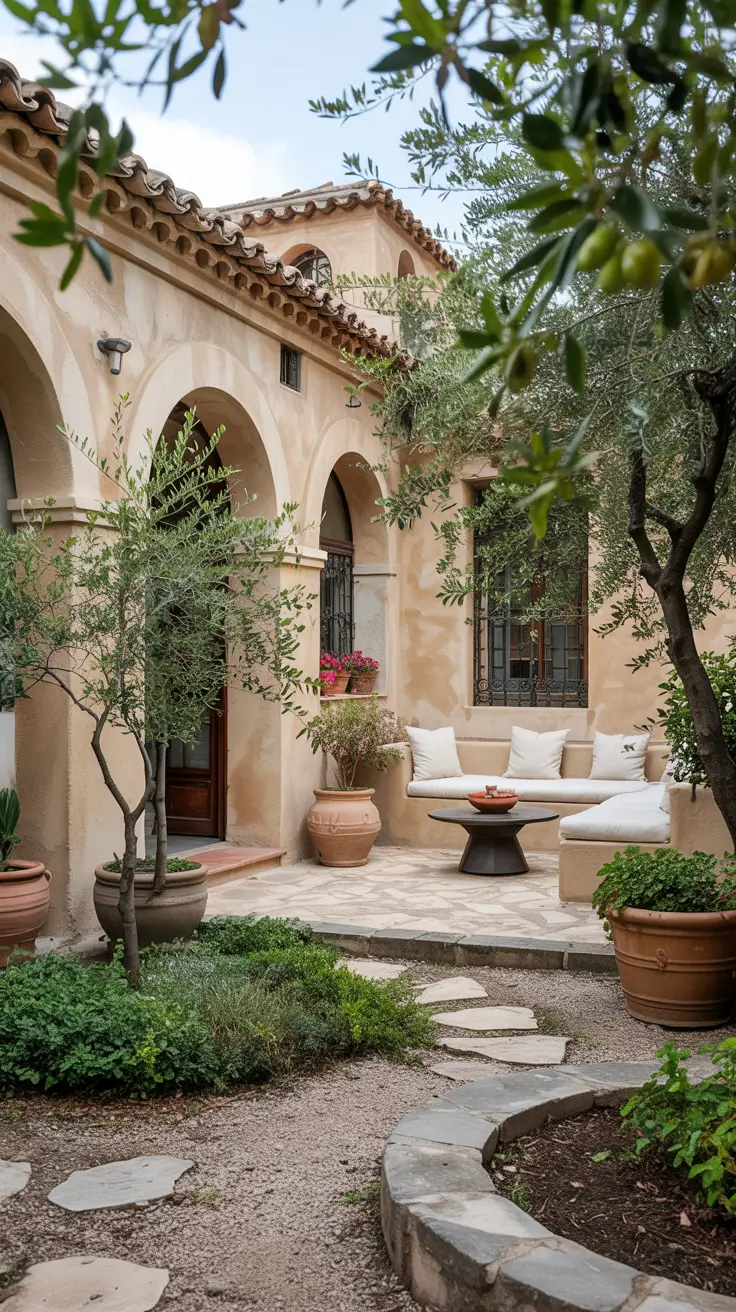
Stone terraces and transitional patios often serve as the bridge between interior and exterior spaces. I usually design pathways using gravel or irregular stone slabs that lead from the house into planted areas with olive trees, citrus trees, and aromatic herbs. These features create the feeling that the architecture and the landscape were designed together.
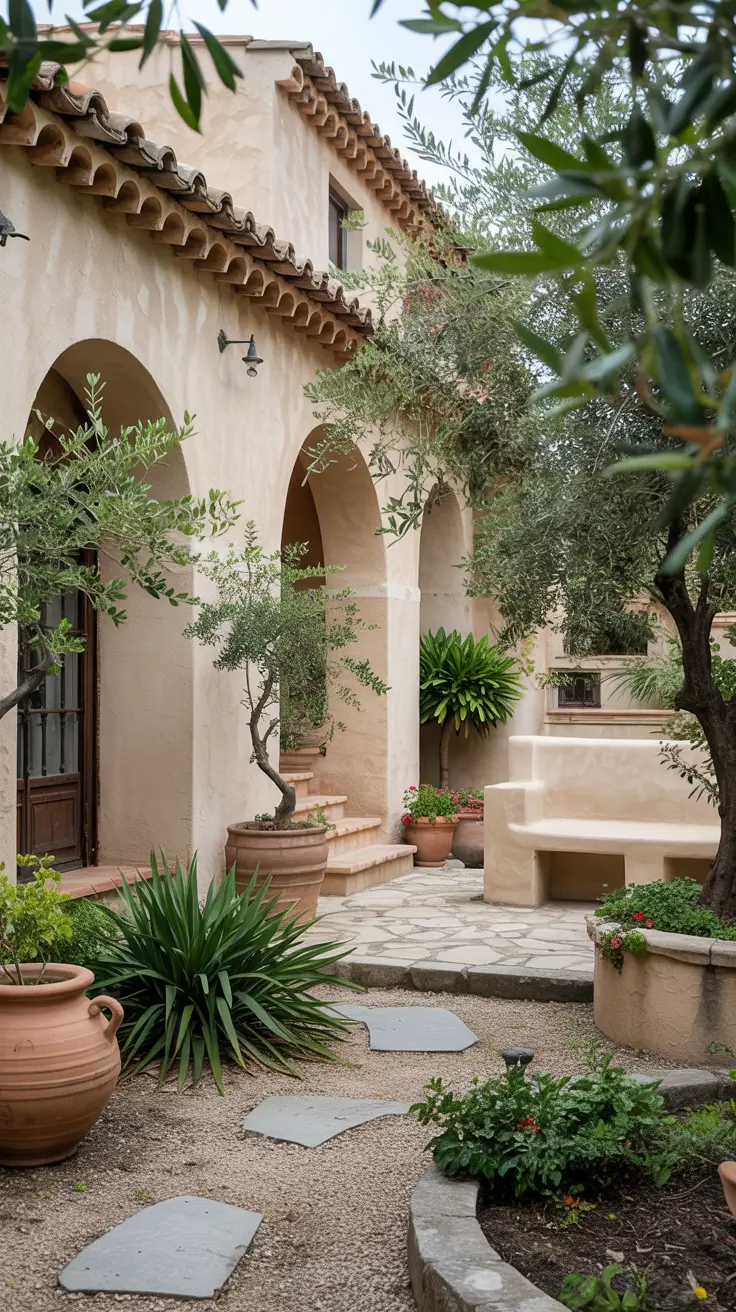
In my opinion, the most successful mediterranean gardens are those that feel authentic rather than overly decorative. Designers from publications like Elle Decor frequently recommend using fewer but stronger materials, such as natural stone and weathered wood, instead of adding too many ornamental elements.
What could strengthen this concept further is incorporating shaded transitions like vine covered pergolas or archways. These structures soften the architectural lines and create gradual movement between indoor and outdoor areas.
4. How to Design a Garden in Mediterranean Style With Natural Materials and Warm Colors
Designing a garden in mediterranean style begins with the careful selection of materials. I always prioritize natural finishes that age beautifully over time. Terracotta tiles, rough limestone, wooden beams, and handmade ceramic containers all contribute to the warm and relaxed atmosphere associated with mediterranean design.
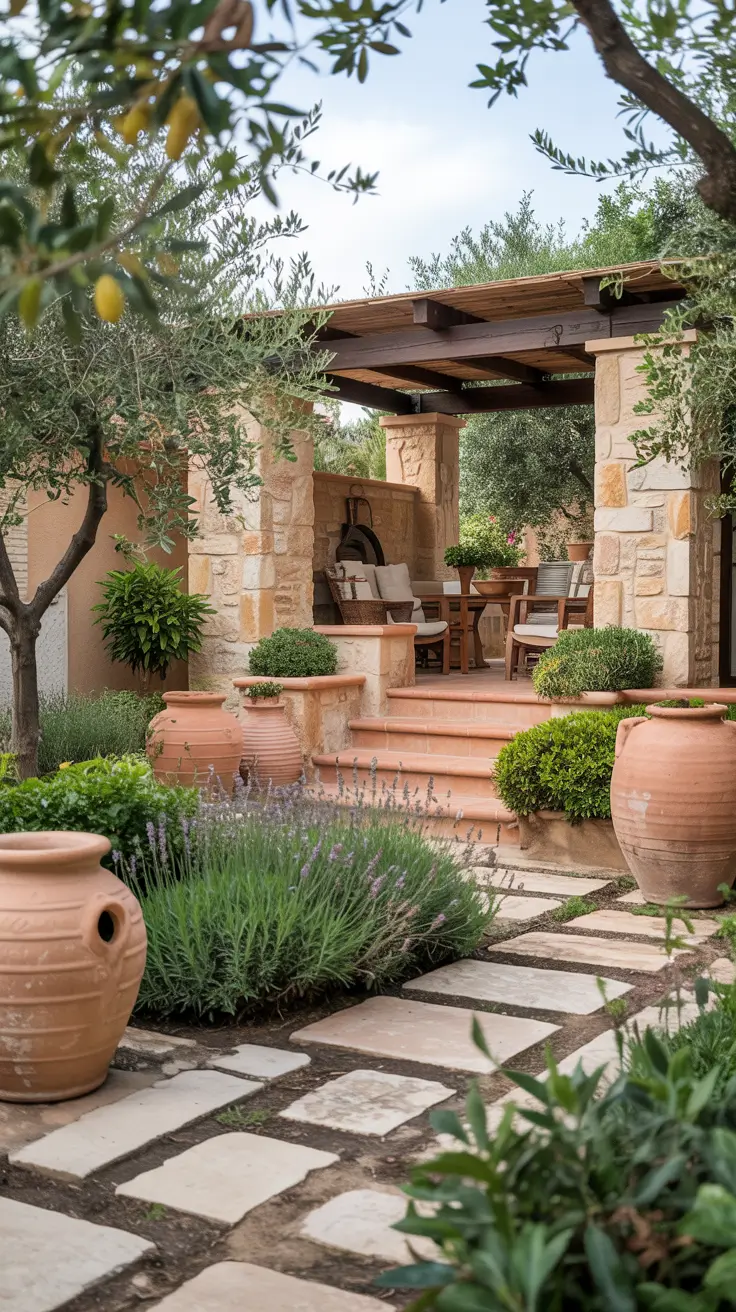
Color also plays an important role. Earthy tones such as sand, clay, warm white, and muted ochre form the foundation of the palette. These shades reflect sunlight beautifully and help the garden feel bright and welcoming. I usually complement them with greenery from olive trees, cypress, and lavender to create contrast.
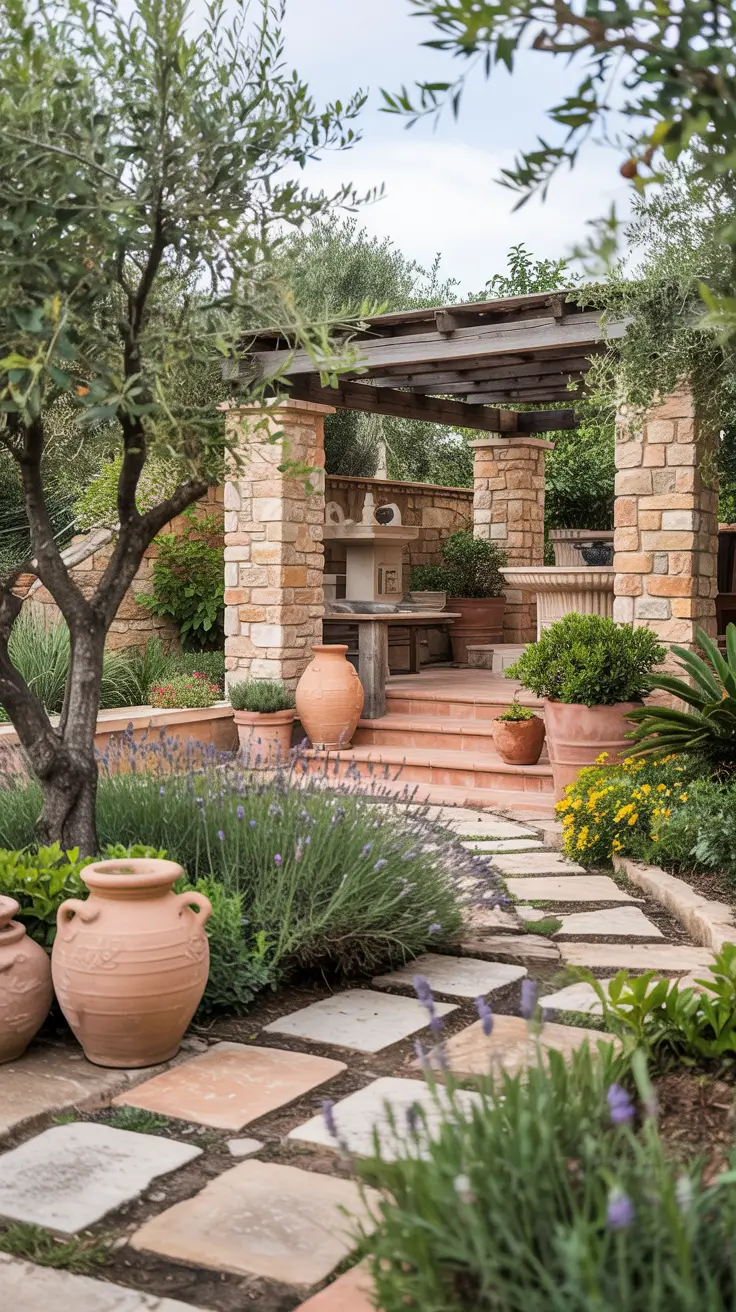
Through experience, I have learned that texture matters as much as color. Combining smooth plaster walls with rough stone surfaces and soft plant foliage creates a layered visual experience. This approach prevents the landscape from appearing flat or overly minimal.
An improvement to this section could involve explaining how to integrate shade elements such as fabric sails or pergolas. Mediterranean climates rely heavily on shaded outdoor zones to make gardens comfortable during the hottest hours of the day.
5. Tuscan Style Patio Garden Design for an Authentic Mediterranean Outdoor Living Space
A mediterranean garden design tuscan style patio is often the heart of outdoor living. When I plan these spaces, I focus on creating an area that naturally encourages gathering, dining, and relaxation. Large stone pavers, rustic wooden tables, and vine covered pergolas instantly give the patio a Tuscan character.
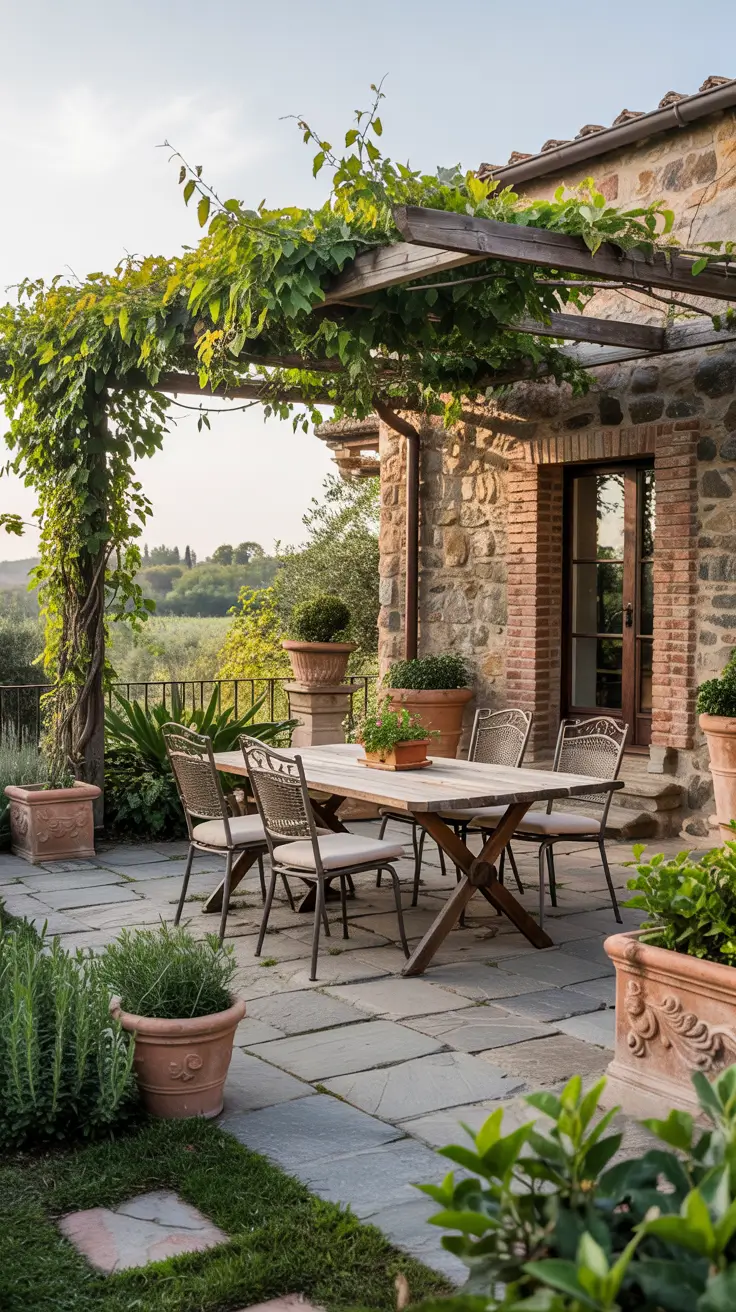
Furniture should feel sturdy and timeless. I typically include heavy wooden dining tables, wrought iron chairs with neutral cushions, and ceramic planters filled with herbs or citrus trees. These pieces create an outdoor living area that feels authentic rather than overly modern.
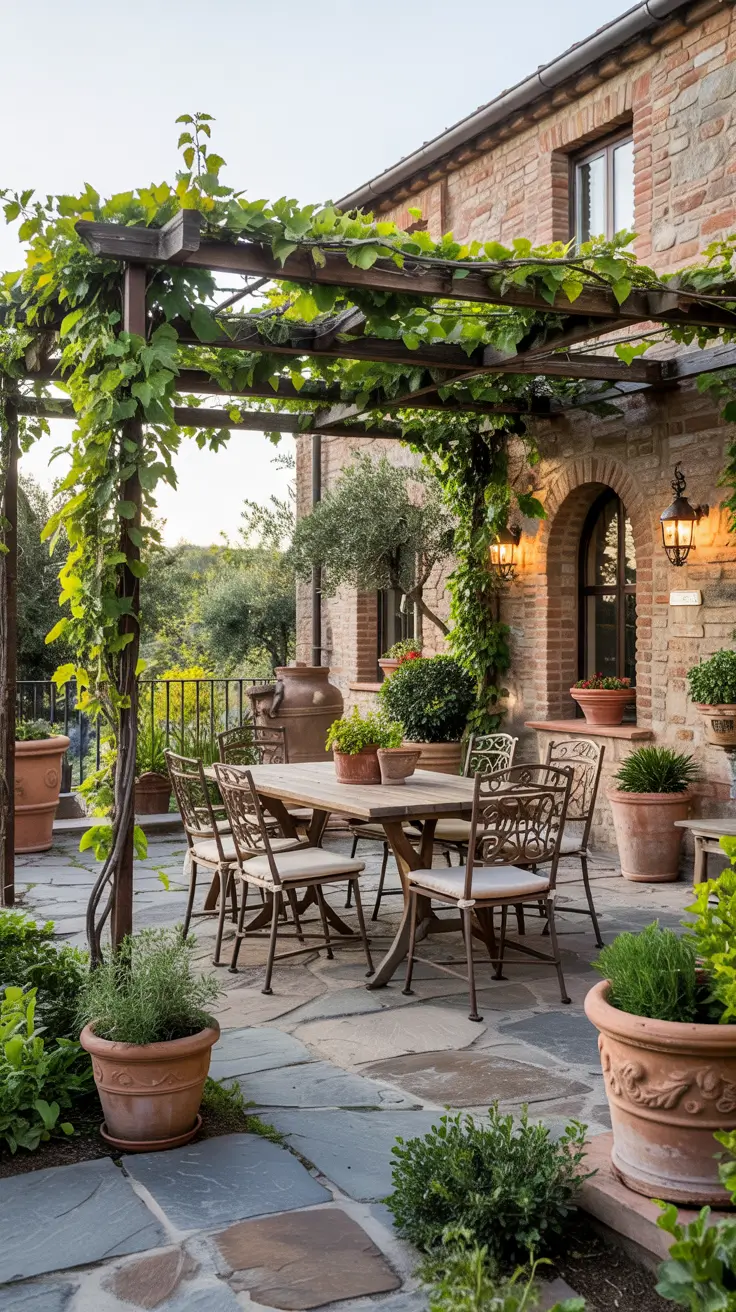
From my perspective, the success of a Tuscan patio comes from how comfortable it feels. Outdoor kitchens, wood fired pizza ovens, and long communal tables encourage people to spend more time outside. Many landscape designers featured in Gardenista emphasize that Mediterranean patios should support daily living, not just occasional entertaining.
To make the patio even more practical, I would also include built in seating or low stone walls that double as benches. This solution increases seating capacity without overcrowding the space with furniture.
6. Mediterranean Garden Design Tuscan Style Outdoor Living Areas for Modern Homes
Modern homes can easily incorporate mediterranean garden design tuscan style outdoor living spaces by focusing on natural materials and simple geometry. I often design rectangular terraces with stone flooring and minimalist pergolas that provide shade while maintaining a clean architectural look.
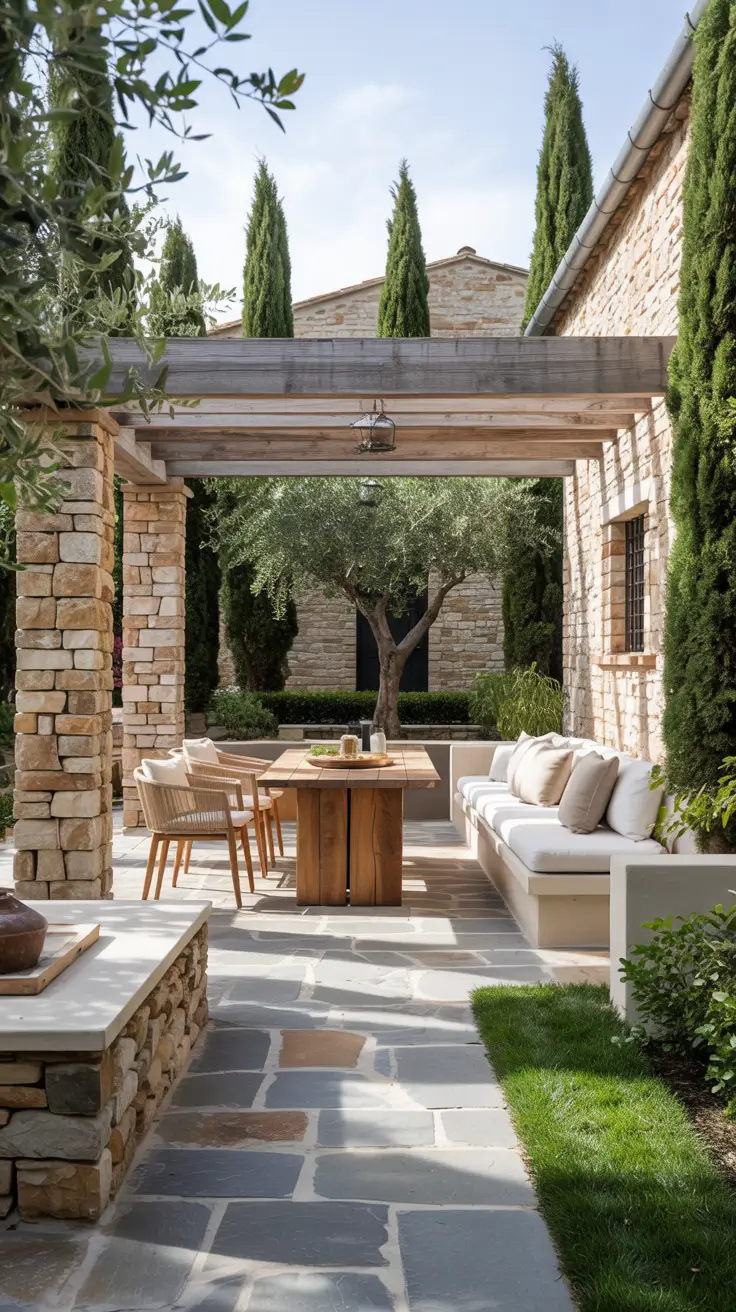
Furniture in these spaces usually combines rustic and contemporary elements. For example, a solid wood dining table can be paired with streamlined outdoor chairs, while neutral cushions and linen fabrics keep the palette calm and natural. These details help the garden feel modern without losing its Mediterranean identity.
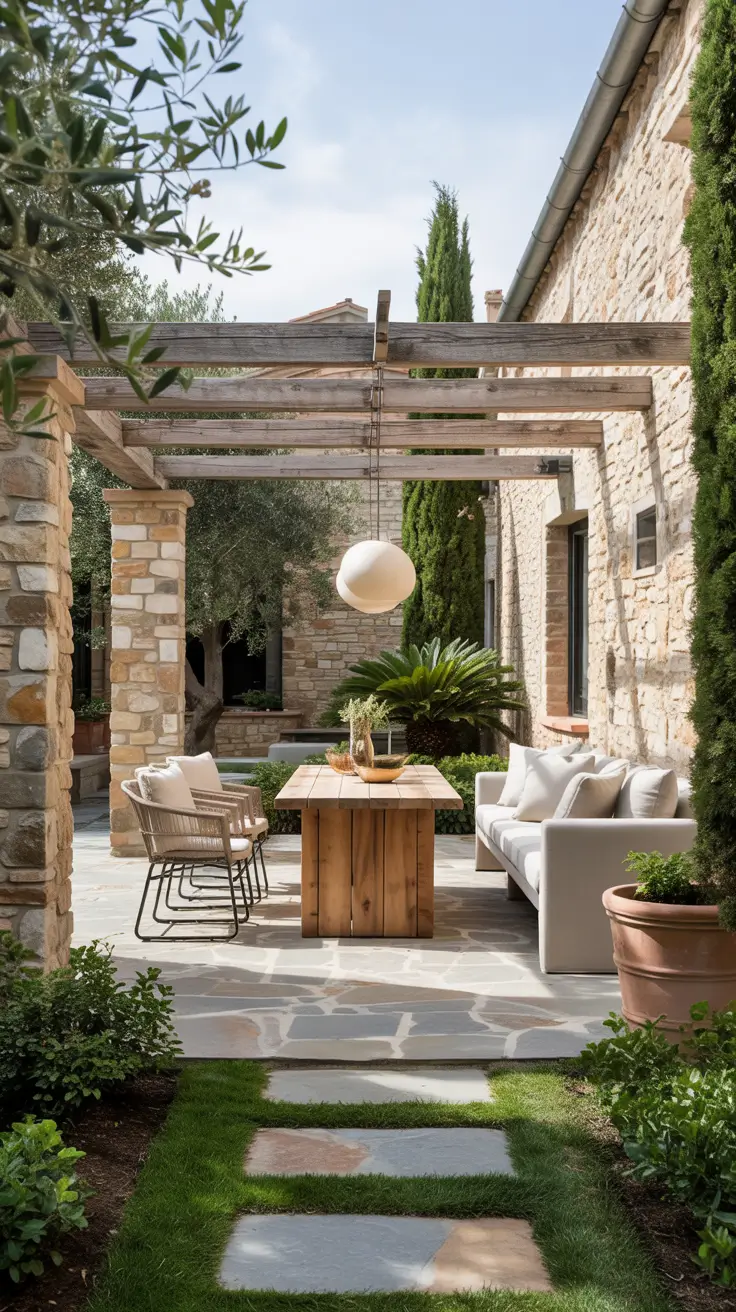
In my own projects, I prioritize multifunctional spaces. Outdoor lounges, dining areas, and small garden pathways can exist within the same courtyard if the layout is carefully planned. This approach is especially useful for urban homes where outdoor space is limited.
One element that could strengthen these outdoor living zones is layered planting. Tall cypress trees, medium shrubs, and ground level herbs create visual depth while reinforcing the Tuscan atmosphere.
7. Mediterranean Style Garden Shed Ideas That Complement Rustic Landscapes
A mediterranean style garden shed should feel like a natural extension of the landscape rather than a purely functional structure. I usually design these sheds with textured stucco walls, clay tile roofs, and wooden doors that resemble small Spanish colonial buildings.
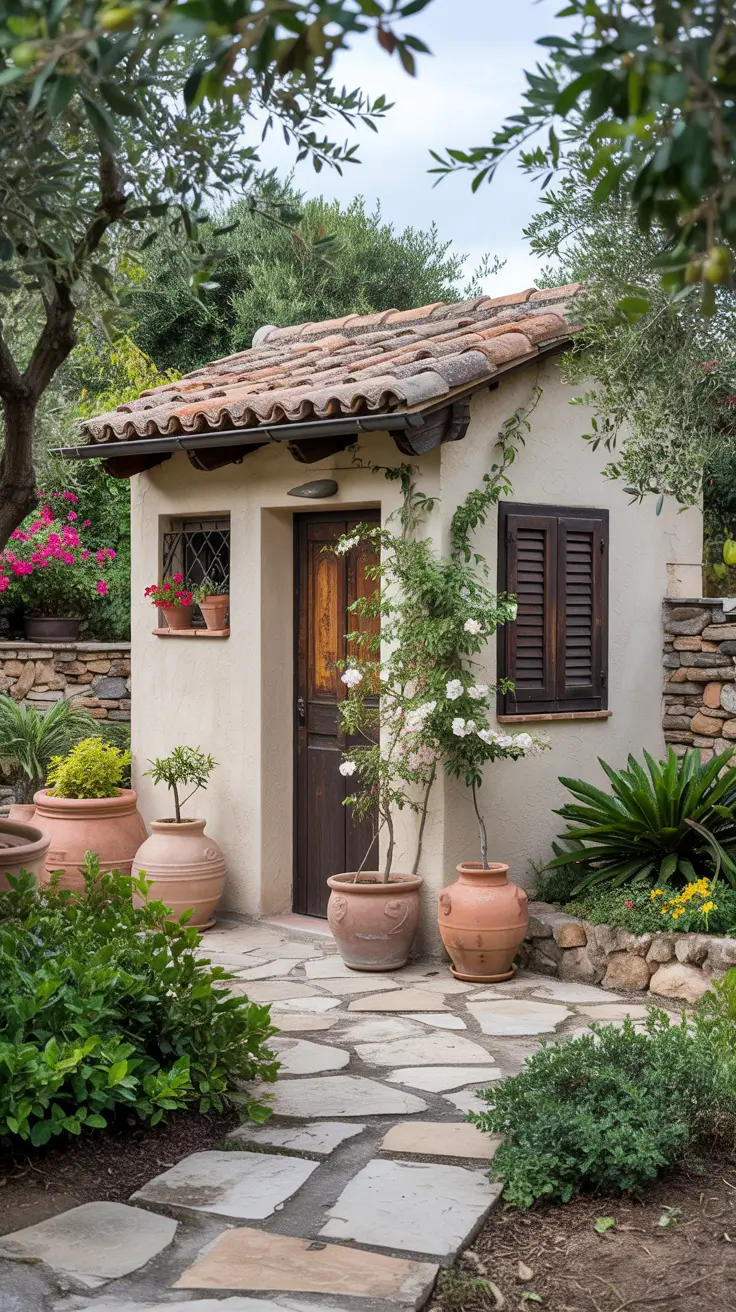
Practical details are important. Storage for garden tools, terracotta pots, and irrigation equipment should be organized inside, while the exterior can feature climbing plants such as jasmine or bougainvillea. These plants soften the structure and help it blend into the surrounding garden.
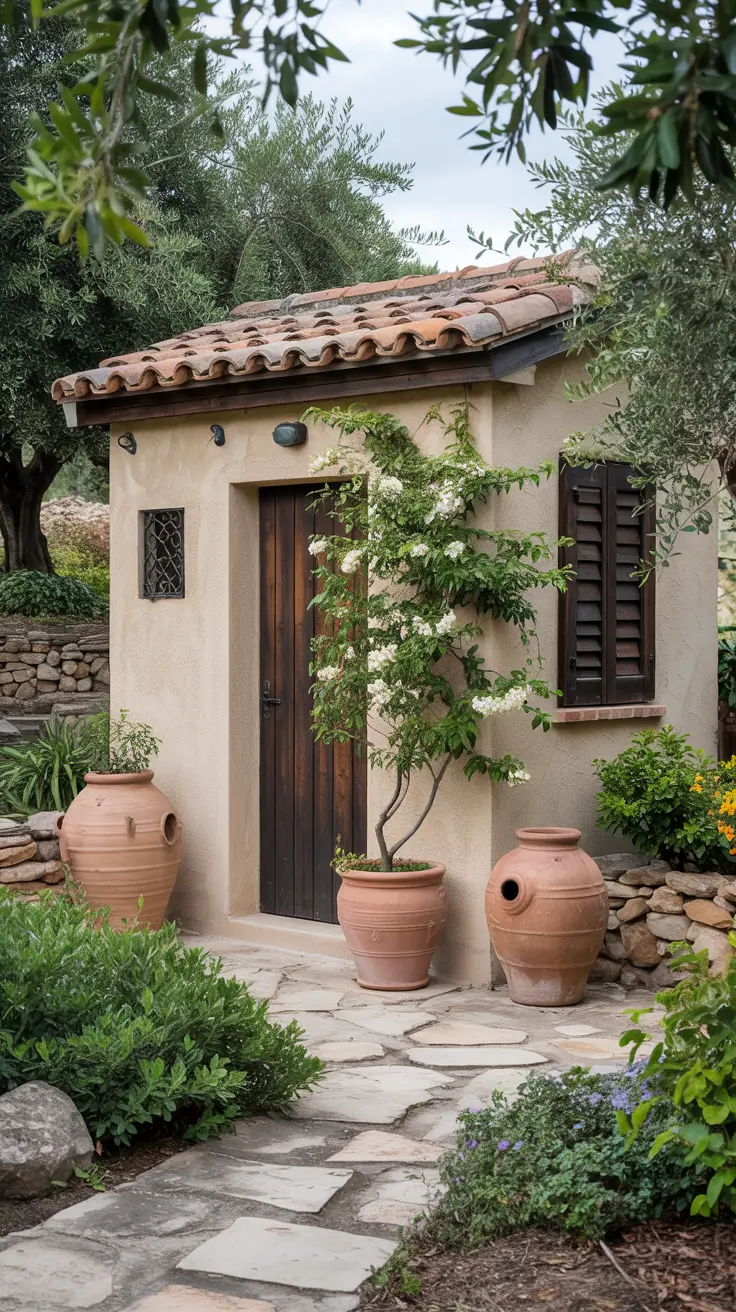
In my opinion, garden sheds can also become decorative focal points. A small window with wooden shutters, rustic lantern lighting, and nearby potted herbs can transform a simple storage building into a charming garden feature.
To make the shed more functional, I would recommend including a small work counter or potting station. This addition allows gardeners to repot plants and prepare seedlings directly within the shed area.
8. Mediterranean Style Roof Garden Concepts for Urban Outdoor Living
When I design a mediterranean style roof garden, I begin by transforming a simple rooftop into a functional outdoor retreat. Urban environments often lack natural greenery, so a roof garden designed with mediterranean inspiration creates a calm and sun filled space above the city. The combination of warm stone flooring, terracotta containers, and drought tolerant plants instantly recreates the relaxed character of coastal landscapes.
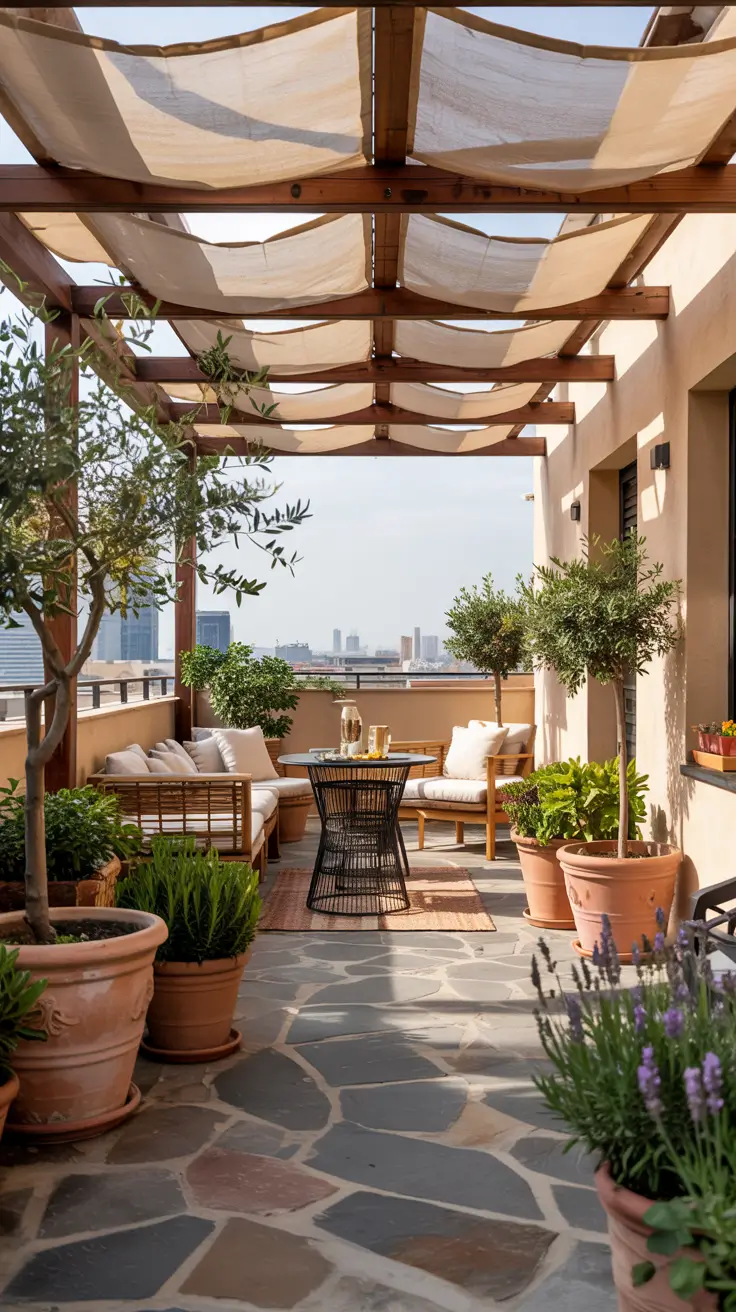
In practice, I structure the roof layout carefully to balance planting zones and outdoor living areas. Large ceramic pots with olive trees or dwarf citrus trees become focal points, while lavender, rosemary, and ornamental grasses fill smaller containers around the seating space. I often include pergolas or wooden shade frames with light linen fabric to soften sunlight and make the terrace comfortable throughout the day.
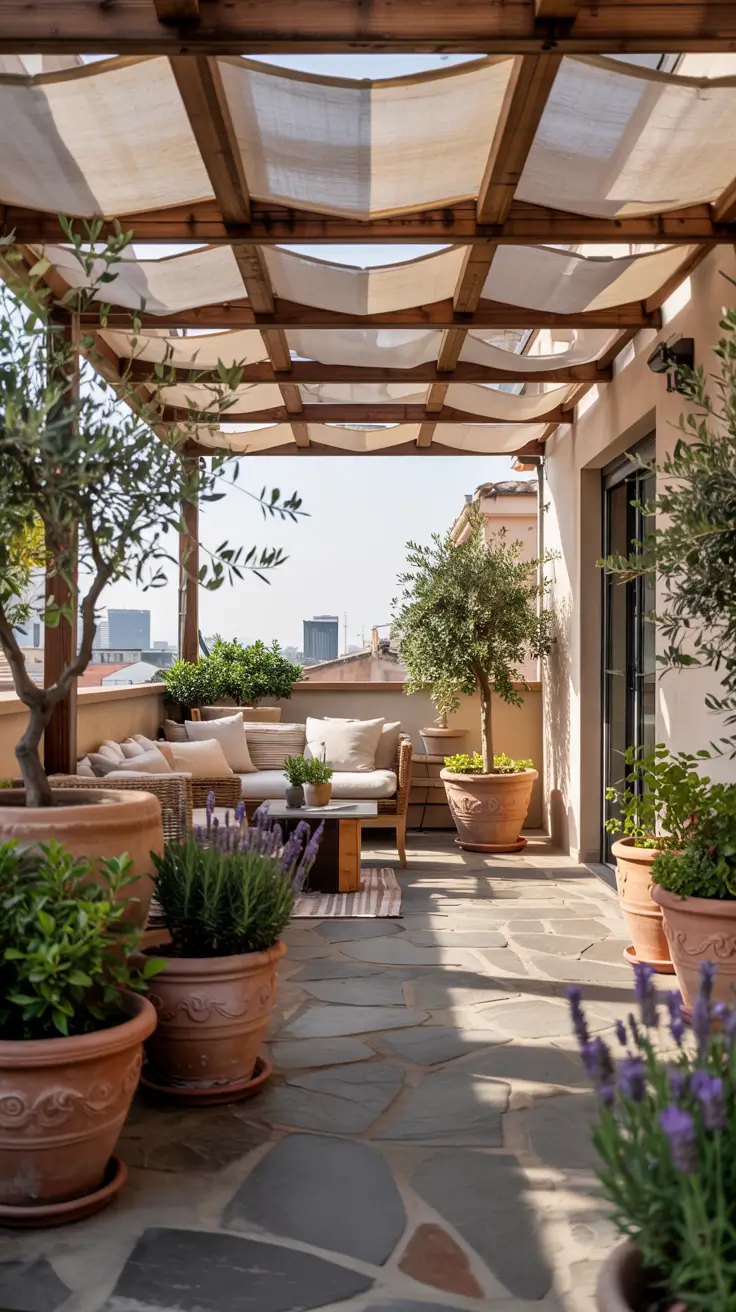
From my experience, rooftop gardens benefit greatly from layered planting. Even in limited space, combining tall plants, medium shrubs, and low herbs helps the garden feel more natural and visually rich. Many landscape designers featured in international design magazines emphasize this principle because vertical planting increases both privacy and visual depth.
To improve this type of roof garden even further, I would recommend integrating subtle lighting and built in seating. Low wall benches or integrated planters can maximize space efficiency while maintaining the clean mediterranean style terrace garden atmosphere.
9. Mediterranean Garden Design Tuscan Style Backyards With Olive Trees and Stone Paths
A mediterranean garden design tuscan style backyard typically focuses on natural simplicity and timeless materials. When I approach this design, I start with a layout built around gravel pathways and irregular stone paving that guide movement through the landscape. Olive trees are often the central element because they provide structure, shade, and an unmistakable Mediterranean character.
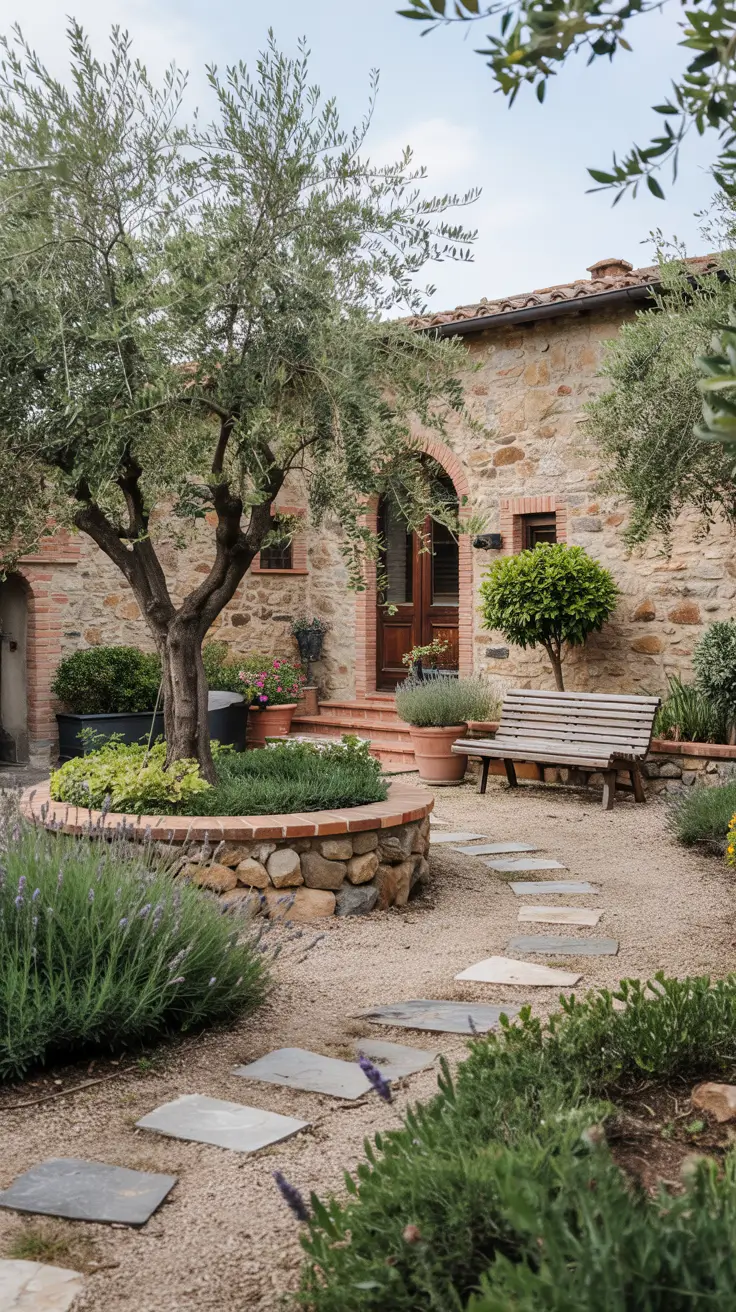
The surrounding planting scheme should support the rustic atmosphere. I usually combine lavender borders, rosemary shrubs, and cypress trees to frame the garden paths. Stone benches or wooden seating areas are positioned along the walkways so that the backyard encourages slow movement and quiet moments outdoors.
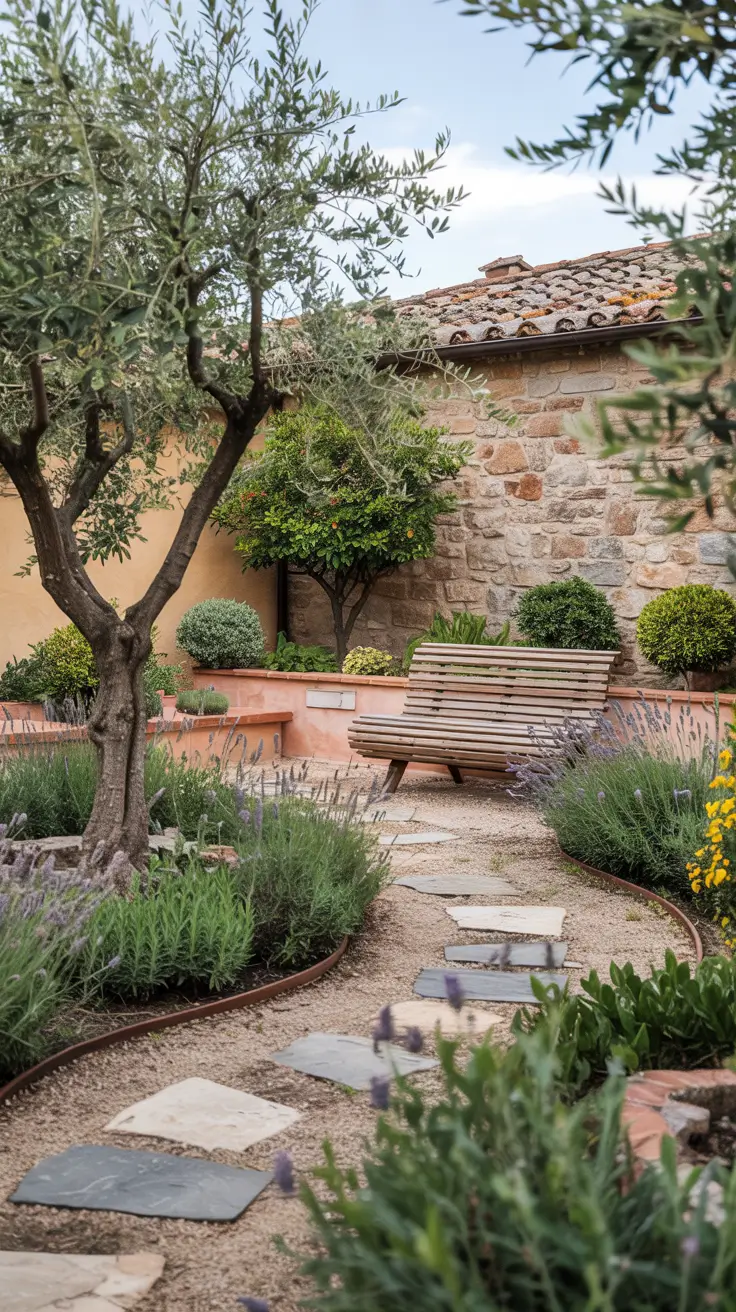
Personally, I find that the charm of Tuscan gardens lies in their subtle imperfection. The pathways should not feel overly polished. Slight variations in stone shapes or gravel textures actually enhance the authenticity of the landscape. Publications such as Garden Design Magazine often highlight that natural irregularity makes Mediterranean landscapes feel more organic.
One additional feature that could enhance this backyard concept is a small courtyard fountain or stone basin. Water elements provide sound, movement, and a focal point that strengthens the tranquil Tuscan atmosphere.
10. Mediterranean Style Terrace Garden Designs for Beautiful Elevated Outdoor Spaces
Designing a mediterranean style terrace garden allows elevated outdoor spaces to feel like private coastal courtyards. I usually begin by defining the terrace with warm materials such as terracotta tiles, limestone paving, or natural stone slabs. These materials reflect sunlight and contribute to the relaxed mediterranean garden styles aesthetic.
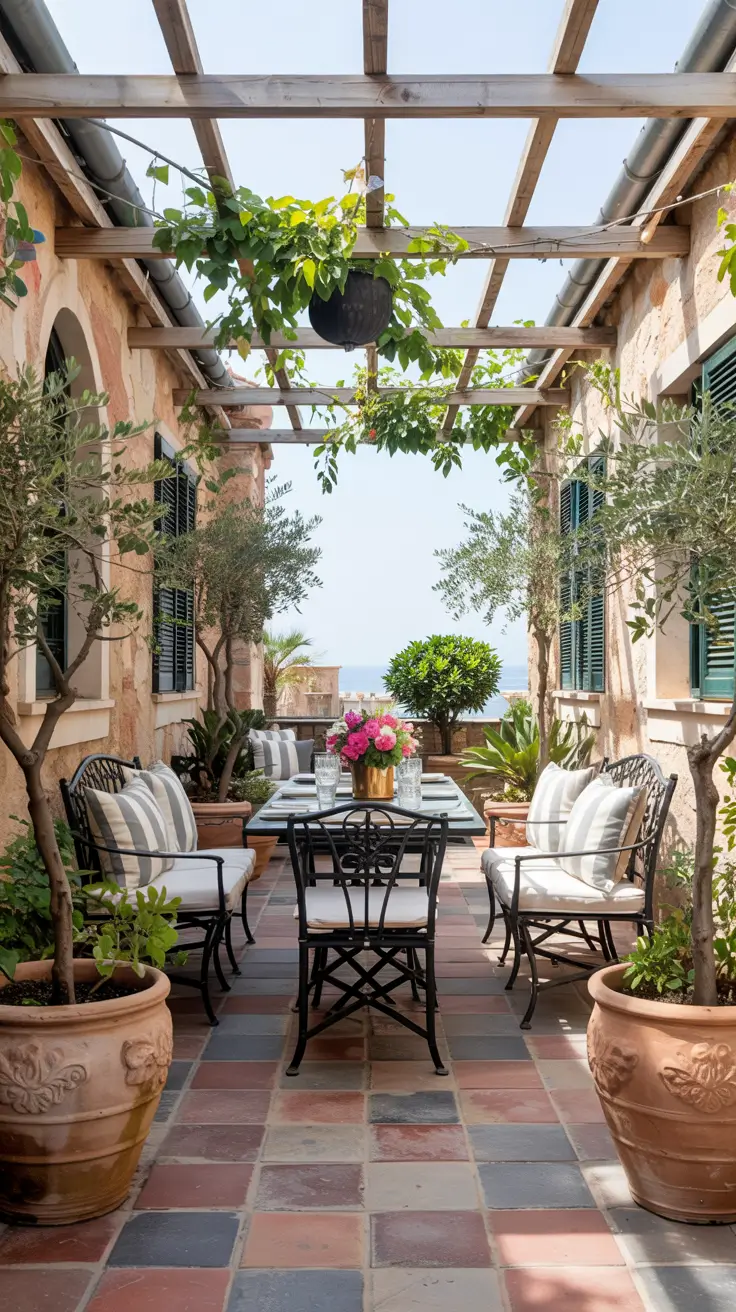
Furniture selection should emphasize comfort and durability. Wrought iron seating, wooden lounge chairs, and weather resistant cushions create a welcoming outdoor living environment. I also like to incorporate large planters filled with olive trees, citrus plants, or climbing vines that soften architectural edges.
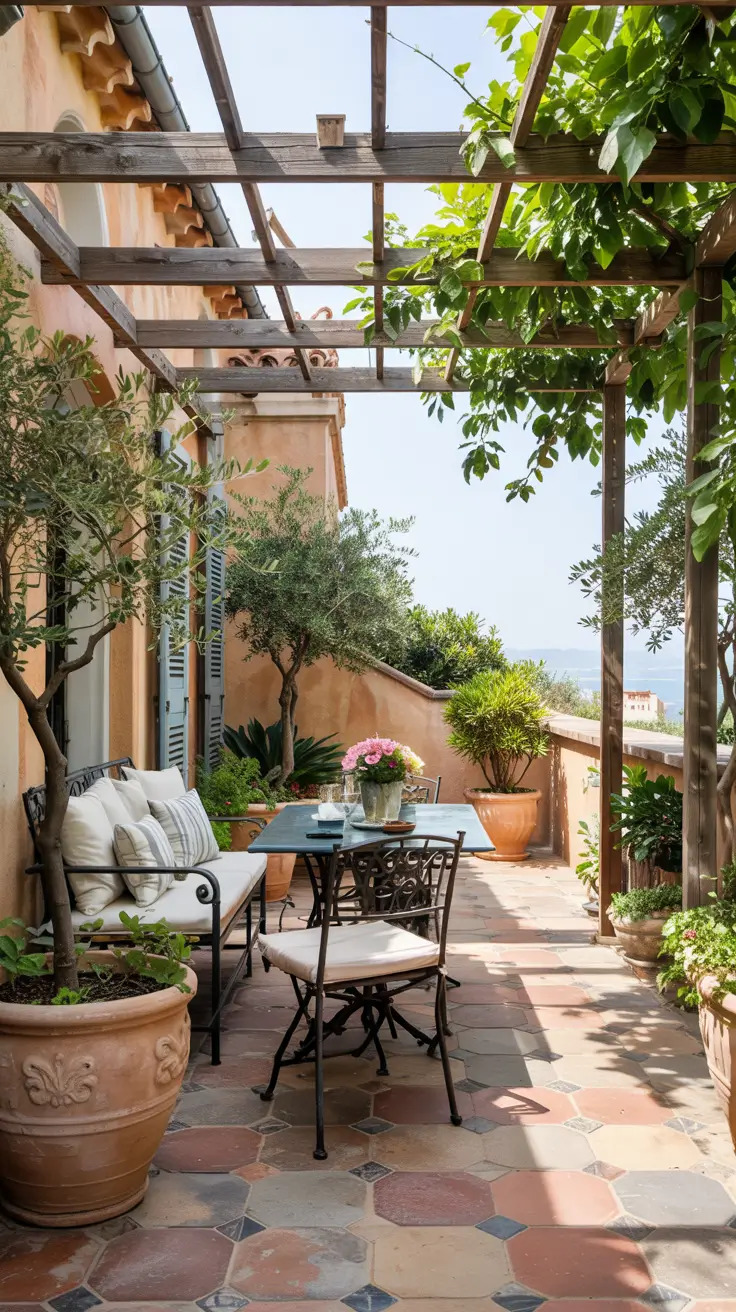
From my professional perspective, terraces become far more enjoyable when they include multiple zones. A dining table, a shaded lounge area, and small planting pockets can coexist in a well organized layout. Many designers recommend creating micro spaces within terraces because it increases usability throughout the day.
To make this terrace garden even more functional, I would recommend adding textile elements such as outdoor rugs and light fabric shades. These details enhance the mediterranean style terrace garden atmosphere while improving comfort during hot summer afternoons.
11. Small Garden Mediterranean Style Ideas That Maximize Space and Charm
Creating a small garden mediterranean style layout requires careful planning but can produce impressive results. Even compact outdoor spaces can reflect the warmth of mediterranean landscapes when materials and plants are selected thoughtfully. I typically begin with a clear structure using gravel ground cover, stone edging, and a simple pathway that organizes the space.
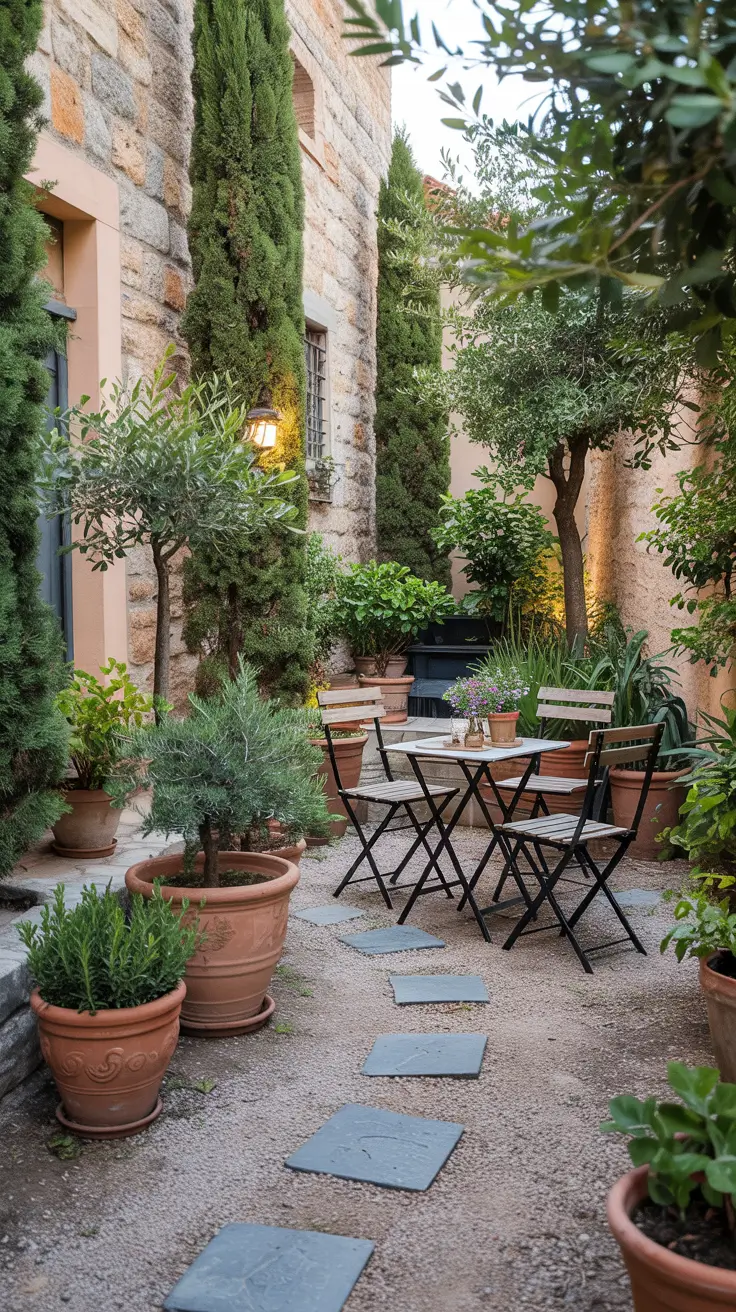
Vertical elements become especially important in smaller gardens. Wall mounted planters, climbing vines, and narrow cypress trees help create height without occupying too much floor space. Terracotta pots filled with herbs or flowering plants bring texture and color while maintaining the rustic mediterranean style garden design aesthetic.
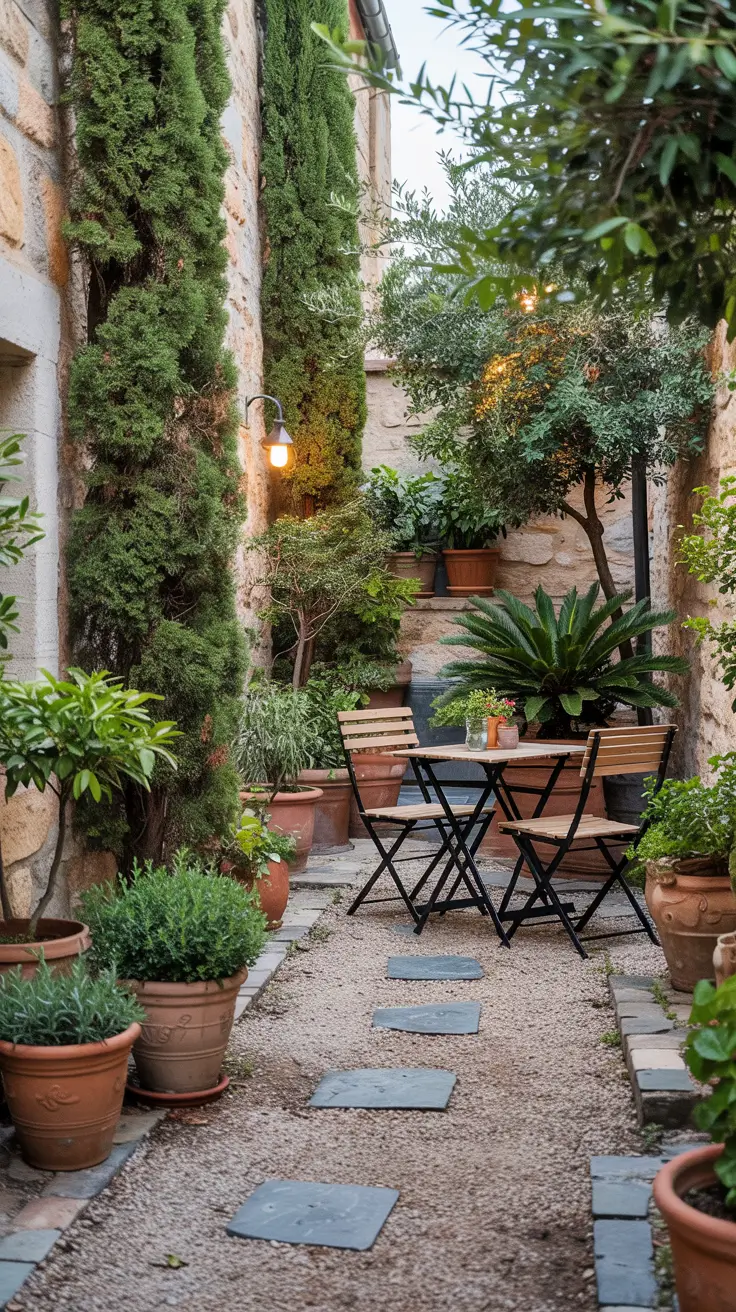
In my experience, small mediterranean gardens benefit from a limited but consistent palette. Using the same materials and plant types throughout the space prevents visual clutter and makes the garden appear larger. Designers frequently recommend repeating elements such as terracotta containers or stone textures to create visual unity.
To improve this design further, I would add a compact seating area such as a built in bench or small bistro table. Even a very small seating zone allows the garden to function as a true outdoor living space rather than only a decorative feature.
12. Mediterranean Landscape Design With Tuscan Inspiration for Warm and Inviting Gardens
Mediterranean landscape design with strong Design tuscan inspiration focuses on warmth, texture, and natural materials. When I develop these gardens, I usually begin with a simple layout that highlights pathways, gathering spaces, and planting areas that feel relaxed rather than overly formal.
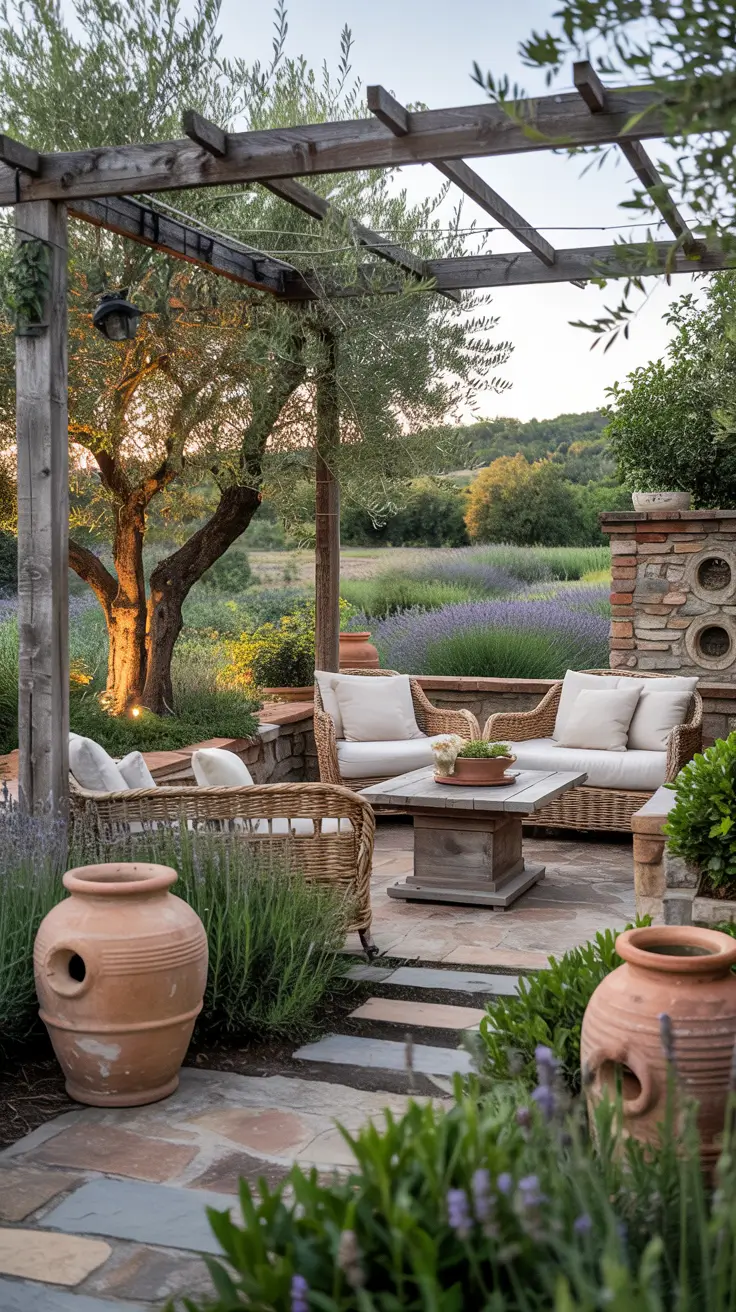
Stone terraces, rustic wooden pergolas, and gravel courtyards often define the main outdoor living zones. I prefer using olive trees, cypress, lavender, and sage to reinforce the Tuscan character while also ensuring the planting scheme remains drought tolerant and easy to maintain.
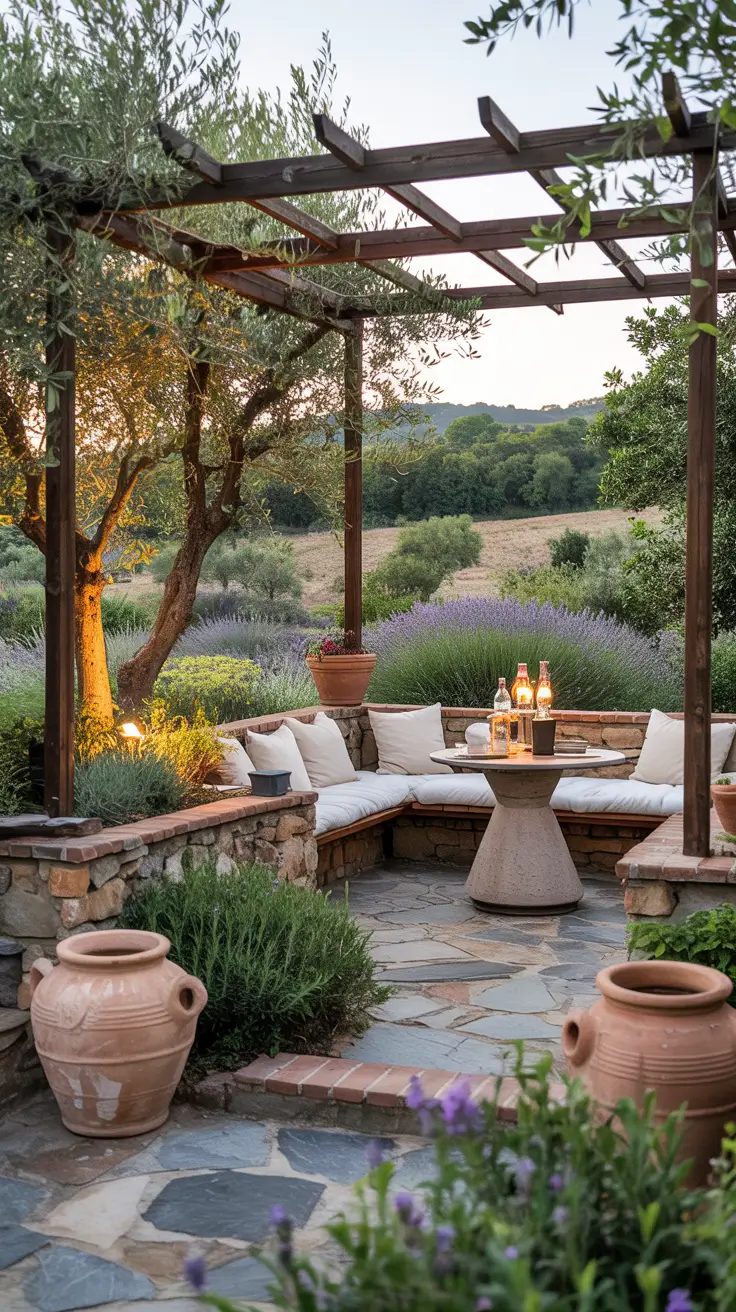
From my perspective, the atmosphere of a Tuscan garden comes from the balance between architecture and landscape. Garden walls, arches, and rustic gates create structure, while soft planting brings movement and fragrance. Well known design publications frequently highlight how this contrast creates inviting outdoor environments.
To enrich this concept even further, I would recommend incorporating decorative pottery and sculptural elements. Handmade ceramic vessels or weathered stone pieces can serve as focal points that highlight the artistic heritage of Mediterranean gardens.
13. Mediterranean Garden Ideas in the UK – Plants, Layouts, and Climate Tips
Many homeowners in the Uk believe that mediterranean garden styles cannot thrive in cooler climates, but in my experience they can work very well with thoughtful plant selection. The key is adapting the mediterranean garden style landscape concept to local weather conditions while maintaining its visual identity.
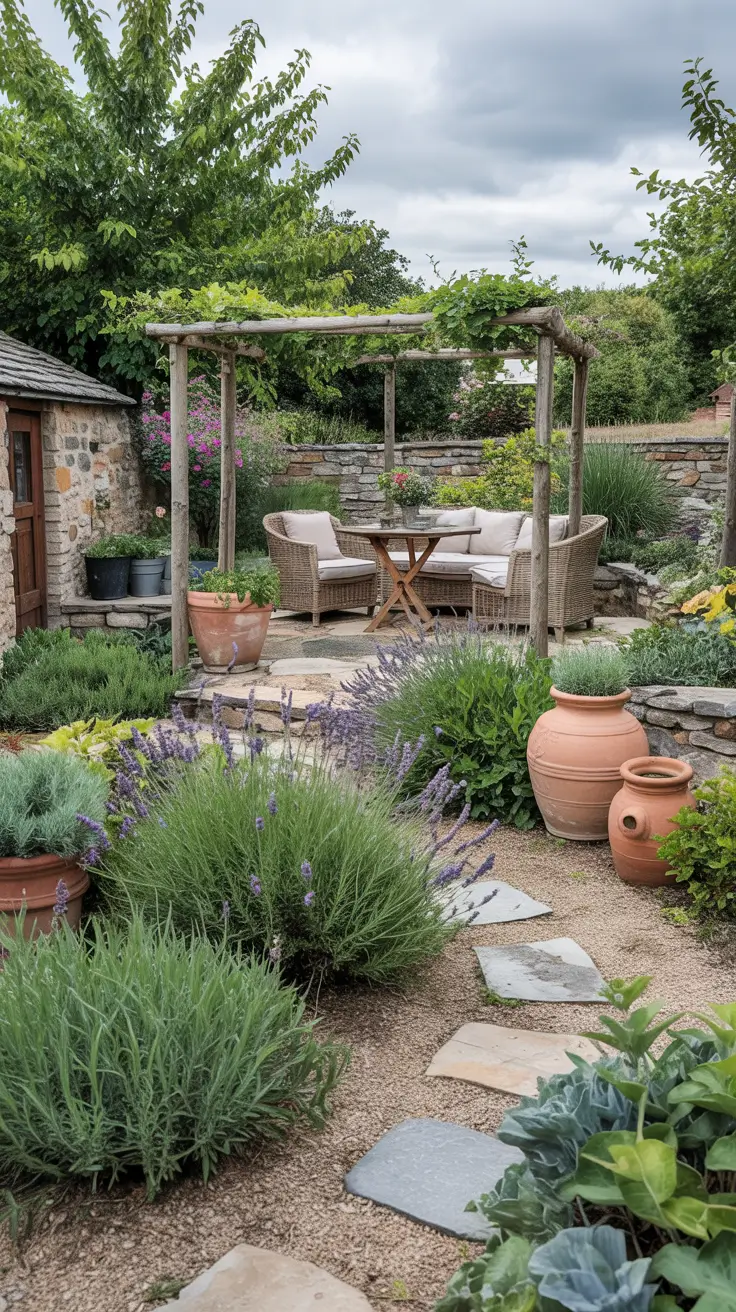
I usually recommend hardy plants that resemble traditional Mediterranean species. Lavender, sage, thyme, ornamental grasses, and hardy olive varieties can tolerate cooler temperatures while still providing the same visual texture. Gravel ground cover and stone paving also help recreate the authentic Mediterranean atmosphere.
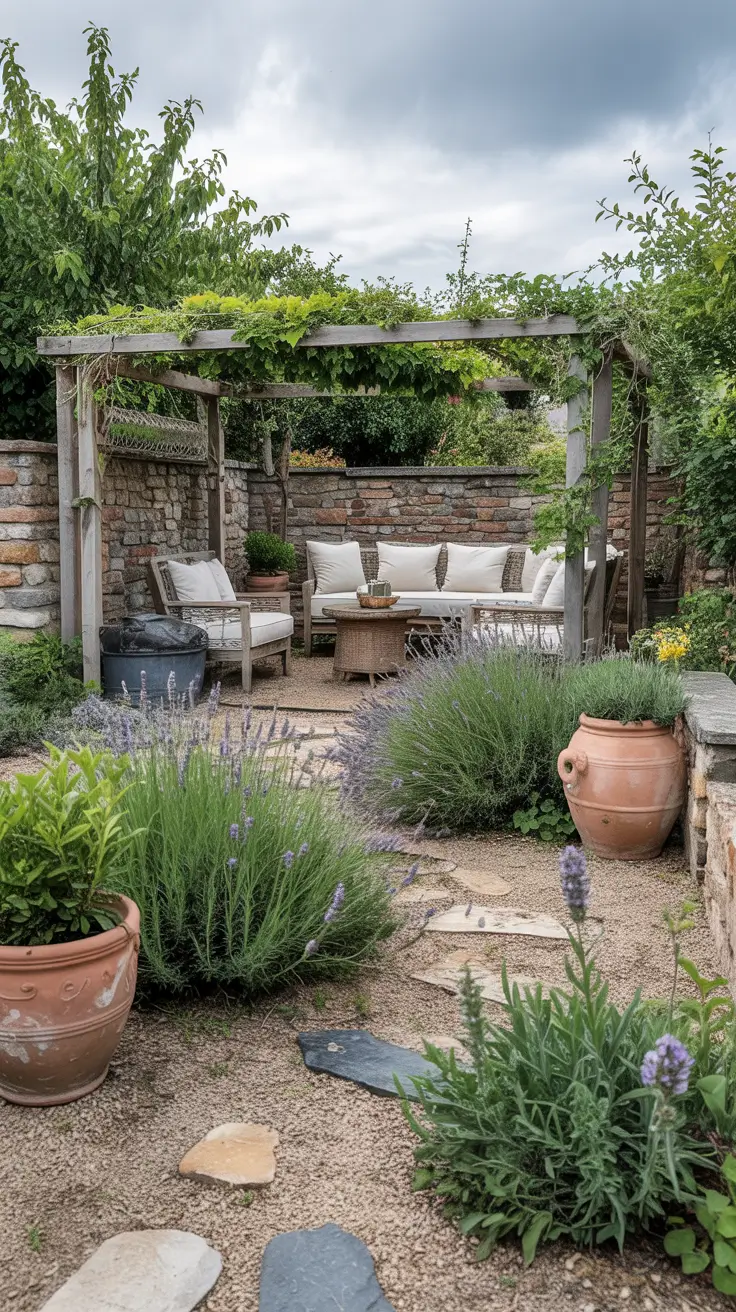
Personally, I find that sheltered courtyards and south facing gardens perform best in the UK climate. Warm walls and protected spaces help plants retain heat and reduce exposure to strong winds. Landscape designers often emphasize microclimates because they significantly influence plant survival and growth.
One improvement that could strengthen these gardens is the inclusion of pergolas or covered seating areas. These structures provide protection from rain while maintaining the relaxed mediterranean outdoor living atmosphere.
14. Mediterranean Garden Style Landscape Ideas Inspired by Spanish Colonial Outdoor Living
Spanish colonial landscapes represent one of the most recognizable interpretations of mediterranean garden styles. When I design gardens inspired by this tradition, I focus on enclosed courtyards, tiled patios, and shaded arcades that create intimate outdoor rooms.
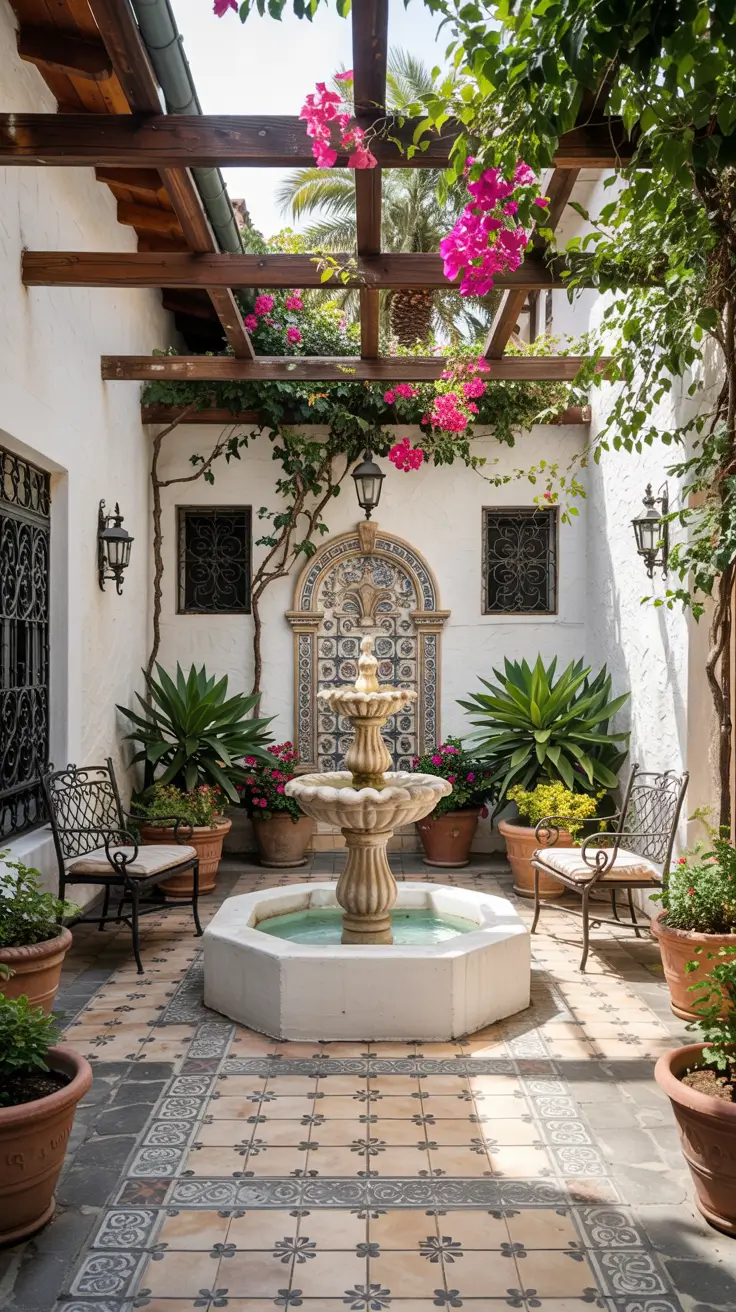
Materials play a defining role in this style. Decorative ceramic tiles, stucco walls, wrought iron railings, and carved wooden doors all contribute to the visual richness of the landscape. Courtyards often include a central fountain or water basin surrounded by lush planting and shaded seating areas.
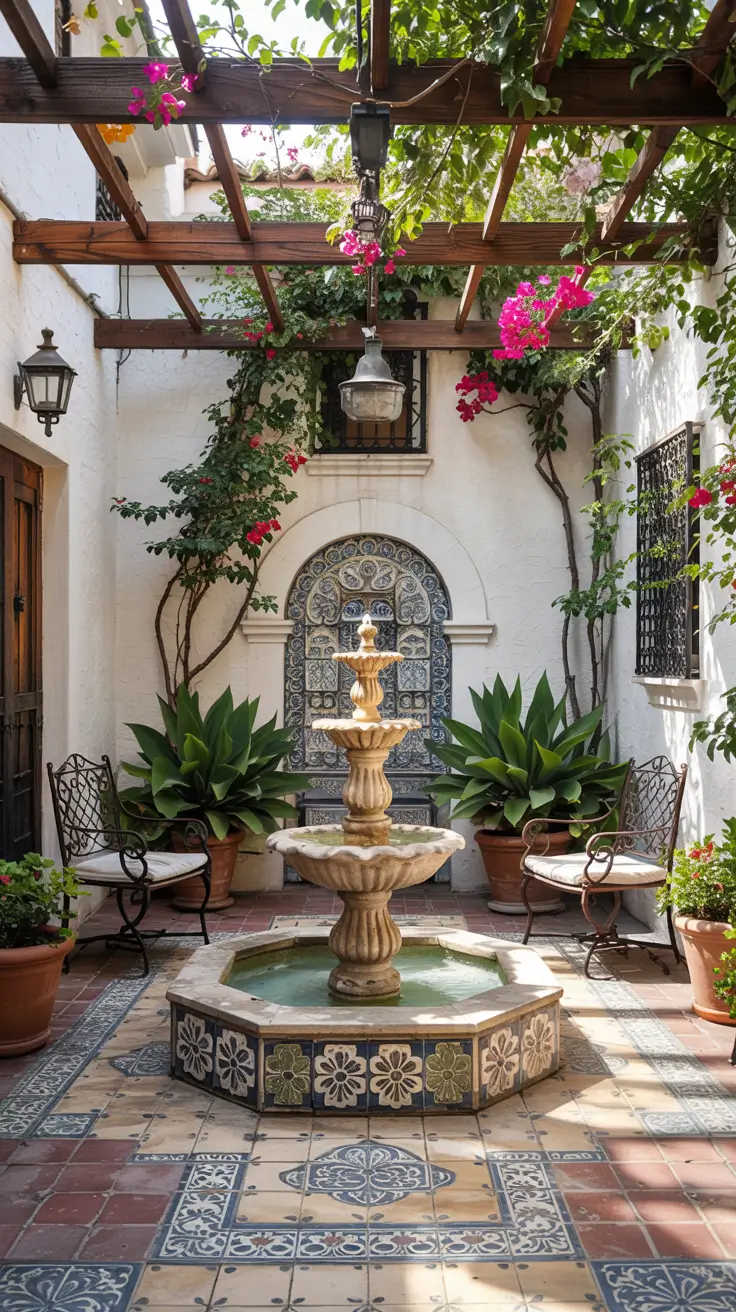
In my opinion, Spanish colonial gardens feel particularly welcoming because they combine architecture, water, and greenery within a compact space. Many landscape designers highlight the importance of courtyard layouts because they naturally encourage relaxation and social interaction.
To strengthen this design concept further, I would add climbing vines such as bougainvillea or jasmine around arches and pergolas. These plants introduce color, fragrance, and shade while reinforcing the romantic atmosphere associated with Spanish colonial gardens.
15. Mediterranean Outdoor Living Spaces Inspired by Spanish Colonial Gardens
I often start a mediterranean garden style landscape by focusing on outdoor living zones. Spanish colonial gardens traditionally treated outdoor space as an extension of the home, and I find this concept incredibly useful when designing modern mediterranean style homes garden environments. A shaded patio, comfortable seating area, and natural materials instantly create the feeling of a true mediterranean garden design tuscan style outdoor living space.
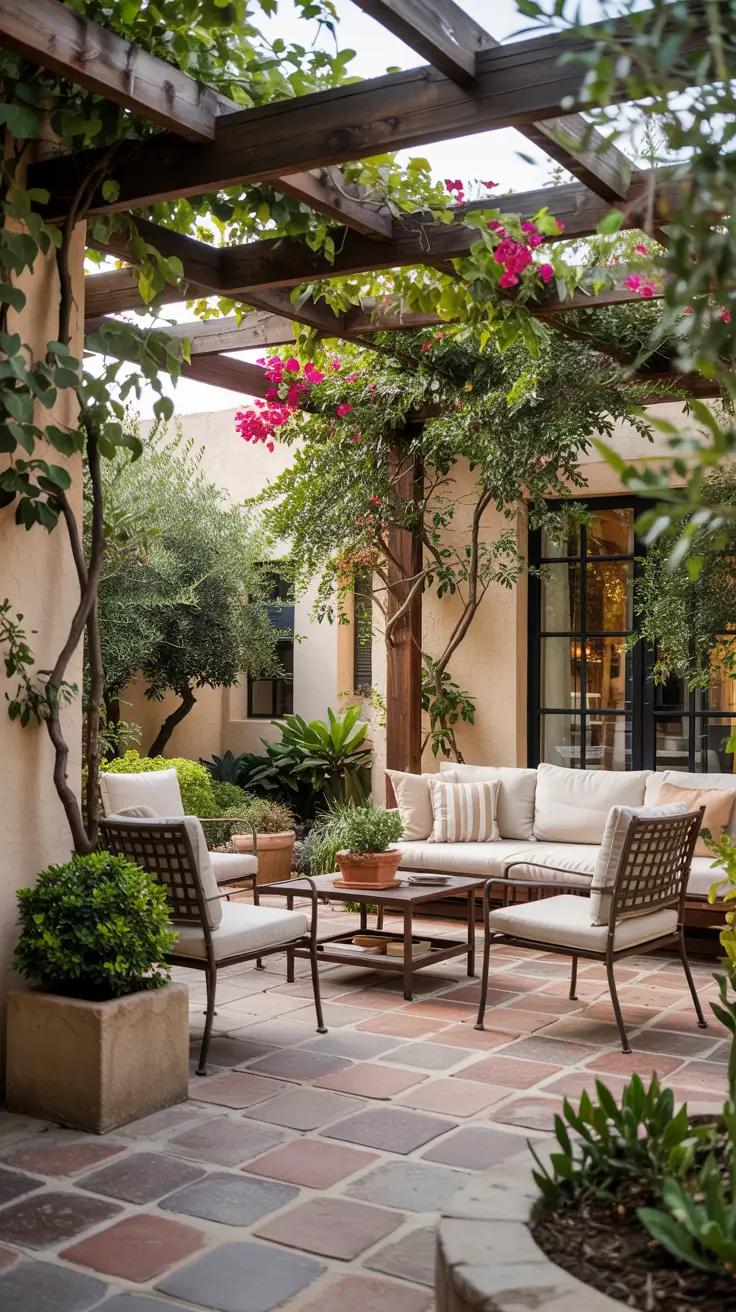
When I design these areas, I usually include wrought iron furniture, terracotta flooring, and textured stucco walls. Wooden pergolas covered with climbing plants such as bougainvillea or grapevine help soften the architecture while creating shade. Stone planters filled with olive trees, rosemary, and lavender complete the setting and reinforce the authentic garden in mediterranean style atmosphere.
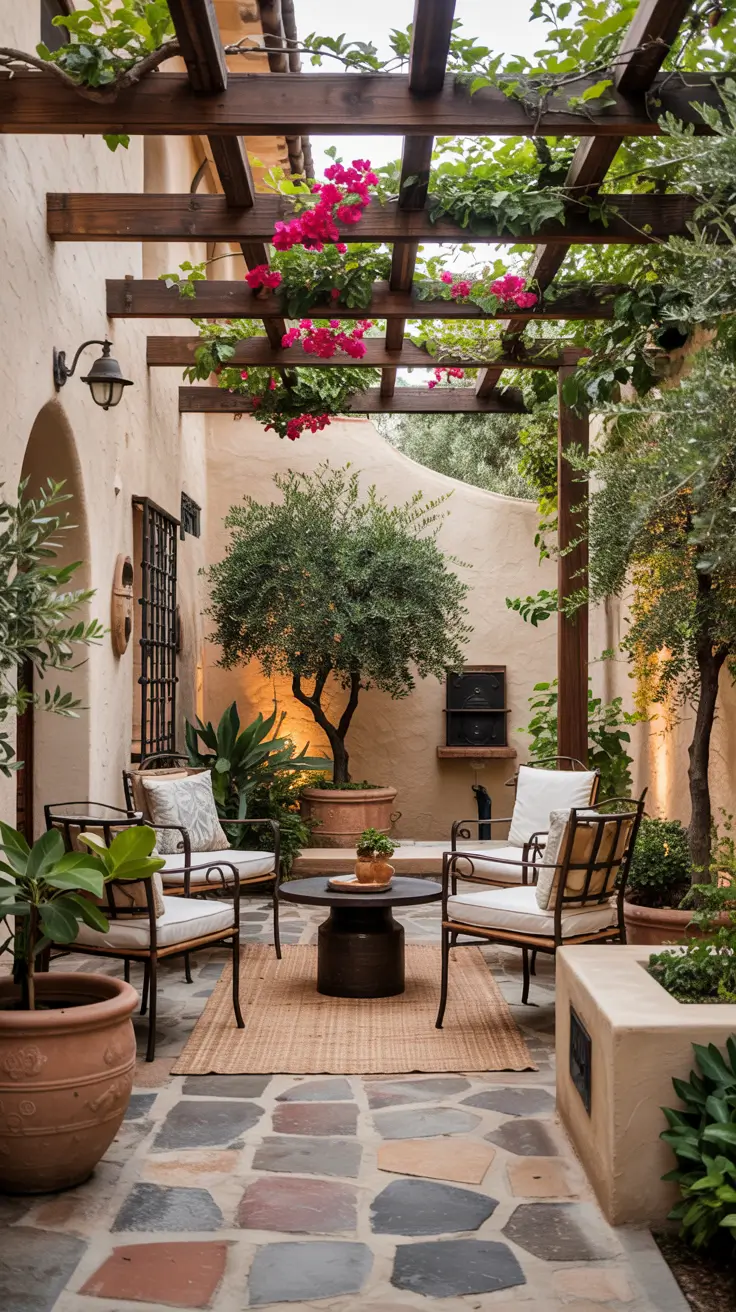
From my experience, the success of a mediterranean outdoor living space depends on balance. Architectural elements should frame the space, while plants provide softness and seasonal change. Designers from publications such as Architectural Digest often emphasize the importance of layered textures in Mediterranean gardens, and I strongly agree with this principle.
What I would still add to this section is subtle lighting. Lantern style wall lights, string lights across pergolas, and low pathway lights dramatically improve evening outdoor living while maintaining the relaxed mediterranean aesthetic.
16. Spanish Colonial Mediterranean Garden Style for Elegant and Historic Landscapes
Spanish colonial inspiration plays a major role in many mediterranean garden styles. When I design a garden with this influence, I focus on symmetry, architectural structure, and carefully framed views. These gardens often feel elegant and timeless, which makes them perfect for properties that want a classic mediterranean style garden design identity.
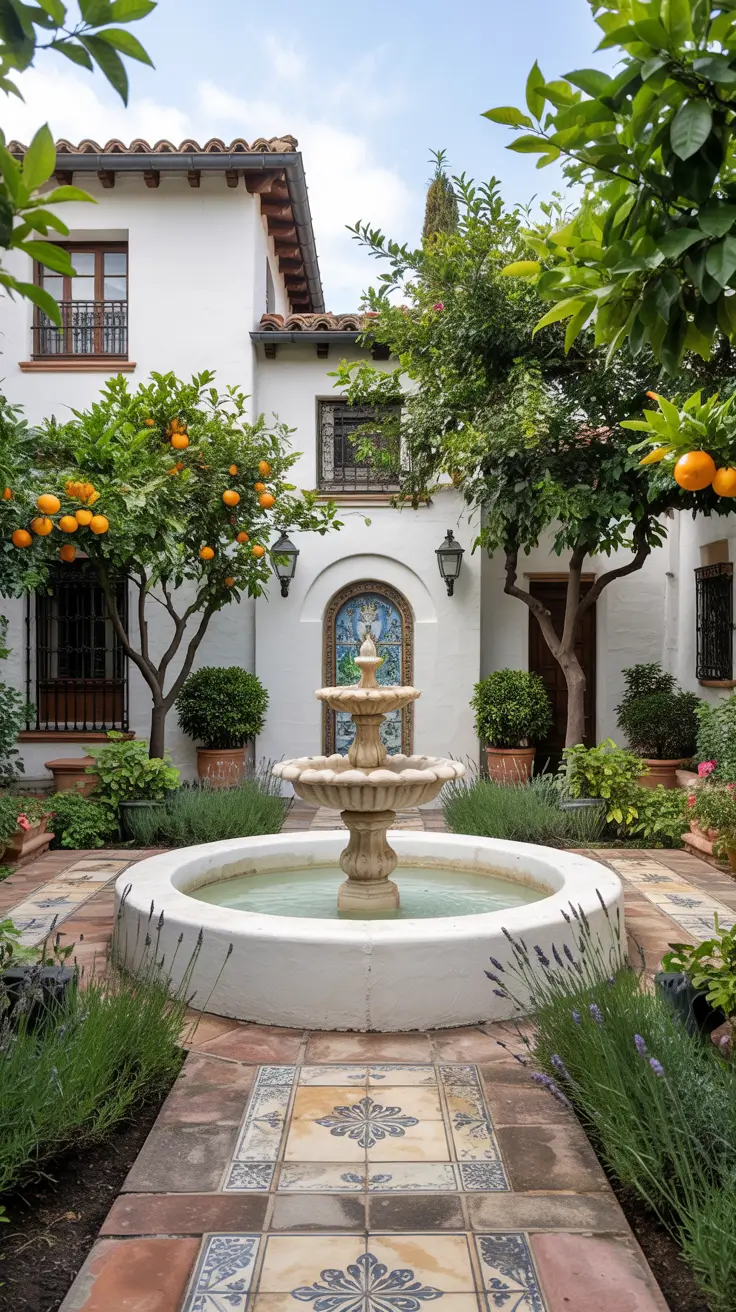
Key elements I typically include are clay roof tiles, white stucco walls, and arched openings that lead into garden courtyards. A central fountain often becomes the focal point of the landscape. Surrounding planting beds usually contain drought tolerant plants such as citrus trees, rosemary, sage, and lavender. These plants are not only authentic to Mediterranean climates but also practical for sustainable landscape maintenance.
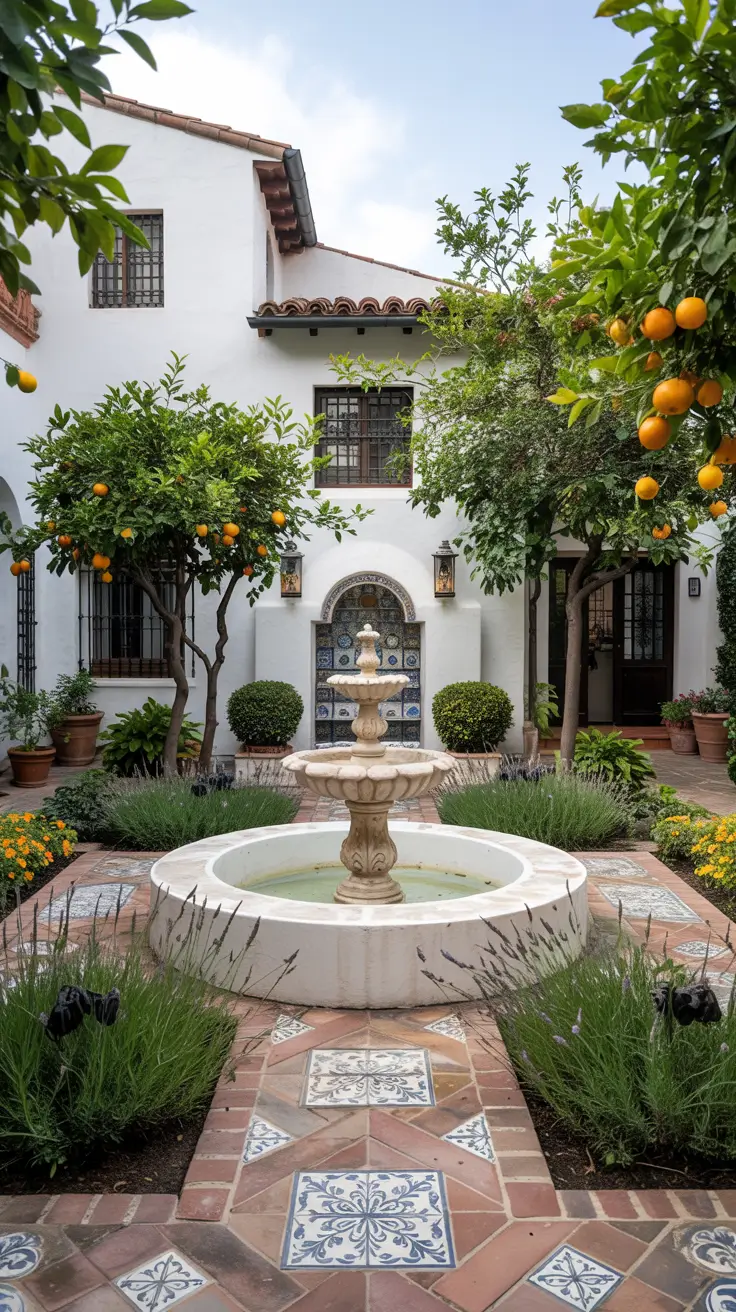
Personally, I appreciate how Spanish colonial landscapes combine simplicity with sophistication. The layout is often structured, but the plants remain relaxed and natural. Designers frequently note that Mediterranean gardens should never look overly formal, and I always keep that balance in mind when planning layouts.
One element that could further enhance this type of landscape is decorative tile work. Hand painted Spanish tiles used in fountains, steps, or benches can add color and cultural authenticity to the entire mediterranean garden style landscape.
17. Mediterranean Garden Pathways and Gravel Courtyards
Pathways are essential in any mediterranean style garden design because they guide movement and create structure within the landscape. In many mediterranean garden design tuscan style backyards, I like to use gravel paths and courtyard spaces to replicate the relaxed character of traditional European gardens.
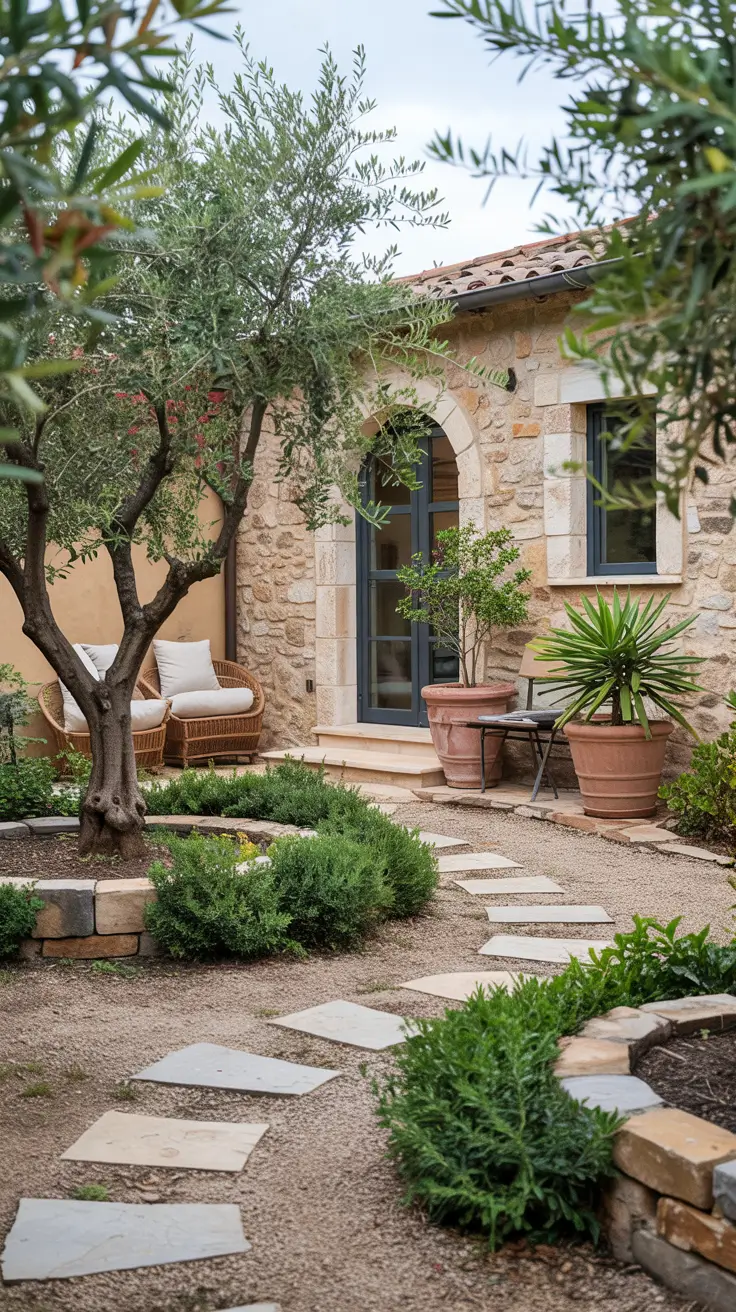
Gravel is one of the most practical materials I use. It drains well, complements natural stone, and provides a soft visual contrast against planting beds. I usually combine gravel with limestone or sandstone stepping stones. These materials help create natural transitions between terraces, seating areas, and planting zones.
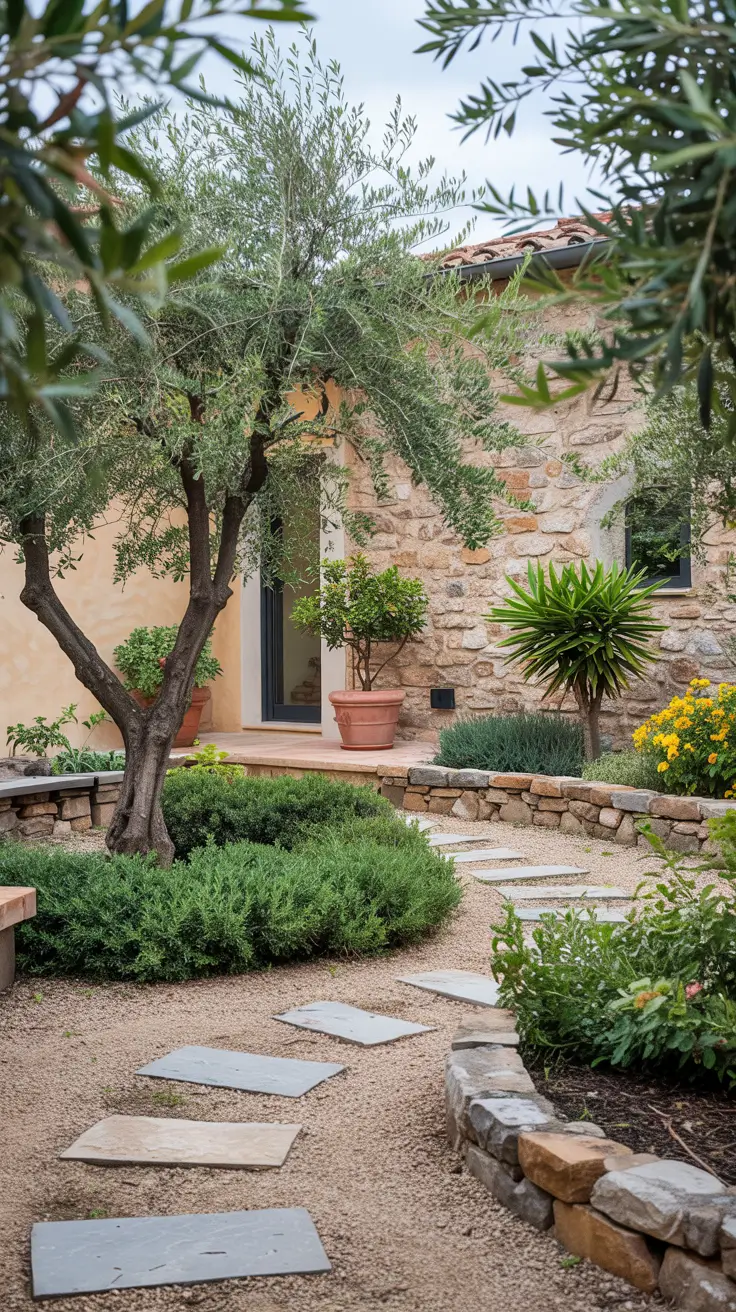
In my experience, gravel courtyards are especially useful for outdoor living spaces. They can host dining tables, lounge chairs, or even a fire pit while maintaining the rustic mediterranean garden style landscape look. Designers frequently recommend mixing hard surfaces with greenery to prevent spaces from feeling too rigid.
To improve this section further, I would incorporate vertical elements such as climbing vines on trellises or walls surrounding the courtyard. This helps define the space and enhances the layered feel typical of mediterranean gardens.
18. Natural Stone Features in Mediterranean Garden Design
Natural stone is one of the defining materials in mediterranean style garden design. Whenever I design a garden in mediterranean style, I try to incorporate stone through retaining walls, staircases, patios, and decorative accents. Stone provides texture and permanence, which are essential characteristics of authentic Mediterranean landscapes.
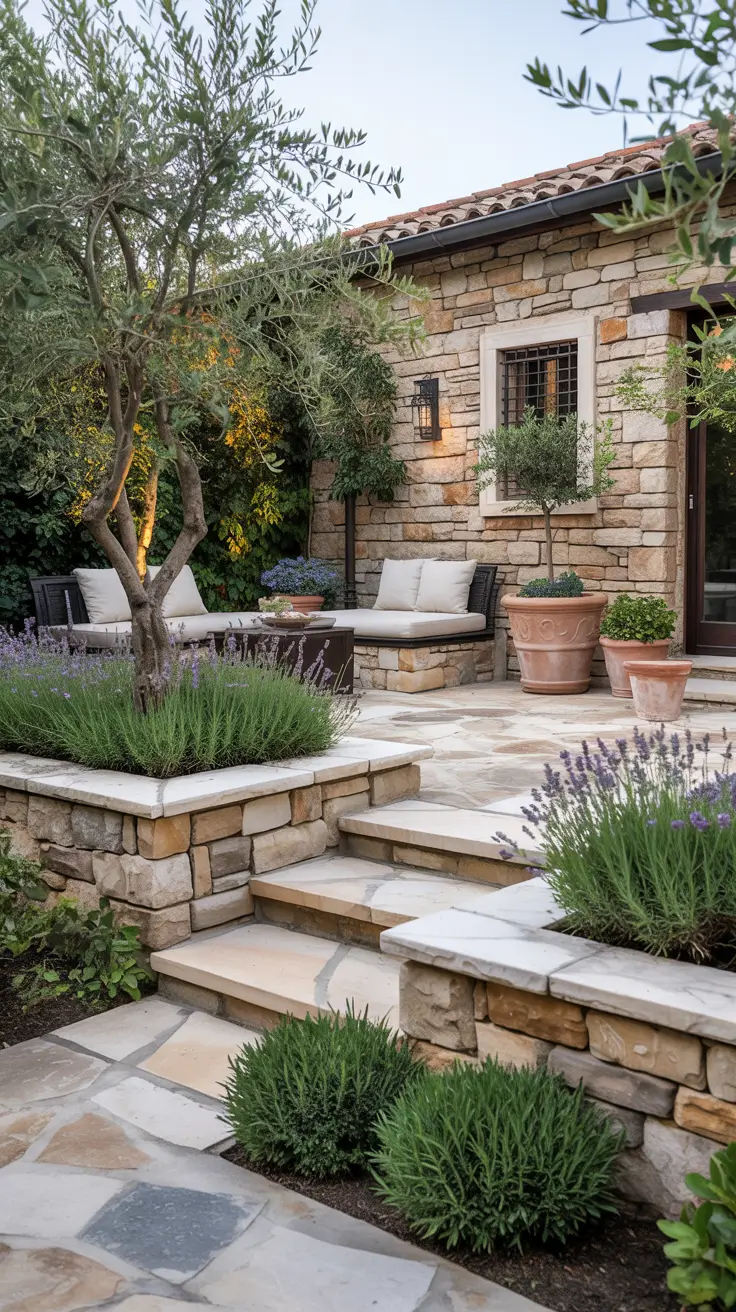
I typically use limestone, travertine, or sandstone because their warm tones complement the earthy color palette common in mediterranean garden styles. Stone benches, low garden walls, and raised planting beds are not only decorative but also functional. These features help organize the space and create comfortable seating areas within the landscape.
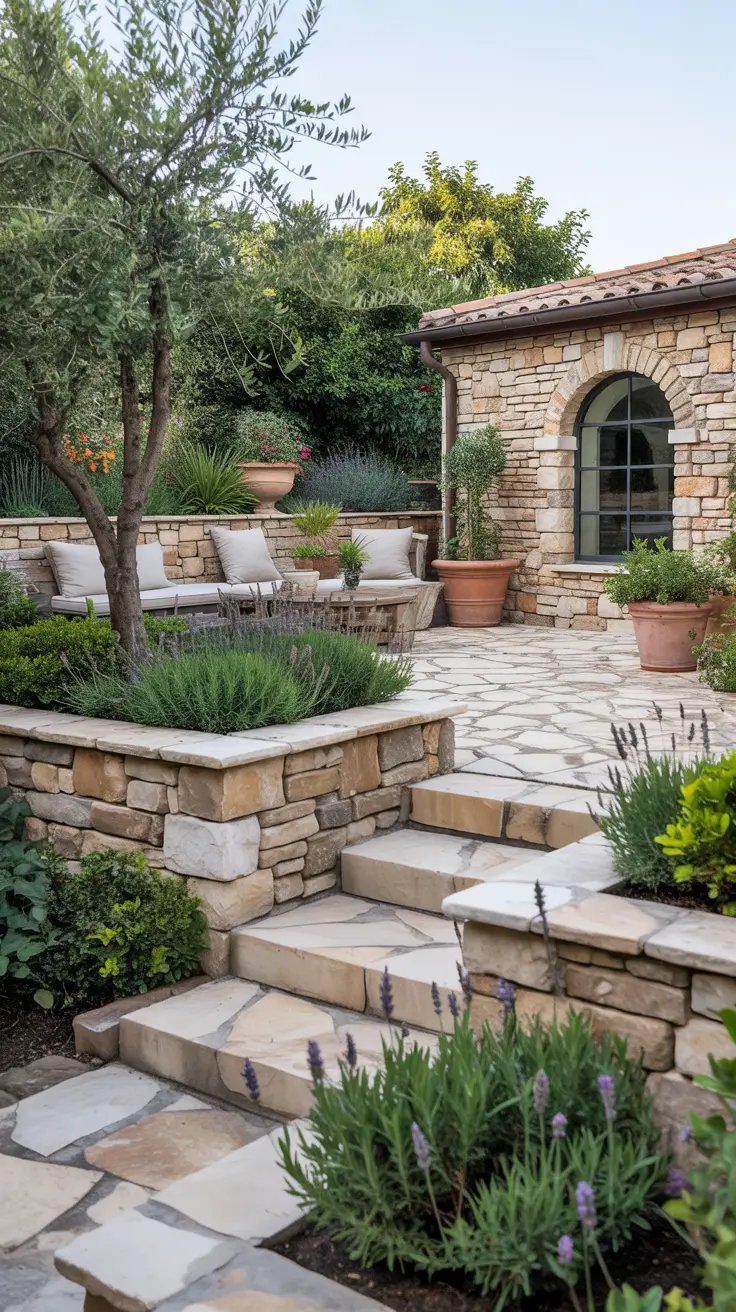
From a design perspective, natural stone also connects the architecture of the home with the surrounding garden. Many Mediterranean homes use similar materials in exterior walls or flooring, so repeating stone elements in the landscape creates visual continuity.
One additional feature that could strengthen this design approach is a stone water element. Even a small fountain or wall fountain can introduce movement and sound, making the garden feel more tranquil and immersive.