
Sunken living room ideas for 2027 are changing how we think about depth, comfort, and architecture at home. Whether you are planning a split-level layout or hunting for inspiration that blends Modern and Minimalist touches, the lowered living room is having a real comeback. Below I look at the solutions that work in everyday homes and how a sunken area can improve flow, zoning, and mood.
Sunken Living Room Railing Ideas with Half Walls
Sunken living room railing ideas with half walls offer a more grounded, architectural solution. I use half walls to softly enclose the sunken area while still letting light and connection pass through the room. This works well in homes that need a stronger sense of separation.
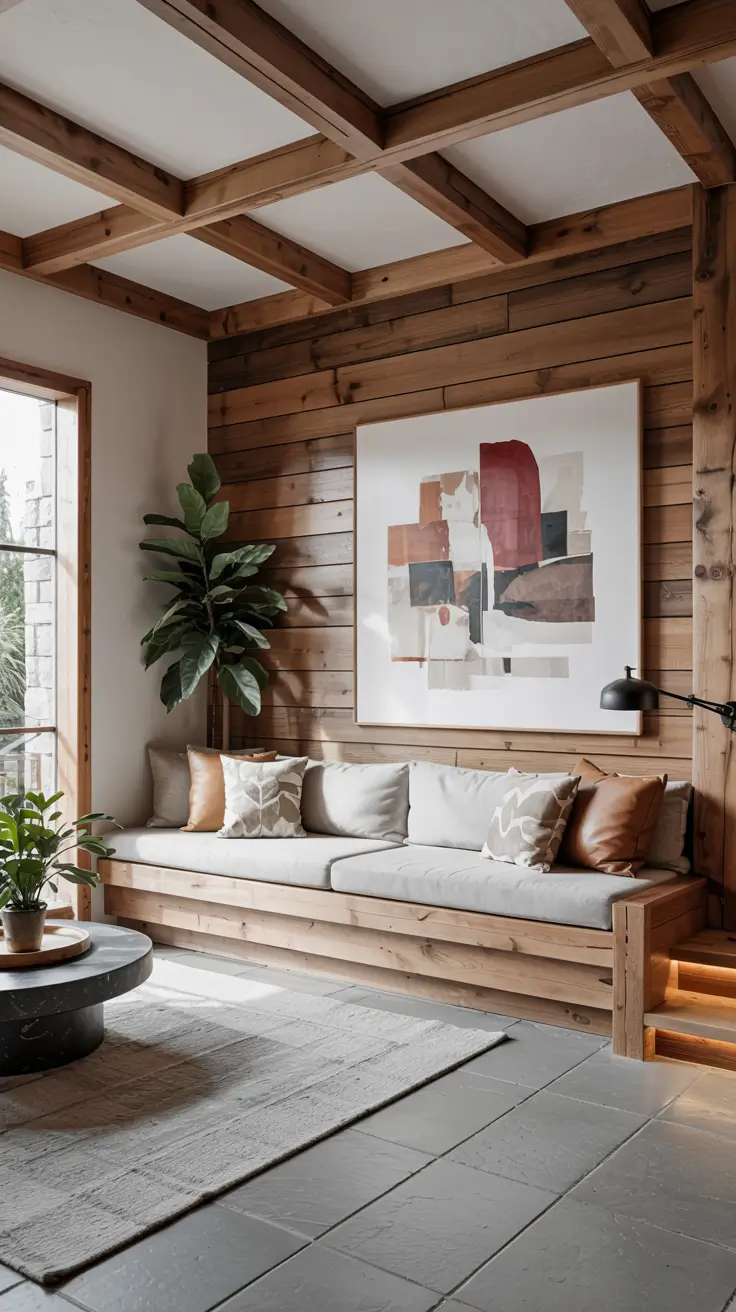
Half walls can double as seating backs, shelving, or display surfaces. I often add wood caps, stone finishes, or upholstered tops for comfort and function. These elements anchor the sunken living room and make it more useful day to day.
In my professional view, half walls leave plenty of room for creative expression. Designers often point to their versatility, and I agree they can hold lighting, storage, or even built-in planters.
What I would add is careful proportioning. I always keep the wall height below seated eye level so the space does not feel closed off visually.
Sunken Living Room Fireplace Ideas as a Focal Point
Sunken living room fireplace ideas create a strong focal point that naturally draws people in. I position the fireplace to anchor the lowered area and reinforce its role as the heart of the home. This approach improves both the layout and the atmosphere.
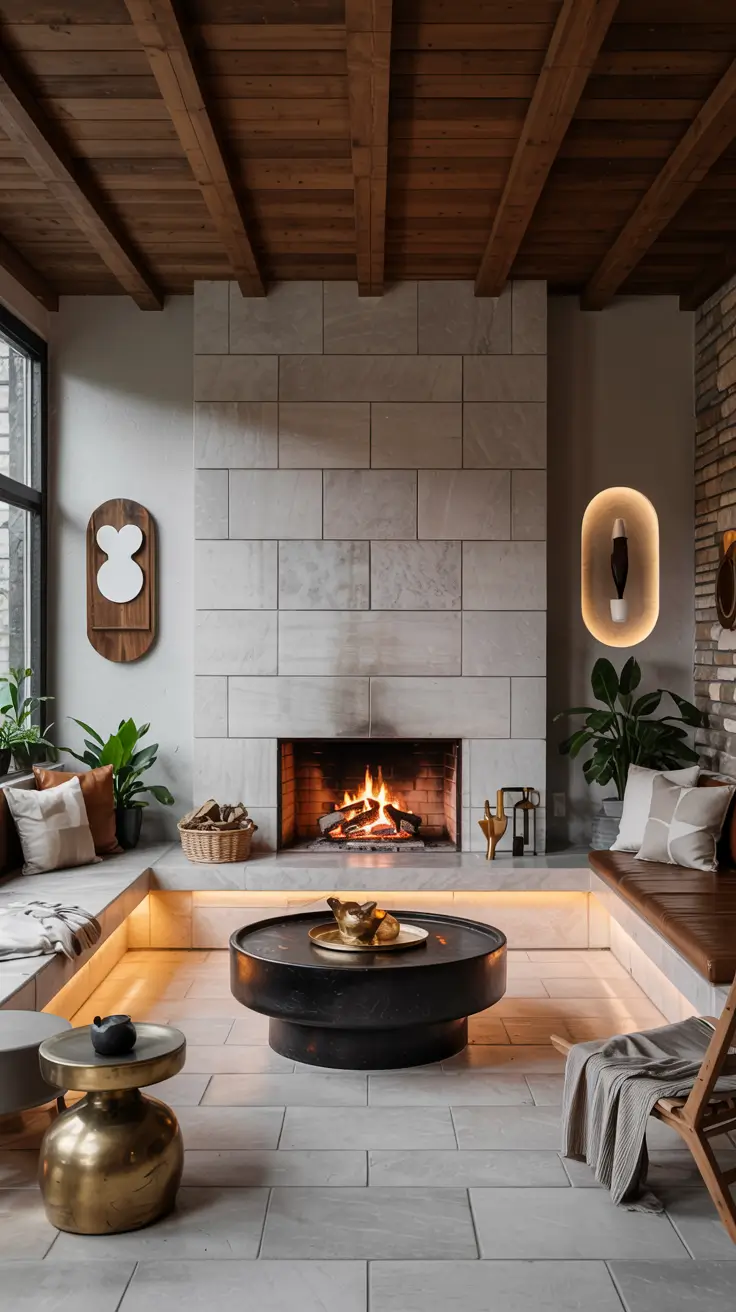
Fireplace designs range from sleek linear units to stone clad hearths. I choose styles that suit the overall look, whether modern, minimalist, or rustic. Seating faces the fire, which encourages conversation and comfort.
In my experience, designers often stress proportion and placement. I agree that a fireplace should line up with seating height and room scale so it feels balanced and intentional.
What I would add is integrated storage or display space around the fireplace. It adds function and lets the focal wall serve more than one purpose.
Modern Updates on Classic 70s Sunken Living Room Ideas
When I reinterpret classic 70s sunken living room ideas for 2027, I focus on cleaner lines, lighter materials, and visual continuity. The lowered area should feel like a natural extension of the main living space, not a visual break. Modern sunken living room design relies heavily on seamless flooring transitions and subtle level changes that improve flow.
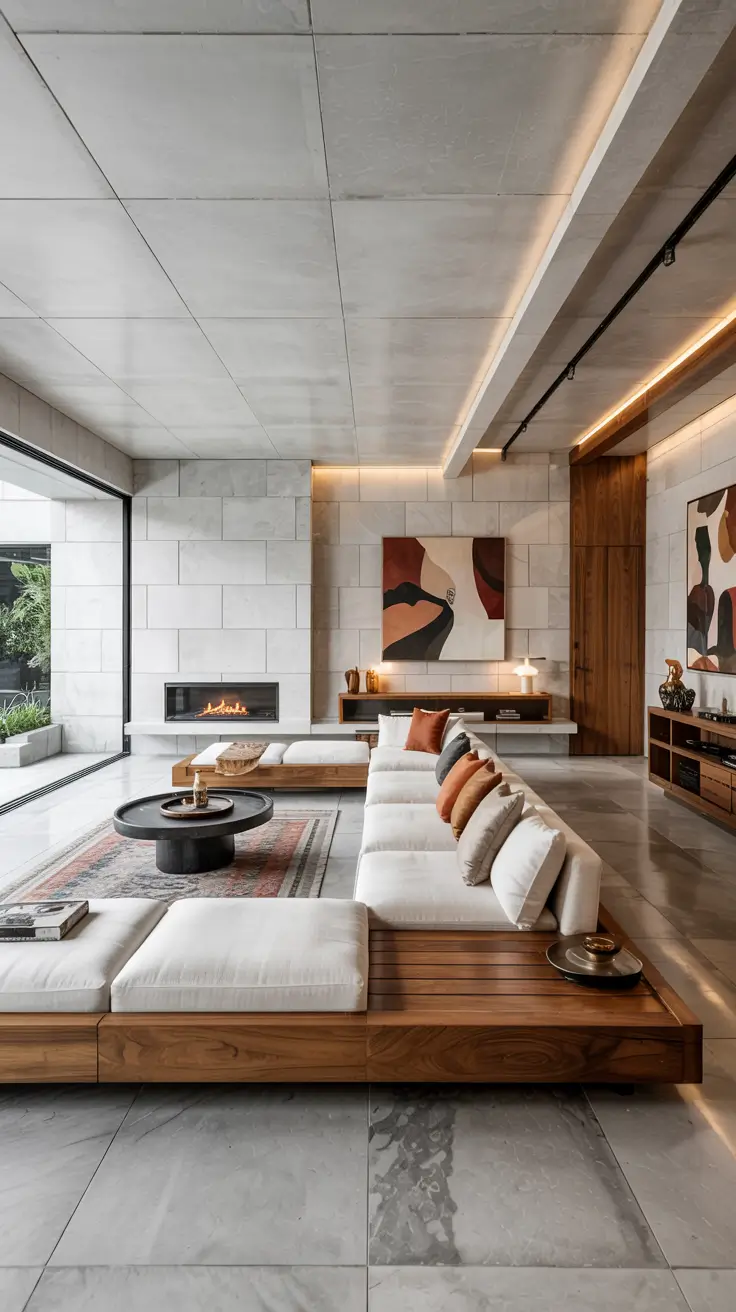
Furniture choices are intentionally restrained. I favor low-backed sofas, sculptural lounge chairs, and minimal coffee tables in wood, stone, or metal. These pieces respect the lowered scale of the room and reinforce a modern look. Neutral color palettes paired with tactile surfaces such as wood paneling or stone cladding bring warmth without clutter.
Personally, I find that the most successful updates avoid copying the 70s too literally. Designers from well-known US studios often emphasize reinterpretation over replication, and I follow that advice closely. The goal is inspiration, not imitation.
To strengthen this section, I would include more detail on ceiling treatments. Adding subtle ceiling drops or wood slats above the sunken zone frames the space visually and reinforces its importance within the overall layout.
Split Level Railing Ideas for Sunken Living Rooms
I approach split level railing ideas for sunken living rooms as a balance between safety and visual continuity. In 2027, railings are no longer heavy dividers. They have become architectural accents that guide movement between levels. They help define the sunken area while keeping the layout open and connected to neighboring spaces.
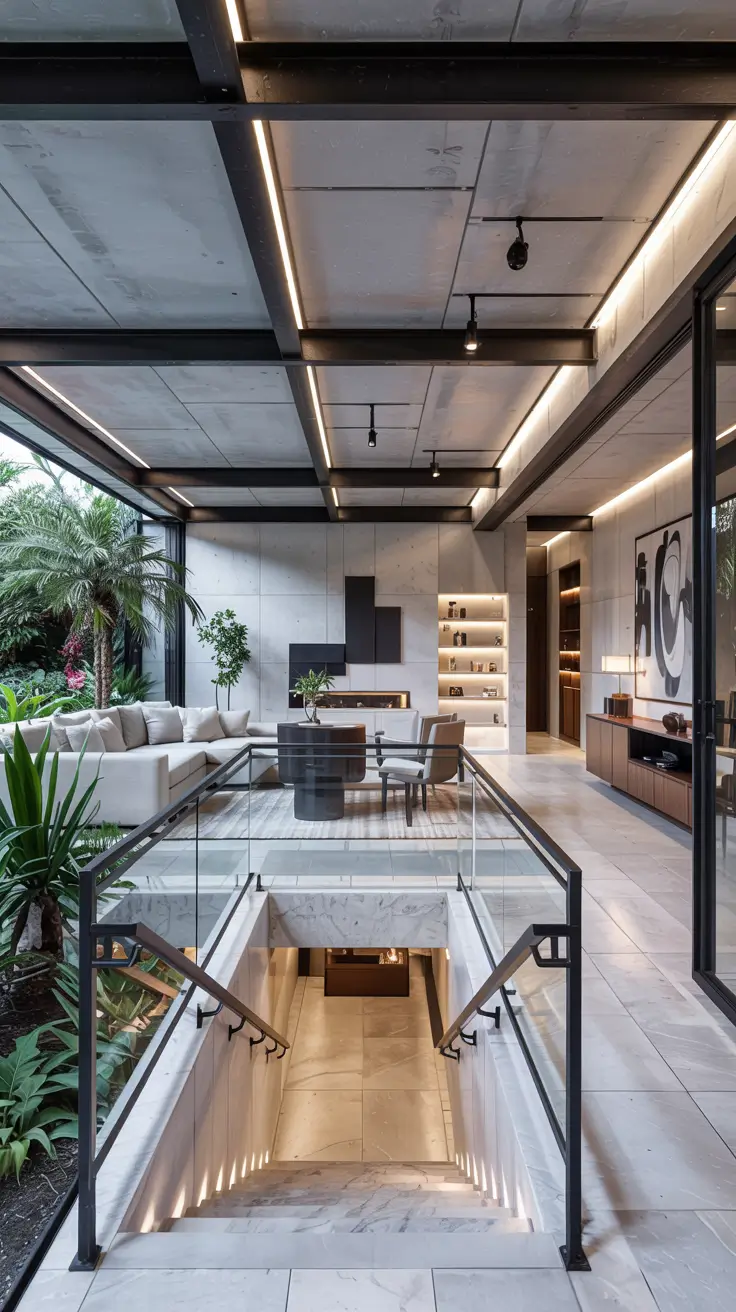
For materials, I often use slim metal profiles, glass panels, or wood slats running in the same direction as the flooring. These railing solutions suit modern and minimalist interiors and avoid visual clutter. I always coordinate the railing height and spacing with furniture placement so the sightlines across the room stay clear.
From my experience, designers often recommend transparent or semi open railings to keep light moving through the space. I agree, because it lets the sunken living room feel like part of the home rather than a lowered enclosure.
What I would add here is integrated handrails with concealed lighting. It improves nighttime safety and adds a refined detail that elevates the whole experience.
Why Sunken Living Rooms Are a Key Interior Trend in 2027
I see sunken living rooms in 2027 as a direct answer to open plan fatigue and the need for zones that feel defined yet still connected. Dropping the seating area creates a natural focal point without adding walls, which keeps the layout logical and the room visually open. This works especially well in split level homes and new builds, where floor heights can be planned from the very beginning.
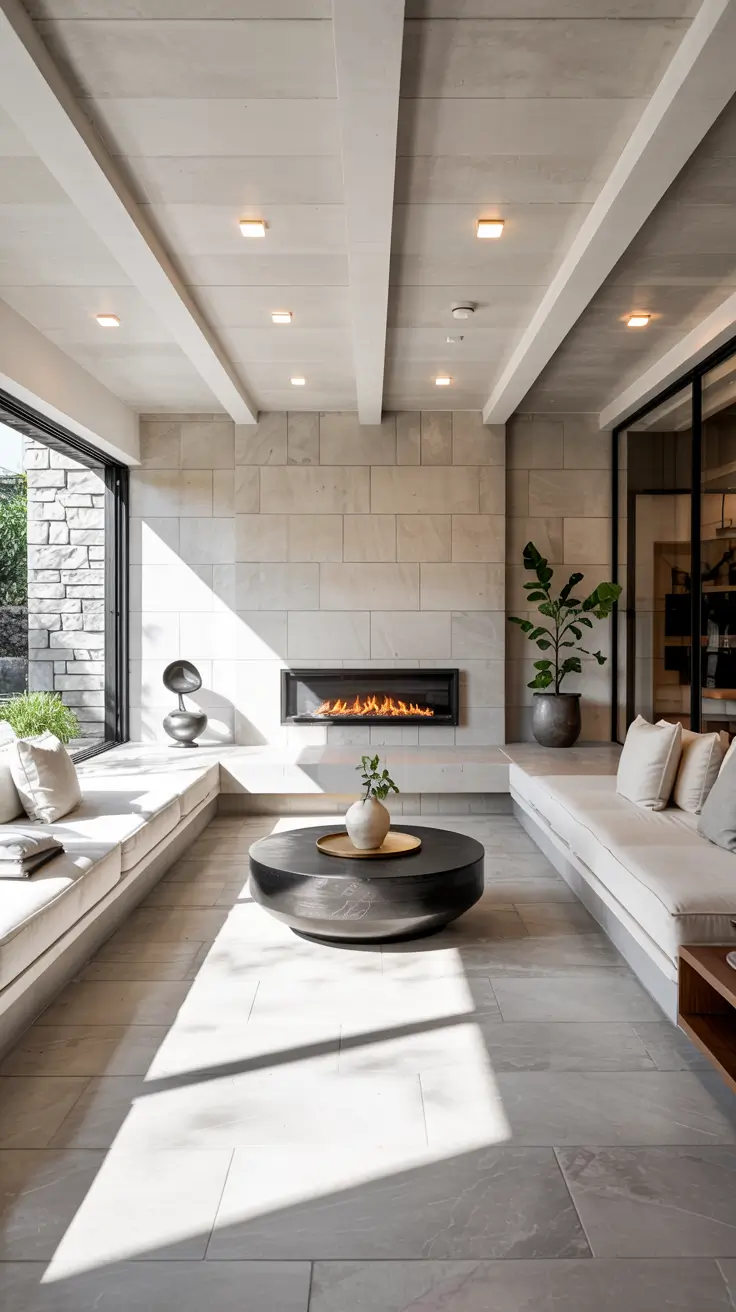
From a design standpoint, these spaces usually rely on built-in seating, layered flooring, and subtle step transitions. Built-in sofas, modular sectionals, and recessed lighting reinforce the sunken effect while keeping the room comfortable for daily life. I always suggest matching furniture scale to the depth of the pit so the room never feels cramped.
In my experience, designers across the US are revisiting this idea because it offers real emotional comfort. Publications like Architectural Digest have pointed out the return of conversation focused layouts inspired by the 70s, now updated with modern materials. I agree with that direction because it balances nostalgia with the way we live today.
What often gets left out of this concept is early coordination with structural and HVAC planning. I would always add detailed planning for air circulation, drainage where it applies, and lighting placement so the sunken area feels intentional rather than like an afterthought.
Rustic Sunken Living Room Ideas with Natural Character
Rustic sunken living room ideas bring warmth and authenticity to modern homes. I use natural materials and textured finishes to emphasize the depth of the sunken area and create a relaxed, inviting mood. This style works well in both city and countryside settings.
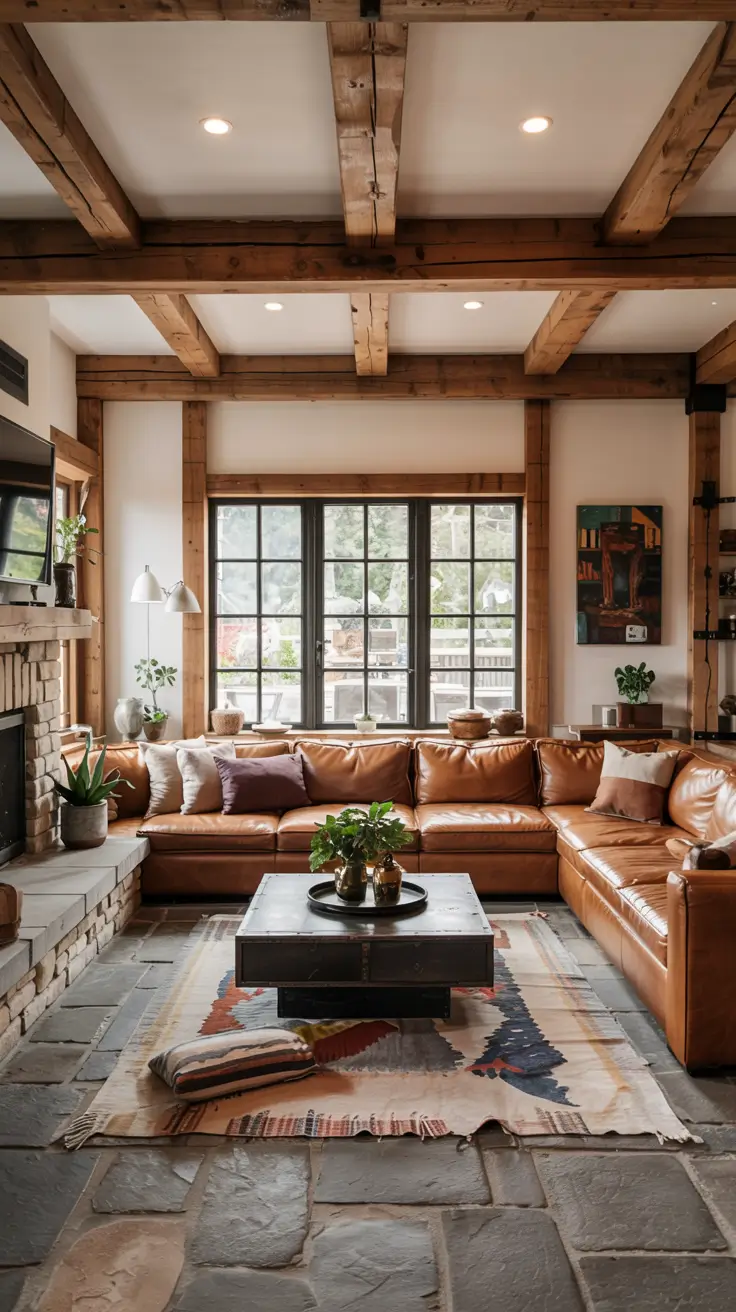
Furniture often includes solid wood seating, leather upholstery, and stone or wood flooring. I choose these because they age gracefully and add to the tactile quality of the room. Exposed beams or natural stone walls strengthen the rustic character even more.
Personally, I appreciate how rustic design softens the architectural drama of a sunken living room. Design publications often note the emotional comfort of natural materials, and I see that reflected in how people use and enjoy these spaces.
What I would add is subtle modern lighting. Mixing rustic textures with contemporary fixtures keeps the space feeling current rather than themed.
How Sunken Living Room Ideas 2027 Combine Comfort and Statement Design
Sunken living room ideas for 2027 succeed because they combine comfort with a strong visual identity. I see these spaces as both functional living areas and architectural statements. Thoughtful layout, balanced proportions, and intentional material choices keep them practical.
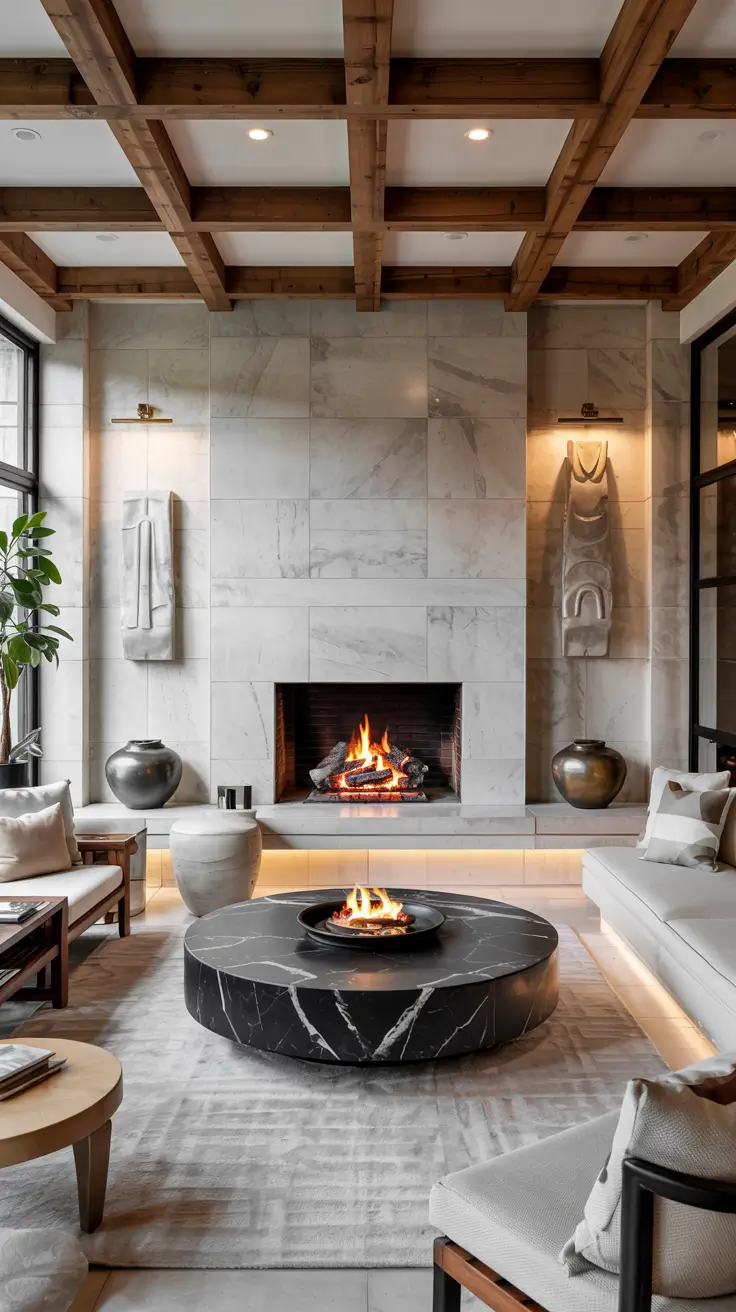
Furniture, from deep sofas to integrated platforms, supports relaxation while reinforcing the design intent. Sunken living room fireplace ideas often become the focal point, adding warmth and anchoring the space both emotionally and visually.
From my perspective, the best designs respect how people move and gather. Many respected US designers emphasize designing around human behavior, and that principle matters especially in sunken interiors.
What I would add to this discussion is long term adaptability. Designing the sunken space so it can evolve with changing needs ensures that a statement design does not compromise everyday living.
70s Sunken Living Room Conversation Pit Ideas Reimagined
I see the renewed interest in sunken living room 70s conversation pit ideas as a response to our wish for more intimate and social interiors. In 2027, this concept is no longer just about nostalgia. It is about bringing back a lowered seating zone that naturally shapes conversation, improves acoustics, and creates a sense of enclosure without building walls. A well planned sunken living room layout makes the pit feel like part of the main floor rather than separate from it.
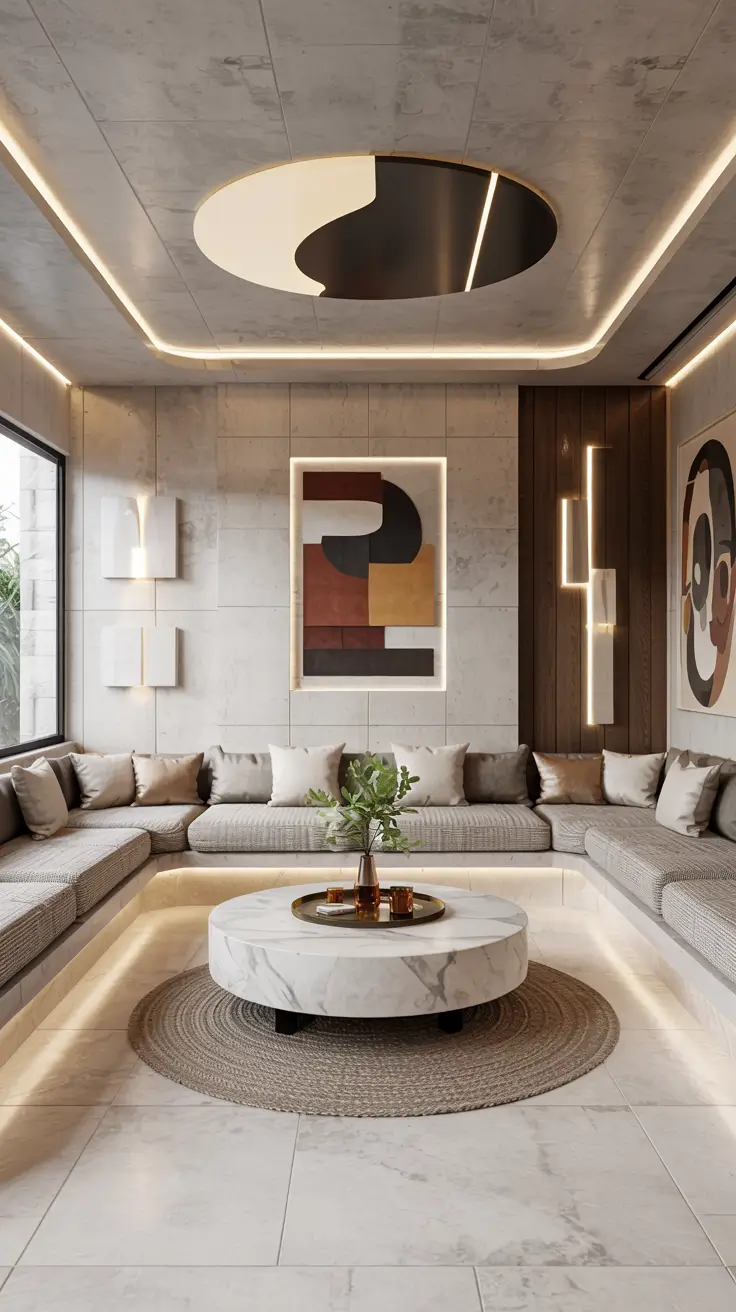
From a furniture perspective, I recommend built-in or modular seating that follows the geometry of the pit. Upholstered benches with integrated storage, low profile sectional sofas, and a central coffee table anchored to the floor help ground the space. Materials matter here. Durable textiles, textured wool, and performance fabrics keep the seating practical for daily use while still echoing the relaxed spirit of the 70s.
In my experience, designers frequently stress that proportion is everything with conversation pits. Publications like Architectural Digest often highlight how shallow depth and wide steps make these spaces feel welcoming rather than dated. I agree and always advise clients to avoid overly deep pits, which can feel disconnected from the rest of the home.
What I would add to this section is a stronger focus on step visibility and safety. Integrated LED lighting along each step edge improves usability and makes sure the retro inspiration works with modern living standards.
Minimalist Sunken Living Room Ideas for Modern Living
Minimalist sunken living room ideas resonate strongly in 2027 because they emphasize calm, order, and intentional design. I approach these interiors by reducing visual noise and letting the sunken form itself become the main feature. Clean geometry, open sightlines, and a restrained palette define this approach.
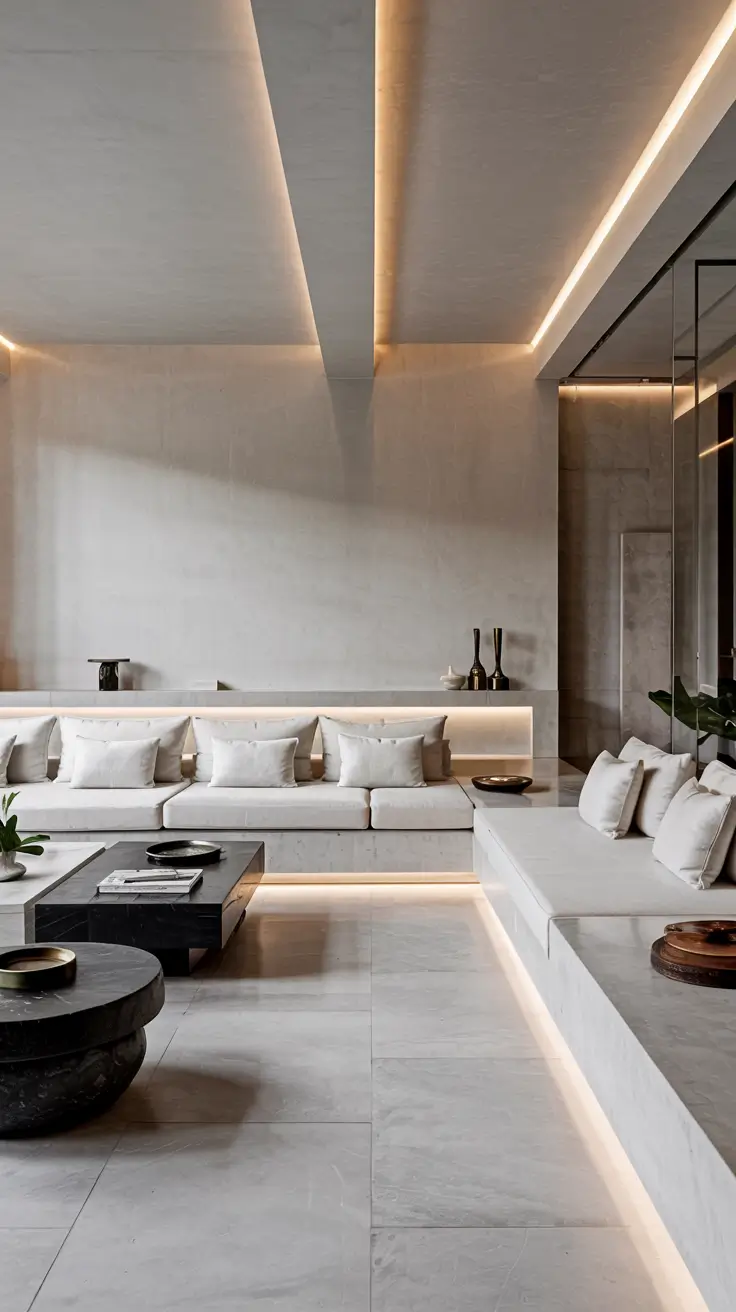
Furniture in a minimalist sunken living room is purposeful and often custom sized. I recommend slim sofas with firm cushions, integrated seating platforms, and concealed storage. Flooring choices like polished concrete, wide plank wood, or large format stone tiles reinforce simplicity while staying durable.
From my professional experience, minimalist interiors succeed when every element earns its place. Designers frequently advise editing rather than adding, and that mindset is essential here. A sunken space already has presence, so it does not need much decor.
What is often missing in these spaces is softness. I would add layered textiles such as area rugs, seat cushions, or acoustic wall panels to balance the minimalist look with everyday comfort.
Lighting Ideas That Enhance Sunken Living Room Design
Lighting plays a crucial role in sunken living room design because level changes affect how light behaves in a room. I prioritize layered lighting so the lowered area feels inviting rather than shadowed. Recessed ceiling lights, wall washers, and integrated step lighting work together to define depth.
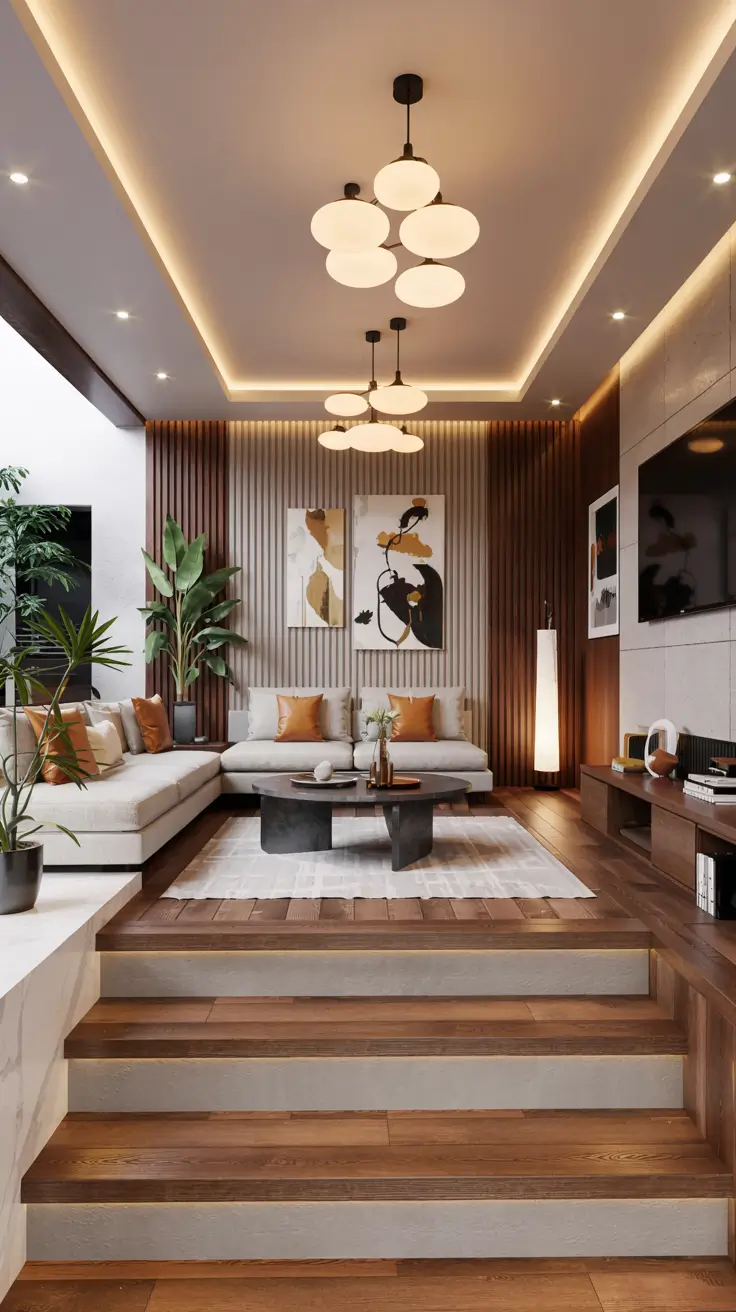
Each lighting element should have a purpose. I recommend pendant lights to anchor the seating zone, LED strips under seating edges for safety, and adjustable floor lamps for flexibility. These choices improve function while reinforcing the sunken layout visually.
From my experience, lighting designers often stress that indirect light is key in sunken rooms. This advice is widely shared across professional design media, and I fully support it. Soft, diffused light adds comfort and highlights architectural details without glare.
What I would add here is smart lighting control. Dimming systems and scene settings let homeowners shift the sunken space between conversation, relaxation, and entertaining with ease.
Flooring Ideas That Define Sunken Living Room Spaces
Flooring plays a defining role in sunken living room ideas for 2027. I use changes in flooring to visually anchor the lowered area while keeping it in harmony with the surrounding spaces. This creates layout clarity without any physical barriers.
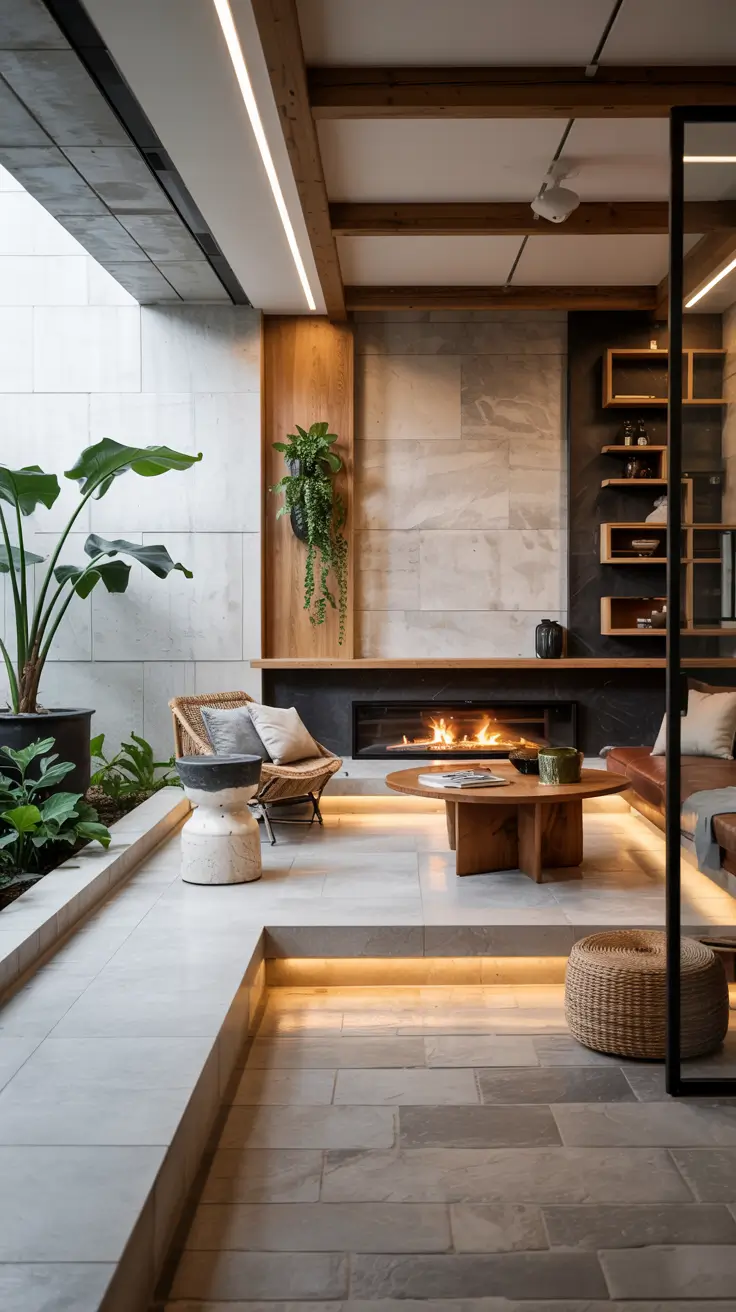
Common choices include textured stone, warm wood, or soft carpet inside the sunken zone. I pick materials based on comfort, acoustics, and durability. Contrasting flooring helps highlight the depth and reinforces the design intent.
In my experience, flooring decisions have a big effect on how inviting a room feels. Design media often highlight tactile materials as a key trend, and I find this especially relevant in sunken areas where people gather and unwind.
What is sometimes missing is attention to edge detailing. I would add subtle metal or wood trims at level changes to protect the flooring and sharpen the visual definition.
Minimalist Sunken Living Room Ideas with Clean Lines
Minimalist sunken living room ideas focus on simplicity, negative space, and clarity of form. I treat the lowered floor as a quiet architectural gesture rather than a dramatic showpiece. This layout supports calm living and fits well with a minimalist lifestyle.
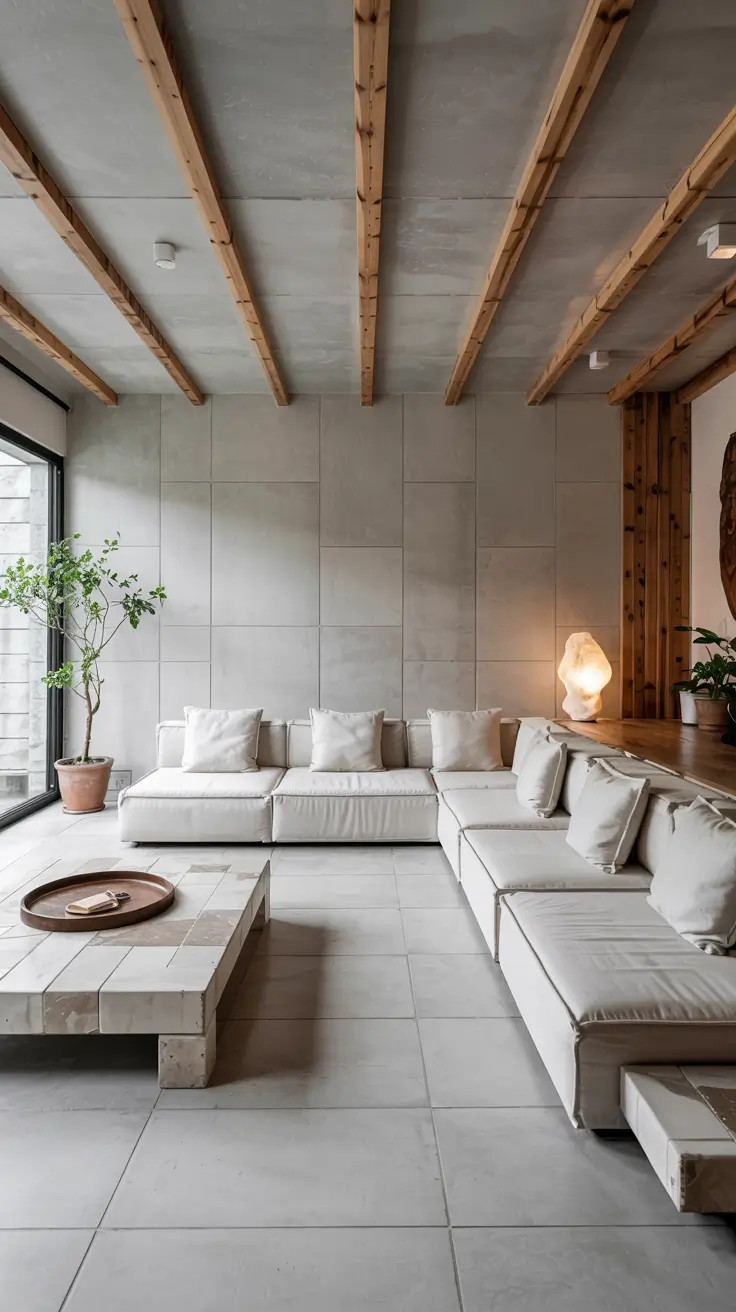
Furniture stays deliberately sparse. A single modular sofa, a low table, and concealed storage are usually enough. Smooth concrete flooring, light wood, and matte finishes help the room read as one cohesive minimalist piece. I skip unnecessary decor so the attention stays on the quality of the space.
From my professional perspective, minimalism only works when proportions are exact. Well known interior designers often stress the importance of scale, and I agree that even a few inches of depth can change how the space feels. Precision is what keeps the room from looking cold or unfinished.
What I would add here is integrated storage beneath the seating platforms. It keeps the minimalist look intact while making everyday life easier without adding visual noise.
Designing Functional Large Scale Sunken Living Rooms
Large sunken living room ideas need careful planning to avoid feeling cavernous or underused. I approach large sunken spaces by clearly defining zones within the lowered area while keeping them open to the surrounding floor plan. Proper proportions and circulation paths are essential.
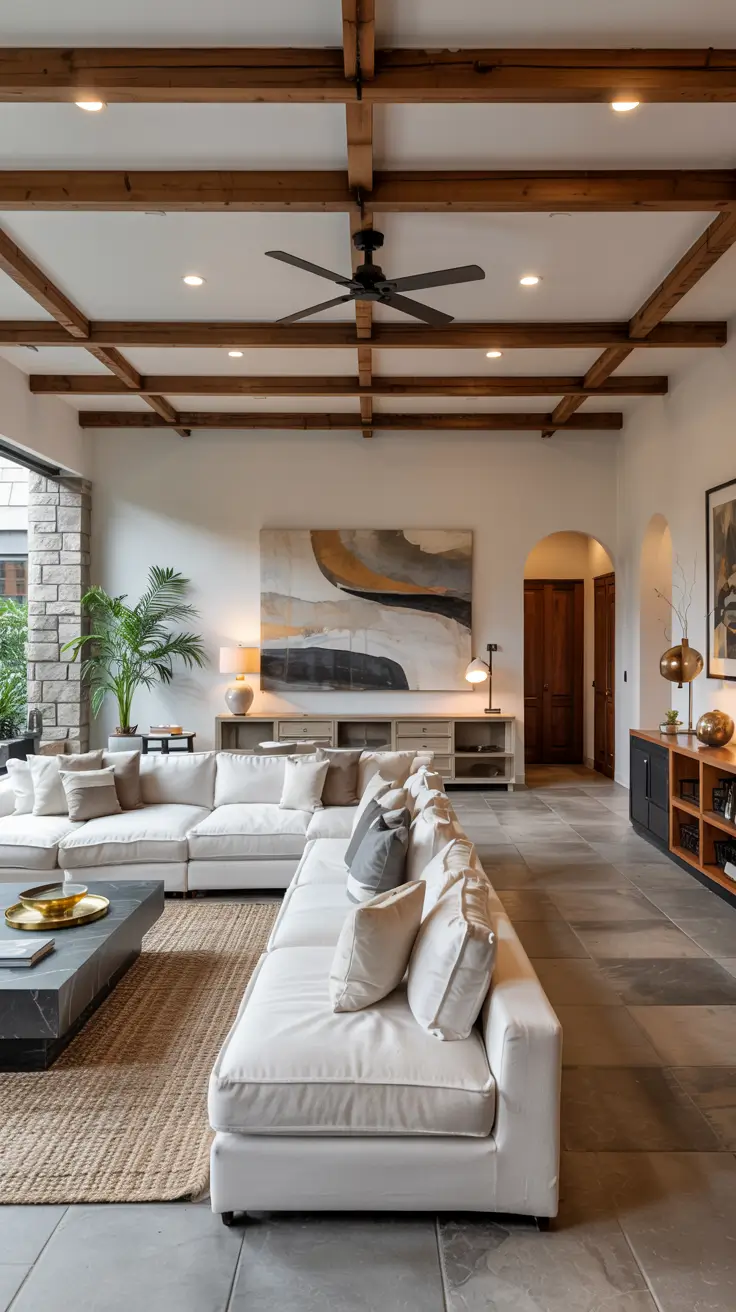
Furniture selection becomes more expansive. I recommend oversized sectionals, several seating clusters, and substantial coffee tables to match the scale. Sunken living room railing ideas, including half wall versions, help define boundaries without blocking views.
In my professional work, I often reference split level railing ideas for sunken living rooms to balance safety and style. Designers consistently point out that low railings or glass panels keep the space open while improving usability.
To enhance this section, I would put more emphasis on acoustics. Large sunken spaces benefit from upholstered surfaces, rugs, and acoustic panels that manage sound well.
Sunken Living Room Inspiration from 2027 Interior Trends
Looking at sunken living room ideas for 2027 inspiration, I see a clear shift toward biophilic design, tactile materials, and flexible layouts. Sunken spaces are increasingly used to create emotional contrast within open plan homes. Lowering the floor subtly changes perspective and adds a feeling of retreat.
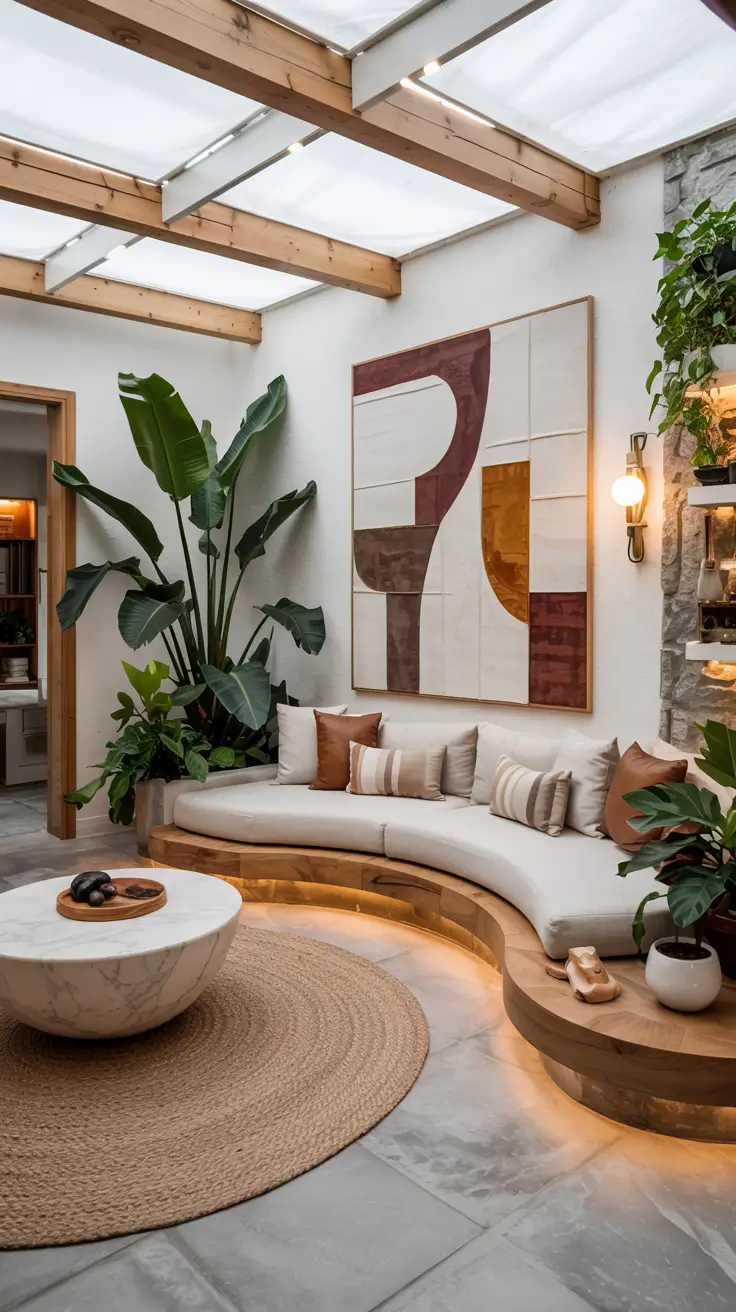
Furniture and decor in this context often include natural wood seating, stone clad platforms, indoor plants, and layered lighting. I frequently specify curved sofas and organic tables to soften the geometry of the sunken area and echo current trends.
In my view, trend driven inspiration works best when it fits real lifestyle needs. Many designers quoted in US interior magazines stress that trends should support comfort and longevity, not override them. I apply that philosophy consistently when designing sunken spaces.
To complete this section, I would add more discussion of adaptable layouts. Modular seating lets the sunken area evolve over time, which matters a lot in trend focused interiors.
Innovative Sunken Living Room Design Concepts for 2027
Innovation in sunken living room design for 2027 centers on flexibility and smart technology. I see spaces that adapt to different uses, from lively gatherings to quiet evenings, without changing the core layout. This reflects how living rooms are actually used today.
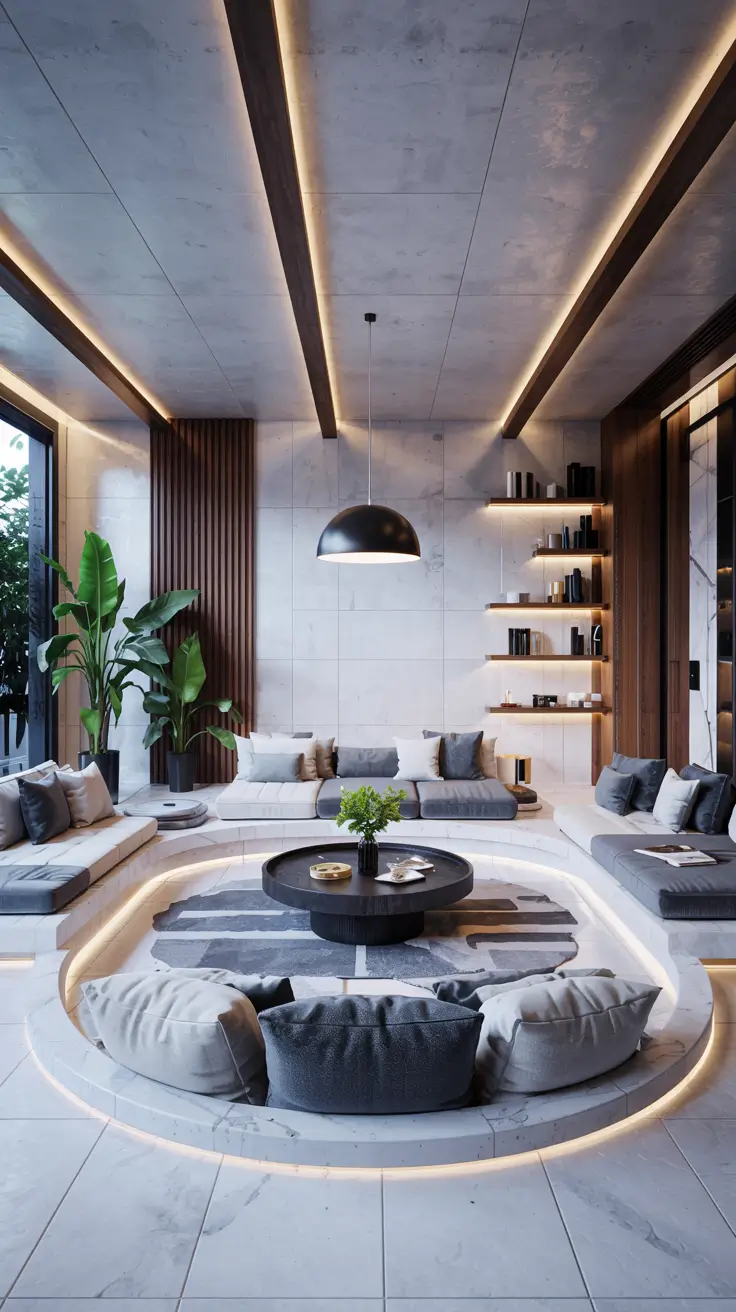
Design features often include movable seating modules, hidden power outlets, and smart lighting systems. I recommend pieces that can be rearranged easily while still looking cohesive. Engineered wood and durable textiles hold up well to long term use.
From my point of view, innovation should make life more comfortable, not more complicated. Many designers emphasize human centered design, and I agree that technology should stay discreet and supportive.
What I would add is planning for future adaptability. I always suggest designing the sunken area so it can be leveled or repurposed if your needs change over time.
Sunken Living Room Railing Ideas That Maintain Openness
Sunken living room railing ideas for 2027 focus on keeping the space open while still addressing the change in level. I see these designs as a subtle framework rather than a boundary, especially in large open plan homes where visual continuity matters most.
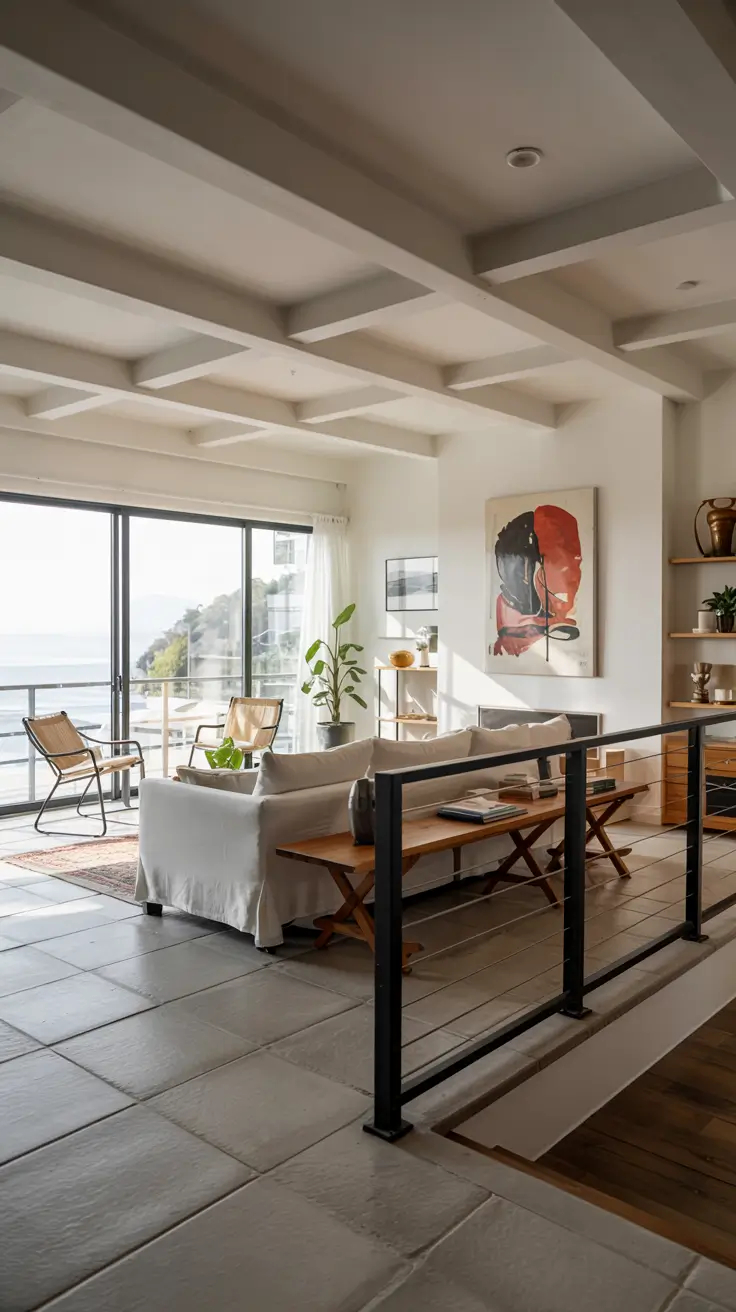
Glass railings, thin cable systems, and vertical wood battens are popular choices. I pick these because they offer protection without blocking the view of the whole room. When the flooring and wall finishes are consistent, the railing almost disappears visually.
Personally, I find that open railing systems work best when they follow the rhythm of the architecture. Many interior design experts suggest lining up railing lines with ceiling beams or window frames, and I often use that principle to get a cohesive result.
What tends to be missing is attention to maintenance. I would choose finishes that resist fingerprints and wear, especially for glass and metal in high traffic areas.
Modern Sunken Living Room Ideas for Contemporary Homes
When I design modern sunken living rooms, I focus on clean geometry, strong horizontal lines, and a seamless connection to the rest of the house. The lowered level works as an architectural statement that strengthens the overall layout instead of breaking it up. This approach shines in homes with large windows and open sightlines.
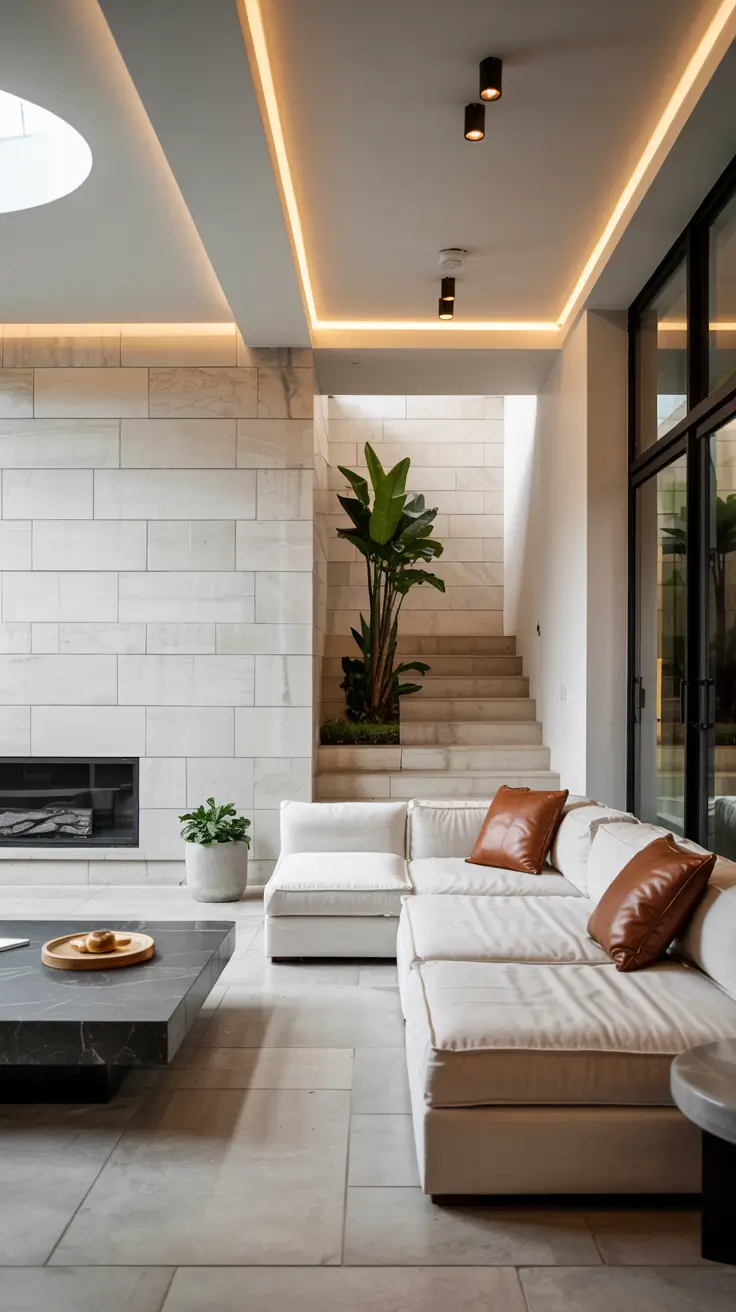
Furniture choice matters a lot here. Low profile sectionals, streamlined coffee tables, and integrated media walls support the modern look. I prefer neutral upholstery paired with textured flooring to define the sunken zone quietly, without visual clutter. Recessed LED lights along the steps or seating edges add depth and make the space safer.
Personally, I find that modern sunken living rooms work best when restraint is applied. Designers often advise limiting the palette to two or three finishes, and I stick to that rule to keep the space cohesive. It helps the room feel timeless rather than driven by the latest trend.
If there is one thing that tends to be missing, it is acoustic planning. I would add soft surfaces such as area rugs or upholstered wall panels to improve sound quality, especially in large open plan interiors.
Large Sunken Living Room Ideas for Open Plan Interiors
Large sunken living room ideas work particularly well in expansive open plan interiors. I see them as a way to create intimacy inside a big footprint, using depth rather than partitions to define the living zone. This approach supports both comfort and spatial clarity.
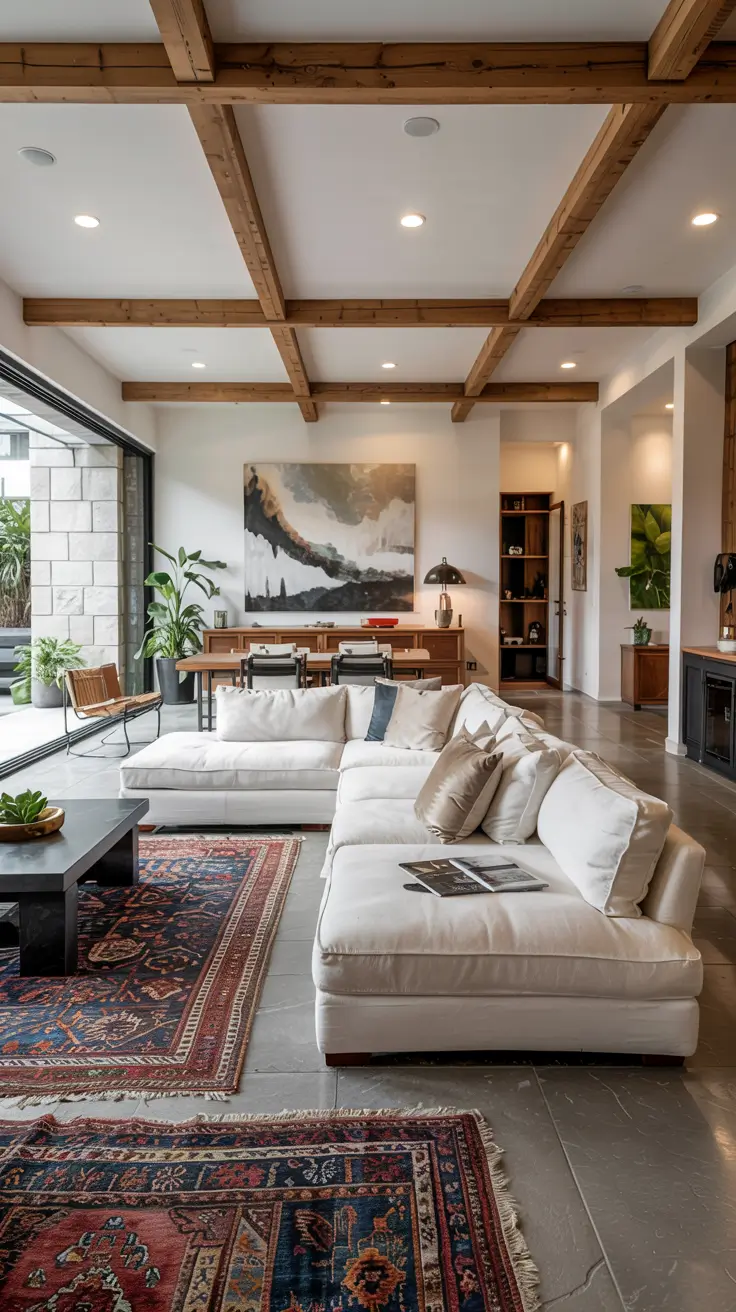
Furniture choice is crucial in large layouts. I recommend generous sectionals, layered rugs, and oversized coffee tables that match the scale of the room. Continuous flooring around the sunken area helps unify the interior while still highlighting the lowered zone.
From my experience, large sunken living rooms benefit from strong focal points. Many designers suggest anchoring the space with lighting or a fireplace, and I find that advice practical for keeping the visual balance.
What I would add is acoustic planning. In large spaces I always include soft materials and upholstered surfaces to reduce echo and improve sound comfort.
Sunken Living Room Step Ideas for Smooth Level Transitions
Sunken living room step ideas matter for both safety and visual continuity. I design steps that feel built in rather than added on, using consistent materials and proportions. Smooth transitions make the space more accessible and more comfortable overall.
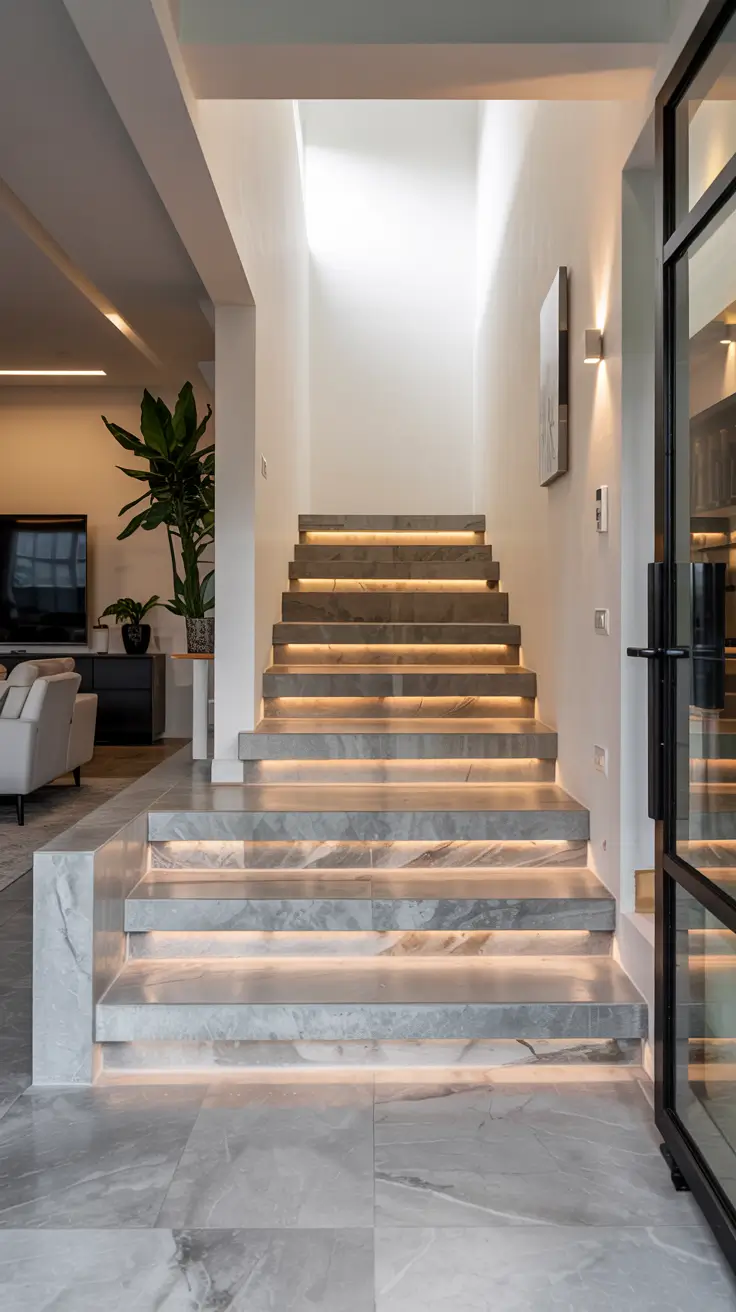
Steps often double as seating or display platforms. I like wide treads, integrated lighting, and non slip finishes. These details keep the transition practical while adding to the overall design.
Personally, I believe steps should enhance the moment of entering the space. Many professionals recommend soft lighting and gentle riser heights, and I follow these guidelines to create welcoming transitions.
What I would add is early coordination with building codes and accessibility standards. Confirming compliance from the start prevents costly changes later and improves long term use.
Sunken Living Room 70s Conversation Pit Ideas Reimagined
Sunken living room 70s conversation pit ideas are making a polished comeback in 2027. I reinterpret this classic with modern proportions, updated materials, and better comfort standards. The goal is social interaction without visual heaviness.
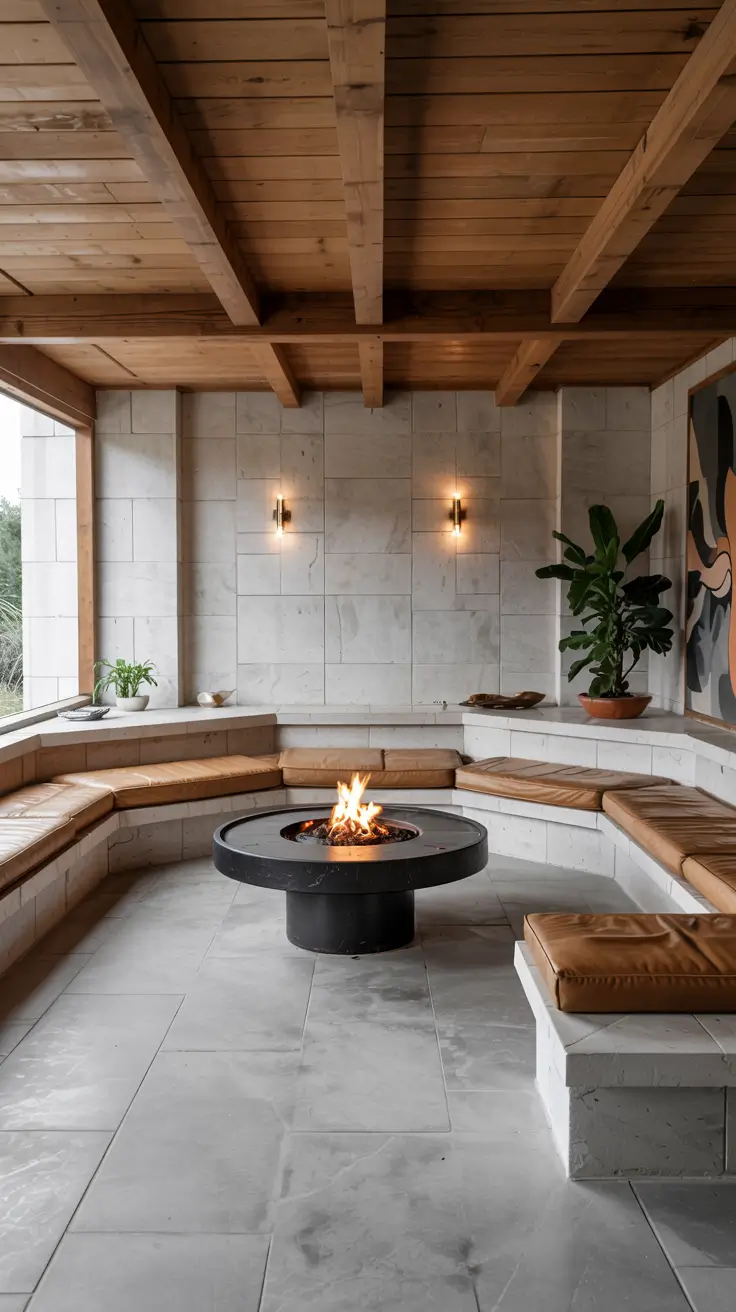
Seating is usually built in, upholstered in durable modern fabrics, and paired with a central table or a fire feature. I focus on ergonomic depth and supportive cushions for long term comfort while keeping the spirit of the original concept.
Personally, I see this style as a bridge between nostalgia and contemporary living. Many designers point to the social value of conversation pits, and I agree they encourage connection in a way few layouts can.
What I would add is flexibility. I often design removable cushions or modular elements so the pit can adapt to different uses over time.
Sunken Living Room Ideas Layouts That Improve Spatial Flow
Sunken living room layout planning in 2027 is all about movement and zoning. I use these layouts to separate the living area from a dining or kitchen zone while keeping an open plan feel. The change in level naturally guides how people move through the room.
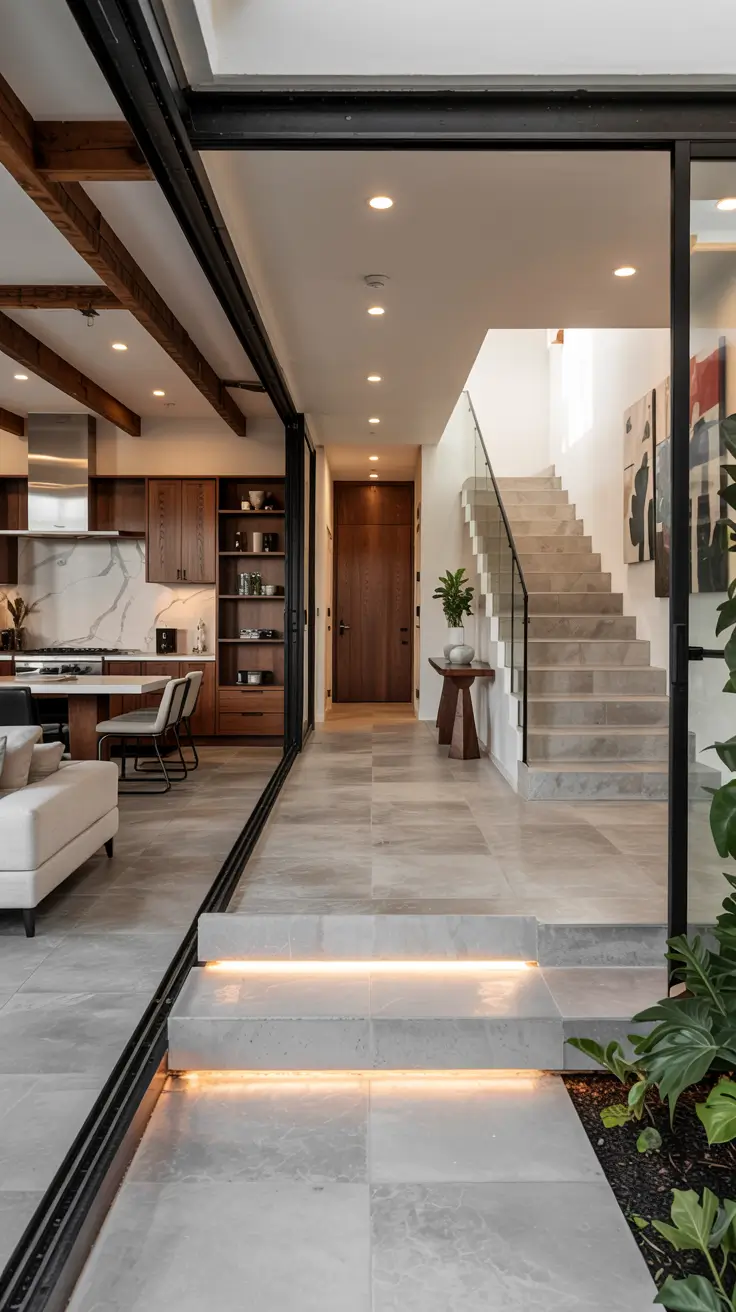
When it comes to design elements, steps, flooring changes, and ceiling treatments need to work together. I often specify one flooring material with slight texture variations to signal the transition. Furniture follows the circulation paths, keeping walkways clear and easy to read.
Based on my experience, the best layouts feel effortless. Interior design professionals often recommend testing a layout with full scale plans, and I always support that approach. It helps avoid awkward transitions and makes the room more comfortable to use.
What tends to be overlooked is the lighting hierarchy. I would add layered lighting plans with ambient, task, and accent lights to support the flow and usability of the room throughout the day.

More living room ideas
- Egg Chair Ideas for 2027
- Living Room Furniture for 2027
- Apartment Living Room Ideas for 2027
- Living Room Table Ideas for 2027
- Accent Chairs for Living Room 2027
- Boho Living Room Ideas for 2027
- 25 Contemporary Living Room Ideas for 2027
- 27 Living Room Makeover Ideas for 2027, From Cozy Nooks to Budget Refreshes
- Farmhouse Living Room Ideas for 2027
- Sofa Table Design for 2027
- Round Table Living Room Ideas for 2027
- Lounge Chair Ideas for Living Room 2027
- Chair Ideas 2027
- Sofa Ideas for 2027
You might also like
Living Room
20 Neutral Winter Living Room Decor 2026 Ideas for a Cozy Home
Living Room
Whites Living Room Ideas for 2027
Living Room
Summer Living Room Refresh Ideas 2027
Living Room