Outdoor reading nooks are becoming one of the most desired lifestyle trends in 2026, blending comfort, nature, and intentional design into everyday living. But what makes an outdoor reading nook truly cozy, functional, and inspiring? How can you design a space that works equally well for kids, adults, patios, balconies, or even school environments? In this guide, I will walk through practical outdoor reading nook ideas, from DIY setups to stylish patio solutions, helping you create a space that feels personal, relaxing, and beautifully designed.
1. Outdoor Reading Nook 2026 – Cozy Garden Escapes for Relaxing and Inspiration
I approach a modern outdoor reading nook as a seamless extension of the garden, where comfort meets intentional design. In 2026, these spaces focus on layering natural textures, soft seating, and subtle zoning to create a peaceful retreat. I prioritize positioning the nook where natural light is balanced with shade, often near greenery or a quiet corner of the yard to enhance relaxation and reduce distractions.
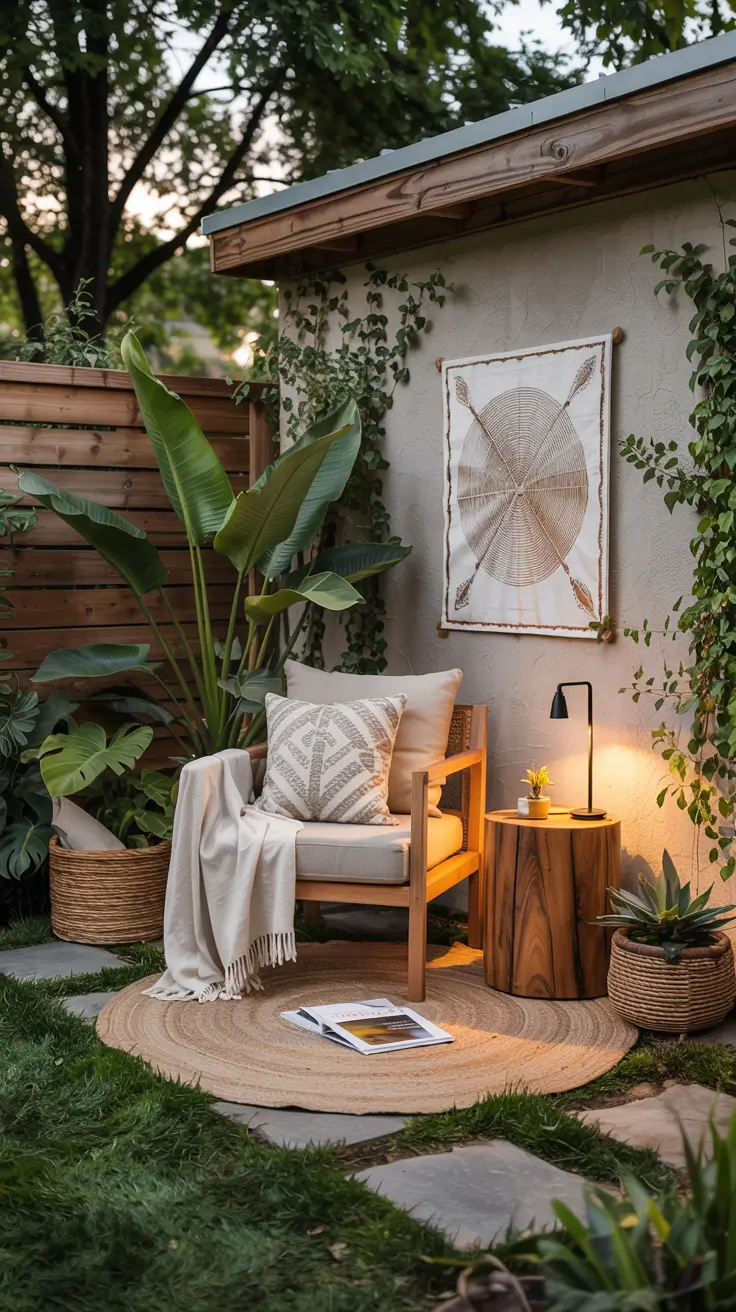
I typically include a deep cushioned lounge chair or a small outdoor sofa, paired with weather-resistant textiles in neutral or earthy tones. A low wooden table, outdoor rug, and soft throws add warmth and usability. I also recommend integrating vertical elements like trellises or planters to create a sense of enclosure without blocking airflow.
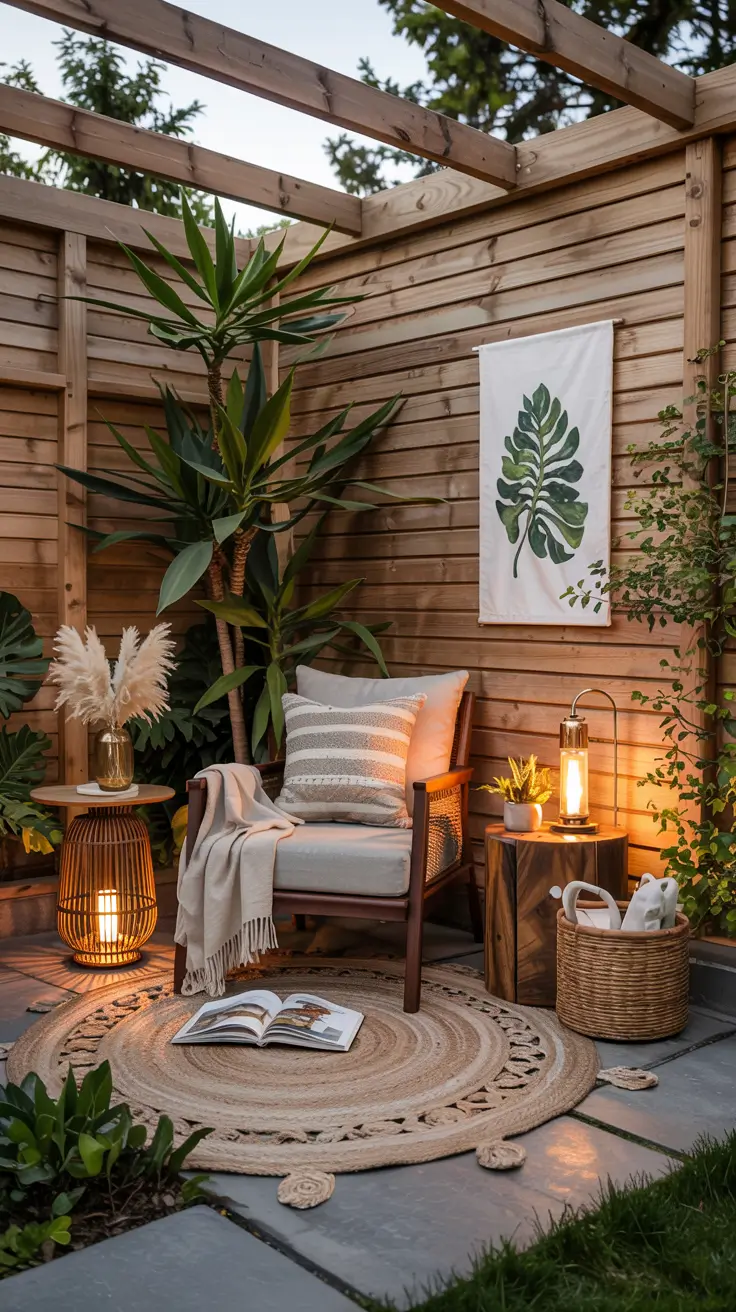
From my experience, the most successful designs feel personal rather than staged. I often take inspiration from editorial projects featured in architectural magazines, where designers emphasize sensory comfort, such as sound, light, and texture, over purely visual aesthetics.
What I would add here is a more defined lighting strategy. I recommend incorporating solar lanterns or warm LED string lights to ensure the nook remains functional during evening hours.
2. Outdoor Reading Nooks Ideas That Transform Any Backyard Into a Peaceful Retreat
When transforming a backyard into a reading retreat, I focus on zoning the space clearly. A reading nook should feel distinct from the rest of the yard, even if the area is small. I achieve this through layout planning, using rugs, planters, or pergolas to define boundaries while maintaining openness.
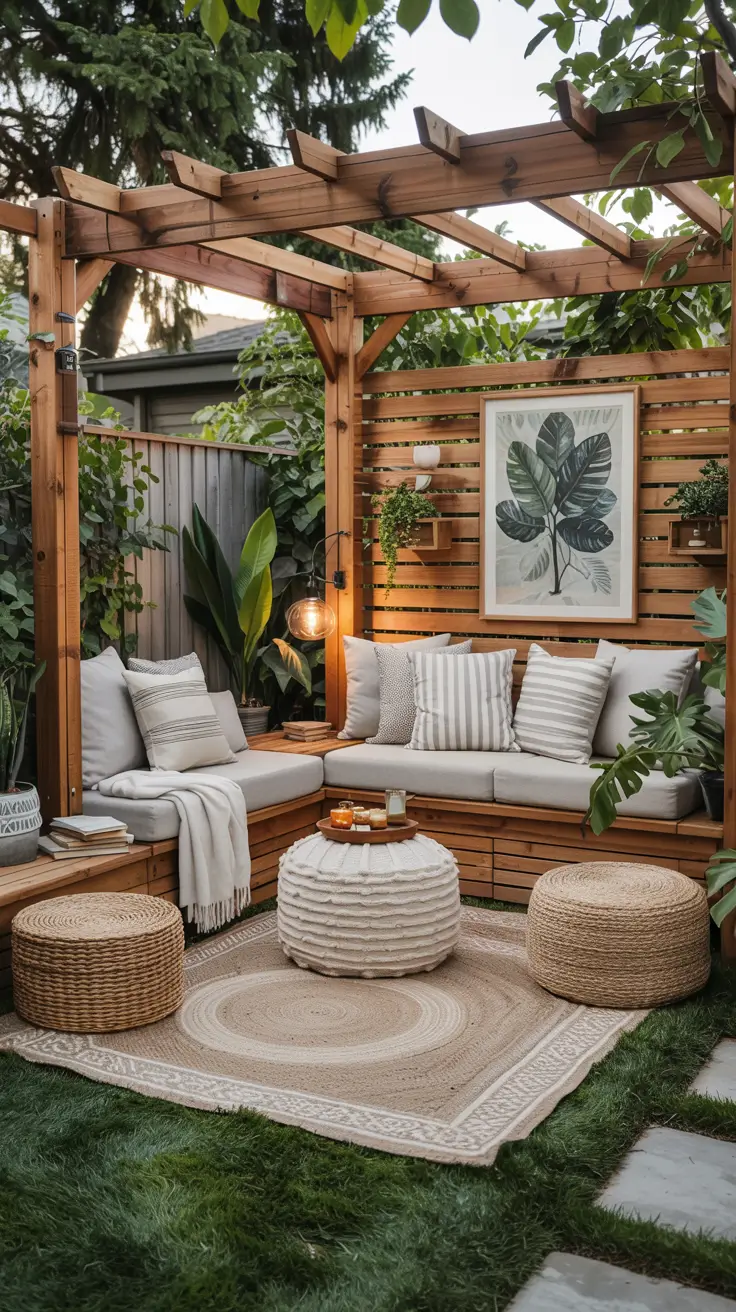
I include practical elements such as a weatherproof storage bench, side table for books, and layered seating options like poufs or cushions. These elements make the nook adaptable for different reading positions. Materials like teak, rattan, and powder-coated metal work well for durability and style.
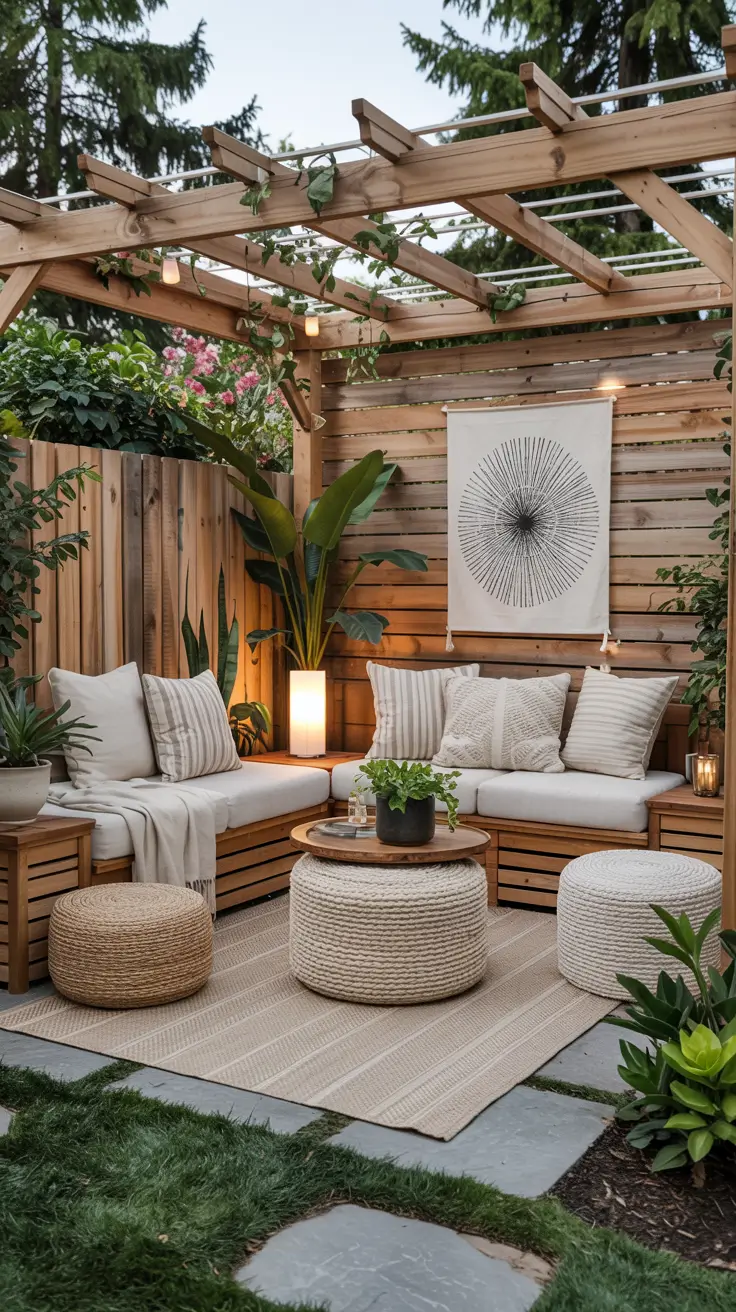
In my projects, I notice that people often underestimate the importance of acoustics. Adding plants or soft surfaces helps absorb noise, making the space more peaceful. This aligns with advice from outdoor design experts who emphasize multisensory comfort.
To improve this section, I would suggest integrating shade solutions such as umbrellas or retractable canopies to increase usability during hot summer days.
3. Cozy Outdoor Reading Nooks for Kids That Spark Imagination and Learning
Designing outdoor reading nooks for kids requires a different mindset. I focus on creating a space that feels playful yet safe, encouraging curiosity and independence. Positioning the nook in a visible but slightly secluded area helps children feel both secure and adventurous.
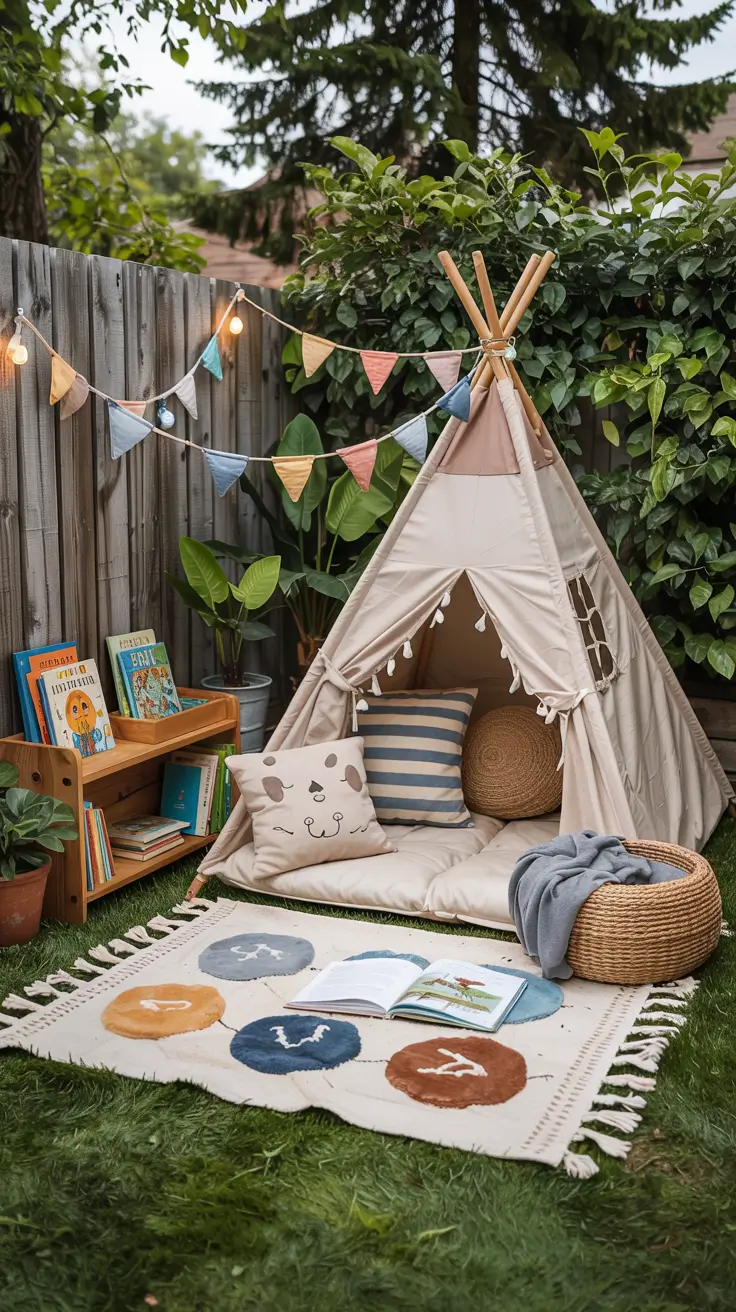
I use soft, durable materials such as foam cushions, washable rugs, and low seating like bean bags or floor mats. Adding elements like small shelves, baskets for books, and themed decor inspired by nature or storytelling enhances engagement.
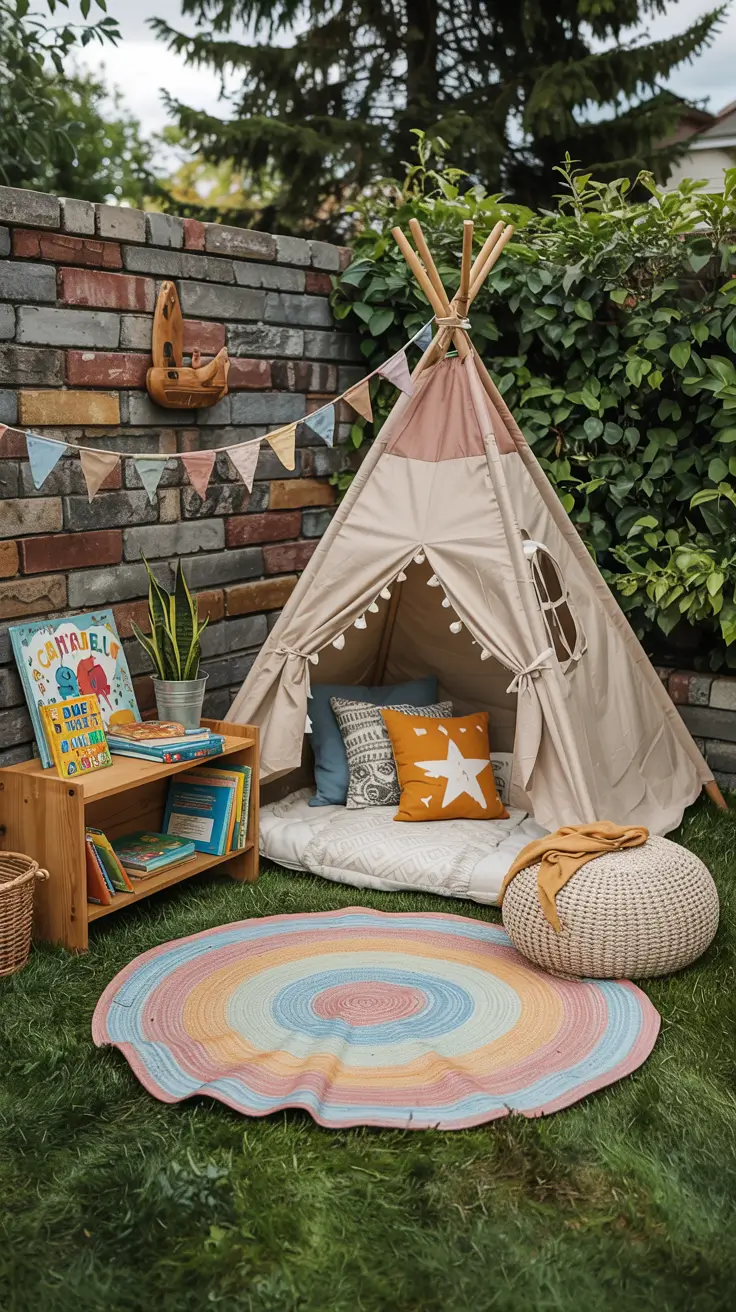
In my experience, children respond strongly to environments that feel like their own world. I often incorporate small tents, teepees, or canopy fabrics to create a sense of enclosure, which supports focus and imaginative play.
What I would add is more interactive features, such as chalkboards, sensory walls, or rotating book displays to keep the space dynamic and educational.
4. DIY Outdoor Reading Nook Ideas for Budget Friendly Backyard Comfort
When working on outdoor reading nooks DIY projects, I prioritize affordability without sacrificing comfort. Repurposing materials is key. I often start with pallets or reclaimed wood to build seating structures, which can be customized to fit any space.
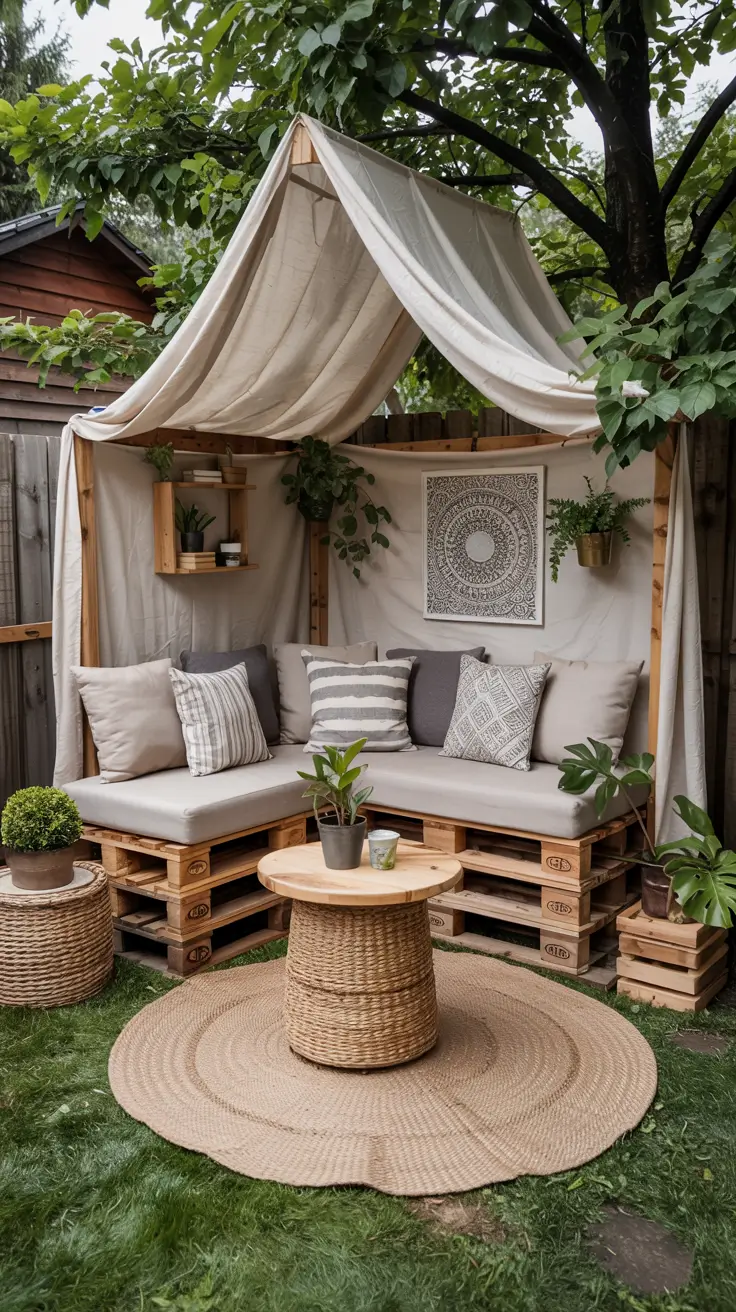
I recommend adding thick cushions, outdoor fabric covers, and simple backrests to improve ergonomics. A DIY canopy made from fabric or shade sails can instantly elevate the design while providing necessary sun protection.
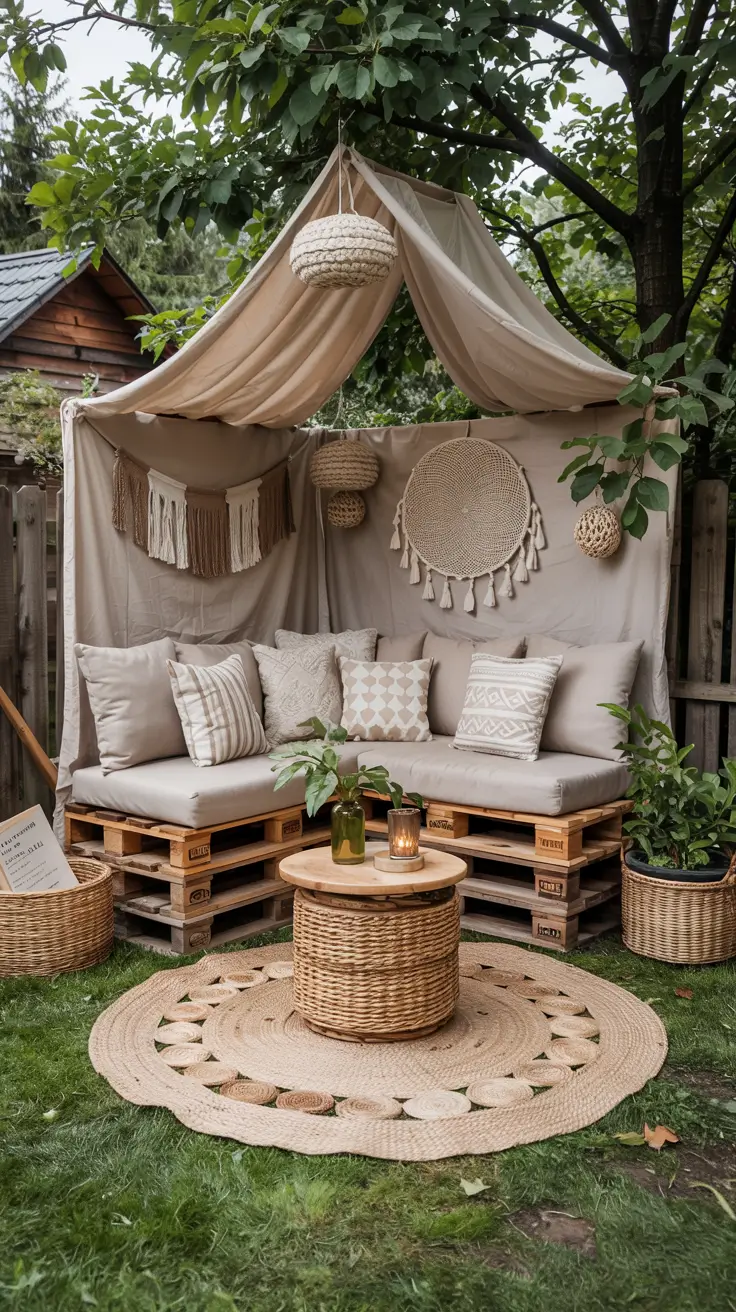
From my perspective, DIY projects offer more flexibility and personalization than store-bought solutions. They allow you to adapt the design to your specific outdoor conditions and preferences.
To enhance this setup, I would suggest sealing all materials properly to protect against weather damage and extend the lifespan of the nook.
5. Outdoor Reading Nook Inspiration for Stylish and Functional Spaces
When I look for outdoor reading nook inspiration, I focus on balance between aesthetics and usability. A visually appealing space should still support long reading sessions without discomfort. I design with symmetry, color harmony, and intentional focal points.
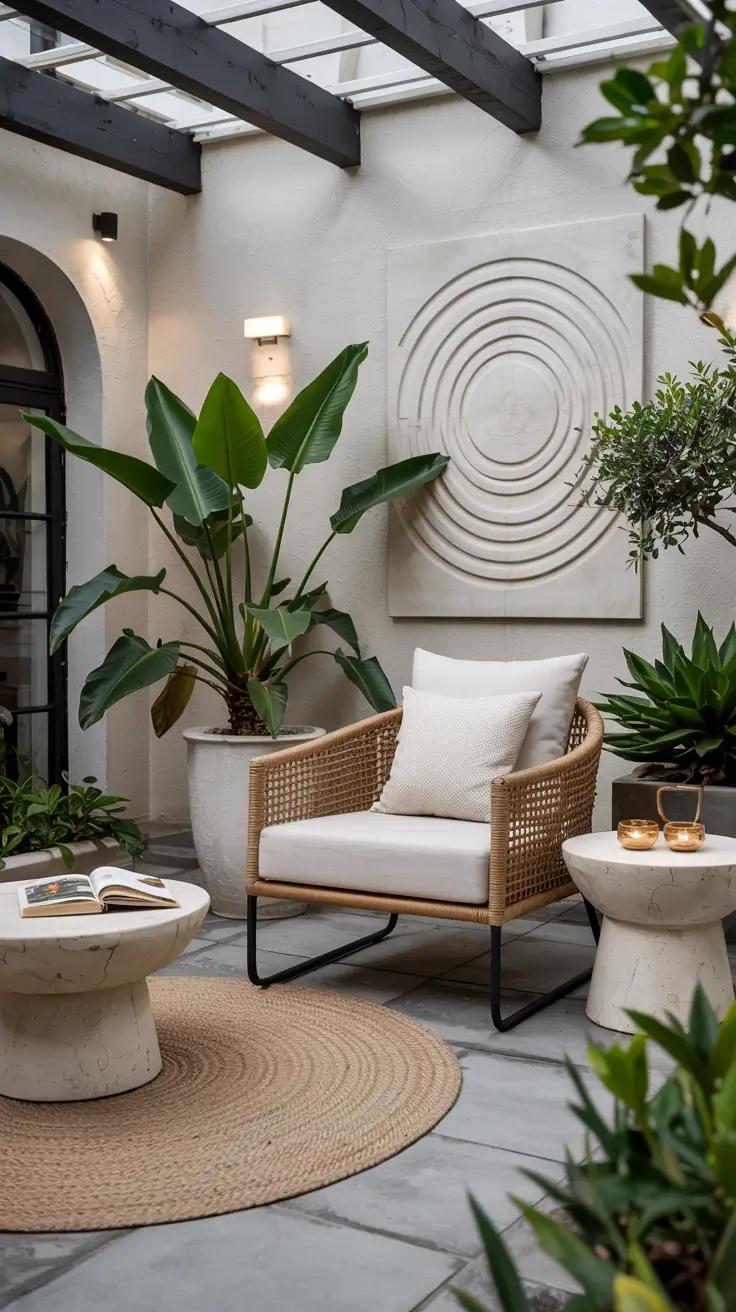
Furniture selection plays a major role. I often combine a statement chair with minimalist accessories, such as a sleek side table and subtle lighting. Decorative elements like outdoor art, cushions, and planters help define the style without overcrowding the space.
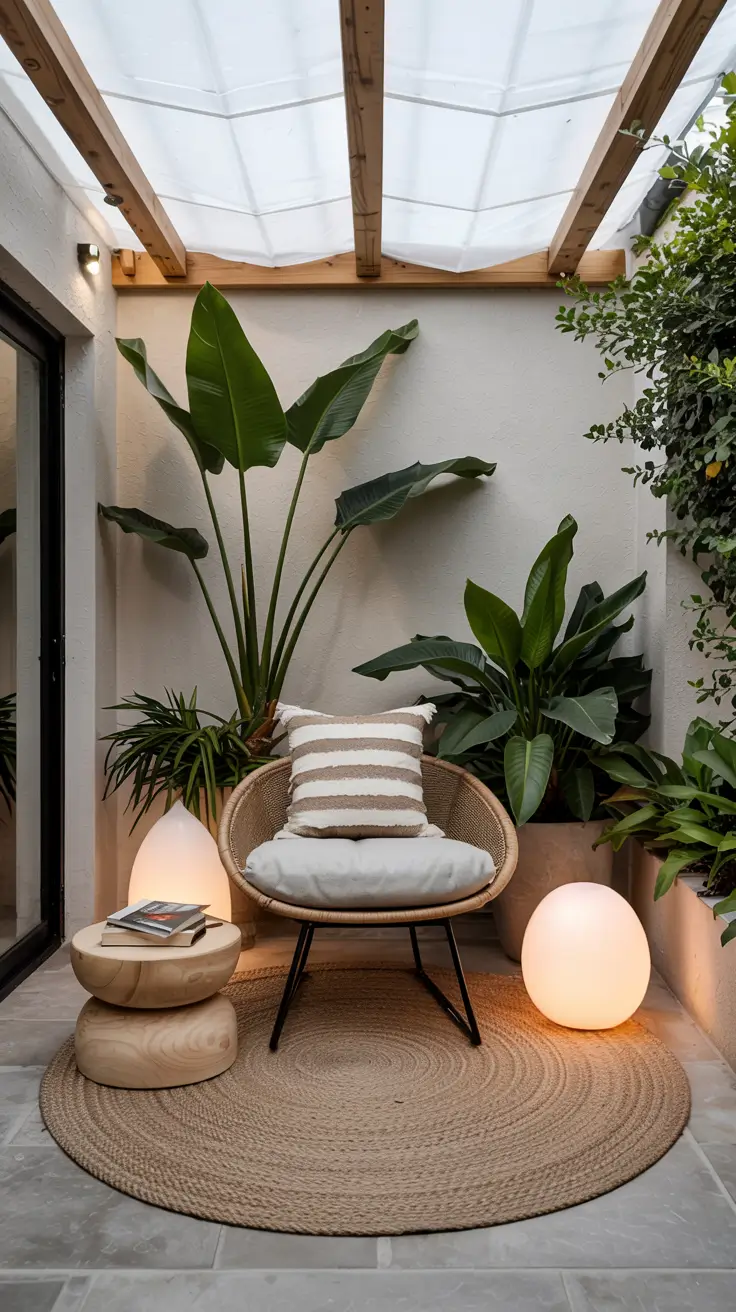
In my work, I draw inspiration from modern outdoor living trends that emphasize simplicity and natural integration. Clean lines paired with organic textures create timeless appeal.
What could be added here is a clearer color palette strategy. I recommend sticking to 2-3 main tones to maintain cohesion and avoid visual clutter.
6. Outdoor Reading Nooks Patio Designs for Small and Large Spaces
Designing outdoor reading nooks patio layouts depends heavily on available space. For smaller patios, I focus on vertical design and multifunctional furniture to maximize efficiency. For larger areas, I create layered zones that separate reading from dining or social spaces.
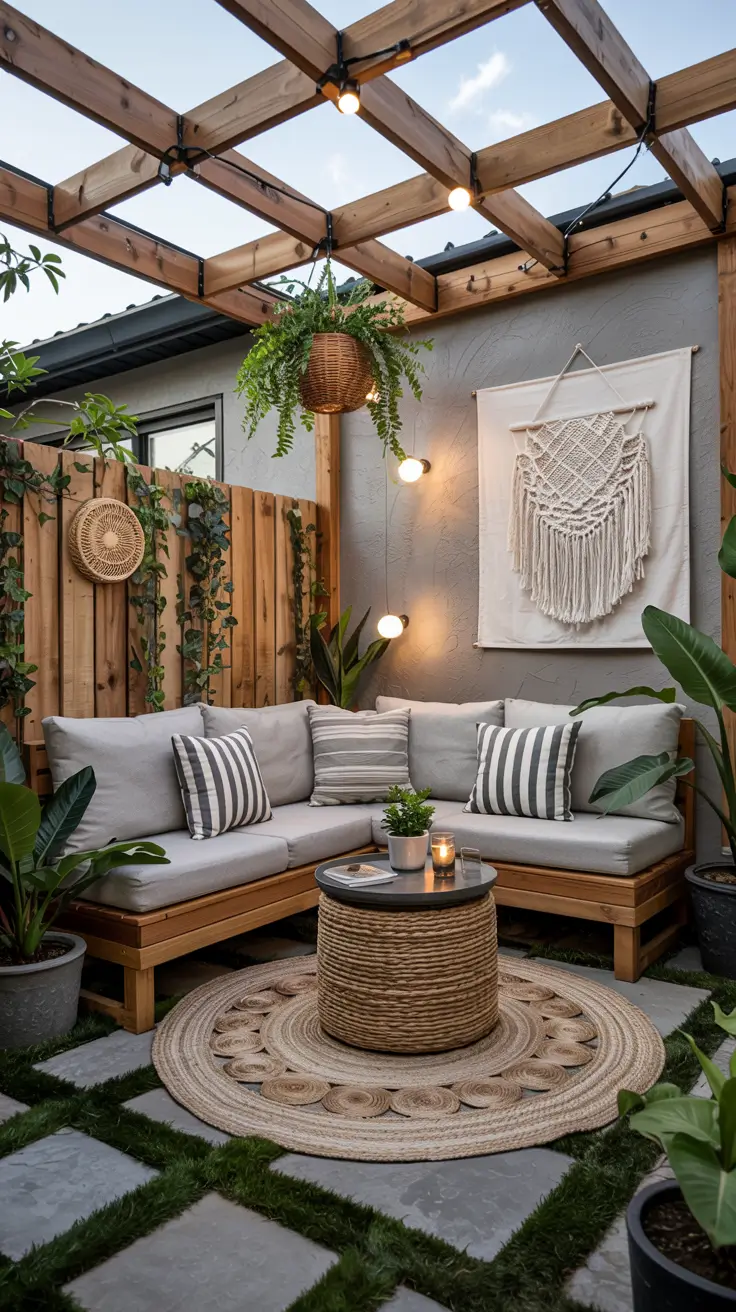
I typically include compact seating like corner benches or foldable chairs for small patios, while larger patios allow for lounge chairs, swings, or even daybeds. Rugs and lighting help unify the space and make it feel intentional.
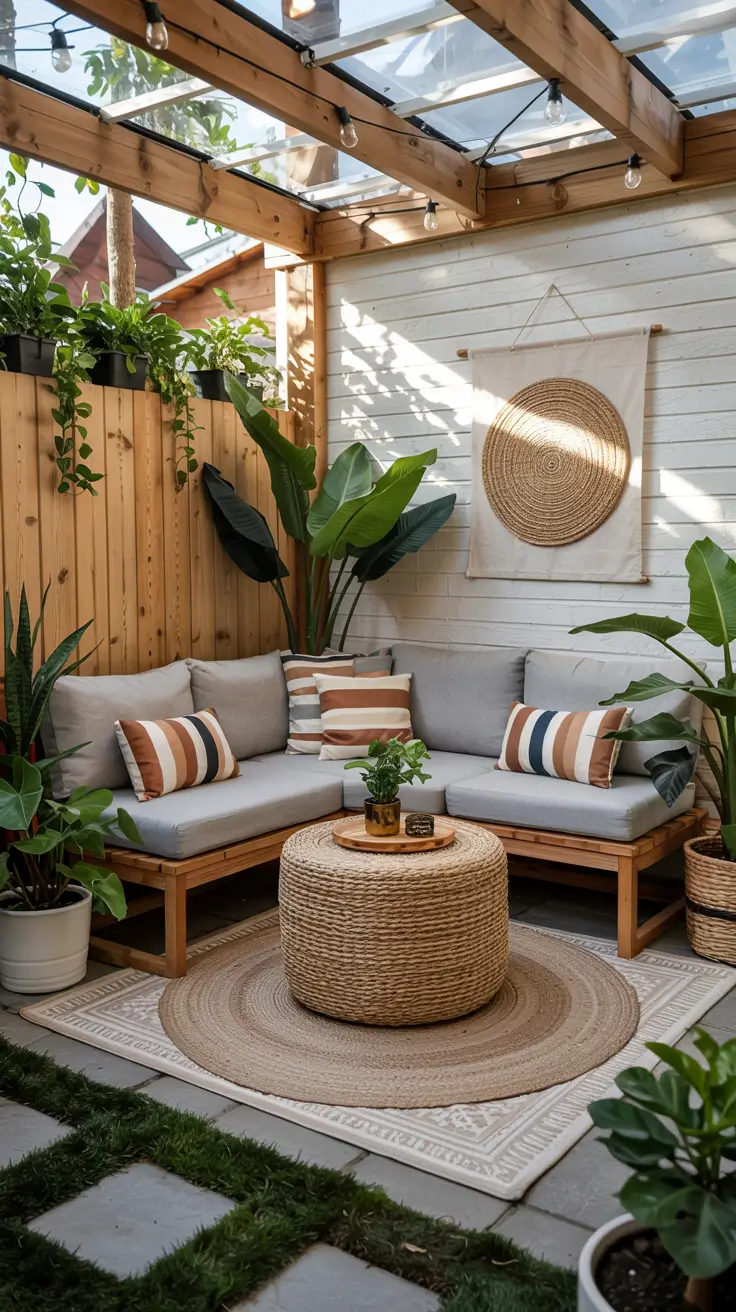
From my experience, flexibility is crucial. A well-designed patio nook should adapt to different times of day and weather conditions. Adjustable furniture and modular layouts work best.
To improve this section, I would include recommendations for wind protection, such as screens or strategically placed plants, especially for exposed patio areas.
7. Outdoor Reading Nook School Concepts for Creative Learning Environments
In educational settings, outdoor reading nook school designs focus on accessibility, durability, and engagement. I design these spaces to support group reading as well as individual quiet time. Layout planning ensures easy supervision while maintaining a calm atmosphere.
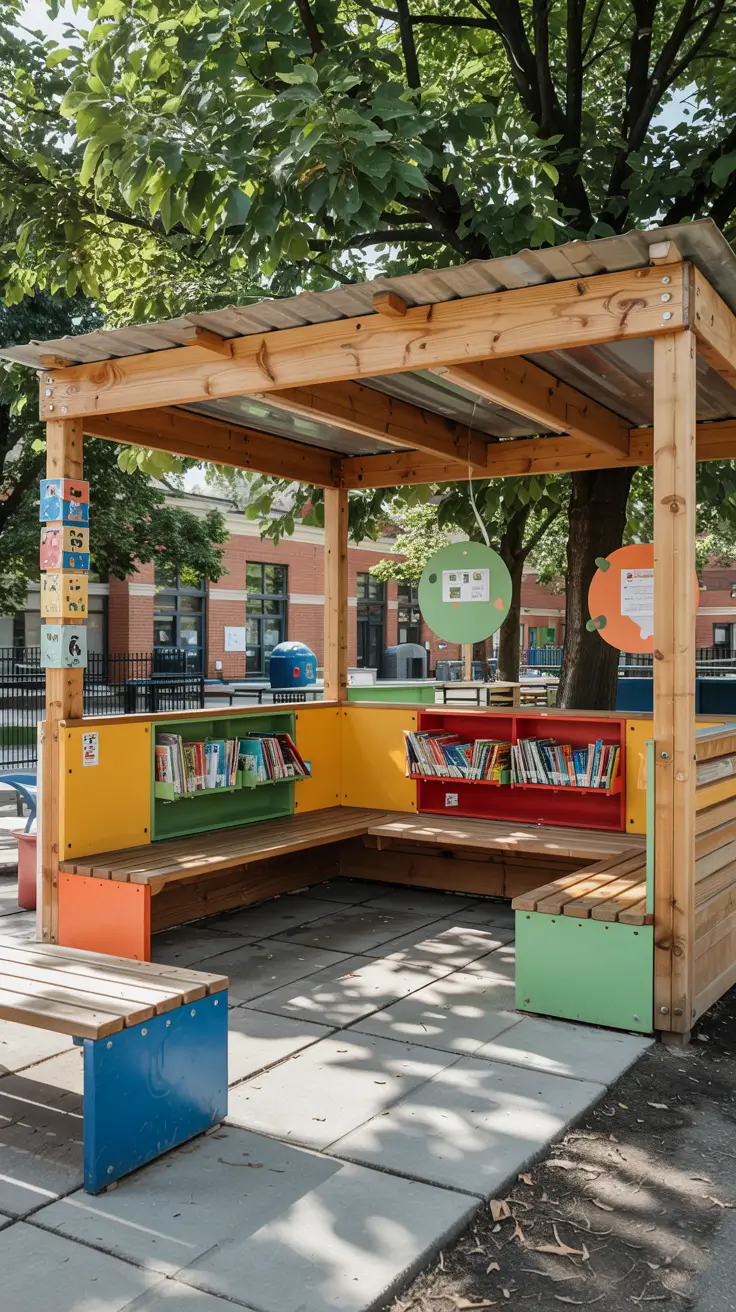
I use sturdy, weather-resistant furniture such as benches, modular seating, and outdoor storage units. Bright but balanced colors help create an inviting environment without overstimulation. Shade structures are essential for safety and comfort.
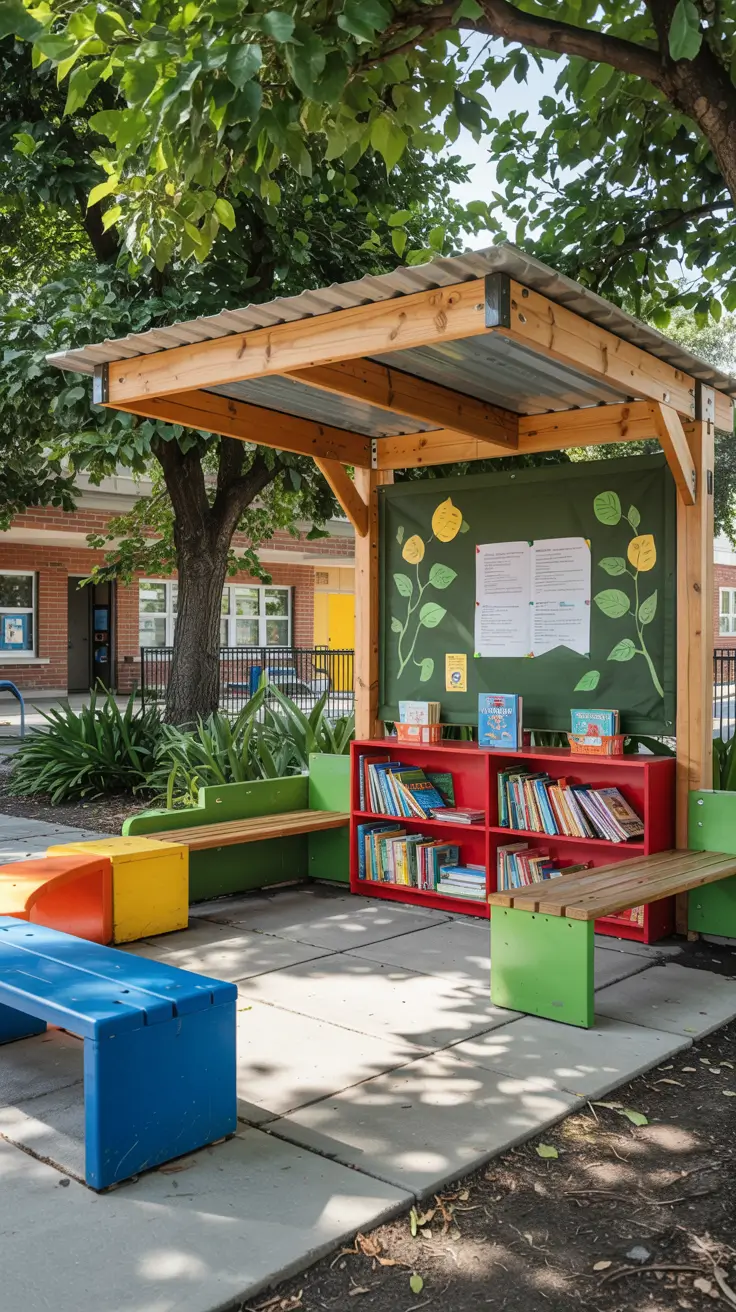
Based on my experience, outdoor learning spaces significantly improve student focus and engagement. Many educational design guidelines emphasize the benefits of nature-based environments for cognitive development.
What I would add is more emphasis on inclusivity, ensuring that the design accommodates children of different abilities through accessible seating and pathways.
8. Outdoor Reading Nooks Balcony Ideas for Compact Urban Living
When designing outdoor reading nooks balcony spaces, I focus on maximizing every square meter without making the area feel crowded. In urban settings, the key is to create a sense of privacy and calm despite the surrounding noise. I usually position seating along one side and use vertical elements like rail planters or screens to visually separate the nook from the rest of the balcony.
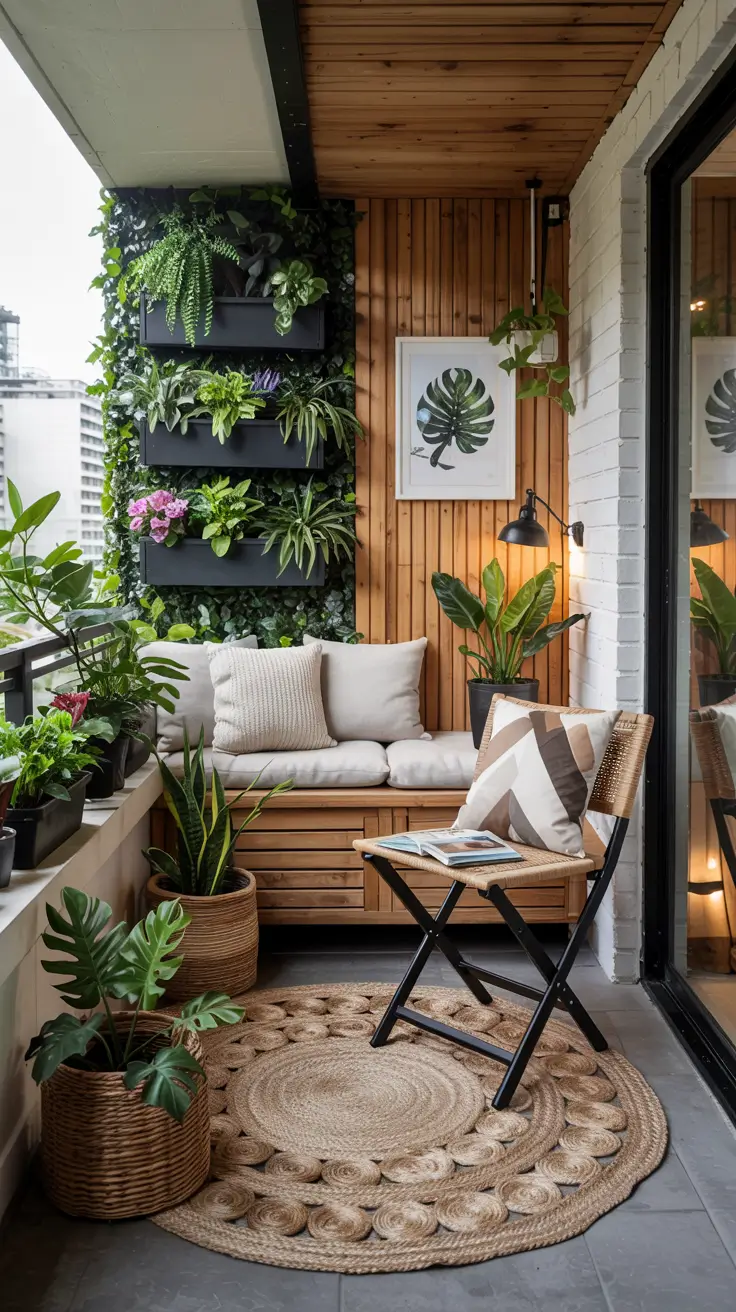
I choose compact, multifunctional furniture such as foldable chairs, slim benches with storage, or hanging chairs. Soft cushions, outdoor rugs, and lightweight throws help introduce comfort without overwhelming the space. I also recommend adding greenery like potted herbs or climbing plants to soften hard surfaces and improve the atmosphere.
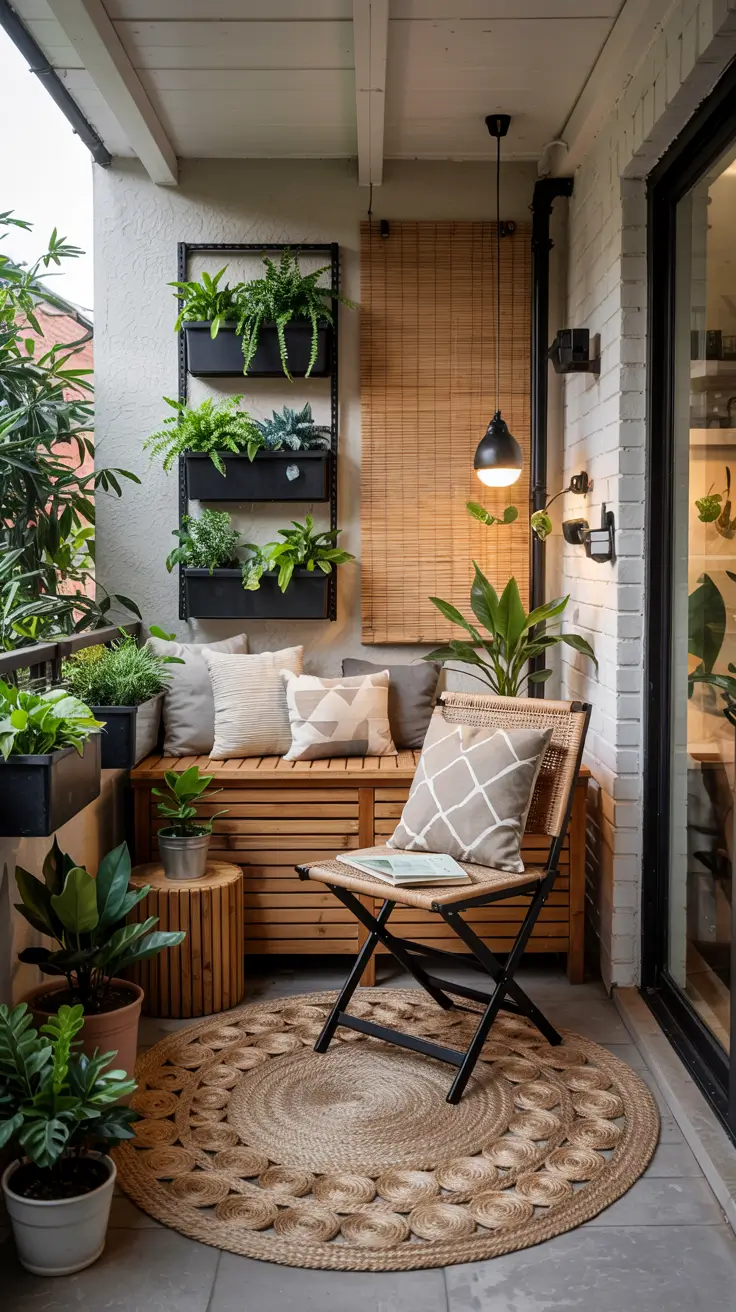
From my experience, balconies benefit greatly from intentional styling. Even small details like coordinated textiles or a consistent color palette can elevate the space significantly. Designers often highlight that small outdoor areas should feel curated rather than cluttered.
What I would add is better wind and sun control. Installing bamboo screens or outdoor curtains can make the balcony nook more usable throughout the day.
9. Outdoor Reading Nook Under Tree Ideas for Natural Shade and Calm
Creating an outdoor reading nook under tree is one of the most natural and calming solutions. I usually select a tree with a wide canopy that provides consistent shade throughout the day. The placement should allow enough airflow while still feeling enclosed and peaceful.
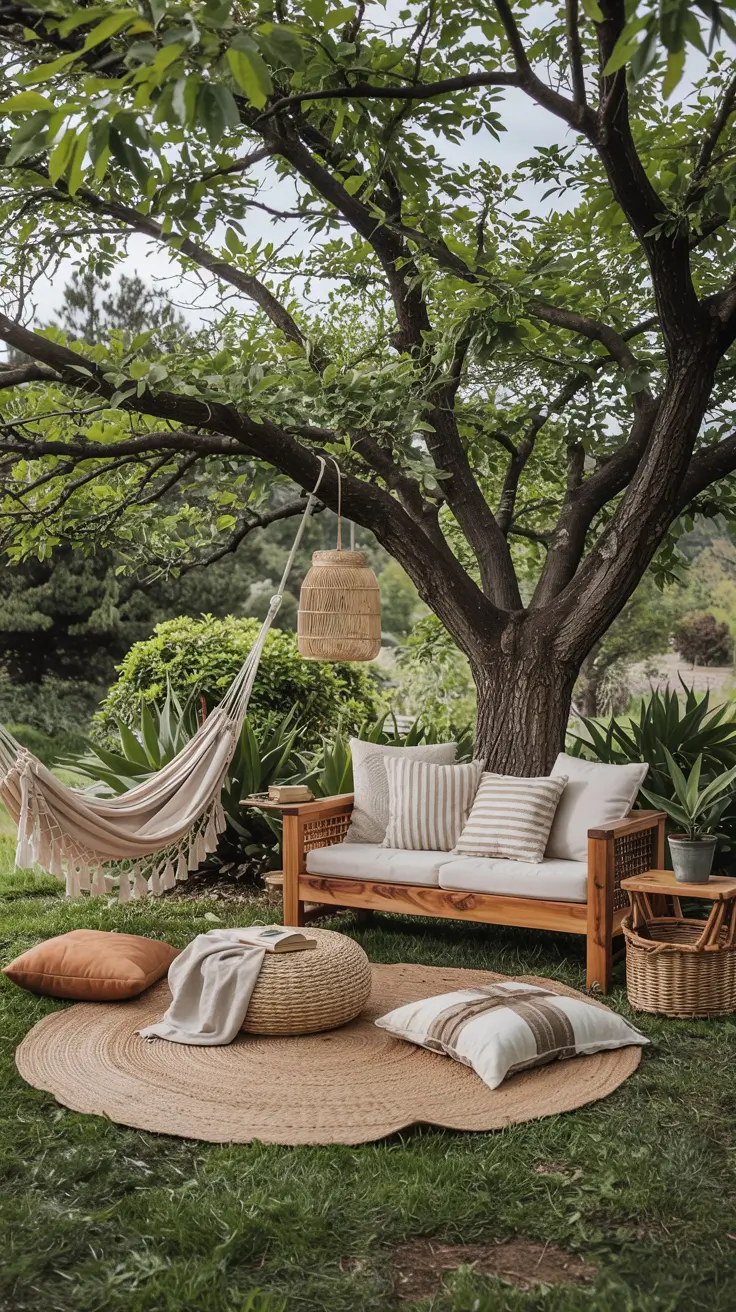
I incorporate simple seating like a wooden bench, hammock, or layered floor cushions. Natural materials work best in this setting – wood, linen, and cotton blend seamlessly with the surroundings. Adding a small side table or crate for books keeps the space functional.
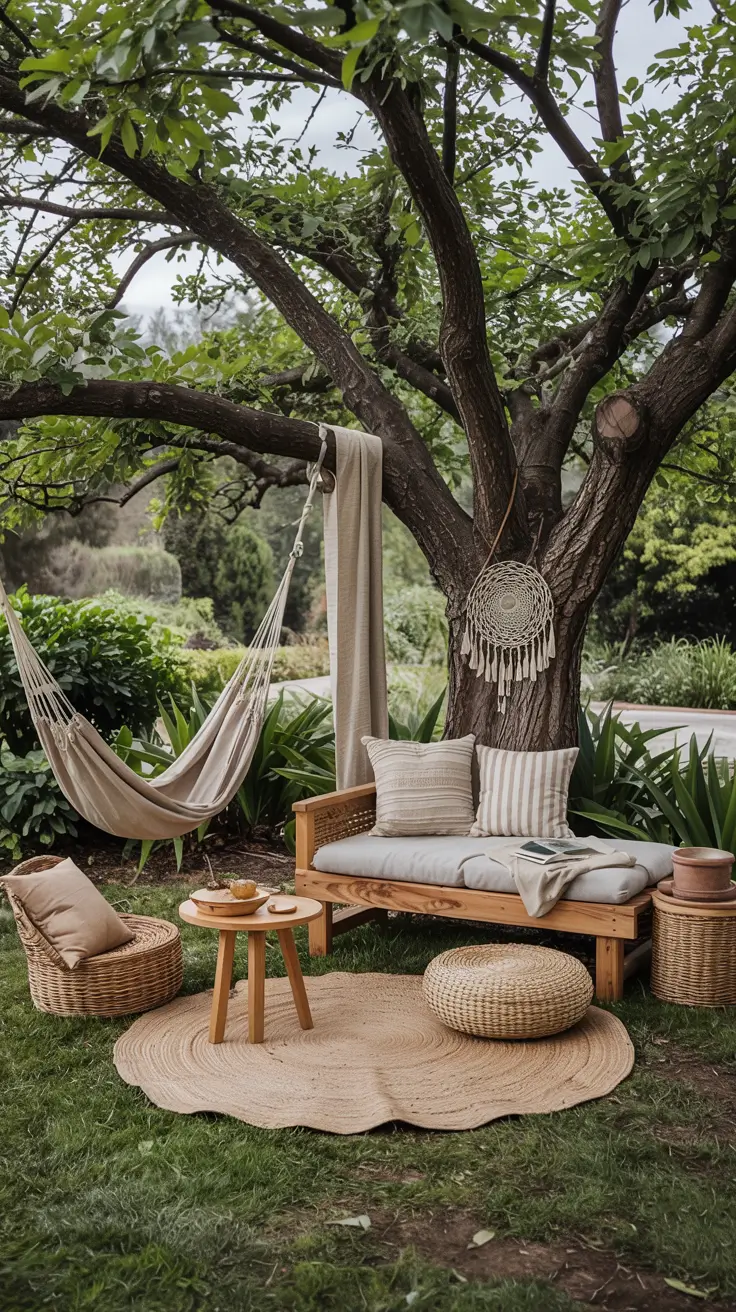
In my experience, the sound of leaves and natural shade creates a unique sensory environment that cannot be replicated artificially. This type of nook often becomes the most used space in the garden.
To enhance this section, I would recommend adding ground covering such as gravel, decking, or outdoor rugs to prevent moisture and improve comfort.
10. Outdoor Reading Nook Ideas for Kids with Fun and Cozy Seating
When planning outdoor reading nook ideas for kids, I focus on comfort combined with playful elements. The goal is to create a space that encourages children to spend time reading while feeling relaxed and engaged. I usually design with lower seating and soft boundaries to make the space approachable.
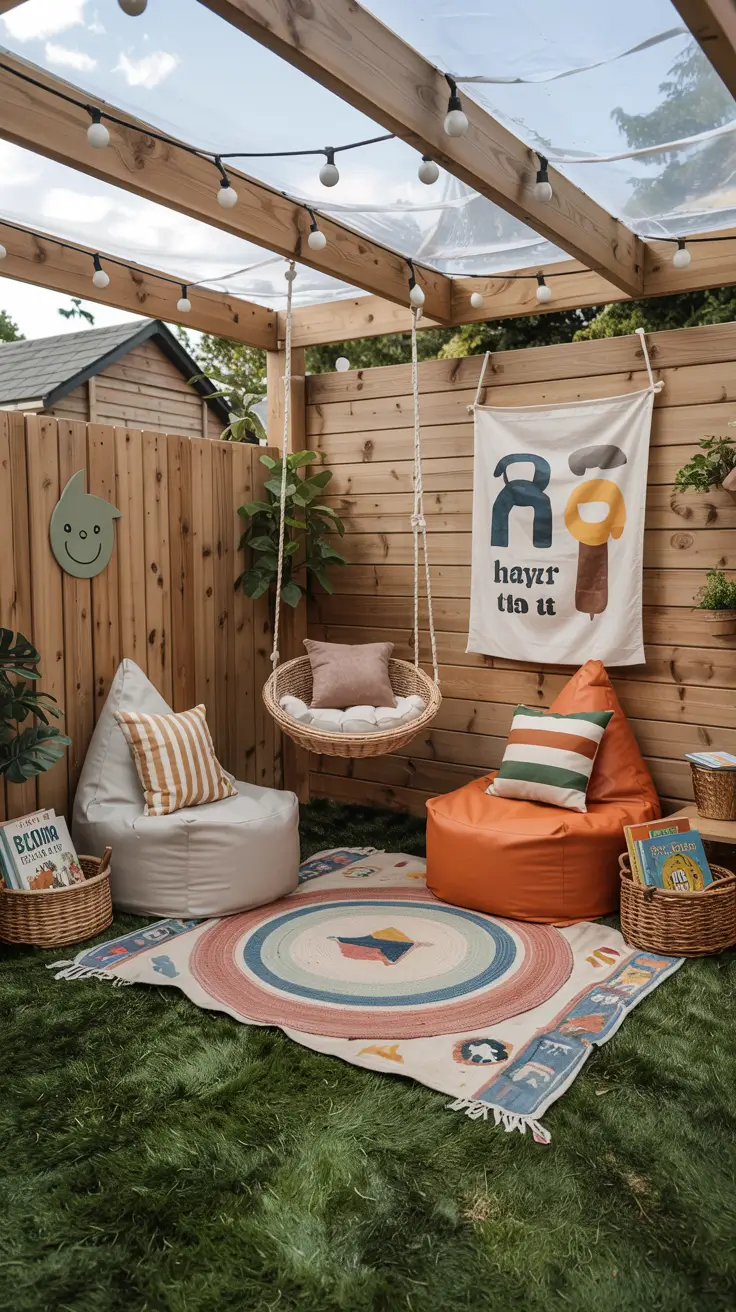
I include bean bags, floor cushions, small swings, or even hanging chairs to create variety. Bright but not overwhelming colors, themed decor, and accessible book storage make the nook functional and inviting. Materials should always be safe, durable, and easy to clean.
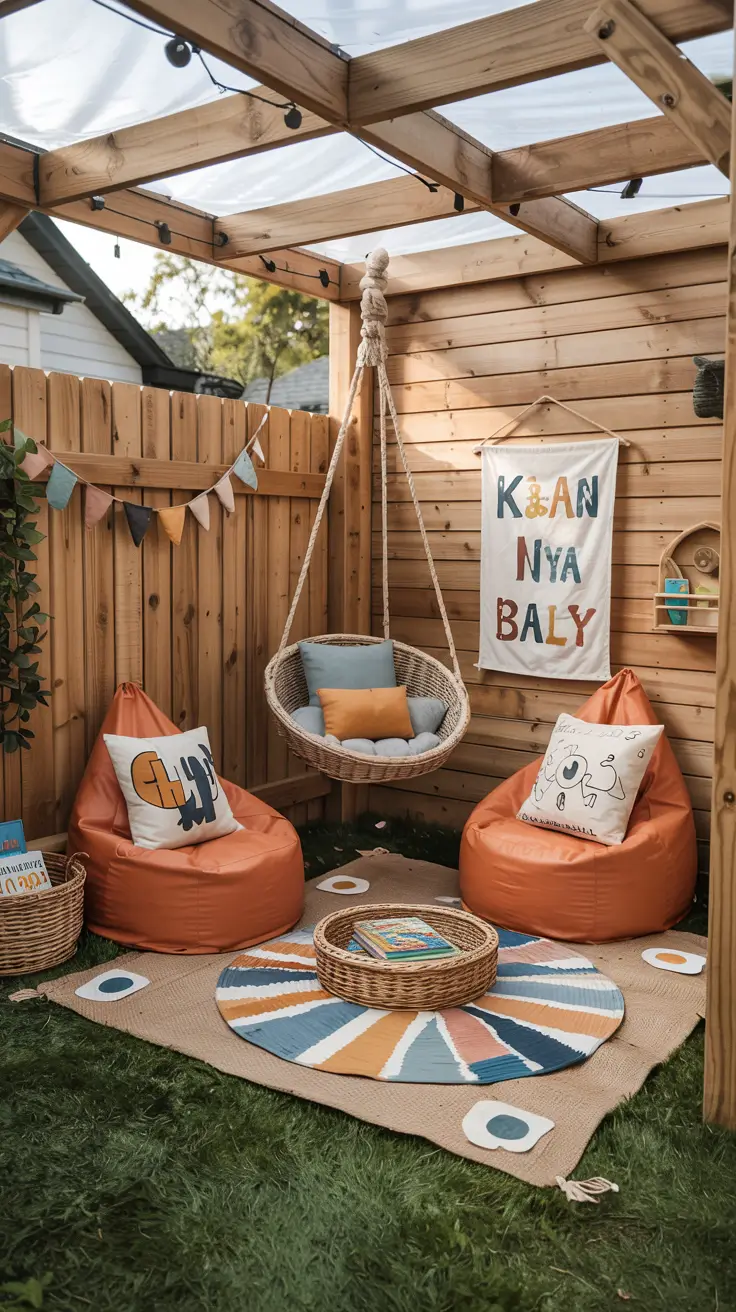
From my perspective, variety in seating helps maintain interest. Children enjoy choosing where and how they sit, which increases the likelihood of them using the space regularly.
What I would add is more shade and weather protection to ensure the nook remains usable throughout different seasons.
11. Outdoor Reading Nook Ideas for Adults Seeking Relaxation and Privacy
Outdoor reading nook ideas for adults should prioritize comfort, privacy, and simplicity. I usually design these spaces as quiet retreats, slightly separated from high-traffic areas. Positioning the nook near greenery or water features enhances the calming effect.
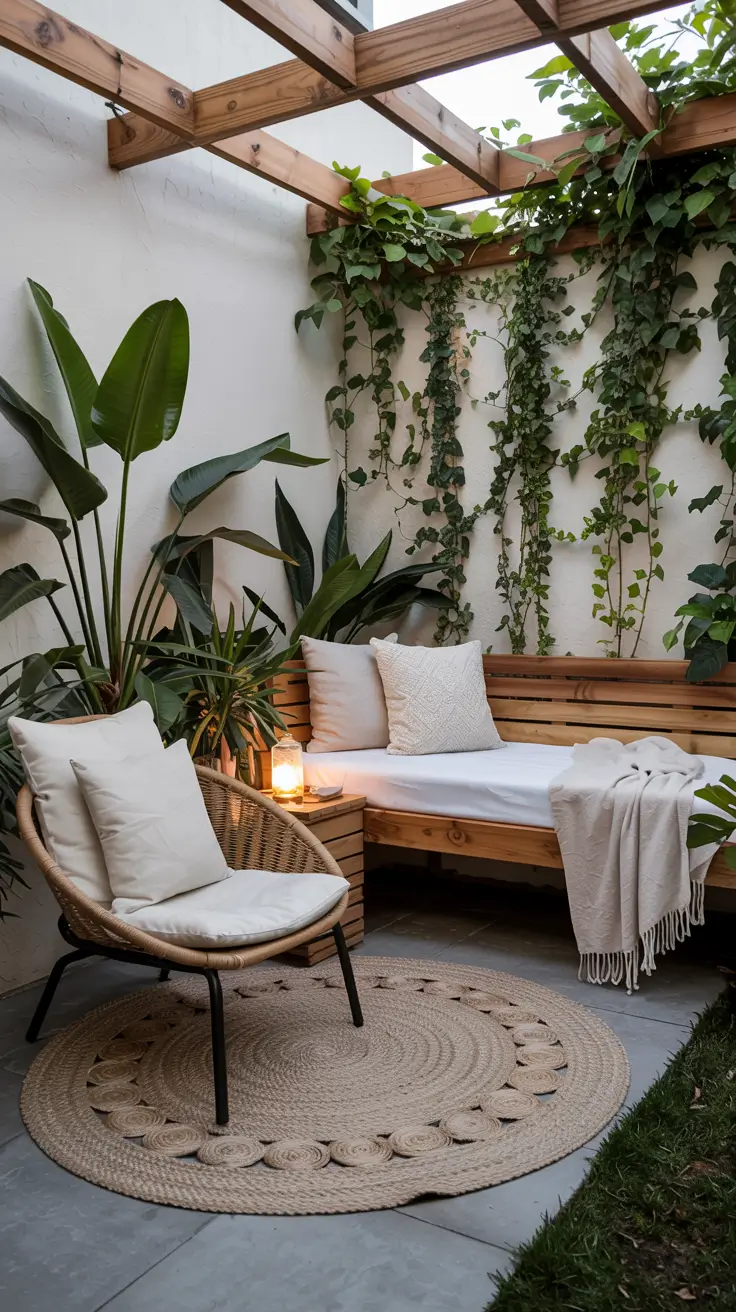
I recommend investing in ergonomic seating such as lounge chairs or daybeds. Adding side tables, subtle lighting, and neutral-toned textiles creates a cohesive and relaxing environment. Privacy screens, tall plants, or pergolas help define the space.
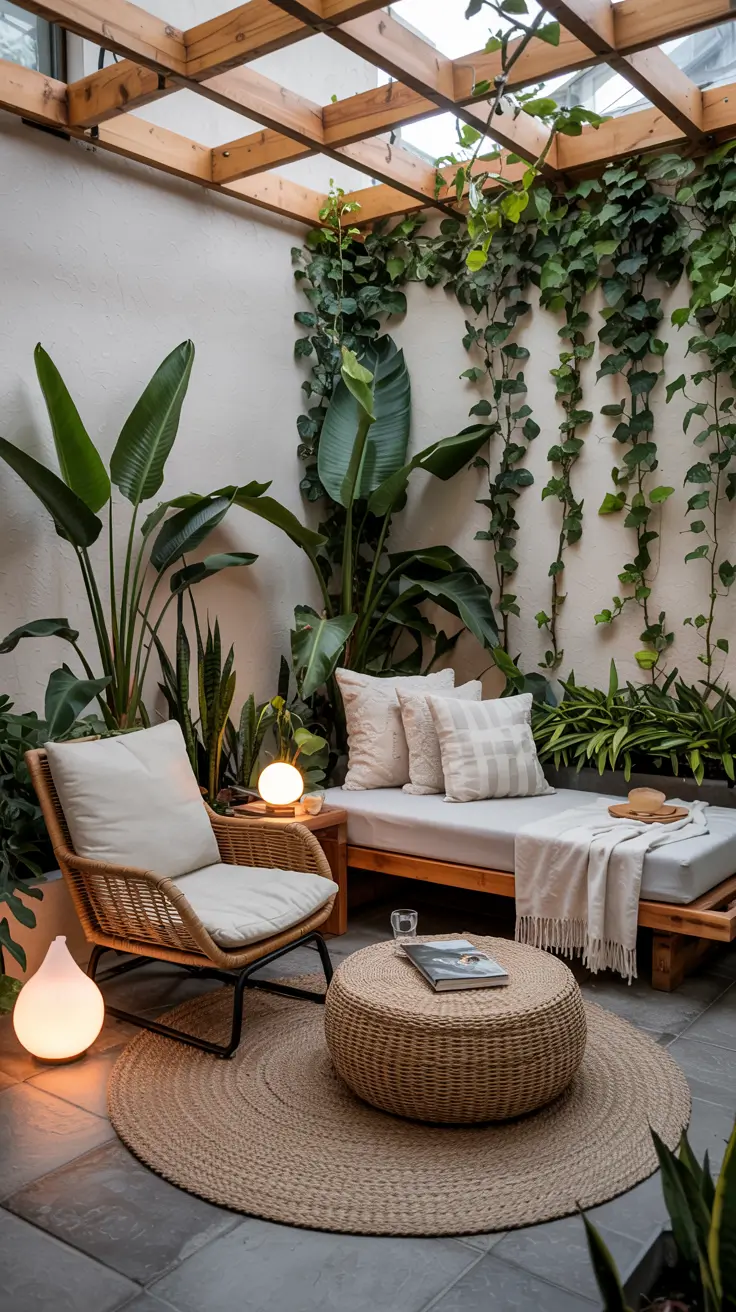
In my experience, adults value consistency and comfort over decorative complexity. A well-designed nook should support long reading sessions without distraction.
To improve this section, I would include sound elements like water features or wind chimes to enhance the sensory experience.
12. Garden Outdoor Reading Nook Ideas for a Lush and Peaceful Escape
Garden outdoor reading nook ideas focus on integrating the nook naturally into the landscape. I usually design these spaces as hidden corners surrounded by plants, creating a sense of retreat and immersion in nature.
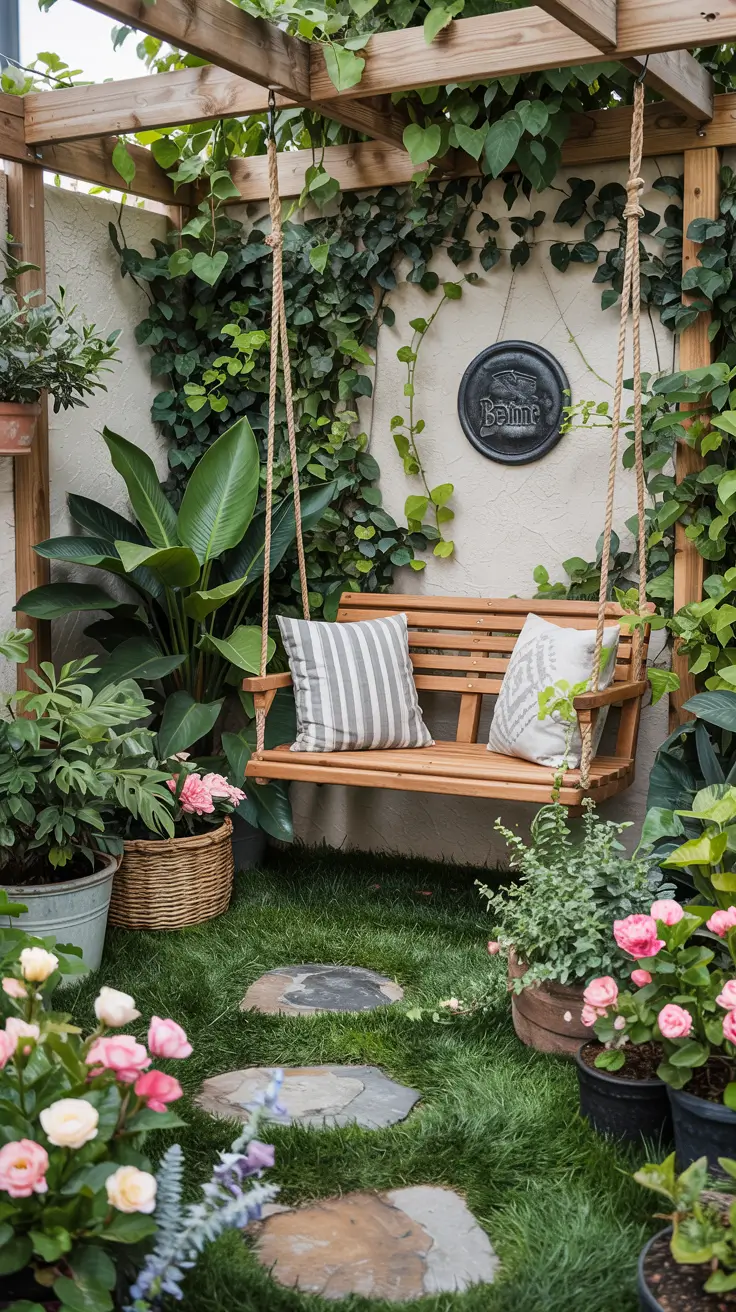
I incorporate benches, swings, or even built-in seating surrounded by greenery. Climbing plants, flower beds, and layered planting help create depth and visual interest. A small pathway leading to the nook enhances the experience.
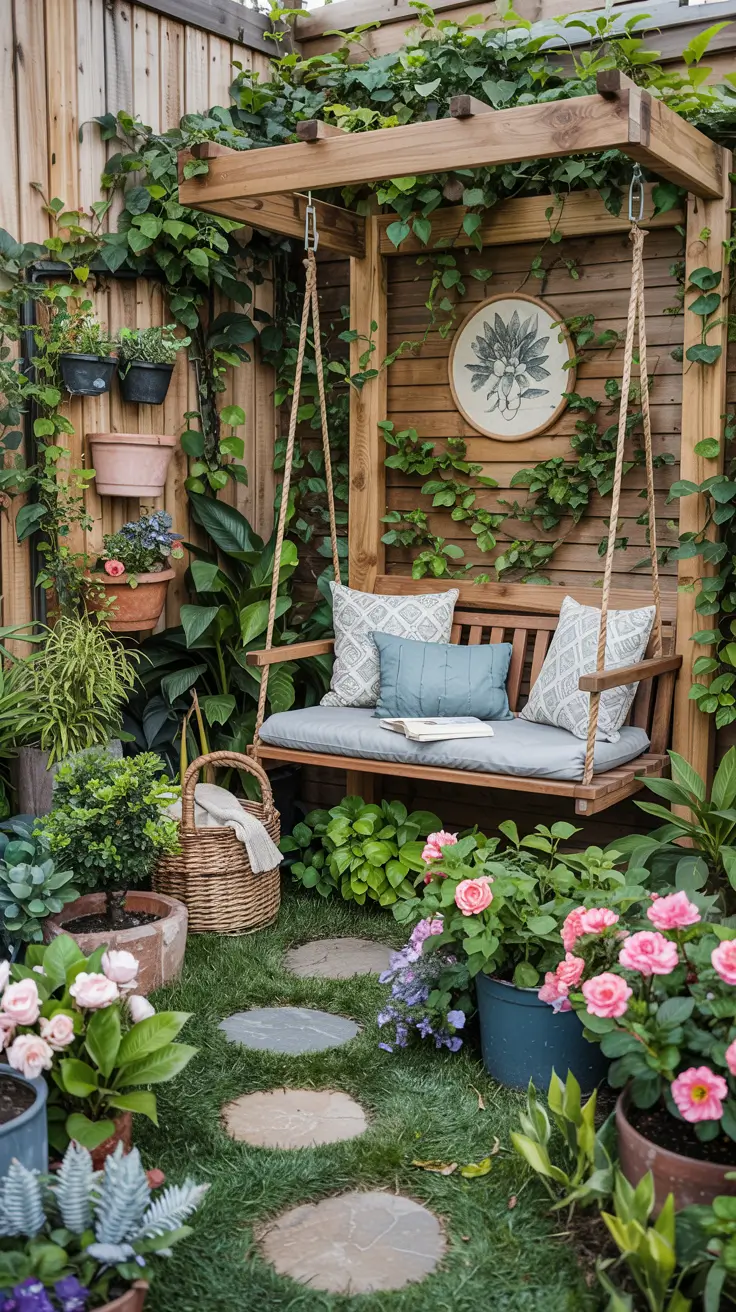
From my experience, these spaces feel more special when slightly concealed. The journey to the nook becomes part of the experience, making it more inviting and unique.
What I would add is a lighting plan for evening use, such as solar path lights or subtle garden lighting.
13. Outdoor Reading Nook Ideas with Hammocks for Ultimate Comfort
Outdoor reading nook ideas with hammocks are ideal for those who prioritize relaxation. I usually position hammocks between trees or on sturdy frames, ensuring stability and proper tension. The surrounding area should feel open yet comfortable.
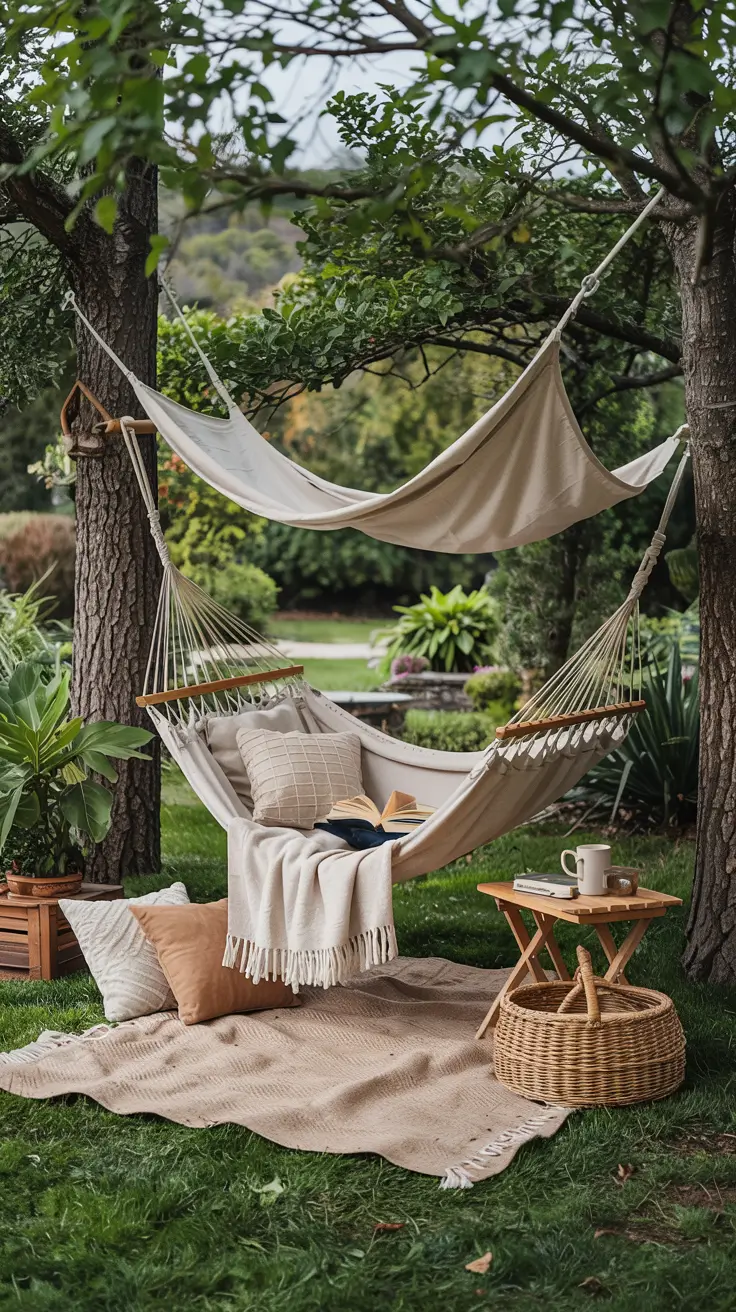
I complement the hammock with soft blankets, outdoor pillows, and a nearby side table. Adding shade through trees, umbrellas, or fabric canopies improves usability during the day.
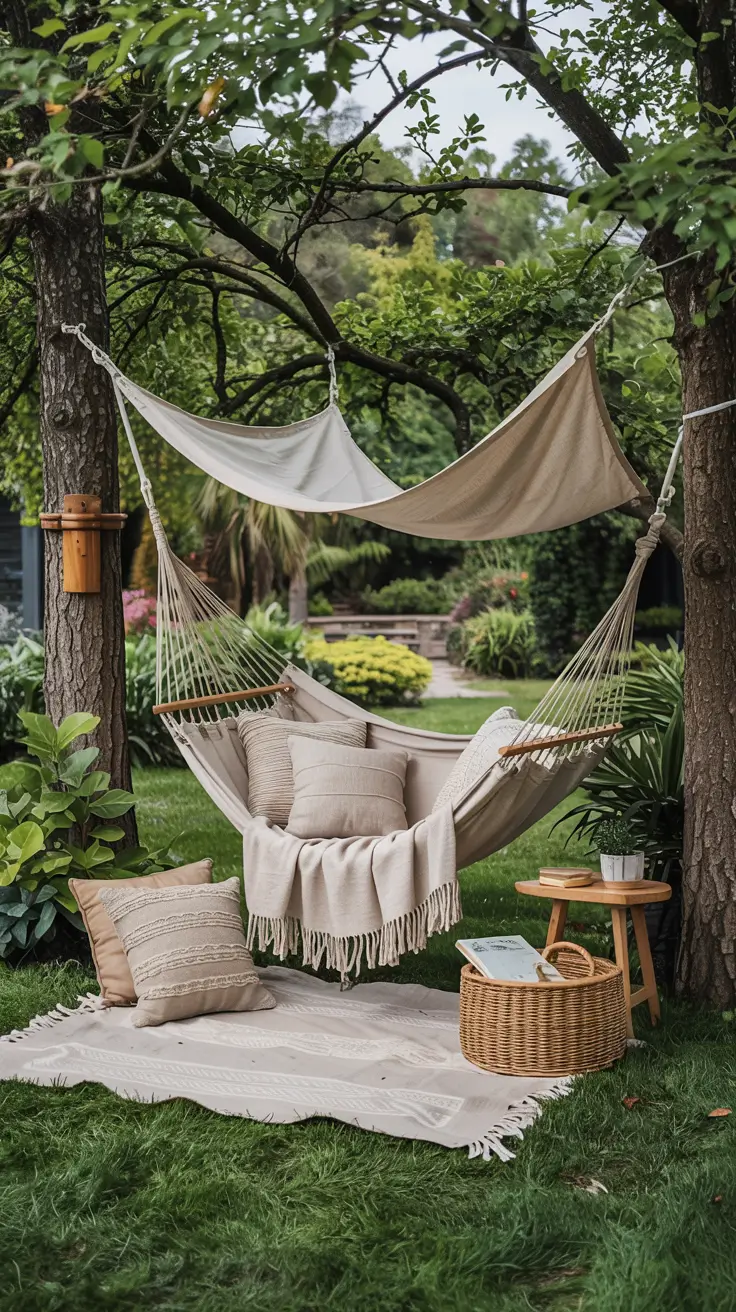
In my experience, hammocks naturally encourage longer reading sessions due to their ergonomic support. They also create a laid-back atmosphere that is difficult to replicate with standard seating.
To enhance this section, I would recommend adding storage solutions for books and accessories to keep the area organized.
14. Covered Outdoor Reading Nook Ideas for All Weather Enjoyment
Covered outdoor reading nook ideas are essential for year-round usability. I design these spaces with pergolas, gazebos, or retractable roofs to provide protection from sun and rain. The structure should feel integrated rather than overpowering.
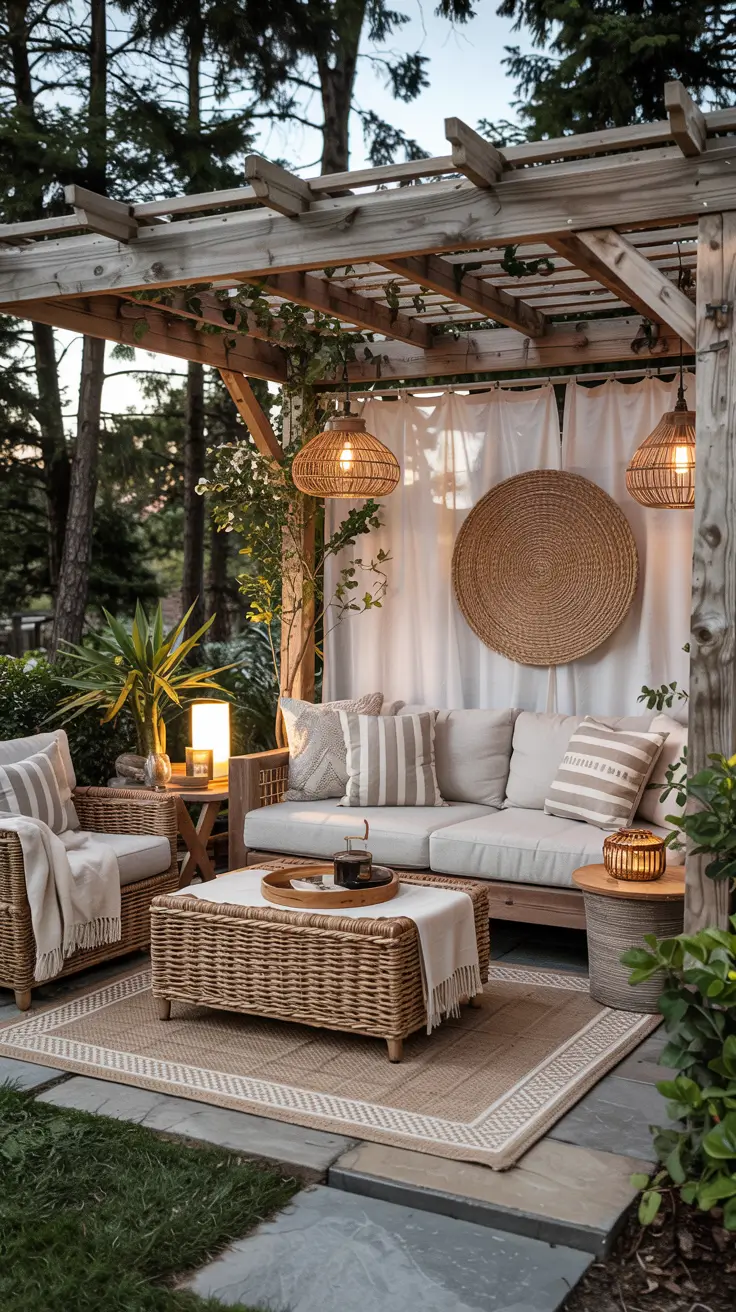
I include weather-resistant furniture, layered textiles, and lighting to make the space comfortable in different conditions. Curtains or screens can be added for additional protection and privacy.
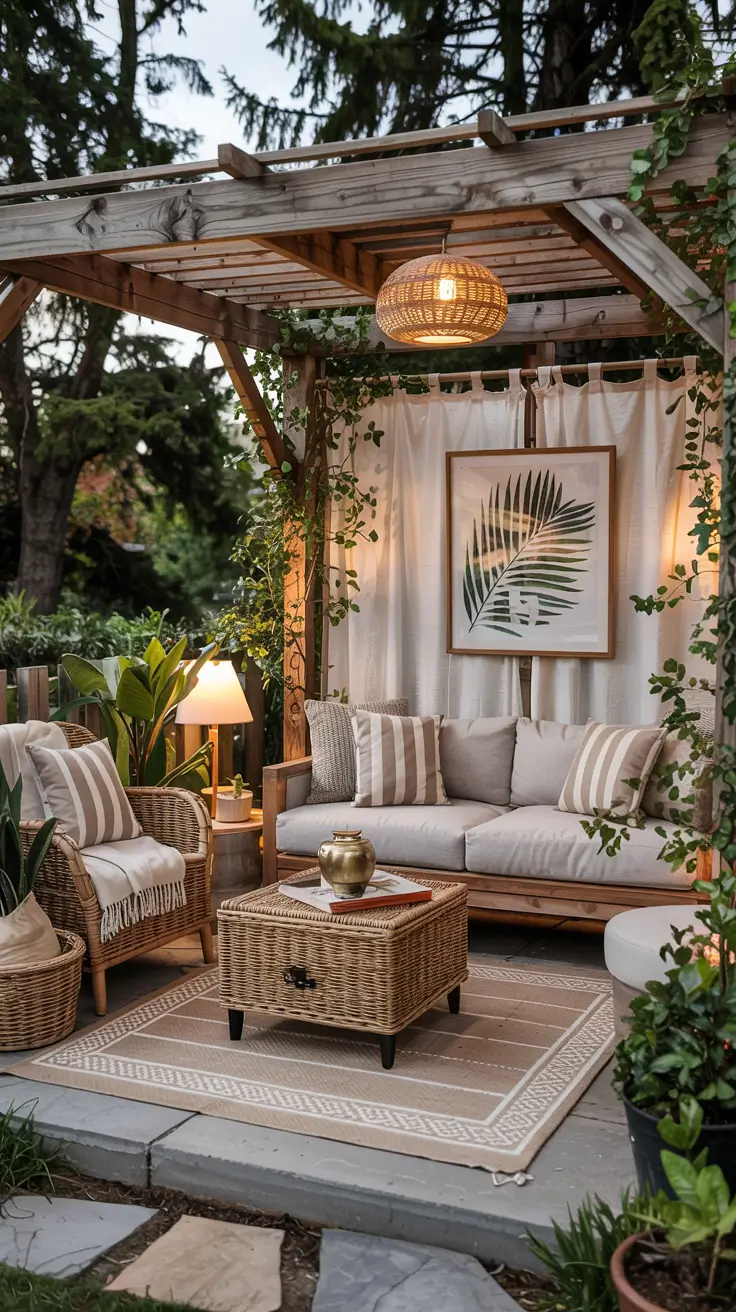
From my perspective, covered nooks offer the most flexibility. They allow you to enjoy outdoor reading regardless of weather, making them a practical investment.
What I would add is heating elements such as outdoor heaters or blankets for cooler seasons, extending usability even further.
15. Tiny Outdoor Reading Nook Designs for Small Spaces and Corners
I often find that the biggest challenge with outdoor reading nooks is not creativity, but space. In small patios, balconies, or compact garden corners, every centimeter matters. When designing a tiny outdoor reading nook, I focus on creating a sense of enclosure and comfort without overcrowding the area. A well-designed small nook can feel more intimate and functional than a large, undefined space.
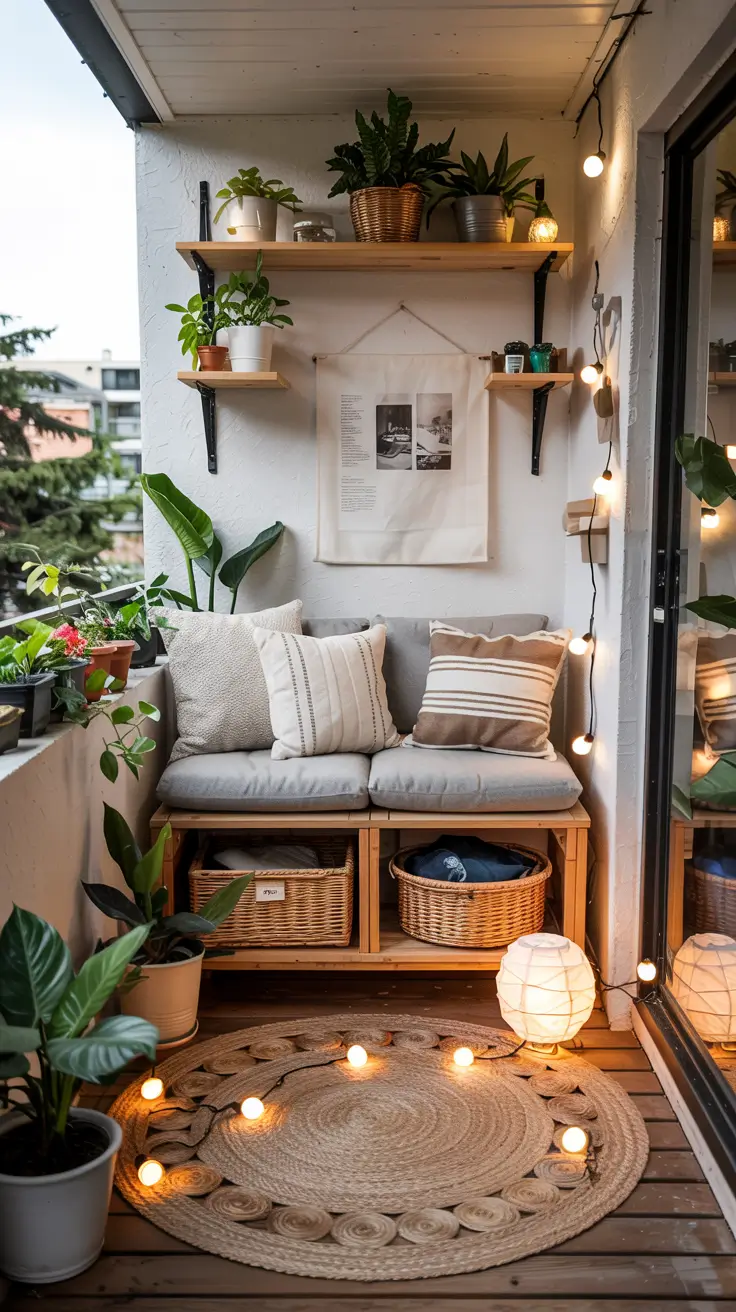
For furniture, I always recommend compact seating such as a cushioned bench with built-in storage or a foldable lounge chair. Adding vertical elements like wall-mounted shelves or hanging planters helps maximize space while keeping the floor uncluttered. Soft textiles such as weather-resistant cushions, throws, and a small outdoor rug instantly create a cozy atmosphere, even in the smallest balcony reading nook.
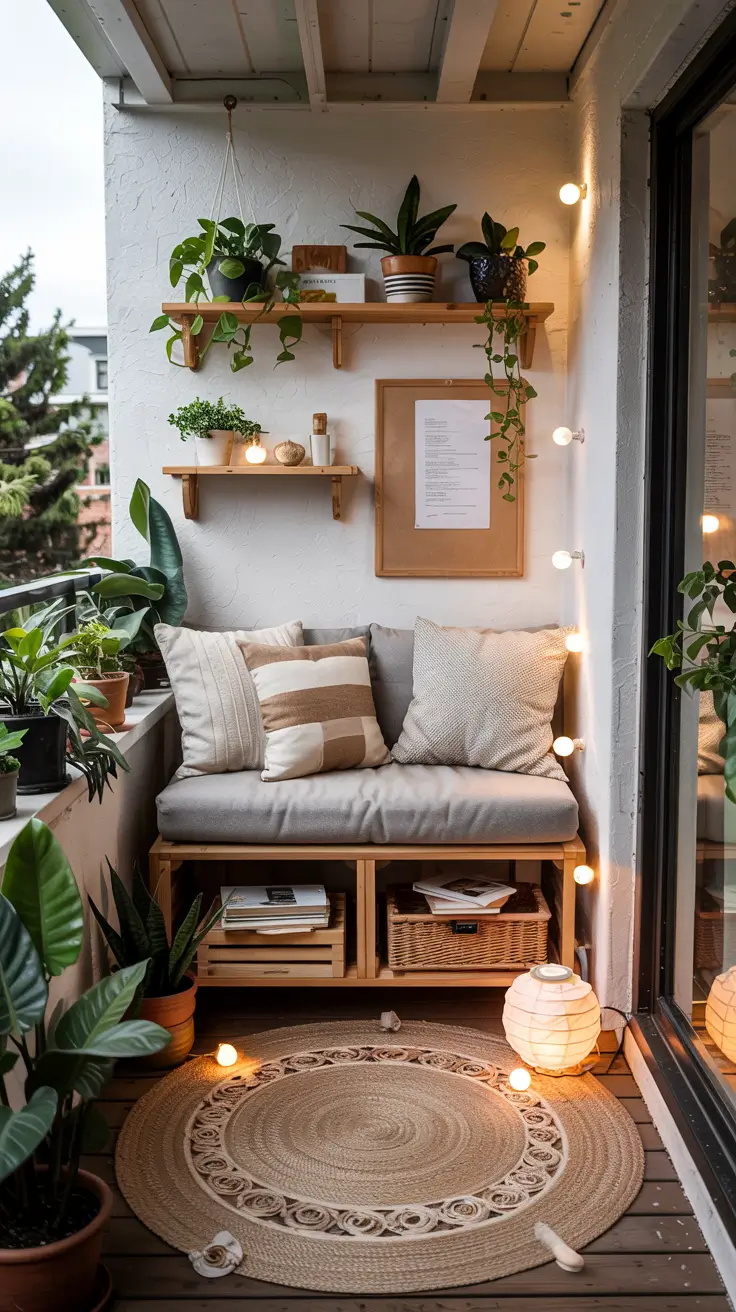
From my experience, lighting plays a crucial role in tiny spaces. I prefer warm string lights or compact solar lanterns that do not take up space but add depth and ambiance. Designers from publications like Architectural Digest often emphasize layering light, even outdoors, and I strongly agree with this approach.
What could further improve this section is the addition of multi-functional furniture, such as a bench that converts into a daybed or hidden compartments for books, which enhances practicality in extremely limited spaces.
16. Secret Garden Outdoor Reading Nook Ideas for Magical Hideaways
Creating a secret garden outdoor reading nook is about crafting a sense of escape. I approach this design by using natural elements to form a secluded, almost storybook-like environment. Dense greenery, climbing plants, and layered landscaping help transform a simple garden into a magical retreat.
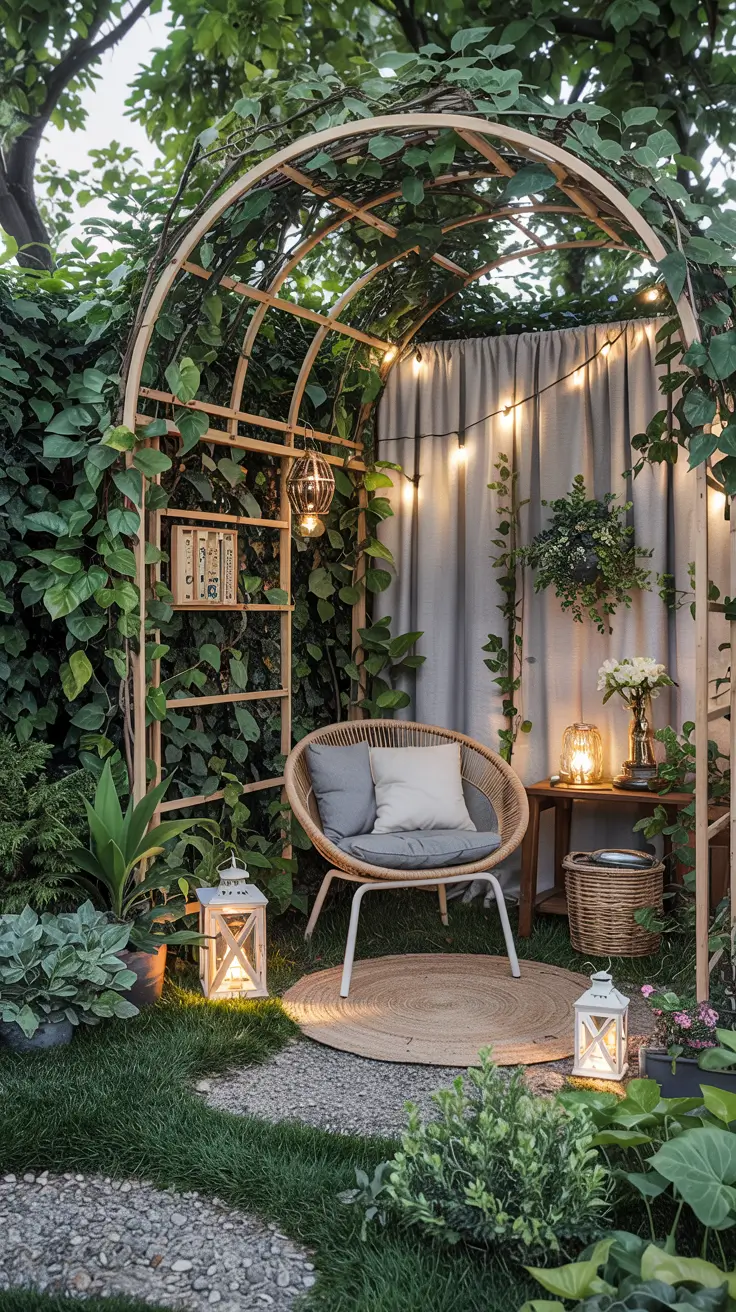
I typically include elements such as an arched trellis covered with vines, a comfortable lounge chair or daybed, and soft ground textures like grass or gravel paths. Adding sheer outdoor curtains or tall plants around the nook creates privacy while maintaining airflow. Decorative accents like lanterns, ceramic pots, and subtle fairy lights enhance the atmosphere.
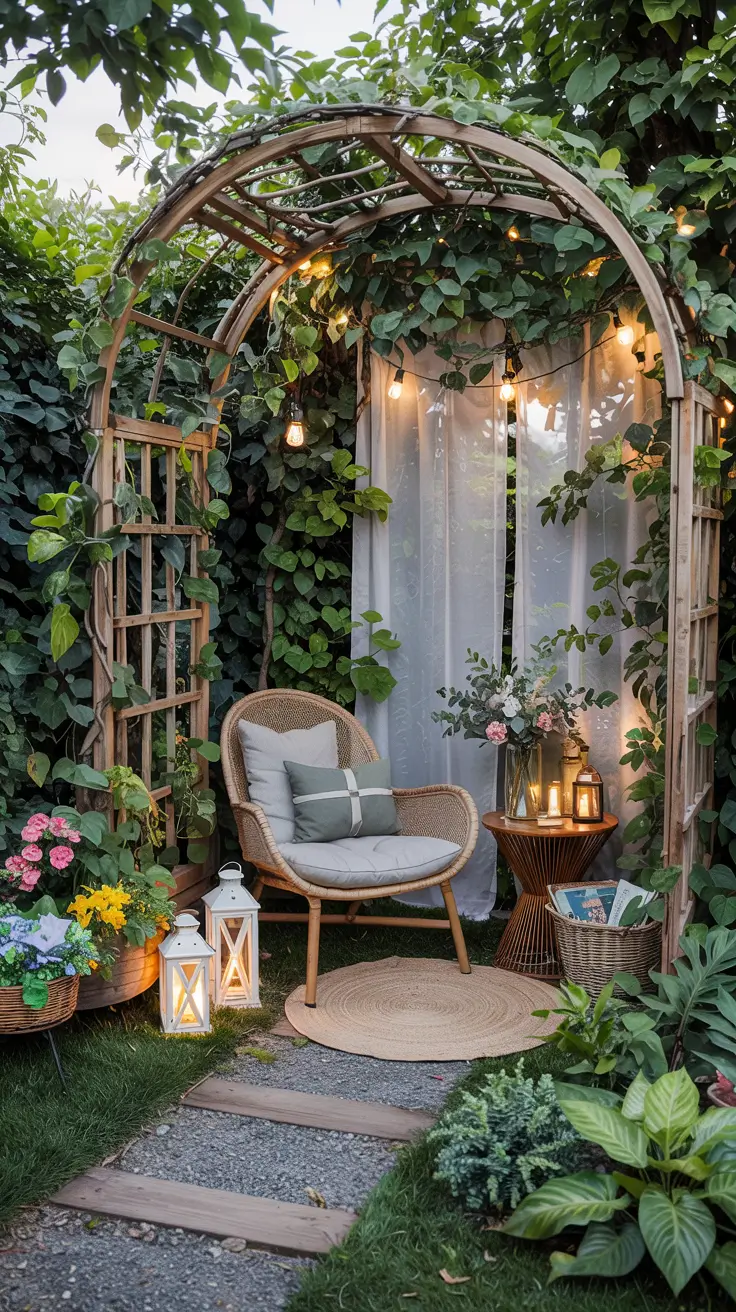
Personally, I find that these spaces are especially effective for relaxation because they create a psychological separation from everyday surroundings. Many landscape designers recommend using layered planting to build depth, and I have seen how effective this technique is in making even a small garden feel immersive.
To complete this section, I would add a small water feature or wind chimes, as these sensory elements significantly enhance the calming effect of a secret garden nook.
17. Outdoor Reading Nook Ideas with Pallets for Rustic DIY Charm
Outdoor reading nooks diy projects using pallets are one of the most accessible ways to create a cozy space on a budget. I often recommend this approach because it allows full customization while maintaining a rustic and natural aesthetic. Pallets can be easily adapted to fit patios, gardens, or even school outdoor reading nook setups.
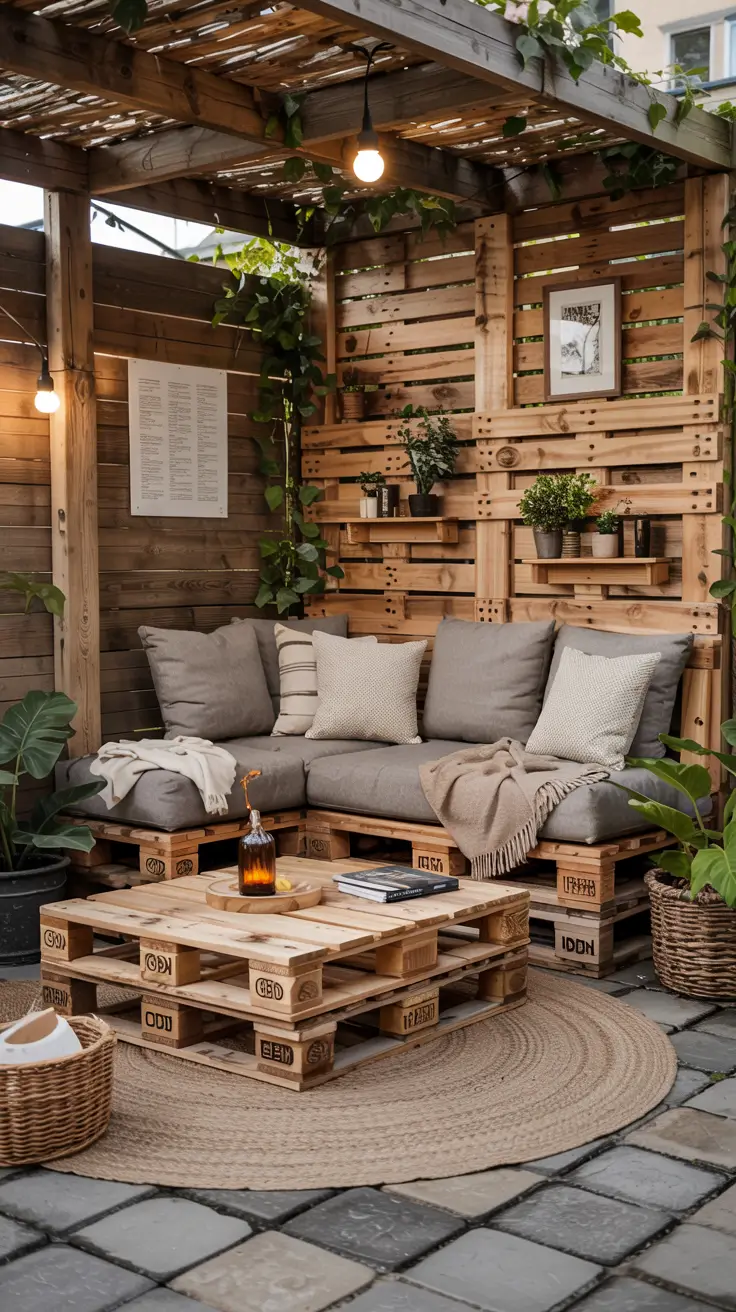
I usually build a base seating platform using stacked pallets, topped with thick cushions for comfort. Backrests can be created by attaching vertical pallets, and side sections can function as built-in tables for books and drinks. The natural wood texture adds warmth, especially when lightly sanded and finished with weather-resistant coatings.
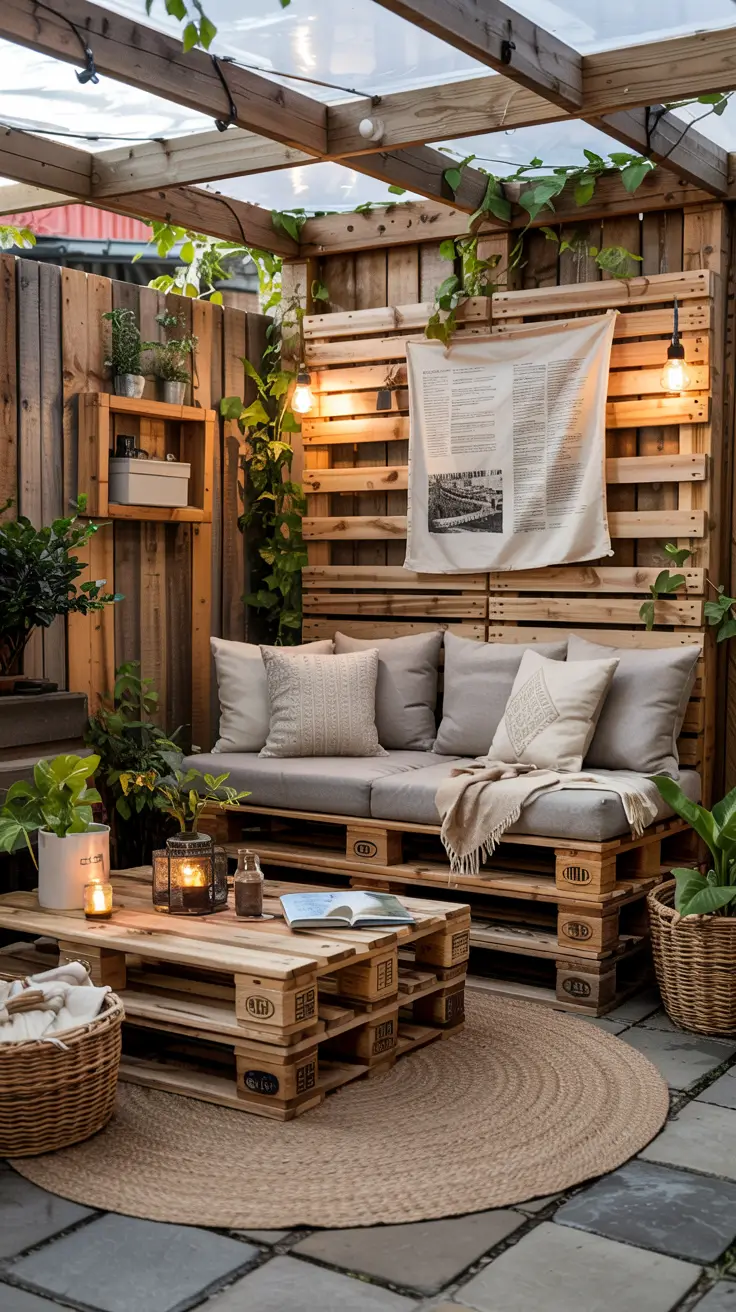
In my opinion, pallet designs work best when combined with soft textiles and greenery. Without these, the space can feel too raw. Experts from DIY-focused platforms often highlight the importance of balancing hard and soft elements, which I always keep in mind.
To enhance this section, I would include guidance on weatherproofing pallets and selecting outdoor-safe finishes, as durability is essential for long-term use.
18. Outdoor Reading Nook Swing Ideas for a Relaxing Reading Experience
A swing instantly transforms an outdoor reading nook into a dynamic and relaxing environment. I like to design these spaces around gentle movement, which naturally encourages longer and more comfortable reading sessions. Whether placed on a patio or under a tree, swings add both function and visual interest.
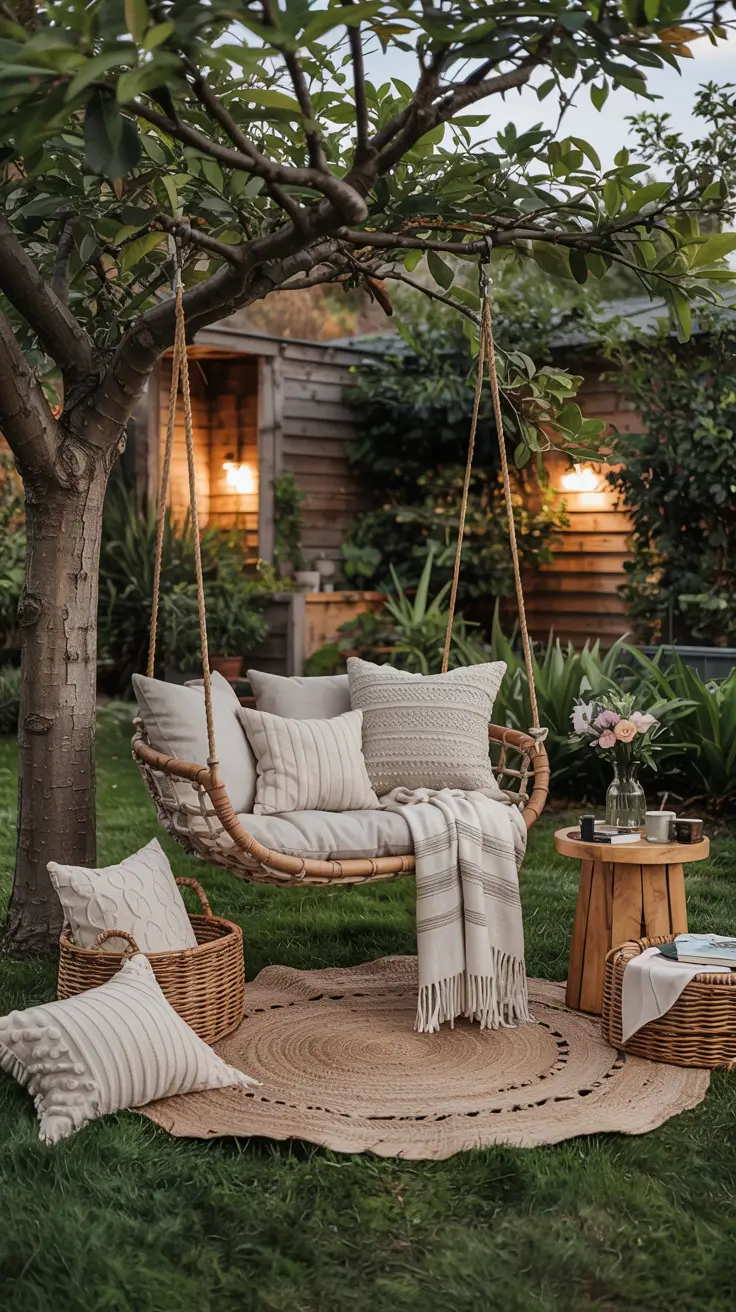
I prefer using either a hanging chair, hammock swing, or a full bench swing depending on the available space. Support structures must be secure, whether attached to a ceiling beam or a sturdy tree branch. Adding layered cushions, throws, and a small side table ensures both comfort and practicality.
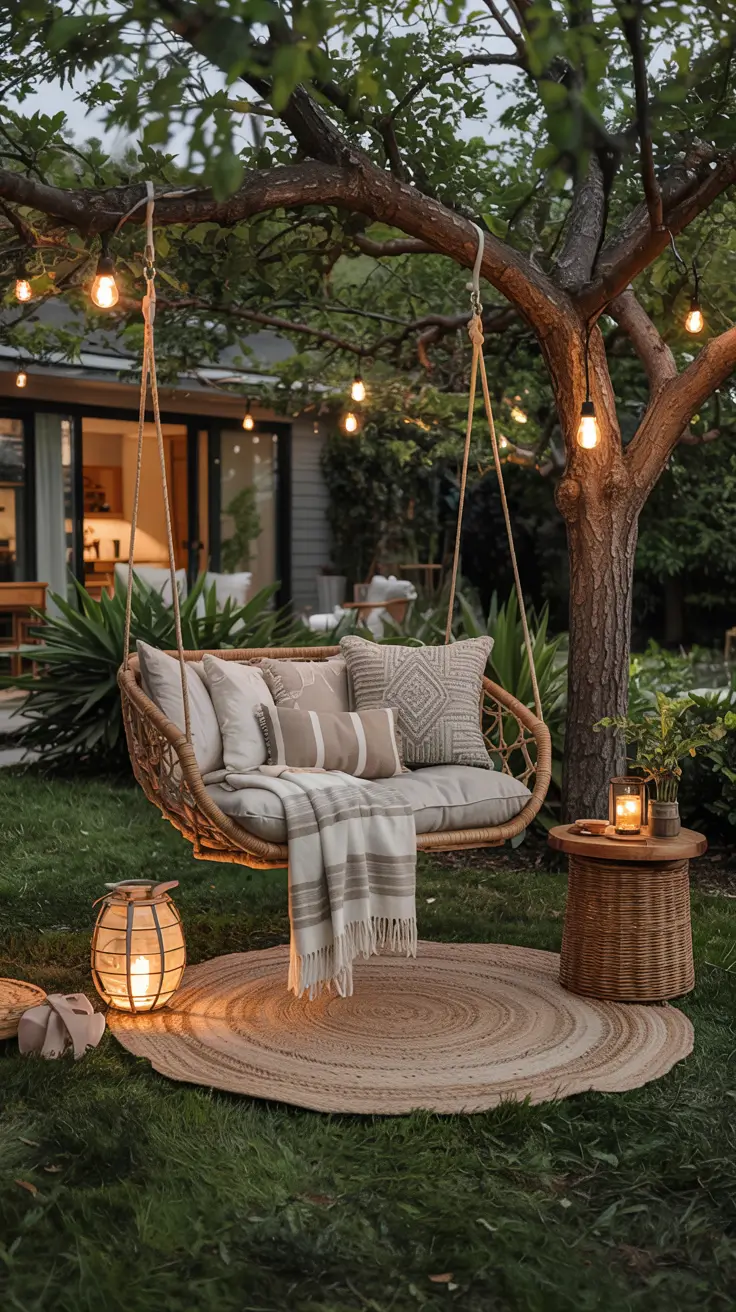
From personal experience, swing-based reading nooks are particularly effective for stress relief. The subtle motion creates a calming rhythm that enhances focus. Many wellness experts emphasize the benefits of gentle movement, and I have found this to be true in real-life setups.
What could be added here is a discussion on safety considerations, including weight limits and proper installation techniques, which are essential for both kids and adults.
19. Rustic Outdoor Reading Nook Designs with Natural Materials
Rustic outdoor reading nooks focus on authenticity and connection with nature. I approach these designs by prioritizing natural materials such as wood, stone, and linen. The goal is to create a space that feels grounded and timeless rather than overly styled.
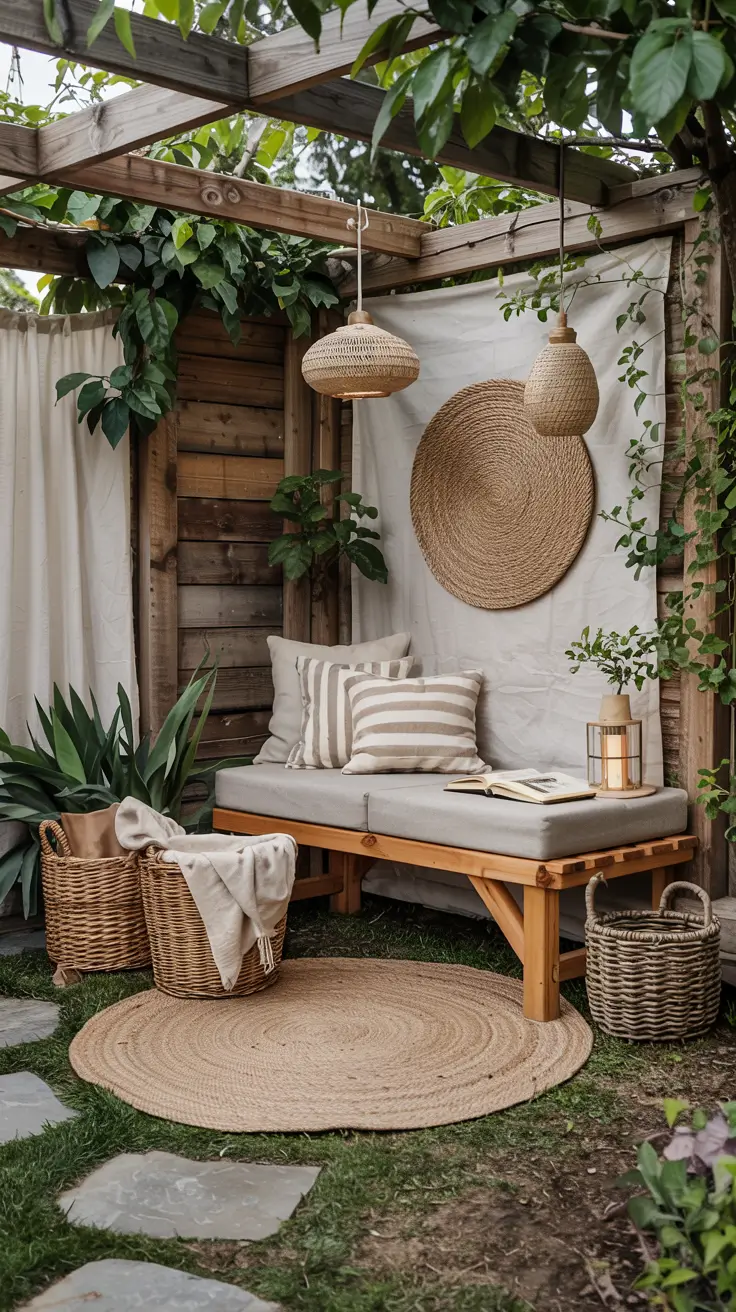
I often use wooden benches, reclaimed wood furniture, and stone pathways to define the area. Textiles remain simple, usually in neutral tones, while decor includes woven baskets, ceramic pieces, and minimal accessories. Positioning the nook near trees or natural shade enhances the overall experience.
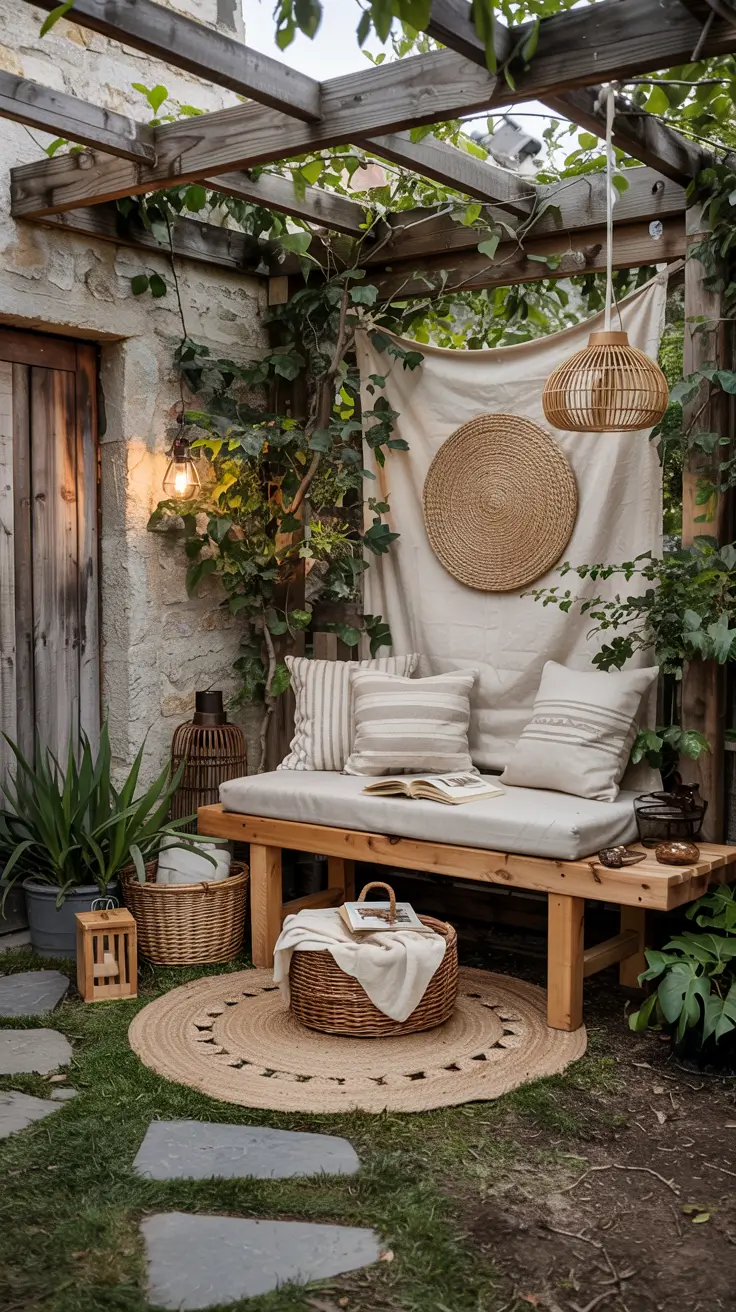
In my experience, rustic designs are some of the most durable and adaptable. They age beautifully and require less maintenance compared to trend-driven styles. Designers frequently highlight the importance of using materials that weather well, which aligns with my approach.
To strengthen this section, I would include ideas for integrating subtle lighting, such as lanterns or solar lights, to extend usability into the evening.
20. Creative Outdoor Reading Nook Ideas Inspired by Animal Crossing and Minecraft
Drawing inspiration from games like Animal Crossing and Minecraft allows for playful and imaginative outdoor reading nooks. I like to incorporate whimsical layouts, bright colors, and interactive elements that make the space engaging, especially for kids.
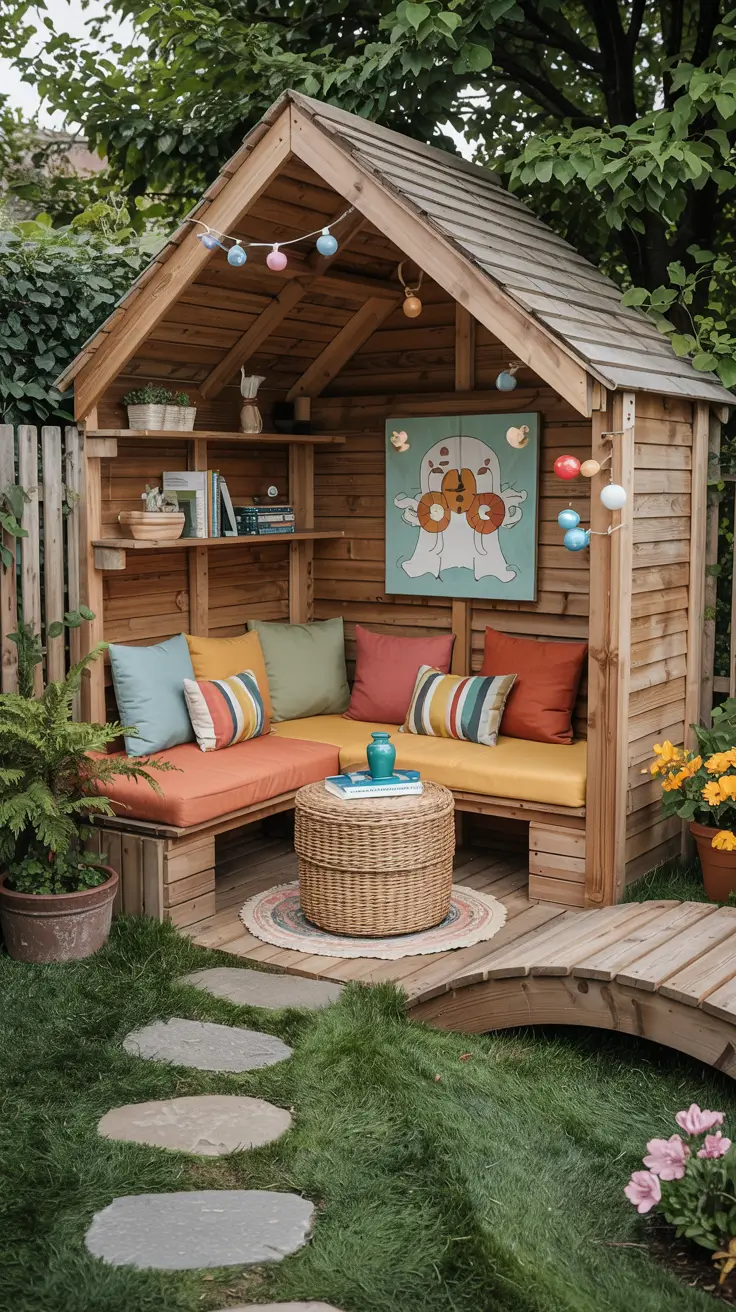
I usually include features such as patterned cushions, themed decor, small wooden structures, and creative layouts that mimic in-game environments. For kids outdoor reading nooks, adding elements like mini bridges, stepping stones, or themed seating enhances the experience and encourages reading.
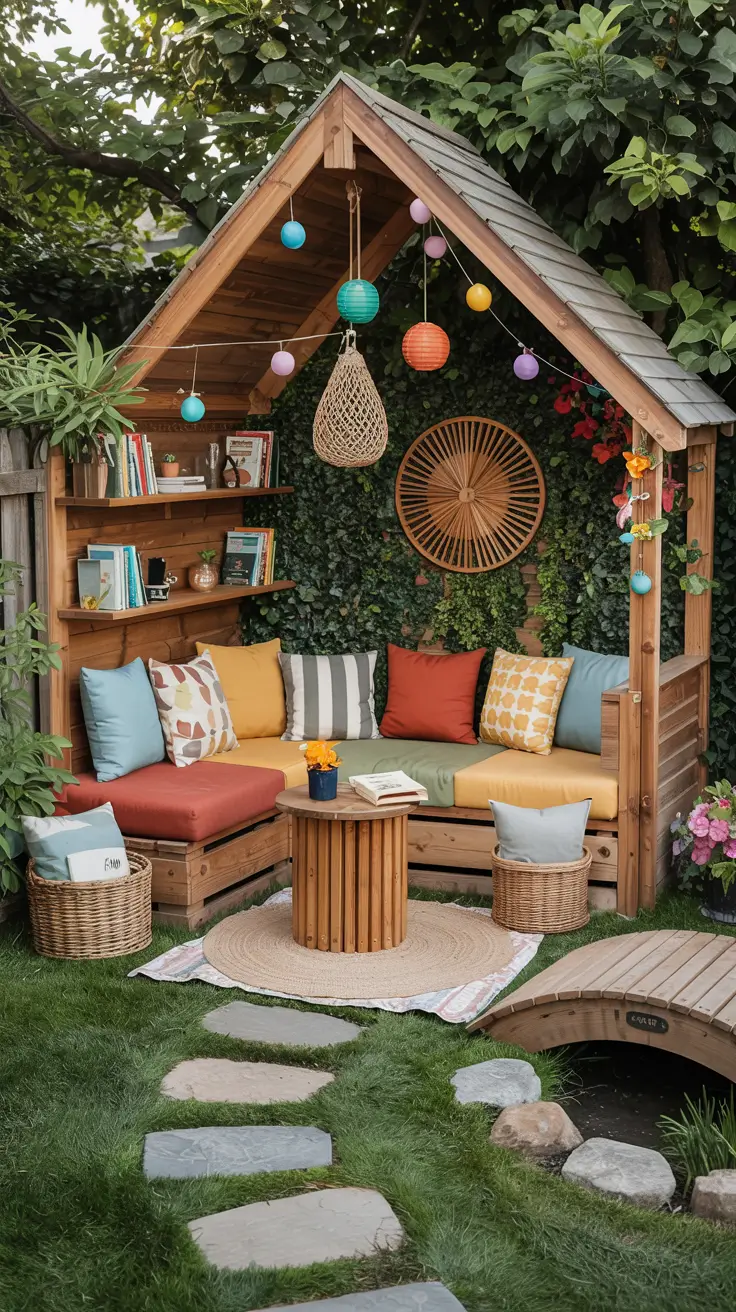
From my perspective, these designs are particularly effective for children because they blend play and learning. Many educational experts emphasize creating engaging environments to foster reading habits, and I have seen how themed spaces can make a significant difference.
What could be improved in this section is the inclusion of adaptable design ideas that can grow with children, ensuring the nook remains relevant as their interests evolve.
21. Outdoor Reading Nook Design Trends 2026 for Modern Cozy Spaces
Outdoor reading nook inspiration in 2026 is strongly focused on comfort, sustainability, and multifunctionality. I notice a clear shift toward creating spaces that serve both as relaxation zones and aesthetic highlights within the home.
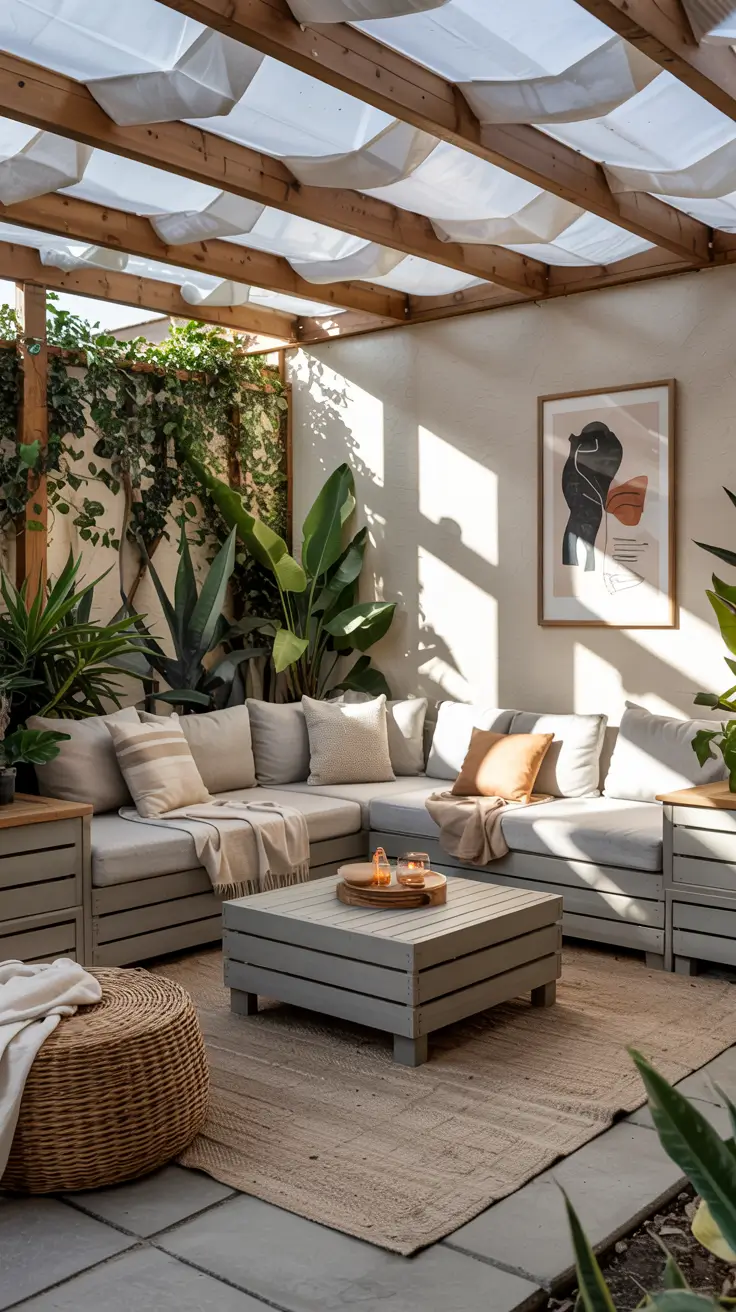
I often incorporate modular furniture, eco-friendly materials, and layered textiles to achieve a modern cozy look. Neutral color palettes combined with natural accents are especially popular. Covered outdoor reading nooks and flexible shading solutions are also becoming essential features.
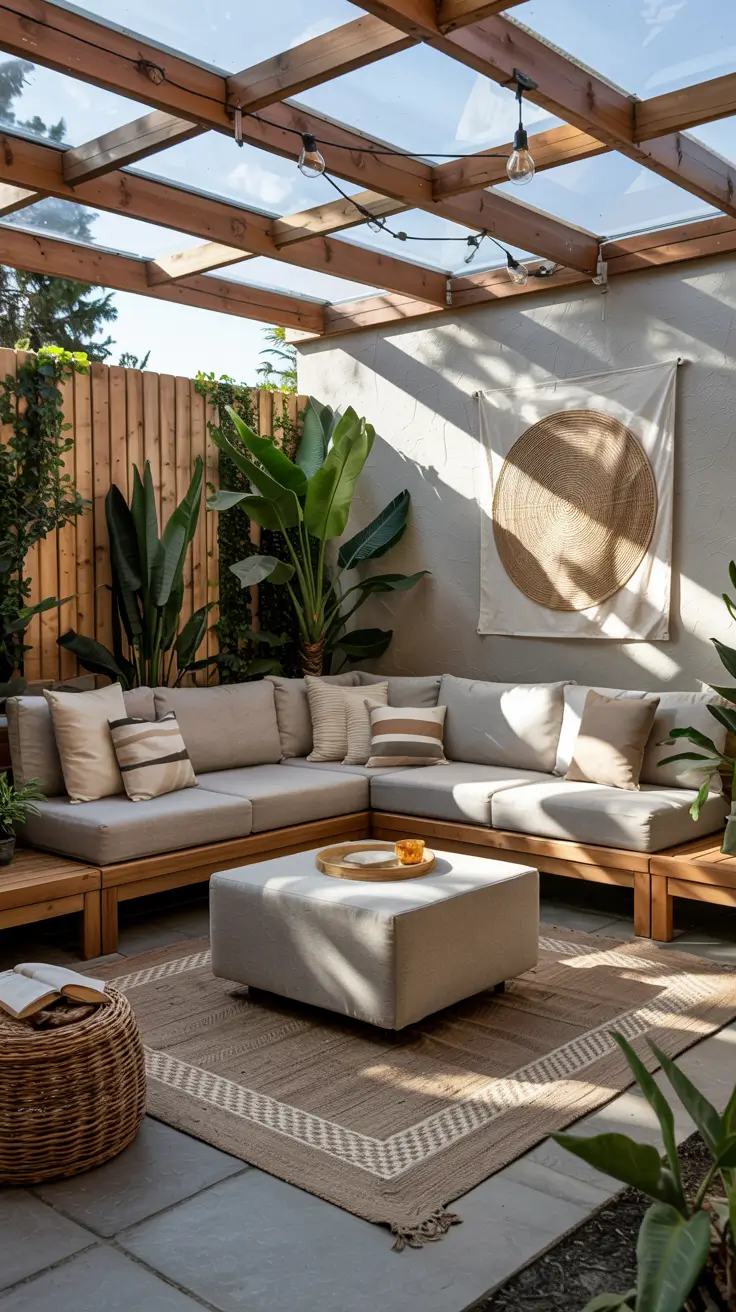
In my opinion, the most successful modern designs balance style with usability. Trends come and go, but comfort remains the priority. Leading design publications consistently emphasize human-centered design, which I fully support in outdoor spaces.
To complete this section, I would add smart features such as outdoor-friendly lighting controls or integrated charging solutions, which reflect the evolving needs of modern users.