Are you looking for fresh garden wall ideas 2026 that combine decorative appeal with practical outdoor function? Wondering how brick, concrete, vertical, or painted garden walls can transform your front or back space into something truly modern? In this guide, I will walk through creative, realistic solutions that balance design, structure, and personality while naturally integrating trends like outdoor vertical greenery, cement block patterns, and decorative DIY elements.
1. Garden Wall Ideas 2026 – Front Garden Statement Walls That Elevate Curb Appeal
I design front garden walls as strong visual anchors that define the first impression of a home. In 2026, I focus on combining white painted brick, curved forms, and low structural elements that guide the eye toward the entrance while maintaining openness. A front garden wall should feel welcoming rather than defensive, which is why I often balance height with transparency using mixed materials like brick and fence combinations.
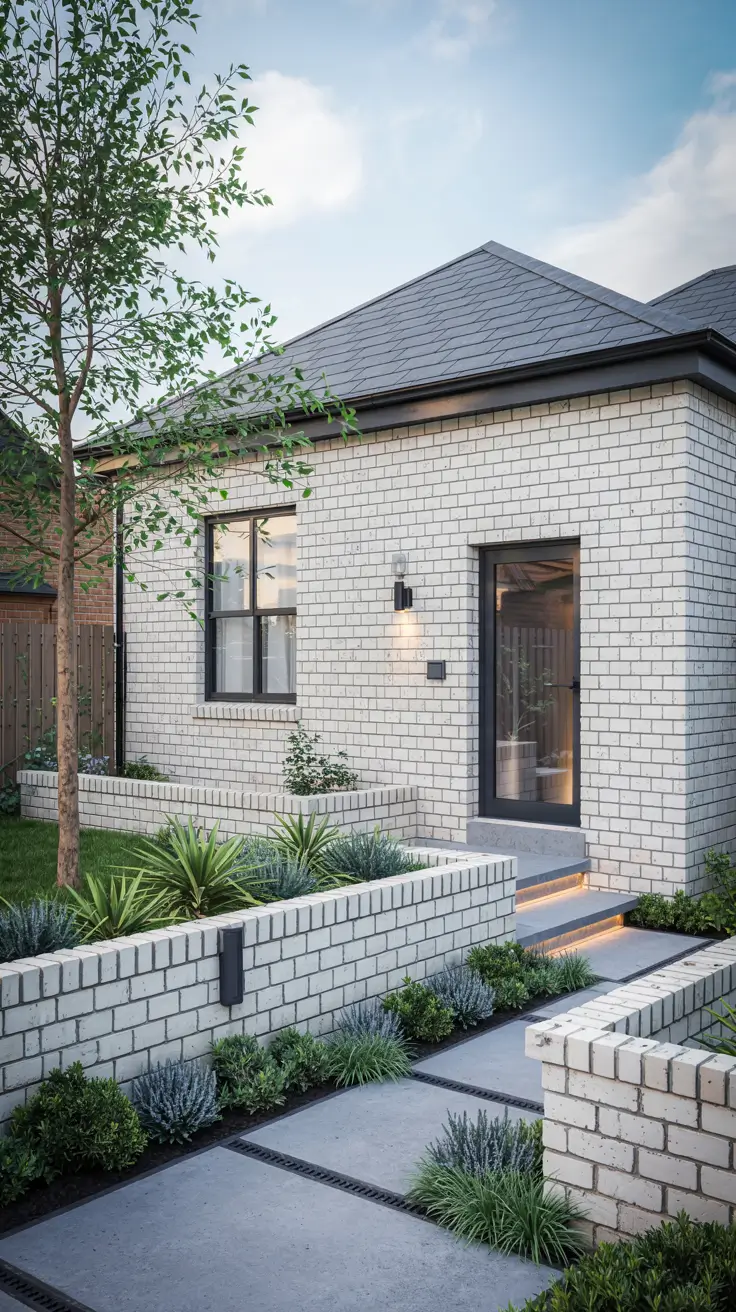
From a design standpoint, I include integrated planters, subtle lighting, and textured finishes to enhance depth. A decorative brick wall paired with black metal fencing creates contrast, while a low retaining section helps manage elevation changes. I also prioritize pathways, ensuring the wall complements the flow of movement rather than interrupting it.
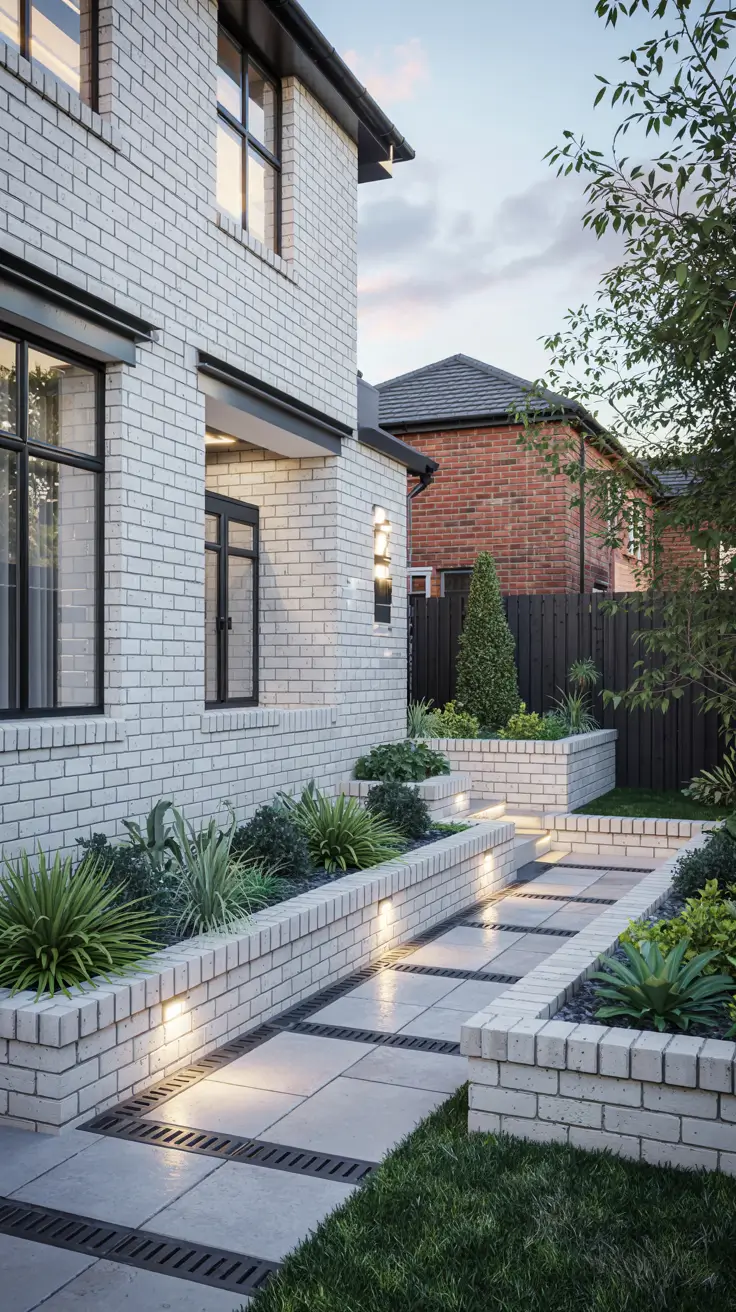
In my experience, front walls work best when they echo the architecture of the house. Inspired by recommendations from Better Homes and Gardens, I keep materials cohesive and avoid overcomplication. A simple painted brick finish or Mediterranean style texture often delivers a timeless result.
What is often missing in this type of design is layered lighting. I always recommend adding soft outdoor lights along the base or embedded into the wall to highlight texture and improve nighttime curb appeal.
2. Decorative Garden Wall Ideas 2026 for Stylish Outdoor Spaces
Decorative garden wall ideas in 2026 go beyond simple boundaries and become focal design elements. I treat these walls as outdoor art pieces, incorporating stone textures, patterned cement blocks, and even vertical accents that add rhythm to the space. These walls are especially effective on terraces or patios where visual impact matters most.
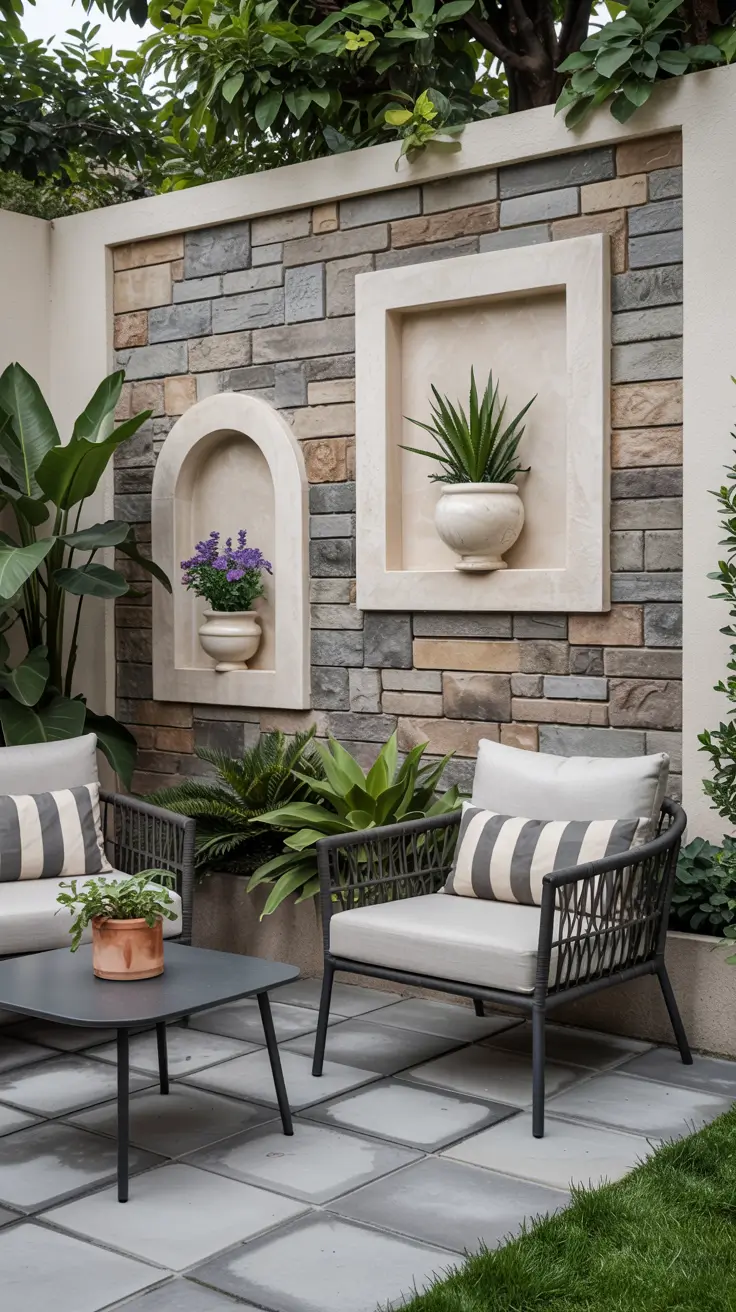
I typically include features such as built-in niches, sculptural elements, or painted surfaces that introduce personality. Decorative stone combined with smooth concrete sections creates contrast, while subtle curves soften the overall structure. Outdoor furniture placed near these walls, such as minimalist seating or wooden benches, enhances usability.
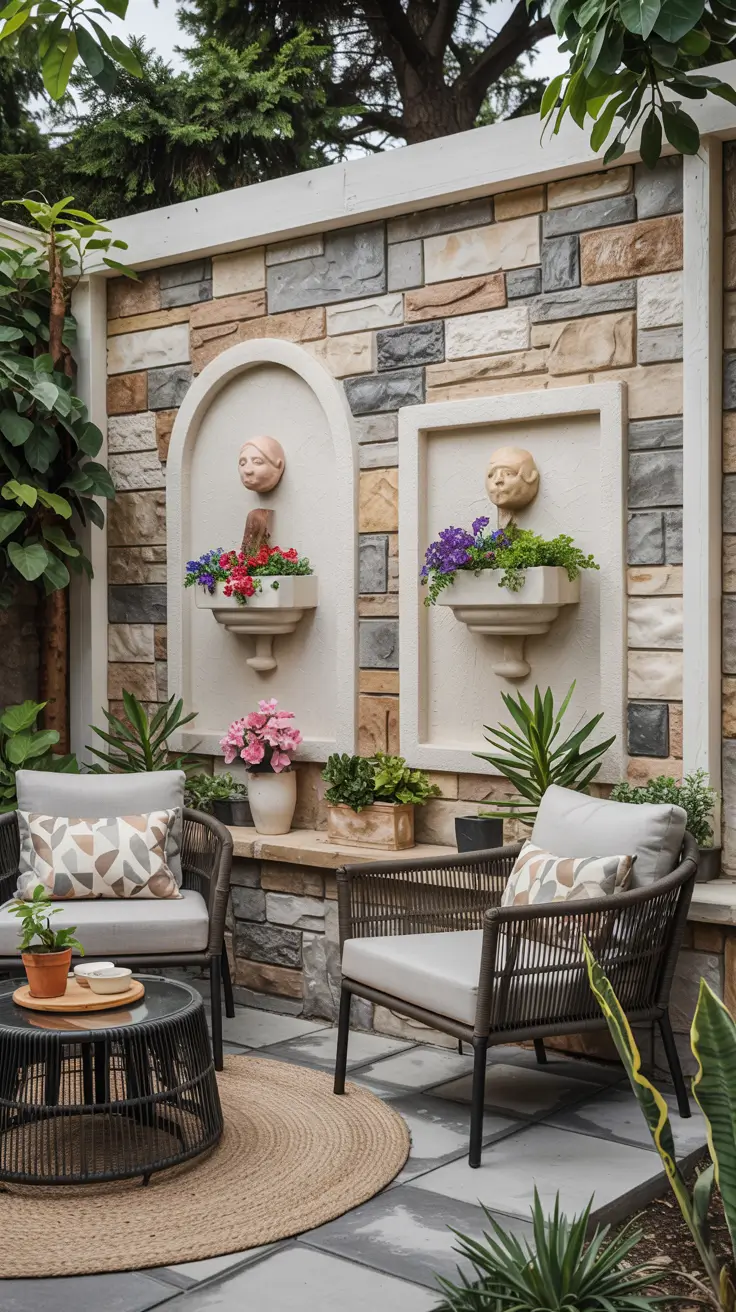
Personally, I find that decorative walls should not compete with plants but rather frame them. Designers from Architectural Digest often emphasize balance, and I follow that principle by integrating greenery without overwhelming the wall itself.
What many overlook is texture variation. I always suggest mixing at least two materials, such as stone and painted surfaces, to avoid a flat and uninspiring result.
3. Brick Garden Wall Ideas That Blend Classic and Modern Design
Brick remains one of the most reliable materials in garden wall ideas outdoor trends. I use brick to create both traditional and contemporary looks by adjusting color, layout, and finish. Painted brick, especially in white or black tones, transforms a classic material into something modern.
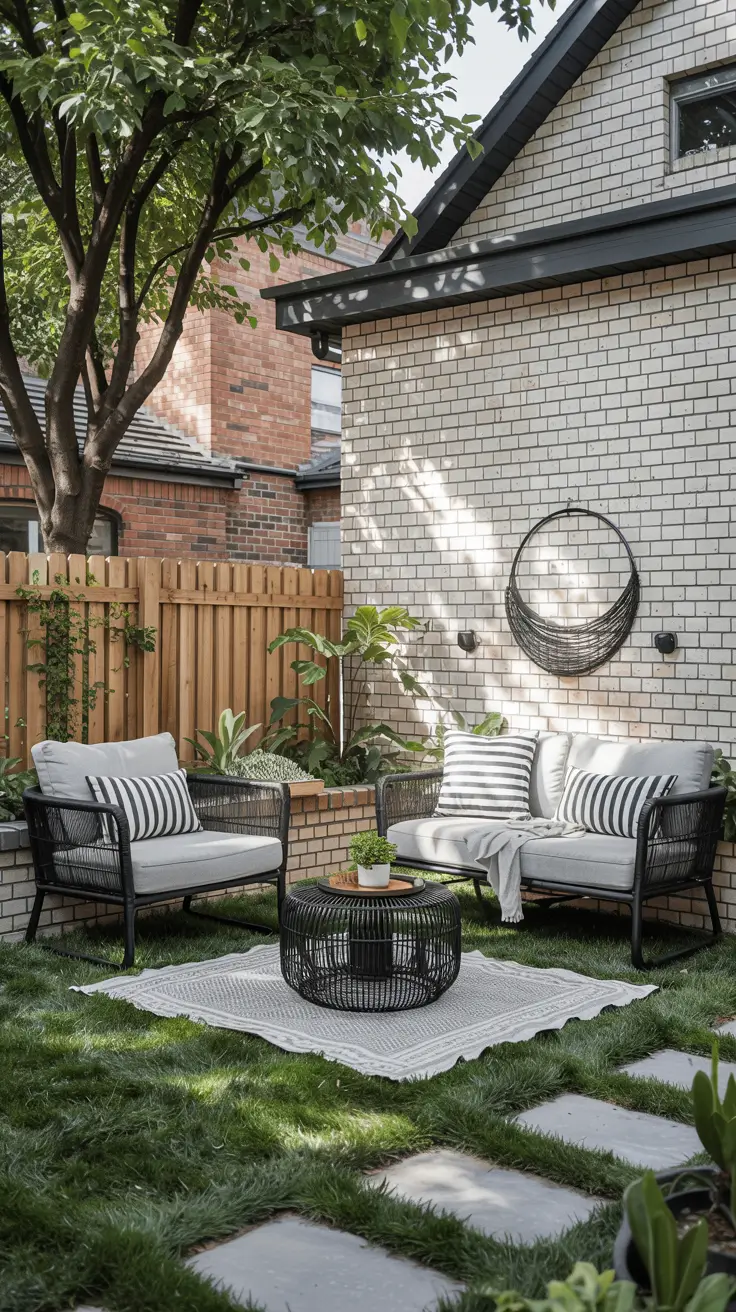
In my designs, I often combine brick with metal or wood to soften its heaviness. A brick and fence combination works particularly well in back gardens, offering both privacy and openness. I also use varied brick patterns to introduce subtle visual interest without overwhelming the space.
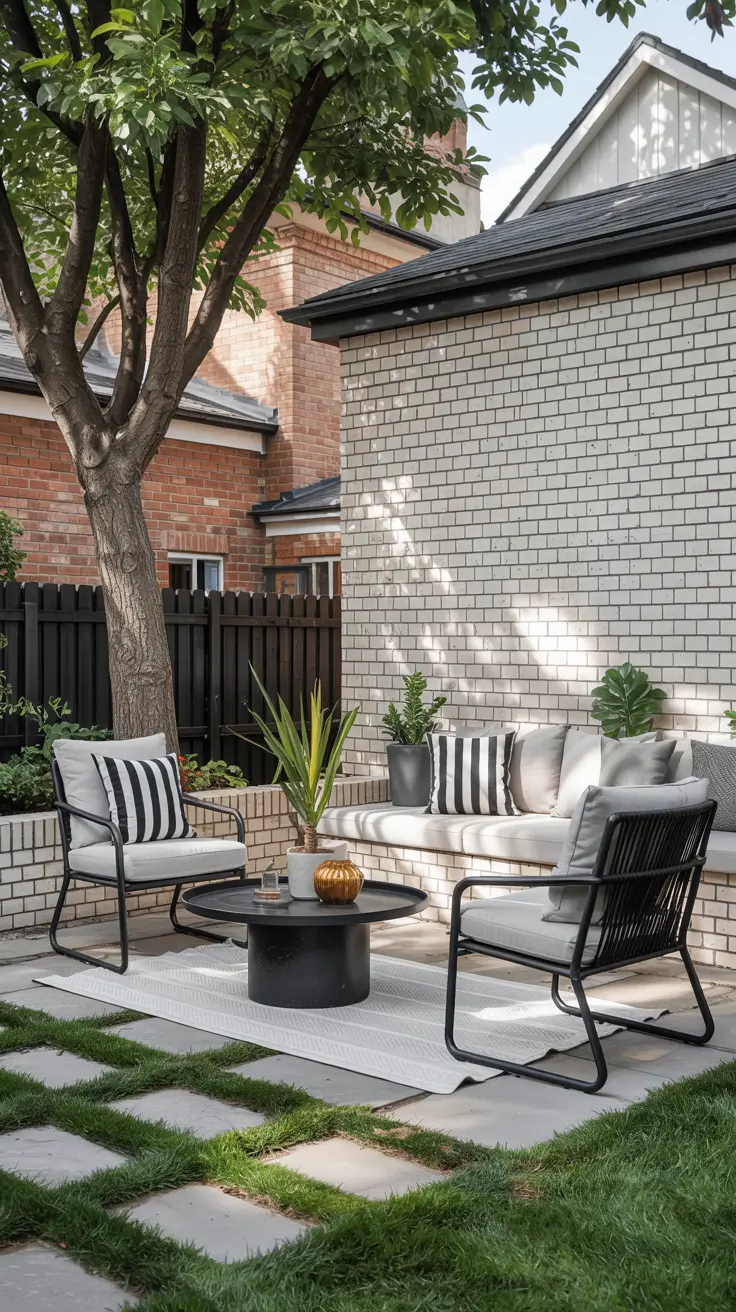
From my perspective, brick is ideal because of its durability and versatility. Experts frequently highlight its longevity, and I have seen firsthand how well it ages compared to other materials.
What is often missing is lighting integration. I recommend embedding lights into brick walls to highlight their texture and create a warm evening atmosphere.
4. Outdoor Garden Wall Ideas 2026 for Functional and Beautiful Landscapes
Outdoor garden wall ideas in 2026 must balance aesthetics with function. I design these walls to define zones, support soil, and create seating opportunities. A well-planned wall can transform a simple yard into a structured, usable landscape.
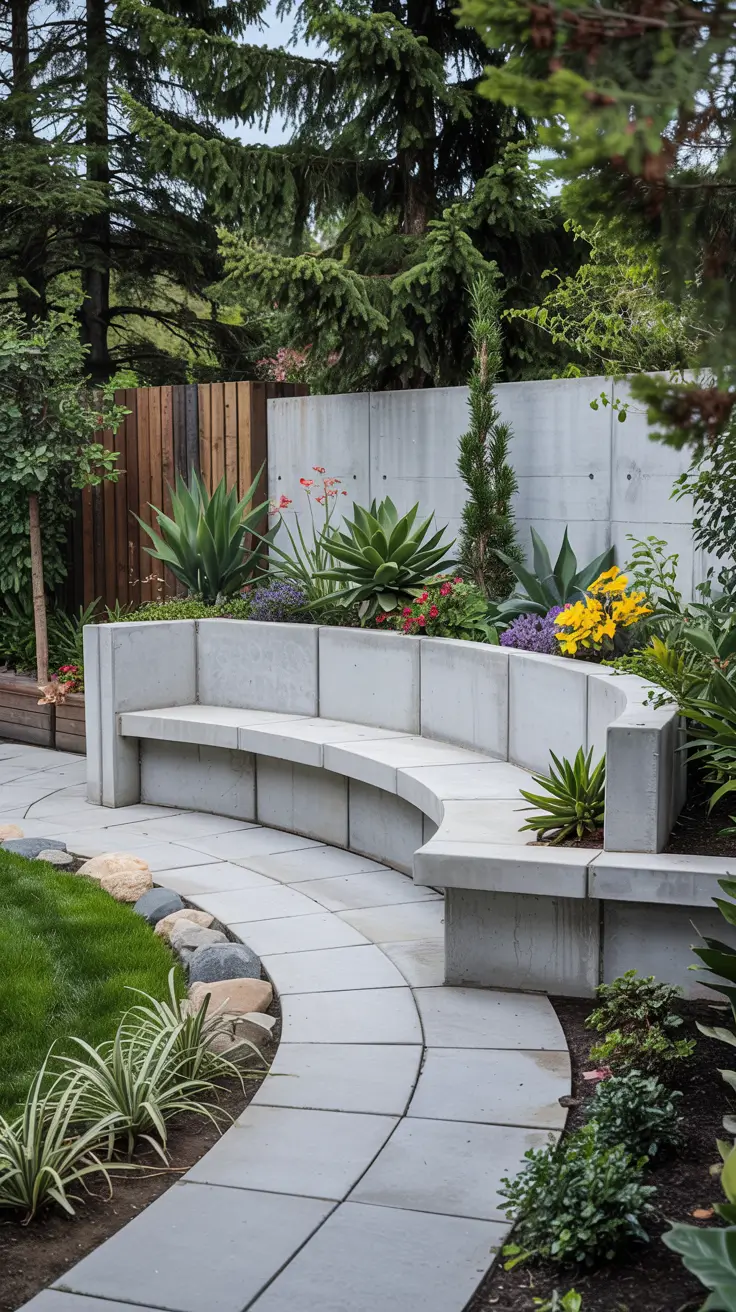
I include multifunctional elements such as built-in benches, planters, and storage niches. Concrete and stone are my preferred materials for durability, while curved designs help soften the overall look. I also consider how the wall interacts with pathways and garden features.
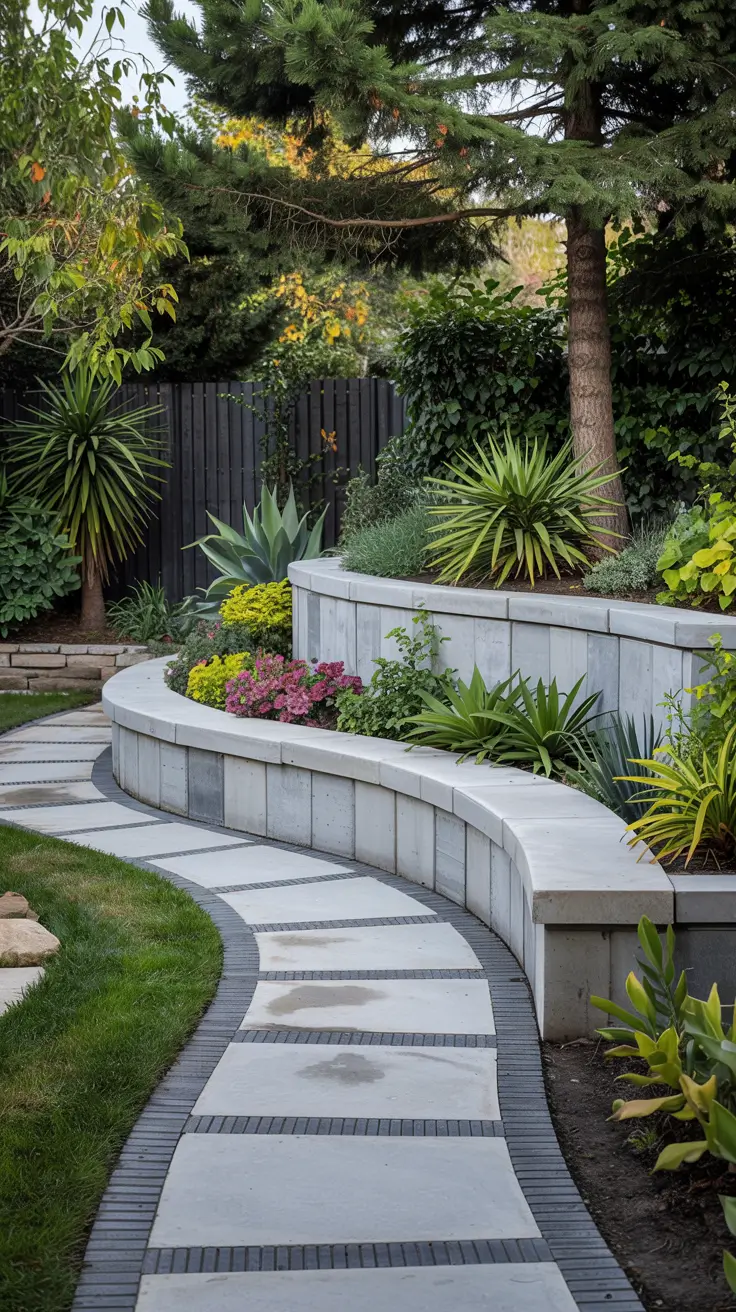
In my experience, functionality should never compromise beauty. Landscape designers often stress cohesion, and I ensure that every wall aligns with the overall garden theme.
One improvement I always suggest is adding integrated seating. Many designs miss this opportunity, but it significantly increases usability without requiring additional furniture.
5. Creative Retaining Garden Wall Ideas for Sloped Yards
Retaining walls are essential for sloped gardens, but I approach them as design opportunities rather than purely structural elements. In 2026, I focus on tiered layouts that create multiple levels for planting and relaxation.
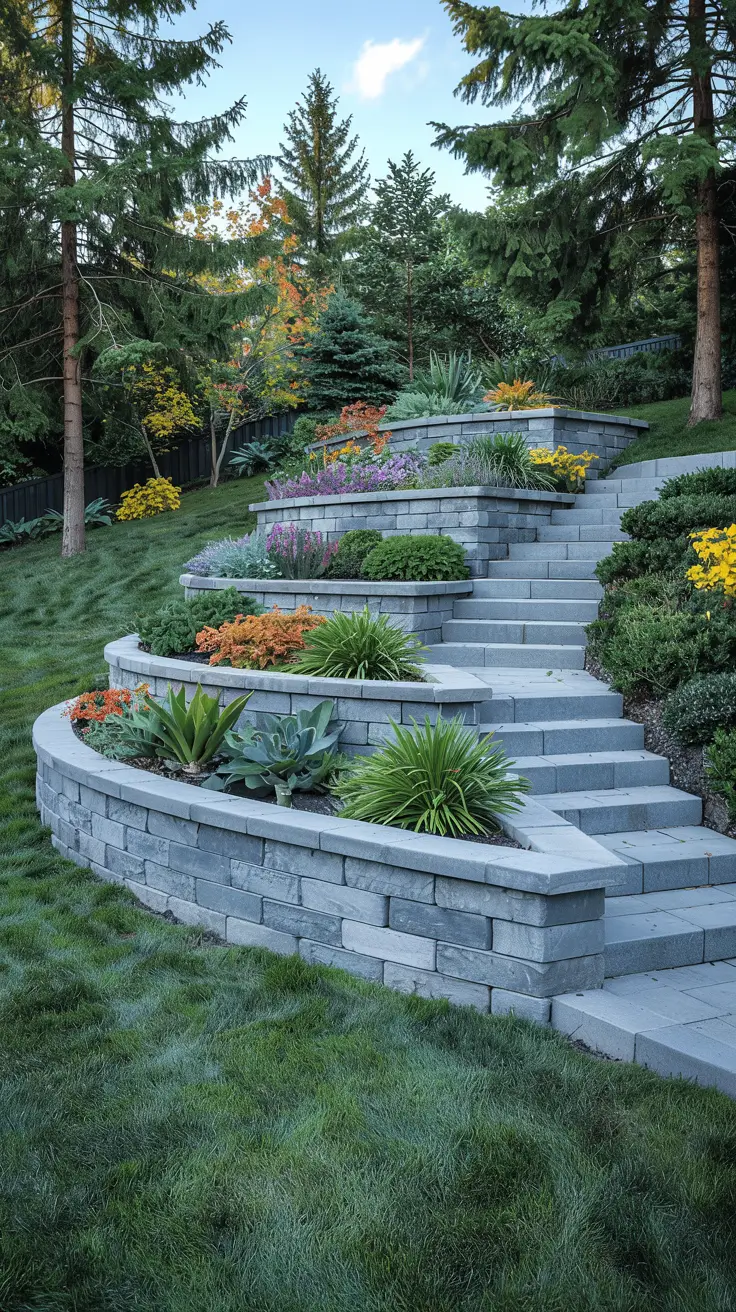
I typically use concrete, stone, or cement block systems for strength, while incorporating greenery between levels to soften the structure. Each tier can serve a purpose, from seating areas to planting beds.
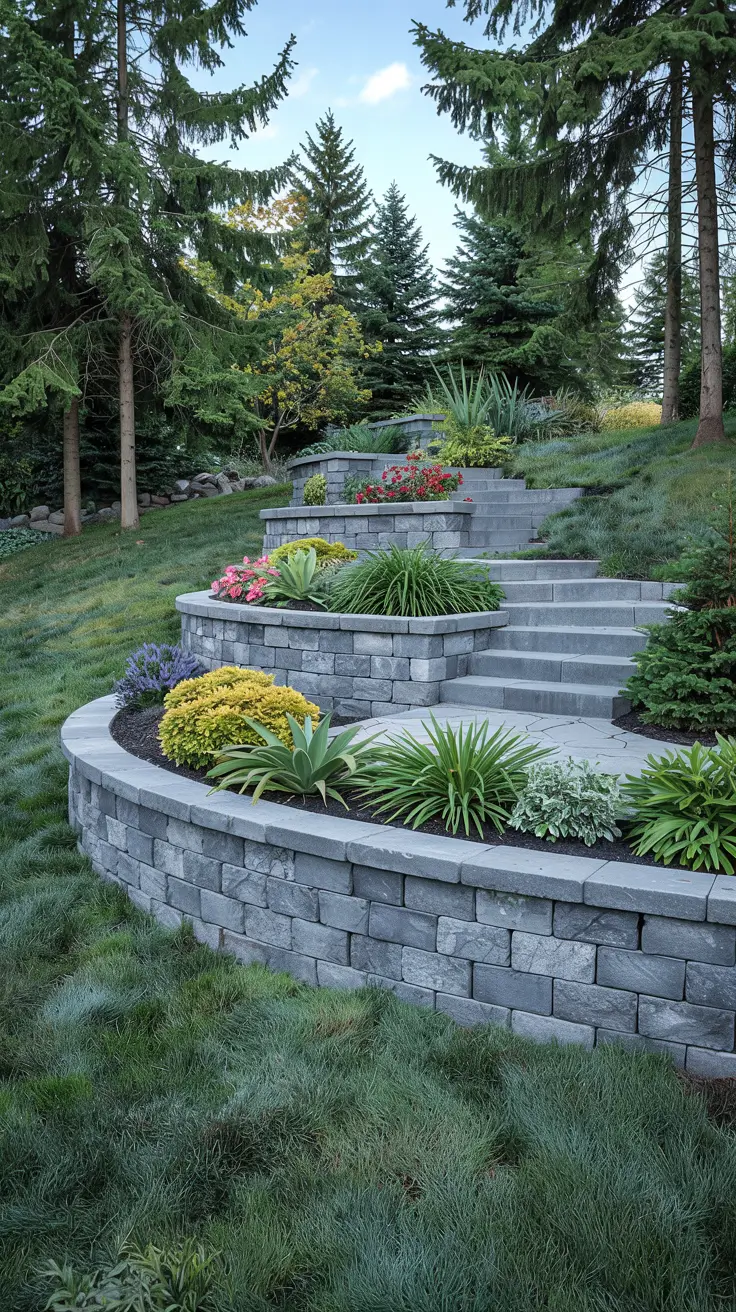
From my perspective, retaining walls should feel intentional, not imposed. Professional landscaping advice often emphasizes integrating natural elements, and I always include plants to reduce the visual weight of the wall.
What is often missing is proper drainage planning. I always ensure that water management is addressed to maintain both durability and appearance.
6. Low Garden Wall Ideas for Subtle Structure and Definition
Low garden walls are ideal when I want to define space without blocking views. These walls work particularly well in front yards, terraces, and open landscapes where subtle structure is needed.
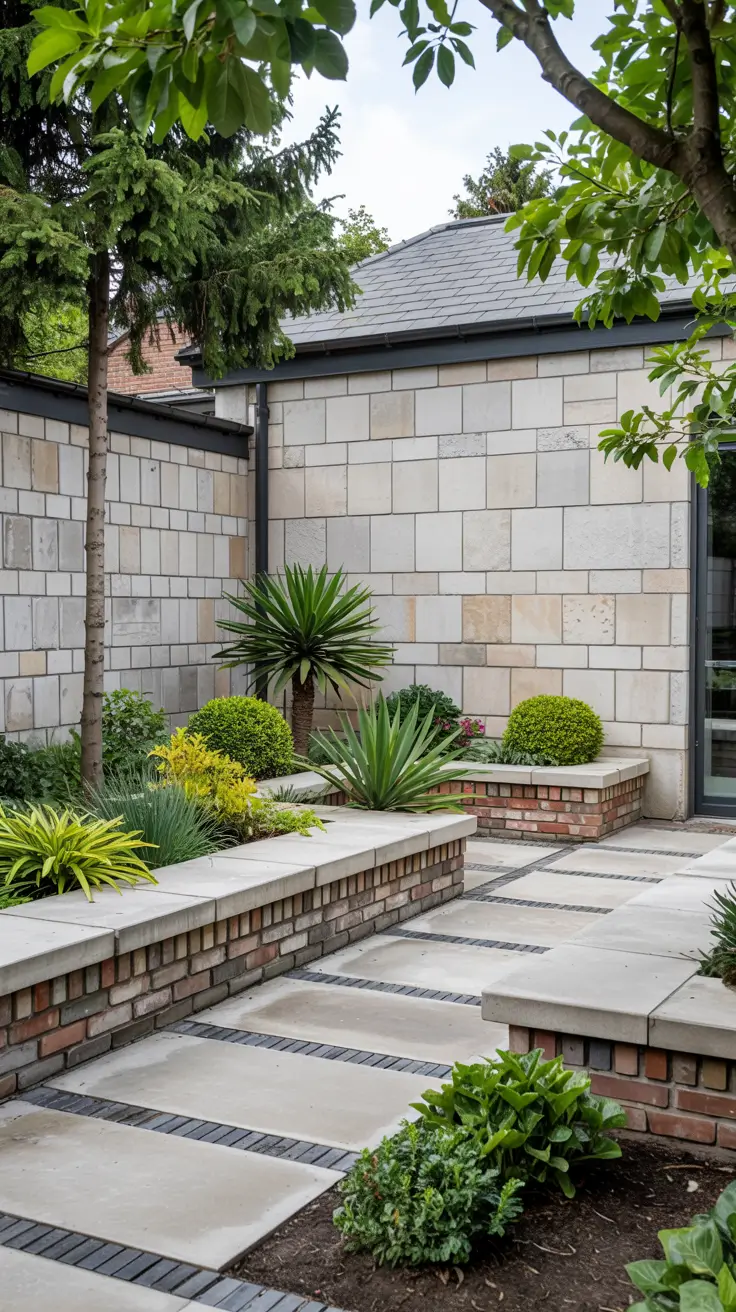
I design low walls using brick, stone, or painted concrete, often combining them with greenery or fencing. Their height allows them to double as seating or decorative edges, making them highly versatile.
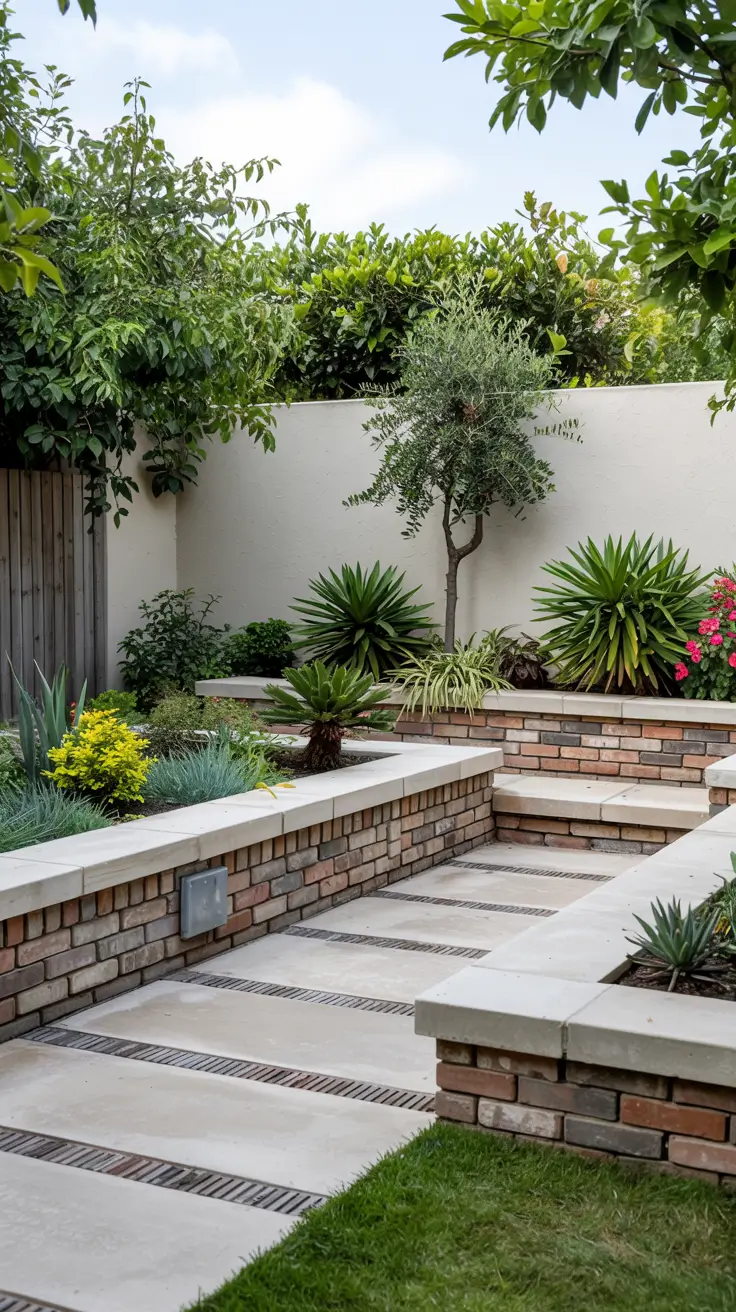
In my experience, low walls create a sense of order without feeling restrictive. Many modern outdoor designs favor this approach because it maintains openness.
What I often add is a contrasting top layer, such as stone caps or wooden finishes, to enhance durability and visual appeal.
7. Back Garden Wall Ideas for Privacy and Visual Interest
Back garden walls serve a different purpose, focusing on privacy and atmosphere. I design these walls to create a secluded environment while still maintaining visual interest through texture and materials.
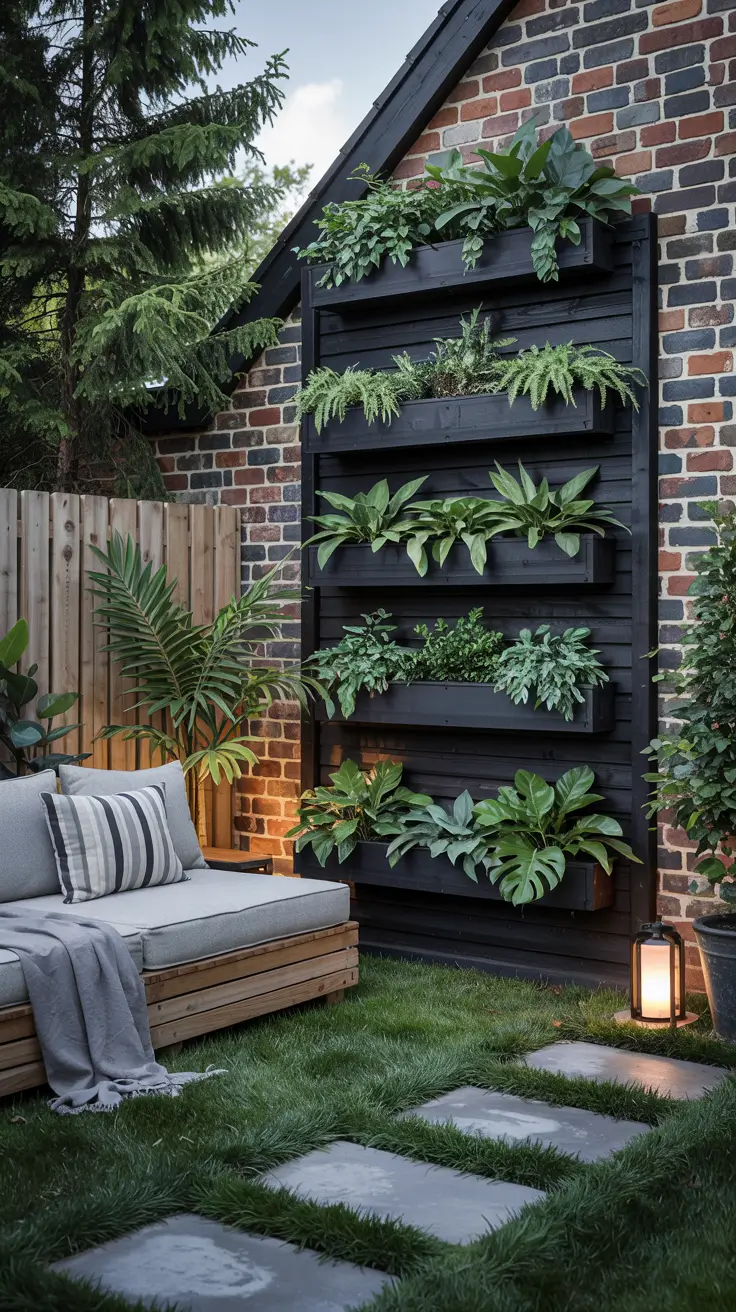
I often use taller structures, combining brick, wood, or vertical greenery. Painted finishes, especially darker tones like black, create a cozy and intimate feel. Adding decorative panels or lighting enhances the overall design.
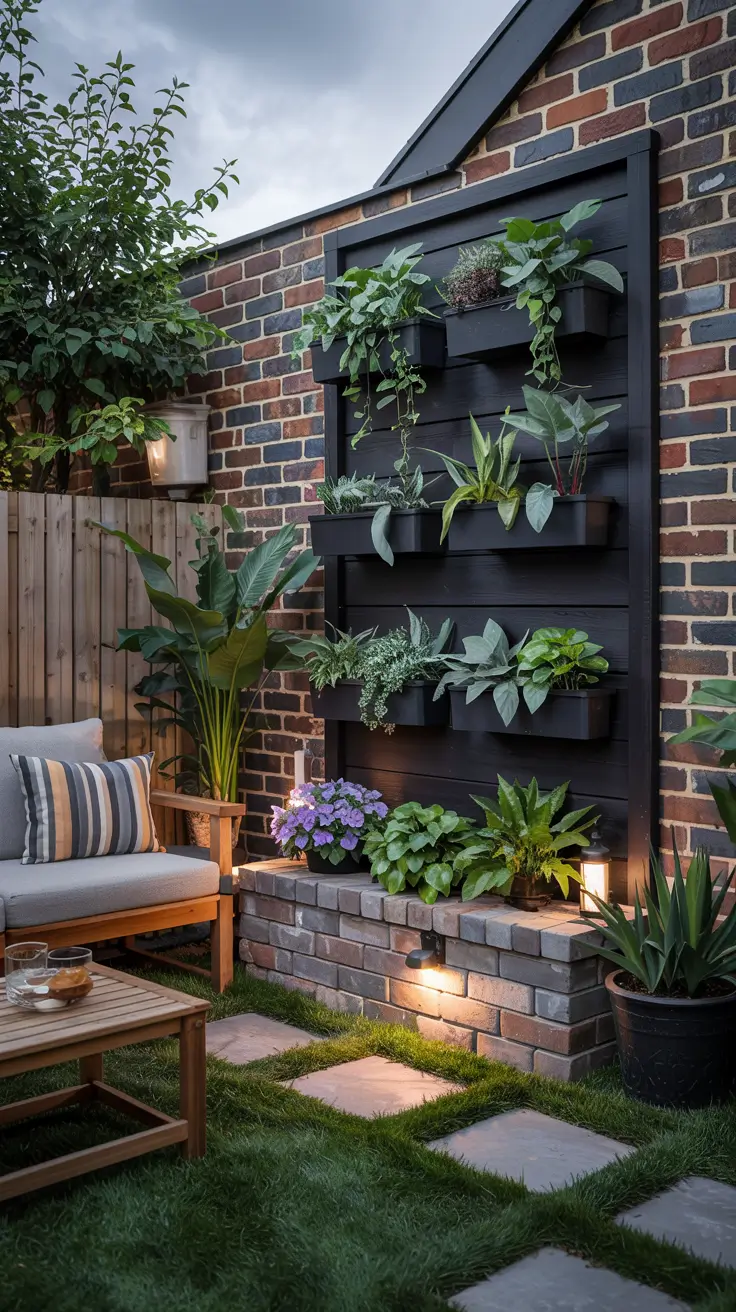
From my perspective, privacy walls should not feel heavy or closed off. I take inspiration from modern landscape trends that incorporate vertical plants to soften the structure.
What is often missing is layering. I recommend combining solid walls with vertical garden elements to create depth and avoid a flat appearance.
8. White Garden Wall Ideas for Clean and Elegant Outdoor Looks
I often use white garden walls when I want to create a clean and timeless outdoor space that reflects light and makes the garden feel larger. A white wall works beautifully in both small and spacious gardens, especially in front or terrace areas where brightness enhances the overall ambiance. It pairs effortlessly with greenery, making plants stand out while maintaining a calm and organized aesthetic.
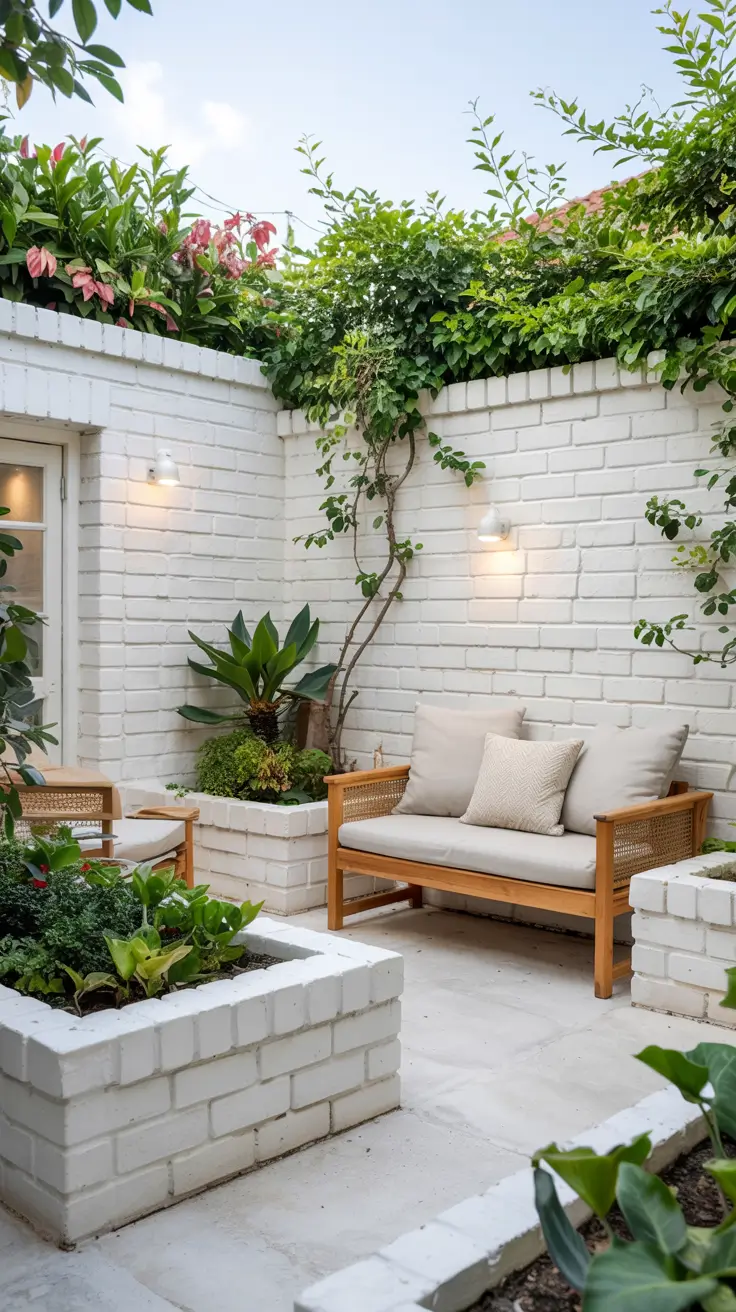
In my experience, combining painted brick or cement block walls in white with minimal outdoor furniture creates a cohesive look. I usually recommend adding light wooden benches, neutral outdoor cushions, and subtle lighting fixtures. These elements soften the rigidity of the wall and make the space more inviting. White also works well with vertical garden elements or climbing plants, adding depth without overwhelming the design.
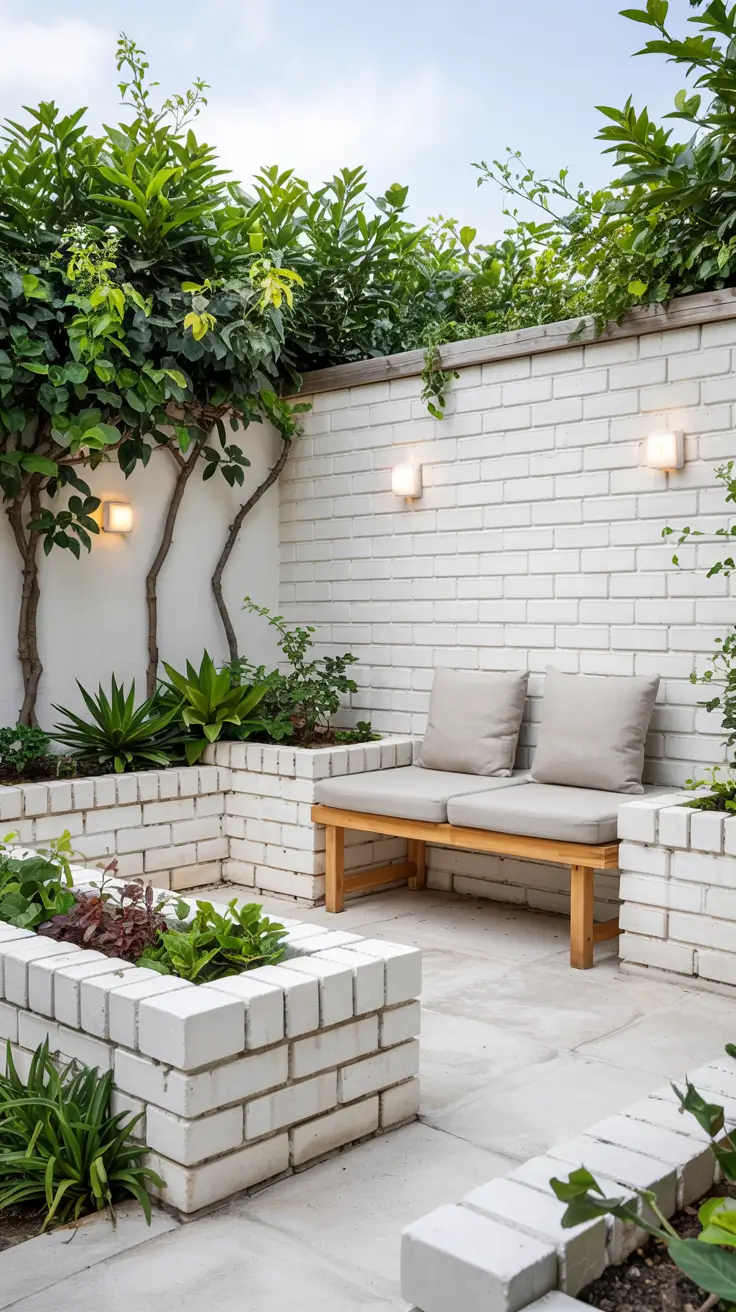
Personally, I find that white walls are especially effective in Mediterranean-inspired gardens. Many designers emphasize the importance of light reflection in outdoor spaces, and white surfaces help achieve that effortlessly. I always advise balancing the brightness with natural textures like stone or wood to avoid a sterile look.
To improve this section, I would add integrated lighting or subtle wall-mounted fixtures to enhance the white surface during the evening and create a layered visual effect.
9. Terrace Garden Wall Ideas for Layered Outdoor Living
When designing terrace garden walls, I focus on creating layers that define different zones. Terrace walls are ideal for sloped landscapes or multi-level outdoor areas, allowing for both visual interest and functional separation. These walls often act as retaining structures while also serving as decorative elements.
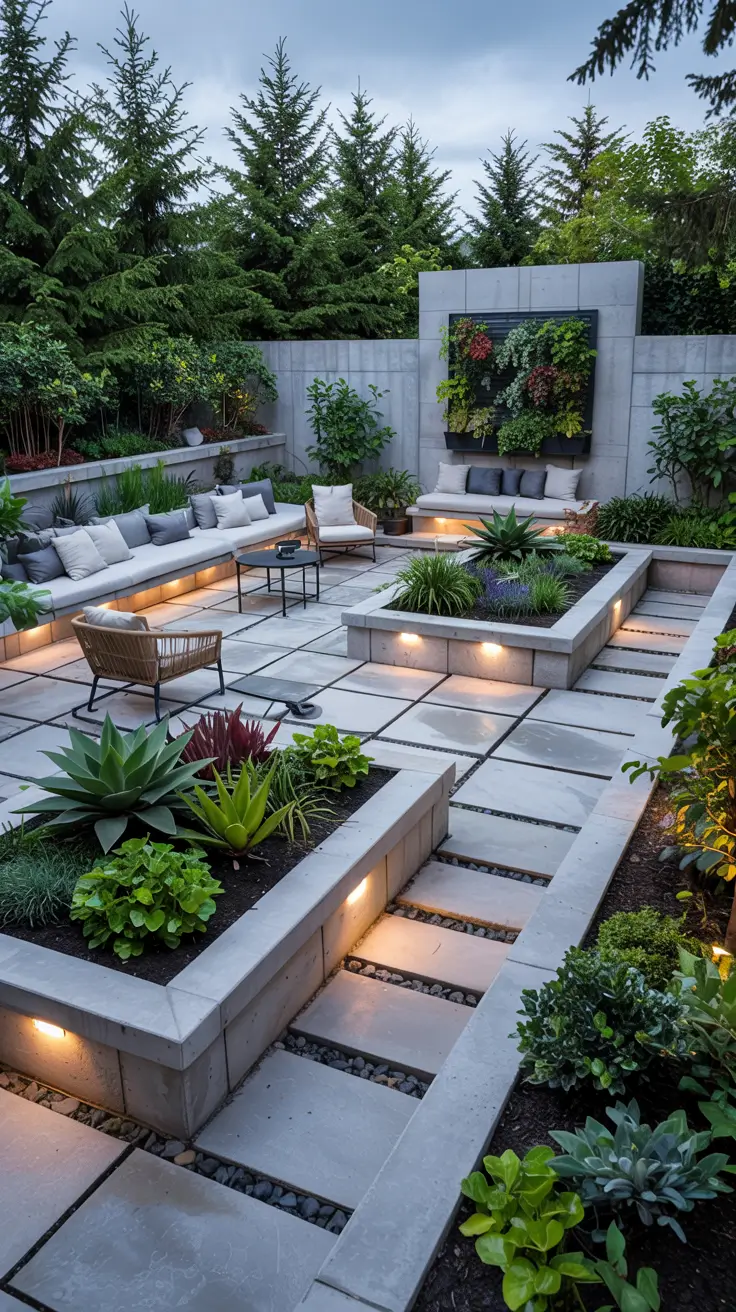
I typically use concrete or stone materials for terrace walls because they provide durability and structure. Adding built-in seating, planters, or even low retaining walls enhances usability. I also like incorporating vertical garden sections into terrace walls to maximize greenery without taking up additional space.
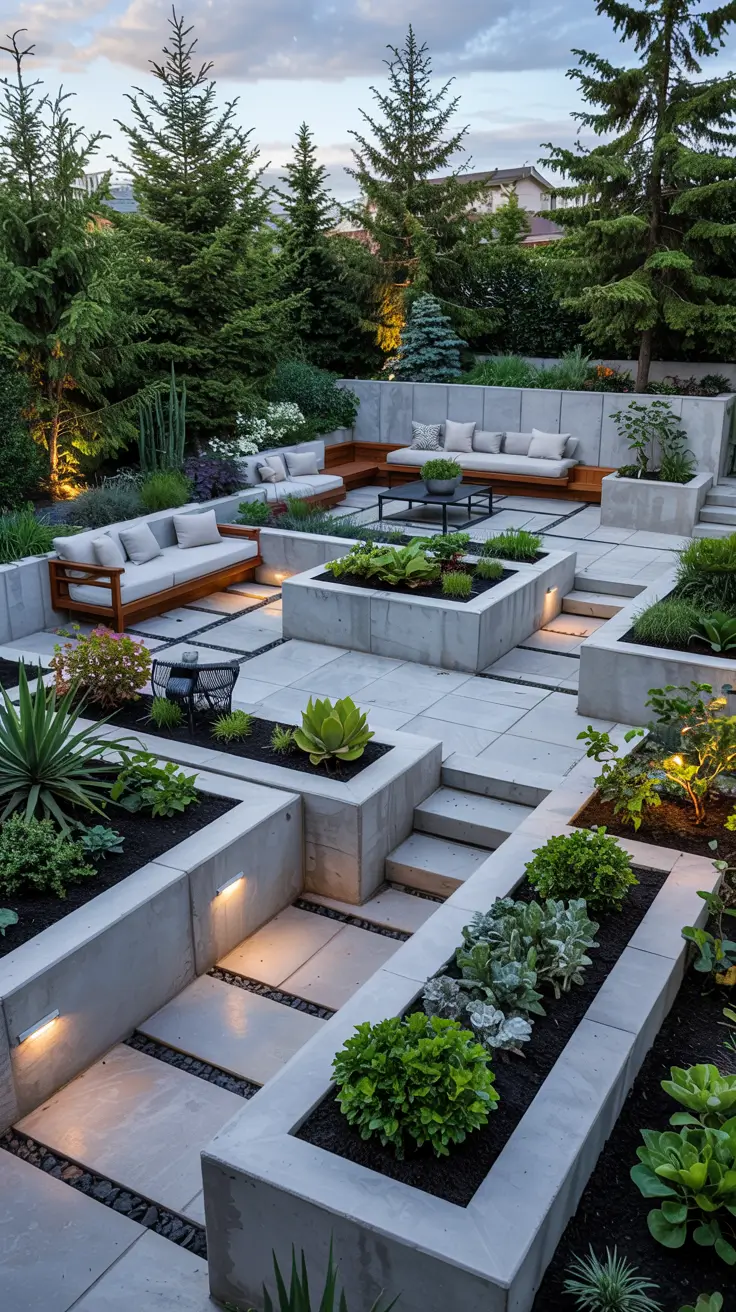
From my perspective, terrace walls are one of the most practical garden wall ideas outdoor because they solve structural challenges while improving aesthetics. Many landscape professionals recommend combining hardscape with softscape, and terrace walls are perfect for achieving that balance.
What could be added here is a water feature or cascading plants between levels to create movement and a more dynamic environment.
10. Curved Garden Wall Ideas for Soft and Organic Landscaping
I prefer curved garden walls when I want to break away from rigid lines and create a more organic flow in the landscape. Curved walls naturally guide movement through the garden and make the space feel more relaxed and inviting. They are especially effective in back garden designs where a softer layout is desired.
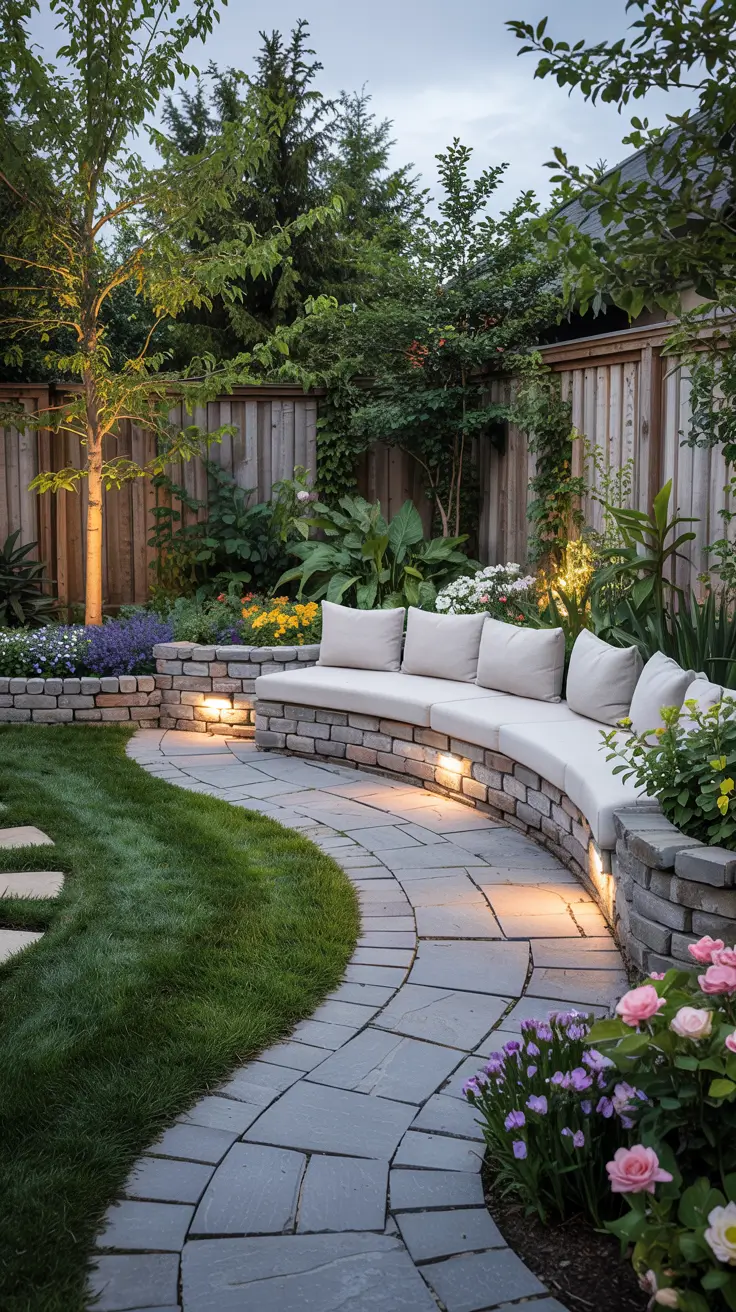
In terms of materials, I often choose brick or stone for curved walls because they allow for smooth shaping. Adding low seating along the curve or integrating planters enhances both functionality and aesthetics. I also recommend soft lighting along the curve to highlight the shape at night.
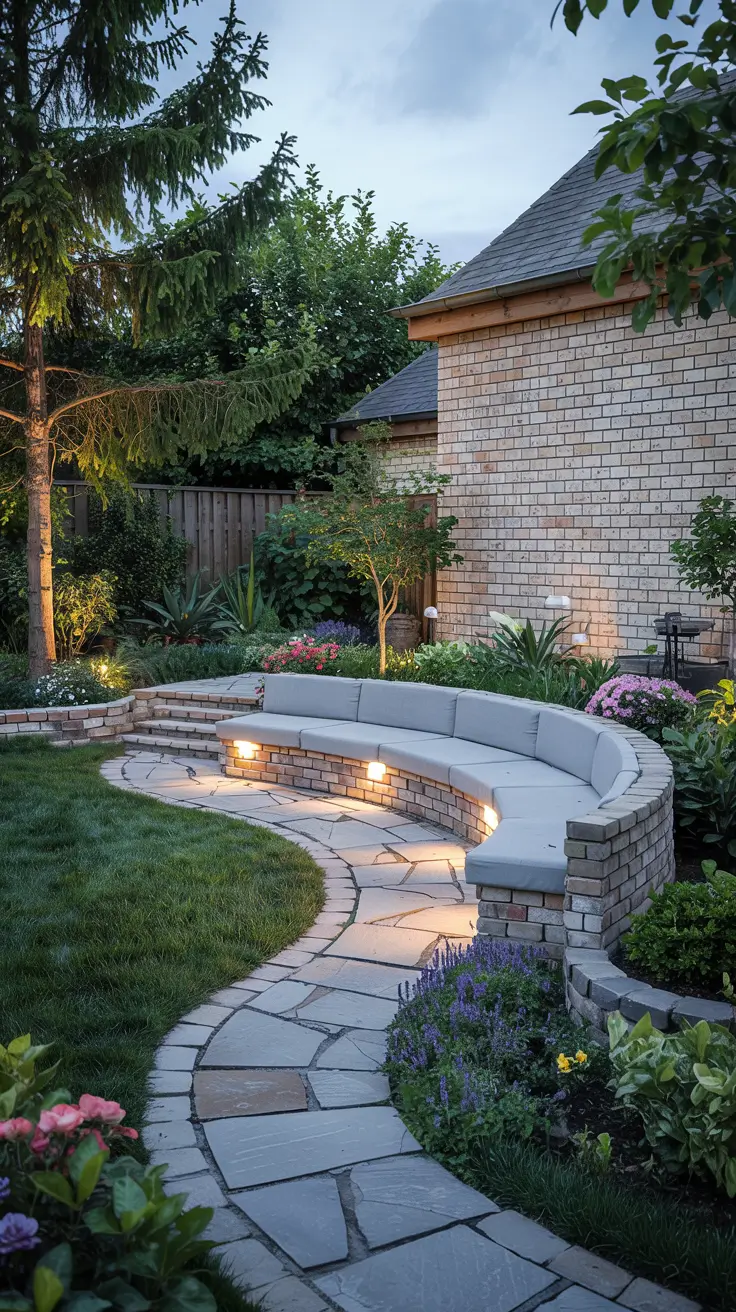
In my opinion, curved walls bring a sense of harmony that straight lines cannot achieve. Designers often note that organic shapes help reduce visual tension, and I have seen this effect firsthand in many projects.
To complete this idea, I would include pathways that follow the curve of the wall, reinforcing the natural flow of the design.
11. Brick and Fence Garden Wall Ideas for Hybrid Boundaries
I often combine brick and fence elements when clients want both privacy and openness. This hybrid approach works well in front gardens where full walls might feel too closed off. The combination allows light and air to pass through while still defining boundaries.
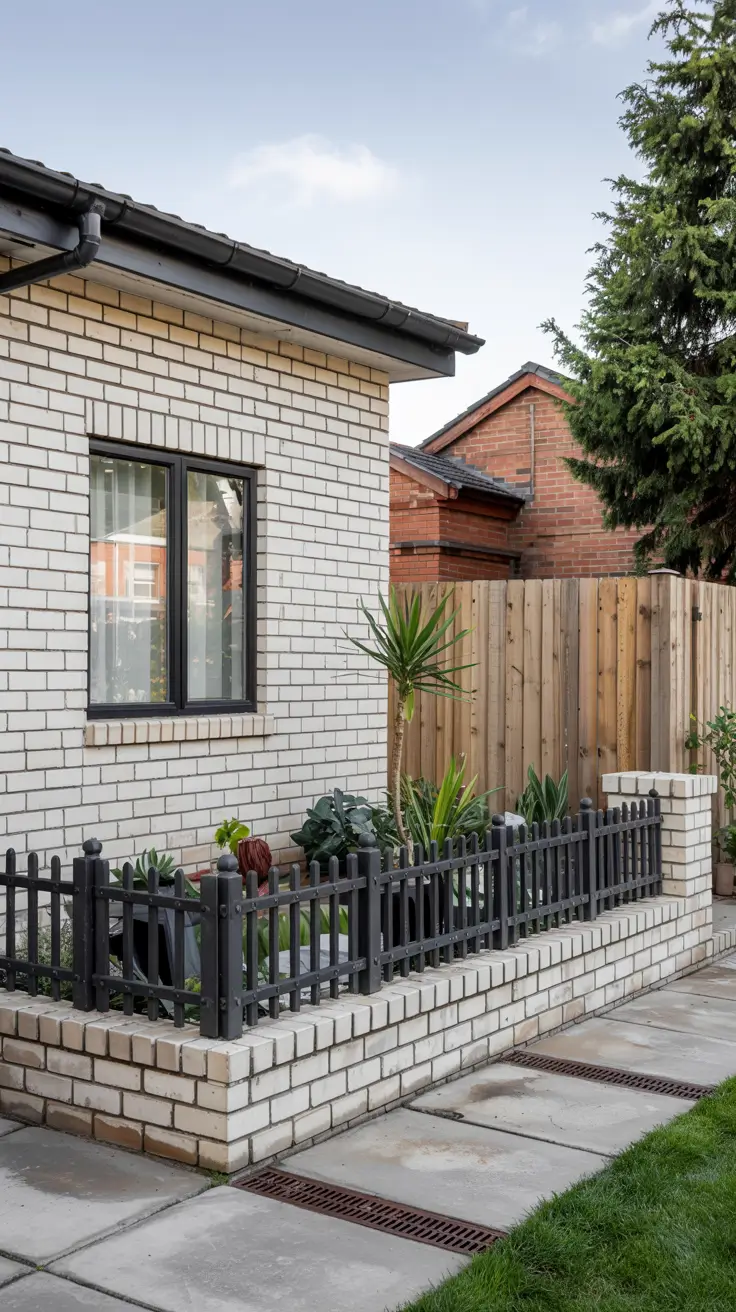
Typically, I use a low brick base with a metal or wooden fence above it. This creates a strong foundation while maintaining visual lightness. Painted brick options, especially in white or black, can modernize the look, while wooden fences add warmth and texture.
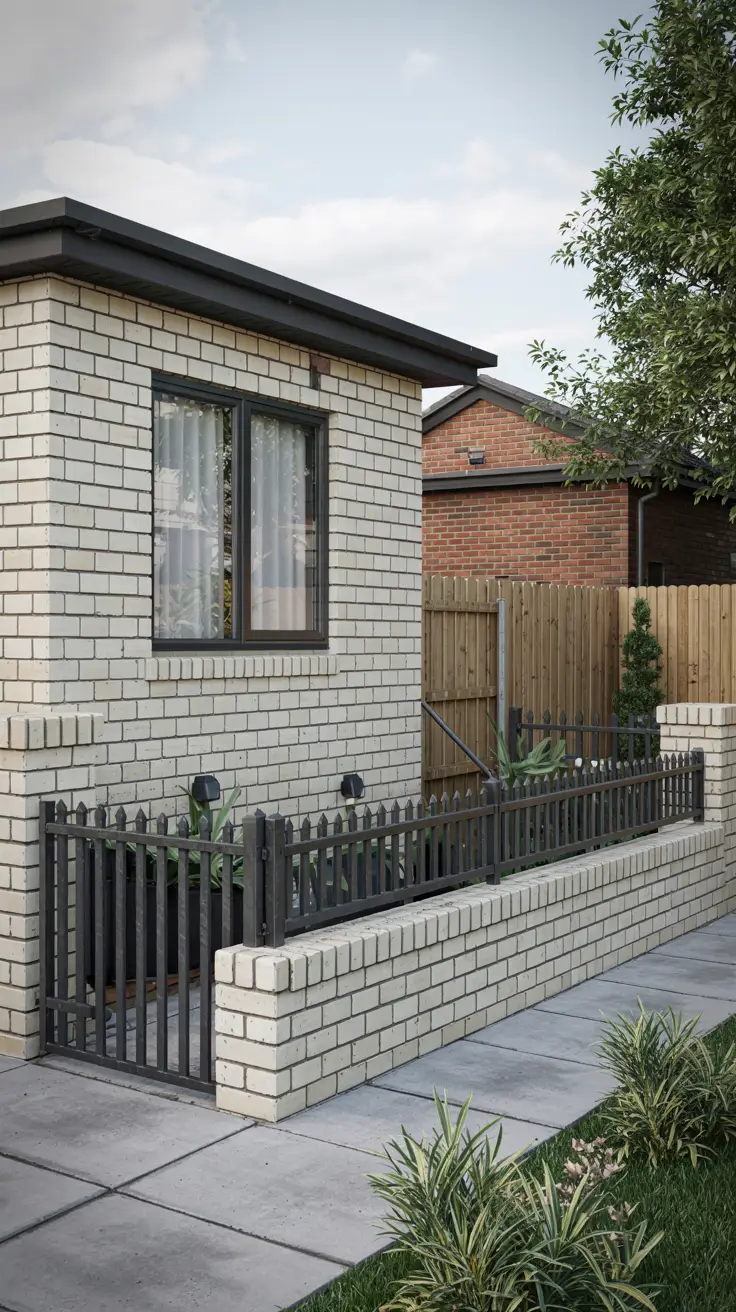
From my experience, this is one of the most versatile garden wall ideas decorative because it adapts to different styles, from modern to rustic. Many outdoor design experts recommend mixing materials to avoid monotony, and this approach does exactly that.
What I would add here is integrated lighting along the fence or brick base to enhance both safety and visual appeal at night.
12. Stone Garden Wall Ideas for Natural and Timeless Appeal
Stone garden walls are my go-to choice when I want a natural and enduring look. They blend seamlessly into the landscape and work well in both traditional and modern settings. Stone is particularly effective for retaining walls and decorative boundaries.
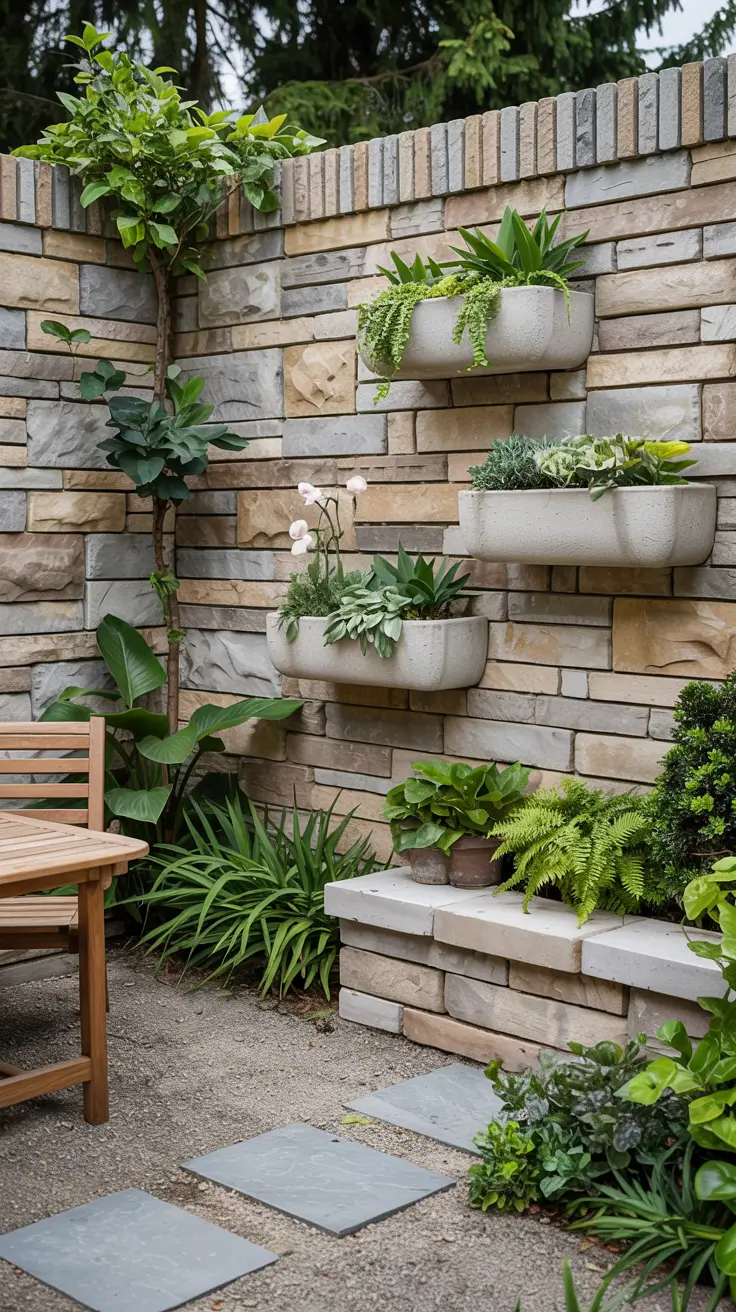
I usually select natural stone or decorative stone finishes, depending on the desired level of refinement. Pairing stone walls with wooden furniture, gravel pathways, and lush planting creates a balanced outdoor environment. I also like incorporating vertical planting pockets within stone walls for added texture.
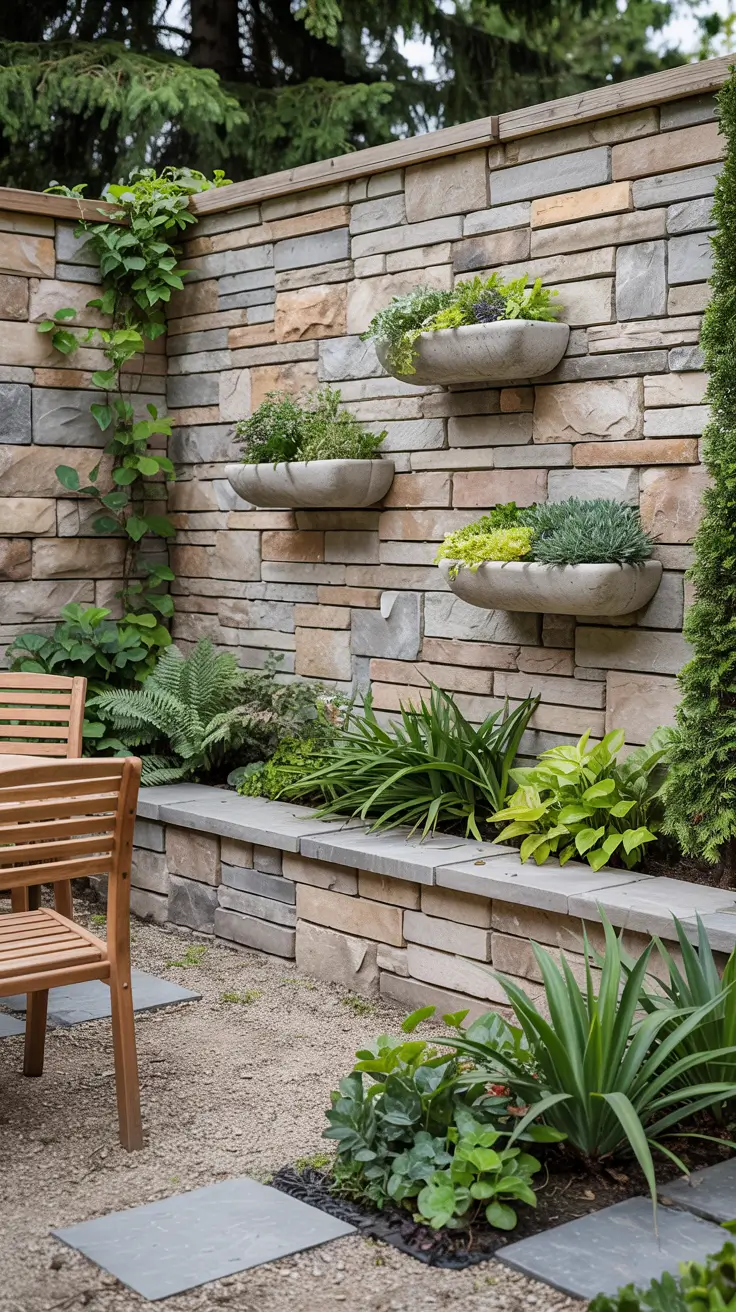
Personally, I believe stone walls age beautifully, gaining character over time. Many landscape architects emphasize sustainability and longevity, and stone is one of the best materials for achieving both.
To enhance this concept, I would include subtle water elements or moss accents to further integrate the wall into the natural surroundings.
13. Black Garden Wall Ideas for Bold and Contemporary Gardens
Black garden walls are something I use when I want to create a striking and modern outdoor space. They provide a strong contrast to greenery and make plants appear more vibrant. This approach works particularly well in minimalist or contemporary designs.
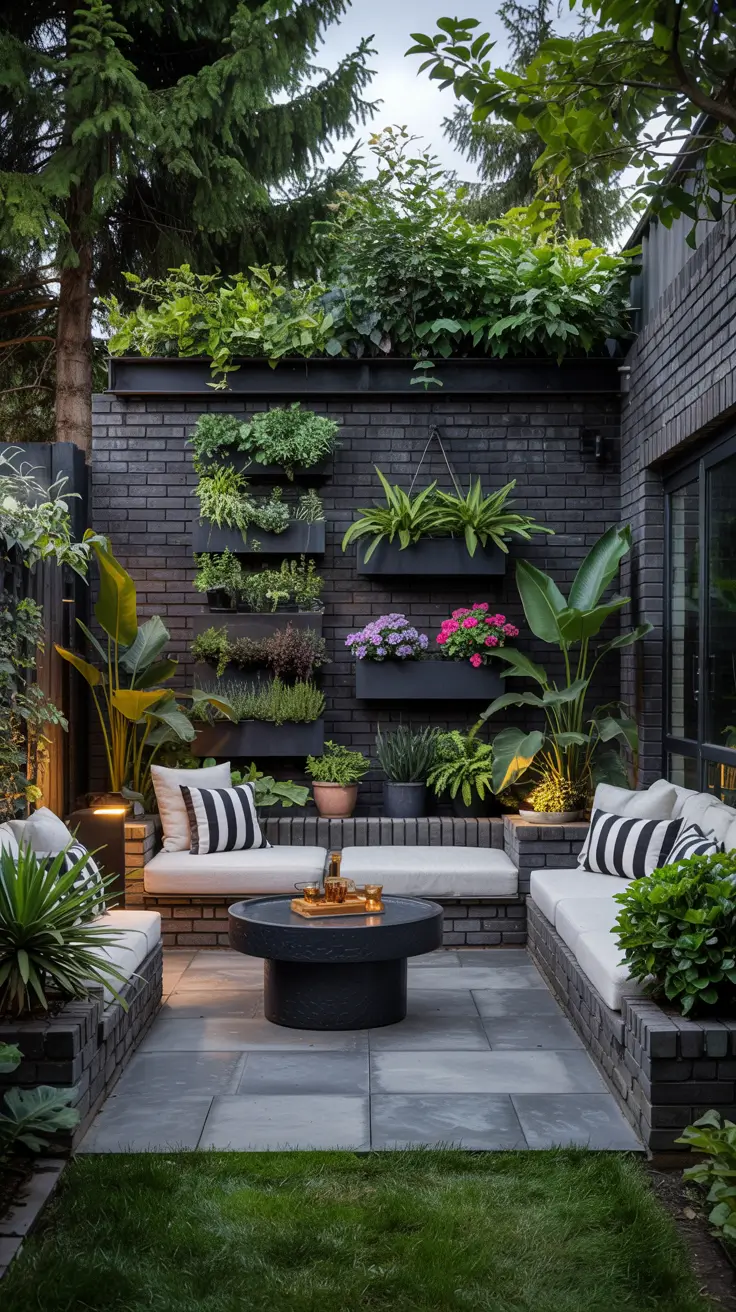
I often use painted brick or concrete in black, combined with sleek outdoor furniture and metal accents. Adding warm lighting helps balance the dark tone and prevents the space from feeling too heavy. Vertical outdoor installations also stand out beautifully against a black backdrop.
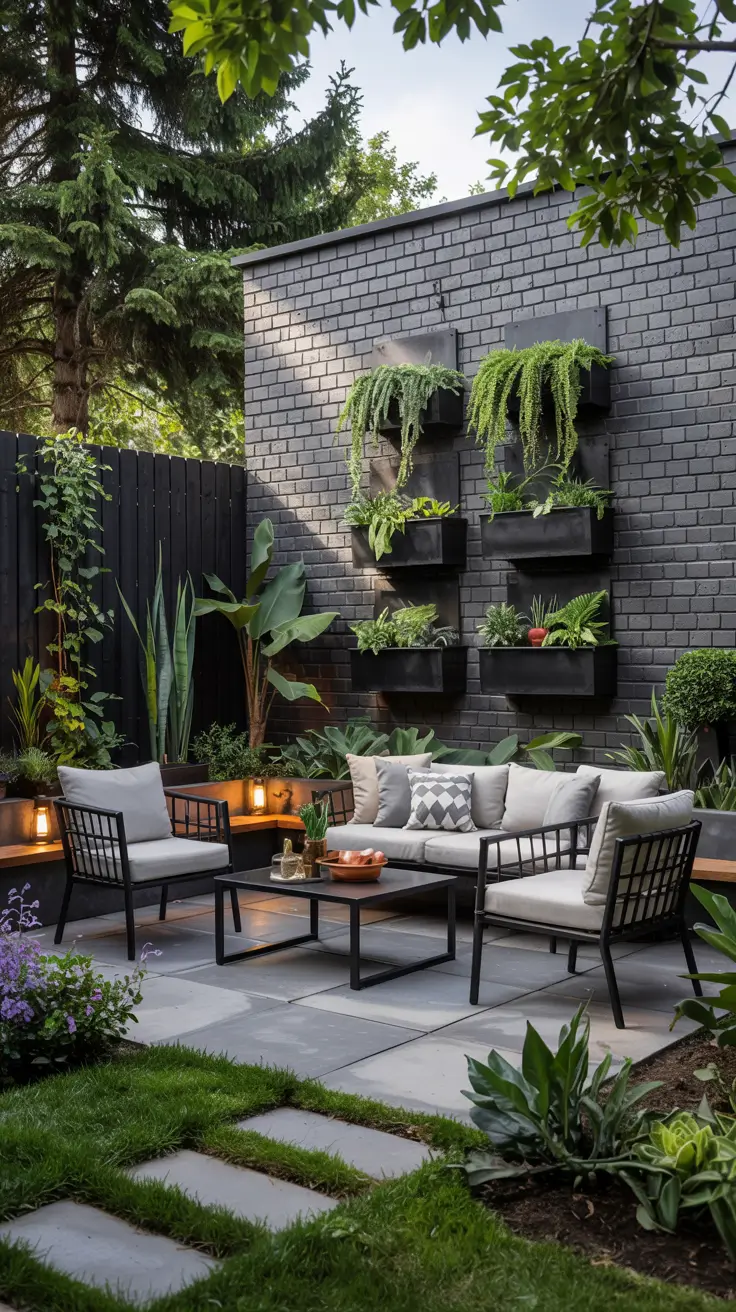
In my experience, black walls are one of the most impactful garden wall ideas painted because they instantly elevate the design. Many modern designers recommend using dark tones to create depth and contrast, especially in urban gardens.
What could improve this section is the addition of reflective elements such as glass or metallic decor to enhance light interaction.
14. Tall Garden Wall Ideas for Privacy, Security, and Impact
Tall garden walls are essential when privacy and security are priorities. I often recommend them for back gardens or urban spaces where neighboring properties are close. These walls create a sense of enclosure and allow for more controlled design within the space.
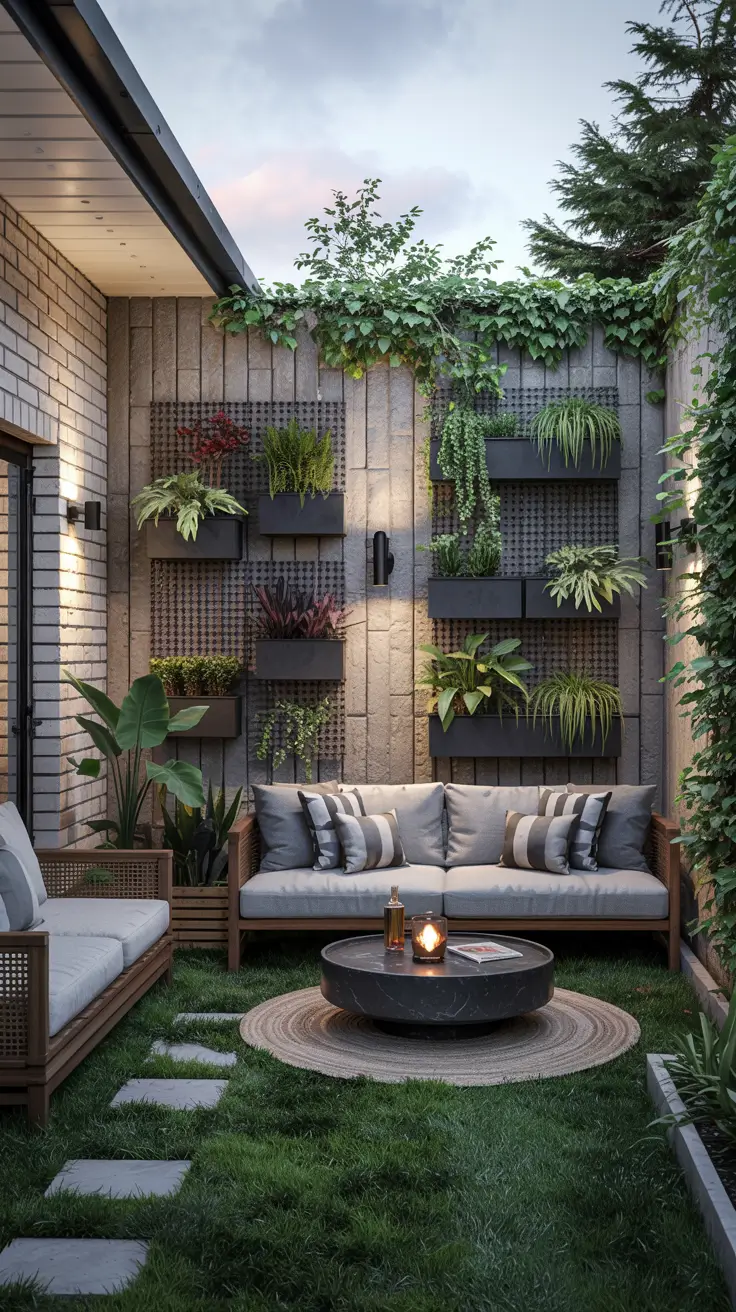
I typically use concrete, cement block, or brick for tall walls due to their strength and durability. To avoid a heavy appearance, I incorporate vertical gardens, textured finishes, or painted surfaces. Adding lighting fixtures or decorative panels helps break up large surfaces.
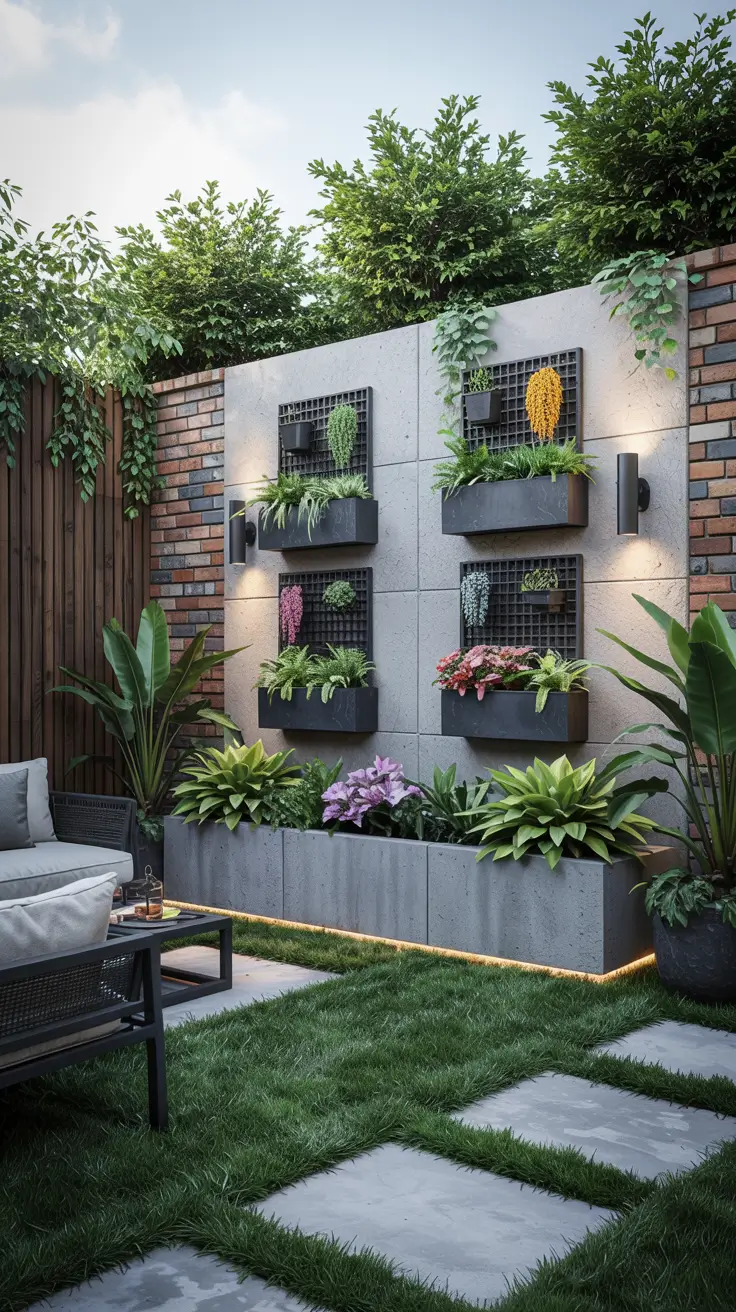
From my perspective, tall walls offer a unique opportunity to create a private outdoor retreat. Many professionals suggest treating tall walls as design features rather than barriers, and I fully agree with this approach.
To complete this idea, I would add climbing plants or modular vertical systems to soften the height and create a more inviting atmosphere.
15. Vertical Garden Wall Ideas 2026 for Space-Saving Greenery
I approach vertical garden walls as one of the most efficient solutions for maximizing greenery in limited outdoor or indoor spaces. In 2026, these designs focus on combining structure with lush planting systems, allowing even narrow areas to feel vibrant and alive. Vertical layouts are especially useful for small terraces, urban gardens, or compact backyards where horizontal space is limited.
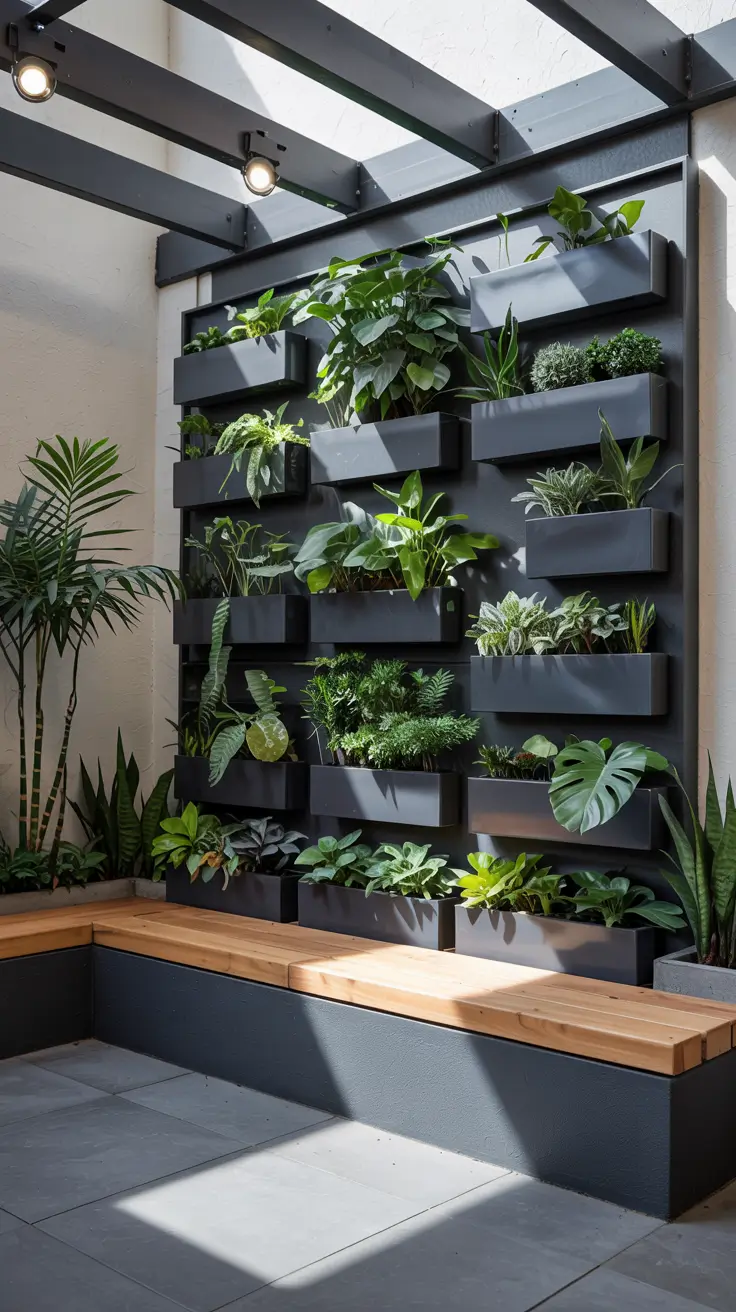
In my projects, I incorporate modular planting panels, drip irrigation systems, and lightweight frames attached to concrete or brick walls. I often combine vertical greenery with subtle lighting to highlight textures at night. Furniture such as slim benches or compact outdoor seating is positioned nearby to create a relaxing zone without overcrowding the space.
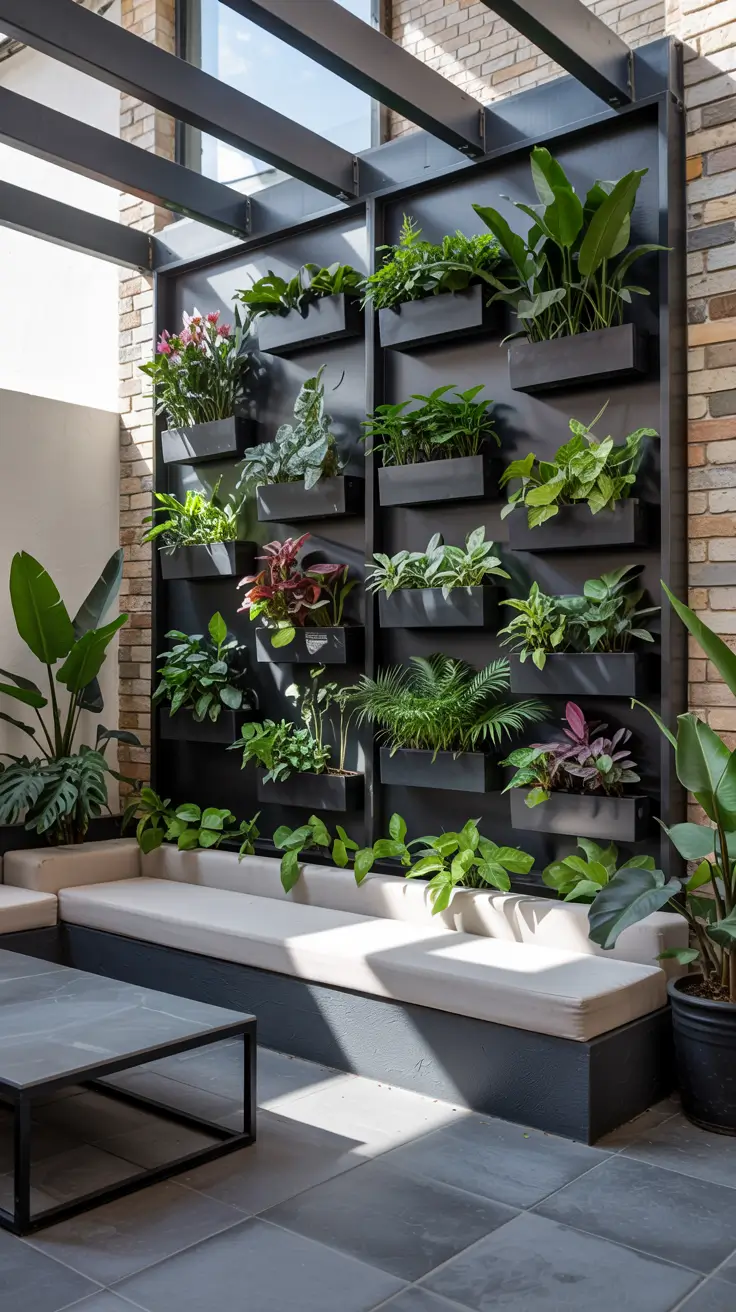
From my experience, vertical garden walls not only enhance aesthetics but also improve air quality and insulation. Many modern landscaping experts emphasize their sustainability benefits, and I always recommend choosing low-maintenance plants that thrive in vertical conditions.
What is often missing is proper irrigation planning. I always ensure that a built-in watering system is included to maintain plant health and reduce maintenance effort.
16. Outdoor Vertical Garden Wall Ideas with Lush Living Plants
Outdoor vertical garden wall ideas take greenery to another level by turning entire walls into living ecosystems. I use these designs to create focal points that feel both natural and architectural. They work particularly well in back gardens or patios where a strong visual element is needed.
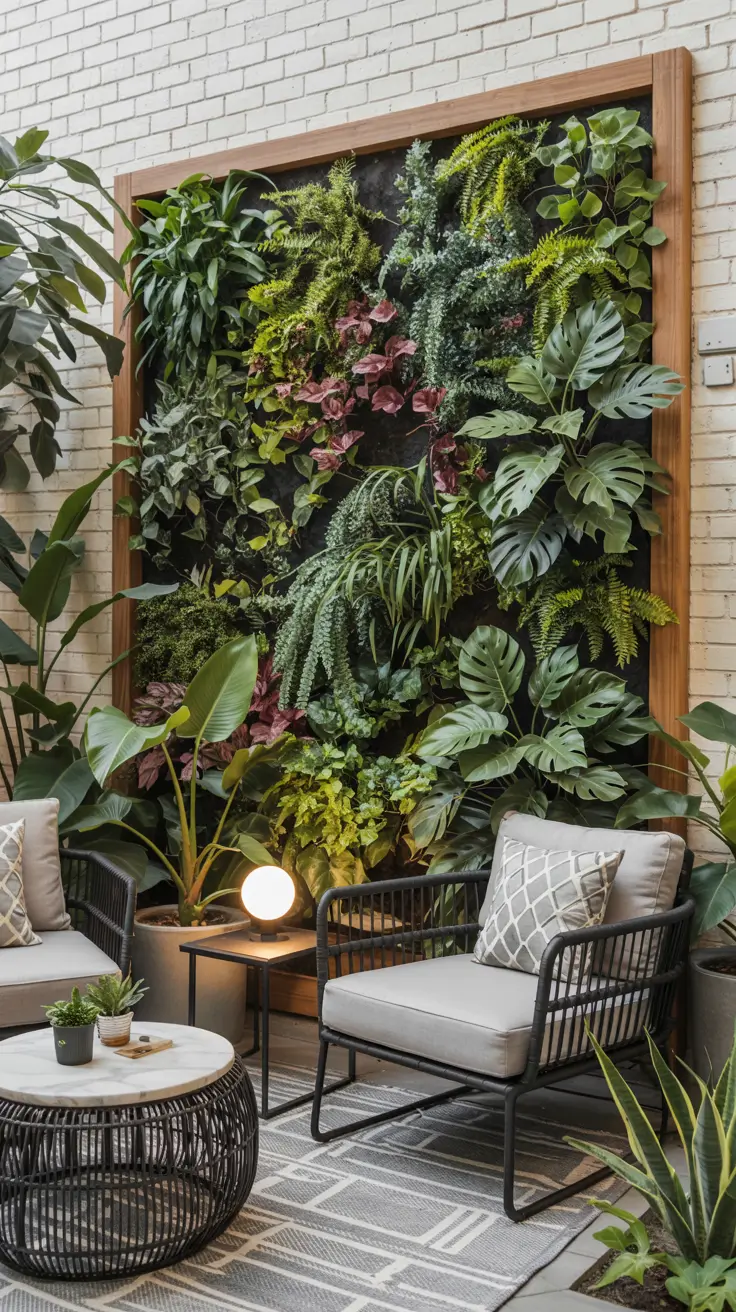
I typically include a mix of trailing plants, dense foliage, and seasonal accents to create depth. The wall structure is often supported by metal or wooden frames, while integrated lighting enhances the greenery during evening hours. Pairing these walls with neutral outdoor furniture ensures that the plants remain the main highlight.
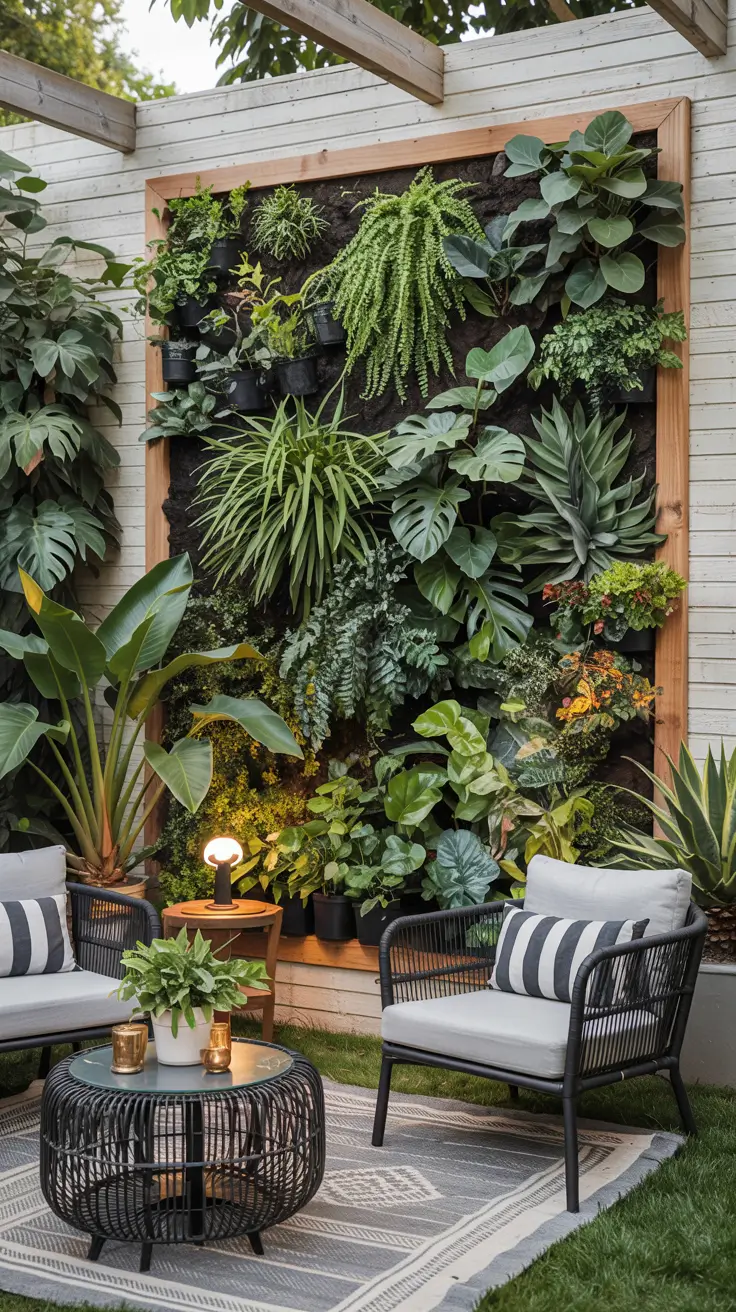
In my opinion, the success of a vertical garden depends on plant selection. I often follow advice from landscaping professionals who recommend combining hardy plants with decorative varieties for a balanced look.
What many designs lack is seasonal variation. I always suggest including plants that change throughout the year to keep the wall visually interesting.
17. Indoor Garden Wall Ideas That Bring Nature Inside
Indoor garden wall ideas are becoming increasingly popular as people look for ways to bring nature into their homes. I design these walls to act as living art pieces, adding texture, color, and freshness to interior spaces. They are particularly effective in living rooms, dining areas, or even home offices.
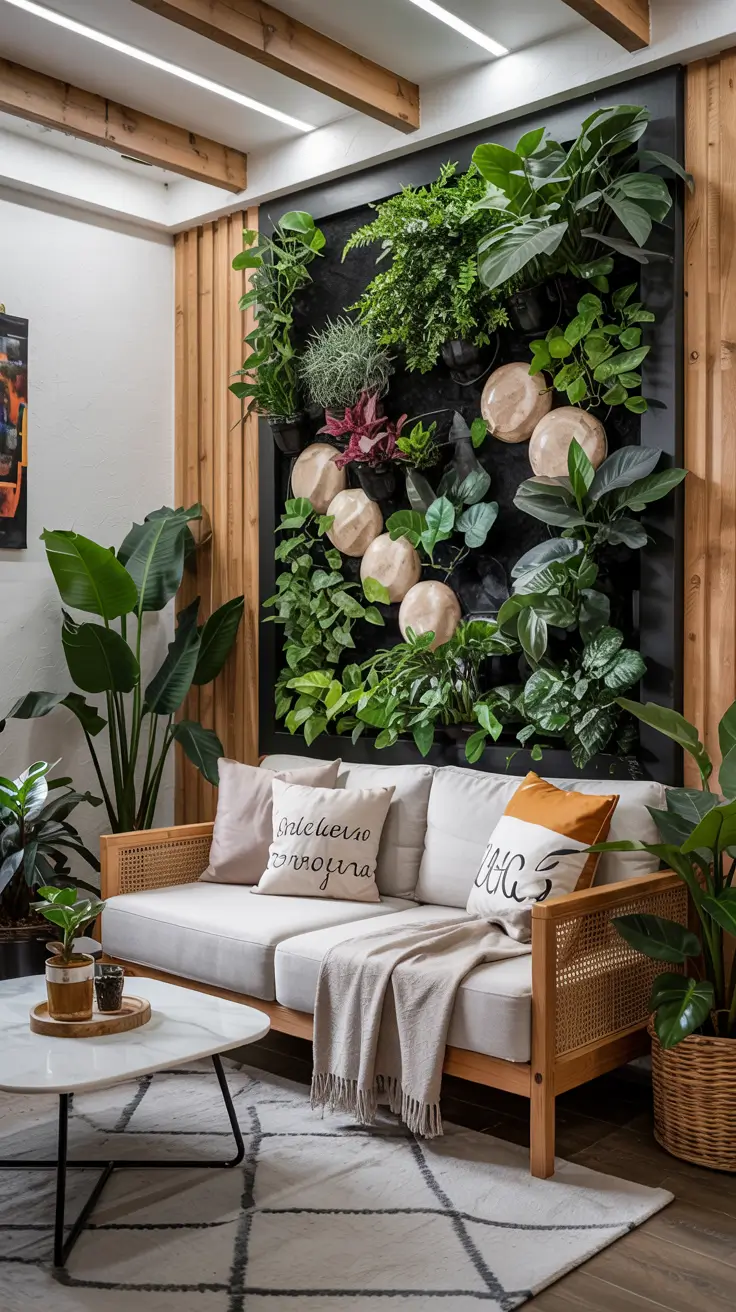
I incorporate controlled lighting, irrigation systems, and carefully selected plants that thrive indoors. Materials such as white painted surfaces or black frames help highlight the greenery. Furniture is kept minimal to ensure the wall remains the focal point.
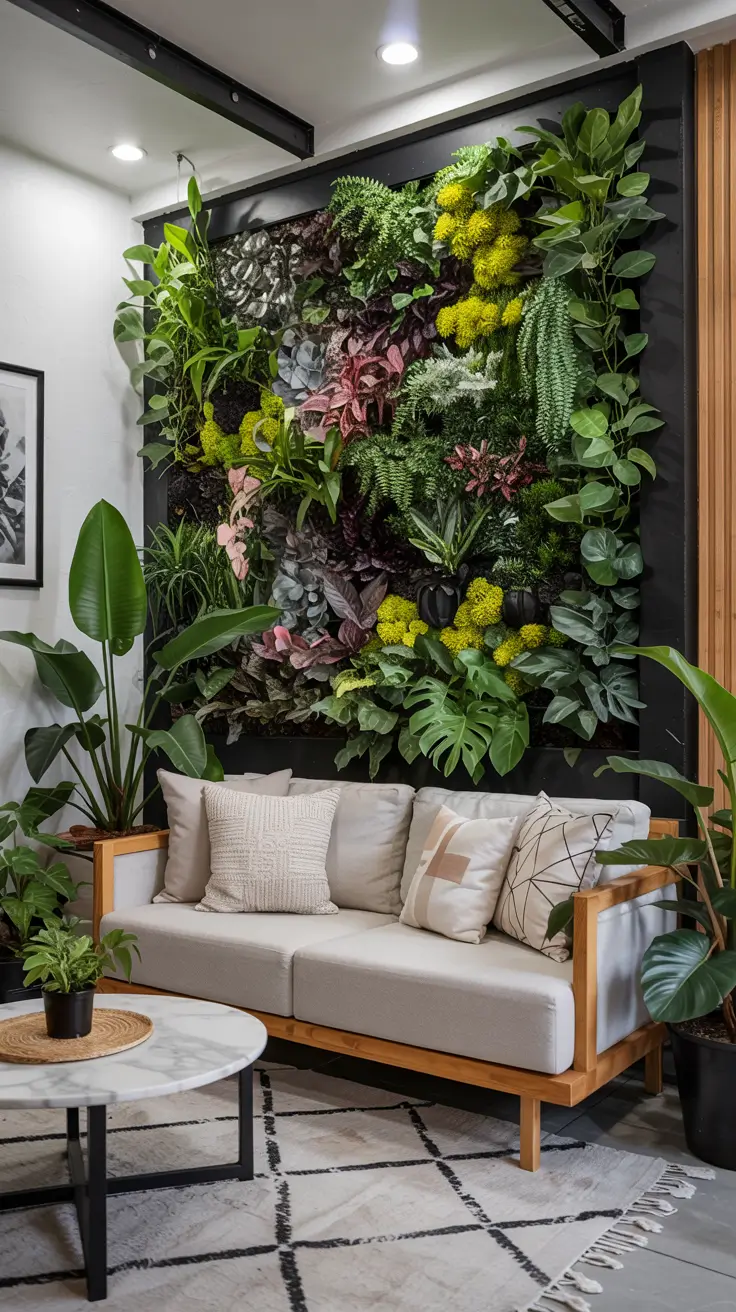
From my perspective, indoor garden walls create a calming environment that enhances well-being. Interior design experts often highlight the psychological benefits of greenery, and I have seen how these installations transform the atmosphere of a space.
What is often missing is proper lighting design. I always recommend using grow lights to ensure plants remain healthy regardless of natural light availability.
18. Painted Garden Wall Ideas to Add Color and Personality
Painted garden wall ideas allow for creative expression and personalization. In 2026, I see a strong trend toward bold colors, geometric patterns, and artistic finishes that turn simple walls into statement features. Painted brick and concrete surfaces are particularly effective for this approach.
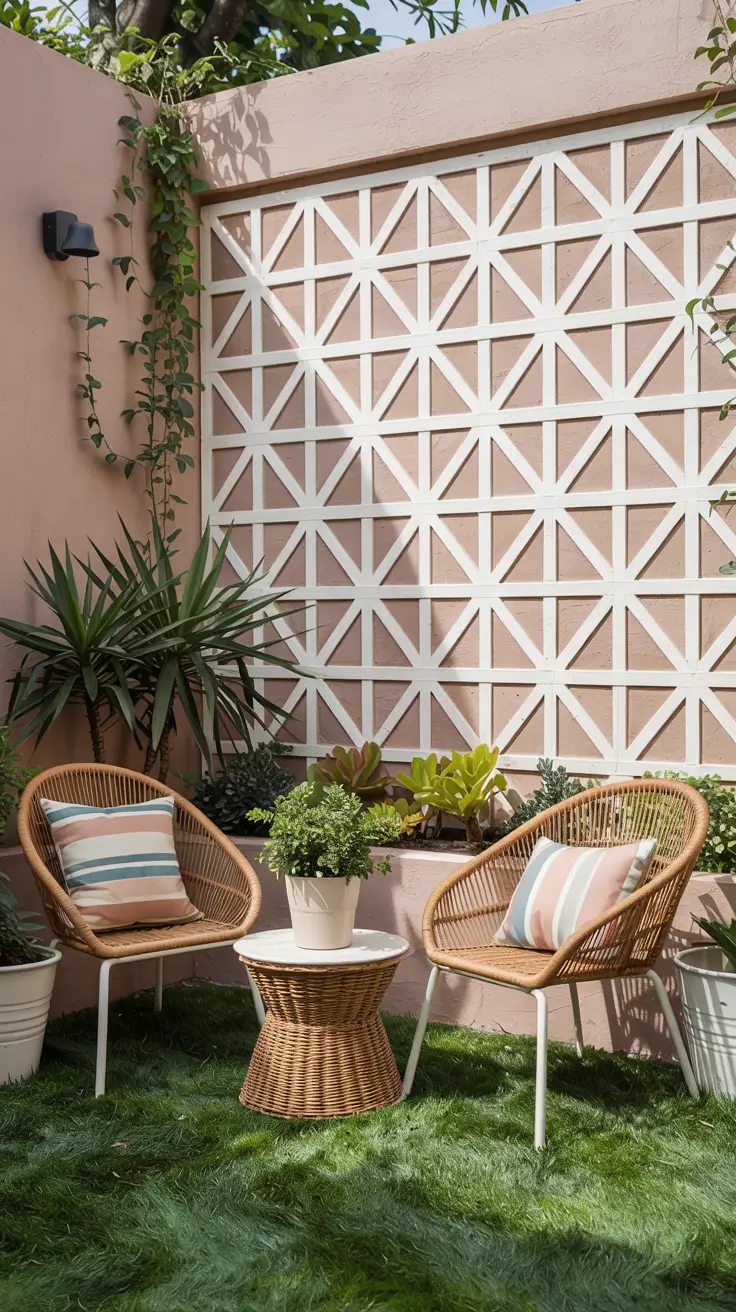
I usually select color palettes that complement the surrounding landscape and architecture. White and black remain popular choices, but I also experiment with Mediterranean tones and soft pastels. Decorative elements such as wall art or mounted planters enhance the overall design.
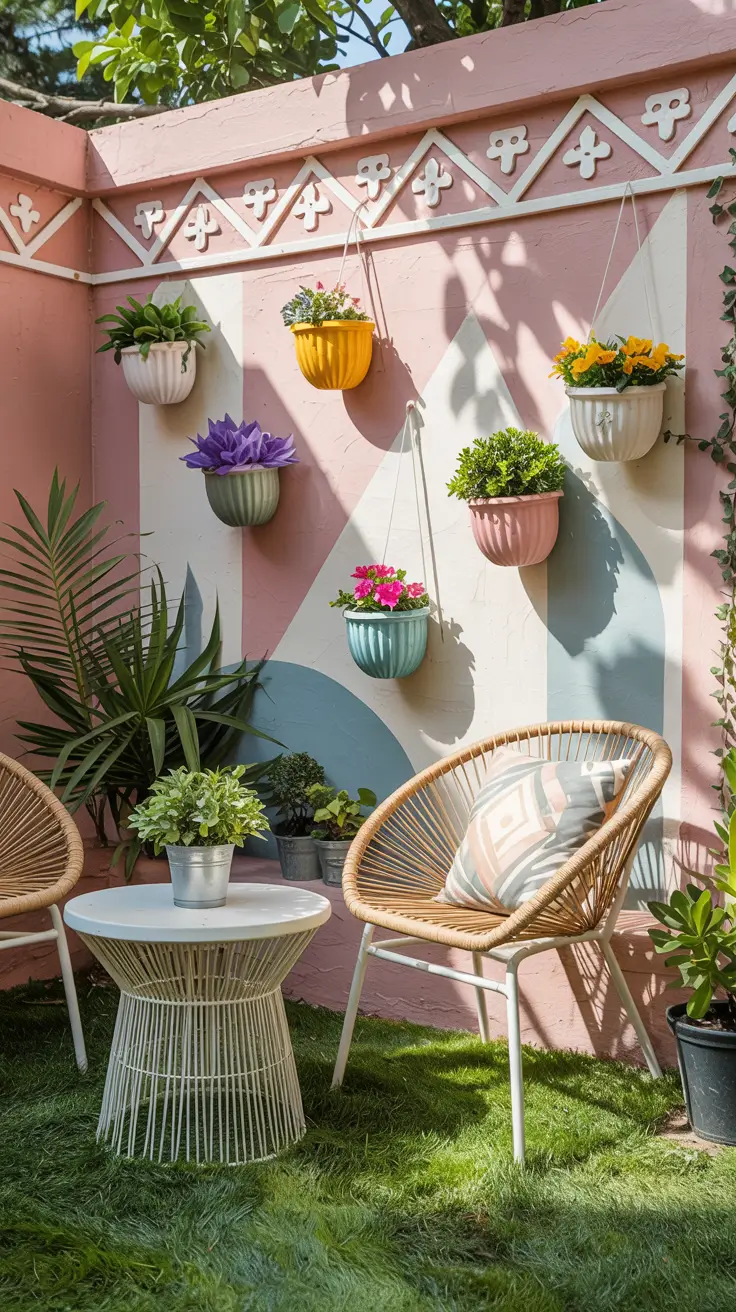
In my experience, painted walls can completely transform a garden without requiring major structural changes. Design publications often emphasize the power of color, and I always encourage thoughtful experimentation.
What is often missing is weather protection. I always recommend using high-quality outdoor paint to ensure durability and long-lasting color.
19. Pallet Garden Wall Ideas DIY for Budget-Friendly Designs
Pallet garden wall ideas DIY are perfect for those who want a cost-effective and creative solution. I use pallets to build vertical planters, decorative walls, or even small partitions within a garden. These designs are highly flexible and easy to customize.
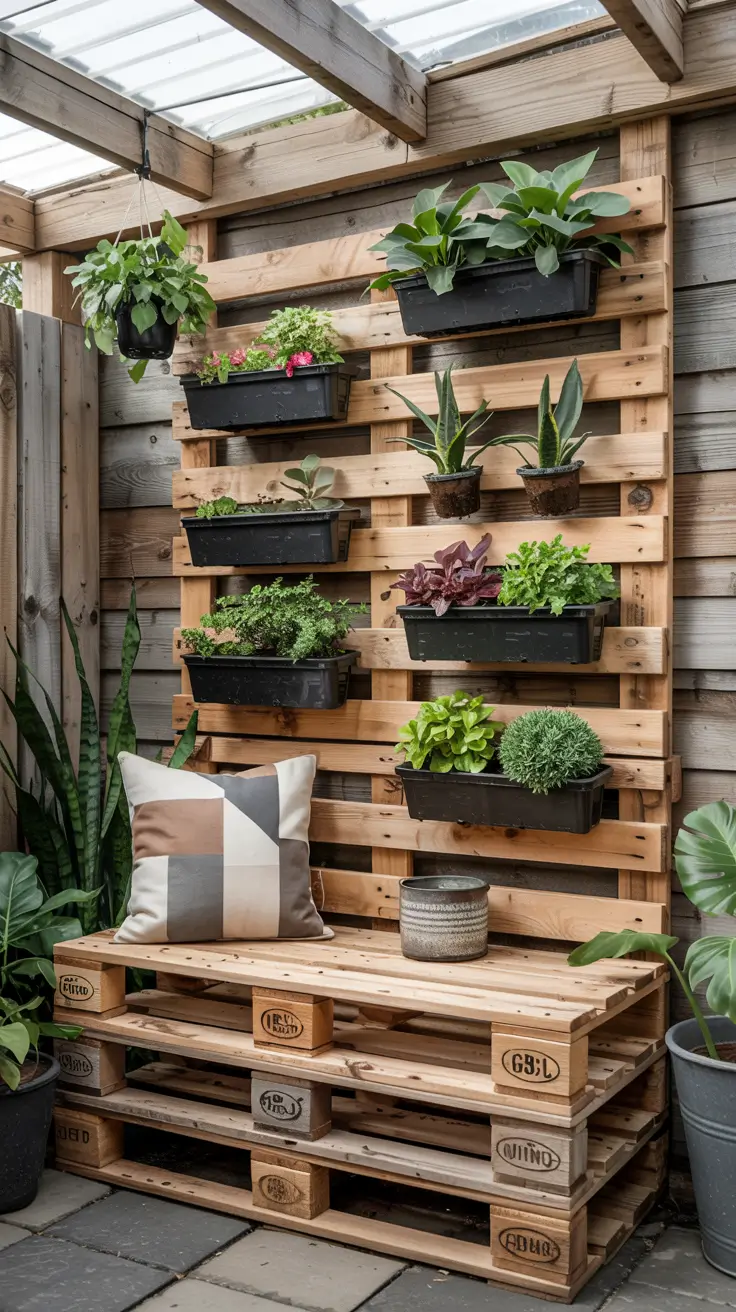
I typically treat and paint the pallets to improve durability and appearance. They can be mounted on existing walls or used as standalone features. Adding small shelves or hooks increases functionality, while plants bring life to the structure.
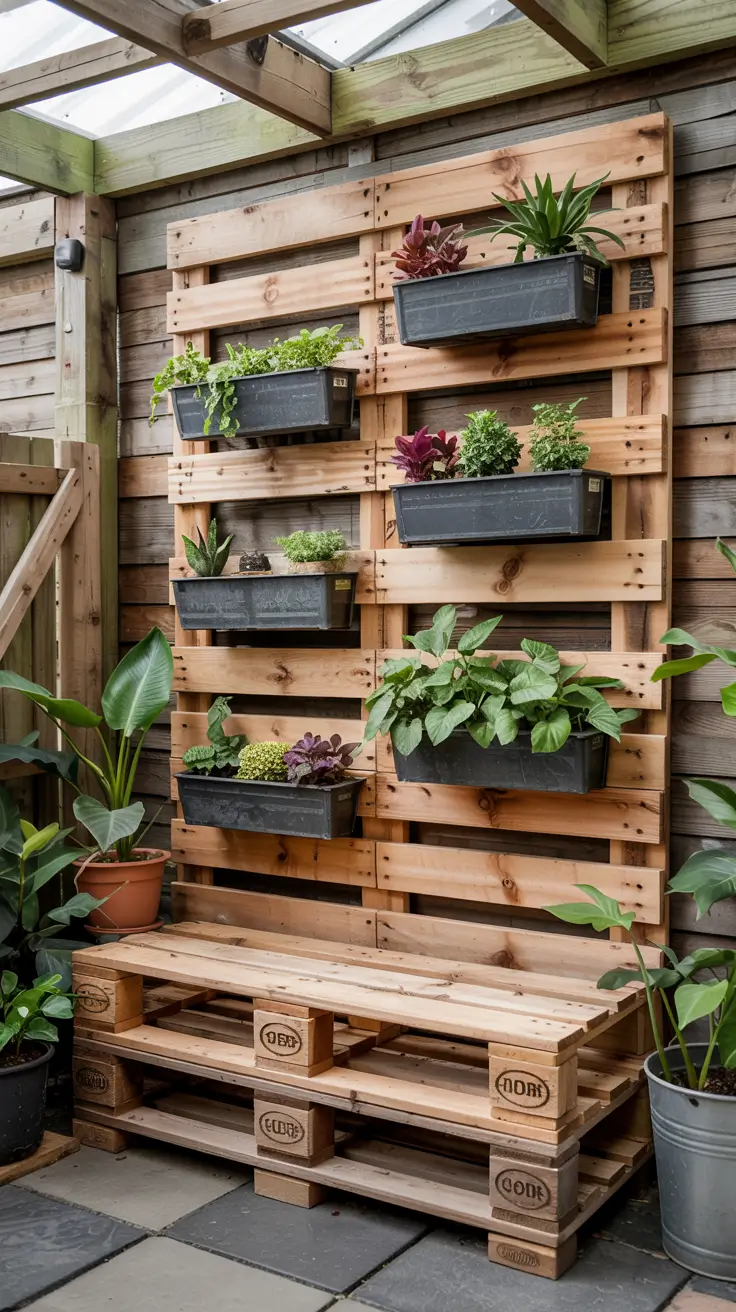
From my perspective, pallet walls are ideal for DIY enthusiasts who enjoy hands-on projects. Many design communities highlight their versatility, and I have found them to be both practical and visually appealing.
What is often missing is proper treatment of the wood. I always ensure pallets are sealed and protected against moisture to extend their lifespan.
20. Concrete Garden Wall Ideas for Modern Minimalist Spaces
Concrete garden wall ideas are central to modern minimalist design. I use concrete to create clean lines, smooth surfaces, and a neutral backdrop that highlights other elements in the garden. These walls are particularly effective in contemporary outdoor spaces.
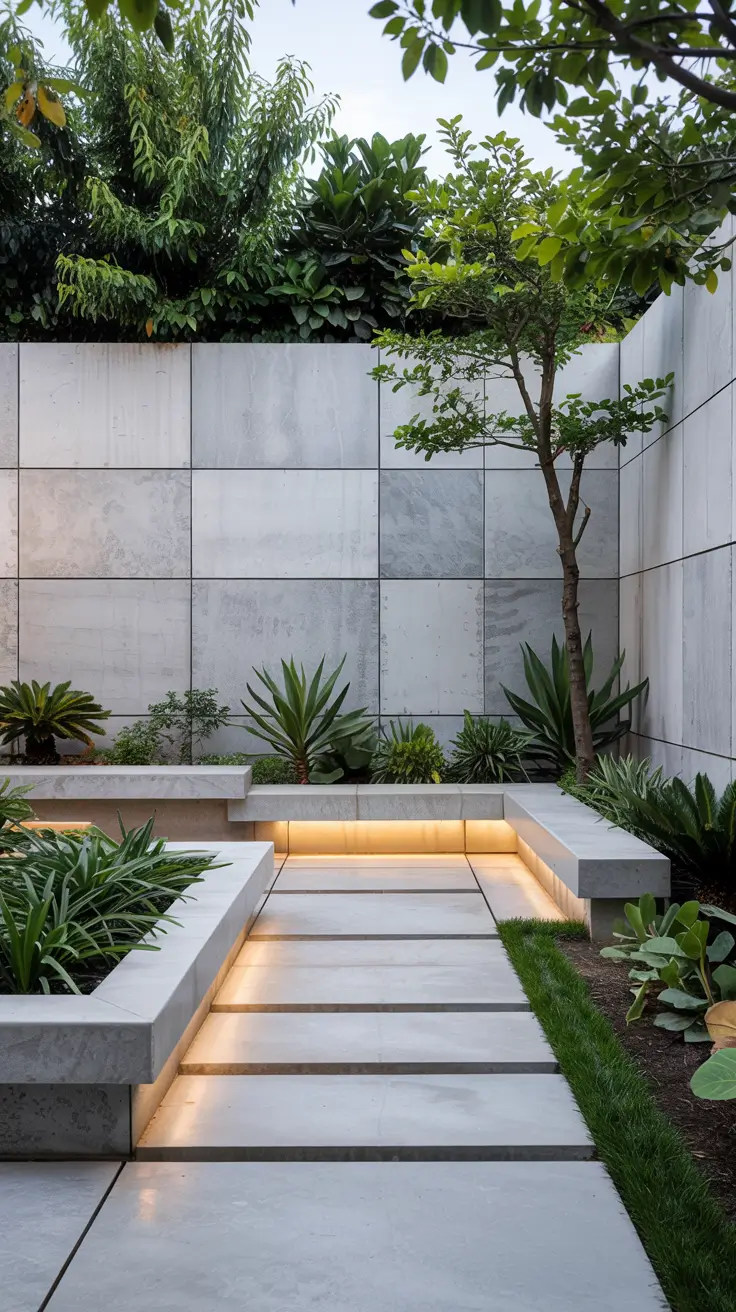
I often combine concrete with wood, metal, or greenery to soften its appearance. Integrated lighting and built-in seating enhance functionality, while curved or textured finishes add subtle interest.
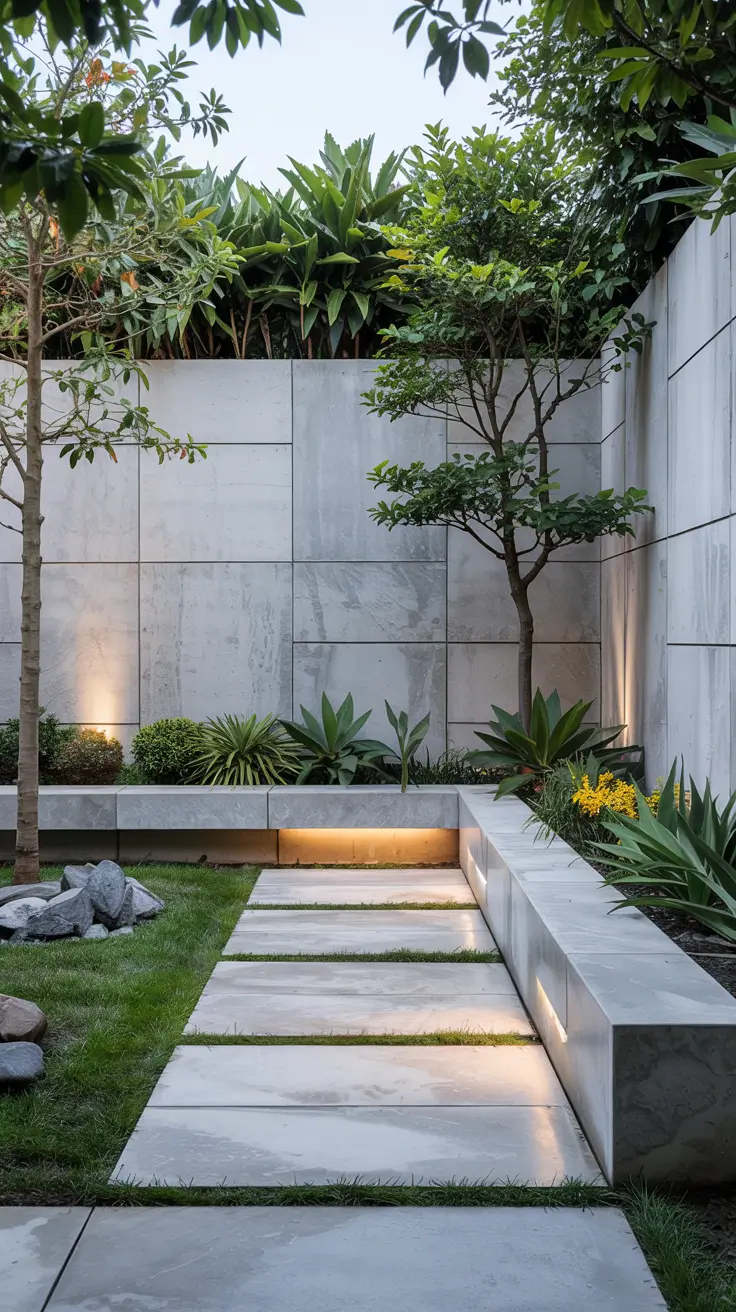
In my experience, concrete offers unmatched durability and versatility. Modern architects frequently use it for its simplicity and strength, and I find it ideal for long-term solutions.
What is often missing is texture variation. I always recommend adding subtle patterns or combining materials to avoid a cold or overly industrial look.
21. Cement Block Garden Wall Ideas with Creative Patterns
Cement block garden wall ideas are gaining popularity due to their affordability and design flexibility. I use these blocks to create patterns, textures, and even semi-transparent walls that allow light and air to pass through.
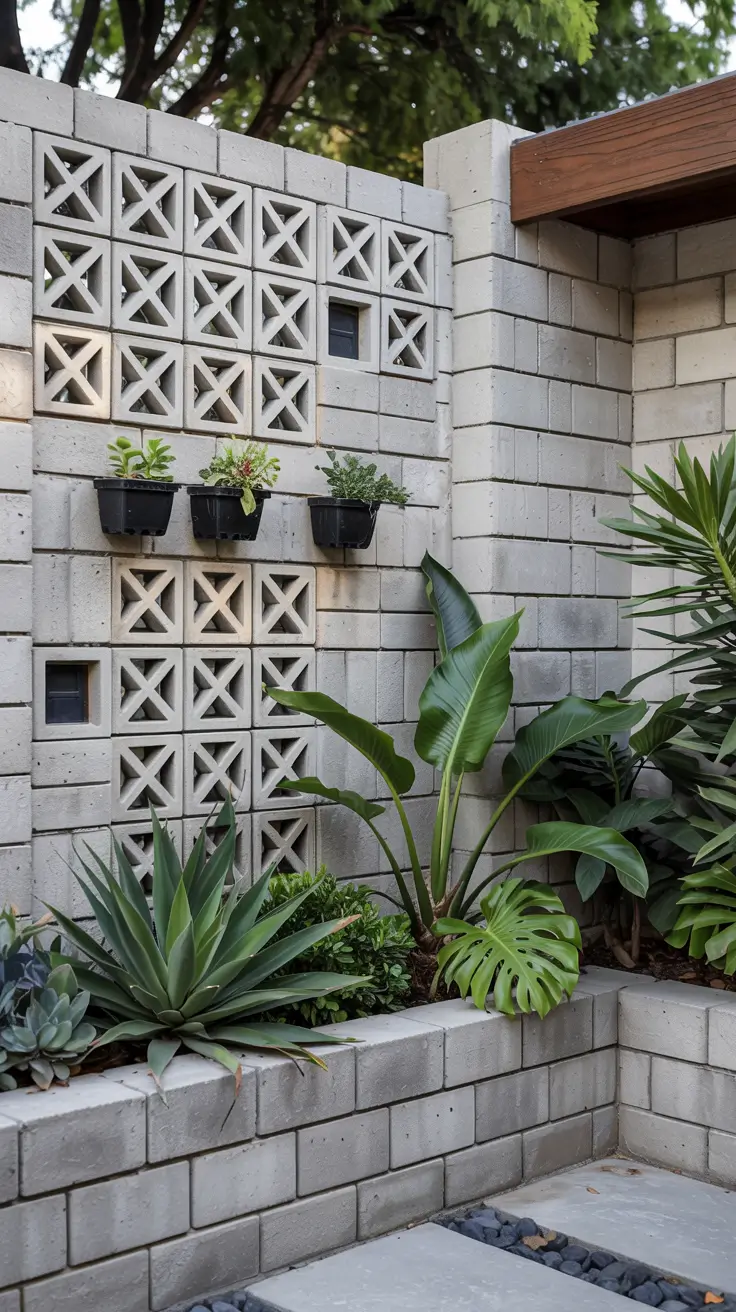
I typically arrange blocks in geometric or decorative patterns, sometimes combining them with painted finishes or greenery. These walls work well in both front and back gardens, adding visual interest without overwhelming the space.
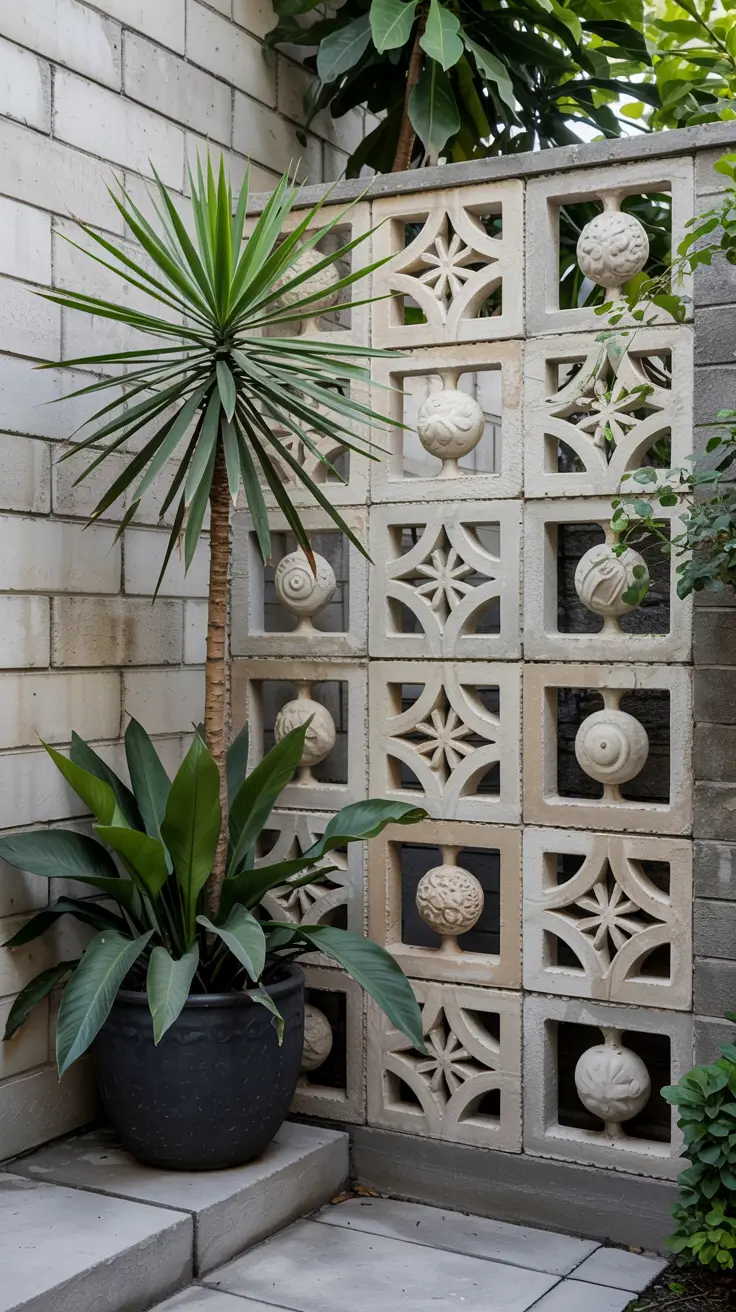
From my perspective, cement blocks offer a unique balance between function and creativity. Many modern designers experiment with these materials, and I find them especially useful for DIY projects.
What is often missing is finishing detail. I always suggest sealing or painting the blocks to enhance durability and improve their overall appearance.