What makes a garden feel truly complete? Is it the plants, the pathways, or something that frames it all together? For many homeowners in 2026, the answer lies in the fence — specifically, a well-designed garden design wood fence that defines space, adds character, and reflects personal style. Whether you’re exploring garden fence ideas diy wood pallets on a tight budget, dreaming of bold wood fence painting ideas garden transformation, or planning elegant gates and wire combinations, the right fence changes everything. In this article, I’ll walk you through the most inspiring wood fence ideas for garden spaces this year — practical, beautiful, and built to last.
1. Garden Design Wood Fence Ideas for Contemporary Spaces
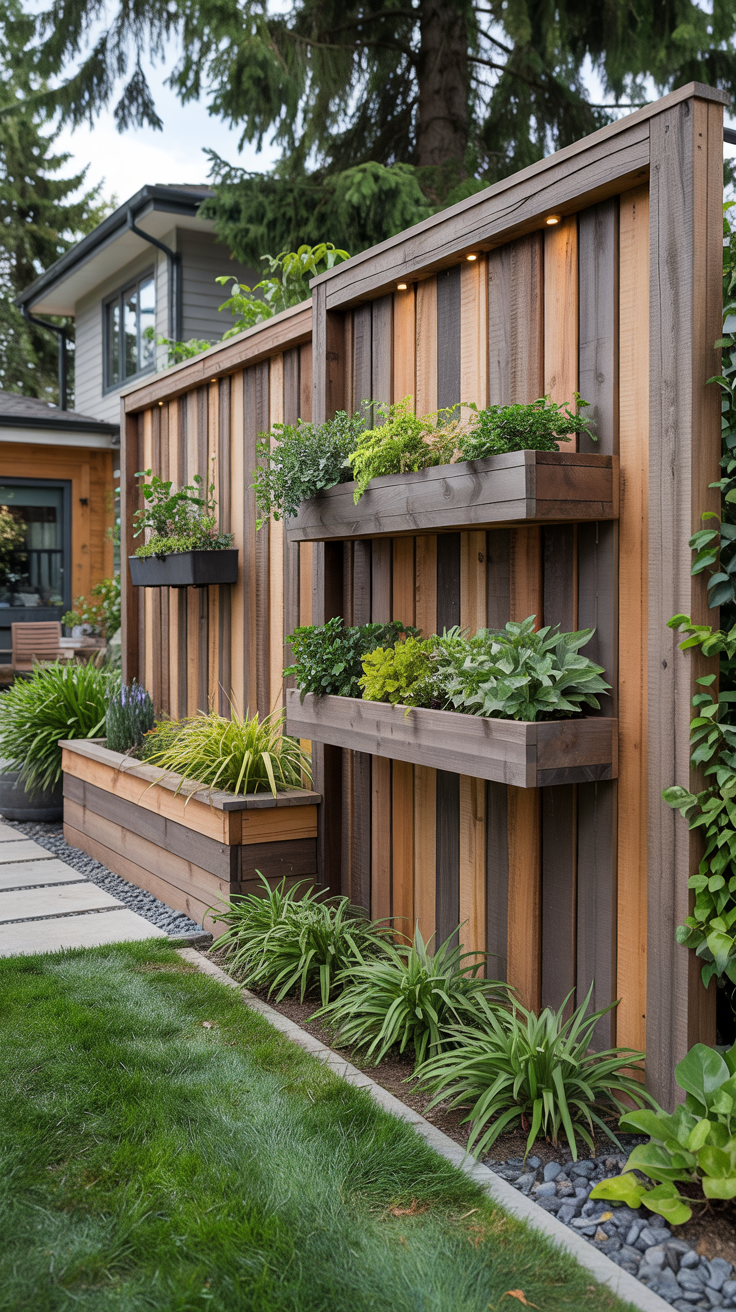
When I approach a contemporary garden design wood fence project, I focus on clean lines, natural materials, and a visual harmony between the outdoor structure and the home’s architecture. In 2026, the trend is firmly toward vertical board fences with varied plank widths, deep-toned stains in charcoal or warm walnut, and integrated planting pockets that blur the boundary between structure and garden. These fences don’t just enclose space — they define it with intention and sophistication. The overall effect is one of deliberate design rather than a purely practical barrier.
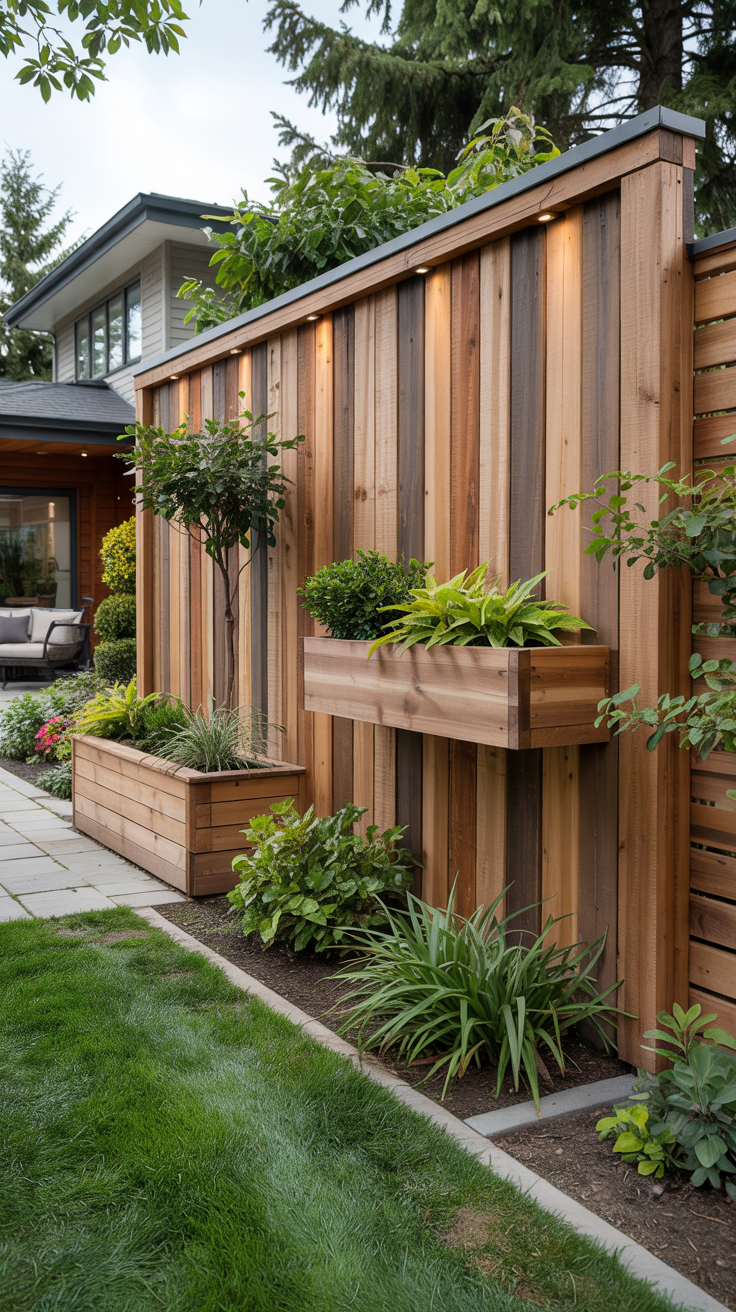
The materials I recommend for this style include pressure-treated cedar or Douglas fir boards, paired with concealed aluminum post hardware for a sleek, fastener-free face. Raised planter boxes mounted directly onto the fence panels add greenery at eye level, while recessed LED strip lighting along the top rail creates a polished evening atmosphere. Each of these elements works together to make the fence a genuine design feature rather than an afterthought. Selecting boards with a consistent grain and applying a quality semi-transparent stain amplifies that architectural quality further.
From my experience working on contemporary outdoor spaces, the most common mistake homeowners make is choosing fence heights that don’t correspond to the garden’s scale. Landscape architect Scott Byron, frequently featured in Architectural Digest’s outdoor design coverage, recommends matching fence height to the dominant hedge or shrub line in the garden — typically between 5 and 6 feet — to maintain visual proportion. I follow this principle on every project and the difference in outcome is immediately noticeable. Proportion is the invisible factor that separates a polished garden from a crowded one.
One element I find often missing from contemporary wood fence designs is a considered transition point — where the fence meets a patio, deck, or garden path. Adding a short section of horizontal cladding or a recessed panel at these junctions creates a deliberate visual pause that elevates the entire design. It’s a small detail, but it signals intentionality throughout the space. I always include this transition detail in my project drawings, and clients consistently single it out as one of their favorite features once the build is complete.
2. Wood Fence Ideas for Garden Privacy and Style
Privacy is one of the primary reasons homeowners invest in a solid wood fence, and in 2026, achieving it no longer means sacrificing style. I always recommend tongue-and-groove board construction for maximum privacy, as the interlocking profile eliminates gaps without requiring overlapping planks. When finished with a semi-transparent stain in a muted sage or iron-grey tone, these fences feel architectural rather than purely functional. They enhance the overall garden design while doing their practical job effectively and quietly.
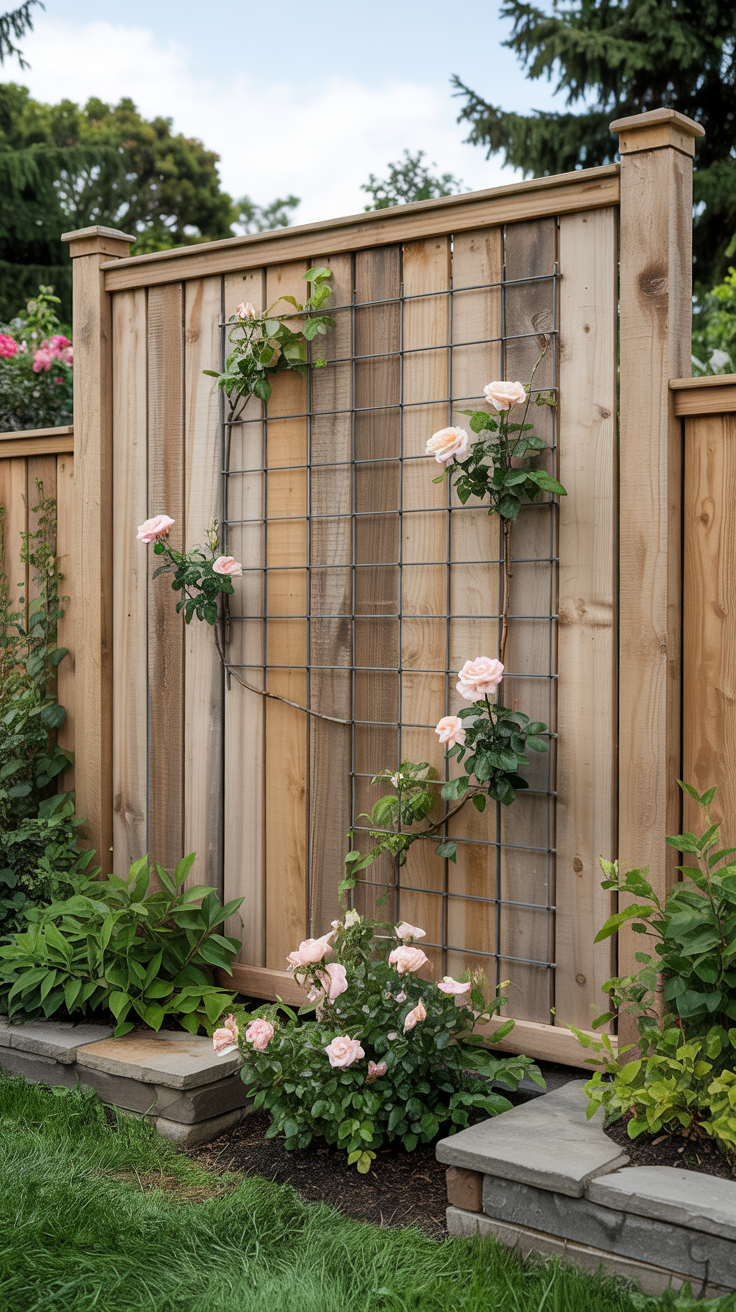
To soften the visual weight of a tall privacy fence, I incorporate climbing plant supports directly into the frame — simple galvanized wire trellises tensioned between posts allow roses, jasmine, or clematis to grow naturally across the surface. Paired with a wide-capped top rail and stone or gravel planting beds at the base, this approach creates a layered, living fence that improves with every season. The combination of solid wood structure and organic planting gives the garden a mature, established quality that new builds often lack. It is one of the most rewarding transformations I have seen in residential garden work.
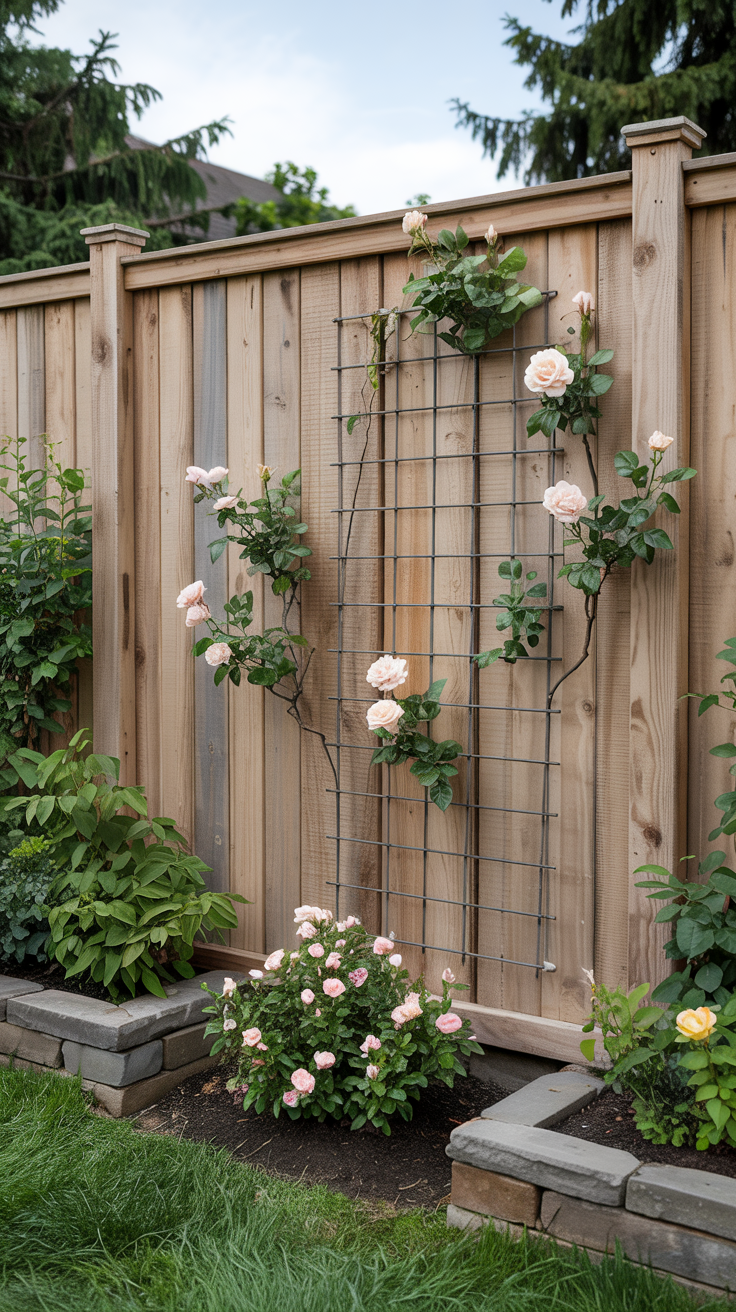
Better Homes and Gardens consistently highlights privacy fencing as the single highest-return outdoor improvement a homeowner can make, both for personal enjoyment and property value. I agree entirely — and I’d add that the choice of stain color is just as important as wood species or height. A warm, earthy tone connects the fence to the soil and planting, while a cool grey reads as more modern and expansive. Matching the stain to an existing exterior trim color is the fastest way to make a new fence feel like it has always belonged.
Something I find consistently overlooked in privacy fence planning is acoustic consideration. A solid tongue-and-groove fence of 6 feet or more provides meaningful noise reduction from neighboring properties or street traffic — a benefit that is rarely mentioned but immediately appreciated. I recommend specifying 1-inch thick boards rather than the standard 0.75-inch profile for this reason, as the additional density makes a measurable difference. When clients discover this after installation, it is often the detail they appreciate most about the upgrade.
3. DIY Garden Fence Ideas Using Wood Pallets
Garden fence ideas diy wood pallets have moved well beyond the rough-and-ready aesthetic of the early DIY movement. Today, I approach pallet fencing as a legitimate design choice — one that is sustainable, highly customizable, and surprisingly attractive when executed with care. Standard GMA pallets, sanded smooth and treated with an exterior wood sealer, produce fence panels that are sturdy, weather-resistant, and completely free from the raw, unfinished look that once defined this material. With the right preparation, pallet fencing holds its own alongside far more expensive alternatives.
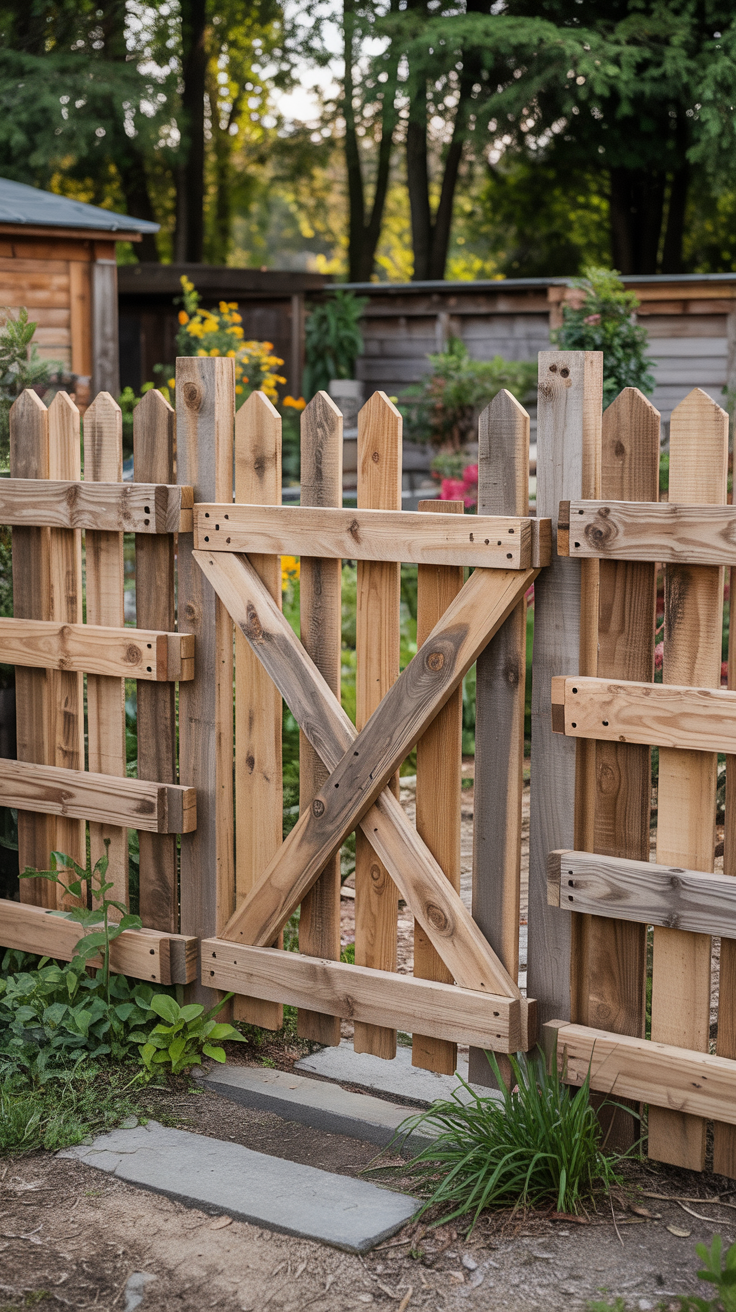
The key to elevating a pallet fence is consistency and finish. I always disassemble the pallets fully, select only the straightest and most even boards, and rebuild the panels on a consistent post-and-rail frame rather than stacking whole pallets end-to-end. This extra step produces a fence with uniform spacing and flat, paintable surfaces. Adding a simple picket-style top profile cut with a jigsaw transforms the panel completely — suddenly it reads as a designed element, not a recycled material.
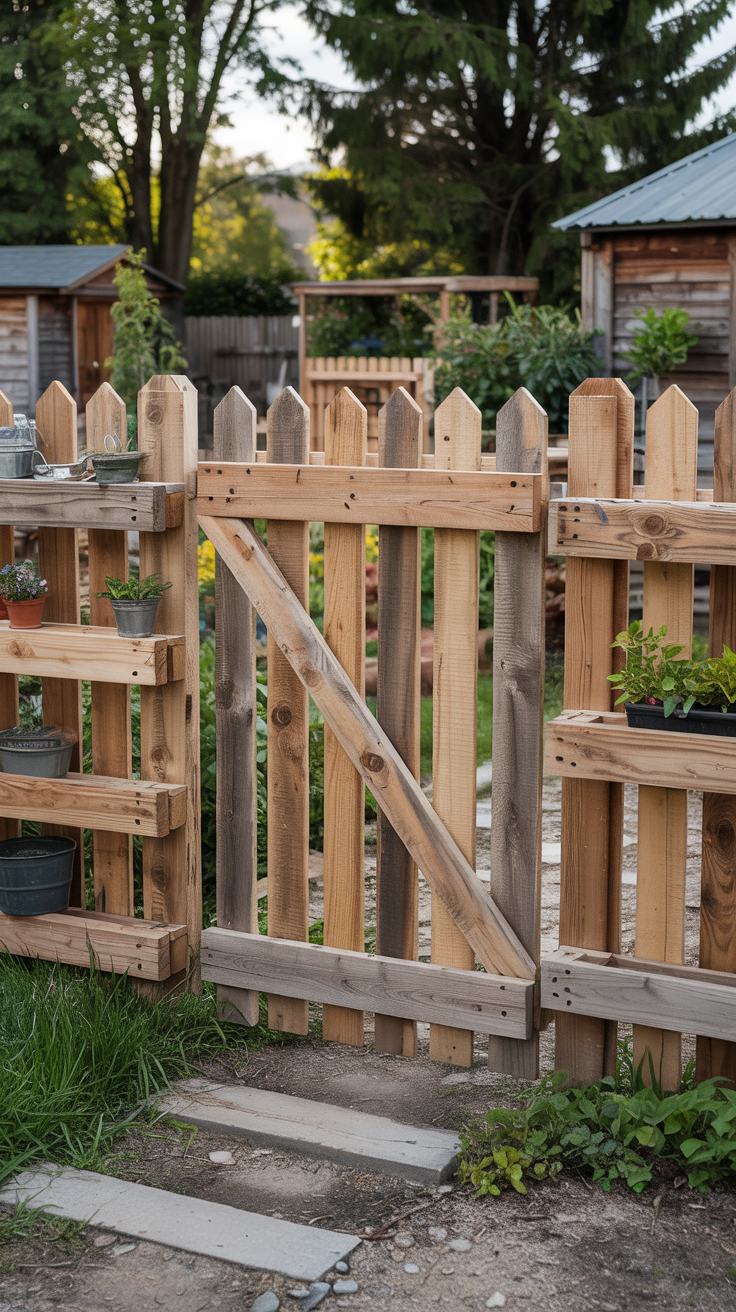
For anyone starting a wood pallet garden ideas fence project on limited time, I recommend sourcing pallets from local garden centers or hardware distributors who use heat-treated (HT stamped) pallets only — these are safe for outdoor use and will not leach chemicals into garden soil. It takes a weekend to complete a standard 20-foot section, and the total cost is a fraction of purchased fencing. I have completed this type of project for under $60 including stain, posts, and hardware. The savings free up budget for quality exterior sealant, which is where I always advise spending the extra dollars on a pallet build.
One aspect of pallet fence projects that I find rarely discussed is post-installation reinforcement. Because pallet boards are thinner and lighter than conventional fencing timber, the fence relies more heavily on the post-and-rail frame for rigidity. I always use 4×4 pressure-treated posts set in concrete to at least 24 inches depth, and I add a center rail at mid-height on any panel taller than 4 feet. This internal structure is what separates a pallet fence that stands strong for years from one that begins to lean and warp after the first winter. It is a non-negotiable step in my process.
4. Creative Wood Pallet Garden Fence Ideas for Budget Projects
Beyond the standard panel fence, wood pallet garden ideas fence projects can take genuinely creative forms on minimal budgets. One of my favorite approaches is the staggered-height pallet fence — alternating panels set at 3.5 and 5 feet create a dynamic, rhythmic boundary that adds visual interest to long, flat garden perimeters. Combined with whitewash paint and hanging tin planters along the taller sections, this design feels intentional and characterful rather than improvised. The rhythm of varying heights draws the eye along the fence line in a way that a uniform panel never can.
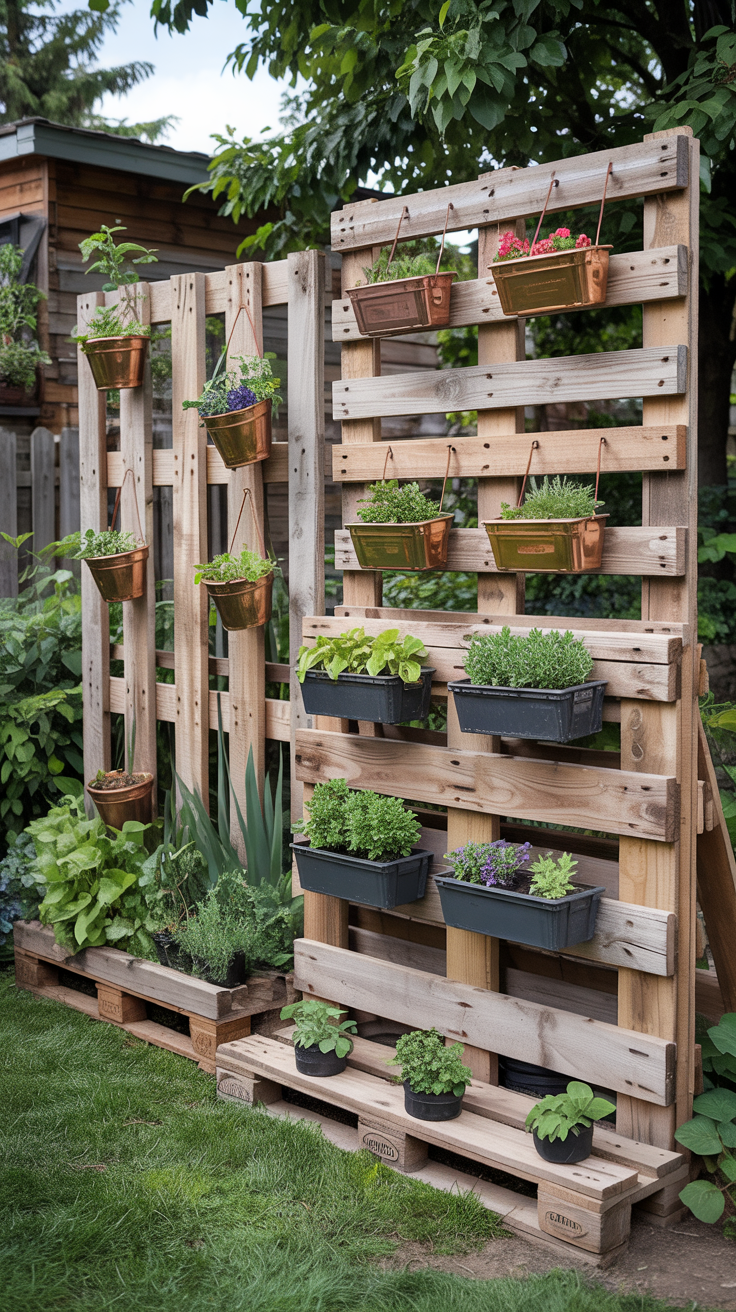
Whole upright pallets can also function as freestanding garden dividers — placed vertically in the soil with a concrete footing, they work beautifully to separate a vegetable patch from a lawn, or to create a sheltered seating alcove. I add a coat of exterior chalk paint in a dusty terracotta or deep navy, then mount simple wooden shelves between the slats for herb pots or garden tools. The result is a multi-functional structure that earns its place in the garden both practically and visually. These freestanding dividers are also fully removable, which suits renters or anyone who wants flexibility in their garden layout.
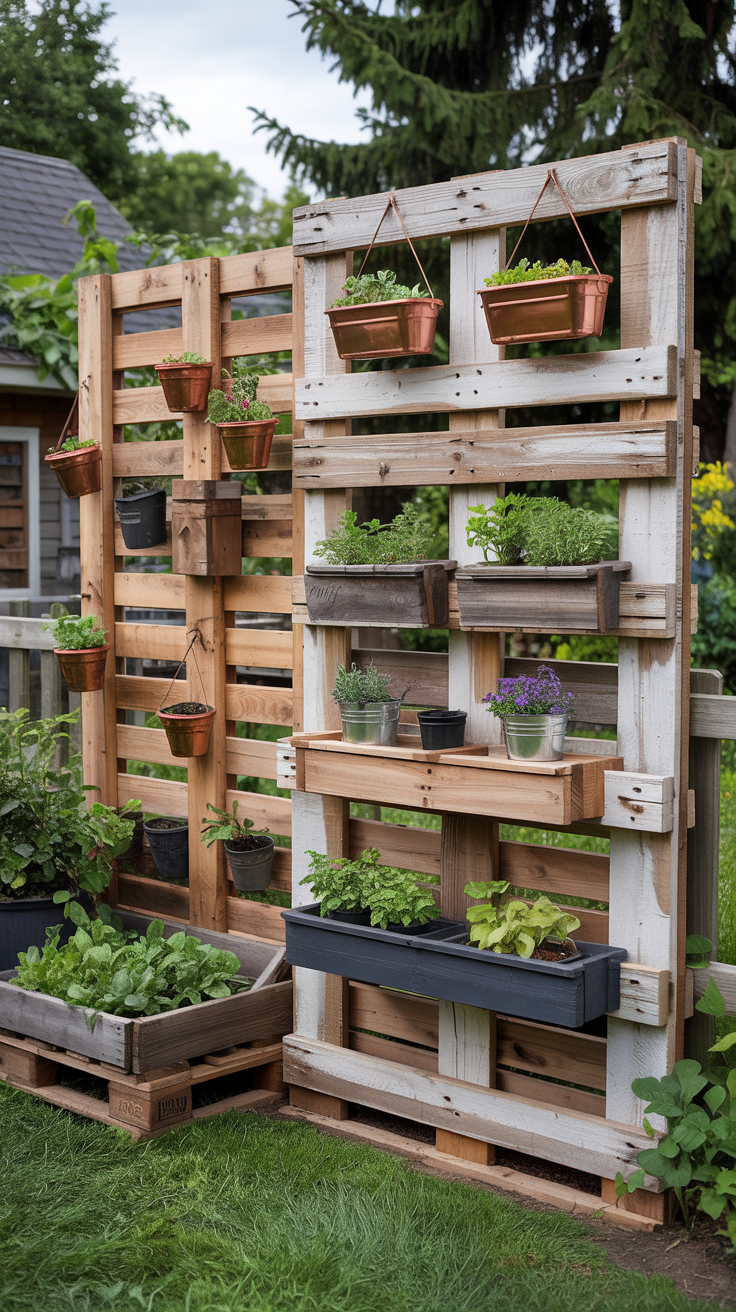
Garden fence ideas diy cheap wood projects like this succeed best when there is a unifying color palette across all elements. I recommend choosing one paint color for the fence and repeating it on planters, raised beds, or nearby furniture — this is the simplest way to make a budget garden look cohesive and designed. Interior designer Joanna Gaines has spoken publicly about this principle in her outdoor spaces, noting that color repetition is the fastest way to create a pulled-together outdoor room. It costs nothing extra and makes an enormous difference to the finished result.
A detail I always add to budget pallet fence projects is a capping board along the top edge of each panel — a simple 2×4 laid flat across the top of the pallet boards and secured with exterior screws. This cap serves three purposes: it covers the raw end grain of the pallet boards, which is where moisture enters and rot begins; it adds a finished, intentional look to the top line of the fence; and it provides a narrow shelf for small potted plants or garden lanterns. It costs only a few dollars per panel and transforms the perceived quality of the entire build. I consider it essential on every pallet fence I design.
5. Rustic Wood Fence Ideas for Natural Garden Landscapes
Rustic wood fence ideas garden design has experienced a genuine renaissance in 2026, driven by growing interest in naturalistic planting and rewilding-inspired outdoor spaces. I work with split-rail, post-and-board, and woven hazel panel fences for this aesthetic — all of them prioritize natural texture, irregular form, and materials that age gracefully without requiring significant maintenance. In a wildflower meadow garden or a cottage-style planting scheme, a rustic fence frames the scene without competing with it. The fence becomes part of the landscape rather than a boundary imposed upon it.
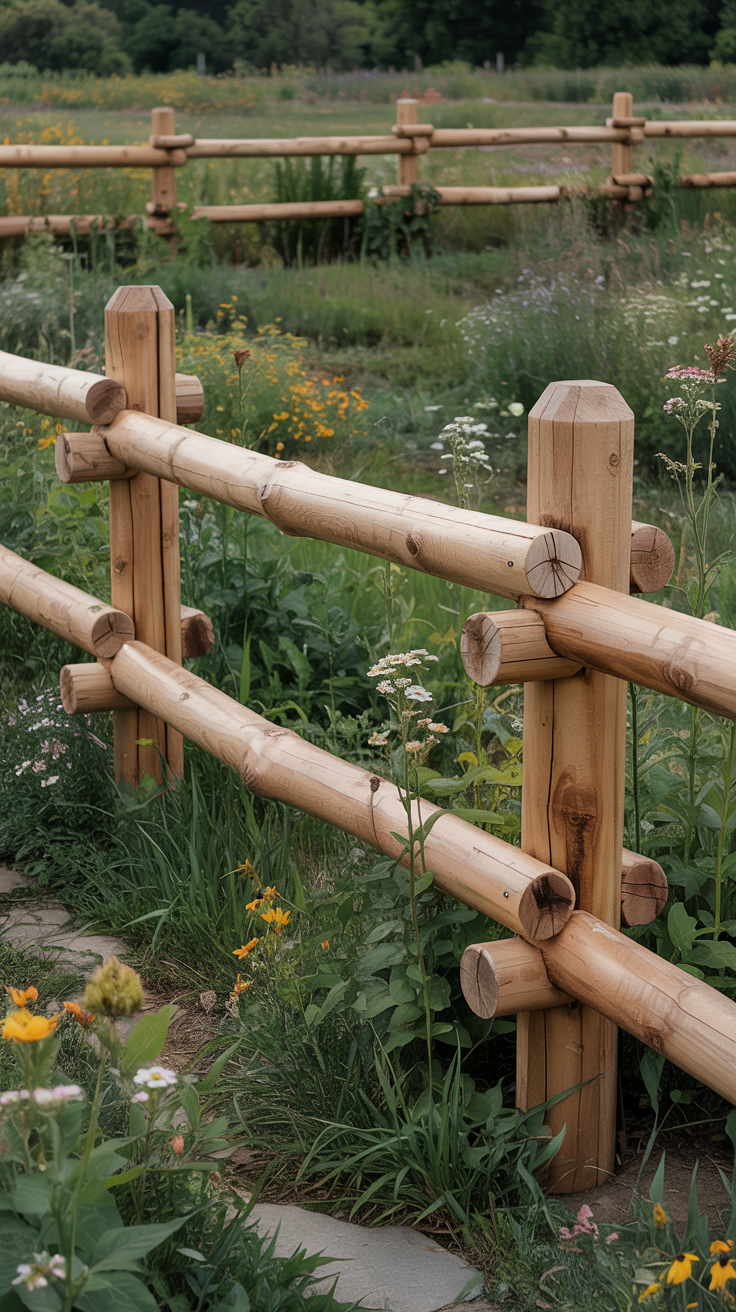
Split-rail fencing is my first recommendation for large rural or semi-rural gardens. The open construction — two or three horizontal rails slotted into drilled posts — allows planting to spill through naturally and keeps sightlines open across the landscape. For smaller urban or suburban gardens seeking a rustic garden fence wood ideas aesthetic, I prefer woven willow or hazel hurdle panels, which bring incredible texture and a deeply organic quality that no manufactured product can replicate. Both options are available from specialist rural fencing suppliers and increasingly from mainstream garden centers as the naturalistic trend grows.
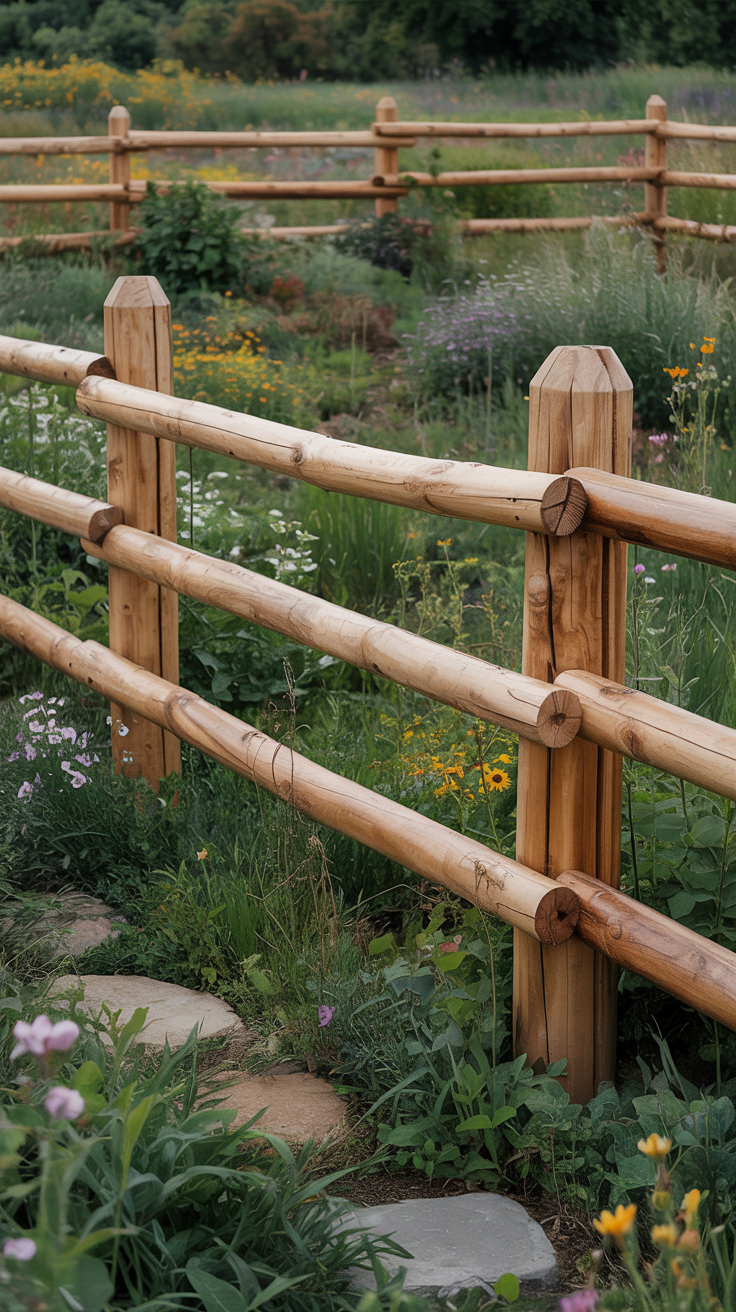
Personally, I find rustic fencing most compelling when it is allowed to weather naturally to silver-grey rather than being re-stained every season. The silver patina of aged cedar or oak is genuinely beautiful and requires no maintenance beyond an occasional brush-down. Horticulturist and garden designer Piet Oudolf, whose naturalistic planting philosophy has influenced garden design globally, has long advocated for materials that change and age alongside the plants they contain. This is a principle I have come to fully embrace — the fence that weathers is the fence that belongs.
One practical consideration I always raise with clients pursuing rustic fencing is the question of ground posts. Split-rail and woven panel fences are visually informal, but they still require solidly set posts to remain structurally sound over time. I specify 4×4 or round-section posts in black locust or pressure-treated pine, set in concrete to a minimum of 24 inches, regardless of how casual the fence aesthetic above ground. A rustic fence that leans or sags after two seasons loses all of its charm. The invisible infrastructure is what allows the visible material to age beautifully rather than simply deteriorate.
6. Garden Fence Wood Ideas for Durable Outdoor Boundaries
Durability is the foundation of any good fence investment, and choosing the right wood species makes the difference between a fence that lasts 8 years and one that lasts 30. For garden fence wood ideas focused on longevity, I consistently recommend western red cedar, black locust, or pressure-treated pine as the three most reliable options available to North American homeowners. Each offers a different balance of cost, appearance, and natural resistance to rot, moisture, and insect damage. Understanding that balance before purchasing material is the single most important step in a successful fence project.
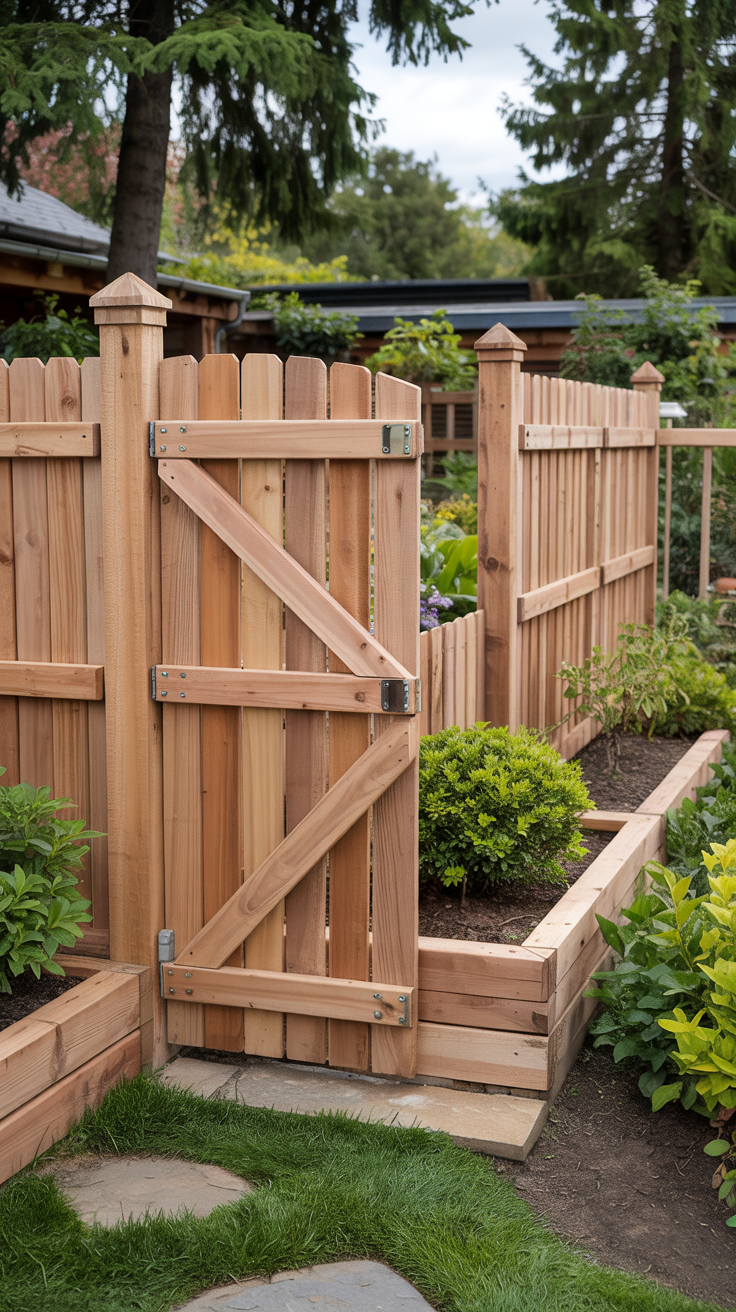
Western red cedar is my personal preference for most residential garden fence projects. Its natural oils make it inherently rot-resistant without chemical treatment, it takes stain beautifully, and it remains dimensionally stable through freeze-thaw cycles — an important consideration in colder climates. For posts specifically, I always specify pressure-treated lumber rated for ground contact (UC4B or better), regardless of what species is used for the panels above. Post failure is the most common cause of fence collapse, and using the correct post grade eliminates that risk almost entirely.
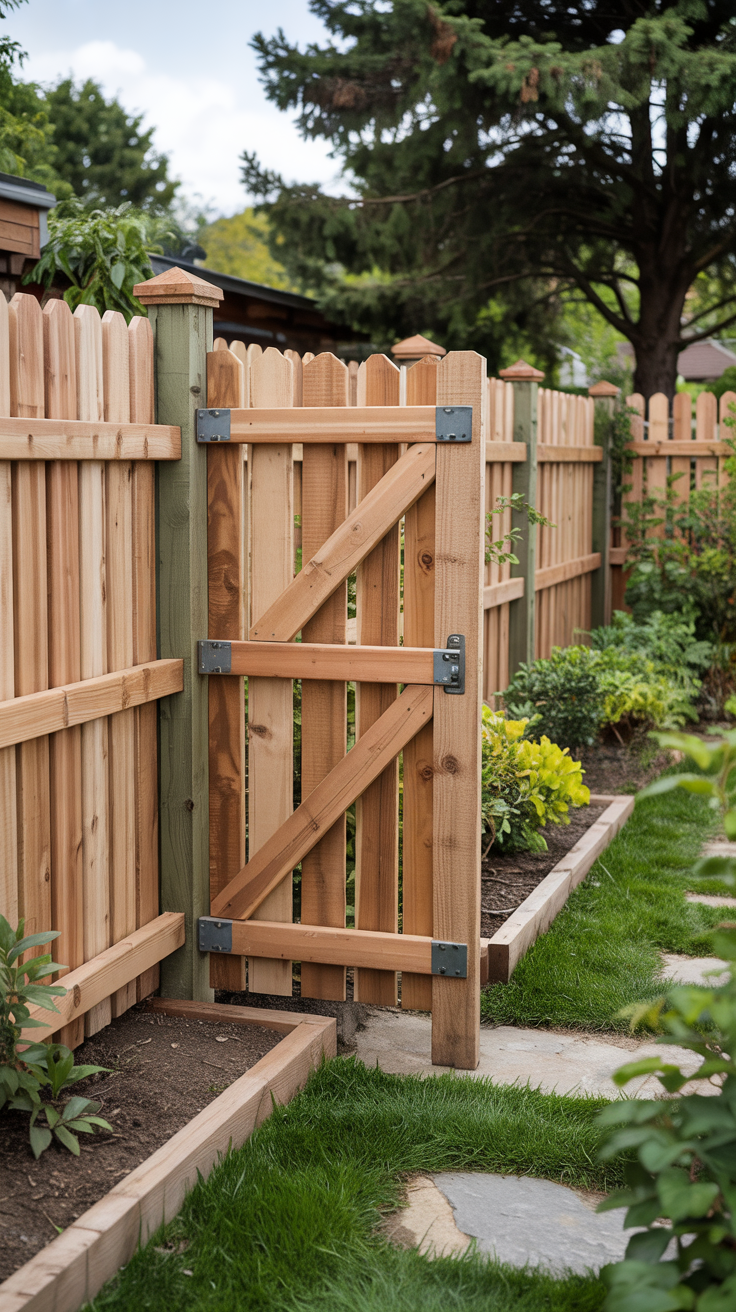
I also recommend installing a gravel board — a sacrificial horizontal plank at the base of each panel, set just above soil level — on any close-board or solid panel fence. This board takes the moisture and ground contact damage instead of the decorative panel above it, and can be replaced individually for a fraction of the cost of a full panel. The This Old House team has featured this detail in their fencing guides, and in my experience it extends the life of a wood fence by 8 to 12 years in moderate climates. It is one of the highest-value, lowest-cost details in residential fencing.
An area I find consistently under-specified in durable fence projects is the connection hardware. Galvanized or stainless-steel joist hangers, post caps, and structural screws cost only marginally more than standard hardware, but they resist corrosion for decades while standard steel fasteners begin to bleed rust stains into the wood within 3 to 5 years. I specify hot-dipped galvanized hardware as the minimum standard on every outdoor wood project. The wood may be perfectly preserved while corroding hardware silently undermines the structural connections — addressing this at the build stage costs almost nothing compared to remedial work later.
7. Wood Fence Painting Ideas for Garden Transformation
Wood fence painting ideas garden transformation projects are among the most cost-effective upgrades a homeowner can make. A single coat of exterior masonry paint in a considered color can completely redefine a garden’s character — taking a tired, weathered fence from eyesore to focal point in a single weekend. In 2026, the colors I’m seeing most in high-performing garden spaces are deep forest green, off-black, warm sage, and dusty blush — all of which create a rich, receding backdrop that makes planting and garden furniture stand out. Color is the fastest and most affordable design tool available to any gardener.
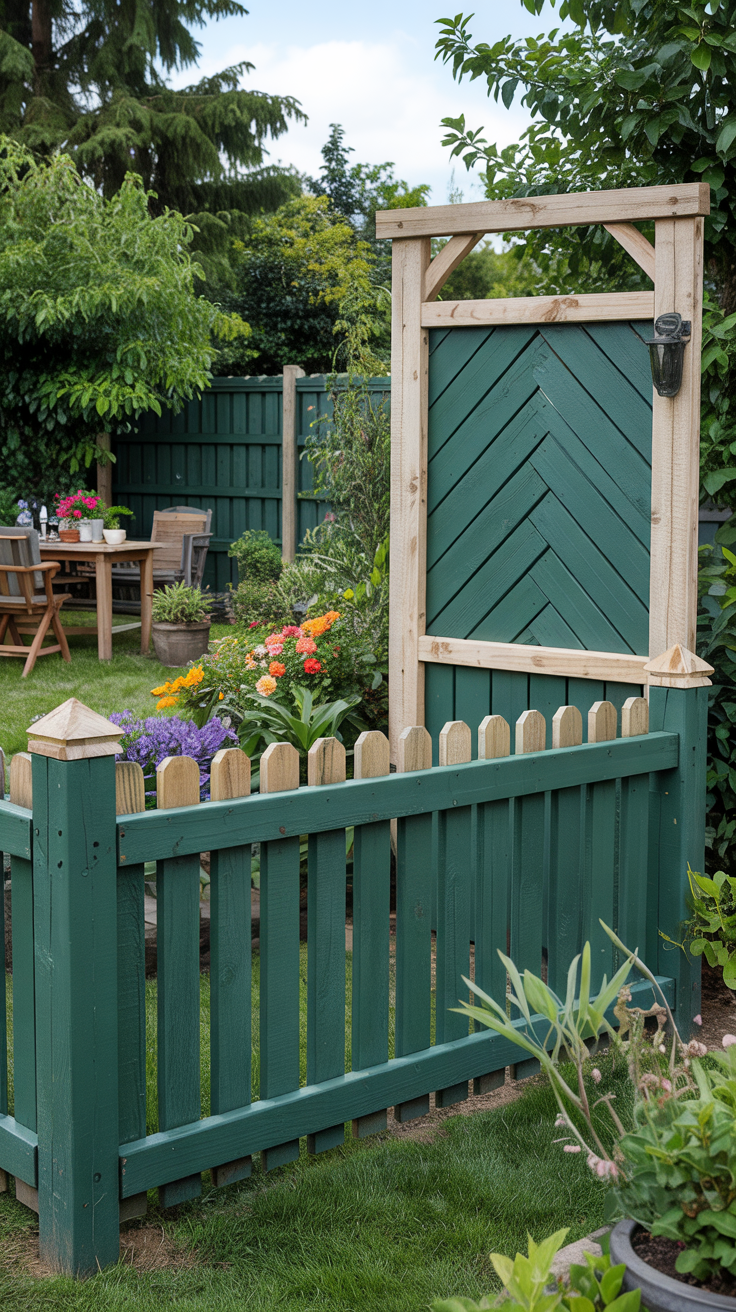
For painting technique, I always prepare the surface thoroughly before any product touches the wood — that means a pressure wash, 48 hours drying time, then a light sand with 80-grit paper on any rough grain. I apply two thin coats of a quality exterior wood paint rather than one thick coat, which prevents peeling and ensures better penetration into the grain. Farrow and Ball’s Exterior Eggshell range and Sherwin-Williams Emerald Exterior are the two products I reach for most often — both offer exceptional coverage and color retention over multiple seasons. Cutting corners on preparation invariably shows within the first year.
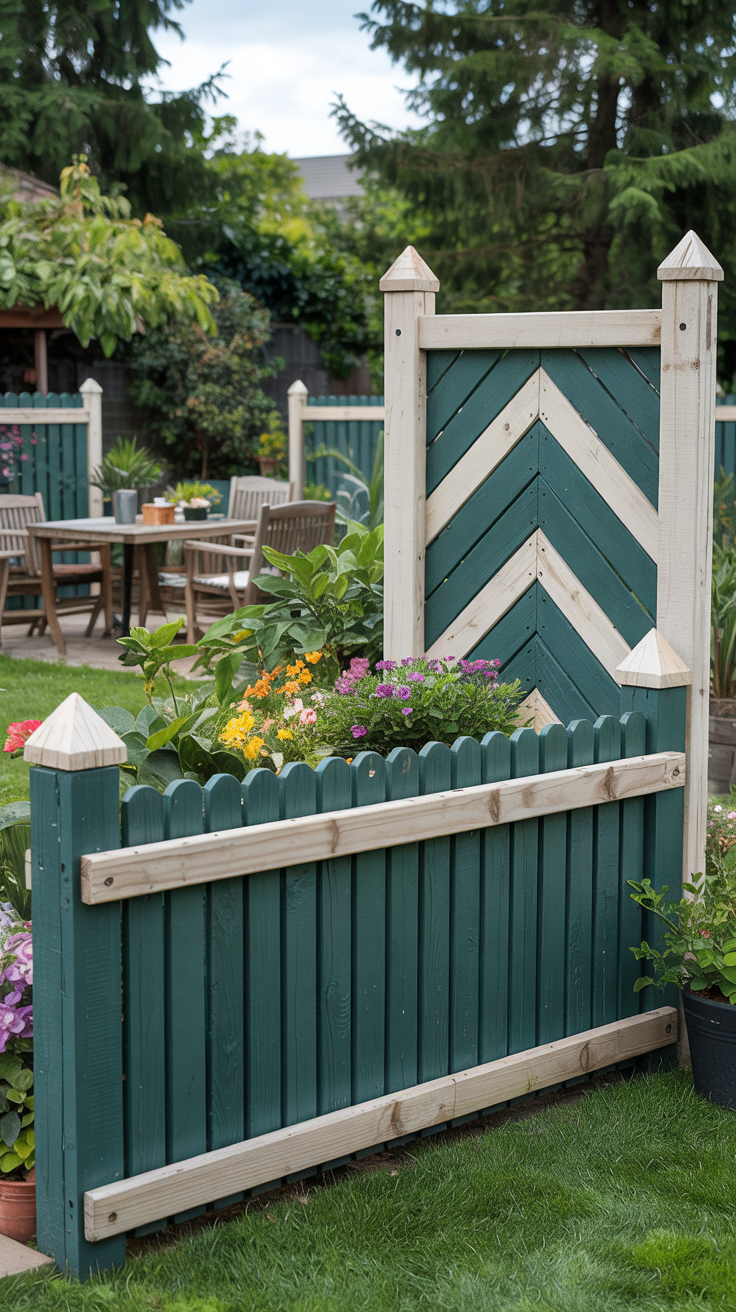
One painting idea I particularly love and recommend is a two-tone approach: painting the main fence panels in a dark, receding color and the capping rail and posts in a lighter contrast tone. This simple technique creates a visual frame around each panel and gives the fence a deliberately designed, architectural quality. It takes no additional cost — just a second color and careful masking — but the visual upgrade is significant. I have applied this approach to plain, builder-grade fences and watched them become genuine focal points of the garden with nothing more than paint and two days of work.
A painting idea that I believe deserves more attention is the use of fence panels as a canvas for decorating ideas diy garden art wood murals or geometric patterns. Using exterior paint and low-tack masking tape, a simple chevron, diamond grid, or botanical silhouette pattern can be applied to individual panels to create a feature wall effect within the garden. This is particularly effective on fences that back onto seating areas or outdoor dining spaces, where the fence functions as an outdoor room wall. The investment is minimal — a few hours and a couple of sample pots of paint — and the creative return is extraordinary.
8. Decorating Ideas for Wooden Garden Fences
Fence decorating ideas diy garden art wood projects have become one of the most exciting areas of outdoor design in 2026, and I approach them with the same level of intentionality I bring to any interior space. A bare wooden fence is essentially an outdoor wall, and treating it as such — as a surface with real design potential — unlocks an enormous range of possibilities. From mounted ceramic planters and hand-forged iron hooks to painted botanical murals and shadow-box display frames, the fence can become the most characterful element in the entire garden. The key is choosing decorations that relate to the planting and furniture already present, so the overall effect feels curated rather than cluttered.
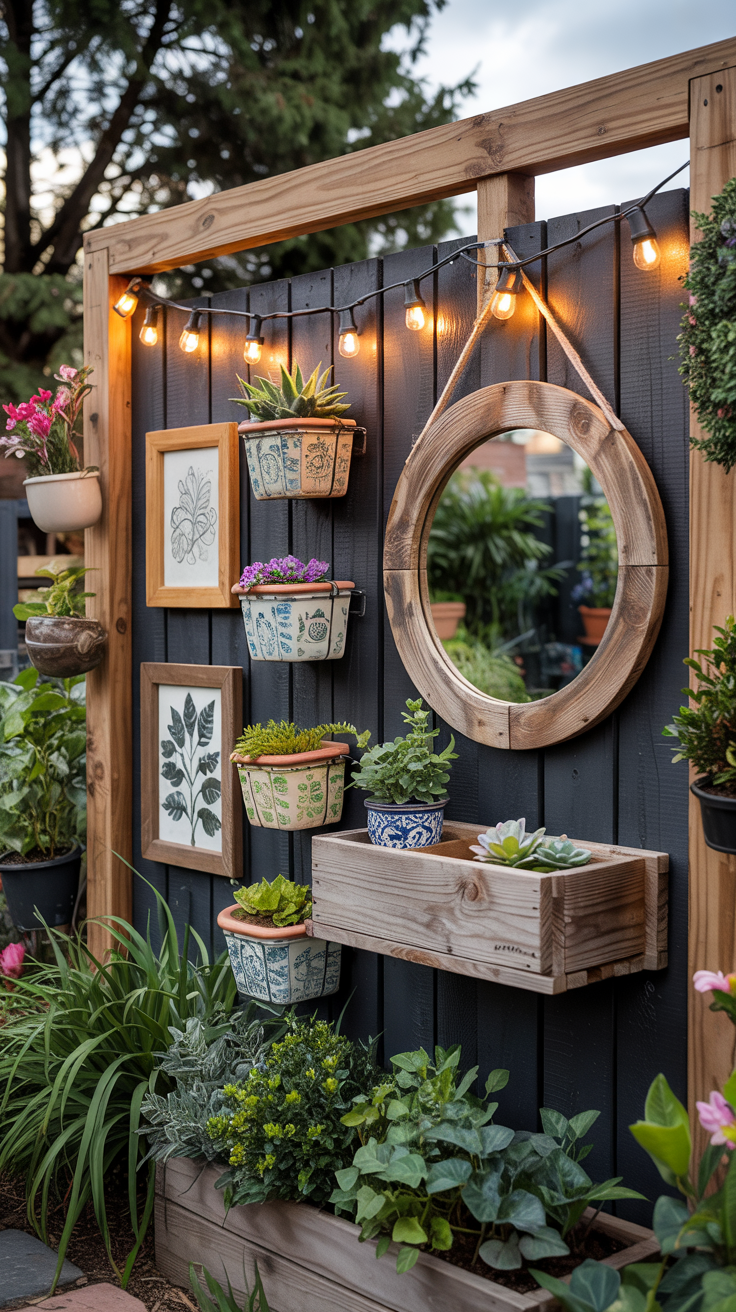
The decorative elements I return to most consistently are weatherproof wall-mounted planters in tiered arrangements, reclaimed wood framed mirrors that bounce light and create the illusion of depth, and hand-painted house number plaques that give the fence a personal identity. I also love incorporating driftwood sculptures and woven macramé panels for textural contrast against flat-board fence surfaces. Each element should be secured with stainless-steel fixings rated for outdoor use — decorations that fall or corrode within a season undermine all the effort invested in selecting them. I recommend grouping items in odd numbers and varying heights to create visual arrangements that feel natural rather than symmetrical and rigid.
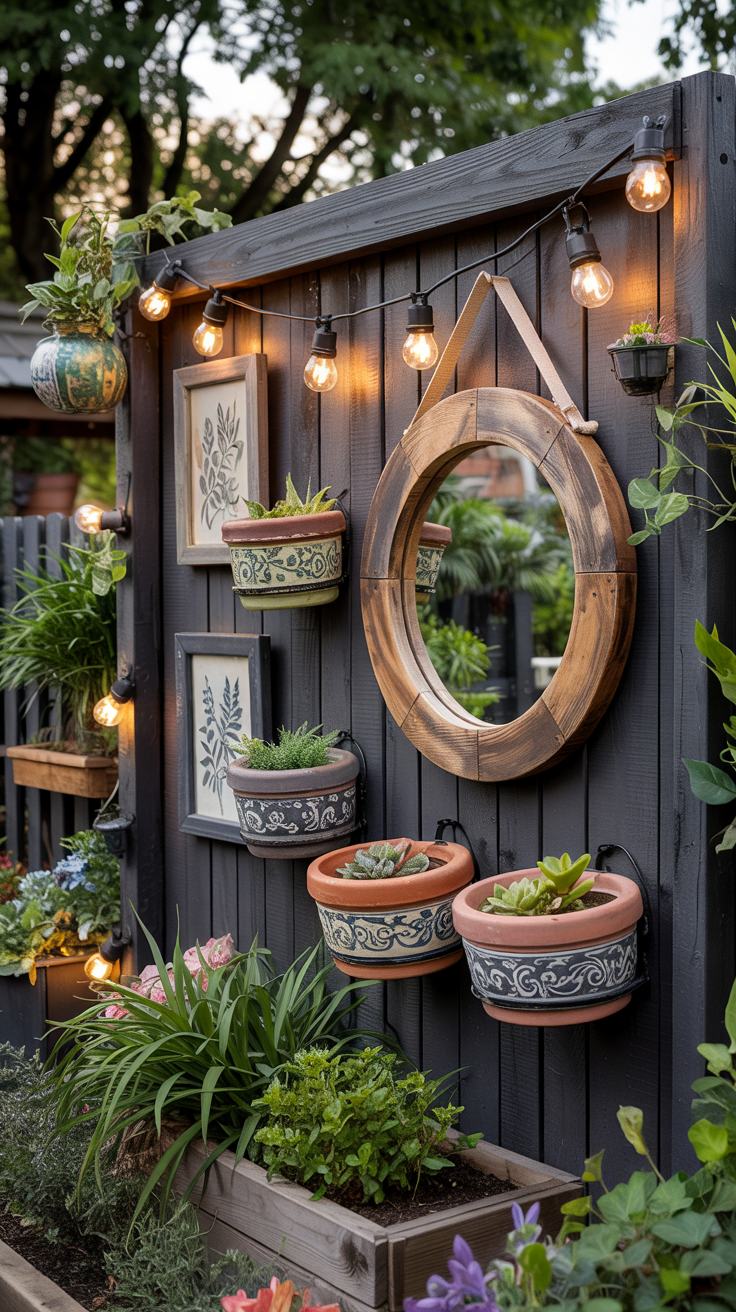
From my experience, the most successful fence decoration projects begin with a single anchor piece — one larger, more substantial element that everything else is arranged around. This could be a large round mirror, a statement planter, or a painted panel. Architectural Digest’s outdoor living editors have consistently advised this approach in their garden feature coverage, noting that starting with one hero piece and building outward prevents the scattergun effect that makes decorated fences look busy rather than beautiful. I follow this principle on every project and it reliably produces results that feel considered and complete.
One decorating approach I find deeply underused is lighting as a primary decorative tool on wooden fences. Solar-powered festoon lights strung in a loose catenary curve along the top rail, small uplighters mounted at post bases to cast warm light up the fence face, and lantern-style sconces at gate posts all transform the fence after dark into something genuinely magical. The evening garden is often neglected entirely in planning, yet it is the version of the space most homeowners actually spend time in during warm months. Investing a small amount in fence-specific lighting pays dividends in enjoyment every single evening throughout spring, summer, and fall.
9. Cool Garden Ideas for Decorating Wood Fence Panels
Cool garden ideas for decorating wood fence panels go beyond simple planters and enter the territory of outdoor installation art and interactive design. In 2026, I am seeing homeowners treat individual fence panels as discrete canvases — each one receiving a different treatment that contributes to a gallery-wall effect along the full fence run. One panel might carry a geometric painted pattern, the next a climbing plant frame, the next a mounted vintage garden tool arrangement. The cumulative effect of varied panel treatments is a fence that rewards closer inspection and gives the garden a uniquely personal, layered quality.
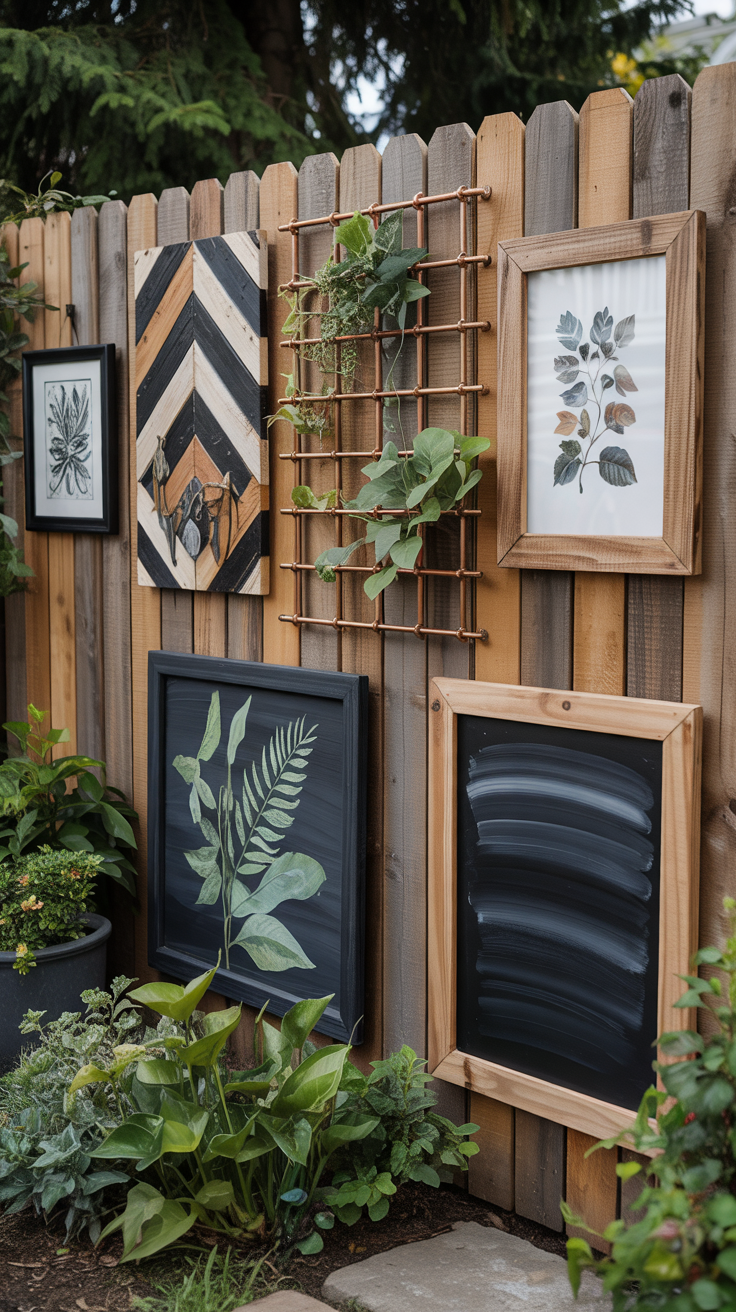
The specific panel decoration ideas I recommend most are: chalkboard paint on a single central panel for seasonal messages or plant labels; copper pipe trellis grids that develop a beautiful patina over time; and pressed botanical art pieces sealed under acrylic sheet and mounted in weatherproof frames. Woven grass or reed inserts fitted into a timber border frame create textural panels that complement naturalistic planting beautifully. For family gardens, a section of pegboard-style fence with interchangeable hooks and baskets for tools, gloves, and twine creates a highly functional and visually satisfying outdoor utility wall. Each of these ideas costs very little but delivers a level of personality that no standard fence panel can match.
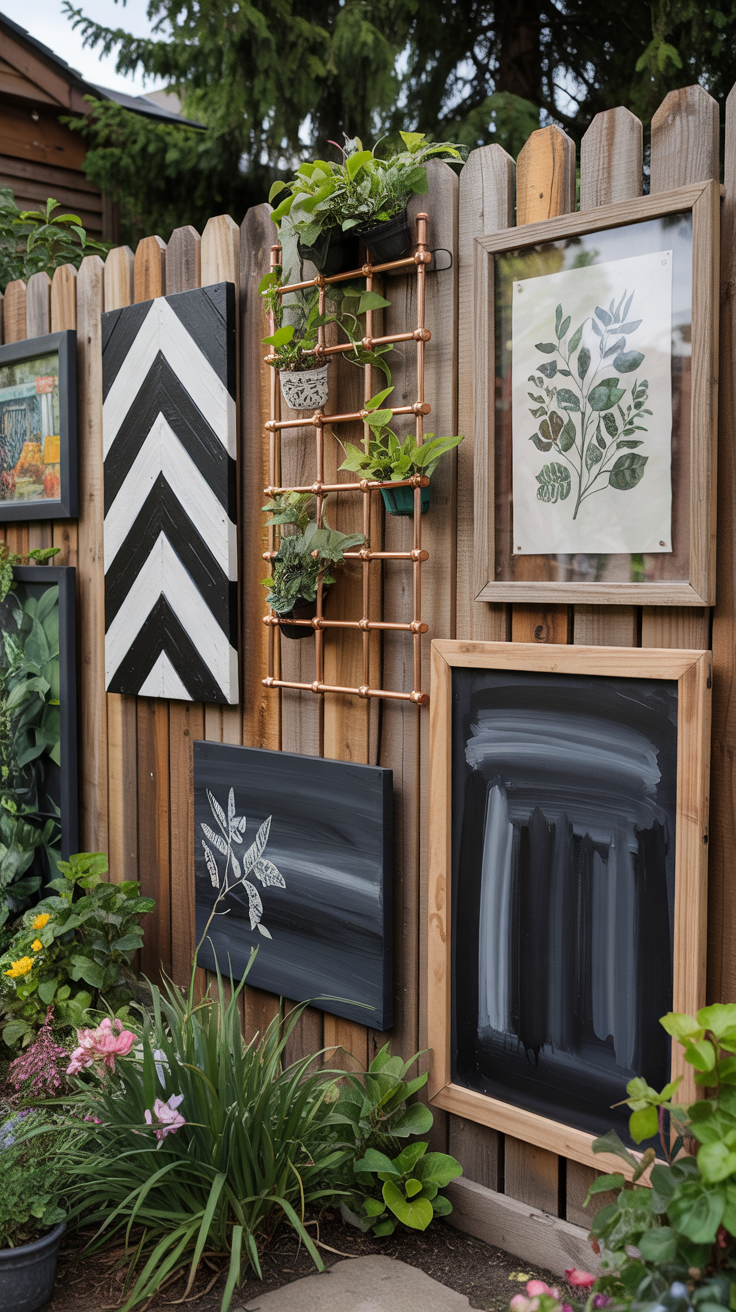
I personally find the most rewarding cool garden ideas for decorating wood fence panels are those that involve the garden itself as the decorative material — using the plants, seedheads, and seasonal color of the planting beds to animate the fence surface rather than relying entirely on applied objects. A fence panel painted in deep charcoal with a single espaliered apple tree trained flat against it is more beautiful than any collection of decorative items, and it gets better every year. This approach aligns with the philosophy shared by the Royal Horticultural Society in their annual garden design guidance, which consistently advocates for using structural planting as the primary decorative element in outdoor spaces.
A dimension of panel decoration that I think deserves more attention is seasonal rotation — planning from the outset for decorations that can be swapped out to reflect spring, summer, autumn, and winter. Simple interchangeable frames mounted on the fence with stainless-steel clips allow dried flower arrangements, seasonal wreaths, or festive lighting panels to be exchanged without tools or new fixings. This approach keeps the garden feeling current and alive throughout the year, rather than static. I always design at least one or two interchangeable mounting points into fence decoration plans, and homeowners consistently tell me it is one of the features they use and appreciate most.
10. Garden Fence Ideas DIY Cheap Wood Projects for Beginners
Garden fence ideas diy cheap wood projects for beginners are more accessible than ever in 2026, thanks to the growing availability of affordable materials and the wealth of practical guidance available online and in print. My starting recommendation for any beginner is the simple post-and-picket fence — it requires only basic tools (a drill, a saw, a level, and a mallet), uses inexpensive pine or spruce timber, and produces a clean, classic result that suits almost any garden style. The construction logic is straightforward, the material costs are low, and the skills developed on this project transfer directly to more complex fence builds later.
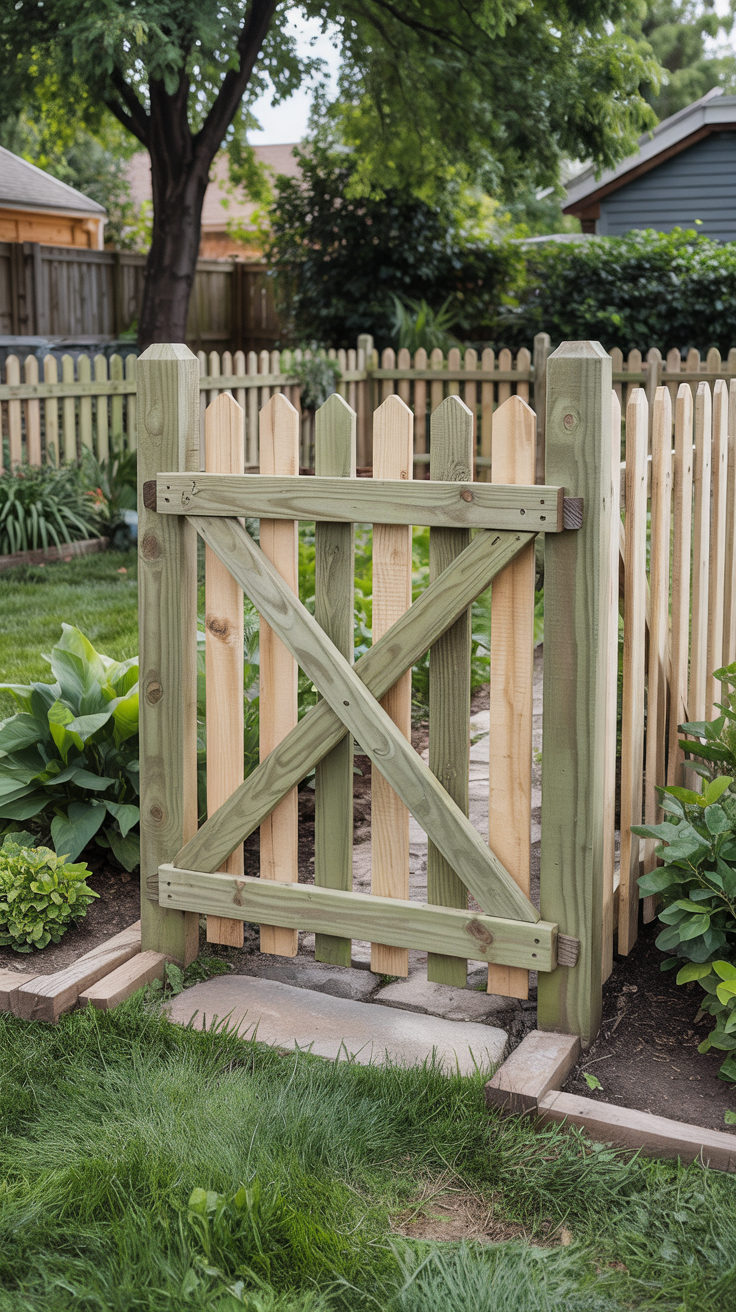
The material list for a budget beginner fence build is refreshingly short: 4×4 pressure-treated posts, 2×4 rails, and 1×3 or 1×4 pickets in standard pine. Set posts in concrete at 8-foot intervals, attach two horizontal rails at top and bottom, and nail or screw pickets at consistent spacing using a pre-cut spacer block to maintain uniformity. The entire 20-foot section can be completed in a single day with two people and costs well under $100 in materials at standard lumber yard prices. Finishing with an exterior primer and two coats of outdoor paint in any chosen color elevates the result immediately and protects the wood for years.
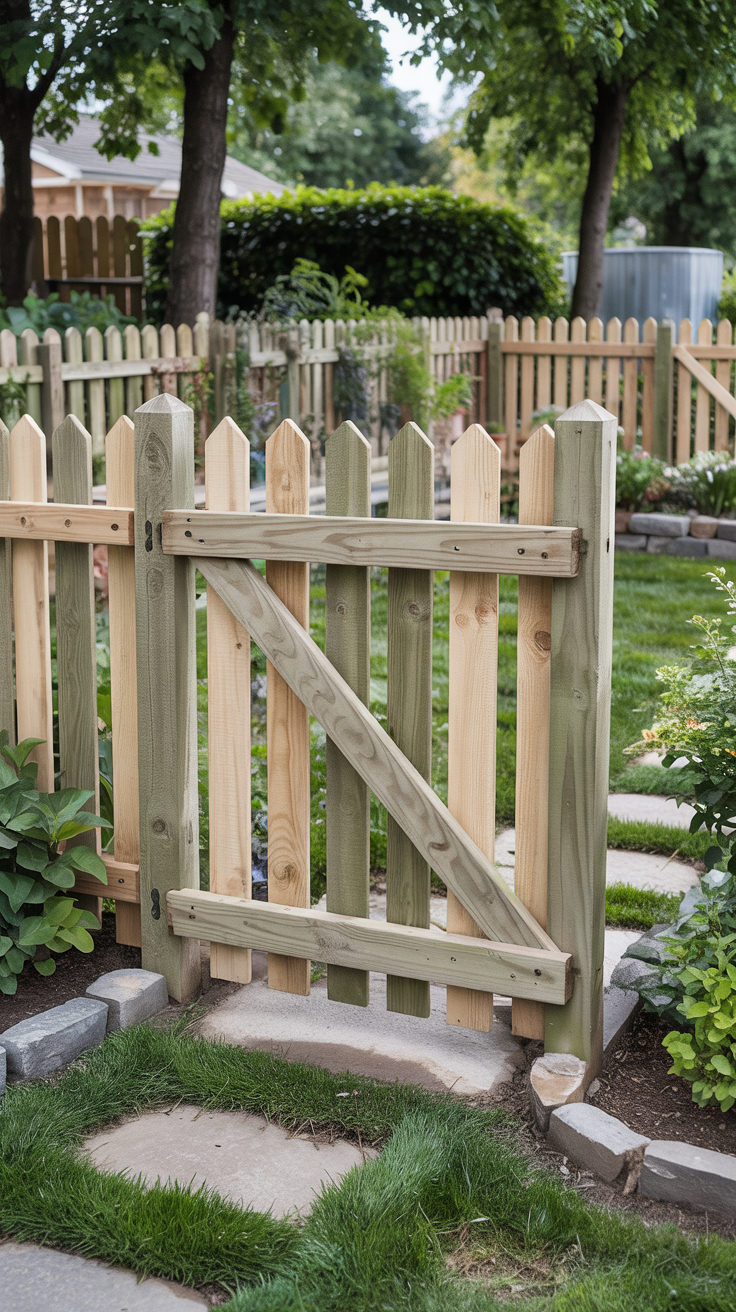
For absolute beginners who feel uncertain about post-setting, I recommend the spike-anchor method as a starting point — driving steel spike anchors into the ground with a post driver and bolting the 4×4 posts directly to the anchors. This eliminates the need for concrete mixing and post-hole digging, making the project genuinely achievable for a solo builder in an afternoon. Fine Homebuilding magazine has covered this technique in their beginner fencing guides, noting that spike anchors perform well in stable, non-waterlogged soils and can support a standard picket fence with complete reliability. I have used this method on beginner projects with excellent results in well-draining garden conditions.
A critical point I always raise with beginners taking on cheap wood fence projects is the importance of marking underground utilities before any post-setting begins. In the US, the 811 call-before-you-dig service is free, available nationwide, and legally required before any ground excavation — including fence post holes. I have seen DIY projects delayed and made expensive by striking irrigation lines or electrical conduits that could easily have been located in advance. Making that call takes five minutes and potentially saves hundreds of dollars in repair costs and significant personal risk. It is the single most important preparation step on any fence project, and it costs absolutely nothing.
11. Wire and Wood Fence Garden Ideas for Mixed Material Designs
Garden wood and wire fence ideas represent one of the most versatile and visually interesting categories in contemporary outdoor design. I use the combination of timber posts and rails with tensioned wire infill — whether welded wire mesh, individual horizontal wires, or hexagonal wire netting — to create fences that are open, structural, and highly adaptable to planting integration. The wood provides warmth, scale, and a natural material quality, while the wire introduces a graphic linear precision that reads as modern and considered. Together, the two materials produce a fence character that neither achieves independently.
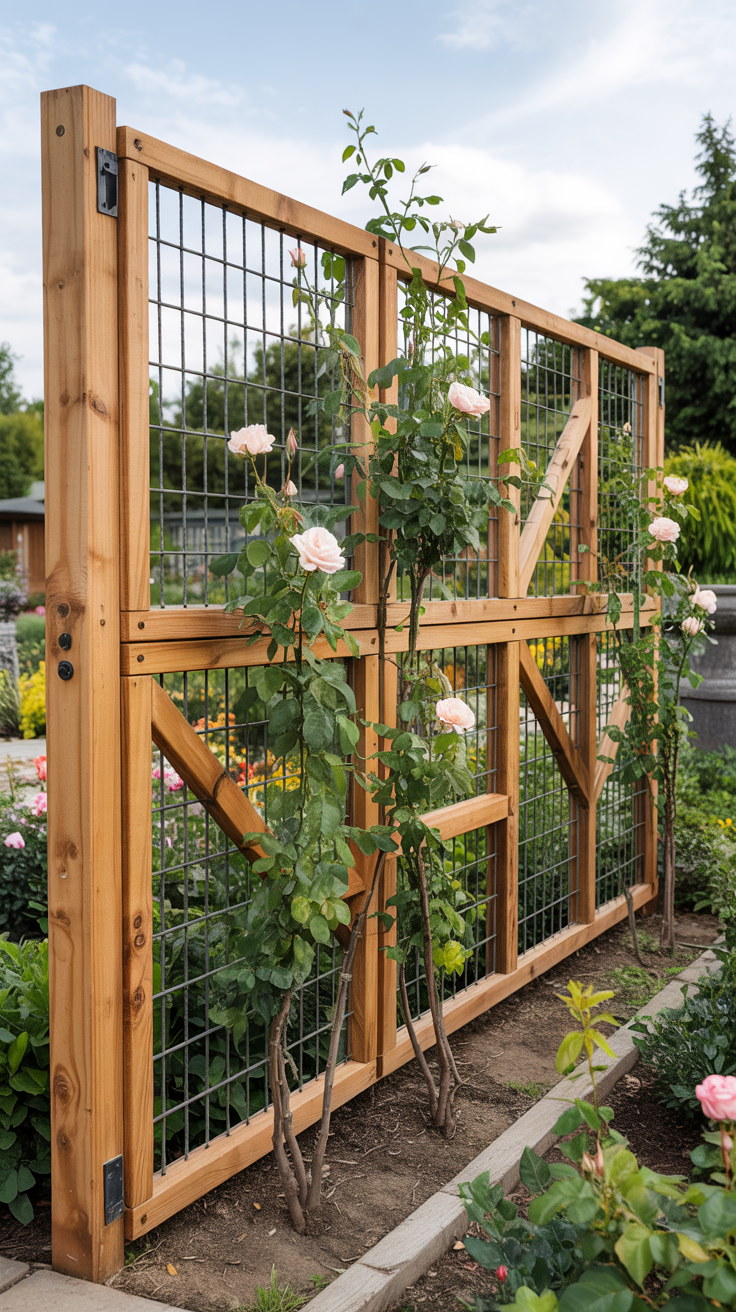
The wire and wood configurations I work with most are: horizontal wire strands tensioned between timber posts for a vineyard-inspired boundary; welded steel mesh panels set into a hardwood frame for a contemporary garden divider; and galvanized wire netting stapled to the back of a rail fence to create a small-animal-proof garden boundary without interrupting the visual openness of the design. For planting integration, I prefer tensioned horizontal wire on timber posts — the wires provide ideal support for climbing roses, wisteria, or espalier fruit trees, and the timber posts can be stained any color to suit the garden palette.
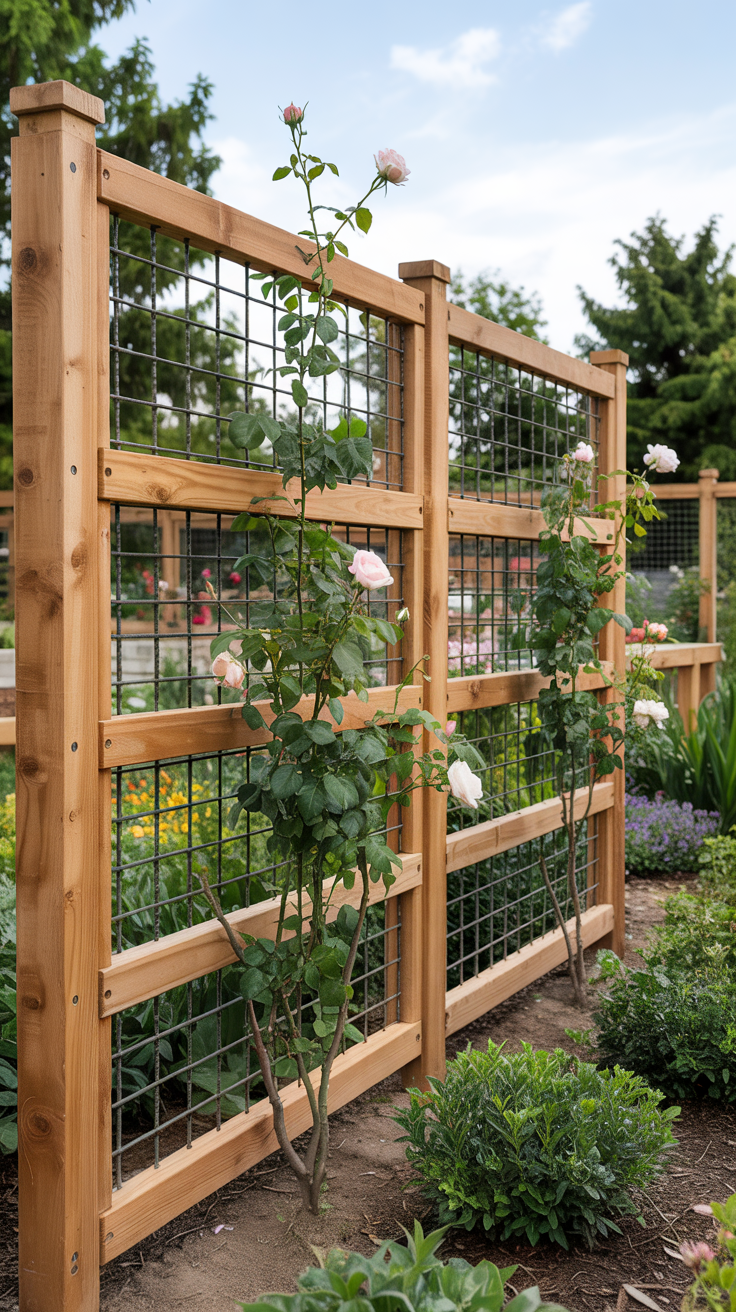
From a design perspective, the garden wood and wire fence ideas I find most compelling in 2026 are those where the wire itself becomes the decorative feature — using black powder-coated mesh in geometric diamond or square patterns set into slim hardwood frames to create a screen that functions like an outdoor artwork. The contrast between the dark wire geometry and the warm wood grain is genuinely beautiful, and the open construction ensures that light and air move freely through the fence rather than creating a solid, oppressive barrier. I have used this combination to divide kitchen garden spaces from ornamental areas with excellent aesthetic results.
One technical consideration I always address with wire and wood fence projects is tension maintenance. Wire strands that are not properly tensioned will sag within one to two seasons, pulling on fixings and ultimately distorting the timber frame. I specify eye bolt and turnbuckle tensioning hardware at every wire anchor point, which allows tension to be re-adjusted easily without tools as the wire naturally relaxes over time. This hardware is inexpensive — under $5 per anchor point — and it is the detail that separates a wire and wood fence that stays beautiful for a decade from one that starts to look tired within the first few years.
12. Garden Fence Gates Wood Design Ideas for Functional Entryways
A garden gate is the first physical interaction a visitor has with your outdoor space, and I believe it deserves as much design attention as any other element in the garden. In 2026, wooden garden gates are being designed as genuine architectural features — framed in hardwood with decorative panel inserts, integrated lighting, and hardware that is chosen as carefully as door furniture on a front entrance. The gate sets the tone for everything beyond it, and a well-designed wooden gate communicates quality, care, and personal style before a single step is taken into the garden.
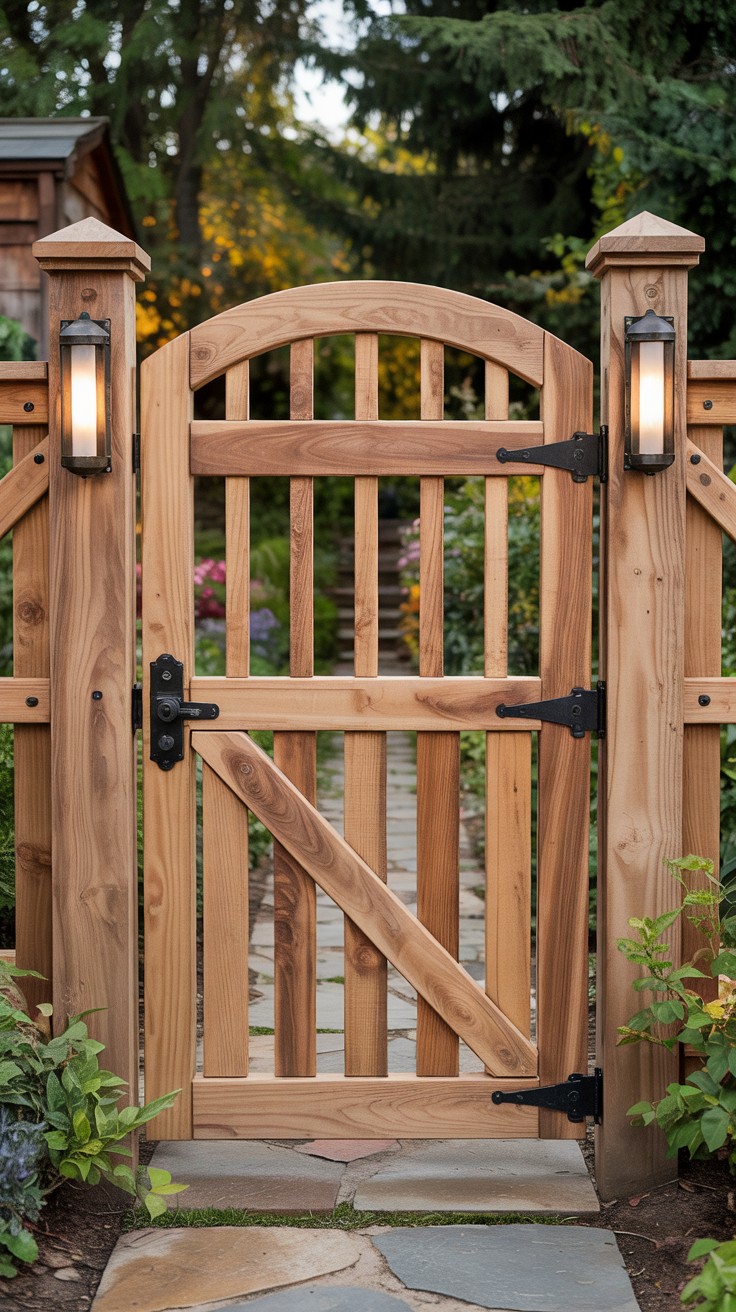
The gate designs I recommend most for residential gardens fall into three distinct types: the solid-panel privacy gate in vertical boards with a deep-stained finish and concealed hinges for a contemporary look; the open-frame gate with decorative wire or timber lattice infill for a more traditional or cottage-style garden; and the arched top gate in natural cedar with a simple diagonal brace for a classic, proportioned aesthetic that suits period and rural properties equally well. In every case, I specify adjustable ball-bearing hinges rated to the gate’s full weight, a mortise lock or heavy-duty barrel bolt, and a gate post diameter of at least 4×6 inches to handle the leverage of a swinging gate without movement.
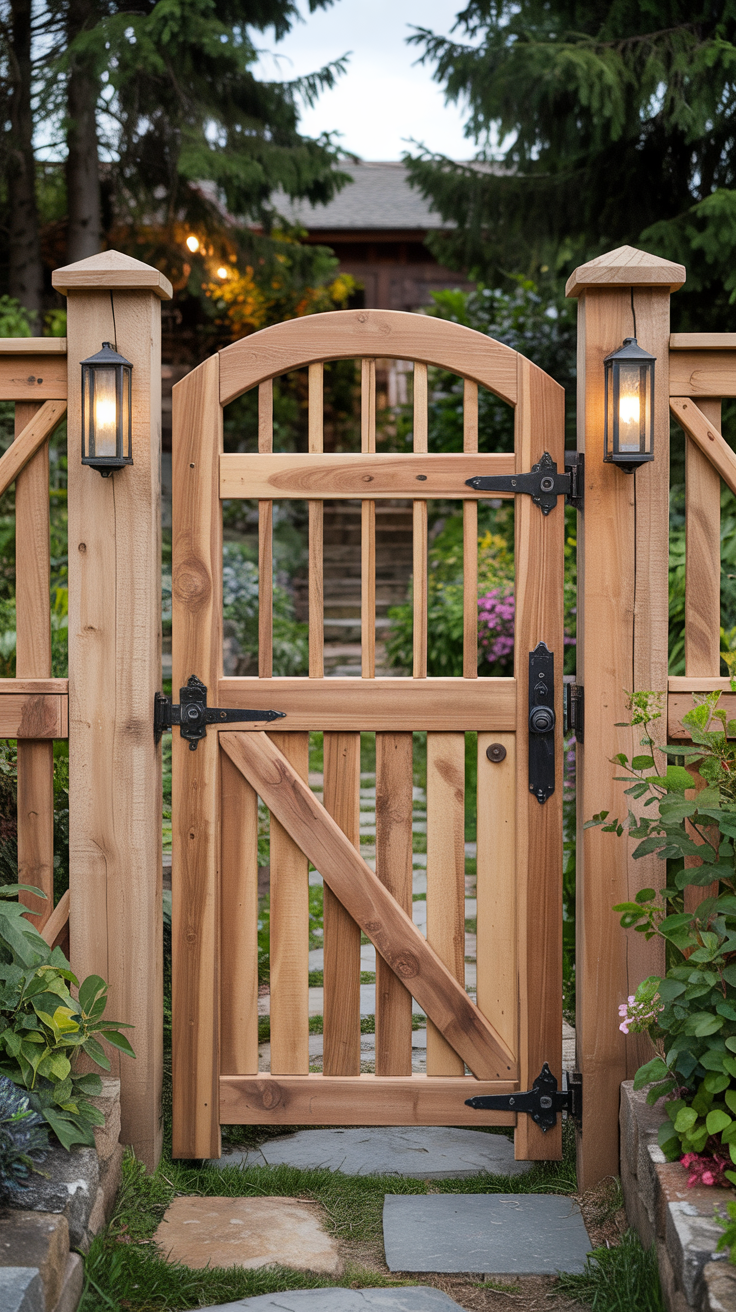
Hardware selection is the detail I see most often compromised on wooden garden gates, and it is consistently the first thing that fails. I use only heavy-duty galvanized or powder-coated steel hinges and latch sets — never the lightweight zinc-alloy hardware sold in general hardware stores, which corrodes and seizes within two seasons of outdoor exposure. For gates wider than 4 feet, I add a diagonal compression brace running from the bottom hinge corner to the top latch corner, which prevents sagging under the gate’s own weight over time. This simple geometry — compression force running toward the hinge — is a fundamental of gate construction that every builder should understand before starting.
An element I find consistently missing from garden gate designs is a considered threshold — the transition of surface material at the gate’s base. A short section of stone slab, brick pavers, or gravel set into the path immediately inside and outside the gate creates a visual and physical arrival moment that makes entering the garden feel like a deliberate, pleasurable act. This transition can be as simple as two cut stone slabs flanking the gate posts, but it changes the entire experience of moving through the entrance. I include this detail in every garden gate project I design, and it elevates the gate from a functional element to a genuine destination within the garden.
13. Low 4 Foot Wood Fence Ideas for Garden Borders
A 4 foot wood fence ideas garden border is one of the most practical and versatile fencing formats available, sitting at the intersection of boundary definition, visual openness, and ease of construction. At this height, the fence clearly delineates garden zones — separating lawn from planting beds, front garden from street, or vegetable patch from ornamental space — without creating the enclosed, walled feeling of a full privacy fence. I use 4-foot fences extensively in front garden designs, where local ordinances often restrict height and where visual connection to the street and neighborhood is desirable.
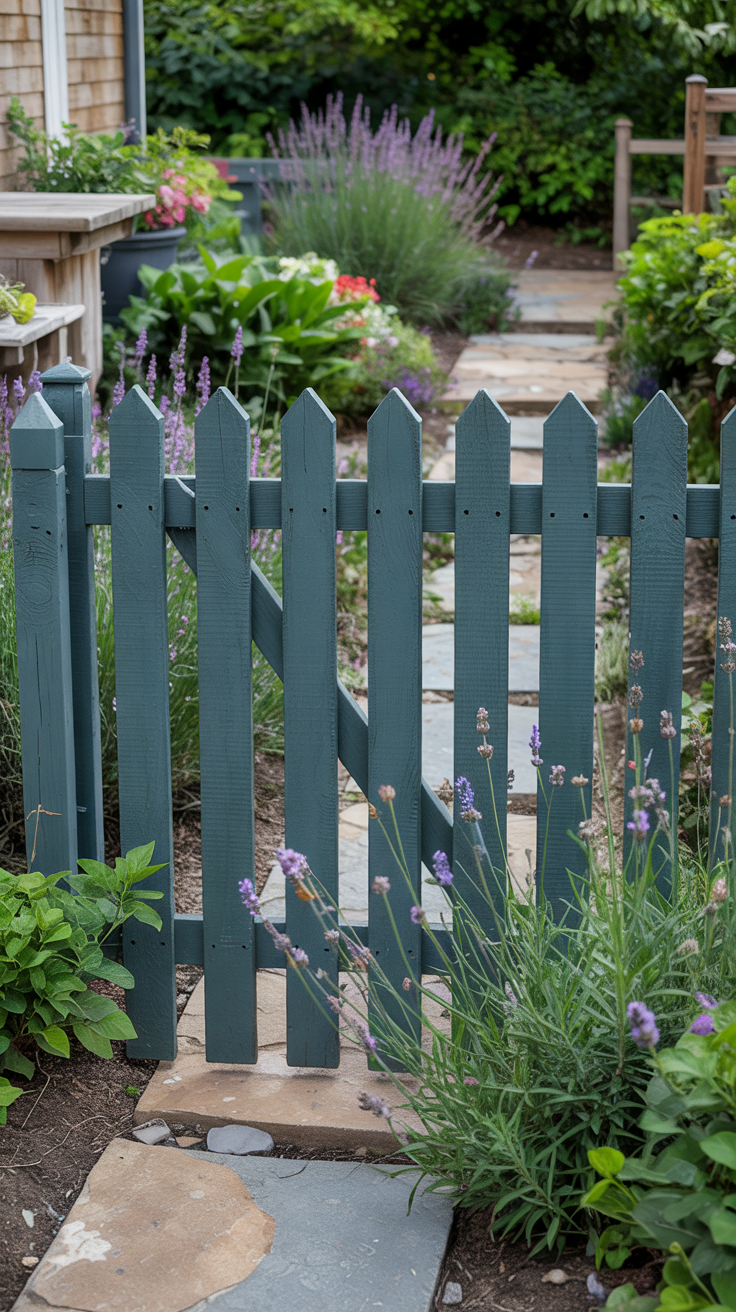
The styles I recommend most at this height are the classic painted picket fence in a tight 2-inch spacing for a traditional American garden aesthetic; the horizontal-rail fence in three evenly spaced boards for a modern farmhouse or contemporary country look; and the close-board panel fence in a 4-foot height for side boundaries that need more privacy at ground level without blocking light to adjacent windows. All three look exceptional when painted in a considered exterior color — deep green, charcoal, or warm cream — and all three are well within the capability of a competent DIY builder working over a single weekend.
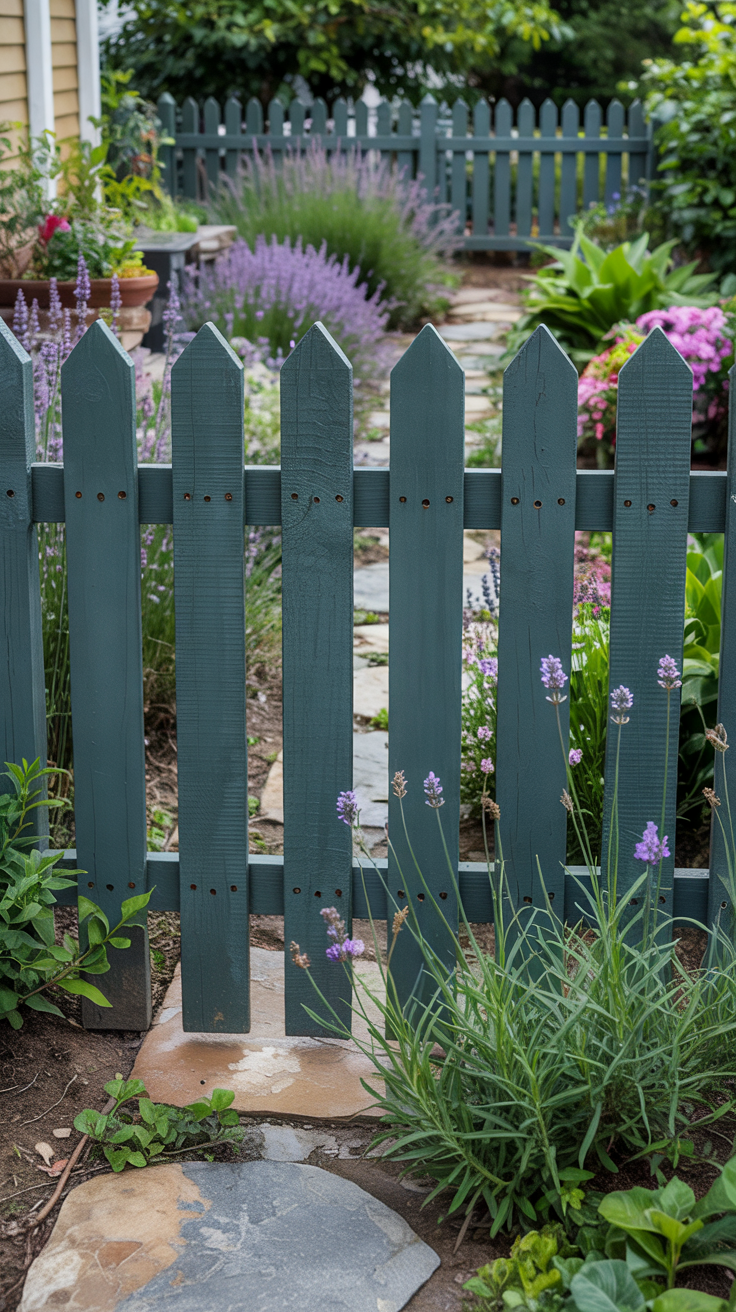
I find the 4-foot picket fence particularly well-suited to front gardens when it is designed with a planted border on both sides — a narrow bed of lavender, box hedging, or ornamental grasses along the fence line softens its presence and integrates it into the landscape rather than imposing it as a hard boundary. Southern Living magazine has long championed the combination of white picket fencing with flowering perennial borders as one of the most enduringly appealing elements in American residential garden design. I agree entirely — and I would extend that recommendation to colored picket fences with complementary planting, which can feel even more personal and distinctive.
One application of the 4-foot fence that I believe deserves more creative attention is its use as an internal garden divider rather than a perimeter boundary. A 4-foot fence running through the center of a garden to separate a lawn from a kitchen garden or a play area from an ornamental space creates a sense of depth, journey, and discovery within the garden. It also provides additional vertical planting surface — both sides of the fence can be planted independently, effectively doubling the planting opportunity within the same footprint. This internal division technique is one of the oldest tools in formal garden design, and it works with equal effectiveness at the domestic residential scale.
14. Modern Minimalist Wood Fence Design Ideas for Gardens 2026
In 2026, the minimalist approach to garden fence design has become one of the most sought-after aesthetics among homeowners who want clean lines and a sense of calm in their outdoor spaces. A modern minimalist wood fence typically features uniform vertical or horizontal planks in a single tone, with no ornamental excess. I find this design particularly effective for smaller gardens, where visual clutter can make a space feel cramped. The fence acts as a neutral backdrop that allows plants, lighting, and hardscaping to take center stage. When working with this style, the choice of wood species matters enormously — I recommend cedar or thermally modified ash for their durability and natural resistance to weathering without heavy chemical treatment.
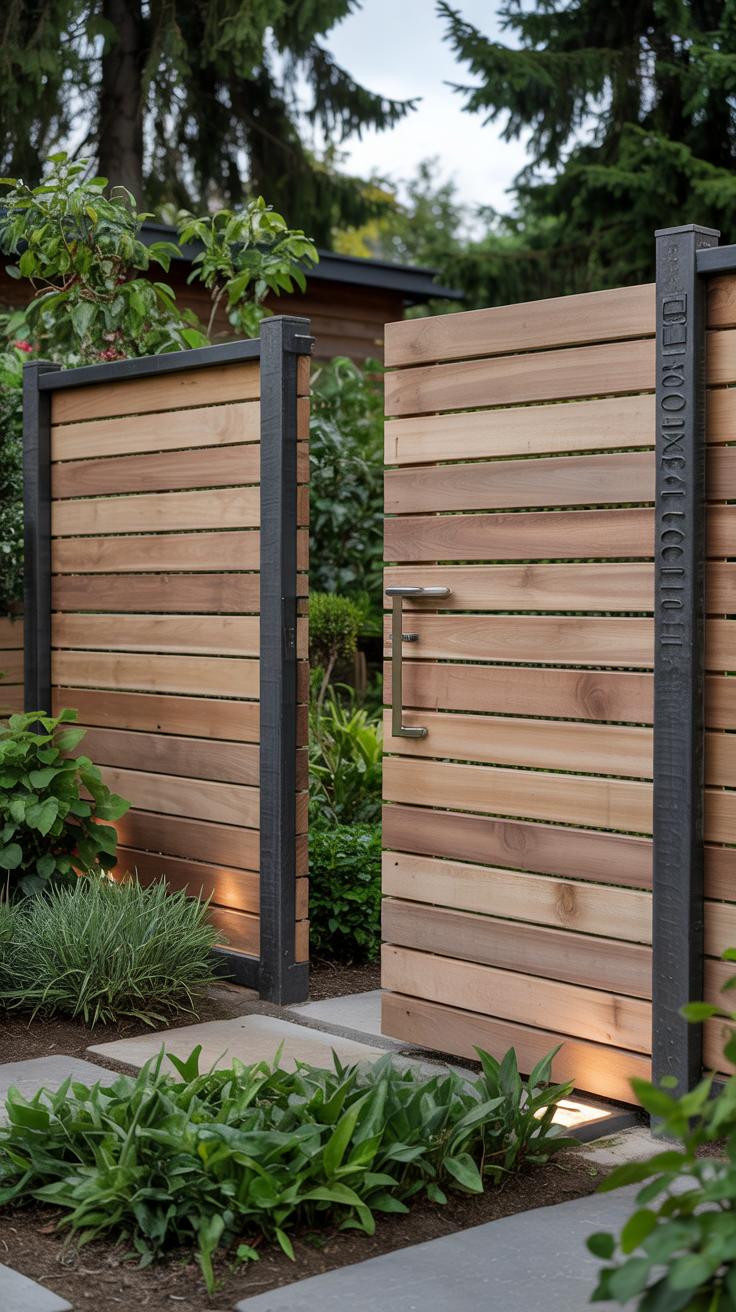
The key components that bring this design together include smooth-planed timber boards installed with precise, equal spacing, paired with slim powder-coated steel posts for a contemporary edge. I always suggest integrating recessed ground lighting along the fence base — this subtle detail adds depth at night and emphasizes the horizontal or vertical rhythm of the boards. A matte, dark charcoal or warm greige stain rather than paint preserves the natural wood grain while keeping the palette sophisticated. The gate in a minimalist design should match the fence paneling exactly, using the same plank width and finish, with a simple pull handle in brushed stainless steel or matte black.
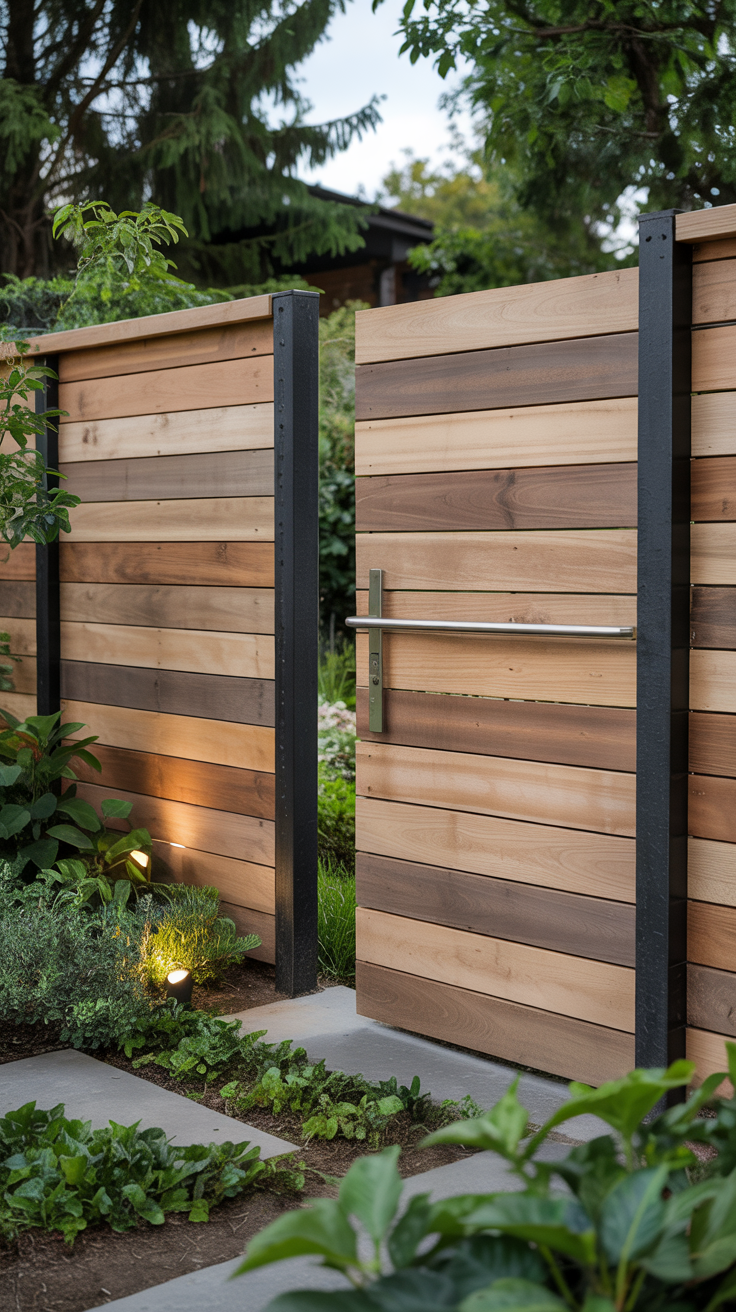
From my experience, one of the most common mistakes in minimalist fence design is neglecting the post finishing. Exposed, untreated post tops collect water and accelerate rot. I always recommend metal post caps or angled cuts on timber tops to shed rainwater. Architectural Digest noted in their outdoor design features that “restraint in material choice but precision in execution” defines the best minimalist garden structures — and I fully agree. Keeping the design intentional rather than simply sparse is what separates a truly modern fence from one that just looks unfinished.
One element I would add to complete this section is a note on spacing and privacy balance. A fully closed minimalist fence offers privacy but can feel imposing, so I recommend leaving a 10 to 15 mm gap between planks. This allows airflow, reduces wind load stress on the structure, and gives the design a lighter, more refined character without sacrificing the sense of enclosure.
15. Horizontal Slat Wood Fence with Integrated Planting Shelves
Horizontal slat fencing has been a dominant wood fence idea for gardens for several seasons now, and in 2026 it continues to evolve with practical additions like integrated planting shelves and wall-mounted herb boxes. I find this style particularly useful for gardens that serve as outdoor living rooms, where every vertical surface is an opportunity for greenery. The horizontal lines visually widen a narrow garden and draw the eye along the length of the fence rather than upward, creating a more expansive feel even in compact urban plots.
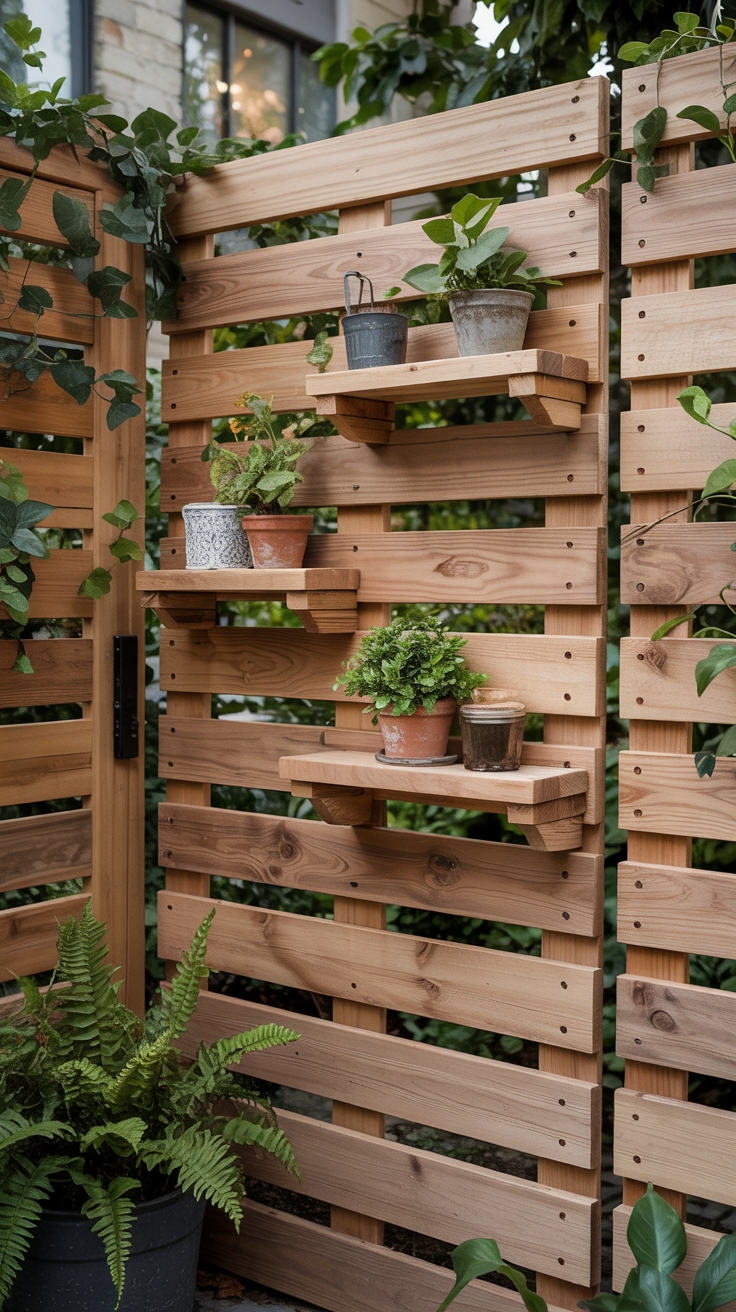
The design I recommend combines 90mm to 120mm cedar planks installed horizontally with a 5mm shadow gap between each board. Attached directly to the fence at varying heights, small cantilevered timber shelves — finished in the same stain as the fence — hold terracotta pots or metal planters. I prefer pairing warm-toned wood with dark green foliage plants like ferns or trailing ivy, which creates a rich, layered visual contrast. The gate in this design works beautifully as a matching horizontal-slat panel on a heavy-duty pivot hinge, keeping the design language consistent from every angle.
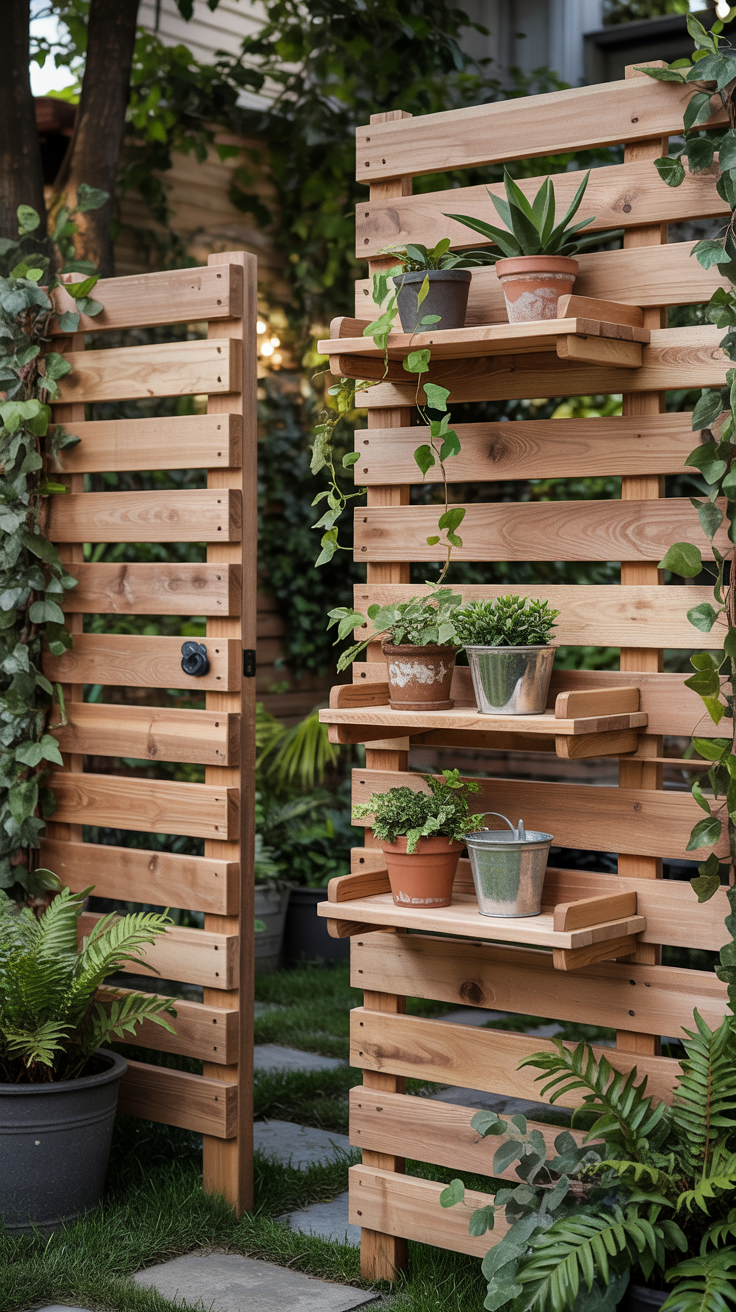
In my experience, the integration of planting elements into the fence structure is one of the best ways to blur the line between architecture and garden. It gives the fence a purpose beyond enclosure and makes the garden feel intentional and curated. Better Homes and Gardens has highlighted this approach as one of the top outdoor trends, emphasizing that “fences that double as garden features add lasting value to outdoor spaces.”
16. Rustic Wood Fence Ideas for a Cottage Garden Aesthetic
Rustic wood fence ideas for a garden bring a timeless, weathered charm that pairs beautifully with cottage planting styles featuring roses, lavender, and climbing hydrangea. I am particularly drawn to this style because it feels genuinely organic — the imperfections in the timber, the slightly uneven post heights, and the natural grey patina of aged wood all contribute to a fence that looks as though it has always been part of the landscape. In 2026, rustic does not mean neglected; it means intentionally embracing natural character while maintaining structural integrity.
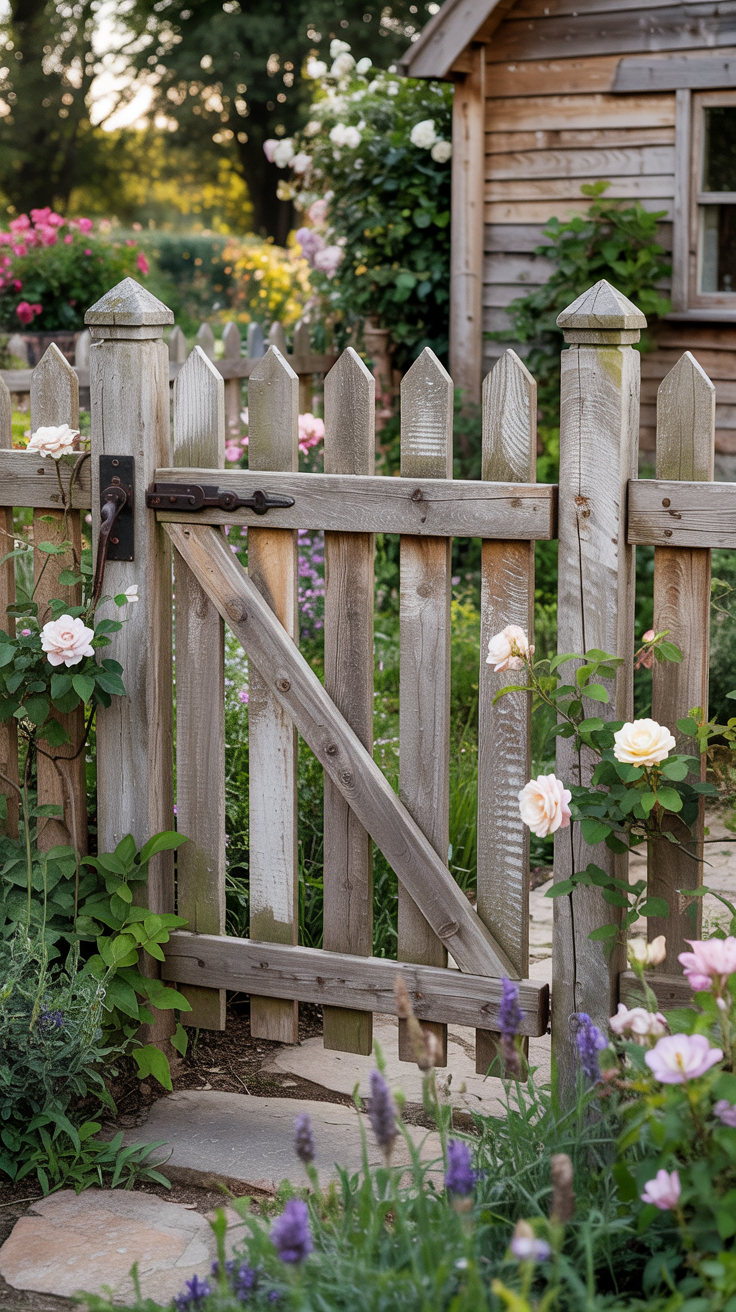
The materials I use for this style include rough-sawn oak or reclaimed barn timber, installed as a classic picket fence or as a more organic post-and-rail design. I recommend pairing this with a simple wooden gate that has a slight arch at the top and hand-forged iron hinges and latch — these small hardware details make an enormous difference to the overall authenticity of the look. Climbing plants trained up the fence posts, such as clematis or sweet pea, soften the structure and help it integrate naturally into the garden planting scheme. A light wash of diluted white paint can brighten the fence without concealing the wood grain, which is a technique I use often to refresh older timber without making it look newly painted.
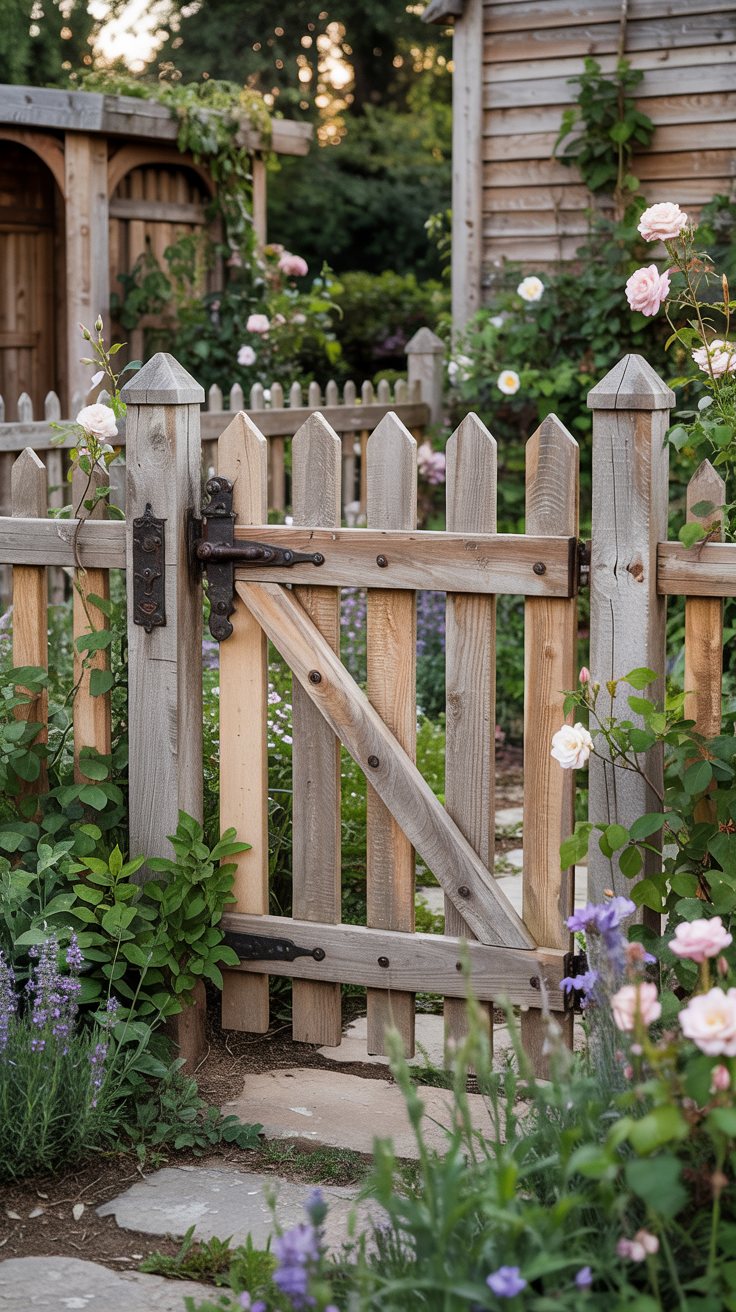
I always advise treating the base of any timber posts with a wood preservative before installation, even for rustic designs where the visible surfaces are left natural. Ground contact is where rot starts, and no amount of aesthetic beauty compensates for a fence that fails structurally within a few years. This is a practical step that is easy to overlook when you are focused on the visual outcome.
17. Artistic DIY Fence Decorating Ideas with Wood Garden Art
Fence decorating ideas diy garden art wood have exploded in popularity as homeowners look for personal, expressive ways to transform a plain fence into a focal point. I believe the fence is one of the most underutilized canvases in the garden, and approaching it as an art installation rather than a boundary structure opens up remarkable creative possibilities. In 2026, the trend leans toward layered wood art — think carved panels, burned designs, shaped silhouettes of botanicals or animals, and mixed-media pieces that combine timber with metal or ceramic accents.
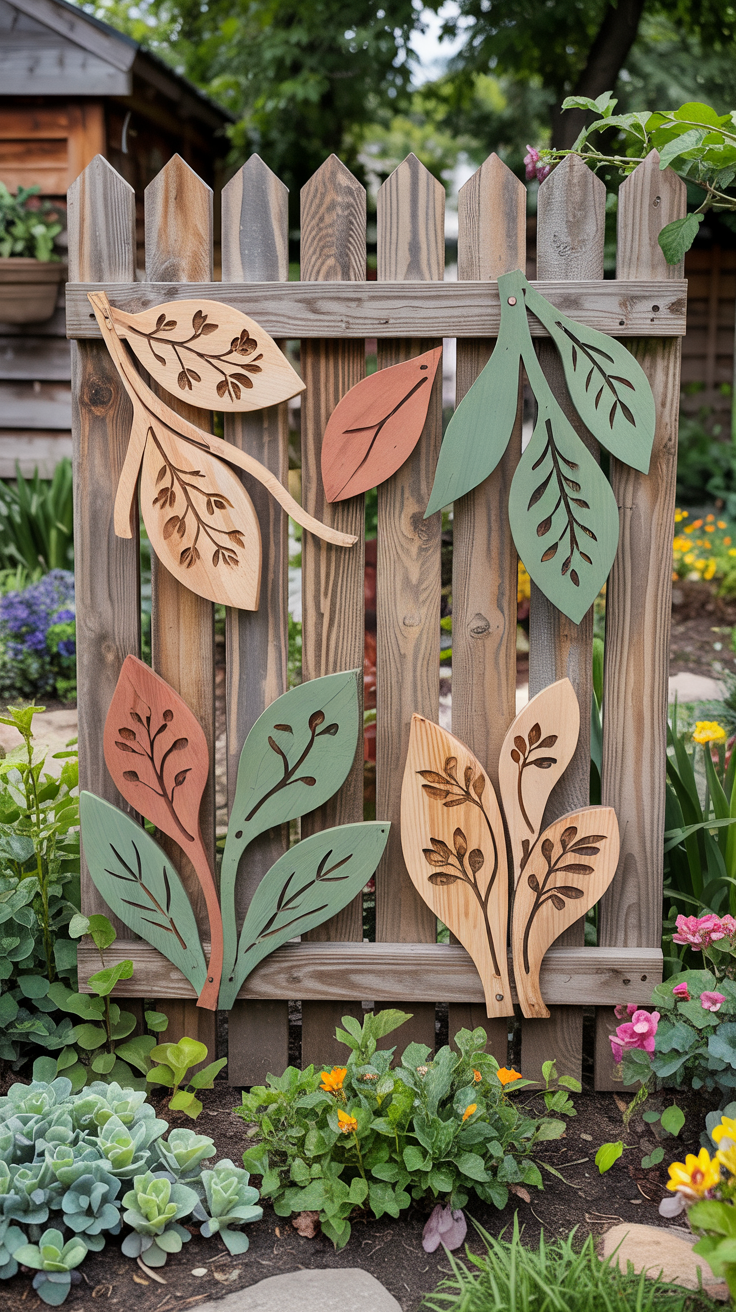
The techniques I find most accessible and impactful for DIY garden art on wood fences include pyrography (wood burning), which allows you to create detailed patterns or quotes directly onto fence planks, and relief carving on individual panel sections. Another approach I love is attaching shaped plywood cutouts — painted in weather-resistant outdoor paint — as dimensional wall art along the fence surface. These can depict botanicals, geometric shapes, or abstract forms. For a cohesive look, I recommend limiting your palette to two or three outdoor paint colors that complement your garden’s overall scheme. Decking paint in a satin finish holds up exceptionally well in outdoor conditions and comes in a wide range of colors.
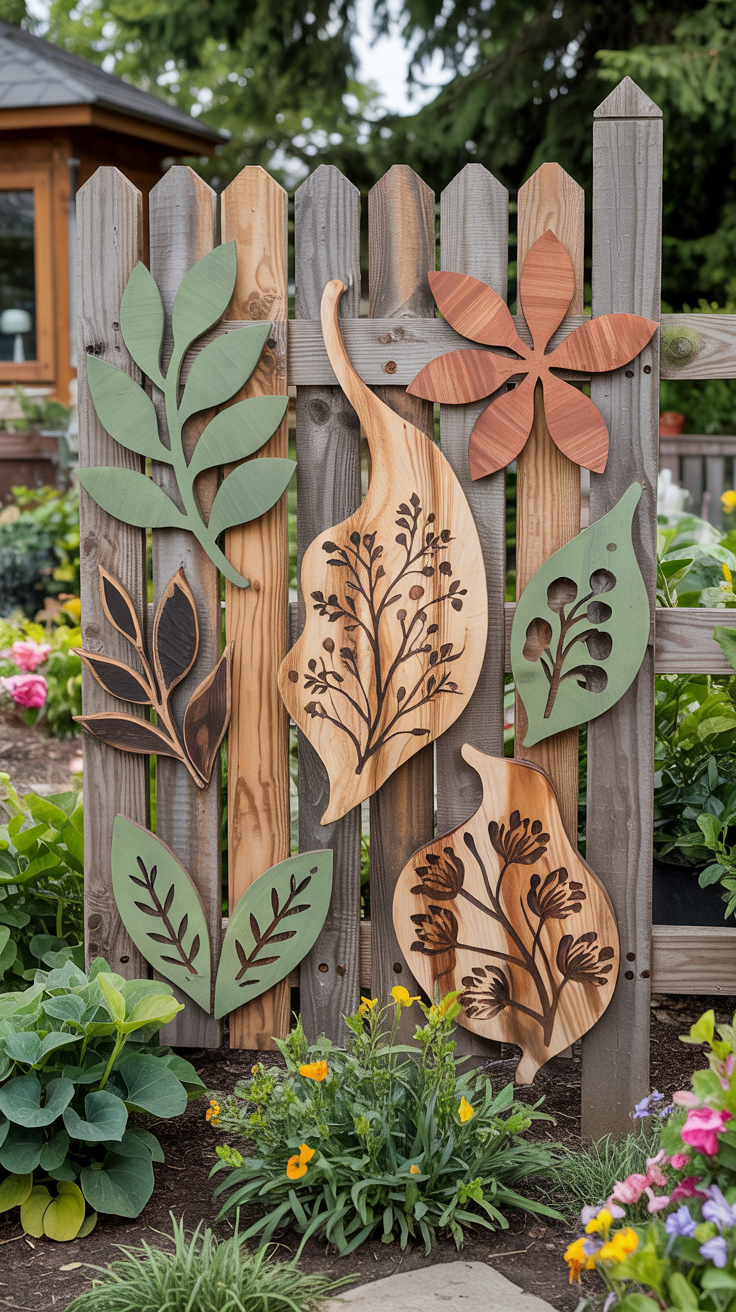
One of the most inspiring examples of fence art I have encountered was featured in This Old House, where a homeowner used a combination of reclaimed wood pieces arranged in a mosaic pattern across their back fence to create a large-scale landscape image. The project cost under 200 dollars in materials and completely transformed the space. I reference this kind of project when clients feel that artistic fence decoration is beyond their ability — it is far more achievable than it looks.
To complete this section, I want to add that weather sealing your art is non-negotiable. Any painted, burned, or carved surface on an exterior fence needs a UV-resistant clear coat applied over the top, refreshed every two to three seasons, to preserve both the art and the underlying wood.